Resistance is the Secret of Joy–and of Social Revolution

The little old building that houses the offices of Orion Magazine was crowded with people of all ages, gathered around a data projector to see the just-released film, DISRUPTION: CLIMATE. CHANGE.

The film, made by the same folks who created the excellent climate advocacy film DO THE MATH, features stalwart activists like Naomi Klein, Van Jones and Bill McKibben, along with newer voices like Chris Hayes and Keya Chatterjee, all focused intently on a single goal: getting the viewing public—that’s us!—to understand that climate change is real, it’s happening now, it’s going to get worse before it gets better, and there is absolutely no more important cause to which to dedicate our lives.

According to the 2014 report by the IPCC, the Intergovernmental Panel on Climate Change, we are in for a rough century. If we don’t stop burning fossil fuels like there’s no tomorrow, we’ll drive the global temperature so high that severe climate change will result. Mega-storms, melting polar caps, coastal flooding, ocean acidification, damages to agriculture, human and ecosystem health, mass extinction, you name it.

Walker - from Beauty in Truth jpg

Alice Walker

How do we avoid despair when looking ahead at an uncertain and probably chaotic future? One of the scientists interviewed in the film quotes Alice Walker, who famously wrote that “resistance is the secret of joy.”

This is the title of one of Walker’s novels, and the quote comes from the protagonist, Tashi/Evelyn, who willingly submits to genital mutilation as a young woman eager to conform to her society’s idea of what is right and proper…only to spend the rest of her life dealing with the resulting pain and trauma.

She thinks to herself that “resistance is the secret of joy” as she’s on her way to be executed for the crime of having murdered the old woman who cut her clitoris out with a razor—the woman who performed this “operation” on hundreds and hundreds of young girls over the course of a long career as an exciser.

For us, as for Tashi, there comes a point where we can no longer go along with the path that our elders and leaders have laid out for us.

There comes a point where we have to begin to think for ourselves, and to see that the danger of going along with the status quo far outweighs the danger of standing up to declare that another world is possible.

In a much-quoted column on Truthdig.com, Chris Hedges writes that because of the stranglehold the fossil fuel industry has on our political process, ordinary democratic tactics are not going to work in the urgent struggle to radically rethink and retool our economy to run on renewable energy.

“We have known about the deleterious effects of carbon emissions for decades,” Hedges writes. “The first IPCC report was published in 1990. Yet since the beginning of the Kyoto Protocol Era in the late 1980s, we have emitted as much carbon dioxide as was emitted in the prior 236 years. The rising carbon emissions and the extraction of tar sands—and since the industry has figured out how to transport tar sands without building the northern leg of the Keystone XL pipeline, this delivery seems assured—will continue no matter how many police-approved marches are held. Play by the rules and we lose.

“Resistance will come from those willing to breach police barricades. Resistance will mean jail time and direct confrontation. Resistance will mean physically disrupting the corporate machinery. Resistance will mean severing ourselves from the dominant culture to build small, self-sustaining communities. This resistance will be effective only when we refuse to do what we are told, when we turn from a liberal agenda of reform to embrace a radical agenda of revolt.”

These are strong words from a middle-aged white guy, a media guru with a lot to lose.

Hedges is disdainful of the People’s Climate March on September 21, which, he says, has been coopted by some of the big fossil fuel companies themselves, and has failed “ to adopt a meaningful agenda or pose a genuine threat to power.”

Go ahead, “March if you want,” Hedges says. “But it should be the warm-up. The real fight will come once people disperse on 11th Avenue.” 

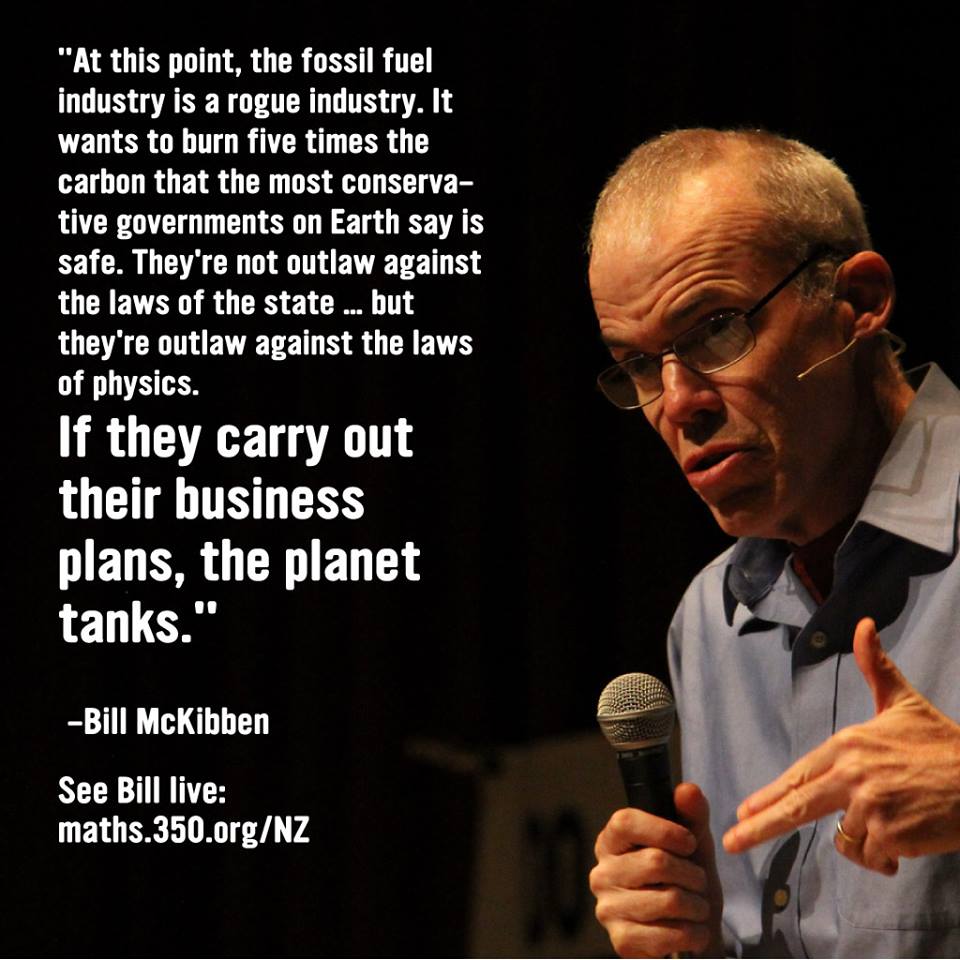
This is a point that is also made in the DISRUPTION film by the People’s Climate March organizers, who freely acknowledge that the march is only a first step in what will be a much more protracted struggle to, as one activist says, “take back our future” from what Bill McKibben calls the “rogue industries,” the criminal fossil fuel companies who are selling the future of every living being on the planet for a fourth-quarter profit report.

My favorite part of the film is right at the end, where Van Jones looks directly at us through the camera and says that change must start with each one of us taking a good hard look in the mirror.

photo

The author marching in Washington,DC, February 2014

Planetary and political change starts with personal awareness and responsibility. We can’t keep hanging around waiting for our political leaders to do the right thing. We can’t keep waiting for someone else to step up. If you have a vision of a better world, now is the time for you to start expressing it, finding others to share it, and together making it happen.

Next week I’ll be sharing my own story of coming to awareness, finding my way out of the straitjacket of convention and back into a deep connection with the natural world, which I had as a child but lost as I took my place among the young adults of my generation.

Entitled “The Personal is Planetary,” my talk is aimed at people like me—ordinary, people who work hard, take their responsibilities as parents and mentors seriously, and try to be kind and compassionate towards others.

How could it be that good people like us have let the planet come to the brink of disaster?

Human beings are like caribou—or like lemmings. We are instinctively compelled to run with our pack, even if the pack is running straight over a cliff. Those who try to buck this stampede can find themselves trampled.

The DISRUPTION film makes the point that we Americans are both bystanders to the tragedy of global climate change, and perpetrators. We have been enjoying the carbon-intensive lifestyle that is now driving the entire planet down the road to ruin.

True story. But regrets and guilt won’t get us anywhere now. We must find within ourselves the courage to look in that mirror, accept our culpability and deficiencies, and move on to do whatever we can, in the time that is left to us, to work towards a smooth transition to a sustainable future for children and grandchildren.

I’ll be in New York on September 21 for the People’s Climate March, will you? Let’s remember that resistance is not only the secret of joy. It’s the only way real social change has ever been accomplished.  
Help Wanted: Willing Ring Bearer Seeks Quest

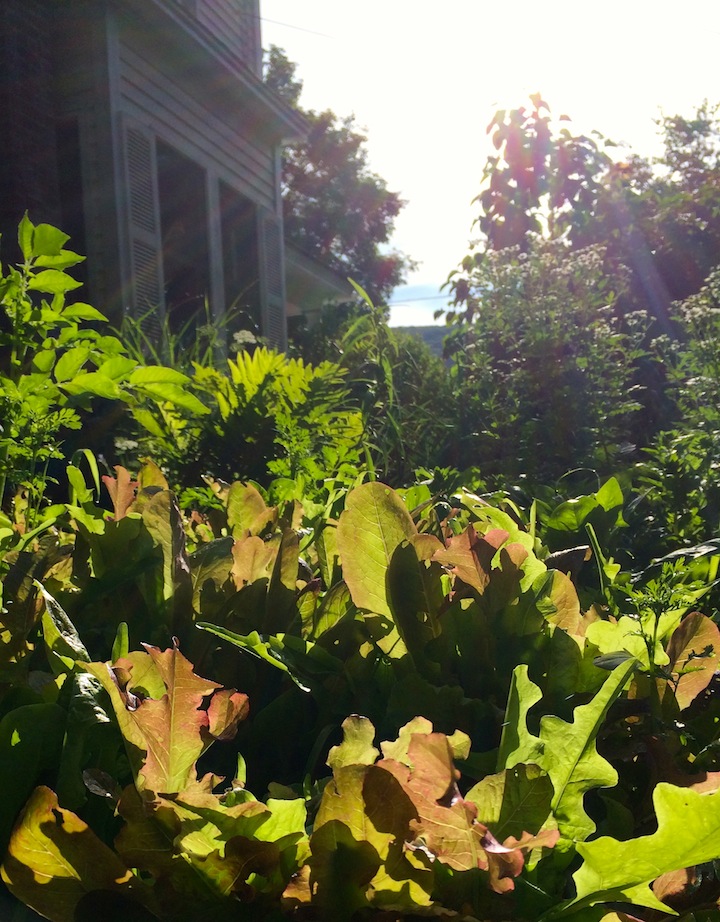
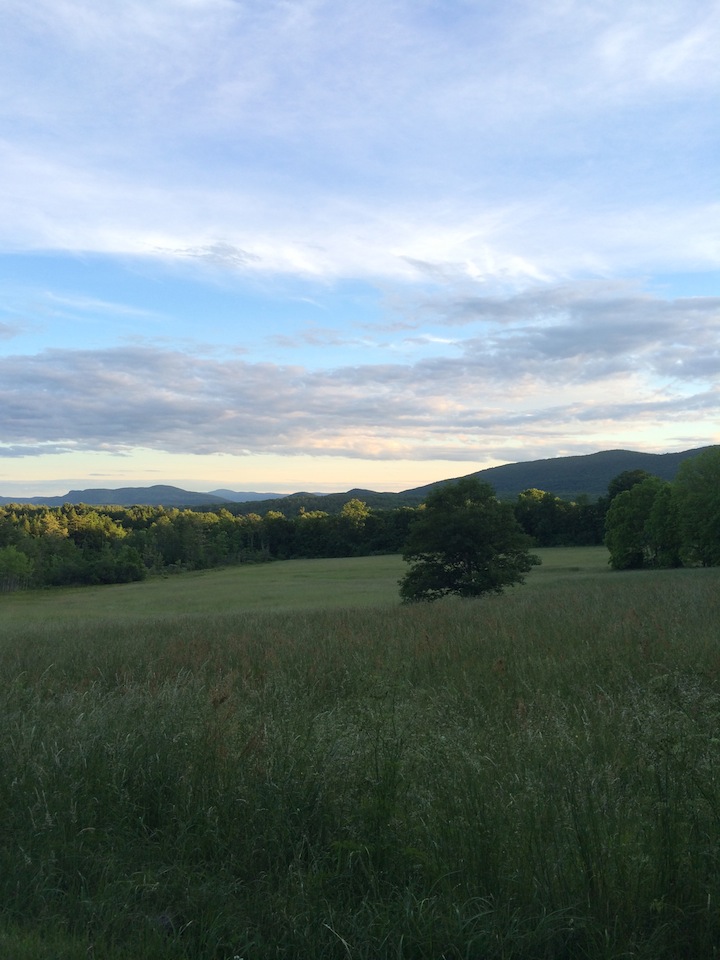
All week the energy of the summer solstice seemed to build in me. After a week of rain, the sun burst through and we had a whole week of clear, low-humidity days in which it appeared that you could see the plants growing happily, stretching their roots down into the soil and their leaves up towards the bright sky.

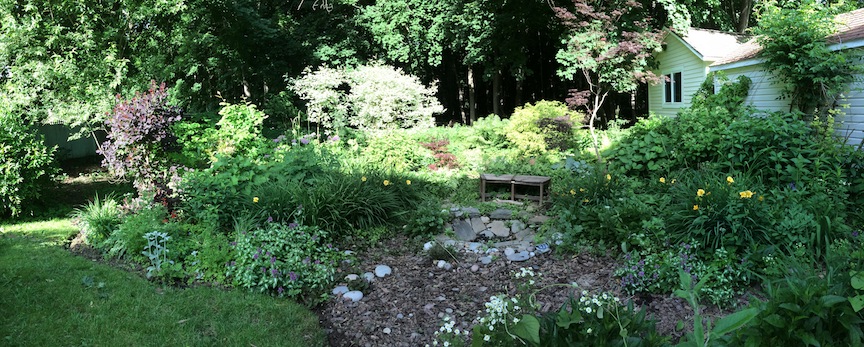
My peaceful backyard in the Shire

My peaceful backyard in the Shire

In anticipation of several weeks away (I’ll be making my annual pilgrimage to Nova Scotia soon) I spent a lot of time out in the garden, planting vegetables and annuals, weeding flower beds, mulching and staking and tending.

morning lettuce

morning lettuce

pumpkins

pumpkins

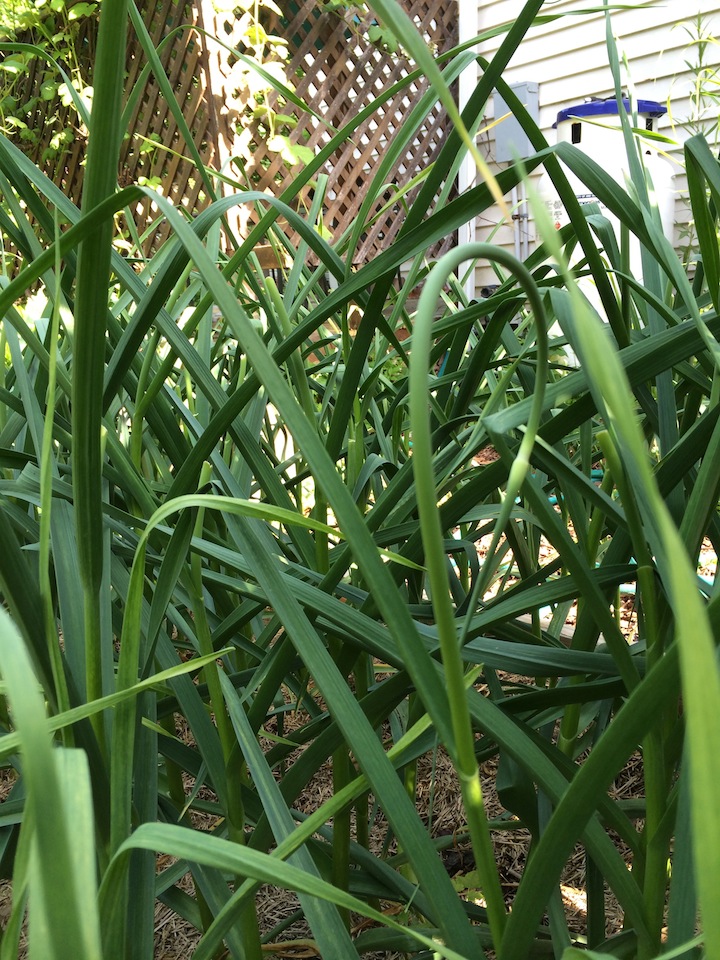
Garlic; note the gas tank in the background

Garlic; note the gas tank in the background

It’s always hard to leave a garden in the summer, when you know the minute your back is turned the invasive weeds will grow with vindictive vigor, the slugs will multiply and munch away at the lettuce, and the Japanese beetles will arrive to decimate the roses.

However, I must get away from the confines of my little corner of the world to clear my head and ready myself for another year—for me, as a lifelong academic, the year always starts with the fall semester of school.

Last night, in honor of the longest day of the year, my son and I took an evening hike up a local mountain, and sat on a rock ledge facing west as the sun slowly and majestically dropped towards the horizon.

Eric in woods

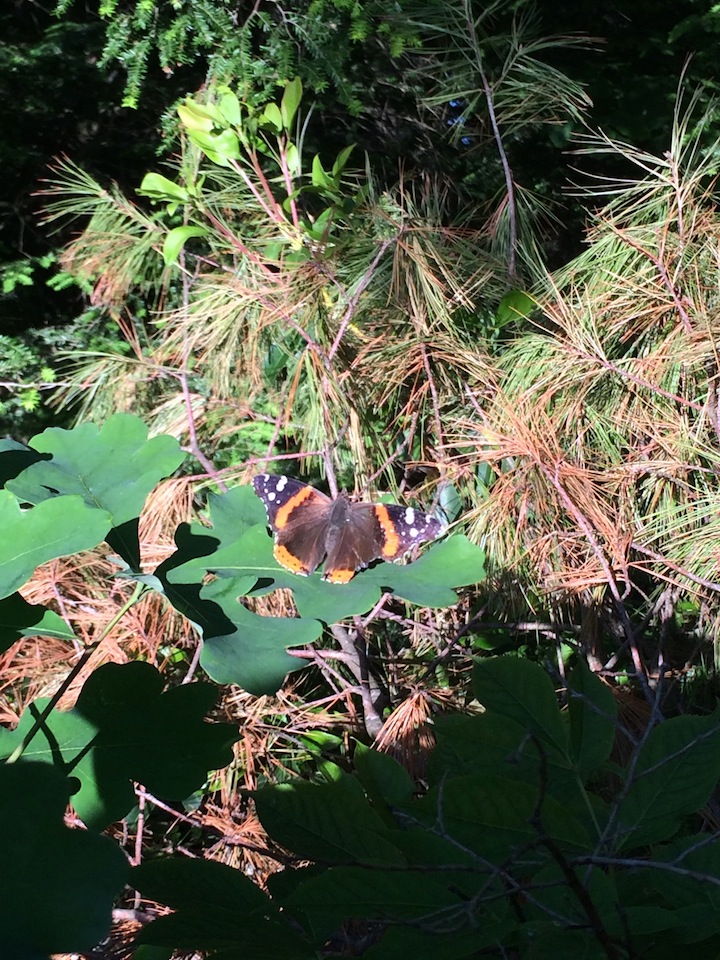
We were happy to find some friends up there—a caterpillar with beautiful markings, making its way up an oak sapling, and a pair of orange-and-black butterflies, sunning themselves just like we were.

caterpillar

butterfly

solstice sunset

As we walked down again in the last rays of sunshine, I couldn’t help thinking about the strong contrast between the peaceful, lovely landscape of my home ground, where for many of us the most urgent question of the day is “what shall we have for dinner?” or “what movie shall we watch tonight?” and the social landscapes that cry out to me every day when I read the news headlines—arid, violent, rigid, harsh.

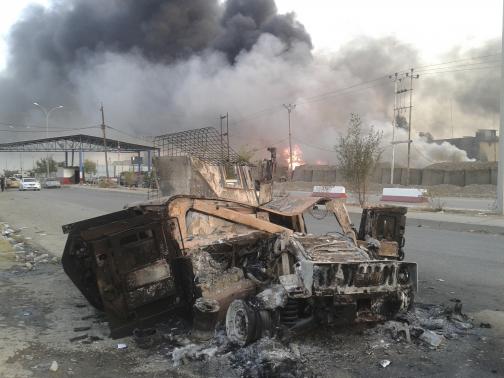
Reuters photo taken June 11, 2014 in Mosul, Iraq

Reuters photo taken June 11, 2014 in Mosul, Iraq


This summer solstice, as I sit in my peaceful green American haven, Iraq is again descending into crazed sectarian violence. The news reports that “militias are organizing” or “Mosul was taken” focus on the politicians playing the mad chess game of war, and the young men drawn into the armies as battlefield pawns. There is no mention of the mothers, sisters and grandmothers of those politicians and young men. The women rarely surface in the headlines, and when they do, the news is not good: a woman who dared to go out to a rally stripped and gang-raped, for example.

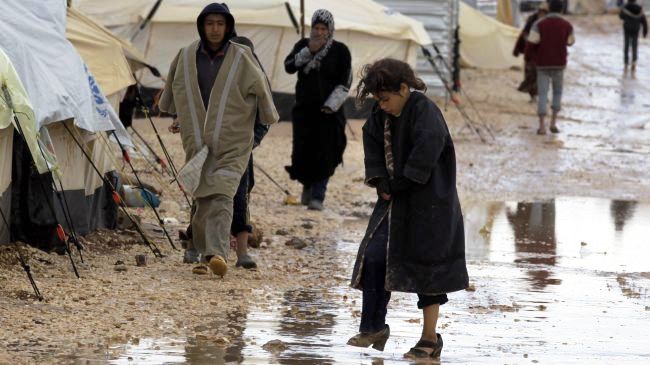
We hear about women obliquely in the reporting about the incredible surge of refugees living in camps this year: of the 51 million people living in refugee camps under U.N. supervision, half are children—which means that a high percentage of the other half are probably mothers and grandmothers. But that is in inference I am making by reading between the lines; those women are invisible in the official story.

Syrian refugee camp in Jordan, now Jordan's fifth largest city

Syrian refugee camp in Jordan, now Jordan’s fifth largest city

jammas.hussain20130212012158677

I have to recognize the incredible privilege I have as an American woman, living in the heart of the heavily guarded gated community that this country has become.

Other people around the world are paying the price for the peace and plenty I have here in my home. And not just people—the animals and insects and birds and forests are paying the hugest price of all to maintain my privileged lifestyle.

How long can I continue to live comfortably with this knowledge?

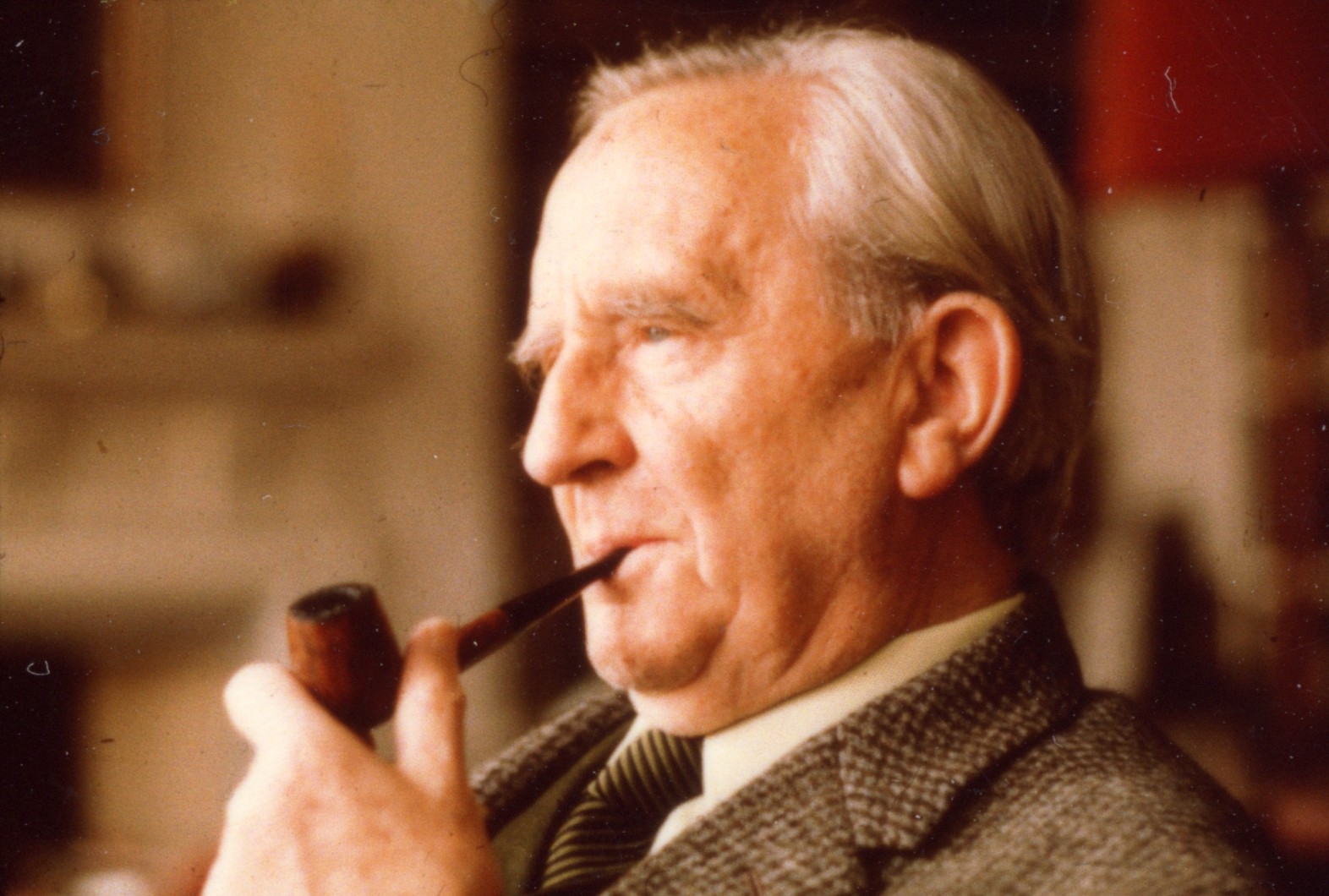
The more time goes on, the more I see how prescient J.R.R. Tolkien was with his Lord of the Rings series. Berkshire County, where I live, is indeed “the Shire” of legend—peaceful, productive, green and jolly. Outside our borders, far, far away, the armies of Mordor are mobilizing in the midst of lands laid waste by the industries of the Dark Lord. Few in the Shire are worried; the chance of those nasty people and industries actually coming here seem remote indeed.

JRR Tolkien

JRR Tolkien

In Lord of the Rings, it is Gandalf the wizard who serves as the bridge between these two very different landscapes. He gives Bilbo, and later Frodo, the charge of becoming the change agents who can make all the difference. The fight against the Dark Lord is fought on many fronts, but the quest to destroy the Ring of Power is paramount, and in order to destroy the ring Frodo must journey to the heart of the dark Empire itself.

I can’t escape the feeling that here in the quiet Shire where I live, ordinary people like me are being called upon, as Bilbo and Frodo were, to step up to the immense and dangerous challenge of resisting the darkness that is brewing on our borders.

But in our case there does not seem to be a Gandalf who can give us a mission and guide us as we set off on the quest. Not even the wisest leaders of the environmental and peace movements seem to be able to provide that kind of leadership. Worldwide, those leaders who claim to know with absolute certainty what is right and what to do are precisely the ones who are fomenting war and leading us down the path to environmental, civilizational suicide.

That must be why I am drawn to study with those who are exploring other epistemologies, outside of the normative range of politics, science, philosophy and religion.

Right now my bedside reading includes Anne Baring, Pam Montgomery and Pamela Eakins, along with Brian SwimmeMartin Prechtel, Bill Plotkin,  and Daniel Pinchbeck.

spring meadowWhen I look out into the green world stretching up towards our beneficent Sun, or glowing brightly under our sweet white Moon, I can see and hear the harmony that life on Earth evolved to sing. Put water and sunlight together, wait a few billion years, and you get this incredible lush planet, pulsating with life.

Human beings have flourished so well that now we have become overpopulated, an invasive species that is destructively taking over every last environmental niche on the planet. In a normal terrestrial cycle, we would go bust, our civilization would collapse, and with time the earth and the sun would gradually rebuild life in endlessly new creative forms.

Is that what is coming? Or will we be able to be the Gandalfs of our own generation, waking ourselves up out of our complacency here in the beautiful American Shire, and conquering the inner and outer Dark Lords that are laying waste to the planet?

What is the quest that is mine to carry out? What is yours? If we at least start asking these questions, with the greater good of the Earth in mind, perhaps the answers will emerge in time to set humanity on a better path.

solstice sunset dark

Late Night Thoughts on Love, Loss and the Urgent Need for Action

I had a rough night last night. I went to bed thinking about the April 15 “Blood Moon” lunar eclipse; unfortunately we could not see it here in the Northeast, but we certainly could feel the extra-intense full moon energy these past few days.

At some point in the wee hours I woke up to strong winds battering the house, and peering out the window I could see that our long-awaited springtime had been overrun by Old Man Winter again. Driving snow, accumulating steadily on the ground.

Shit. Yet another manifestation of the new normal of our wrecked climate.

After that I tossed and turned and couldn’t fall back asleep. Eventually, bored with my own churning thoughts, I fired up my tablet and started reading The New York Times in bed. Bad move. The first article that caught my attention was about how hazardous materials, particularly heavy crude and gas from the Bakken Fields in North Dakota, are being sent by rail to ports in the Northeast in exponentially increasing quantities, with virtually no regulatory oversight.

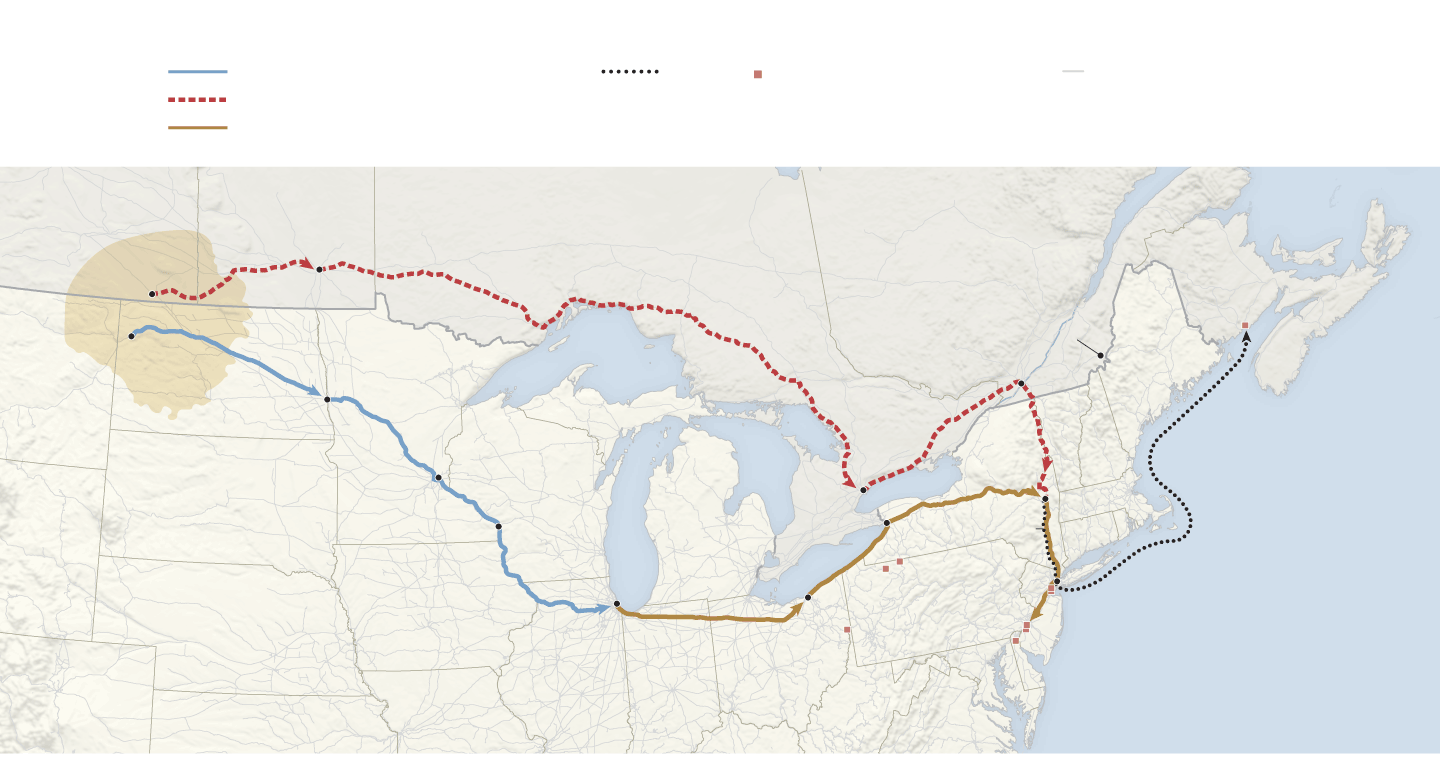
The map below shows the rail lines from North Dakota to the Hudson River, where tankers take the oil up to the refinery at St. John, New Brunswick, on the magnificent Bay of Fundy.

I live just two blocks from a train line, and I see the tanker cars that rumble past twice a day.

The tracks go right through downtown Pittsfield, the largest town in Berkshire County, and they go through many of our most lovely wilderness areas too.

But compared to cities like Albany, where schools are apparently sited right along the railroad tracks, or Philadelphia, which narrowly averted a major hazmat rail accident just recently, we have it good here in the Berkshires.

The point is, we are kidding ourselves if we think that nasty crude oil spills and explosions only happen somewhere else, like Ecuador or Nigeria.

We are kidding ourselves if we try to imagine ourselves as innocent bystanders in the nightmare of industrial devastation of our land, waters and air, and the destruction of our planet’s biospheric life support systems.

If Humans Are So Smart, Why Are We Destroying Our Home?

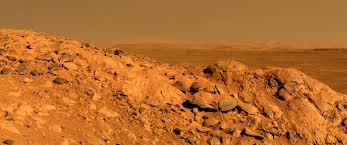
Surface of Mars

Surface of Mars

Surfing around the web bleakly in the middle of the night, I found myself reading articles speculating about how the dead, dry planet Mars lost its ability to support life.

The most likely scientific guess right now seems to be a catastrophic asteroid hit that changed the climate. Somehow the magnetic field of the planet was damaged, which allowed its atmosphere to literally blow away into space.

On Earth, our undoing will be the result of our own relentless industriousness and intelligence.

Human beings are so smart, we figured out how to split atoms and make atomic explosions! Too bad we haven’t got a clue what to do about the residual radiation and radioactive waste—waste with a half-life measured in the billions of years.

We’re so smart, we figured out how to harness the carbon energy buried deep in the ground in the form of coal, gas and oil. We even figured out how to turn oil into a different kind of substance that’s virtually indestructible—plastic! We just somehow overlooked the fact that we might quickly bury ourselves in plastic garbage, and choke ourselves in exhaust fumes.

We’re the smartest species on Earth. But like the Grinch, it appears that we have one fatal flaw—our hearts are many sizes too small for our outsized minds.

If we were guided by heart energy—that is, LOVE—in the application of our amazing technological abilities, what a very different world it would be.

It’s Time For Those With Loving Hearts to Speak in Many Tongues, Translating Love into Action

If future beings ever look back, shaking their heads at the demise of Homo sapiens on Earth and wondering how this once lush green and blue planet turned dead and brown, I wonder if they will be aware of the anguish of some of us living through these bitter transition times.

Will they know that some of us tossed and turned through the night, seeking futilely for a chink in the armor of the corporate stranglehold on our planet? Will they see that many of us, in these end times, tried to stand up for our values; tried to put into action the love we feel for the living creatures that share our beautiful Earth?

Always, it comes back to the question that keeps me up at night. What can we do to make a difference, now while there’s still time?

For a wordsmith like me, the obvious answer seems to be to learn to speak more tongues.

Since the corporations who are so bound and determined to keep fracking and mining and bulldozing their way to Kingdom Come only understand the language of quarterly profit and loss, this is the way we must speak to them.

The almighty priests of the Bottom Line and their henchmen the politicians could care less about emotional blather of love and respect for life and leaving a livable planet for future generations. So let’s speak to them in terms of losses.

The insurance company guys understand already how irreversible climate change will lead to losses on a Biblical scale. The fossil fuel magnates must also be made to understand that they are driving us all down a rapid road to ruin—and no gates will be high enough to keep the floods, fires and starving displaced populations out. We’re all in this together—rich and poor alike will go down with our sinking Mothership Earth.

To the church-going folks, we can speak the language of moral commitment and social responsibility. This weekend is a holy time in the Jewish and Christian calendars. When we’re thinking about the Resurrection and the miracle of Passover, let’s remember how these ancient holidays celebrate LIFE. For those who are religious, how can you claim to follow the Ten Commandments or the teachings of Jesus and allow the destruction of our planet to proceed unopposed?

To the ordinary folks who are just trying to keep their own lives on track, we must speak in a very pragmatic voice. It’s time to begin to pull together as communities and insist on re-localizing energy production (solar, wind, geothermal) and agricultural production in order to build resilience at the state and town level.

It’s time to insist on regulations that will put the safety of people and environmental ecosystems above the profit margins of corporations, and if the federal government won’t do it, the states and towns must step up.

Lying awake at night worrying and mourning is a poor use of my energy. I want to spend whatever time we have left raising my voice to motivate all of us who care to work tirelessly and passionately on behalf of the voiceless: the trees and the bees, the birds and the whales, the frogs, elephants and farm animals, and especially on behalf of the human children as yet unborn, who may never be born—or may be born into a nightmarish, unlivable world gone mad.

Bulbs contending with snow and temperatures in the 20s on April 16, 2014--western Massachusetts

Bulbs contending with snow and temperatures in the 20s on April 16, 2014–western Massachusetts

The Solutions are Hidden in Plain Sight–if you look through 21st century eyes

IMG_4806A lot of us in the Northeast are doing our share of grumbling this year about the Arctic air that just won’t go away.  Usually March is the time when the winds start to blow, the sap starts to rise, the snow melts into the thawing earth and our thoughts turn to snowdrops and crocus.

This year, we’re still in the deep freeze with a hardpack of snow on the ground, and no end in sight.

It’s all part of the erratic weather of our climate change era.  The question for all of us now is, how, beyond bitching and moaning, are we going to respond?

Most of us just shrug and turn the dial on the heater up a little higher, not thinking about what that very small, ordinary act really entails.

If your thermostat is wired into an oil burner or a natural gas furnace, like most homes and apartment buildings in the Northeast, then when you turn up the dial in response to the bitter cold you are, perhaps unwittingly, enabling, supporting and becoming an integral part of the very industry that is relentlessly destroying our climate.

The fossil fuel industry is not some demonic force outside of our control.  It’s just a human business that is responding to human needs for energy—lots and lots of energy.

We Americans are used to getting what we want, and what we’ve wanted, in the 50 years I’ve been on the planet, is ease.  What could be easier than turning a dial to make your house warmer in the winter or cooler in the summer, or gassing up your comfy car before you get on the freeway?

1_RussetLikewise in terms of agricultural production—we like to get our vegetables pre-washed and sometimes even pre-cut, all even-sized, no blemishes, laid out attractively in faux crates under spotlights in our upscale grocery stores.

When we buy that bag of potatoes or carrots, we’re not thinking about the tons of pesticide, herbicide, fungicide and fossil fuels that went into making it easy for us to throw these items in our shopping cart.

We’re not thinking about the bees, butterflies and other valuable insects that have been driven to population collapse by industrial agricultural practices; or the huge dead zones in the ocean at the mouth of the Mississippi River, where fertilizer and chemical run-off from the Midwest runs down to the sea; or the millions of birds that are affected each year by the toxic chemicals we spread over the landscape.

We’re just throwing that bag of veggies into the cart, or turning up that dial.

Well, the time of such oblivious innocence is over.

The curtain has been pulled back, and the Wizard of Industrial Capitalism has been revealed—and lo and behold, he wears the ordinary face of each one of us.

Every step we take on this beautiful, battered planet of ours matters.

Eric and me at the February 2013 Forward on Climate rally in DC

Eric and me at the February 2013 Forward on Climate rally in DC

I am heartened to know that this very weekend, one year after the big climate change rally in Washington DC that I attended in the hopes of pressuring the Obama Administration to block the Keystone XL pipeline, thousands of activists, most of them college students, will be raising a ruckus at the White House gates to insist that the politicians stop gambling away their future.

Here in my backyard, in the Massachusetts-New York region, people have woken up to the fact that mile-long trains of crude oil and gas are being run through heavily populated neighborhoods.

We’re moving to block gas fracking in western Massachusetts as the sight of contaminated tap water in fracking regions brings the dangers right home.

We’re also starting to get serious about making solar energy accessible to homeowners and businesses.

UnknownThis week’s New Yorker magazine has a fascinating article about a little-known scientific program to create a controlled thermonuclear fusion power plant.  Unlike the current fission plants, which burn radioactive fuel and generate dangerous waste, the fusion plant, if it were successful, would run indefinitely on seawater and lithium, with no waste.  It would be ten times hotter than the core of the Sun.

Talk about an audacious plan!  You have to hand it to human beings, we are nothing if not hubristic.  It is our greatest strength and our most glaring weakness.

Why spend billions on creating an artificial sun here on earth?  Why not just learn from our cousins the plants, and start to use the sunlight we have more efficiently?

It’s time to take off our grimy 20th century glasses and start looking at the world and ourselves through 21st century eyes.  When we do, we’re going to find that the solutions to all the problems that beset us have been hidden in plain sight all along.

Of Oil, Honey and the Future of Human Civilization

do_the_math_image_1I have been reading Bill McKibben’s new book, Oil and Honey: The Education of an Unlikely Activist, with a group of students in a course called Media Strategies for Social and Environmental Justice Advocacy that I’m offering for the first time this semester at Bard College at Simon’s Rock.

Oil and Honey tells the story of how McKibben founded 350.org with a group of his students at Middlebury College in 2009, and how together they went on to become the most visible American environmental organization of our time, leading the U.S. protests against the Keystone XL pipeline and creating an international movement to put pressure on governments and policy makers to quickly and decisively address the mounting threats of climate change.

Most recently, McKibben has been focusing on divestment as a tactic to push the fossil fuel industry to shift into cleaner forms of energy production.

Taking its cue from the successful anti-apartheid divestment campaigns of the 1980s, the strategy is to awaken enough ordinary citizens–including college students, church-goers and workers of every stripe–to the perils of climate change, and get them to press their hometowns, companies, churches and colleges or schools to divest their endowments, retirement funds and other collectively held investment portfolios from the fossil fuel industry.

It seems like a good strategy, and yet it did not elicit much enthusiasm from the students in my class.

They were more interested in thinking about how to educate younger kids about the beauty and value of the natural world, and moving from that basic platform out into activism.

Kids today spend so much time indoors, in front of screens, that they have little sense of connection to nature, my students said.  And without that connection, it’s very hard to understand why it’s important.  What’s all the fuss about?

This is what it’s about.

Bill McKibben asks us to “do the math” and understand that if we were to actually succeed in burning all the fossil fuels that are currently in the ground, we would heat our planet to a level not seen for millions of years.

It would definitely be game over for human civilization, and it would take millions of years for the planet to restabilize.

What it is about this simple math that human beings today do not want to see and understand?

Part of it is simply that we’re so easily distracted.

The big news yesterday was that Federal Aviation Administration will now allow airline passengers to use their computers and tablets right through take-off and landing.  We can be in front of our screens to the very last second of the day!

Meanwhile, while we’re busy on our computers, not paying attention, the fossil fuel industry is going around the resistance to the Keystone XL pipeline by massively investing in railway terminals, lines and cars for carrying its tar sands oil down to refineries and tankers on the coasts.

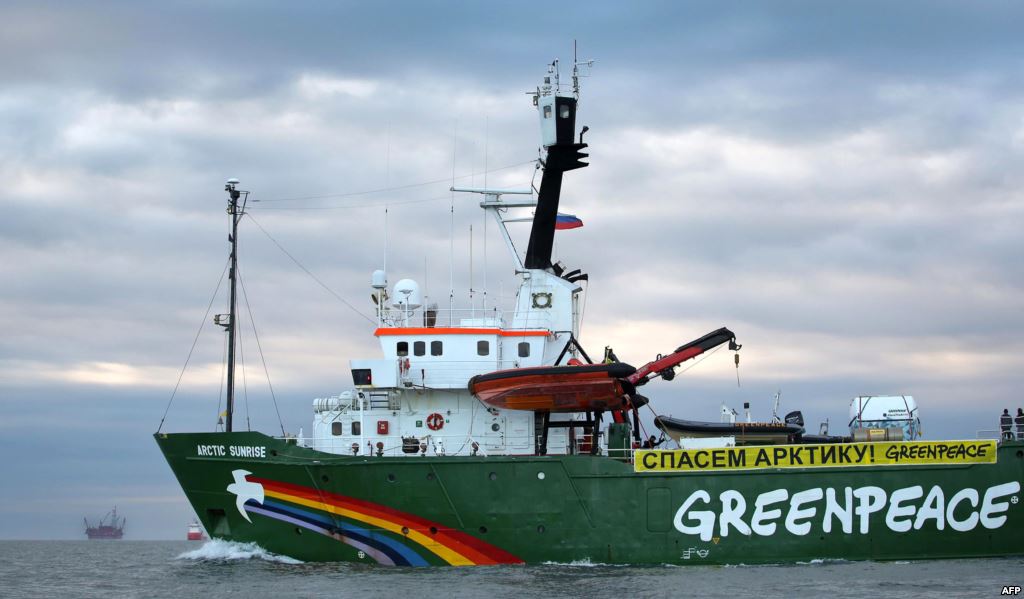
B3029FCC-5228-4E57-B879-F8A83ABF036B_mw1024_n_sAnd up in the darkness of the Russian tundra, 30 Greenpeace activists are languishing in cold solitary prison cells, held without trial for the crime of trying to raise awareness about the destruction of the Arctic by Russian and international oil drilling.

Where is the outrage?

In the book Oil and Honey, McKibben ingeniously compares corporate behavior to bee behavior.  Corporations are like bees, he says, in being relentlessly “simple” and focused on their one crucial task—for bees, making honey; for corporations, making profit.

They don’t change their focus, no matter what.

But humans are more complex than that.  We can change and adapt to new circumstances.  We can recognize and act upon moral imperatives.  We don’t have to follow suicidal corporations blindly over a cliff of their own making.

Although it’s true that the alarming dependence of Americans on screens of every size can get in the way of a connection to the natural world, on the other hand, the fact that so many people are networked together through the media presents great opportunities for activism and change.

With my students this semester, I’ll be thinking about how to harness the power of the media to create a different kind of swarm—not following our current corporate leaders, but moving in an entirely different direction.

We’re not alone—there are many groups working on this now, from the Transition Town movement to the Pachamama Alliance to even such formerly mainstream organizations as the Sierra Club.

The task: to awaken a critical mass of people, worldwide, to the reality that we are living in an end-time of biblical stature; and to get them to understand that we have the power to change the storyline from doom-and-gloom cataclysm to a positive shift into a whole new relationship of humans to our planetary home.

Working cooperatively, bees are able to turn small grains of pollen into vast tubs of honey.  Human beings can do that too–when we work together for a common cause we can do almost anything.

So what are we waiting for?

images-1