Cupid, go home!

It’s fascinating to me that the Transition Times blog post that has gotten the most attention, by far, is “There’s more to love than Cupid and his arrows,” my Valentine’s Day 2012 post, which has been read hundreds of times since February 14.

Of course, people are always interested in love and romance.  And this is a positive, peaceful essay about being very thankful for the love I have in my life through my parents and children, to the point where I’m not missing romantic engagement.

Truly, I’m not.

There has been a spate of articles lately about so-called “singletons,” men and women who choose to remain happily single.

Some of the articles fret that such people may have troubles as they age, since they have no companions to help care for them.  A recent New York Times Room for Debate series, “Being Alone Together,” explored both sides of the issue, with many of the writers arguing that solitude has significant benefits.

I am not living alone; I am living with my two teenage sons at the moment.  I have to say that I do enjoy the rare times when I have the house to myself, and have no one but myself to please.

When I was in my early twenties, before I married, I lived on my own in Greenwich Village while I studied as a graduate student at NYU.  Although I had never felt confined or fettered while I lived with my parents, the freedom of living alone was fantastic, as was the convenience of living so close to the NYU campus and the stimulation of the Village.

But nevertheless, during those years I felt a tremendous pressure to marry, to have children—to paraphrase Mrs. Ramsay in Virginia Woolf’s To the Lighthouse.

Did it come straight from my ovaries?

It wasn’t like my parents were pushing me at all. But I felt a kind of insecurity about being single, like I was lacking or missing something. I was incomplete.

In those days, the 1980s, there was a lot of talk about how if you didn’t find a mate in your twenties or early thirties, you’d be over the hill and never find one.  Believe it or not!  Stories of unhappy women in their forties abounded—women who had never been married, and were totally, miserably fixated on finding the ever-elusive Mr. Right.

Although I was living alone and perfectly content with my life, I still felt like it was temporary, and I’d better be constantly on the look-out for the man who would come along to complete me and open the door to my real adult life, which could only begin with those wedding vows.

Now, on the other side of two decades of marriage and a divorce, I am once again single and enjoying the freedom, this time without that little Cupidlike imp sitting on my shoulder warning me that I’d better focus on love and get myself hitched.

I have young friends getting married now and of course I wish them much happiness and fervently hope that they will be better marriage partners than my ex and I were for each other.

But I have to say, from my current vantage point it seems rather miraculous that one’s chosen mate at age 25 could still be the perfect partner at age 50.  What an amazing feat to grow together so harmoniously that you still complement and satisfy each other after so many years of married life.

I know it happens; I have witnessed it for myself with others.

I just suspect it’s the exception, not the norm.

I have no illusions about finding—or being–such an exceptional partner in the next chapter of my life.

And you know what?  That’s just fine.

Starving women, American chic style

Barely have the baubles of the Oscars faded into Hollywood history, when the bleak news of the real world comes flooding back in.

School shooting in a high school cafeteria in Ohio.

Keystone XL pipeline permit back on the table.

Rick Santorum is arguing against the separation of church and state, and thumbing his nose at the idea that young people should go to college.

And in case you haven’t noticed, the snowdrops are blooming now in New England–about a month ahead of schedule.

But you know what I found most truly disturbing in my cursory glance at the NY Times homepage today?

The prominent Giorgio Armani ad campaign, depicting two different women, each one more pitifully emaciated than the other.

Look at those protruding collar bones!  The jutting cheek and jawbones!  The stick-thin arms and legs!

If this young woman was in Darfur or Ethiopia, we’d be wondering, with compassion, when she last had a meal.

But because she’s a highly paid model, we relax that compassionate muscle and not only don’t worry about her, but actively admire her beauty.

What kind of beauty standard is it when a young woman has to be literally wasting away to make the grade of approbation?

It would be one thing if the male models were similarly emaciated.

But no.  Look at the male Armani models and you find something else entirely.

These guys are solid, well-muscled, athletic hunks.  Nothing underfed or waiflike about them.

In fact, they’re star athletes!  That’s David Beckham on the left, and a couple of tennis stars below.

The point is that attractive men are strong, athletic and powerful, while attractive women are starvation-thin, and even if they’ve got some attitude, their jutting collarbones give them away.

You know they go and gag themselves to throw up their breakfasts every day.

When they eat breakfast, that is.

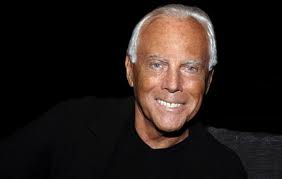
Meanwhile, Giorgio Armani himself looks quite hale and hearty.

Does he have a clue of the kinds of destructive stereotypes he is reinforcing by presenting his models the way he does?

There is nothing beautiful about skin and bones. Ask any concentration camp or famine victim.

It would be one thing if our society projected its thin beauty fetish equally on both men and women.

By presenting women as vanishingly thin, weak, waiflike creatures, while men are robust and muscular, the fashion industry sends an unmistakeable message: beautiful women are weak, admirable men are strong.

Don’t like it?  Who cares, you’re ugly anyway!

Well, Mr. Bones and Sixpacks Armani, since when are you the arbiter of beauty and strength on this planet?  I’ll take a strong woman over a waif any day, and I hope those hunky athletes would do the same.

Cancer blues

This is a post about cancer.

This is a post in honor of all the men, women and children who have died from cancer in the post-industrial age.

This is a post that acknowledges, fully, the extent to which American society has led the way in the extermination of these people–these cancer victims.

How many cancer victims do you know?  According to the World Health Organization, cancer accounts for millions of deaths worldwide each year (7.6 million deaths in 2008, more than died from the Nazi Holocaust).

Cancer is a Holocaust.  It is a disease, or disorder, that cuts across every economic boundary.  It is just as prevalent among the 1% as among the 99%.  It is just as prevalent among the highly educated as among the working class, although of course certain professions are more risky: industrial agriculture, factory work, anything involving radiation.

The truth is that most of the technologies we Americans love the most–cell phones, smart phones, wireless, for starters–are hazardous to our health.  Just like junk food, which we also love.  Or the wanton burning of fossil fuels in our beloved SUVs.

When climate change activists tell us we have to give up our fossil fuels to save the planet, we act like spoiled toddlers.  NO! We will NOT give up our toys!  NO!  We will NOT turn down our themostats, or buy smaller cars, or make a concerted effort to switch to solar.

As parents, we Americans are generally pretty permissive.  We let our kids have what they want, unless it is dangerous for them, or detrimental to their health.

I never let my kids drink Kool-Aid or eat Cheetos, because I knew very well that the junky chemicals in those products were harmful.

But I have let them have cell phones. We have wireless throughout our house.  From what I understand, smart meters, which communicate wirelessly, via electro-magnetic radio frequencies, are in the process of being installed on every home in America.

We can’t afford to eat exclusively organic in my home.  We live near a river polluted with PCBs by GE.  We breathe air labeled “hazardous” on many summer days.

And as a result, we are at risk for cancer, just like everyone else in the developed world.  Everywhere that chemicals are dumped into the environment, everywhere that the ozone layer is thinning, everywhere that the winds blow radiation around, living organisms, including human beings, are dying of cancer at elevated rates.

Last week my Human Rights, Activism and the Arts class at Bard College at Simon’s Rock watched a TED Talk by Eve Ensler, who has (so far) survived a run-in with cancer.  Eve brilliantly makes the point that the inner landscape of cancer mirrors the outer landscape.  What we do to the environment comes back to haunt us in our own bodies.

If we humans, of every class background, are now falling sick in record numbers, it’s a reflection of our sick our environment is.  How sick we have made our environment.

Heal our world, heal ourselves.

Eve Ensler has spent years fighting against the violence that men perpetrate on women’s bodies.  A survivor of an abusive father herself, she has waged a heroic battle against her own demons, and the demons that beset patriarchal cultures worldwide.

She is gearing up now for her biggest effort ever, One Billion Rising, a campaign by V-Day to galvanize men and women to stand up against violence, especially violence against women.

I salute Eve Ensler’s ground-breaking efforts to put her art in the service of social justice, and to link the quest for social justice to environmental health.

If we can’t heal our planet, we will not be able to heal ourselves.

We are the cancer on our planet.

Our own treatment approaches would dictate our eradication.  Radiation therapy: burn it out.  Chemotherapy: poison it to death.

But there is another way.

Look upstream, as Sandra Steingraber has been telling us for the past 20 years.

Find out what is causing the cancer, and CHANGE IT.

Find out why so many women are suffering from violence, and CHANGE IT.

CHANGE.

Where there is a will there is a way.  How sick do we have to become, how sick does our world have to become, before we find the will to change our ways?

Turn those pink ribbons green

I’m going to make a confession.  I never could stand those pink ribbons.  I’ve never done a “Walk for the Cure” or bought daffodils for cancer victims or even picked a cancer-cure-themed postage stamp.

I’m glad to hear that the Komen Foundation has bowed to pressure and is restoring funding to Planned Parenthood, a worthwhile organization if there ever was one.

But in general, the idea of putting the energy and effort of well-meaning citizens behind “the search for a cure for cancer” just irritates me, because let’s face it, we know what causes cancer, and therefore we can do better than cure it, we can prevent it!  Maybe not 100%, but we can take it back to the modest rates that previous generations of human beings enjoyed.

For my grandparents’ generation, a diagnosis of cancer was frightening because it was so often a death sentence, but it was rare. Not one of my four grandparents came down with cancer, and I don’t believe their parents did either.  This isn’t due to some genetic serendipity, it’s just a fact that cancer rates in the first half of the 20th century (and every century before that) were way lower than they are now.

Cancer rates are skyrocketing now thanks to the environmental toxins that humans have introduced into our air, soil and water, and thus our agricultural crops, drinking water and the very air we breathe.  Rachel Carson saw the effects of DDT on birds, and gave the warning just before she succumbed to cancer.  

We may have removed DDT from the US market, but it’s still being used in other countries, and here it has been replaced by a whole host of alphabet-soup chemicals, each one more potent and carcinogenic than the last.

If you really want to make a difference in the war against cancer, forget about those ridiculous pink ribbons.  Use the power of your wallet and your ballot to insist that the government step up and do its job in regulating the industrial agriculture sector.

Or better yet, let’s allow the specter of industrial agriculture to fade away into the dustbin of the 20th century, and start a real “green revolution,” dedicated to the health and well-being of our planet and all her denizens.

What color is your ribbon?  Mine is green.

Canaries in the Roundup Ready Fields

This morning I woke up with the phrase “canaries in the coal mine” playing over and over in my mind.

Maybe it’s because one of the last things I read before going to sleep last night was an article about the harmful effects of methylmercury in songbirds.  Methylmercury is the organic form of mercury, a biproduct of coal burning, which falls to the ground with rain, gets into the groundwater and begins to make its way through the food chain, starting with leaves, snails and worms, and going up into birds, fish and mammals.

Mercury poison is slow and insidious, showing up in erratic behavior and a kind of deadly dullness in birds and other animals.

“Songbirds with blood mercury levels of just 0.7 parts per million generally showed a 10 percent reduction in the rate at which eggs successfully hatched,” writes Anthony DePalma in the New York Times. “As mercury increases, reproduction decreases. At mercury levels of greater than 1.7 parts per million, the ability of eggs to hatch is reduced by more than 30 percent, according to the study.

“Over all, birds in contaminated sites were found to be three times as likely to abandon their nests or exhibit abnormal incubation or feeding behavior. In some nests, the chicks seemed to have been affected most; they vocalized less and did not beg as aggressively to be fed.

“Such consequences mimic the effects of mercury on humans whose primary contact with the toxin is through the consumption of fish. The contamination can be passed to children in the womb or while they are nursing, damaging their nervous systems and impairing their ability to learn.”

Still mulling this information over, thinking about the mysteriously rising rates of autism, Asberger’s and other neurological disorders in our children, I poured myself a cup of coffee and opened up Facebook, often a good source of information about what is on people’s minds on any given morning.

At the top of my news feed, I found several glaring stories about Monsanto, the biggest and baddest of the industrial agriculture corporations.  Much has been written about the evils of GMO crops, terminator seeds, and the effects of Roundup on the environment.  But now, as with mercury poisoning, we’re beginning to realize how glyphosate, one of the main ingredients of Roundup, is infiltrating water and food and making its way up the food chain—to us.

Glyphosate is being blamed for infertility, mental illness, decreases in beneficial gut bacteria, and cancer.  Of course, it’s hard to find large-scale, reliable studies documenting these side effects, because no one spends more money than Monsanto in discouraging research that might affect its sales.

And Big Pharma is also along for the ride, since the more sick people, the merrier the cash register rings.

Yesterday I went for a walk on the golf course that sits in one of the most beautiful pieces of land in my neighborhood, a flat plain with the Housatonic River looping through it.  As always, I was struck by the complete absence of broadleaved plants in the thick grass of the course.  Not a dandelion; not a plantain; nada.  And nary a bird, either, except for a few stray chickadees chirping in one of the few thickets remaining by the river.  A microcosm of the Roundup Ready world we live in.

It strikes me that we are far beyond the canary in the coal mine moment now.  The canaries have died…but we are still advancing into the darkness, taking our chances, going on a toxic mixture of blind faith, naïve optimism and sheer stupidity.

The politicians have been paid to keep their eyes shut, and the rest of us don’t want to see what’s right in front of us.  Most of us who do see don’t act.

Until now.  Tomorrow there will be a big protest in lower Manhattan, in front of the Courthouse on Foley Square, where a major lawsuit has been brought against Monsanto by the Organic Seed Growers and Trade Association (OSGATA).

It’s no secret that Monsanto has used harsh bullying tactics to force farmers to use its expensive artificial seeds, fertilizers, pesticides and herbicides—the rash of farmer suicides in places like India and South Korea have borne mute testimony to the despair that comes of the resulting debt bondage.

European farmers have been more savvy about keeping Monsanto and its GMO crops at bay, and although we in the U.S. have been fairly passive until now, the times they are a’changing.

Listen to the combative tone in OSGATA President Jim Gerritsen’s voice as he rallies his 300,000 members to stand up for their rights:

“Today is Independence Day for America.  Today we are seeking protection from the Court and putting Monsanto on notice.  Monsanto’s threats and abuse of family farmers stops here.  Monsanto’s genetic contamination of organic seed and organic crops ends now.  Americans have the right to choice in the marketplace – to decide what kind of food they will feed their families – and we are taking this action on their behalf to protect that right to choose.  Organic farmers have the right to raise our organic crops for our families and our customers on our farms without the threat of invasion by Monsanto’s genetic contamination and without harassment by a reckless polluter. Beginning today, America asserts her right to justice and pure food.”

A bus for farmers and allies from Columbia County will be leaving for New York at 6 a.m. tomorrow morning (meeting at the old Walmart parking lot at 351 Fairview Ave in Hudson) to join the protest in front of the federal courthouse.  I’ll be in my classroom tomorrow, but my heart will be at Foley Square.

How many canaries have to die before we wake up?

Sex 101: From Plan B to Pleasure

I have mixed feelings about the decision of Secretary of Health Kathleen Sebelius to overrule the FDA’s recommendation to allow over-the-counter sales of Plan B, without any age restrictions.

On the one hand, the knee-jerk liberal in me says wait a minute–access to contraception in any form should not be restricted.

On the other hand, it makes me a little nervous to think about young kids–say, 12-year-old girls–being able to buy morning-after pills as casually as they might buy cold medicine.

Our society is already sexualizing young girls way more than I think is healthy.  If Plan B were widely available, it might be used as just another reason why girls should open themselves up to sex at a younger age.

Another part of my hesitation comes from knowing full well that Big Pharma is pushing over-the-counter (OTC) sales just to make more profits on the drug.  I don’t think they are really that concerned with the welfare of young women.

Rather than simply making Plan B available OTC, I would like to see a national conversation (let’s call it a national general assembly) on the issue of the hypersexualization of youth, on the one hand, and the with-holding of sex education and contraception, on the other.

It saddens me that students in my gender studies classes are still reporting that sex education in their high schools consisted mainly of scare tactics ranging from “have sex before marriage and you’ll go to hell” (Catholic school) to “have sex and you’ll get disgusting STDs” (public school) to abstinence-only “just say no” programs.

In an age where the answer to any question is readily available on the Web, we owe it to our teenagers to present these issues in much more depth.  We should be discussing sexuality in all its multivalent nuances, from issues of sexualized violence (what happens if you say no and he doesn’t listen?) to the pros and cons of each of the many contraceptive options, to what I see as very often the missing link in contemporary discussions of sexual relations: pleasure.

Sex isn’t just about contraception, it’s not just about STDs, it’s not just about violence, it’s not just about worrying over drawing limits of one kind or another.

It’s about pleasure.

Her pleasure as much as his.  Mutual pleasure.  Mutual desire, mutual satisfaction.

Any sex ed worth its salt needs to be honest with young people, both boys and girls, about why sex makes the world go round.  It shouldn’t just be discussed in terms of threats, warnings and prohibitions.

Sex for pleasure is one of those defining human characteristics that too often gets lost in discussions of Plan B, abortion rights, and HIV-AIDS prevention.  These are all important issues, but let’s not lose sight, along the way, of what it’s all about.

The drug companies have not yet figured out how to package pleasure.  Let’s hope they never will.

You can’t evict an idea whose time has come

My title comes from the Occupy Wall Street website, posted on a gray, gloomy morning after the police eviction of protesters in Liberty Park.

Occupations are going on in cities and towns in all 50 states now.  What the mayors and police chiefs of these locales need to understand is that the more they try to contain and stamp out this protest movement, the faster it will spread.

Beatings, gassings, intimidation, arrests, evictions…history has shown time and again that the human spirit refuses to be quenched by such brutality, especially when we face the firing squad together.

Occupy is a “leaderless movement”; it’s multigenerational and cuts across many social differences that have previously been used by the status quo to divide us.

United by a fierce and ardent hope that refuses to be extinguished, the Occupy protests all across America call on each of us to stand up in support of a new American dream.

In this new vision, our government representatives will put the well-being of the majority ahead of any narrowly defined special interests.

This means that the health of our citizens will come before the profits of industries like agriculture and energy. It means that the health of our global environment will be more important than corporate competition for resource extraction.

It means that the social safety net will be expanded and strengthened, not allowed to fray or be deliberately shredded.

It means that American public education will once again rise like a beacon throughout the world, giving all children, regardless of their social background, the knowledge, tools and creativity to move boldly and joyfully into the 21st century.

It means that our democracy will once again be broadly participatory.  We are done with politicians who are slaves to their corporate owners.

And no, we will not accept higher taxes on the working families who can least afford to bear the brunt of holding our creaky and corrupt system together.

We want a new system, with a radical reorganization of priorities.  Let our foreign policy be run by diplomats, not by bombers and drones.  Let an age of international cooperation in the service of urgent global needs begin.

Working together across borders, we can solve the world’s problems and move forward into a new era of sustainable, widespread prosperity.

Truly the Occupy protesters have it right.  You can’t evict an idea whose time has come.

Resisting the Energy Vultures

Today’s New York Times Sunday Review piece by White House correspondent Mark Landler, “A New Era of Gunboat Diplomacy,” gives disturbing insight into the mindset not only of the men and women who preside over national foreign policies, but also into the media lapdogs who cover them.

Landler reports that China and the U.S., along with practically every other country in possession of a serviceable Navy fleet, are entering into “a new type of maritime conflict — one that is playing out from the Mediterranean Sea to the Arctic Ocean, where fuel-hungry economic powers, newly accessible undersea energy riches and even changes in the earth’s climate are conspiring to create a 21st-century contest for the seas.”

Secretary of State Hillary Rodham Clinton, one of Landler’s sources, explains blandly that “This hunt for resources is going to consume large bodies of water around the world for at least the next couple of decades.”

Clinton has got the right metaphor there.  What Landler describes all too flippantly as “a watery Great Game” could well indeed “consume large bodies of water around the world.”

What neither Clinton nor anyone else interviewed for Landler’s article bring up is the cardinal question:  When the game is over, what will be left of the living beings that used to populate those waters in unimaginably vast numbers?

Landler describes the navies and drill ships of countries from China and the U.S. to Turkey and Israel jockeying for control of huge troves of oil and natural gas deposits that have been discovered beneath the sea.

Of especial interest to these circling energy vultures are the deposits beneath the Arctic ice.  Landler reports that “melting ice has opened up the fabled Northwest Passage,” making resource extraction in the Arctic more viable than before.

This offhand and veiled reference to climate change provides a window into the sociopathic mindsets of the men who rule the Energy Kingdoms.  The cowboys of global fossil fuel extraction are essentially warlords, relying on the national armies of their nominal countries of origin to clear the way of opposition to their reckless drilling.

From their warped point of view, global warming can be seen as a bonus.

If the Arctic ice melts, so much the better–it’ll make it easier to get those billions of barrels of oil out of the sea and into the global market.

No matter that deep sea drilling has been proven to be highly risky and lethal to the environment.  Hello, does anyone remember BP in the Gulf of Mexico?
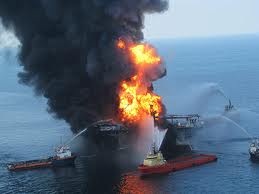
Imagine a spill like that going on in frigid northern waters.

Imagine billions of barrels worth of oil or gas gushing into the Arctic Ocean, to be picked up by the currents and spread all over the world.

Imagine the destruction of marine wildlife, and indeed the entire marine food chain, that this would entail.

NY Times reporter Landler doesn’t waste time contemplating such grim scenarios.  The focus of his article is “gunboat diplomacy,” a glamorous new competition among national navies to dominate the oceans, seen strictly in utilitarian terms.  His only mention of fish, or indeed any maritime creature, is a brief aside that icebreakers are being sent into the Arctic circle by countries like China and Korea, “to explore weather patterns and fish migration.”

Landler’s article, which is billed as “news analysis,” reveals the extent to which the chillingly disturbing values of the Energy Kings have permeated not only the governments who are supposed to be regulating their industry and safeguarding the natural world, but also the media “watchdogs,” who are obviously sitting cozily in the laps of Big Oil.

Questions of environmental sustainability and health are simply outside the picture for these folks.  It’s not relevant to them whether or not the polar bears survive.  They don’t care about the coral reefs, or the plankton.  They don’t care about whales.  Their only concern is the bottom line.

What is the most effective opposition to such monomania?

Trying to think of persuasive strategies gives me a touch of hysteria.  We could appeal to their love of seafood!  Wouldn’t they miss their caviar and oysters?

They will figure out how to grow these in tanks.

We could appeal to them as property owners: what’s going to happen to their beachfront homes, not to mention their office towers in coastal cities around the world, when the waters begin to rise?

They will have armies of lawyers figuring out ways to make the taxpayers bear the burden of their lost properties.

We could appeal to their brand image.  Does Exxon-Mobil really want to go down in history as the biggest perpetrator of maritime omnicide in world history?

They will throw this back at us, and rightly so: they were just doing their job of giving the consumer what she wants, a steady supply of affordable energy.

It’s true that we all share the blame for this tragedy unfolding in front of our eyes. It’s also true that we have the power to stop it.

How? We need to demand that the rights of the denizens of the natural world be respected.  A new Declaration of the Rights of Nature has been written–it needs to be circulated, popularized and upheld.

We need to insist that our politicians report to the people, the taxpayers, not to the corporations. Yes, people want energy; we want cars, we want electricity.  But we want to direct our tax dollars into R&D of renewable sources of energy–solar, geothermal, wind–not into dangerous oil and gas extraction or nuclear fission, and not into dirty coal mining either.

We need to call the mainstream media on its dereliction of duty when it presents one-sided reports like Landler’s industry white paper today.

Extracting those billions of barrels of oil buried below the earth’s surface miles beneath the sea would not just be a death sentence for marine life.  It would drive the nails on the human coffin as well, along with all the other species on this planet who will not be able to adapt to the erratic climate extremes of floods, droughts and storms that will inevitably ramp up once the planet heats beyond the point of no return.

Under these circumstances, if the governments won’t listen, radical action may prove a necessity.  The French Resistance to the Nazis were considered criminals in their own time and place, but look like heroes to us today, with the power of hindsight.

We are in the midst of a new, much larger Holocaust now, one that threatens not just one group of people, but all of us, and our natural world as well.

Each of us has a choice to make.  You can go along with the crowd, watching impassively as the train leaves the station for the gas chambers, or you can dare to raise your voice in opposition, and maybe even to throw a wrench in the gears of power.

Each of us is going to die sooner or later.  Wouldn’t you rather die knowing you had done your utmost to make a difference, to safeguard the world for your children and all life on this planet?


An older form of Deep Green Resistance rises from the rainforest. Euramericans, ignore this at your peril.

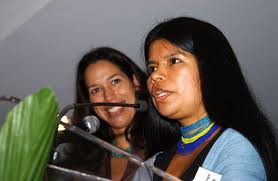
If you want to see something really inspiring, watch and listen to Patricia Gualinga, an Achuar woman from the Ecuadorian rainforest, talking about how her people are standing firm on the frontlines of the siege of the forest by multinational oil extraction companies.

Listening to this indigenous activist, you see shades of all the millions of indigenous peoples around the world who lived in harmony with their environment, respecting and sustainably stewarding their lands.

To say that this balance was altered when the Europeans began their voyages around the world is not to blame or guilt-trip.  It is simply to speak the truth.

To say that the European Enlightenment period, which gave us Manifest Destiny, “I think therefore I am,” the closing off of the commons and the capitalist drive to resource exploitation, was actually a time of deepening darkness, is simply to pronounce the self-evident.

While we contemporary heirs to this 500-year history may be individually blameless, collectively we have been bystanders who have followed the paths of least resistance and allowed the destruction of our planet to proceed apace.

The Pachamama Alliance, on whose behalf Patricia Gualinga spoke last week, is an unusual partnership between Euramericans and these South American indigenous survivors, warriors who are defending the great Amazonian rainforest, the dynamic lungs of the Southern Hemisphere, against rapacious encroachers.

We need another alliance like this between the peoples of the far North and those Euramericans who know that destroying the Canadian boreal forests would be equally catastrophic.

The Pachamama Alliance has developed a powerful model of collaboration across the boundaries of nationality and race in the service of a higher vision of earth-based spiritual activism.

This is a vision that needs to grow exponentially in the coming years.

For too long we have been held captive by the media-induced trance of relentless growth and consumerism.  It’s time to break the spell and allow the pendulum of human evolution on this planet to swing back to balance.

To do this, we need to listen to new voices, heed new calls.  We Euramericans have had our shot at leading the world our way.  It has been a disaster.

It’s time to cede the stage to our indigenous sisters and brothers, and try following their lead for a change.  This is a whole new level of Deep Green Resistance, based on creation rather than destruction.

 It’s time to co-create a new story with the indigenous peoples of the planet, who still know how to live harmoniously with the natural world.

Listen to the Pachamama story, and then it’s up to you–what comes next?  What role will YOU play?

A teachable moment at Penn State?

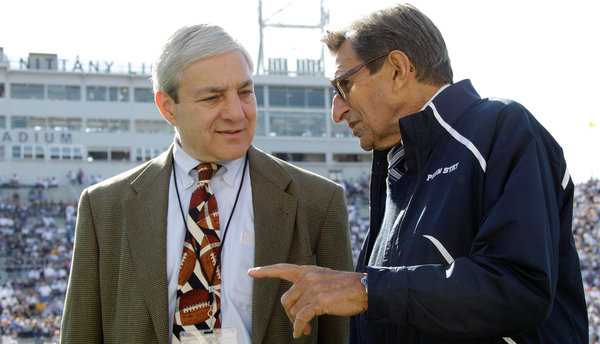
What is most shocking to me about the current scandal at Penn State (sports and sexual abuse of boys, in case you hadn’t heard) is the response of the students to the announcement last night that longtime head football coach Joe Paterno was fired.

Do the hundreds of students who poured into the streets to smash car windows and pull down lamp posts believe that it was OK that the coach turned a blind eye to the repeated rape of boys, some as young as 10 years old, in the university’s football locker room showers?

Do they want to be part of an institution that condones this kind of behavior?

If anything, the students should have taken to the streets to demand Paterno’s resignation, along with that of his boss, Penn State president Graham Spanier.

But no.  To these rampaging students, what happened in those showers with the pedophile assistant coach Jerry Sandusky was less important than hanging on to their beloved head coach.

This is reminiscent of so many other, similar scandals, in which men’s loyalty to social groups, whether it’s the military, a fraternity, a gang, or a football team, is so strong that it completely skews their independent moral compasses.

If you presented a group of unaffiliated students with a scenario like what we’ve just witnessed at Penn State, and asked them whether assistant coach Mike McQueary was right to blow the whistle on Sandusky after witnessing him rape a 10-year-old boy in the football locker room shower late one night in 2002, I think most of those students would say McQueary was in the right.  They would also most likely come to the conclusion that it was the duty of McQueary and Sandusky’s boss, Joe Paterno, to report the crime.

But obviously things don’t look so clearcut when various conflicting loyalties come into play.  When McQueary realized that Paterno and other school officials were not going to report Sandusky, should he have pursued the matter independently–even when it might very well have cost him his job?

Of course, the answer is yes.  How could McQueary and Paterno sleep at night knowing that Sandusky was using university facilities to lure in boys?  Boys, who, by the way, he met through a charity he belonged to, the Second Mile Foundation, which purports to help disadvantaged children in Pennsylvania.

It saddens but does not surprise me that the students at Penn State who protested the firing of Coach Paterno are willing to put their team loyalty ahead of the pursuit of justice and integrity in this case.

It’s very similar to the loyalty of the Catholic priesthood, which chose to protect its own rather than stand up for the rights of the young children, mostly boys, who were being molested by pedophile priests for years and years.

Or like the loyalty of fraternity boys who would never rat out a “brother” who raped a girl during a party.

I’m sorry, guys, but this is not brotherhood.  It’s bullying: one person taking advantage of someone with less social power or physical strength, and a whole bunch of bystanders letting it happen.

This is what the Penn State students are proud of?  They should be ashamed.

At least Joe Paterno, at 84, does seem to be showing some signs of moral rectitude.  “This is a tragedy,” he said yesterday. “It is one of the great sorrows of my life. With the benefit of hindsight, I wish I had done more.”

Yeah, Joe.  You may have had more football game victories than any other college coach, but you sure could have done more.