Stepping Out With Confidence on International Women’s Day 2015

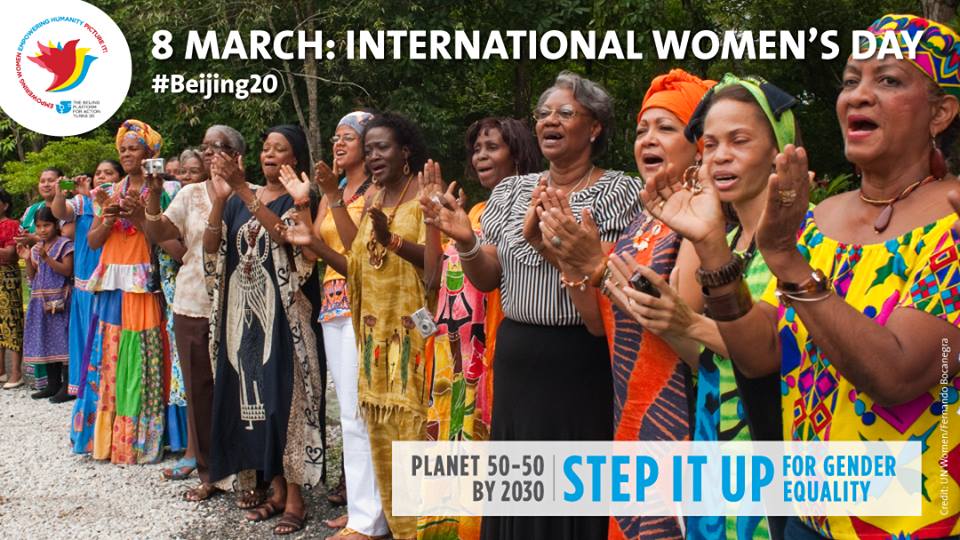
Although far less widely known and celebrated in the U.S. than Valentine’s Day or Mother’s Day, International Women’s Day is a much more interesting holiday.

It is one of the few truly global holidays, observed in most countries around the world (hence the prominence it gets at the United Nations, that international enclave in the heart of New York City).

10547569_10152665160926905_6098336329294702328_n

Unlike Mother’s Day and Valentine’s Day, IWD is not a romantic or family-oriented holiday. On International Women’s Day, women accept recognition for their hard work and achievements in both the public and private spheres, and gather to advocate for further advancement down the road to full gender equality.

Gender equality looks different depending on where in the world you are located. But at its core is one of the fundamental principles of human rights: that no human being should be discriminated against on the basis of their physical attributes.

Even in the U.S., supposedly a bastion of liberal values, we have a long way to go before we arrive at the goal of gender equality. This is partly a vision problem: there is still a fair amount of confusion over what a society in which men and women were treated equally would look like.

In every society in transition, there is anxiety about change from those who have been benefiting from unearned privilege (in the U.S., that would be white males, especially of the Christian variety). Giving up privilege is hard.

It was good to see Sheryl Sandberg and Adam Grant make the case in The New York Times this week about why gender equality, “in the boardroom and the bedroom,” will make both men and women happier, healthier, more successful and less stressed out.

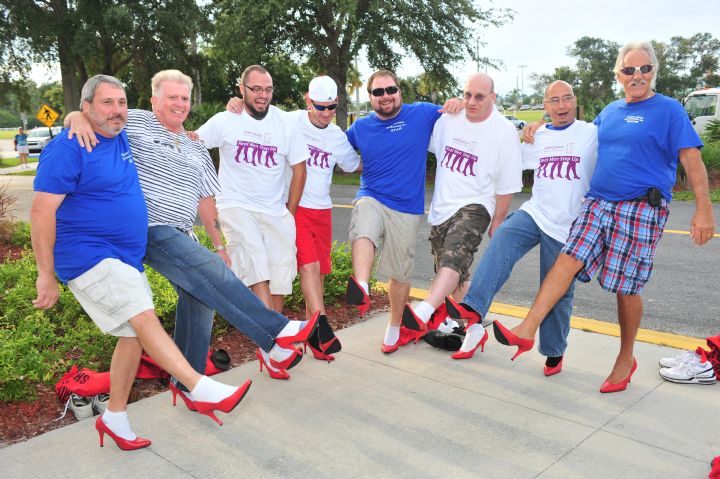
It was also good to see a group of Afghan men taking the unprecedented step of standing up for women’s human rights in their country by donning burkas themselves—in much the same vein as the “Walk A Mile In Her Shoes” campaign that has men marching together in women’s high heels to protest sexual assault.

DSC_0027

Burkas and high heels are very different in intention—the one aimed at completely covering up a woman’s body and face, the other aimed at accentuating and drawing attention to women’s legs—but similar in effect: these are dress codes that hamper women’s ability to stand strong and step out comfortably and confidently into the world.

I know Western women who will argue that they feel more confident wearing their heels, and I’m sure there are Afghan women who prefer to step out in public shielded by their burkas. But this has everything to do with the world in which they operate, dominated by an often hostile, or at least aggressively attentive male gaze. It’s not about their own comfort in their own bodies.

No, we’re not going to get back to the Garden in which Adam and Eve romped about gaily without so much as a fig leaf coming between them and their lovely natural surroundings.

But this International Women’s Day, let’s reaffirm the basic principle that all human beings are created equal and deserve equal human rights, no matter what they look like and no matter where they live—beginning with the right to step out confidently into a affirming, welcoming world.

As U.N. Secretary General Ban Ki-Moon puts it, “To be truly transformative, the post-2015 development agenda must prioritize gender equality and women’s empowerment. The world will never realize 100 per cent of its goals if 50 per cent of its people cannot realize their full potential.”

Amen to that! And as the International Women’s Day 2015 theme says, it’s time to “Make It Happen!”

The Berkshire Festival of Women Writers: A Big Tent for Honoring and Encouraging Women’s Creative Voices

Stockbridge, MA.  Photo J. Browdy 2015

Stockbridge, MA. Photo J. Browdy 2015

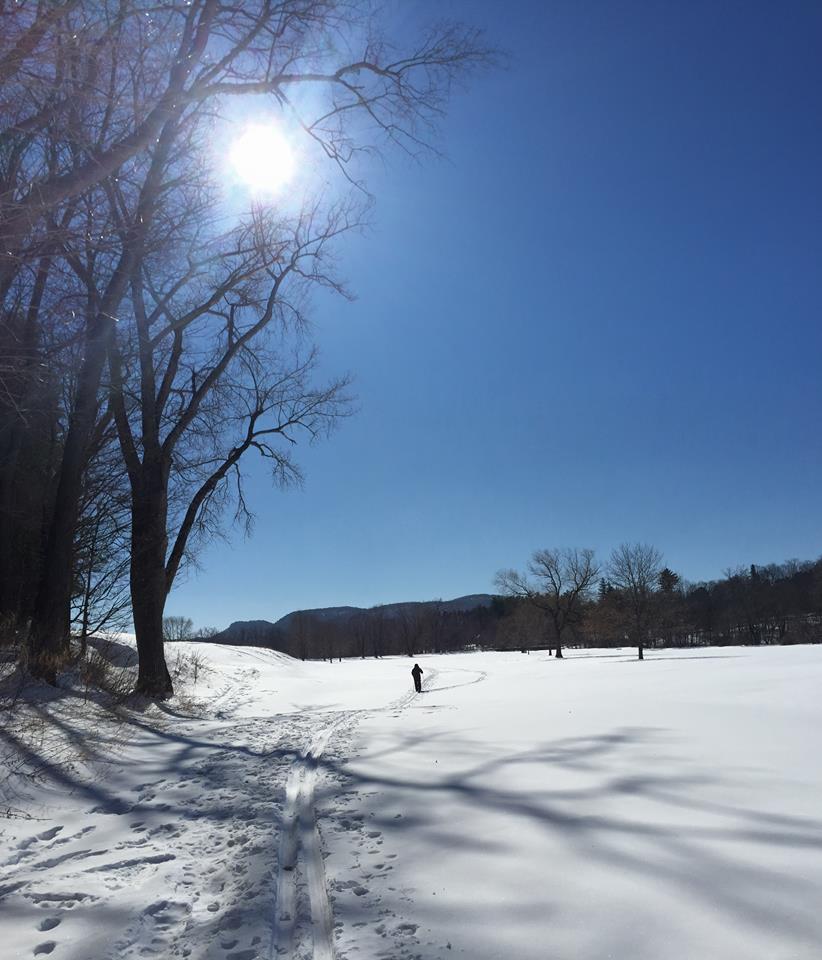
We’re still in the deep-freeze here in the Berkshires weather-wise, but the bright sunshine is telling us that underneath the ice and snow the buds and shoots of spring are stirring.

And we creative women of the Berkshires are stirring too, as we launch ourselves today into the big beautiful Berkshire Festival of Women Writers, the biggest celebration of Women’s History Month happening under one banner anywhere in the U.S.A.

Do you know of any other grassroots Festival that spreads itself out across the whole month of March, with an event celebrating women’s creative expression and unique perspectives every single day from March 1 – 31?

We can do it here in the Berkshires because of the generous talent of our creative women, who are willing to step up and out into the spotlight to share who they are and what they know with our appreciative audiences; and because of the generosity of our sponsors and donors, who know that when more women and girls share their ideas and talents in the public sphere, the whole community benefits.

Mary Pipher used the figure of Shakespeare’s Ophelia to describe the loss of confidence and self-esteem that can often undermine teenage girls, just as teen boys are becoming louder and more self-confident. More recently, research has shown that while many boys have a socially reinforced tendency to take risks, many girls tend to keep their hands down, literally and figuratively, unless they’re absolutely sure they have the right answer.

This means that teen girls and young adults often have less practice in taking the risk of speaking out in public settings, and over time, they tend to fall into the habit of observing rather than participating, following rather than taking the lead.

I know, because I was that girl. As a child, my mother describes me as being a chatterbox who loved to show off my knowledge—for example, I had an encyclopedic knowledge of the names of local birds and flowers, which were taught to me by my grandmother, a biologist and nature lover. I could rattle off the names and characteristics of a hundred birds, and I knew where to find dozens of different native plants that grew in the woods and fields around our home.

JB at 15But that generous volubility did not accompany me out of childhood. As a teenager I was the girl who got an A on every paper, but almost never spoke in class. When I did take the risk to speak, I was overcome with a fear that set my voice trembling and a flush rising uncomfortably to my face. It was much easier to just stay silent.

It took me many years of forcing myself, as an adult, to step into the spotlight to teach, give presentations and lead community groups, before that unwarranted stage fright dissipated. For many other women, who don’t have opportunities in their professional life to speak up, the habit of silence and hanging back persists.

I would like to believe that with more and more women entering the workforce and doing well in their careers, this gender imbalance is fading, but I know that’s not yet true. Even the fabulously successful Sheryl Sandberg is aware of how important it is that women and girls are encouraged to take the risk of speaking their minds, and to do so with poise and confidence.

That is my underlying goal with organizing the big Berkshire Festival of Women Writers: to open up multiple opportunities for women and girls in my home community to inspire each other and their audiences with their creative voices, in order to build a momentum that will continue to grow and develop year-round, flowing out into our communities in ways that we can’t entirely predict.

Amber Chand performing her one-woman show, "Searching for the Moon: A Heroine's Journey" in a BFWW event

Amber Chand performing her one-woman show, “Searching for the Moon: A Heroine’s Journey” in a BFWW event

Men and women may be equal, in theory at least, but we are not the same. We have different sensibilities, born of our different biological composition and our different experiences—differences that should be celebrated and honored.

I am looking forward to a joyful month of celebrating women’s creativity in the Berkshires with many friends, neighbors and visitors. The momentum we build, event by event, will send us soaring into our much-anticipated springtime.

21st Century Leadership: Learning to Love in the Digisphere

Life in the digital age is accelerated up to speeds that previous generations (say, anyone born before 1900) would have found incomprehensible. The demands on our time are more intense than ever before, and decisions made in the blink of an eye or the tap of a finger can continue to reverberate for months or years, spinning out of control if caught up in the wild eddies of cyberspace.

We all know about cyber-bullying by this time—how it can drive some people, especially vulnerable young people, to despair and suicide.

We’ve also learned how dangerous random tweets and photo messages can be in a digital world where nothing on the Internet is really private.

This environment calls for leaders of tremendous personal strength and integrity—but it is not an environment that creates such people. Digital life–with its endless distractions, easy avatars and a million ways to cheat–seems to breed a kind of aimless cynicism. Even people who are motivated enough to attend retreats on “finding your purpose” are likely to be surfing through their lives, perpetually seeking the next answer or thrill or coveted consumer item.

In such an environment, how can we mentor people of all ages to become the leaders the world so desperately needs now?

We might begin by discussing the qualities we’d like to see in our leaders, and thus in ourselves. Although we still cling to a heroic ideal of leadership, enjoying the feeling of following a charismatic, forceful and self-confident leader, the truth is that leadership in our time is becoming much more decentralized.

The saying “We are the ones we’ve been waiting for,” attributed to the Hopi, has never seemed more apt than now, when each of us has the potential to assume a leadership role in our digital and real-world lives.

For example, are we going to join a digital mob assault of someone who is vulnerable? Or will we refuse to join in the feeding frenzy, or even take a stand in defense of the person who’s down?

How can we use the power of the World Wide Web to enhance thoughtful, in-depth communication, rather than allowing it to serve as a platform for name-calling and threats?

marquee

There is a world of difference between movement-building through the media, as in the #BlackLivesMatter movement or One Billion Rising, and vicious personal attacks on individuals that can quickly escalate into the digital equivalent of terrorist attacks.

The technology that enables this behavior is so new that we have not yet had time to establish codes of conduct or to fully weigh the ethical considerations of a Twitterized world.

Giving children access to the Web without the guidance of their parents or teachers is the equivalent of letting a teenager get behind the wheel of a car without having any learner’s permit or driver’s ed.

We have a whole structure for training young people about the dangers of alcohol, drugs & sex…but next to nothing in place that mentors and supports them–or us older folk either–in becoming responsible citizens of the digisphere.

And since this is where all of us spend a vast proportion of our waking lives, and where, increasingly, the collective human consciousness is being developed, it certainly seems like an essential place to begin a discussion of ethical, responsible, and purposeful leadership.

Ironically, to understand the digisphere and our place in it, we need to take the time to disconnect. Like a mental cleanse or fast, time spent untethered to the Web is time that allows us to reconnect with our own internal voice, our own inner guidance that has always been there for us, since we were the tiniest of infants.

IMG_9158Human babies know instinctively that they like warmth, gentle touch, smiling faces, eye contact and gentle, friendly voices. These human preferences do not go away as we age. Humans, like other mammals, are hard-wired to love and to enjoy being loved.

This is the kind of experience that it’s very hard for the digisphere to conjure up. For all the online dating services, the Skypes and Google hang-outs, the endless news feeds, there is still nothing that beats personal, real-world human connection.

Of course, any leader today is going to have to be an adept user of the media. But the primary values behind the use of media by a leader worthy of that title must be true to the ancient and ageless human value of love.

Leadership, in essence, is putting oneself forward in loving service to others and the broader community. There is no formula for it, and it will look different in every specific context. But at the base, at the bedrock, a good leader acts out of love.

Can loving leadership be taught and practiced in the digisphere? In the 21st century, this is seeming like an increasingly urgent question.

Skirmishes in the Gaian Wars

I’m trying—I really am—to comprehend all the skirmishes that make up our current Fossil Fuel Wars. Does anyone else find it dizzying to keep up with all the simultaneous fronts? For every piece of good news there’s a downer; for every ray of hope, there’s a big dose of icy cold water to keep us sputtering.

To review just some of what I’ve been aware of these past few days:

President Obama acted to preserve a big area of Alaskan wildlife refuge from oil drilling—Hooray! But he also, at the same time, opened up a huge area of the ocean off the eastern seaboard of the Atlantic for oil drillers—BOO!!

In the same week, President Obama took the opportunity of a state visit to India to push that country to work on lowering its carbon emissions. As reported by The New York Times, the President told his Indian hosts: “I know the argument made by some — that it’s unfair for countries like the United States to ask developing nations and emerging economies like India to reduce your dependence on the same fossil fuels that helped power our growth for more than a century…But here’s the truth: Even if countries like the United States curb our emissions, if countries that are growing rapidly, like India, with soaring energy needs don’t also embrace cleaner fuels, then we don’t stand a chance against climate change.”

I thank President Obama for raising awareness in India about the global importance of reducing dependence on dirty fossil fuels.

But then his next stop was Saudi Arabia, the epicenter of the international oil extraction empire (otherwise known as OPEC), where he and whole passel of American officials kowtowed to the new Saudi King in an all-too-obvious display of how important the fabulously wealthy Saudi monarchy is to American interests, both in the Middle East and at home.

saudi-arabia-oilDoes anyone else notice the immense Sun shining down on the Arabian desert, as well as the Indian subcontinent? How different it would be if President Obama were to use his bully pulpit to urge a transition to solar power, even in the Arabian desert, leaving all those reserves of dirty oil in the ground!

Then there’s the fracking front. Sandra Steingraber and her hardy band of upstate New York resisters are standing firm against a nefarious plan to store volatile gas in unlined salt chambers below the water line in Seneca Lake. Hooray!

But at the same time, the transnational gas giant Kinder Morgan is surveying the forested hills in my own Berkshire backyard, preparing to run a new pipeline through our neighborhood to carry fracked gas from Pennsylvania out to the coast. Supporters argue that the pipeline will make gas in our corner of the world more affordable, but I am not convinced, especially given that I have not heard of any plans to make some of this pipeline gas available here in Berkshire County.

1-direct-kin-der-morgan-route

I just filled my propane tank this month and was shocked to be charged almost $5 a gallon for the gas. Are they price gouging us now to soften us up so we’ll bow down and let their pipeline go through our territory without resistance?

If I sound cynical, it’s because I am.

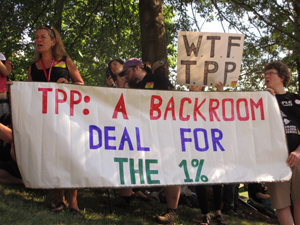
tpp-protestThen there is the Transpacific Partnership front, which has been chugging along largely under the radar of media and public scrutiny for several years now. For all President Obama’s heartwarming rhetoric (and action) to support more vulnerable Americans, his administration is at the same time engaged in negotiating a trade agreement that has been described as “NAFTA on steroids.”

As Lori Wallach puts it, writing in The Nation, “Think of the TPP as a stealthy delivery mechanism for policies that could not survive public scrutiny. Indeed, only two of the twenty-six chapters of this corporate Trojan horse cover traditional trade matters. The rest embody the most florid dreams of the 1 percent—grandiose new rights and privileges for corporations and permanent constraints on government regulation. They include new investor safeguards to ease job offshoring and assert control over natural resources, and severely limit the regulation of financial services, land use, food safety, natural resources, energy, tobacco, healthcare and more.”

The worst part is that if the pact goes through, signatories “would be obliged to conform all their domestic laws and regulations to the TPP’s rules—in effect, a corporate coup d’état. The proposed pact would limit even how governments can spend their tax dollars. Buy America and other Buy Local procurement preferences that invest in the US economy would be banned, and “sweat-free,” human rights or environmental conditions on government contracts could be challenged. If the TPP comes to fruition, its retrograde rules could be altered only if all countries agreed, regardless of domestic election outcomes or changes in public opinion. And unlike much domestic legislation, the TPP would have no expiration date.”

A resistance movement to the TPP is beginning to stir. A modest protest was held earlier this week in New York City by representatives from Doctors Without Borders and the Health Global Access Project, among other groups, focusing specifically on the provisions in the TPP that “will undermine efforts to ensure access to affordable, life-saving medicines in both the United States and abroad,” according to an article in Common Dreams.

The fact that this trade agreement has gotten so far without public oversight—not even Congressional oversight!—is truly frightening. 1984/Brave New World, here we come!

When even Democrats oppose the President’s agenda, risking a public disagreement with the President to stand by their principles, you know something big is at stake.

Whether the issue is oil drilling in the ocean, pipelines over land, or noxious trade deals favoring corporations’ rights above the rights of ordinary Earthlings, human and non-human, we can’t afford to passively assume that our elected representatives are going to look out for our best interests.

We can’t assume that anyone else is going to fight our battles. We have to stand up for what we believe.

No, we can’t fight every skirmish in this interminable battle for a sustainable future. But we have to keep our eyes and our hearts open, and stand ready to take a stand in alignment with our highest values and the better world we know is possible.

Gaia is depending on us. We can’t afford to fail her now.

After Charlie Hebdo: Tuning Out, Tuning In to the Violence that Beseiges Us

When the news of the Charlie Hebdo attack flashed into the headlines last week, with all its chaotic blood, gore and terror, I had a surreal feeling of detachment and déjà vu. Similar scenarios have been hitting us so often in recent months and years—the Boston Marathon bombing…the Times Square attempted bombing….Sandy Hook Elementary School…. Virginia Tech…Ferguson….the list could go on and on, and that’s just the incidents on American soil.

How do we cope with the constant background noise of violence against which our lives play out in the 21st century? How do we avoid either extreme: numbing out/tuning out, or becoming overwhelmed with fear and grief?

If you thought I might have the answer, I’m sorry to disappoint. I don’t know. It seems to me that I go back and forth from one reaction to another, depending on my mental resilience when the latest instance of violence surges into my awareness.

Asterix creator Albert Uderzo, 87, came out of retirement to draw this tribute to the victims of the Charlie Hebdo attack, published in Le Figaro newspaper. Uderzo was where Uderzo is quoted in Le Figaro as saying: “I am not changing my work, I simply want to express my affection for the cartoonists that paid for their work with their lives.”

Asterix creator Albert Uderzo, 87, came out of retirement to draw this tribute to the victims of the Charlie Hebdo attack, published in Le Figaro newspaper. Uderzo was where Uderzo is quoted in Le Figaro as saying: “I am not changing my work, I simply want to express my affection for the cartoonists that paid for their work with their lives.”

If I’m feeling strong and stable, I can hit a balance, which seems like the healthiest response; I can honor the victims with appropriate grief and anger at the perpetrators, while maintaining the psychic distance I need to go about my daily business without being blown away by fear and sorrow.

Is this really “the healthiest response,” though? Or am I kidding myself here? How can it be healthy and sane to be so compartmentalized that I am able to acknowledge the pain and suffering on one hand, while at the same time going on with my life in an ordinary way?

Digging a little further into this, I have to ask: who does it benefit for me to be able to carry on with a stiff upper lip, remaining calm, cool and collected in the face on ongoing tragedy? Does it benefit me, or the status quo of the society I live in, which has generated this endless loop of repetitive tragedy?

What would happen if one day we all suddenly started to feel fully empathetic with the victims of violence—and not just gun violence, or military violence, but also rape, domestic violence, violence against animals, violence against the forests and the waters of our planet?

In the #BlackLivesMatter and #WeAreSenecaLake protests, and now in the #JeSuisCharlie meme and rallies in Paris, we are seeing a hint of the powerful force that can be unleashed by human compassion.

What if I, and other Americans like me, started to actively fight the conditioning that has made us believe that the healthiest, sanest response to ubiquitous violence is to turn our gaze away and keep moving?

What if we began to lean in to the deep wellsprings of compassion and empathy that are our birthright as human beings, and act out of the power we find there?

What if instead of accepting the constant static of violence as a given of modern existence, we began to actively tune in to it, in order to serve—each one of us—as antennae capable of picking up the signal and disrupting it, transforming it from cacophony to an entirely different, new form of activist harmony?

In their own satirical way, the Charlie Hebdo team was engaged in doing just this. They were holding a mirror up to our sick society, and forcing us to gaze at ourselves and recognize the extent of our own complicity in the violence that besieges us.

I believe, with Arundhati Roy, that another world is possible. On a quiet day, I can hear her breathing. But on a typical, violent day, all I can hear is the labored thumping of my own heavy heart.

Photo c. J. Browdy, 2015

Photo c. J. Browdy, 2015

Jesus Christ, Thomas Berry, and the New Shamanism: What the World Needs Now

Christmas Eve. The night of the year that we celebrate the birth of a baby who would grow up to reveal himself as a seer, a man with a direct connection to the Divine.

I believe that we all have the potential to have such a connection. In fact, I think it’s our birthright as humans, and it’s an ability we share with other animals as well.

All of us animals sleep and dream, and during our dreams we experience the same non-ordinary reality that the prophets and mystics have been telling us about—men like Socrates, Jesus or Mohammed who heard the voices of divine spirits.

For the past two thousand years or so, Western philosophy has been working steadily to wall off the connections between the natural world, including other animals, and human beings.

But in our dreams, those walls come tumbling down, as we visit landscapes and mingle with animals whose messages we strive to remember and interpret when we awake.

Thomas Berry

Thomas Berry

I am very intrigued by the recognition of religious scholar and eco-philosopher Thomas Berry that what human civilization urgently needs, in this time of ecological crisis, is to re-open the psychic channels connecting us to our planetary home.

He calls for a revalidation of the “shamanic personality”; shaman referring to a human being who can enter non-ordinary reality at will, and access valuable wisdom from the spirit world (or the Divine, as Western tradition would call it).

Berry argues that every human being is “genetically coded” to have access to the wisdom of the dreamland, whether in sleep or in the trance of deliberate shamanic journeying. And, he says, this is where we are going to find the solutions to the ecological crises we face today.

Change is not going to come from politics and protests, Berry says. It’s going to come through a psychic shift in which “we awaken to the numinous powers ever present in the phenomenal world around us,” which manifest themselves in human beings in our most creative moments. “Poets and artists continually invoke these spirit powers, which function less through words than through symbolic forms,” he says, continuing:

“In moments of confusion such as the present, we are not left simply to our own rational contrivances. We are supported by the ultimate powers of the universe as they make themselves present to us through the spontaneities within our own beings. We need only become sensitized to these spontaneities, not with a naïve simplicity, but with critical appreciation. This intimacy with our genetic endowment, and through this endowment with the larger cosmic process, is not primarily the role of the philosopher, priest, prophet or professor. It is the role of the shamanic personality, a type that is emerging once again in our society.

Tree spirits.  Photo c. J. Browdy 2014

Tree spirits. Photo c. J. Browdy 2014

“More than any other of the human types concerned with the sacred, the shamanic personality journeys into the far regions of the cosmic mystery and brings back the vision and the power needed by the human community….

“The shamanic personality speaks and best understands the language of the various creatures of the earth….This shamanic insight is especially important just now when history is being made not primarily within nations or between nations, but between humans and the earth, with all its living creatures….

“If the supreme disaster in the comprehensive story of the earth is our present closing down of the major life systems of the planet, then the supreme need of our times is to bring about a healing of the earth through this mutually enhancing human presence to the earth community.

“To achieve this mode of pressure, a new type of sensitivity is needed, a sensitivity that is something more than romantic attachment to some of the more brilliant manifestations of the natural world, a sensitivity that comprehends the larger patterns of nature, its severe demands as well as its delightful aspects, and is willing to see the human diminish so that other lifeforms might flourish.”

Another way to name the “sensitivity” Berry is talking about here is, quite simply LOVE.

The same love practiced and preached by Jesus Christ, but expanded to include the entire earth community, not just the human branch.

tree heart

Tree heart. Photo c. J. Browdy 2014

I am continually amazed by the generosity with which the natural world gives and gives to support the cause of a flourishing earth community. Death comes that life may continue. A clearcut forest patiently begins the work of recreating itself, from the soil bacteria on up. There is no such thing as guilt or blame in the natural world, only endless patience and a resilient creativity, always seeking better paths towards the goal of abundance and teeming myriad forms of life.

Thomas Berry says that we humans, as part and parcel of the earth community, are genetically coded to participate in this great unfolding of exuberant life.

For a long time (at least since the time of Gilgamesh, who harshly slew Humbaba, the guardian of the forests, and cut down an entire cedar forest just because he could) human culture has been working tirelessly to sever our connection to the divinity immanent in the natural world.

“In relation to the earth,” Berry says, “we have been autistic for centuries.”

seeingBut now, “the planet Earth and the life communities of the earth are speaking to us through the deepest elements of our nature, through our genetic coding….Only now have we begun to listen with some attention and with a willingness to respond to the earth’s demands that we cease our industrial assault, that we abandon our inner rage against the conditions of our earthly existence, that we renew our human participation in the grand liturgy of the universe” (Berry, The Dream of the Earth, 210-215).

There is a lot to ponder here. Berry seems to be proposing that in our genetic make-up is an ability to communicate on a deep level with the earth, including other animals and life forms. Under the spell of Western civilization, we have allowed ourselves to become alienated not only from the natural world, but also from our own innate ability to commune with “the dream of the earth,” through our inherent shamanic/psychic powers. We have been content to delegate the connection to the Divine to others—prophets, seers, priests—rather than to cultivate within ourselves that “sensitivity” to divine inspiration and that access to the powerful creative pulse of the universe which we all experience in dreams.

This alienation has led us inexorably to the hairline edge upon which human civilization now perches. After 10,000 years of a stable climate, warmly conducive to the development of prosperous human communities, we are on the brink of another great break in planetary history, this one brought on by our own insensitivity and inability to listen and understand the many cues the natural world has been giving us.

If a new Messiah is to arise and lead us to safety, it must be one who can reawaken in us the loving ethical responsibility that all humans are born with.

I believe that the potential to become this leader lies dormant in each one of us. My question this Christmas, which is really a question for myself above all: how are you going to manifest, in your own life and in the larger earth community in which we all live, the divine LOVE that Jesus Christ, in his purest form, represents?

IMG_8353

Storytelling and Resistance: Whose Narratives Are You Listening To? What Stories Are You Telling?

Generally when I turn on the radio or open up The New York Times or other media sources, I am immediately assaulted by the SAME OLD BAD NEWS.

Another hundred children gunned down by fundamentalist militants.

Another police brutality case.

Another round of insane Republican shenanigans in Congress, hijacking the taxpayers, the environment or the nation itself with greedy, mean, shortsighted policies.

The list goes on and you know it as well as I do. We live in a time when stories do not have happy endings and even the heroes get shafted.

Although I think it’s still pretty clear who’s right and who’s wrong, being wrong doesn’t mean you are necessarily unsuccessful. Mysteriously, the bad guys often win in contemporary news narratives. Even when a scapegoat is chosen to die on his sword, the game goes on, and since the media loves to cover the most powerful, most colorful players, it can often seem like there’s no glory in being good or right. Only in being powerful.

President Obama announces policy shift on Cuba

President Obama announces policy shift on Cuba

I’m happy to see our quiet, serious President finally starting to flex his muscles a little and learn how to play this game.

Re-establish diplomatic relations with Cuba, well it’s about time! So what if the Cold Warriors complain, let them grumble into their mothballed cups.

Shake hands with China’s President and make some progress on global climate treaties, hell yeah! Where I come from, that’s called leadership—the kind of leadership that’s aimed at the future, not digging in its heels and trying to hold us all back in a carbon age that has outlived its usefulness.

Now I want to see President Obama reject that Keystone XL pipeline once and for all. Falling oil prices are the perfect excuse for saying what we all know to be true: tar sands oil is an abomination that, if extracted, will incinerate our planet. For the sake of all our children and the generations to come, we must leave that dirty oil in the ground and move on to a clean energy future.

Yes, this means that the bad-guy oil moguls must reinvent themselves as good-guy renewable energy czars. We’ll keep giving them our money…if they show themselves to be the planetary stewards we’ve been waiting for.

I keep thinking about the slogan I read somewhere (I believe it is a Chinese proverb): Crisis = Danger + Opportunity.

There is no doubt that these early years of the 21st century are a dangerous, crisis-ridden time. But they are also a time of great opportunity.

We have the chance to wake up and start telling some new stories, in which Good and Right actually do prevail; in which Greed and Vindictiveness are punished; in which deeds are measured not in dollars generated, but by how much they will benefit the greater good of the planet and all her denizens.

I suggest you pay attention to the stories you’re hearing; to who’s telling them; and who benefits from the version that hits the media fan.

Me, I like to pay attention to some of the storytellers who may not make it into prime time (as in, the front page of The New York Times), but surely merit a place there.

Bill McKibben

Bill McKibben

For example, Bill McKibben, winner of the 2014 Right Livelihood Award for inventing 350.org and working tirelessly to raise awareness about climate change; Vandana Shiva, a relentless opponent of Monsanto’s assault on biodiversity and a champion of small farmers and their heirloom seeds and organic farming practices; and Sandra Steingraber, who is leading a most inspiring movement against a huge corporate conglomerate seeking to store pressurized natural gas beneath the floor of Seneca Lake in upstate New York.

These are the heroes and heroines of our time. In these cold, dark days of the Winter Equinox, human beings have always gathered around the fire to listen to stories. I say, don’t waste your time listening to the canned stories our news media prepare. Find and tell your own stories, and make sure they’re stories that inspire hope.

Here’s a good story, if you’re looking for one: how the citizen resistance to tracking gas in New York State triumphed, with Governor Andrew Cuomo backing away from this highly risky practice in the wake of intense negative pressure.

Stories matter. Words have power. Let’s make sure we are telling each other stories that will serve as bridges into the future we want to live.

11-02_story_telling

Moving From Human Rights Day to Earth Rights Day

UnknownWas there some kind of intentional bitter irony in this week’s avalanche of bad news about human rights, released just in time for Human Rights Day (December 10)?

Leading the list is the so-called Torture Report, about CIA human rights abuses during interrogations. I’m sorry, but I can’t muster up much shock about this supposed “news.”

Anyone who has been following Latin American news for the past thirty years or so knows that the CIA has not only been routinely torturing its prisoners, but also teaching its particularly vicious brand of torture techniques to the repressive dictatorships the U.S. has found it to be in our “strategic interests” to support.

Doesn’t anyone remember the infamous School of the Americas? That was the testing ground for the interrogation manual used at Abu Ghraib, Guantanamo and other detention sites, some so secret we don’t even know where they were located.

To me, the fact that detainees have been savagely tortured by American CIA and special forces is old news. What’s new is that there is at least a little bit of official shame over it.

In the past week we’ve had “revelations” about fraternity gang rape, rape in the U.S. military, and fatal police brutality against people of color, specifically Black men.

Again, this is nothing new. What’s new is the sense of outrage.

Not since the Occupy Wall Street movement have ordinary Americans taken to the streets the way they have this week to protest the failure of our criminal justice system, exposed in the cases of Michael Brown and Eric Garner.

The response to the violations of women’s human rights has been less vigorous. I’d like to see the same kind of multiracial, cross-gender coalitions building to counter the systematic abuse of women’s bodies through forced sex—whether on college campuses, in the military, through sex trafficking and sex slavery, or rape as a weapon of war.

Again, this is an old story. Women have been raped since the beginning of time. We’ve discarded old, worn-out cultural narratives before and we can do it again.

On this Human Rights Day, I declare that the Age of Impunity is over.

The flip side of the surveillance state we all live under is that we the people are watching those in power too.

Not only are we watching, but we have the power to share information and mobilize ourselves for resistance as never before.

Flash mobs anyone? Whose streets/our streets?!

The new story I’m waiting for, which still seems like a distant mirage on the horizon, is the one that argues not just for human rights, but for the rights of all life on Earth.

Humans have been so arrogant in our conception of “rights.”

We do not have the right to destroy the forests, prairies and savannahs of our planet. We do not have the right to kill the coral reefs and drive marine life to extinction.

Coral-reef-near-Fiji-007

We do not have the right to poison our rivers, lakes and aquifers with toxic chemicals, or to wreck the balance of our earthly climate with our unrestrained burning of fossil fuels and destruction of carbon-sinking greenery and soil.

To me there is a clear continuum between the torture of captives, the killing of unarmed citizens, the rape of girls, and the razing of forests and on-going extinction of millions of species.

The question I would like to pose on Human Rights Day is this: when are we humans going to step into our role as the ethical stewards of life that we have evolved to become?

Many wise people today say that it must be women who lead the way into this new ethical age. It must be women who write the new story.

I believe that every human being can access masculine and feminine strengths and characteristics, no matter the biology of the body we’ve been born into.

I believe that both women and men need to fight our patriarchal culture’s glorification of the masculine by tapping into our nurturing, life-giving feminine side.

Women and men, the Earth needs you now. We’re not just talking about Human Rights anymore, we’re talking about Species Rights, about Plant Rights, about the right of the living biosphere of our planet to flourish and continue its million-year progression into a thriving future.

We need to move from Human Rights Day to Earth Rights Day, and we don’t need to wait for the United Nations to get its act together to do it.

Let’s make every day Earth Rights Day, starting with—tomorrow.

On Building Solidarity in Social Justice Movements: Reflections on Ferguson and Beyond

As a scholar of personal narratives by marginalized women activists from around the world, I have been studying the dynamics of privilege and oppression at close range for many years.

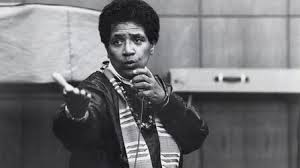
Audre Lorde

Audre Lorde

For those on the receiving end of repressive treatment, an essential strategy of resistance is one voiced by the poet-activist Audre Lorde years ago: “the transformation of silence into language and action.”

We’ve been seeing this transformation since the murder of Michael Brown last summer. The people of Ferguson refused to take this outrage silently, and others, of all ethnicities and from all across the country, have rallied to their cause. Since the moment the grand jury decision letting the police off the hook—again—was handed down, my social media feeds have been on fire with declarations of sympathy and anger, along with demands for positive social change.

It has been heartening to see so many Americans marching together in cities all across the country in support of racial justice. Lots of white faces mixed in with the black and brown ones, all united in demanding that our government and legal system protect the rights of all Americans, not just the ones with privilege and power granted by a discriminatory system.

Unknown-1An oppressive system will try to protect those in power and maintain its status quo by discouraging dissent, sometimes silencing its critics by force (as in, for example, the assassinations of Martin Luther King Jr. and Malcolm X) or longterm imprisonment (think Leonard Peltier or Nelson Mandela).

Sometimes the silencing is imposed by shaming (think how women are often made to feel embarrassed and “unfeminine” when we dare to speak out against oppression by men); sometimes by peer pressure and the judicious distribution of rewards to those who go with the flow (for instance, young men can be rewarded by fraternity membership or sports glory when they go along with oppressive treatment of women or younger recruits).

One aspect of privilege I have been especially struck by is this formulation, which I learned from the gender studies scholar Michael Kimmel: “privilege is invisible to those who have it.”

Too often, those in power don’t realize how they participate in the oppression of others. Or maybe they choose to turn a blind eye, because acknowledging the effects of privilege would make them feel uncomfortable about themselves.

Privilege and oppression are relative terms, and very few people fit entirely into one category or another. In other words, I might be privileged by my white skin, but disadvantaged by my gender. I might be privileged by my gender, but disadvantaged by being born into poverty. And so on.

Those of us who believe in justice and want to live in a country that protects the rights of all its citizens equally need to understand how important it is to use our privileges, whatever they may be, to fight oppression in all of its guises.

photo-d

Immigrants arriving at Ellis Island, NY, early 20th century

For example, immigration reform: Americans who remember that just a few generations back their families were fortunate enough to be able to enter this country legally need to stand up for the rights of today’s immigrants.

Or women’s rights: we need to cheer on men like Nick Kristof, who consistently serves as an ally for oppressed women, using his privilege as a New York Times columnist to call attention to violations of women’s human rights worldwide.

In the environmentalist and animal rights movements, we see human beings using our privilege to advocate for the rights of wild animals and farmed animals to a life well lived.

And so on. Social movements are strongest and most successful when they draw their power from solidarity between the privileged and the oppressed.

History shows us that when a social system veers too far into an oppressive dynamic, it becomes weak and liable to fall. Social revolutions occur when enough people are fed up and have little to lose by challenging the status quo.

Americans know that we’re in a precarious state right now, with our politicians being bought and paid for by industry, the super-rich growing ever wealthier while the vaunted American middle class slips down into the ranks of the struggling working poor.

We are living through a dangerous time, but a time of opportunity too: a time when those of us who are awake to the dangers can speak out against oppression, stand up for justice, and insist on the structural changes needed to make our country live up to its own ideals.

I’m not talking about riots here, although those are sometimes the only way the system can be made to focus on the rage of the oppressed.

I’m talking about recognizing the dynamics of privilege and oppression, understanding our own place in the system, and using whatever privileges we have to support those with less power.

Only this kind of broad-based solidarity, based in our own communities but with a nation-wide reach, can shift the oppressive system that was stacked against Michael Brown in Ferguson. When to start? Now.

Envisioning a Cosmic Religion, Rooted in Mother Earth: Homage to Thich Nhat Hanh

It must have something to do with reaching midlife. The beat of elders moving on out of this lifetime has picked up for me, and it’s so hard to let them go, knowing that as each life ends, those of us remaining are called ever more strongly to step into their shoes and become the elders leading our society.
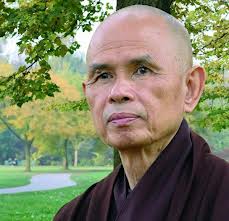
Thich Nhat Hanh

Thich Nhat Hanh

Few people alive today could step easily into the humble, powerful shoes of Thich Nhat Hanh. Like the Dalai Lama, he is a Buddhist monk who has been so generous and warm in inviting others into his orbit. Whether or not you practice Buddhism, whether or not you follow any religious tradition at all, there is so much wisdom and guidance in Thich Nhat Hanh’s writings, so much to learn and gain from listening to him.

I regret that I never had the chance to be physically in his presence, but as with so many of the other great leaders I admire, I know him through the writings he has shared and through his public persona and the good works he has accomplished.

At 88 years old, Thich Nhat Hanh is in the hospital with a brain hemorrhage from which he may still recover. He is still with us today but even after he is gone, I know his spirit will be showering us with the lovingkindness he knows we need to overcome the negativity that besets so many of us as individuals and as societies.

Today, in homage to Thay (as his students call him lovingly), I want to quote at some length from one of his last books, the beautiful Love Letter to the Earth. I urge you to buy a copy of this small bright gem of a book, and use it as a guide and inspiration—maybe you will be moved to write some love letters of your own to our dear battered planet.

“Dear Mother Earth,

“The human species is but one of your many children. Unfortunately, many of us have been blinded by greed, pride, and delusion, and only a few of us have been able to recognize you as our Mother. Not realizing this, we have done you great harm, compromising both your health and your beauty. Our deluded minds push us to exploit you and create more and more discord, putting you and all your forms of life under stress and strain. Looking deeply, we also recognize that you have enough patience, endurance and energy to embrace and transform all the damage we have caused, even if it takes you hundreds of millions of years.

“When greed and pride overtake our basic survival needs, the result is always violence and unnecessary devastation. We know that whenever one species develops too rapidly, exceeding its natural limit, there is great loss and damage, and the lives of other species are endangered. For equilibrium to be restored, causes and conditions naturally arise to bring about the destruction and annihilation of that species. Often these causes and conditions originate from within the destructive species itself. We have learned that when we perpetrate violence toward our own and other species, we are violent toward ourselves. When we know how to protect all beings, we are protecting ourselves.

“We understand that all things are impermanent and without a separate self-nature. You and Father Sun, like everything else in the cosmos, are constantly changing, and you are only made of non-you elements. That is why we know that, in the ultimate dimension, you transcend birth and death, being and nonbeing. Nonetheless, we need to protect you and restore balance, so that you can continue for a long time in this beautiful and precious form, not just for our children and their children but for five hundred million years and beyond. We want to protect you so you can remain a glorious jewel within our solar system for eons to come.

Northern lights, photographed from space

Northern lights, photographed from space

We know that you want us to live in such a way that in each moment of our daily lives we can cherish life and generate the energies of mindfulness, peace, solidity, compassion and love. We vow to fulfill your wish and respond to your love. We have the deep conviction that generating these wholesome energies, we will help reduce the suffering on Earth and contribute to alleviating the suffering caused by violence, war, hunger and illness. In alleviating our suffering, we alleviate yours.

“Dear Mother, there have been times when we suffered greatly as a result of natural disasters. We know that whenever we suffer, you suffer through us. The floods, tornadoes, earthquakes and tsunamis aren’t punishments or manifestations of your anger, but are phenomena that must occur on occasion, so that balance can be restored. The same is true of a shooting star. For balance in nature to be achieved, at times some species have to endure loss. In those moments, we have turned to you, dear Mother, and asked whether or not we could count on you, on your stability and compassion. You didn’t answer us right away. Then, beholding us with great compassion, you replied, “Yes, of course you can count on your Mother. I will always be here for you.” But then you said, “Dear children, you must ask yourselves, can your Mother Earth count on you?”

“Dear Mother, today we offer you our solemn reply, “Yes, Mother, you can count on us.””

Love Letter to the Earth concludes on a vision of a new kind of spirituality, a new kind of religion, founded on the Buddhist principle of interbeing—which, like deep ecology, understands that every form of life on earth, and indeed every element of our planetary biosphere is profoundly interconnected and interdependent, not in a hierarchy but in a rhizomatic web. Every strand in that web must be honored and tended, and this is the work that human beings, especially, are called upon to take up.

If Thich Nhat Hanh’s vision of a new religion for the 21st century could be realized, what a wonderful world it could be. Listen:

“We can build a deep spiritual practice based not on dogmas or beliefs in things we can’t verify, but entirely on evidence. To say that the Earth is a great being is not just an idea; each of us can see this for ourselves. Each of us can see that the Earth has the qualities of endurance, stability and inclusiveness. We can observe the Earth embracing everyone and everything without discrimination. When we say that the Earth has given birth to many great beings, including buddhas, bodhisattvas and saints, we are not exaggerating. The Buddha, Jesus Christ, Moses and Mohammed are all children of the Earth. How can we describe the Earth as mere matter when she has given birth to so many great beings?

“When we say the Earth has created life, we know it’s only possible because she contains within herself the whole cosmos. Just as the Earth is not only the Earth, so too are we not only humans. We have the Earth and the whole cosmos within us. We are made of the sun. We are made of stars. Touching the true nature of reality, we can transcend the dualistic view that the cosmos is something greater than ourselves or different from ourselves. Getting deeply in touch with the phenomenal realm, the historical dimension, we can realize our true nature of no-birth and no-death. We can transcend all fear and touch eternity.
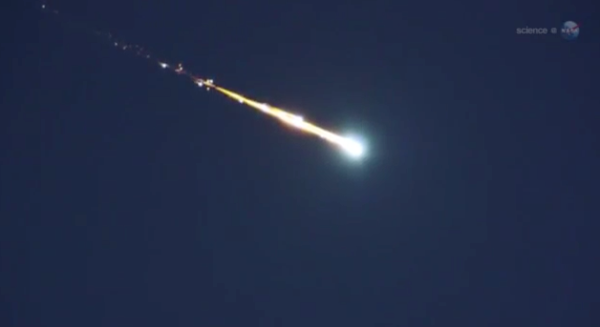
Orionid-shooting-star

“Every advance in our understanding of ourselves, our nature and our place in the cosmos deepens our reverence and love. To understand and to love are fundamental desires. Understanding has some kind of connection with love. Understanding can take us in the direction of love. When we understand and become aware of the great harmony, elegance and beauty of the cosmos, we may feel great admiration and love. This is the most basic kind of religious feeling: it is based on evidence and our own experience. Humanity needs a kind of spirituality that we can all practice together.

“Dogmatism and fanaticism have been the cause of great separation and war. Misunderstanding and irreverence have been the cause of enormous injustice and destruction. In the twenty-first century it should be possible for us to come together and offer ourselves the kind of religion that can help unite all peoples and all nations, and remove all separation and discrimination. If existing religions and philosophies, as well as science, can make an effort to go in this direction, it will be possible to establish a cosmic religion based not on myth, belief or dogma, but on evidence and the insights of interbeing. And that would be a giant leap for humankind.”

Amen, Thay. Go lightly.  We will carry on.

Quotes from Thich Nhat Hanh, Love Letter to the Earth

Parallax Press, 2013