Jesus Christ, Thomas Berry, and the New Shamanism: What the World Needs Now

Christmas Eve. The night of the year that we celebrate the birth of a baby who would grow up to reveal himself as a seer, a man with a direct connection to the Divine.

I believe that we all have the potential to have such a connection. In fact, I think it’s our birthright as humans, and it’s an ability we share with other animals as well.

All of us animals sleep and dream, and during our dreams we experience the same non-ordinary reality that the prophets and mystics have been telling us about—men like Socrates, Jesus or Mohammed who heard the voices of divine spirits.

For the past two thousand years or so, Western philosophy has been working steadily to wall off the connections between the natural world, including other animals, and human beings.

But in our dreams, those walls come tumbling down, as we visit landscapes and mingle with animals whose messages we strive to remember and interpret when we awake.
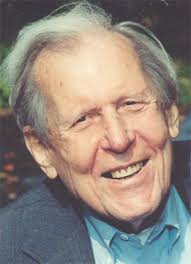
Thomas Berry

Thomas Berry

I am very intrigued by the recognition of religious scholar and eco-philosopher Thomas Berry that what human civilization urgently needs, in this time of ecological crisis, is to re-open the psychic channels connecting us to our planetary home.

He calls for a revalidation of the “shamanic personality”; shaman referring to a human being who can enter non-ordinary reality at will, and access valuable wisdom from the spirit world (or the Divine, as Western tradition would call it).

Berry argues that every human being is “genetically coded” to have access to the wisdom of the dreamland, whether in sleep or in the trance of deliberate shamanic journeying. And, he says, this is where we are going to find the solutions to the ecological crises we face today.

Change is not going to come from politics and protests, Berry says. It’s going to come through a psychic shift in which “we awaken to the numinous powers ever present in the phenomenal world around us,” which manifest themselves in human beings in our most creative moments. “Poets and artists continually invoke these spirit powers, which function less through words than through symbolic forms,” he says, continuing:

“In moments of confusion such as the present, we are not left simply to our own rational contrivances. We are supported by the ultimate powers of the universe as they make themselves present to us through the spontaneities within our own beings. We need only become sensitized to these spontaneities, not with a naïve simplicity, but with critical appreciation. This intimacy with our genetic endowment, and through this endowment with the larger cosmic process, is not primarily the role of the philosopher, priest, prophet or professor. It is the role of the shamanic personality, a type that is emerging once again in our society.

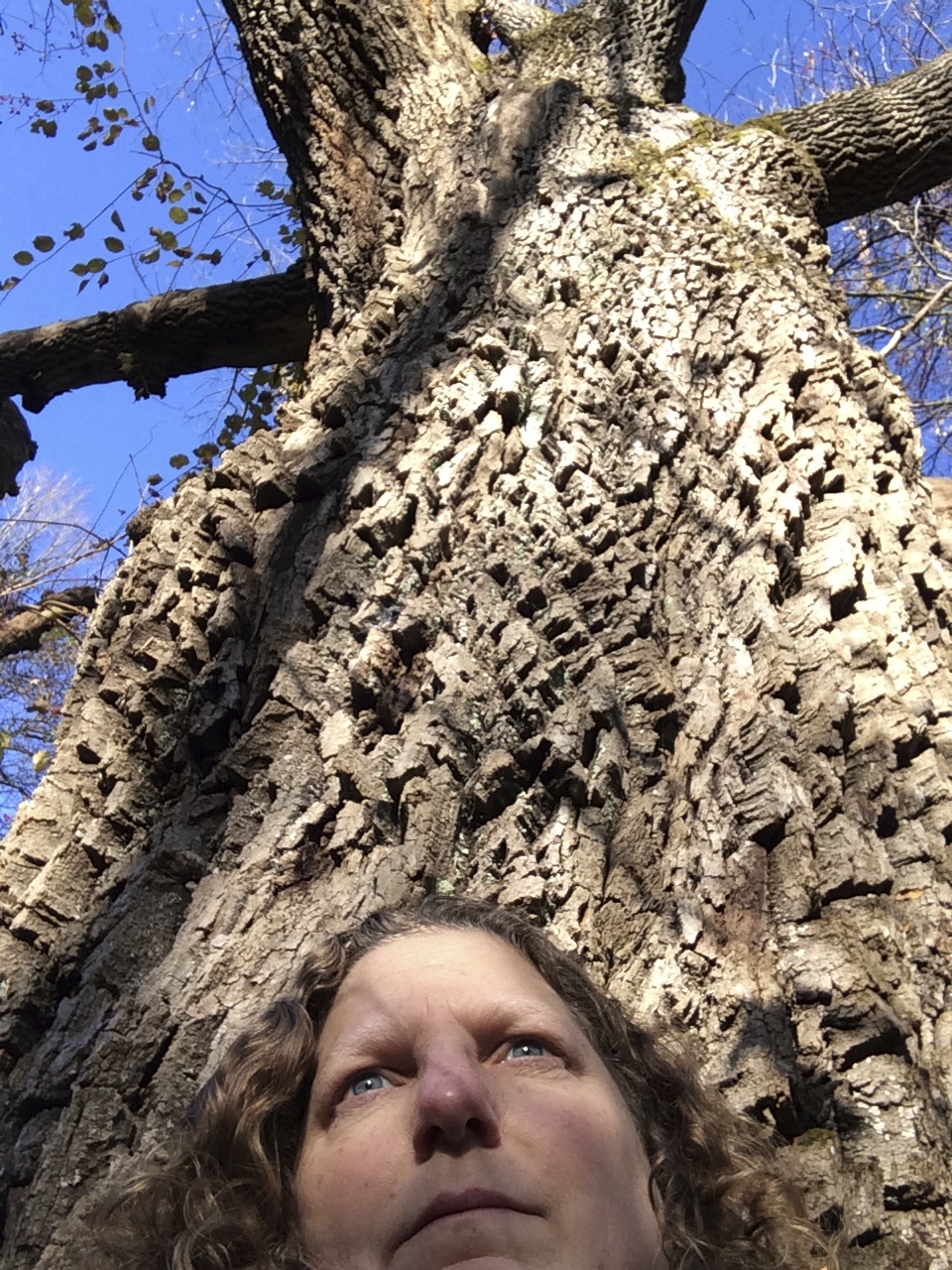
Tree spirits.  Photo c. J. Browdy 2014

Tree spirits. Photo c. J. Browdy 2014

“More than any other of the human types concerned with the sacred, the shamanic personality journeys into the far regions of the cosmic mystery and brings back the vision and the power needed by the human community….

“The shamanic personality speaks and best understands the language of the various creatures of the earth….This shamanic insight is especially important just now when history is being made not primarily within nations or between nations, but between humans and the earth, with all its living creatures….

“If the supreme disaster in the comprehensive story of the earth is our present closing down of the major life systems of the planet, then the supreme need of our times is to bring about a healing of the earth through this mutually enhancing human presence to the earth community.

“To achieve this mode of pressure, a new type of sensitivity is needed, a sensitivity that is something more than romantic attachment to some of the more brilliant manifestations of the natural world, a sensitivity that comprehends the larger patterns of nature, its severe demands as well as its delightful aspects, and is willing to see the human diminish so that other lifeforms might flourish.”

Another way to name the “sensitivity” Berry is talking about here is, quite simply LOVE.

The same love practiced and preached by Jesus Christ, but expanded to include the entire earth community, not just the human branch.

tree heart

Tree heart. Photo c. J. Browdy 2014

I am continually amazed by the generosity with which the natural world gives and gives to support the cause of a flourishing earth community. Death comes that life may continue. A clearcut forest patiently begins the work of recreating itself, from the soil bacteria on up. There is no such thing as guilt or blame in the natural world, only endless patience and a resilient creativity, always seeking better paths towards the goal of abundance and teeming myriad forms of life.

Thomas Berry says that we humans, as part and parcel of the earth community, are genetically coded to participate in this great unfolding of exuberant life.

For a long time (at least since the time of Gilgamesh, who harshly slew Humbaba, the guardian of the forests, and cut down an entire cedar forest just because he could) human culture has been working tirelessly to sever our connection to the divinity immanent in the natural world.

“In relation to the earth,” Berry says, “we have been autistic for centuries.”

seeingBut now, “the planet Earth and the life communities of the earth are speaking to us through the deepest elements of our nature, through our genetic coding….Only now have we begun to listen with some attention and with a willingness to respond to the earth’s demands that we cease our industrial assault, that we abandon our inner rage against the conditions of our earthly existence, that we renew our human participation in the grand liturgy of the universe” (Berry, The Dream of the Earth, 210-215).

There is a lot to ponder here. Berry seems to be proposing that in our genetic make-up is an ability to communicate on a deep level with the earth, including other animals and life forms. Under the spell of Western civilization, we have allowed ourselves to become alienated not only from the natural world, but also from our own innate ability to commune with “the dream of the earth,” through our inherent shamanic/psychic powers. We have been content to delegate the connection to the Divine to others—prophets, seers, priests—rather than to cultivate within ourselves that “sensitivity” to divine inspiration and that access to the powerful creative pulse of the universe which we all experience in dreams.

This alienation has led us inexorably to the hairline edge upon which human civilization now perches. After 10,000 years of a stable climate, warmly conducive to the development of prosperous human communities, we are on the brink of another great break in planetary history, this one brought on by our own insensitivity and inability to listen and understand the many cues the natural world has been giving us.

If a new Messiah is to arise and lead us to safety, it must be one who can reawaken in us the loving ethical responsibility that all humans are born with.

I believe that the potential to become this leader lies dormant in each one of us. My question this Christmas, which is really a question for myself above all: how are you going to manifest, in your own life and in the larger earth community in which we all live, the divine LOVE that Jesus Christ, in his purest form, represents?

IMG_8353

Envisioning a Cosmic Religion, Rooted in Mother Earth: Homage to Thich Nhat Hanh

It must have something to do with reaching midlife. The beat of elders moving on out of this lifetime has picked up for me, and it’s so hard to let them go, knowing that as each life ends, those of us remaining are called ever more strongly to step into their shoes and become the elders leading our society.

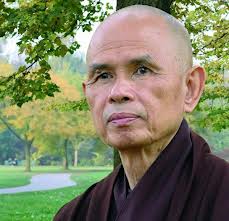
Thich Nhat Hanh

Thich Nhat Hanh

Few people alive today could step easily into the humble, powerful shoes of Thich Nhat Hanh. Like the Dalai Lama, he is a Buddhist monk who has been so generous and warm in inviting others into his orbit. Whether or not you practice Buddhism, whether or not you follow any religious tradition at all, there is so much wisdom and guidance in Thich Nhat Hanh’s writings, so much to learn and gain from listening to him.

I regret that I never had the chance to be physically in his presence, but as with so many of the other great leaders I admire, I know him through the writings he has shared and through his public persona and the good works he has accomplished.

At 88 years old, Thich Nhat Hanh is in the hospital with a brain hemorrhage from which he may still recover. He is still with us today but even after he is gone, I know his spirit will be showering us with the lovingkindness he knows we need to overcome the negativity that besets so many of us as individuals and as societies.

Today, in homage to Thay (as his students call him lovingly), I want to quote at some length from one of his last books, the beautiful Love Letter to the Earth. I urge you to buy a copy of this small bright gem of a book, and use it as a guide and inspiration—maybe you will be moved to write some love letters of your own to our dear battered planet.

“Dear Mother Earth,

“The human species is but one of your many children. Unfortunately, many of us have been blinded by greed, pride, and delusion, and only a few of us have been able to recognize you as our Mother. Not realizing this, we have done you great harm, compromising both your health and your beauty. Our deluded minds push us to exploit you and create more and more discord, putting you and all your forms of life under stress and strain. Looking deeply, we also recognize that you have enough patience, endurance and energy to embrace and transform all the damage we have caused, even if it takes you hundreds of millions of years.

“When greed and pride overtake our basic survival needs, the result is always violence and unnecessary devastation. We know that whenever one species develops too rapidly, exceeding its natural limit, there is great loss and damage, and the lives of other species are endangered. For equilibrium to be restored, causes and conditions naturally arise to bring about the destruction and annihilation of that species. Often these causes and conditions originate from within the destructive species itself. We have learned that when we perpetrate violence toward our own and other species, we are violent toward ourselves. When we know how to protect all beings, we are protecting ourselves.

“We understand that all things are impermanent and without a separate self-nature. You and Father Sun, like everything else in the cosmos, are constantly changing, and you are only made of non-you elements. That is why we know that, in the ultimate dimension, you transcend birth and death, being and nonbeing. Nonetheless, we need to protect you and restore balance, so that you can continue for a long time in this beautiful and precious form, not just for our children and their children but for five hundred million years and beyond. We want to protect you so you can remain a glorious jewel within our solar system for eons to come.

Northern lights, photographed from space

Northern lights, photographed from space

We know that you want us to live in such a way that in each moment of our daily lives we can cherish life and generate the energies of mindfulness, peace, solidity, compassion and love. We vow to fulfill your wish and respond to your love. We have the deep conviction that generating these wholesome energies, we will help reduce the suffering on Earth and contribute to alleviating the suffering caused by violence, war, hunger and illness. In alleviating our suffering, we alleviate yours.

“Dear Mother, there have been times when we suffered greatly as a result of natural disasters. We know that whenever we suffer, you suffer through us. The floods, tornadoes, earthquakes and tsunamis aren’t punishments or manifestations of your anger, but are phenomena that must occur on occasion, so that balance can be restored. The same is true of a shooting star. For balance in nature to be achieved, at times some species have to endure loss. In those moments, we have turned to you, dear Mother, and asked whether or not we could count on you, on your stability and compassion. You didn’t answer us right away. Then, beholding us with great compassion, you replied, “Yes, of course you can count on your Mother. I will always be here for you.” But then you said, “Dear children, you must ask yourselves, can your Mother Earth count on you?”

“Dear Mother, today we offer you our solemn reply, “Yes, Mother, you can count on us.””

Love Letter to the Earth concludes on a vision of a new kind of spirituality, a new kind of religion, founded on the Buddhist principle of interbeing—which, like deep ecology, understands that every form of life on earth, and indeed every element of our planetary biosphere is profoundly interconnected and interdependent, not in a hierarchy but in a rhizomatic web. Every strand in that web must be honored and tended, and this is the work that human beings, especially, are called upon to take up.

If Thich Nhat Hanh’s vision of a new religion for the 21st century could be realized, what a wonderful world it could be. Listen:

“We can build a deep spiritual practice based not on dogmas or beliefs in things we can’t verify, but entirely on evidence. To say that the Earth is a great being is not just an idea; each of us can see this for ourselves. Each of us can see that the Earth has the qualities of endurance, stability and inclusiveness. We can observe the Earth embracing everyone and everything without discrimination. When we say that the Earth has given birth to many great beings, including buddhas, bodhisattvas and saints, we are not exaggerating. The Buddha, Jesus Christ, Moses and Mohammed are all children of the Earth. How can we describe the Earth as mere matter when she has given birth to so many great beings?

“When we say the Earth has created life, we know it’s only possible because she contains within herself the whole cosmos. Just as the Earth is not only the Earth, so too are we not only humans. We have the Earth and the whole cosmos within us. We are made of the sun. We are made of stars. Touching the true nature of reality, we can transcend the dualistic view that the cosmos is something greater than ourselves or different from ourselves. Getting deeply in touch with the phenomenal realm, the historical dimension, we can realize our true nature of no-birth and no-death. We can transcend all fear and touch eternity.

Orionid-shooting-star

“Every advance in our understanding of ourselves, our nature and our place in the cosmos deepens our reverence and love. To understand and to love are fundamental desires. Understanding has some kind of connection with love. Understanding can take us in the direction of love. When we understand and become aware of the great harmony, elegance and beauty of the cosmos, we may feel great admiration and love. This is the most basic kind of religious feeling: it is based on evidence and our own experience. Humanity needs a kind of spirituality that we can all practice together.

“Dogmatism and fanaticism have been the cause of great separation and war. Misunderstanding and irreverence have been the cause of enormous injustice and destruction. In the twenty-first century it should be possible for us to come together and offer ourselves the kind of religion that can help unite all peoples and all nations, and remove all separation and discrimination. If existing religions and philosophies, as well as science, can make an effort to go in this direction, it will be possible to establish a cosmic religion based not on myth, belief or dogma, but on evidence and the insights of interbeing. And that would be a giant leap for humankind.”

Amen, Thay. Go lightly.  We will carry on.

Quotes from Thich Nhat Hanh, Love Letter to the Earth

Parallax Press, 2013

As We Dance the Spiral Dance of Life, Death and Rebirth, We Build Bridges to the Future Every Step of the Way; What Future Do You Choose?

We’re now going into the darkest time of the year, the time when many cultural traditions contend that the veils between the living and the dead grow thinnest, most penetrable.

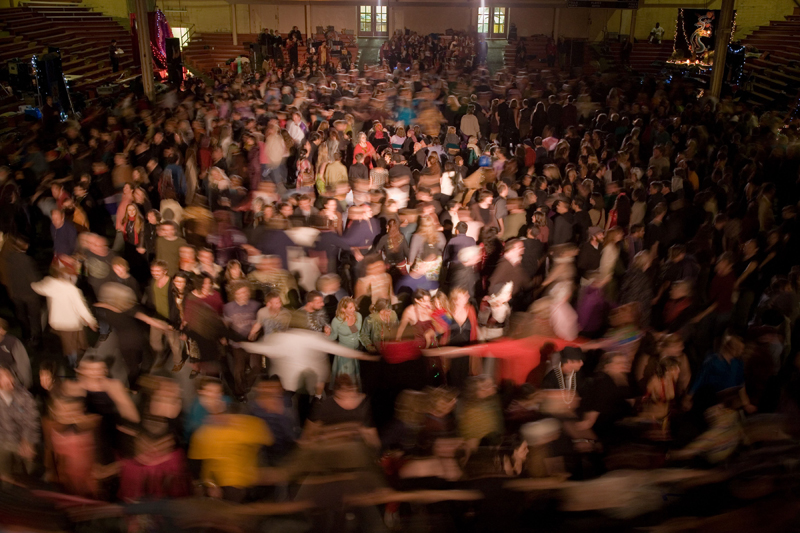
In San Francisco tonight, Starhawk and her Reclaiming coven will be dancing a grand spiral dance with thousands of people, all united under this banner: “2014 Intention: With the help of ancestors, descendants, and the great powers of nature, we weave magic and action to save our home! A ritual to honor our beloved dead and dance the spiral of rebirth.”

M_R_spiral_126800x800

Having participated in one of Starhawk’s circle dances, focused on raising energy through the power of collective intention, I can begin to imagine what a spiral dance on this scale will accomplish.

We Americans too often ignore the significance of energetics in our lives.

We imagine that it doesn’t matter that we spend more and more of our time bathed in low-level radiation from all our electronic devices, from computers to cell phones to electric meters and on.

We don’t pay attention to the way we are similarly taking in steady doses of negative information day after day, from Ebola and cancer to corruption, violence and poverty.

In these dark days of the year, at least in my gloomy northern corner of the world, I can feel my own energy levels sinking, my will to rise and dance on behalf of my ancestors, descendants and Nature wavering.

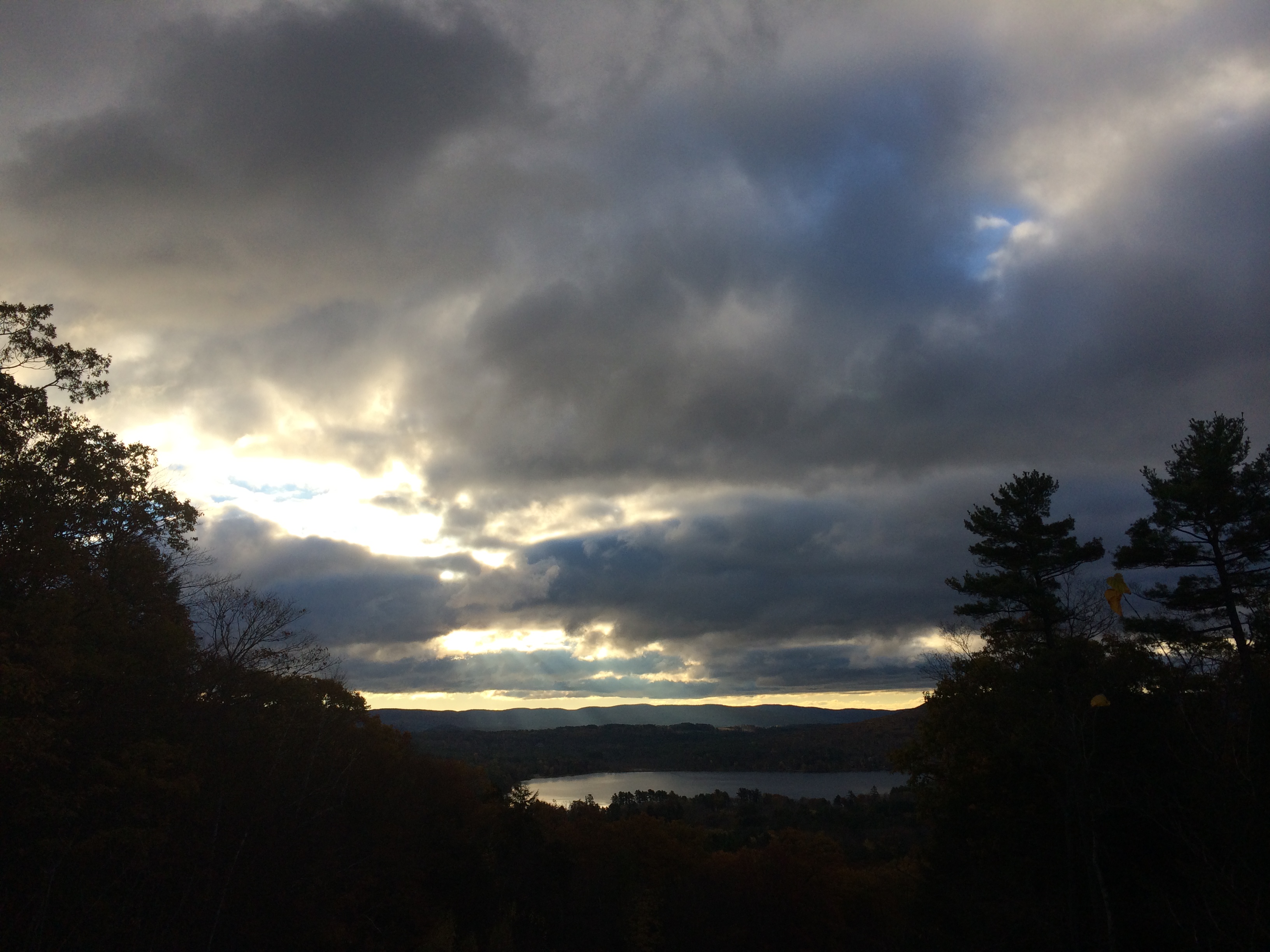
Morning clouds over Stockbridge Bowl. Photo J. Browdy, 2014

Morning clouds over Stockbridge Bowl. Photo J. Browdy, 2014

So I give myself pep talks. I remind myself that the dark days of the year are among the most powerful times for focusing inward and setting new intentions for what will be accomplished with the return of the light.

I get out the photos of my grandparents and my children and remind myself that I must be a strong link on the hereditary chain that stretches back untold generations, if my descendants are to have the good fortune of enjoying the kind of safe, happy, fulfilled lives on Earth that I have had.

Fannie Ashe Browdy and Philip Browdy, my paternal grandparents, around the time of their marriage.

Fannie Ashe Browdy and Philip Browdy, my paternal grandparents, around the time of their marriage.

I remember that I came to this lifetime full of the rising sap of positive energy, loving nothing more than to rise early to watch the dawn, and stay up late to look for shooting stars.

Rooted like the trees that shelter and inspire me

Rooted like the trees that shelter and inspire me

Like the great old trees I love, I have rooted myself deeply in the glacial rocks and rich soil of my life, and now have a wide network of students, friends, colleagues and relatives that I help to nourish with my ideas and initiatives.

And I am not only connected to human friends and relatives, but also to the intricately woven biosphere, with which I interact on a cellular level with every breath I take, every ray of sunshine I absorb, every drop of water I drink.

We are all dancing a great spiral dance together on this planet, weaving our intentions and our gifts into the actions that will build a bridge into our collective future.

Every step we take matters. Will we work day by day towards aligning our love for the planet with our individual actions?

For example, will we invest in fossil fuels or solar panels this year? Will we support local farmers, or buy packaged food that’s trucked in from far away? Will we take a break from eating fish to allow the wild fish stocks to recover? Will we lend our political and financial support to those working to make the human relationship to the planet life-enhancing, rather than destructive?

Reminding ourselves that literally or metaphorically speaking, our ancestors and descendants are relying on us to do the best we can to keep the chain of life strong and unbroken into the future, can help us to make decisions that are forward-looking and mature.

My maternal grandmother, Mildred Louis Rubenstein, with my younger son, Eric

My maternal grandmother, Mildred Louis Rubenstein, with my younger son, Eric

The dance we weave today and every day is about much more than just our own individual lives. We can be and do much more than we imagine, if we resist the downward pressures of negative thinking, and keep the channels of positive energy open to the cosmic flow.

Remember that the Earth and the Cosmos are one and the same, and we humans are just another manifestation of that endlessly circulating energy.  Photo J. Browdy 2014

Remember that the Earth and the Cosmos are one and the same, and we humans are just another manifestation of that endlessly circulating energy. Photo J. Browdy 2014

Cosmic Honey for Robin Williams

Robin Williams

Robin Williams

The death of Robin Williams has lain heavily on me since I heard the news. I echo what all my friends are saying: he was so talented, he brought so much brilliance and joy to the world, how could it be that all his laughs and charm hid such deep reservoirs of pain and despair?

People as creative as Williams are often sensitive and discerning; and if you’re sensitive these days, you can hardly help but be overwhelmed by all the pain we are forced to contend with in the world on a daily basis.

I wince every time I listen to the world news, bracing myself for the inevitable onslaught of violence, disease and misery suffered by human beings—not to mention the destruction of the environment, the extinction of millions of innocent animals, insects and plant life and the ever-accelerating pace of climate change. It’s enough to drive anyone to Prozac.

Suicide is the 10th leading cause of death in the U.S., with some 40,000 suicides a year, 70% of them middle-aged white men. Most cultures and religions condemn suicide; we are asked to live our lives to the fullest, going towards death only when our bodies totally give out. Certainly this is true in the U.S., where death has been demonized and medicalized, seen as an ending to be feared and evaded as long as possible.

But what if death is actually more like a transition, mirroring birth—the emergence into another state of being?

What if death is a release, as some religions would have it, where we rejoin our ancestors and our spiritual families in a non-physical realm free of pain?

I don’t believe in the Christian idea of heaven and hell, but I am certainly not willing to rule out the possibility of an afterlife, in the sense of a spiritual reconnection with the Source energy that animates the physical realm on our planet.

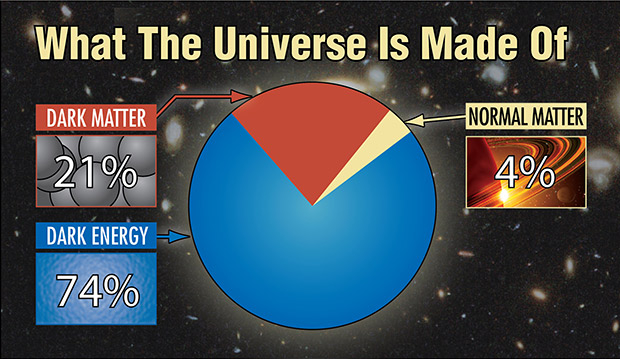
With the advent of quantum physics and the recognition that 95% of the universe is made up of “dark matter” and “dark energy”—i.e., with stuff we know absolutely nothing about—science is beginning to make friends with metaphysics.

You won’t find many scientists willing to go as far as Jungian philosophers like Anne Baring, who talks about “the soul of the cosmos” as a kind of divine intelligence immanent in everything—but at least scientists are beginning to admit how much they don’t know about the way our universe works. And in that opening of humility lies the possibility that there could be a lot more than meets the eye when it comes to one of the greatest unknowns: death.

For Baring (writing with co-author Scilla Elworthy), “The life we know is an excitation on the surface of an immeasurable sea of cosmic energy that is continually surging, dancing, flowing into being. In every galaxy, every star, every planet, every cell of our being the universe is bursting into existence from this womb or sea of being.

“What does this mean for us? It means that when we are in touch with this incredible idea, each one of us becomes a co-creator with that mysterious process, at one with our starry source” and conscious “the sacredness, oneness and divinity of life.”

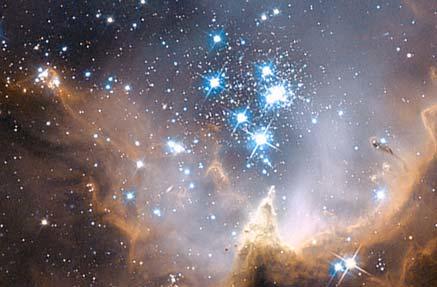
HubbleSpaceTelescope_N90

Baring and Elworthy offer the image of a fully conscious human as “a cell in a limitless honeycomb of golden light. Imagine,” they say, “this luminous network of honeycomb cells connecting people in every part of the world who are trying to lift humanity out of the dark place we are in now. Imagine that through this powerful network of relationships a new consciousness is coming into being.”

The new collective and individual consciousness they imagine would be one that respects all life, generating a mode of living in which humans act as the stewards of our planet, rather than as the greedy, destructive despots we have become in the past few centuries.

“When we are prepared to become but a humble servant of life, devoted to caring for it and healing it, we become free from all fear,” they say. “We are then able to resonate with life, harmoniously and ecstatically.”

I wish Robin Williams had been able to receive this message; to see himself as a bright spark tossed out by the loving flame of our cosmos. I wish he had been able to read Baring and Elworthy’s small gem of a book, Soul Power, which ends with this striking injunction:

“Live life as an opportunity to transform the nectar of experience into the honey that can heal the world.”

As a creative genius, Robin Williams surely was making that honey for us. He just needed to hold more of it back to heal and salve his own sensitive, wounded soul.

Taking the risk to feel the pain of the world, and the love that can change it

Sometimes I wish I just taught math or physics—something dry and formulaic that would not require wading publicly into the messy, unclear, painful areas of life and interpersonal relations. My current mantra is “the personal is planetary.” If this is so, what does it mean for the planet that such a high percentage of my students over the years have revealed such terrible pain and suffering in the classroom over and over again?

Lately I’ve been reading Bill Plotkin’s magisterial work Nature and the Human Soul, in which he argues that human civilization has been stuck for too long (since Gilgamesh, I’d say) in an adolescent stage of development, where young men are encouraged in their shallow enjoyment of violence, sex and glory, and young women are encouraged to be pretty, compliant and deferent to authority.

The students at my institution are generally trying very hard to resist this overwhelming cultural message.  They try to think outside the box.  They have an earnest desire to be politically correct and intellectually sophisticated. It’s all very well on the purely academic front.  But what happens when the cracks in that academic façade appear and reveal deep emotions—anger, grief, fear, desire—that go way beyond the bounds of the merely academic?

Sometimes these emotions can be so frightening that the only sane response seems to be to numb out on drugs (licit & illicit) or get distracted by media entertainment & competition & the race to keep one’s economic head above water. Somehow in my classes these tumultuous, unruly emotions often come leaping into the foreground.  I allow and sometimes even encourage our class discussions to “go there,” to go into that dangerous gray zone between the purely intellectual/theoretical and the deeply personal lived experience. I believe that this is the zone where the most productive new thinking happens, the kind that can shift paradigms and change worlds.  So I’m willing to risk the discomfort of venturing outside our collective comfort zones, in the hopes that a spark set off in one of our class discussions or activities will ignite a fiery passion that goes well beyond the narrow confines of this class, this semester, or any one student’s career.

But in the aftermath, as I think back on the tears shed, the furrowed brows of the listeners, the potential for aftershocks to occur outside the relatively safe space of the classroom, I can’t rest easy.  I feel deeply, myself, the responsibility of leadership, even in the relatively small scale of the classroom.  The ripples of our conversations on any given day may spread out for many years, affecting those of us who listened and bore witness to his pain in ways we cannot yet imagine.

Some believe that we human beings are the consciousness of the planet. If the personal is planetary and vice versa, then it could be that these young people are in some sense channeling the pain of our planet itself. We owe it to our youth, to ourselves, and to the great planet we call home, to—at minimum—listen with respect, try to understand, and consider how our choices and actions can contribute to or lessen the pain.

It’s risky to do this active listening and thinking aloud, in the moment, rather than waiting until we are sure we “have it right,” “understand it all,” or “know what to do.”  But we don’t have the luxury of time now to get it all perfect.  The best we can do is continually check in with our own emotions, and try to be sure that whatever we say or do is rooted in compassion, concern and a sincere desire to make things better.

“In a voiced community we all flourish,” says Terry Tempest Williams.  Blowing with love on the shaky fires of these suffering voices, bringing them into a nourishing, respectful community, will help ease not only human suffering, but also, potentially, as the ripples spread out, the suffering of so many living beings on the planet.

LOVE—the one emotion that trumps all others, on both the personal and the planetary scale.  The one emotion we can never have too much of, and the one out of which new potentialities continually spring. 6a00d83451c79e69e2015432a3f0e2970c-253x300May the tears we shed as we think about the pain of the world water the dry, numbed-out hearts of those who profess not to care about the links between the health of humans and of the natural world.

May we take the pain born of love, and channel it into personal and planetary healing.  May we be wise enough to see the connections between our actions and their ripple effects in human society and the planet writ large. May we learn to feel all the love we’re capable of as humans and to act out of that deep wellspring of emotion. Let it be so.  Let’s make it so.

Love is all we need

Most people I know don’t pay a whole lot of attention to Valentine’s Day.

In its pop culture guise, it’s pretty trite, after all—candy, flowers, champagne perhaps, aimed at seducing the beloved into bed at the end of the evening….

Eve Ensler has tried hard to put a harder, more political edge on V-Day.  She’s got thousands of women dancing for freedom—rejecting the pervasive violence against women that forms the backdrop of so many of our lives.

Unknown-3

But for most of us, well, we’re just here in the trenches, and we may or may not have a loved one to honor as a Valentine this year.

Me, I’ve got no particular human Valentine at present. Such love as I have to give, I want to dedicate to the forests and the birds, the butterflies and the flowers that are, to me, the most beautiful manifestations of LOVE on this planet.

DSCN2252

Any expression of love is far and away more potent than expressions of hatred and violence.

If you love someone, you should, by all means, shower them with kisses and caresses.  You should be extravagant in your appreciation.

Likewise, if the object of your affection is a tree or a landscape or a bright, joyful living thing—say, a tadpole or a fish or a magnificent coral—go ahead and shower that being with the love it deserves.

The only meaningful counter to the hatred, disrespect and violence that has become the norm in Western culture is the intentional distribution of LOVE.

Love is all you need, crooned the Beatles.  Maybe they were on to something.

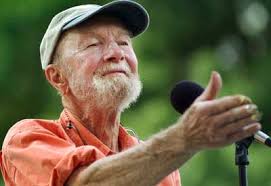
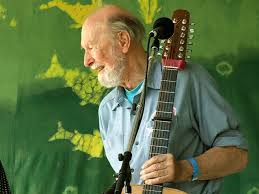
It’s Up to Us Now: Carrying on the Work of Pete Seeger

Unknown-1When I heard the news that Pete Seeger had died, my first thought was “oh no!” and my second thought was “now there goes a man who lived a good life.”

At 94, he had accomplished so much and lived so fully.  Even during his final months and weeks on the planet, he was still playing concerts to packed houses and inspiring people everywhere with his unwavering dedication to using music as a means of raising awareness and fomenting social change.

The New York Times obituary quotes him as saying in 2009 (the year he sang at President Obama’s Inauguration): “My job is to show folks there’s a lot of good music in this world, and if used right it may help to save the planet.”

Pete’s gift was for making music and getting others to sing along with him, and he used it not for fame, fortune or glory, but for the good of those who most needed him.

Whether he was singing in support of the Civil Rights Movement or the anti-war movement, singing for freedom against the red-baiting of the McCarthy era, singing against apartheid or singing for the environmental movement, he was always out in front leading the charge and showing others what true courage and conviction looked like—in a joyous register.

Image: File photo of Pete Seeger and his grandson Tao attending the We Are One - Inaugural Celebration at the Lincoln Memorial in Washington

That upbeat, “we-shall-overcome” personality probably played a big role in Pete’s longetivity—research shows that people who think positively tend to live longer, happier lives than those who tend to see the glass half-empty.

When I saw Pete play, at one of his last concerts last fall, there was a joyous glow about him that lit up the whole stage, and those of us in the audience would have followed him anywhere.

Well, it’s up to us now.  Pete has moved on, and we are left to carry on his legacy—to keep singing his songs and working for the positive social change he believed in and created.

Unknown-2Pete was so deeply engaged with humanity during his lifetime that in death he will still stay lodged in our hearts.

His is the kind of soul that will rise into heaven showering sparks and spores of bright beckoning energy, encouraging us to carry his tune, to keep his good spirit alive.

Today I start a new semester of classes, and I am excited to be teaching two classes that will enable me to do just that: “Women Write the World” and “Writing for Social and Environmental Justice.”

Pete, I’ll be thinking of you with love and admiration as I go to greet my students this morning.  I hope a little of your sweet, positive, hardworking energy will carry us forward this year, and forever.


If you get there before I do

Comin’ for to carry me home

Tell all my friends I’m comin’ too

Comin’ for to carry me home.


Swing low, sweet chariot

Comin’ for to carry me home

Swing low, sweet chariot

Comin’ for to carry me home.


Writing of Disaster, Writing of Hope

As a professor of literature, I tend to pay special attention to what my son is reading in school.  I wish I could say I paid attention to what he reads at home, for pleasure, but the truth is that he does not read for pleasure.  He reads on assignment, and that’s it.

So what is he reading, in his typical 9th grade American public high school?

So far this year he’s read 1984, Lord of the Flies, and Night. Now he’s reading a contemporary novel, How the Light Gets In, by a British author, M.J. Hyland, billed as a 21st century girls’ version of Catcher in the Rye.

In short, it’s been one depressing, upsetting book after another.  Thought-provoking would be the kind term to use, but it saddens me to recognize that generally speaking, “serious” literature is about the things that frighten us.

And it’s not just in literature that this is true.  In pop culture too, the violence that plays out over and over in every form of media entertainment is catering to what seems to be a human need to imagine and play out in fantasy our deepest fears.

Almost all science fiction series and movies that try to imagine the future show us disasters and social dystopias.  These are considered “realistic” (a positive attribute), as distinct from “utopian” scenarios (dismissed as unrealistic, hence not to be taken seriously).

As a parent, a teacher, and a member, like you, of the transitional generation on this planet, I worry about our apparent addiction to what 20th century philosopher Maurice Blanchot called “the writing of disaster.”

Certainly I have not shied away, in my own career, from making myself aware of the ugly side of human experience.  I have studied human rights abuses of every stripe and geographic origin, including sexual abuse, torture, war and genocide.

I have confronted the grotesque truth of the devastation we humans are wreaking on non-human animals and on our planetary environment—the chemical poisoning of air, waters, earth, along with the life forms that inhabit these strata; the factory farms; the mountaintop removal, clear-cutting and strip-mining; the plastics pollution of the oceans; and on and on.

I don’t bury my head in the sand, by any means.

But I question the wisdom of inundating our imaginations, especially those of young people, with violent stories.

Whether they’re historical like Night or futuristic fiction like 1984; whether they’re video game scenarios like GTA or Call of Duty; or TV series, movies, or the daily news—if all we see in virtual reality is human beings being violent, doesn’t this begin to affect the way we understand ordinary reality?

Doesn’t it make us more guarded with each other, less likely to trust, less likely to build community and bring out the best in each other?

Mary Pipher

Mary Pipher

In preparation for my new class this spring, “Writing for Social and Environmental Justice,” I’ve been re-reading Mary Pipher’s 2006 book Writing to Change the World. Mary Pipher, you may remember, is the psychologist who wrote Reviving Ophelia, a book from the late 1980s that provoked a major surge of attention to the way American girls self-sabotage as young teens, and what societal factors made their swan-dive of self-esteem more likely to occur.

In recent years, Pipher has become an environmentalist, leading the charge in her home state of Nebraska against the Keystone XL.  Although the pipeline is not dead yet, it has at least been re-routed away from the ecologically sensitive Sand Hills region.

In Writing to Change the World, she offers a how-to book for those, like me, who see writing as one of the best tools to raise awareness about the issues that matter most.

Pipher writes: “The finest thing we can do in life is to grow a soul and then use it in the service of humankind.  Writers foster the growth of readers’ souls, and the best soil for growth is love.  Writing can be love made visible….This is our challenge: to cultivate lives of reflection, love and joy and still manage to do our share for this beautiful broken planet of ours” (241-2).

However, it seems to me that the kinds of writing we are consuming as a culture, and especially what we’re feeding to our young people, will neither “cultivate lives of reflection, love and joy” nor inspire us to take arms against the sea of troubles that is our planet today.

On the contrary, the dominant narratives I see, at least in American culture, are violent, cynical and despairing, showing us the worst of humanity rather than enticing us forward with dreams of what could be.

I’d like to see the start of a new global literary movement of change narratives in every genre aimed at holding a positive mirror up to human nature, giving us examples of the good we have done and the good we are capable of doing if we draw on our positive qualities—our ability to love, to nurture, to steward, to protect.

Even our oh-so-human violence has a place, if it is used to protect rather than to abuse and wreak wanton havoc.

I would like school curricula to stop replaying the horrific stories of our past—or at least, to balance these negative stories with narratives that give students some positive, hopeful models of human beings as well.

Trying to “grow a soul” in today’s social climate is like trying to grow a plant without sunshine.

Writers, let’s take on the challenge of using our gift with words to change the world for the better.  Let’s be the sunshine, not the shadow.

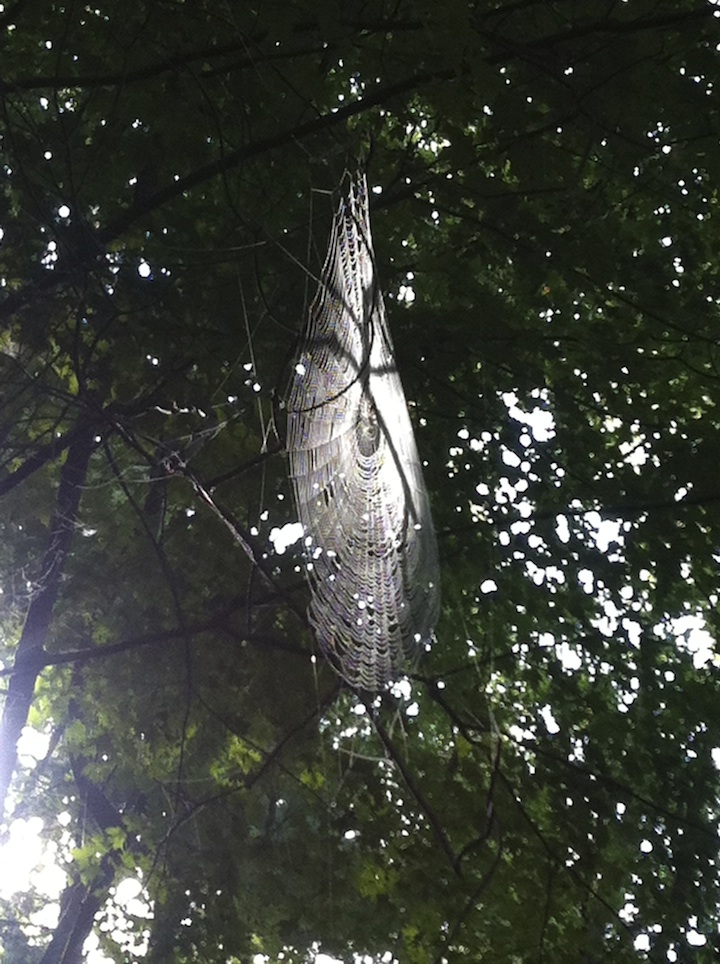
Spiderweb

Dark Universe, Brightening

Socrates had it right long ago when he acknowledged that to the extent that he was wise, it was because he knew how much he did not know.

During my lifetime, the trend has been for homage to be paid to all the cocky, smart human beings who think they know everything.

The slicker and more self-confident the guy (and this is mostly about guys), the more rewards and adulation he gets.

Collectively, especially in the United States, arrogance has been the name of the game.  I think this collective hubris may have reached its apex with the splitting of the atom and the knowledge that he who controls atomic energy controls the world.

Or so we thought.

Climate change is ushering in a whole new, and much more humble era.

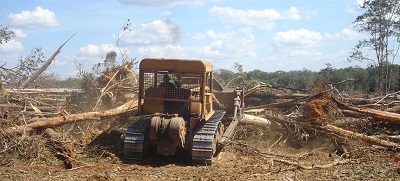
imageIt turns out that just because we can bulldoze forests and mountaintops, change the course of rivers, drill beneath the sea and through solid rock, and completely saturate the earth with satellite, drone and in-home surveillance devices, we are still just as vulnerable as we ever were to the simple, earthbound necessities of food and shelter.

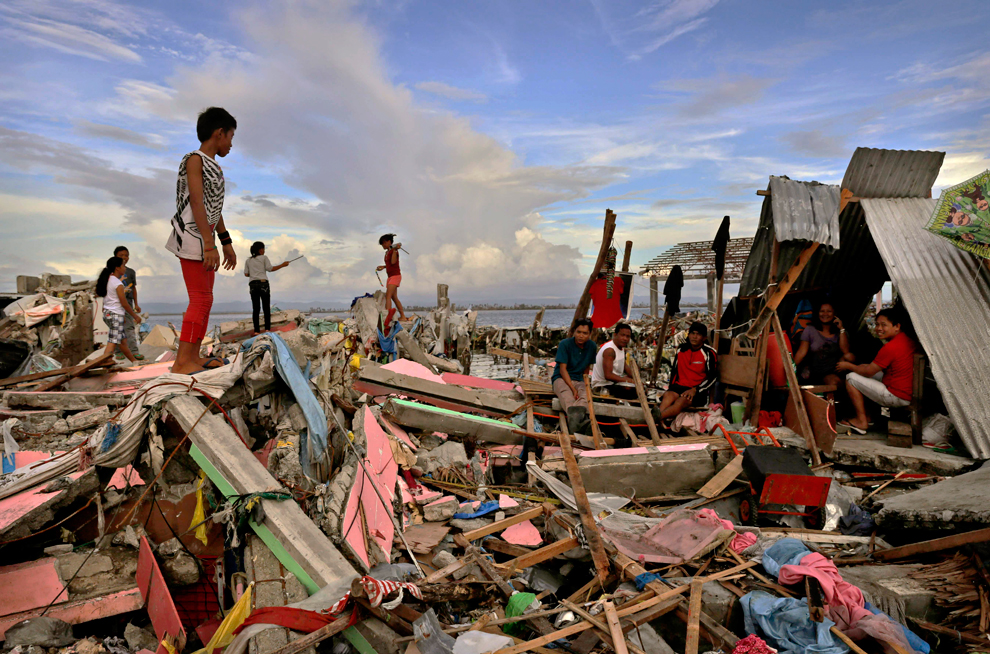
As the big, climate-change-induced storms continue to roll in from the ocean, so frequently that they all begin to blur into an anguished nonstop disaster montage, a slow but steady sea-change in collective human consciousness is beginning to occur.

Aftermath of Typhoon Haiyan, Philippines, 2013

Aftermath of Typhoon Haiyan, Philippines, 2013

We are beginning to recognize how much we still don’t know, and how dangerous our ignorance, combined with arrogance, is becoming.

There is no doubt now that we who are alive today, along with our children and grandchildren, are going to be living through a remarkable transition time as the planet we have destabilized and plundered during the past few hundred years of industrialization seeks to return to equilibrium.

We must acknowledge that human over-population has played a major role in this process of destabilization.  Our very success as a species is what is driving the current unfolding disaster.  By reducing our numbers through disease, drought, flooding and the competition for shrinking natural resources that leads to war, the planet is doing what it must to return to a steady state where the ecosystem as a whole can flourish.

It is sobering to live with this knowledge.

Perhaps it is my sadness at knowing that I am going to be living through (and dying in) a veritable Holocaust of earthly creatures, that has me searching outside the box of science and common knowledge for signs of hope.

IMG_4150 copyI was not raised with religion, but I have always been an instinctive spiritual animist, seeing the divine in the beauty of the natural world, and in my unbounded love for all the elements of our Earth—rock, water, air and all the myriad living beings that inhabit every strata of our planet.

I have also been open, since I was a child, to the possibility that there is more to our experience than meets the eye.  I have always been fascinated by the occult, shamanism, and science fiction involving time travel to other dimensions of space/time.

I don’t know if it is just because I am paying more attention, but lately I have been perceiving a definite uptick in collective awareness that the key to fixing what ails us in the physical world may lie not in better “hard science,” but in a deeper connection to knowledge that can only be accessed through a different kind of perception.

The doors to this under-tapped realm of wisdom are accessible to us through what has poetically been called “our mind’s eye.”

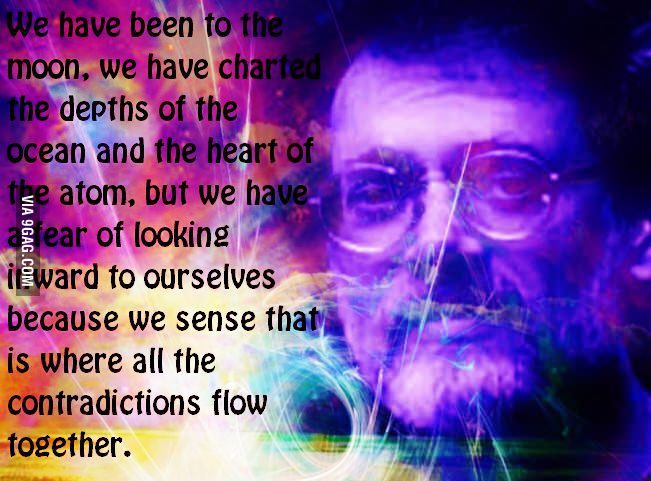
There have always been humans who have been explorers in this realm—Socrates was one, the Biblical sages and prophets were others, and modern esoteric explorers like Rudolf Steiner, Terrence McKenna, Mary Daly, Martin Prechtel, Starhawk and many more.

Terrence McKenna

Terrence McKenna

In the 1960s psychedelic drugs opened the doors for many people who were not at all prepared for the “trips” they encountered.

Now we seem to be coming around again to a period where, as conditions in the physical world deteriorate, more of us are seeking understanding and reassurance in the non-physical.

The more we know of how bad things are here in the physical realm, the more we want to know that “another world is possible.”  And the more we look, the more we find that indeed, there is much more to the universe than meets the eye.

Even scientists are beginning to align with the spiritists they previously disdained. In our age of quantum physics, the whole idea of a “spiritual dimension,” accessible through human consciousness, is becoming much less far-fetched to rational hard science types.

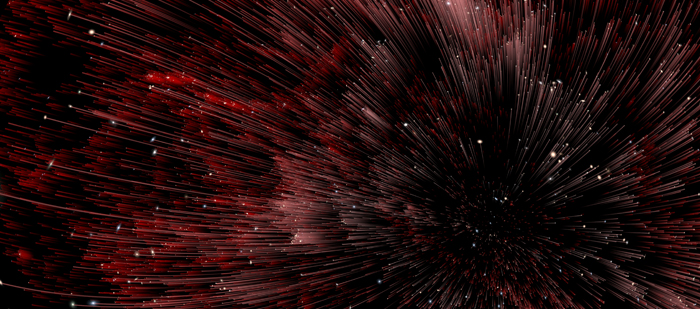
The new Hayden Planetarium show, “Dark Universe,” ends with a graphic that could be right out of “Twilight Zone,” showing that roughly three-quarters of the universe is composed of “dark energy,” a term invented to represent in language something we know enough to know we do not understand at all.

It could be that waking, embodied life is to human consciousness what the physical, hard-matter universe is to the cosmos as a whole.  Just a tiny fragment of a much larger, and potentially much more interesting, whole.

What if the reason every living thing on this planet sleeps (whether in the daytime or the nighttime) is in order to reconnect with the non-physical realm that spiritually sustains us?  We know that if we are deprived of sleep for any length of time, we go crazy and die.

What if “the dreams that come,” whether in sleep or in death, are just as valid a form of experience as the waking hours of our day, and our lives?

What would it mean to be able to think beyond the brief timelines of our individual lives, or even the eons of evolutionary cycles on the planet, and know that we are all part of a much grander cosmic dream?

dark-universe-red-shift-interior

Photo source: American Museum of Natural History, Rose Space Center, Hayden Planetarium, “Dark Universe”

Thinking this way does not give me license to let go of my focus on making a difference here on earth, now in my lifetime.

In some ways this imperative becomes even stronger, as it was for Socrates, Steiner and so many other visionaries who were also powerful initiators and guides during their lifetimes.

During this winter solstice season of introspection and questioning, I have been reading and re-reading the writings of one such contemporary guide, the Sufi mystic and spiritual ecologist Llewellyn Vaughan-Lee.  I leave you with a passage to ponder:

In the book of life we can see the energy patterns of creation, the rivers of light that flow between the worlds.  We can see how the individual relates to the whole and learn the secret ways to bring light into the world; we can understand the deeper purpose of the darkness and suffering in the world, of its seeming chaos.  And the attentive reader can glimpse another reality behind all of the moving images of life, a reality that is alive with another meaning in which our individual planet has a part to play in the magic of the galaxy.  Just as there are inner worlds, each deeper and more enduring, there are also different outer dimensions whose purposes are interrelated and yet different.  The inner and outer mirror each other in complex and beautiful ways, and in this mirroring there are also levels of meaning.  As we awaken from our sleep of separation, we can come alive in a multifaceted, multidimensional universe that expresses the infinite nature of the Beloved.

–Llewellyn Vaughan-Lee, Spiritual Power: How It Works

Let it be so.

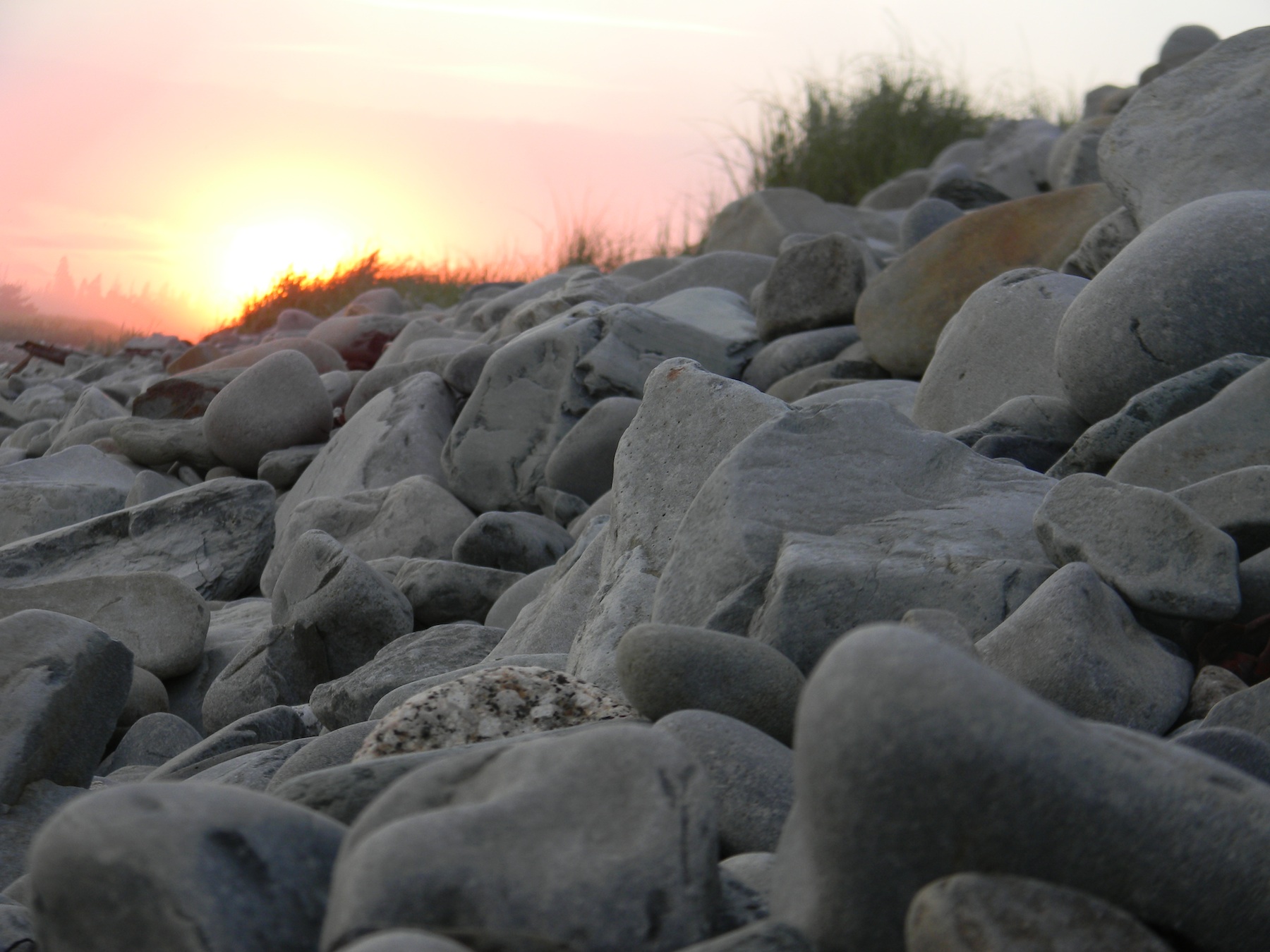
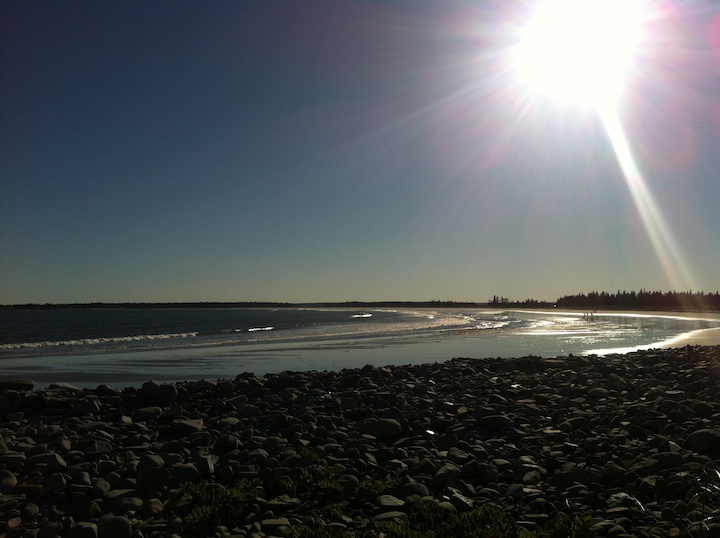
Sunset on Cherry Hill Beach, Nova Scotia.  Photo by Eric  B. Hernandez

Sunset on Cherry Hill Beach, Nova Scotia. Photo by Eric B. Hernandez

Drinking Deep from the Elixir of the Berkshire Festival of Women Writers

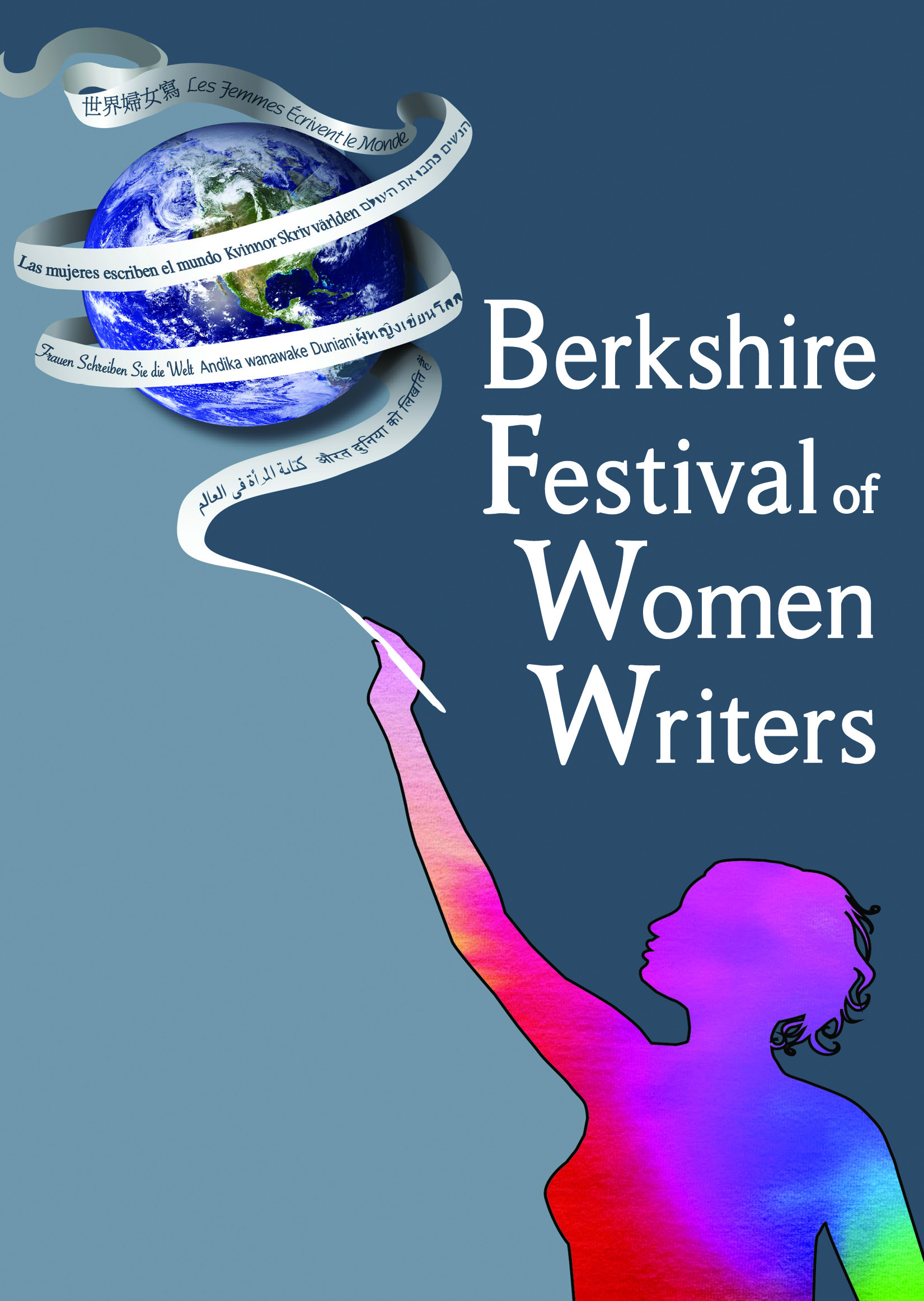
BFWW-vertical-logoJanuary is the season when I must work like mad to get the Program for the 2014 Berkshire Festival of Women Writers out to the printers, so that it will be ready to distribute in February.

For months now, program coordinator Jan Hutchinson and I have been finalizing all the details, gathering the descriptions and bios and photos for no fewer than 58 separate events, featuring more than 150 women and girls at some thirty different venues throughout Berkshire County, including of course our principal sponsor Bard College at Simon’s Rock.

We’ve also been soliciting advertising and sponsors with the help of our hard-working Miss Hall’s School Horizons interns, supervised by organizing committee volunteers Judy Nardacci and Lorrin Krouss.

And committee members Maureen Hickey, Joanne Cooney, Vera Kalm and Johanna Janssen have been helping to generate the funds necessary to sustain a growing Festival like this one, with considerable success—we have dozens of contributors to thank this year.

Once I finish my part of the Program, I’ll send the copy over to Festival graphic designers Alice and Anna Myers, who will work their magic and send it off to our fabulous printer, John DiSantis at Quality Printing, who always does such a stellar job for us.

Then we’ll turn out attention to getting the website up to speed, and getting out our own publicity in local and regional publications and calendars, aided by the very capable and calm Lynnette Lucy Najimy of Beansprout Productions.

In short, our Festival is a huge effort, representing the combined forces of so many talented people in the Berkshires, all coming together to brighten up the often drab month of March with readings, workshops, performances and discussions highlighting the creative energy of women and girls.

I may be grumbling about the frenetic workload now, but I know once March 1 rolls around and our Festival starts to gather steam, the delicious vitality of women’s words will carry me along to inspirational highs I could never have conjured on my own.

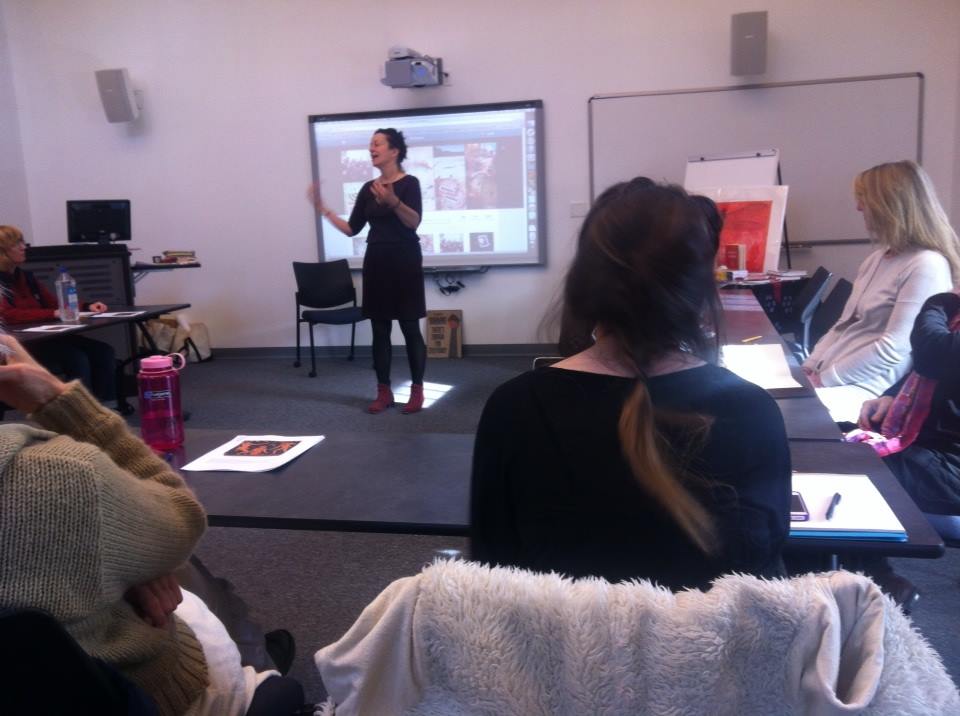
1528653_548356822534_515979881_nThat’s what the Festival is all about—it’s a grand collaborative gift that we give to our community, and not only in March.  This year we’ve begun to offer year-round programming as well: the monthly Lean In group for women writers, co-hosted by Lesley Ann Beck and yours truly at the Berkshire Museum; the Writing from the Heart readings, which we’ll be offering next on February 13 at The Mount; a special Mother’s Day event planned for May at the Sandisfield Arts Center; and the new weeklong Writing Workshops for Women, going on right now and again in June.

The energy of so many creative women and girls coming together to share their ideas and perspectives in the public sphere ignites an alchemical combustion that produces a heady, exhilarating kind of mental/emotional elixir.

We all feel it, presenters and audiences alike—the sheer joy of coming together to shine our creative lanterns at each other, beckoning and inspiring each other on to new heights.

Clarissa Pinkola Estes would call what we do in the Festival “displaying the lantern of the soul.”  In a recent blog post she said that “to display the lantern of soul in shadowy times like these – to be fierce and to show mercy toward others; both are acts of immense bravery and greatest necessity.
Struggling souls catch light from other souls who are fully lit and willing to show it.”

Meet us out on deck at the Berkshire Festival of Women Writers, and bring your lantern!  Let’s create beacons bright enough to illuminate the way forward, together.

Cherry Hill Beach copy