Queer Visions of a Better World

Bradley Manning at work

Bradley Manning at work

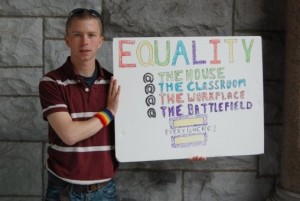
The news this week that Private Bradley Manning had come out as Chelsea made me think first that truth is way stranger than fiction, and second that it makes perfect sense that one of the most courageous warriors of our time would be a queer woman.

Gloria Anzaldua, who has been one of my heroines since I first read her seminal work Borderlands/La frontera back in the 1980s, always insisted that queer folk have a special role to play in bringing about a change in human consciousness—moving us from the patriarchal mold of the past 5,000 years or so to what she called “a new mestiza consciousness,” a much more holistic, inclusive, planetary awareness.

Anzaldua extended Virginia Woolf’s famous statement, in her anti-war tract Three Guineas, that “as a woman, I have no country.  As a woman, I want no country.  As a woman, my country is the whole world,” giving it a new queer mestiza twist:

Gloria Anzaldua

Gloria Anzaldua

“As a mestiza I have no country, my homeland cast me out; yet all countries are mine because I am every woman’s sister or potential lover.  (As a lesbian I have no race, my own people disclaim me; but I am all races because there is the queer of me in all races.)  I am cultureless because, as a feminist, I challenge the collective cultural/religious male-derived beliefs of Indo-Hispanics and Anglos; yet I am cultured because I am participating in the creation of yet another culture, a new story to explain the world and our participation in it, a new value system with images and symbols that connect us to each other and to the planet.  Soy un amasamiento, I am an act of kneading, of uniting and joining that not only has produced both a creature of darkness and a creature of light, but also a creature that questions the definitions of light and dark and gives them new meanings.”

Because queer folk have lived in their own bodies this awareness of being more—more than meets the eye, more than can be limited by any label or category—Anzaldua believed that they would be able to lead the way towards a new human civilization founded not on dominance and subordination, not on hierarchies of value, not on black-and-white binary systems, but on synthesis and what she called “a tolerance for contradictions, a tolerance for ambiguity.”

Some, like Anzaldua herself, would be called upon to become what she called nepantleras, boundary crossers and bridge builders who would go through the wounds and pain of traumatic life experiences to access courage and wisdom to lead others into a new awareness of human potential.

Chelsea Manning is such a nepantlera.

Several years ago, in a class I offered on human rights, my students and I watched, horrified, a recently leaked video called “Collateral Damage,” which clearly showed a group of American soldiers in a helicopter searching out and gunning down unarmed Iraqi civilians who were simply talking together on a quiet, sunny, bombed-out village street.
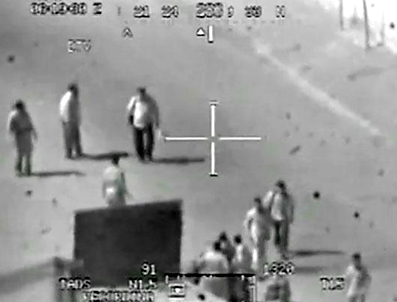
Still image from the Wikileaks Collateral Damage video--before the machine guns started

Still image from the Wikileaks Collateral Damage video–before the machine guns started

The language the soldiers used as they hunted down their targets was straight out of a violent video game, which is probably where they had learned the shoot-em up skills they displayed.  But this was no game.  Of the several men who lost their lives that day, one was a journalist on assignment for the Western media, armed only with his digital camera.

My students and I agreed that we needed to know that this kind of behavior was taking place under the banner of the American flag.  Keeping us in the dark about the reality of what was happening in Iraq, at the cost of enormous sums of taxpayer monies, was a violation of the rights of every American citizen in whose name this war was being fought.

Many obviously agree: the clip “Collateral Damage” has now been viewed more than 14 million times on You-Tube. Only because of the courage of Chelsea Manning and Julian Assange of Wikileaks, both now branded political heretics, did we find out this information.
imagesWe like to think that America is a free country, but it turns out that our freedom has very carefully regulated borders and boundaries.  We are free to dissent as long as we have a permit.

The World Wide Web knows no such boundaries.  It is truly a queer space, a space that has room for every kind of human activity and belief.  In exercising her freedom to circulate information on the Web, Chelsea Manning ran afoul of those who would try to dam the flow, controlling access to knowledge.

Some insist that it is essential that knowledge be controlled, in the name of national security, counter-terrorism, American interests, etc, etc.

It’s past time to start asking questions about whose interests are really served by restricting the free flow of information.

Are we going to become another China, where all individual freedoms are subordinate to the will of the State?  Has it already happened?

What all totalitarian states have eventually learned is that the more human beings are repressed, the more our will to resist is strengthened.

In this country, for the past few decades, our attention has been dulled by the opiates of the entertainment media, consumerism and drugs of many kinds.  A majority of us have slipped without even realizing it into a new form of labor bondage, in service to the almighty Bank, by whose credit and in whose debt we live.

During this time, the military-industrial-financial-media corporate conglomerates have grown huge and menacingly well-armed, to the point where it seems almost impossible that those of us who dare to imagine another way of living—another way of relating to the planet and to each other—might prevail.

We must not allow our vision of a better world to be limited by those who are currently in power.

We must insist on the freedom of the World Wide Web as a queer space for those who understand that “our country is the whole world.”

Chelsea Manning, I salute you!  You had the courage to shine a light into the dark corners of our government, no matter the consequences, and now you courageously step into the full measure of your own identity.

May we each learn to be so bold.

R.O.I.—From Mother Earth’s P.O.V.

imagesPeter Buffett, one of billionaire Warren Buffett’s sons, published a brave, thoughtful op-ed piece in the New York Times the other day.  In it, Buffett takes to task what he calls “the Charitable-Industrial Complex,” the philanthropic crowd who piously seek to save the world, as long as the R.O.I. is sufficiently rosy and the status quo is not upset.

Buffett knows he sounds like a class traitor here as he proffers this description of “Philanthropic Colonialism” (his term):

“As more lives and communities are destroyed by the system that creates vast amounts of wealth for the few, the more heroic it sounds to “give back.” It’s what I would call “conscience laundering” — feeling better about accumulating more than any one person could possibly need to live on by sprinkling a little around as an act of charity.

“But this just keeps the existing structure of inequality in place. The rich sleep better at night, while others get just enough to keep the pot from boiling over. Nearly every time someone feels better by doing good, on the other side of the world (or street), someone else is further locked into a system that will not allow the true flourishing of his or her nature or the opportunity to live a joyful and fulfilled life.”

Buffett says he’s “really not calling for an end to capitalism; I’m calling for humanism…. It’s time for a new operating system,” he declares. “Not a 2.0 or a 3.0, but something built from the ground up. New code.”

Buffett says that philanthropy should be dedicated to  “trying out concepts that shatter current structures and systems that have turned much of the world into one vast market. Is progress really Wi-Fi on every street corner? No. It’s when no 13-year-old girl on the planet gets sold for sex. But as long as most folks are patting themselves on the back for charitable acts, we’ve got a perpetual poverty machine.

“It’s an old story,” he concludes; “we really need a new one.”

Yes.  And philanthropy is not the only sector of our society that needs to reinvent itself.

Although I respect Buffett for his willingness to sound what will be taken as a heretical note in his own social circles (at one point he adds self-consciously “now I’m going to upset people who are wonderful folks and a few dear friends”), I don’t think he goes far enough.

I don’t want to see a merely “humanist” social system, I want to see humans develop an ecological understanding of our place and role on the planet.

I want us to repudiate our colonialist mindset, which persists not only in our tendency to give “humanitarian aid” with one hand while seizing economic control of a country’s most valuable resources with the other, but also in predatory capitalism at home and abroad—the debt bondage that the majority of people on the planet who buy into the system find themselves lashed to, laboring to pay the bank without ever being able to accumulate enough capital, social or financial, to buy their way into the promised land of security and ease.

The “new story” I’d like to see us live by would rewrite human attitudes towards other animals, insisting on the rights of every living being on this planet to a decent life.

That doesn’t mean a pig needs a condo with a swimming pool, but she does need enough space to breathe and move around in, healthy food and a clean, sanitary living environment.  Her wastes need to be disposed of the same way human wastes are—not sent into the rivers to create dead zones the size of states out in the sea.

100_2435Every aspect of the planet, from trees to minerals to water to fossil fuels, should be seen as precious resources to be safeguarded and cherished for the good of all who rely on them, not merely as sources of income for the few who sit on the boards or own stock in the mega-companies that develop, extract, exploit, and sell before moving on, leaving the devastated land as “collateral damage”— someone else’s problem.

The question is, how to get through to the corporate titans who are very happy with the status quo?

These are the folks who live their whole lives in such a fabulous cocoon of wealth and privilege that they have the illusion that they and their families can remain entirely insulated from the shocks of our poisoned, over-populated, over-heated planet.

If even in their philanthropy these people are thinking in terms of R.O.I., it must be a totally foreign concept to them to imagine conducting business in terms of gross social gain rather than gross individual profit.

Andrew Harvey, in his book The Hope: A Guide to Sacred Activism, recounts a lunch conversation he had with one such business tycoon, “the head of a major agribusiness corporation.”  The businessman chews Harvey out for being a “naïve do-gooder” who does not understand how the real world functions.

“Most of you that I have met truly believe that if the CEOs—like me, for instance—really knew what harm their corporate policies were doing, they would rend their Armani suits, fling out their Rolex-wreathed arms, burst into tears and change.  This is madness and shows how little you dare to know about what is really going on.  And how can you even begin to be effective until you understand what you are up against?

Of course, the businessman then enlightens Harvey on what he and other “naïve do-gooders” are up against in the quest to change the world for the better.

“You are up against people like me,” the man says.  “I know exactly what my company is doing and what devastation it is causing to thousands of lives.  I should know; I am running it.  I know and I do not care.  I have decided I want a grand gold-plated lifestyle and the perks and jets and houses that go with it and I will do anything—bend the law, have people ‘removed,’ bribe local governmental officials, you name it—to get what I want.  I know, too, that none of my shareholders care a rat’s ass what I do or how I do it, providing I keep them swimming in cash.”

I thought of this blunt, self-satisfied description of the view from the top of the capitalist heap when I read recently about how the American electricity industry is responding to the rising popularity of home-based solar panels.

images-1Rooftop solar panels are being compared to cell phones, which, if you remember, created a major sea change in the telecom industry.  In the end, the telecom giants made out like bandits, after initially having spent a lot of money and political capital to try to put the brakes on what was perceived as a threat to the traditional landline phone system.

Today it’s the turn of the electricity industry, which is terrified of losing market share if every homeowner can make their own energy on their own roof.

If homeowners are no longer paying the fees that subsidize the public grid, industry officials argue sanctimoniously, how will this public system be maintained?

No where in the New York Times article about this, which appeared in the Business section, was there any mention of the broader social, global benefits of distributed solar electric generation as compared to fossil fuels or nuclear electric sources.

No mention of the many reasons why every government on the planet should be encouraging homeowners and businesses to convert their energy sources to solar, along with wind, hydro and geothermal, just as fast as they possibly can.

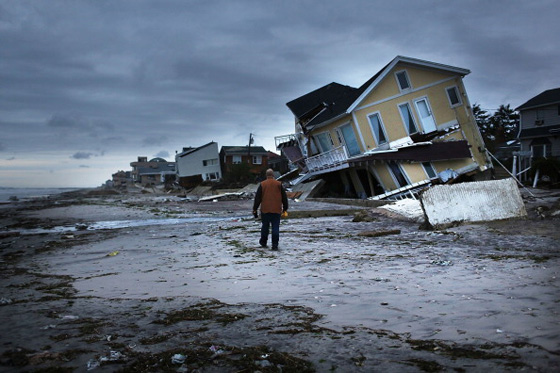
When are the CEOs who are so busy buying off Congressional delegations and creating expensive self-advertising campaigns going to realize that what they really need to be worrying about is not thrifty homeowners taking advantage of tax incentives to install solar panels, but the mega-storms, wildfires and floods that will be coming our way every year, increasing in intensity the longer we wait to make up our minds, as a global society, to give up our addiction to fossil fuels?

hurricane-sandy-damage

Apparently most human beings can only be swayed by self-interest.

OK—we can work with that.  It’s quite clear that it’s in the interests of every human being on the planet to develop a sustainable relationship with our Mother Earth.

If we don’t, she will just give a great shrug of her climatic shoulders and be done with us.

Where will the R.O.I. be then?

Being the change–beyond hope, beyond fear

Every time I write an exhortatory post like the last one, I imagine my readers getting to the end and clucking their tongues in frustration.

“OK, we get it, now the is time to act—but what does she want us to DO?  Doesn’t she have any practical suggestions on what to do in this terrible transition time?  Isn’t she going to lead by example?”

Well, yeah.  In relentlessly focusing my attention, and by extension my readers’ attention, on the frightening facts of environmental degradation–from climate change to toxic pollution to the precipitous decline of millions of species—I am doing something.  It may not be much, but at least it’s better than sticking my head in the sand and ignoring the gathering storm, or selfishly trying to live it up as long as possible—let the band play on!

There are many things I dream of doing, but right now simply cannot.

I cannot build myself an environmentally sustainable, off-the-grid house, nor can I pick myself up and move to an eco-village at this time.

I cannot spend all my time sitting in trees to protest logging or marching on Washington D.C. to protest inaction on climate change.

I cannot devote myself 100% to environmental communications work.

And I can’t wave my wand and stop the poles from melting, or make all the toxic chemicals just go away.

What I can do is take the strengths I’ve been given, in writing and communicating, and use them to try to spread awareness among others, in the hope that the little ripple I may be able to start will grow to a mighty wave of positive change.

***

I need to think more about this question of hope, though.

Margaret Wheatley

Margaret Wheatley

Lately I’ve been reading and re-reading Margaret Wheatley’s latest book, So Far From Home, in which she talks, rather surprisingly, about the need for activists to move beyond hope.

The problem with hoping for change, she says, is that “fear is the constant, unavoidable companion of hope. What this simply means is that I hope for a certain outcome and I’m afraid I won’t get it. I hope for a certain result and I’m fearful it won’t happen. This is the way that hope and fear are wedded together….So, it might be that the road to fearlessness is only found by giving up hope. By giving up outcomes, by giving up goals.”

This is a challenging idea.  If we give up on goals, doesn’t it mean that we give up, period?  That we just bow our heads in resignation and accept the anthropogenic destruction of our planet as inevitable?

Not according to Wheatley.

Quoting from Thomas Merton, who says that we need to “concentrate not on the results but on the value, the rightness, the truth of the work itself,” Wheatley gently asks:

“What if we could offer our work as a gift so lightly, and with so much love, that that’s really the source of fearlessness? We don’t need it to be accepted in any one way. We don’t need it to create any certain outcome. We don’t need it to be any one thing. It is in the way we offer it, that the work transforms us. It is in the way we offer our work as a gift to those we love, to those we care about, to the issues we care about. It is in the way we offer the work that we find fearlessness. Beyond hope and fear, I think, is the possibility of love.”

Could this be a kind of answer to those skeptics who would take me to task for writing about environmental issues without doing enough to be the change I want to see?

By giving myself to this work of raising the alarm, motivated by my deep love for the planet and my awareness of the inter-being of all her denizens, am I doing the work I came here to do in this lifetime?

The truth is that I don’t have much hope, anymore, that we will be able to “save the world.”  Nevertheless, I keep on writing, because writing is my way of working through and releasing myself from fear.

Having spent a lot of my life in fear, and having come to know it intimately, I can say with some authority that fear is a useless, paralyzing emotion.  Fear holds us back, it pinions our wings, it pushes us to do things we will later regret.

What we need, Wheatley says, is the clarity that resides beyond fear and its twin sister, hope.  The clarity that comes with knowing that since our time is going to come sooner or later, what’s important is how we spend each one of our days.

We need to do the work we came here to do, as well as we can, without expecting reward or recognition, without depending on external acclaim or tangible, material successes.

Beyond hope, beyond fear, I will keep going on, day to day, raising my children, doing my teaching and writing, enjoying beauty, pleasure and loving-kindness as they cross my path, and conjuring them myself in the way I live my life.  In that sense, yes, I will be the change.

100_2487 copy

Intentional communities for the 21st century

Most of us today are living in in houses, villages or cities built in and for an earlier time.  Having become more resigned, in recent months, to the inevitability of climate change, with its attendant disruptions of life as we have known it, I am also now more aware of how essential it is that we begin to adapt if we wish to survive the coming cataclysms.

And that is a big IF.

I am not entirely sure that I have the will to survive, if surviving means living in deprivation with the constant threat of violence, as so many science fiction visions of our future have presaged.

That is why I have lately become so fascinated with questions of the hereafter, trying to peer beyond the transition of life into death, to see whether it might be true that some spiritual essence of us might persist beyond the loss of our physical body.

That remains an unanswered question for me, and for that reason it is still hard for me to go easily into the night of death.  Although I don’t want to live through the hard times that will come with climate change, I do have a desire, which grows stronger by the day, to do what I can to prepare for what is coming.

What does this mean, in a practical sense?

It means that I am thinking seriously about trying to connect with kindred spirits with whom to build a resilient community that is designed to meet the challenges of what will become our reality as the 21st century moves forward.

I should admit that I have always been leery of intentional communities, and my limited experience with them has not been very positive.

I was a member of a Waldorf educational community, as a parent, for more than a decade, and that chapter of my life ended badly—I had to pull my son out mid-stream, at the end of fifth grade, because his teacher was making him (and other classmates) miserable, and the school provided absolutely no framework for setting this bad situation right.  As parents, we were told to suck it up or leave, and many of us left.

Today, in my home here in the Berkshire mountains of western Massachusetts, I am a member of various communities, but none with whom I have developed the deep shared bonds of purpose and passion that I imagine would be necessary for a successful intentional community of the kind I am beginning to dimly envision.

What am I looking for?

IFIn some ways, it starts with dwelling.  We need to begin to dwell on the Earth in a sustainable way.  To do this right means we need to change the form of the houses we construct, the energy we siphon from planet and Sun, and the way we produce the food we consume.

The intentional community I imagine will have small, low-energy buildings set harmoniously into the landscape.  Energy will be supplied by geothermal, solar and wind or water, depending on the setting.  As much as possible of the community’s needs will be satisfied locally, using permaculture techniques and the cultivation of fruit and nut trees adapted to the environment.  I imagine chickens, goats, sheep and cows kept mainly for their milk products, and draft horses to plow and fertilize the fields.

I suppose I am envisioning something like what the Amish have held on to all these years, much to the derision of “modern” Americans.

eco-homes-1_1926535b

Might it be possible to adopt the low-tech subsistence model of the Amish (like subsistence farmers worldwide) without necessarily forgoing a) the connectivity of the World Wide Web and b) the freedom of thought and expression encouraged in modern society?

My fear about intentional communities, as they have so far been established, is that they tend to demand strict loyalty and conformism, to such a degree that creativity and growth is suppressed.

I am not willing to give up creative freedom in exchange for material security.

So I am wondering whether it might be possible to form an intentional community based on principles of energy sustainability and a subsistence (as opposed to accumulating or growth) economy, which did not at the same time limit its members creative freedom and growth?

If any models exist, I would appreciate it if readers would point me to them.

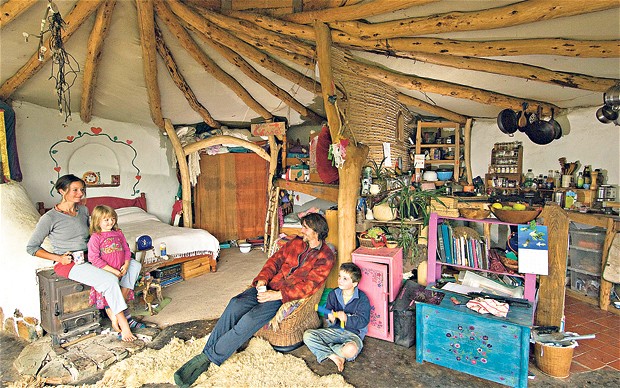
OLYMPUS DIGITAL CAMERAOne I have been thinking about recently is the Lammas Community, in Wales, which I especially love for its marvelous hobbit-style homes.  There are eco-villages throughout EuropeFindhorn is probably the best known—but I am less familiar with similar experiments here in the U.S.

Americans, here is our challenge: to create environmentally sustainable eco-villages that are explicitly designed to weather the climate and social shocks of the coming years, while also allowing for the social and creative free thinking that we have come to cherish at the turn of this century.


Can we achieve this?  Do we have time?  Do we have the will?  Can we afford not to?

“Our lives begin to end the day we become silent about things that matter.”

So OK, having slept fitfully and woken up resigned to accepting the basic premise that it is unlikely that the world as I have always known it will continue into the foreseeable future…what then?

How do I spend my one wild and precious life on the planet?

I am quite clear that I want to put my time, talents and energies into doing my best to head off catastrophe for the natural world.

But this often feels like trying to stick my finger in a huge roaring dyke of bad news—how can I, a small and ordinary person, make a difference for the trees and animals and birds and bees that I so want to protect?

All I can say is that making the attempt is better than giving up.

My gift has always been writing, and so I am using that gift to try to reach out to others, in the hope that if many of us, in our small, ordinary lives, can join our voices together, the resulting chorus could indeed change the world.

I am continually amazed at how the technological innovation of the World Wide Web has facilitated the meeting of minds and the catalyzing of movements.  There has never been a better moment for human progress and connected intellectual growth.

I wake up with a new thought, write it down and send it out into the gushing waters of the internet, where, within the hour, it will be read by someone living on the other side of the planet, who will bat it back to me with comments that will cause me to see the idea from a whole new perspective.  All within the space of an hour! How remarkable is that?

But sadly, it is precisely our reliance on and success with technology that is causing our demise, from simple overpopulation to the poisoning of our environment.

This is the challenge of our time: to very quickly learn to adapt to our rapidly changing climate, and to find environmentally sustainable ways to hang on to our positive technological inventions.

I believe it can be done, which is why I am totally invested in the challenge of waking people up and getting them engaged in fighting the good fight to make our epoch, which many call the Anthropocene, a positive transition to a better human relationship with the Earth, rather than a nightmare ending in the dark night of extinction.

If we were to shift our resources from weapons of destruction–guns, bombs and missiles, chemical poisons, and ever-bigger drills, earth-movers and chain saws—to implements of cultivation and the harmless harvesting of the bounty of our natural world, what a huge difference that would make!

People say that over-population will continue no matter what, but I know from years of studying women’s issues worldwide that when women are educated and respected in a society, they have fewer children.

Between fewer children in the developing world, a lower rate of consumption in the developed world, and the invention of new technologies that act in harmony with nature rather than against her, we could transform our planet within a generation or two.

J.R.R. Tolkien’s classic fantasy The Lord of the Rings is looking more and more prophetic, and it’s surely no accident that the films have come out now, to appeal to the current generation of young people.

We are the ones who must enter the fight to hold off the dark forces of Mordor, in order to preserve the happy, healthy lives in the Shire that all humans are meant to live.

tumblr_m9hm5vDG2h1qzhkvho1_500Today is the anniversary of Dr. Martin Luther King Jr.’s assassination, and I invoke his memory to remind us that although it is true that by ourselves each one of us is puny and limited, it is also true that if we pool our resources and act together we have tremendous power.

We must each start by determining what gifts we can bring to the table of this new movement, and then start where we are, doing what we can, and sharing our insights and passions by all the channels of communication that are open to us, from talking face to face with friends and neighbors to sending our ideas out into the World Wide Web.

Now is the time, and we are the ones we’ve been waiting for.

I will close with two quotes from Dr. King:

“Our lives begin to end the day we become silent about things that matter.”

“If you can’t fly then run, if you can’t run then walk, if you can’t walk then crawl, but whatever you do you have to keep moving forward.”

Amen, brother.

Confronting taboos: death and the afterlife, American-style

It is one of those unspoken social contracts that Americans won’t say anything to each other that might indicate any doubt that life as we know it will continue.

If you dare to bring up the subject of climate change, with its attendant erratic weather, major storms, sea-level rises, wildfires and crop losses, people roll their eyes and change the subject.

If you voice any doubt that the economy—local, national and global—will recover, you are dismissed as a negative Pollyanna, and again, the subject is changed.

If you were, just hypothetically, to express the opinion that our increasing reliance on digital technology might have the quality of an unhealthy addiction, and to worry aloud at the effect that all that unrelenting screen time is having on the current generation of tiny tots, you are dismissed as a raving Luddite.

Nobody talks about the fact that both of our political parties are thoroughly corrupt, and our Supreme Court even more so.

No one mentions the disappointment so many of us feel with President Obama, who has proven himself incapable of effectively standing up to Beltway politics—if indeed that was ever his goal.

We are living through a massive period of collective denial of social and physical reality, with no exit in sight from the crazy funhouse we inhabit, with its motto, “Everything is going to be OK” blazoned on every door.

It’s about time we accepted the fact that everything is not going to be OK.

Not by a long shot.

I have been a little bit quieter than usual this past month, with my attention turned to the Berkshire Festival of Women Writers, but I have been paying attention nonetheless to what’s going on in the world.

The elephants of Africa are under siege and conservationists are now using the E-word to describe their future.

American bees are dying off at record rates due to pesticide poisoning, which is now not only killing the adults, but also the larva of the bee colonies.

The ice at the poles continues to melt at an accelerated rate, while down in Australia it was by far the hottest summer on record.

Just this week, record rainfall brought flooding to Argentina that killed scores of people.

There will be no escape from the severe weather that our degenerating climate system will wreak upon all of us.

As retiring climate scientist James Hansen has testified over and over, we are already at the tipping point from which there will be no return to what was “normal” for the past 10,000 years.

I totally understand the impetus to denial, because really, what can any of us do about all this?

What should we be doing?

Marching on Washington DC?  Setting up survivalist camps in the wilderness?  Sabotaging pipelines and coal-fired power plants?  Buying hybrid vehicles and solar panels?

Damned if I know.

I am on a list-serve that broadcasts a newsletter written by Alex Kochkin, who focuses more on the spiritual side of our current crisis on Earth.  Kochkin insists that we should not be wasting time worrying about the physical issues here on the planet, but instead should be focusing our attention on getting ready for our transition into the spiritual realm—in other words, for death.

Kochkin predicts that there will be a massive die-off of humanity in the coming years, but he casts this in positive terms, as a necessary cleansing that will enable the Earth to reboot and start on yet another spiritual and evolutionary journey.

Believing firmly in a nonphysical afterlife, he is unafraid of death.

This is so counter-cultural that it gives me pause.

Unafraid of death?  Really?

Our culture is so fixated on avoiding death at all costs that it is hard to wrench my mind around to another way of seeing things.

11857232-life-after-death-religious-concept-illustrationWhat if death were just a transition to another (non-physical) stage of existence?

What if it were in fact the best thing that could happen to our planet if the majority of human beings transitioned out of physical existence?

What if the tenacity with which we Americans hold on to our lives was entirely misplaced?

What if instead of focusing all of our technical and intellectual know-how on physical survival, we began to focus on learning more about the non-physical realms that we have so far relegated to the backward precincts of religion, New Age quackery, and woo-woo tales of near-death experiences?

There is a noticeable trend in popular culture reflecting an uptick in interest in explorations of the spiritual/non-physical dimensions.  From Harry Potter to Twilight and beyond, we have a fascination with stories that can take us beyond the bounds of ordinary physical reality.

So strong is the cultural taboo on discussing this seriously that it is hard for me to push the “publish” button and let this blog post out in the world.

But another part of me rebels and is just done with listening to the soothing murmur of the mainstream: don’t worry, dear, everything is going to be OK….

No, everything is not going to be OK.  Just like the elephants and the bees and the polar bears, human beings are going to face a massive die-off due to the changes in our climate system, and soon.

It is that, above all else, that we should be preparing ourselves for.  How? I am not sure.  But one thing is certain: insisting that all will be well, despite all the evidence to the contrary, is just silly and delusional.

It’s time to wake up.

Becoming part of Gaia’s cure, instead of what ails her

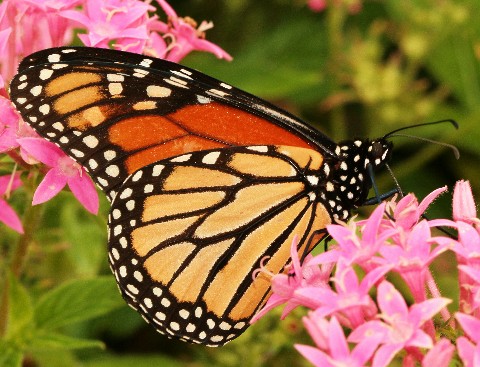
Milkweed-with-Monarch-ButterflyI will never forget one hot summer day when I was about eight years old, and a Monarch butterfly took it into its head to land on my arm and delicately lick up my sweat with its long, probing tongue.

I froze, wanting the Monarch to stay with me as long as possible, and watched with total fascination and delight as it balanced on my warm brown skin and enjoyed the salty treat I had to offer.

Eventually, with a graceful swish of its elegant wings, it rose up in the air and twirled off to land on a nearby stand of sweet-smelling pink milkweed flowers.

I felt blessed by the encounter, and ever after, when I see a Monarch I approach cautiously and respectfully proffer my arm, hoping to feel again the light touch of those fragile black legs and tiny tongue.

My childhood connection with Monarchs came to mind this week as I read the deeply disturbing news that “the number of monarch butterflies that completed an annual migration to their winter home in a Mexican forest sank this year to its lowest level in at least two decades, due mostly to extreme weather and changed farming practices in North America.”

Mexican conservation authorities report that “The area of forest occupied by the butterflies, once as high at 50 acres, dwindled to 2.94 acres in the annual census conducted in December,” which is “a 59 percent decline from the 7.14 acres of butterflies measured in December 2011.”

So now, along with the bats and the goldfinches and so many other species that I have known and loved in my 50 years on the planet, I must bid farewell to the Monarch butterflies too?

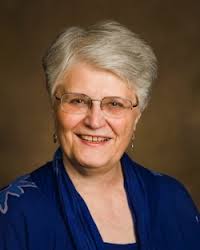
Carolyn Baker

Carolyn Baker

Trying to find a way to cope with the pervasive sense of grief I feel on a daily basis, I turned this week to the works of Carolyn Baker, who has self-published two books that have been striking a chord with thousands of people.

In 2009, she published Sacred Demise: Walking the Spiritual Path of Industrial Civilization’s Collapse, followed in 2011 by Navigating the Coming Chaos: A Handbook for Inner Transition.

Baker comes out of a psychology background, having served as a consulting psychotherapist for many years, but she draws on a wide range of sources that I too have been poring over in recent years, from Joanna Macy to Derrick Jensen to James Lovelock and many more.  Andrew Harvey, author of two books on “spiritual activism,” wrote the forward to her second book.

What all these folks have in common is the strong, level-headed recognition that human civilization is headed for a collapse.

The butterflies and the bats may be going first into the void, but we will not be far behind.

The current noise and controversy over questions like “to frack or not to frack,” “to build wind turbine generators or deep-sea oil rigs in the Arctic,” or “to erect solar arrays or thousand-mile oil pipelines” are just that—so much noise, which obscures our ability to focus on what is driving the debate on all these issues: the fact that our planet cannot and will not support 7 billion people at current levels of consumption.

James Lovelock

James Lovelock

The eminent eco-scientist James Lovelock, who, with Lynne Margulis, developed the theory of Earth as a complex living system he calls Gaia, has just published what may be his final book (he was born in 1919, making him now just seven years short of 100 years old).

Grimly titled The Vanishing Face of Gaia, Lovelock sadly predicts that global heating will force the die-off of much of humanity, and a retreat of the survivors to “lifeboat” places on the planet that will remain habitable on a subsistence basis for those able to live close to the land.

Lovelock uses the metaphor of disease to describe what is happening to our planet these days.  This passage is worth quoting in full:

“When we are first infected by fatal disease organisms, they grow in our bodies without our noticing.  We call this the incubation period, and it can be as long as several weeks.  Then at some stage in their growth, or in our bodily reaction to it, we feel unwell, with fever and pain.  Soon, a matter of hours with the most virulent influenza, homeostasis starts to fail and we collapse and die.  This is when physicians speak of massive organ failure.  In the whole course of fatal disease there is no tipping point but instead a downslide that starts imperceptibly and then grows ever steeper until we fall.

“We became the Earth’s infection a long and uncertain time ago when we first used fire and tools purposefully.  But it was not until about two hundred years ago that the long incubation period ended and the Industrial Revolution began; then the infection of the Earth became irreversible….

“The disease that afflicts the Earth is not just climate change—manifest by drought, heat, and an ever-rising sea.  Added to this there is the changing chemistry of the air and the oceans, and the way the sea grows acidic.  Then there is the shortage of food for all consumers of the animal kingdom.  As important is the loss of that vital biodiversity that enables the working of an ecosystem.  All these affect the working of the Earth’s operating system and are the consequences of too many people.  Individuals occasionally suffer a disease called polycythanemia, an overpopulation of red blood cells.  By analogy, Gaia’s illness could be called polyanthroponemia, where humans overpopulate until they do more harm than good” (232-33).

Lovelock sees the demise of the current terrestrial epoch as inevitable.  But he also reminds us that Gaia is a tough old planet, who has survived many other total collapses of biodiversity in her past.  “After every one of these catastrophes Gaia recovered, taking her own time—sometimes as long as millions of years,” Lovelock says.  “During these periods of convalescence there was always somewhere on Earth a refuge for living organisms, a place where the climate and the chemistry still favored life.  And so it surely will be when polyanthroponemia resolves” (235).

Lovelock faults our human tribalism and the selfish, competitive shortsightedness of a predator species for our current predicament, quoting the biologist E.O. Wilson, who said towards the end of his life, “How unfortunate that the Earth’s first intelligent social animal is a tribal carnivore” (239).

This is “our agonizing condition,” Lovelock says; “we have the intelligence to begin to expand our minds to understand life, the universe and ourselves; we can communicate and exchange our deep thoughts and keep them outside our minds as a permanent record.  We have all this but are quite unable to live with one another or with our living planet.  Our inherited urge to be fruitful and multiply and to ensure that our own tribe rules the Earth thwarts our best intentions” (240).

Lovelock ends his book by looking ahead to a mythical time in the future, when the survivors of the collapse of human civilization “evolve to become as beneficial a part of Gaia as were the photosynthesizers and the methanogens,” who “might serve within her as our brains do in each of us.  We would be an important part of what had become in effect an intelligent planet better able to sustain habitability” (248).

It is our duty, he says, as human beings living through these great Transition Times to ensure that enough of us survive to pass on our genes to the future, in the hopes that future iterations of human beings will overcome our tribalism and selfishness and put our remarkable creative intelligence to work for the good of the planet and all her denizens.

The question becomes then, what should we be doing now to prepare for the future that awaits?

This is where Carolyn Baker’s work becomes so important.  Navigating the Coming Chaos is nothing less than a workbook for inner and outer transition where the focus is on strengthening one’s resilience and connection with a sense of purpose and meaning in a world gone increasingly mad.

“I am not a survivalist,” Baker says.  “I have never believed that the prime objective in preparing for the Long Emergency is to remain alive.  None of us is enthusiastic about death, but we will all die.  To deny this fact and focus primarily on survival is to embrace the heroic perspective and, in my opinion, to miss the point….

“I believe that navigating a collapsing world will entail constant observation of various forms of death—the death of infrastructure, the death of abundance, the increasing absence of goods and services that we now take for granted, the death of institutions, the disappearance of employment and shelter, the increased scarcity of food and water, the death of landscapes and yes, the literal deaths of people and animals.  The collapse of industrial civilization and the lifestyle it has provided is a catastrophic death of a paradigm and a way of life.  While we may look ahead to the ultimate blessings unleashed by this death, it will nevertheless be traumatic to live through the magnitude of losses it will manifest.

“If, however, we can begin now to make friends with death, as the Buddhist tradition has taught for thousands of years, we may be better prepared emotionally and spiritually to navigate a civilization dying on myriad levels….

“Simply put, the essential question is not: How can I survive the collapse of industrial civilization?  But rather: Why am I here, right now, in this place, at this time, experiencing the end of the world as I and my species have known it? (166).

Much of Baker’s book, like Starhawk’s most recent book The Empowerment Manual, is dedicated to prompting self-reflection leading to the recognition of what we are here on this Earth to do—and how we can successfully work with other awakened humans to accomplish our purpose.

The biggest challenge seems to be how to learn to work together harmoniously with each other and with the other living elements of our planetary home.

Gaia callingFor me, it seems clear that what I need to be doing now is to rekindle the instinctive sense of kinship I had with the natural world as a little girl; to find ways to become a channel for the love I felt, and still feel, for the gaudy Monarch butterflies who sailed regally through the fields of my childhood.

Sooner or later I will be following them into oblivion. But let it not be before I’ve had a chance to do my utmost to wake up my fellow travelers on this planet to the state of emergency we now face, and to help create the community structures that will enable at least a critical few of us to survive into the distant future.

We need new stories to help us imagine a new, brighter future

Will someone please do the math on how adding thousands of Americans to the unemployment rolls, thanks to the new “sequester,” is going to save the country money?

Not only will we (as in, we the taxpayers supporting the Federal government) be paying unemployment compensation for those folks, but their communities will also be suffering as they cut back on personal spending…perhaps lose their cars or their homes…and end up needing a lot more in the way of social services.

Sometimes when I check in with American politics, I have to wonder who is writing the scripts.

President Obama sailed into office in 2008 promising that as an outsider to Beltway machinations, he would champion the ordinary American and set the country on a kinder, more humane path.

The Republicans, perhaps rightly, read his conciliatory gestures as weakness, and have taken the bully’s path of stonewalling, denunciation and manipulation of the truth.

Presidential Inauguration, 2013

Presidential Inauguration, 2013

Speaker Boehner’s sour face as he sat behind the President on Inauguration Day this year said it all.  He would not—could not—cooperate in any way with our country’s popularly elected leader.  Not even if his obstinacy brought America to its knees.

The whole scenario was eerily reminiscent of the script from the one-season TV show Commander in Chief, starring Geena Davis as the first woman President of the United States.

She too was pitted against a demonic Speaker, who would stop at nothing to discredit, provoke and undermine her, even if his reckless bullying endangered the welfare of the country overall.

Interestingly, Commander in Chief was cancelled after just one season, just as Ms. Davis’s character, President Mackenzie Allen, was gearing up to run for re-election against—of course—her nemesis, the Speaker of the House.

At the time the explanation given for the cancellation was that audiences were not yet ready for a woman President (the show ran in 2005-06).

But watching the first 18 episodes again recently, it was clear that what really did it in was the daring script, which showed a powerful woman POTUS who was a popular Independent determined to stand up for ordinary Americans and to keep her hands clean of the usual muck of party politics.

Geena Davis as Mackenzie Allen, President of the United States

Geena Davis as Mackenzie Allen, President of the United States

In the last couple of episodes, President Allen decides to champion the Equal Rights Amendment for women, which still to this day has not been ratified by enough states to make it federal law.

Her political advisor tells her it’s suicidal to touch that hot potato if she’s seriously thinking about running for a second term, but she’ll have none of his cynical advice, and indeed ends up summarily firing him.

Could it be that the TV Gods cancelled Commander in Chief precisely because the show demonstrated that there is no reason why our country has to be held hostage to the Republicans—or the Democrats?

11-geena-davis-commander-in-chief-2005-2006Did they cancel the show because it showed that there is no reason why a woman can’t govern with equal or greater smarts, decisiveness and wisdom as a man—even as she remains a loving mother, wife and daughter?

President Allen was shown in every episode facing down stereotypes, garnering the respect of even her crustiest generals and most ruthless homeland security czars.

And the more she succeeds, the more ordinary people applaud and support her, the more determined her political adversaries become to take her down.

The show didn’t end with a bullet to her head; it didn’t have to.  It just got struck from the airwaves by one wave of a TV executive’s red pen.

So ended the daring career of the nation’s first television representation of a woman President of the United States.

***

Cronogram-BFWW-ad-webThis week I have been busy preparing for the opening of the Berkshire Festival of Women Writers, a month-long, grassroots, homegrown Festival that I founded three years ago to give women writers more opportunities to raise our voices in the public sphere.

My whole professional career has been dedicated to this mission of amplifying the voices of women writers, bringing them into classrooms and conference halls, into print and on to stages, because I firmly believe that if women had more power in the world, we would change human society for the better.

Gender is a spectrum: all men and women have both estrogen and testosterone pumping through our hearts, and all of us need to call on both the warrior energy of testosterone and the nurturing energy of estrogen to heal our damaged planet and create a stronger, wiser, more sustainable human civilization.

We cannot afford to wait for our political leaders to grow up and stop playing games with our future, and the future of our children.

We have to each do what we can, in our own spheres, to balance out the bullying and the guns and the lack of compassionate imagination with new stories, different voices speaking a different truth into being.

For me this means shutting out the cacophony of political heckling and sniping and tuning into the voices of the women of my community and our invited guests during this Festival month, as together we change the tenor of public discourse by daring to step out on stage and speak our truths to power.

No matter what happens down in Washington D.C.—no matter if our political representatives continue to lick the boots of the oil and gas industries, build billion-dollar fighter planes instead of mass transit, kick our veterans and young people to the gutter, deny women equal pay for equal work and make young women fight for the right to say no to pregnancy—we still have something they cannot take away from us.

We have our capacity for independent thought and we have our voices.

We must rise to the occasion and write our own scripts, bridges of words and dreams that will carry us into a livable future.

Great Barrington Select Board representative and author Alana Chernila reads her work--an open letter to Fox News anchor Bill O'Reilly--on opening night of the Berkshire Festival of Women Writers (3-1-13)

Great Barrington Select Board representative and author Alana Chernila reads her work–an open letter to Fox News anchor Bill O’Reilly–on opening night of the Berkshire Festival of Women Writers (3-1-13). Author Janet Reich Elsbach looks on.

Time to grow up, America: from the quest for independence to the recognition of interdependence

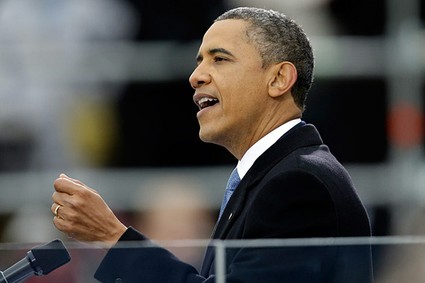
FE_DA_130121obama-inaug425x283In his second Inaugural speech, President Obama gestured back to other great and trying times in American history—“Seneca Falls, Selma and Stonewall”—and even further back, to the Civil War period and the War of Independence.

In all of these historical eras, freedom was the watchword, and first slavery, then inequality, the great evil that had to be eradicated in order for us to move forward as a nation.

Now we’re in a different period, unlike any we have yet lived through as Americans or as global citizens.

What we need now is not more freedom, but more connection.  If there are battles to be fought today—and there are!—they must be in the name not of liberty, but of interdependence.

It is hard to make a stirring speech out of complex concepts like interconnection, collaboration and sustainability, and President Obama’s gestures in this direction were, at best, oblique.

He spent a lot of his time echoing many of the enduring pieties of American history, including the Declaration of Independence, those famous lines that every American schoolchild studies: “We hold these truths to be self-evident, that all men are created equal, that they are endowed by their Creator with certain unalienable Rights, that among these are Life, Liberty and the pursuit of Happiness.”

This is “our generation’s task,” Obama said;  “to make these words, these rights, these values – of Life, and Liberty, and the Pursuit of Happiness – real for every American.”

There is a fundamental dilemma built into this founding creed, because of course one person’s pursuit of happiness may very well impede or encroach upon another person’s life and liberty.

For instance, is it OK that corporate “persons,” in their single-minded pursuit of short-term gains, ie, financial happiness, cut short people’s lives by poisoning our air, water and food supply with toxic chemicals?

Is it OK that your friendly neighborhood billionaire pays a lower tax rate than his secretary, considering that fact that this makes him very, very happy?

President Obama made no secret of his progressive agenda for social equality, ticking off social issues such as equal pay for women, gay marriage, and a more generous immigration approach as “our generation’s task to carry on.”

It was a surprise to many to find him also taking up the hot-button issue of climate change in this speech.

Echoing the Preamble to the Constitution, he insisted that “We, the people, still believe that our obligations as Americans are not just to ourselves, but to all posterity.  We will respond to the threat of climate change, knowing that the failure to do so would betray our children and future generations.  Some may still deny the overwhelming judgment of science, but none can avoid the devastating impact of raging fires, and crippling drought, and more powerful storms.

“The path towards sustainable energy sources will be long and sometimes difficult.  But America cannot resist this transition; we must lead it.  We cannot cede to other nations the technology that will power new jobs and new industries – we must claim its promise.  That is how we will maintain our economic vitality and our national treasure – our forests and waterways; our croplands and snowcapped peaks.  That is how we will preserve our planet, commanded to our care by God.  That’s what will lend meaning to the creed our fathers once declared.”

In the days of Wilberforce and Lincoln, a political leader who dared to speak out against slavery risked the wrath of the richest, most powerful men on Earth.

Today, a politician who dares to speak out against climate change runs the same kind of risk.

We know that the pockets of the huge energy conglomerates like Exxon-Mobil, Shell, Chevron and the rest are way deeper than the puny resources of the American government.

Those guys can buy themselves the best lawyers, the best lobbyists, the best media workers, the best researchers and scientists…and if short-term profit is their only motive, then they have no incentive to desist from continuing their pell-mell push to extract every last ounce of usable oil, gas and coal from the Earth’s crust.

President Obama indicated in his speech that he understands the ethical and scientific implications of allowing the fossil fuel industry to ride roughshod over the possibility of a sustainable future for our children and future generations.

“We, the people, still believe that our obligations as Americans are not just to ourselves, but to all posterity,” he said.

As a parent, I know that my responsibility to my children is greater than any claim I could make to personal freedom.

I cannot blindly pursue my own happiness at the expense of theirs.

No more can we as a nation and as a human civilization continue to pretend that we don’t understand how our permissiveness towards corporate freedom, with its myopic focus on next-quarter profits, is undermining our obligation to future generations—and not just future generations of humans, but of all the creatures and plants who grew up with us on this planet.

If the President truly believes what he said, that “our obligations as Americans are not just to ourselves, but to all posterity,” then he must act boldly to uphold a new creed for the 21st century, based not on freedom and liberty, but on responsibility and interdependence.  And we need to be right by his side, giving him the courage to act on his best convictions.

President Obama ended his speech by affirming that “You and I, as citizens, have the power to set this country’s course.

“You and I, as citizens, have the obligation to shape the debates of our time – not only with the votes we cast, but with the voices we lift,” he said, concluding:

“Let each of us now embrace, with solemn duty and awesome joy, what is our lasting birthright. With common effort and common purpose, with passion and dedication, let us answer the call of history, and carry into an uncertain future that precious light of freedom.”

Wait! No, that’s not right!  It’s not “that precious light of freedom” we need to embrace now; it’s “that precious recognition of interdependence.”

What he should have said in closing was this:

“With common effort and common purpose, with passion and dedication, let us answer the call of history, and work together to create a sustainable, global socio-economic framework, manifested on the local level by caring, collaborative communities who understand that now is no longer the time of independence, or of freedom, but the dawn of a new era of responsibility and interdependence.”

In short, it’s time for us humans to grow up.

If you need more convincing, check out Tiffany Schlain’s marvelous 10-minute “cloud film” INTERDEPENDENCE and read her “Declaration of Interdependence.

For a heartbreaking take on  the urgency of our mission to shift to renewable energy and put a lid on global warming, watch Nikki Craft’s film RESIST DO NOT COMPLY, made with Derrick Jensen and Lierre Keith.

And then join your fellow grown-up citizens in doing the work that it is, as the president said, our generation’s greatest task.

What should we do with our one wild and precious lifetime?

It is the last Full Moon of 2012, but the sky is overcast here, with snow on the way for tomorrow.

Having the moon obscured feels appropriate, as I am searching for a clarity that continually eludes me.

One thing for sure: this is the new normal, me alone with my dog by my side, sipping a quiet glass of wine by the fire, while my sons are out with their girlfriends.

Get used to it, honey!

After 20 years of hardly ever being alone, now it is coming around again, the long quiet hours I remember from my twenties, when I had seemingly endless time to think and read and write.

It saddens me to think of how I spent those hours, poring over the dry tomes of literary critics and deconstructionists, writing my own oh-so-alienated prose in a weak attempt at mimicry.

I wish I had instead been traveling the world in those years, voyaging and adventuring, meeting interesting people and learning new things.

I went as far as Paris and came home attached to a Mexican.

Married to him, I found myself locked into an endless loop of returning to his home in Mexico City year after year.  There I learned first hand about the power of internal colonization; the subtle and not-so-subtle debasement of women in Mexican society; and how to dance, drink and have a superficially good time.

I spent the past 20 years in what seems in retrospect like hard labor, being the primary caretaker in my home as well as—for nine of those years—working two demanding academic jobs.

Now my second job is gone, eliminated by state budget cuts, and one of my sons is almost launched, having gotten his B.A. last spring and moved to Florida for a job.

I am at the threshold of a new period in my life, and this time, knowing how short and precious a lifetime really is, I want to be more intentional–to make the best use of my time.

That is where I am seeking clarity.  What do I want to be doing with my one wild and precious life?

Where should I be putting my energies? What do I have to give? What do I want to be doing with my time?

In the current issue of Orion Magazine, the environmental writer Paul Kingsnorth asks this question too, and provides some answers that I find useful as pointers for myself.

After discussing how likely it is that we are on the cusp of civilizational and ecological collapse, he asks, “what, at this moment in history, would not be a waste of my time?”

His answers are fivefold: 1) Withdraw; 2) Preserve nonhuman life; 3) Insist that nature has a value beyond human utility, and proclaim this loudly to all and sundry; 4) Build refuges; 5) Get your hands into the earth.

This sounds like tremendously good advice to me.  I am especially glad to be reassured that my current retreat into solitary, meditative reflection is not a cop-out, but a necessary stage in the life-cycle of the bodhisattva for the planet that I want to become.

“Withdraw not with cynicism, but with a questing mind.  Withdraw so that you can allow yourself to sit back quietly and feel, intuit, work out what is right for you and what nature might need from you….Withdraw because action is not always more effective than inaction.  Withdraw to examine your worldview: the cosmology, the paradigm, the assumptions, the direction of travel.  All real change starts with withdrawal,” Kingsnorth says.

Preserving non-human life, and proclaiming its inherent value…well, I can try, within my sphere, but let’s face it, the very fact that I type these words on an Apple laptop with my refrigerator whirring quietly in the background means that I am part of the problem.

As Paul Kingsnorth knows and has expressed eloquently, there is nothing any one of us can do that will change the fate of the 200 species that go extinct every day on our planet.

Even if we come together collectively, it will be very hard, maybe impossible, to stop the juggernaut of climate change now.

That’s why the idea of building refuges and relearning off-the-grid skills makes a lot of sense to me.

UnknownI have a persistent vision of building a kind of hobbit-house in the side of a hill, off the grid and sheltered from the coming storms, in the company of others who share my dream of resilience.

It is not for nothing that JRR Tolkien’s classic The Hobbit and The Lord of the Rings are more popular than ever in these opening years of the 21st century.

We are engaged in an epic struggle once again, faced with the spread of a Mordor-esque wasteland over the entire planet.

Will those of us who share the ethos of hobbits, elves and dwarfs be able to save the day?

Will enough of our contemporary wizards—scientists, they call themselves now—weigh in on the side of life and health rather than the oppressive bondage of the capitalist technocracy?

In Tolkien’s novel, Evil comes even to the sheltered little Shire, but is vanquished in the end by the forces of Good.

That is how the stories we like to tell each other go.  It remains to be seen whether reality, this time, will follow this “happily-ever-after” fairytale motif.

I don’t know how it will all end. But I do know that in these dark months of winter, when even the bright full moon is obscured, it feels right to be retreating within to reflect on how best to pursue the struggle in the coming years.

Unknown-2