Cupid, you devil–go home!

I find it really poignant that so many people are Googling “love” and turning up my Valentine’s Day blog post on how I was very happy, last February, to be awash in family love, even though romantic love was absent from my life.

That my Valentine’s Day post is the single most popular post on Transition Times is just evidence of how many people are yearning for love, and happy to find affirmations that there are alternatives to the stereotypical “and they lived happily ever after.”

As the 50% divorce rate in the U.S. attests, very few of us live happily ever after.

For the other 50% who stay married, well—I would like to know how many of you folks consider yourselves truly happy.

My guess is that something like 25% of the people who dutifully marry in their twenties find themselves compatible enough to live happily ever after.

So what does that mean for the institution of marriage?

Is it good enough that a quarter of those who marry in their prime child-bearing years are likely to stay together through the rigors of raising children?

What are the alternatives?

Unfortunately, in our society, there are few alternatives.  Women of means can choose to have children via artificial insemination or surrogate motherhood, without needing the fathers in the picture.

But this is the exception, not the norm.

For most mothers, having the financial, emotional and practical support of fathers (or co-parents, in the case of lesbian couples) is essential.

Raising children is hard.  Raising them alone is much harder.  I can say this with conviction since I’ve been a single mother since 2009, and going it unofficially on my own for longer than that.

For the most part, divorcing women tend to argue hard for custody of our children. We can’t imagine being separated from the little ones we once carried in our bellies—even when they’ve become big hulking teenagers.  They are ours in a way that must be honored.

And yet…they are their father’s children too.  It never ceases to amaze me how fathers can be so casual about their offspring.  They will insist on custody to stick it to their divorcing spouses, but for the most part they don’t have the emotional attachment to their children that we women have.  Or if they do, it is something they are willing and able to forego if need be.

Please correct me if I’m wrong, guys—this is just what I’ve perceived from very unofficial observations of my own family and friends.

All this to say that those who are avidly reading my Valentine’s Day post should be aware that my feelings about love are very complicated indeed.

I love my children.  I love my parents.  I love my brother and his family.  My ex-spouse?  Well, I am grateful to him for the good times we shared, including bringing our two boys into the world.

I wish we could have survived as a couple.

And I am ready to move on.

More words for my son, a warrior for Good

My son read my last post and said that’s very nice, Mom, but it’s all about you!  I thought you were going to write something nice about me, or give me some words of wisdom.

As usual, he was right.

I had actually sat down to write about him, but ended up getting so caught up in the story of his birth that I ran with that instead.

Also, the idea of offering him “words of wisdom” is intimidating.  Most of the time I am just trying to ask the right questions…I am wise enough to know I don’t have the answers.

But let me not shy from the challenge.

What do I wish for my son as he steps out into his third decade of life and enters adulthood?  What do I have to offer him for the journey?

It makes me sad to think about how the actions and inactions of previous generations, my own included, have led to the current threshold upon which he stands, looking out at his future.

My son often talks about looking forward to raising his own children, trying to be the best father he can possibly be.

As I look into the future and try to imagine my grandchildren, I am saddened by all the pressures that they will face, due to global heating, overpopulation and the contamination of the environment.

Will my grandchildren know what it’s like to sit under a blooming apple tree filled with merrily buzzing bees on a perfect May morning?

Will they be able to lie in the tall grass of June without fear of a plague of disease-bearing ticks?

Will they have the pleasure of watching a noble blue heron stalking the riverbank, reaching down with a merciless snap to grab a frog from under a lilypad?

My son wants to be a marine biologist, and has already spent quite a bit of time and energy pursuing that goal out on the water and in the lab.  But every day brings fresh reports of how damaged our oceans are due to overfishing, toxic contamination and ever-acidifying water.

The upcoming corps of marine biologists will have the grim task of monitoring inevitable species decline and habitat degradation, and perhaps suggesting ways to remediate and hold off the destruction.  Rather than celebrating life, they’ll be bearing witness to death.

In my most pessimistic moments, I fear that the havoc of climate change will lead to knock-out storms, epidemics and food shortages that will make huge portions of our planet dismal versions of post-earthquake Haiti.

How can I bear to watch my son stepping out into this apocalyptic landscape, so strong and healthy, so full of energy and hope, so motivated to live his life with high spirits and good grace?

I know there have been many moments in human history when mothers have looked out at the future with similar trepidation.

We simply have to stand back and let them go, trying not to encumber them with our fears, or even with our hopes.

My son’s life is his own to live.  I know that as we cross this Year 20 milestone together, he will begin to pull out ahead of me, leaping boldly and fearlessly into the future.

I hope that during these years when I’ve been nurturing him, I’ve given him some good tools for the journey; some rich memories, and sound habits of body and mind.

The world is waiting for you, my son, and she needs you to stand up and be the warrior for good you were born to be.

Go.


Ode to my firstborn, on his 20th birthday

Twenty years ago tonight I was going into labor with my firstborn son.  I was 29 years old and had been married to his dad for four years.  We were living in Manhattan, and the plan was to give birth at New York Hospital.

When the labor pains started, around midnight, I felt an odd sense of calm.  It was like having some kind of ocean tide within me, pulsing with the ebb and flow of the contractions.

All through the morning they continued, getting very gradually stronger and more painful, until I would gasp when the full cramp bore down on me.  My husband left for work; my mother wanted to take me to the hospital right away, but I knew it wasn’t time yet.  I asked her to make me the filling for stuffed grape leaves, and I sat, pushed away from the edge of the kitchen table by my huge belly, methodically stuffing and rolling the grape leaves, training my mind and hands on that simple task as the great rolling breakers of contractions surged through my body.

Eventually, my mother and I got into a yellow cab to go to the hospital, and she called my husband to meet us there.  I was admitted, but there was apparently a fair amount of dilation yet to go.  Despite my plan not to have an epidural, the waves of pain became so great, as I lay there on my back on the gurney, strapped to a fetal monitor, that I quickly accepted one when it was offered.  Thereafter, it was quite surreal: I could watch the contractions on the monitor, each one higher and more intense than the last, but I could not feel anything.

For hours, I lay on the gurney in that disassociated, semi-vegetal state. A nurse came and went, giving me a catheter when I could not manage to pee on my own, and coaching me about pushing when the epidural started to wear off and it was time to begin serious labor.  “Push like you’re really constipated!” she urged, and soon I was bearing down like a pro, like my life depended on it.

Then all of a sudden the doctor was there telling me to stop pushing, because the baby was coming and the operating room wasn’t ready for me.

Stop pushing?  He had to be kidding.  My body had taken on a life of its own, quite independent of my rational will.  There was no way I could stop pushing.

So there I was, groaning and pushing, as they rolled me down the hall on the gurney to the operating room.

No, this was not 1952.  It was 1992.  But I had the misfortune to be giving birth at New York Hospital just a year or two before the maternity ward was renovated to allow for modern birthing rooms.  I gave birth in a dark, windowless operating room painted a dismal hospital green, without a trace of softness or warmth anywhere.

When my son appeared, they showed him to me and my husband and then quickly whisked him off for tests or treatments.  I was left on the operating table waiting for the anesthesiologist, who took his time getting there.  The doctor had done an episiotomy (without consulting me; this was something else I did not intend to have done) and now we had to wait for anesthesia so he could sew me up.

The anesthesiologist, a cocky young man, must have given me too much, because afterwards I could not feel my legs at all, and I was not allowed out of the recovery room until I could feel my legs.  My son was not allowed to stay with me in the recovery room.

So there I was, sobbing my heart out because I had lost my baby—he was off on another floor somewhere by himself, screaming his head off, with my husband running back and forth between us, distraught.

Finally, after a couple of hours, I began to feel prickles in my legs, and was allowed out of the recovery room.  I got into a bed in a communal nursery room, and at last could hold my newborn baby in my arms. He was upset, still crying—it took him hours to calm down, and both of us were so stressed that nursing was difficult.

During the first night, the nurses began to give him a bottle of formula, and as a new mother I got the impression that I would have to supplement with formula; that I did not have enough milk to satisfy him.

So began months of a colicky baby who screamed every night from around 11 p.m. until 2 a.m.  There was nothing I could do to stop it—I tried everything I could think of, but in the end all I could do was hold him.

It was hard, that first birth.  I learned so much about how important it is, as a mother, to protect oneself and one’s child: to make sure one has a birth plan, a doctor one can really communicate with (my OB-GYN did not show up at the hospital for the birth, she sent her partner instead—a man I had never met and who seemed quite uninterested in me as a human being) and preferably a doula; to investigate the hospital and make sure it has birthing rooms; to stand firm about pain medications and cuts.

My second son was born under entirely different, polar opposite conditions.  No meds, gurneys or fetal monitors; a nurse-midwife and a doula in attendance; a birthing room I could walk around in comfortably while in advanced labor; giving birth squatting rather than flat on my back.  My second son came into the world very peacefully, nestled in my arms and immediately started to nurse.  He never screamed or cried, not until much later, when he was around 11 months old and got pneumonia, and then asthma…but that is another story.

My first child has taught me so much about how to be a mother.  I wish I had known more about it before he was born, so that he would not have had to go through some of the hardships caused by my ignorance.

He will forgive me, I know, because that’s what the unconditional reciprocal love between mother and child is all about.  It is unshakeable, unbreakable.  It is an elemental force that springs from that deep, uterine connection and runs forward, rich with emotion, through a lifetime.

 

Pleasure plus meaning equals happiness: homage to my mom

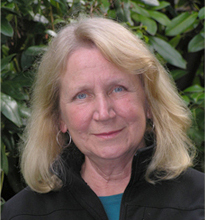
Maria Sirois

Yesterday I went to a Berkshire Festival of Women Writers workshop facilitated by psychologist and inspirational speaker Maria Sirois.  The workshop was called “Happiness: Writing as a Path to Positive Transformation,” and since I am always looking for ways to link all those terms—happiness, writing, path, positive, transformation—I was eager to see how Maria would lay it out for us.

I was not disappointed.  She quickly got the group writing about happiness, and not surprisingly, when I started freewriting about joy, it wasn’t long before I began writing about my childhood summers spent at my family’s country house…long, endless, happy weeks where my brother and I seemed to be perfectly in synch with our mother’s rhythm, where life was peaceful, idyllic and beautiful…the epitome of joy.

Later, when we went around the room and everyone shared a short bit of their freewriting, I was struck by how many of the women present (we were all women that day) associated joy with childhood, and with nature.

Many people shared moments of joy connected with childhood memories of trees—climbing trees, wandering in the forest, listening to the wind in the trees.  Others had written about communion with animals, or remembered ecstatic time spent by the ocean in childhood.

A small corner of my mother's garden

What I remembered was watching my mother dig a rock garden out of the cow pasture in which she and my father had built their small country house when I was 5 years old.  Here are the two sentences I wrote during the workshop, and shared aloud:

“My mother would be quietly exultant as her shovel and trowel revealed new curves or deep, smooth walls of rock, and at the end of a hot morning’s work she would stand, sweaty and red-faced with a fine layer of black earth coating her bare shoulders, drinking iced tea out of a tall green glass and surveying her landscape with a squinted sculptor’s eye.  The work progressed slowly, since it was all done by hand, just one small, determined woman with a strong back and great patience, tracing out the rock with hand tools and as much love as if she were carving out the sweet, benevolent face and voluptuous body of the Earth Mother herself.”

***

Later in the workshop, Maria shared with us a memorable formula for happiness.

Happiness, she said, is the balance of pleasure and meaning.

If life is all pleasure, it can feel empty and meaningless.  If it’s all meaning, then you’re working too hard.

But if you can find the right balance of pleasure and meaning, you can hit that sweet spot of joy, in which you thrive and grow like a well-cultivated garden.

Maria suggested that there is something about creativity itself that brings us to this sweet spot.

My mother, spending her summers relaxing with her children and turning her surroundings into a beautiful landscape sculpture, was drinking from that creative well.

For me there are various creative taps I draw from: writing, teaching, creating programs like the Festival, bringing people together in harmonious, productive alliances.

Platter and dinner by my mom!

My brother recently observed that our mother has always been a wonderful model of someone who is completely focused, passionate about and committed to her art—whether that art is tonight’s dinner, or her magnificent pottery, or her lovingly tended garden.

Since earliest childhood, it has always been clear to me that she put every ounce of creativity she possessed into everything she did—not for external recognition or praise, but just because it was the right way—the most pleasurable way—to approach any task at hand.

Pleasure plus meaning equals happiness.

It strikes me that although my mom has had her share of ups and downs, hers has been by and large a very happy life.

No wonder when Maria asked me to write about joy, I went straight to my primary teacher: Sue Browdy, my mom.

There’s More to Love Than Cupid and his Arrows

One of the reasons I was unhappy in the last five years or so of my marriage—which lasted 21 years—was because my husband, who had been so apparently social and outgoing when I fell in love with him, had become taciturn and isolationist.  He scorned Valentine’s Day as a commercial holiday, and considered buying me flowers or taking me out to dinner on February 14 as a distasteful concession to marketing pressure.

While I can’t deny that Valentine’s Day is seized upon as a marketing ploy by all kinds of industries, I also think that it’s wonderful that we take a day of the year to celebrate love.  It doesn’t have to be romantic love between sexual partners, or would-be sexual partners—that’s where I think our American capitalist version of Love Day has taken a wrong turn.

Valentine’s Day should be a time to celebrate love in all its guises.

Today I celebrate the great love I feel for my parents, who gave me life and have always been so thoughtful and unreserved in their nurturing, from the time when I was an infant to right now, as I contemplate my 50th year.   My parents have taught me so much about being loving as a parent—which is not the same thing at all as being permissive or indulgent.

Today I celebrate the love that flows both ways between parents and children.  After my parents, it is my sons who have taught me at every step along the road about what they needed from me as a loving parent.

Sometimes they needed to be enfolded in my arms, and sometimes they needed me to step back and pretend we were strangers, but always they needed that firm, unbreakable assurance that no matter what they did, I would always be there for them.  That is the bottom line love that I learned from my parents, and no doubt they learned from theirs.

Today in my Art of Autobiography class we wrote and talked about the legacies of love that are passed down through generations in a family.  Even though there are other, less positive legacies that are also passed down, I asked the students to focus on the positive, loving side today, in honor of Valentine’s Day, and to think about how each generation gives a loving gift to those who come next.

It may not always be a gift parents or grandparents recognize that they’re giving, because it may come from such a place of automatic second nature.  For instance, I wrote in class about how my father’s family placed such a high value on education, and that is certainly a legacy that I received, put to good use, and am in the process of handing down to my children.

Who knows how long into the past that chain of valuing education goes, or how far into the future it will penetrate as my sons begin to have children of their own?

I come from loving people who have always wanted the best for their children, even if they didn’t always know how to make it happen.  Even the most loving parents don’t always succeed in doing right by our children. For example, my older son will always regret that he did not have a chance to play soccer earlier in his childhood—his father and I did not realize how important that was to him and did not make it happen for him.  But I have no doubt that he will correct that failing when it comes his turn to parent.

Each generation is imprinted by their parents and grandparents, and then goes on to add a few new tricks of their own, often responding to the exigencies of the time or to what they’ve learned in their own process of coming to maturity.

But what runs through, like molten gold at the core of a happy family like mine, is love.  Deep, abiding love, untainted by self-interest or vanity.

This Valentine’s Day, I celebrate family love.  Maybe another year I’ll be beckoning to Cupid and his arrows, but right now that bright red heart, ancient symbol of the yoni that welcomes us all into life on this planet, needs no romantic glitz or glitter.  It’s calling me home.

Parents, listen up! You need to know, and you need to act–now.

We raise our children so carefully, so thoughtfully.  We make them eat their vegetables, organic if possible.  We send them to the best schools we can find and afford.  We screen their friends and text them anxiously if they’re late coming home.  We worry about their careers, their futures. Will there be any jobs for our precious children when we finally, with great effort and care, get them through high school and college?

Jobs are important, sure.  But why is it easier for us to think about the economy than about the biggest issue confronting our children, and all of us, in the next few years?  I’m talking about the climate crisis and the degradation of the environment. The loss of species, the toxifying of the air, soil and water.  The fact that the planet our children are inheriting is not the planet we were born on to.

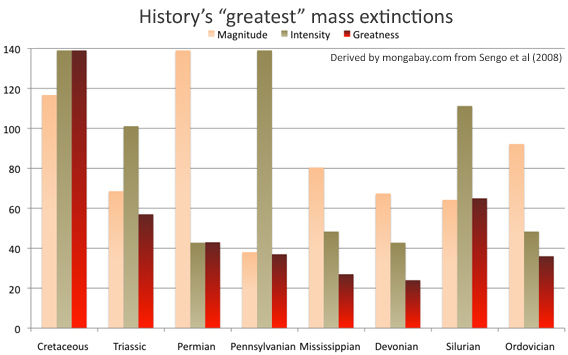
Of course, that’s always been true.  The planet has always been changing, evolving, sometimes in violent increments.  But it’s different now.  It’s different because never before, in the history of homo sapiens, have we been so close to the brink of a major, fast shift in our climate.  Never before, at least since we humans have been on the planetary stage, have we come so close to a global extinction event.

Global extinction event.  Where did I get a phrase like that?  It’s surely not my own language.  It’s one of those memes making the rounds of the Web.  But it’s not part of the lexicon of any of the parents I know.  They don’t want to think about it.  They don’t want to talk about it.  They don’t want to know.

How irresponsible is that, and how surprising, for parents who have been so conscientious, so completely invested in their role as primary caretakers and nurturers of their children.

It’s the privileged parents to whom I address myself most fervently. Parents who put so much time, energy and money into the task of raising their children, and do so with all their intelligence, responsibility and good will.  Parents who often have extra money to put towards a winter vacation someplace warm, or a summertime break by the beach.  Parents who are happy to send their kids to specialty camps in the summer, and who come up with the cash for school trips, afterschool lessons, an educational weekend in the city, a junior year abroad.

Privileged parents, listen up!  If you continue to turn a blind eye to the intertwined issues of environmental degradation and climate change, both of which are caused above all by enforced, ruthless economic growth based on the heedless consumption of fossil fuels and distribution of chemicals in the water, earth and air, your beloved children will face a future in which they cannot thrive.

A future in which none of us can thrive, unless it be perhaps the cockroaches, the ants and—for a while at least—scavengers like vultures and crows.

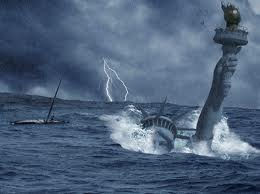
There have been so many disaster movies produced in the past few years—The Day After Tomorrow, 2012, WALL-E—putting out on the big screen our fears about what kind of future awaits us in an age of climate crisis and ecological collapse.  These movies represent our collective unconscious talking to us, presenting worse-case scenarios so that we can prepare ourselves for what may come.

We seem to like these movies because they give us the pleasure of stepping back afterwards and reassuring ourselves that it was just fantasy, not real.

The reports of the International Panel on Climate Change have none of the glamour of the big screen.  But they are saying the same thing as those disaster pictures.  They paint the same picture in different language.

It turns out that those disaster scenarios are real.

Sit with that knowledge for a bit, and then check in with yourself as a parent.  Once you accept that the looming environmental crisis is real, how can you continue to live your life blithely as though everything is OK?

Parents above all have a responsibility not just to take this knowledge seriously, but to act on what we know.  And parents of privilege–the 10%, the 25%–most of all.

We should be vehemently protesting the poisoning of our food, air and water.  We should be doing our utmost to stop the corporations who are wreaking this havoc, to change our own participation in the system, and to envision and manifest a better society that engages sustainably with the planetary ecological systems upon which we all depend.

Never before have we stood at such a juncture as a species.  Now is the tipping point.  Now is the time for us to stand up and be counted.  Now is the time for us to dare to take a path less traveled, to think for ourselves, to do what’s right for us and our children and the world we live in, before it’s too late.

It will not be easy, the road ahead.  There is so much to be done to turn this environmental train wreck around, and so little time.  We may not succeed.

But we cannot continue to play dumb any more.  We cannot continue to keep playing the game as if nothing were wrong, as if the biggest crisis of the past 10,000 years of human history were not on the horizon.  We cannot keep dancing to the band on deck as the iceberg looms before us.

There is too much at stake, for ourselves and especially for our children, whose lives—with any luck, and a lot of hard work—will reach further into the 21st century than ours.  If we care about our world—if we care about our children—we must act decisively, do whatever it takes.  Now.

Fighting for Change with Hearts Wide Open

The environmental philosopher Kathleen Dean Moore looks out at the Occupied social landscape and sees “The Big One”–a movement that will bring all the disparate struggles of our society together on common ground, and effect deep, lasting, structural changes.

“The lines that connect climate change to jobs to the environment to education to health to justice are strong and undeniable,” she says. “The time has passed for an environmental movement. The time has passed for a climate change movement. The time has passed for isolated grassroots movements. We stand on ground that trembles with tectonic movement. Along the straining fault lines of our civilization, we feel the forces building for justice, sanity, and lasting ecological and cultural thriving.”

She’s certainly right that isolated movements are not going to change the world. That’s what’s been so great about the Occupy movements–they’ve been widespread and inclusive,a big big tent spread out over a lot of ground, coast to coast.

As Moore says, the moral ground of the Occupy movements is quite simple and clear: “it’s wrong to wreck the world.”

That’s something I knew instinctively as a child, as most children do.  Part of the great tragedy of our society has been the way we slowly deaden and numb the compassionate, empathic instinct of our children, teaching them to ignore pain and injustice, to just keep walking and mind their own business.

I know that’s what I was taught as a privileged young American growing up in a deeply unequal, unjust and exploitative society.  I know now that it was wrong.

And thanks to Occupy Wall Street and the other Occupy movements, I am beginning to know what to do about it.

We need to stop going about our business as usual, and relearn how to see and feel suffering and inequity.

We need to think outside the box of our normalized capitalist assumptions, making well-being rather than profit the goal of human effort.

We need to make protecting our planetary home our highest priority, because without a healthy environment, we will never build a healthy society, and things are so far gone that bringing back ecological balance will take everything we’ve got.

One of the reasons that revolutions are almost always carried out by the young is because they are closer to the instinctual compassion of their childhoods.

If only the stuffed shirts in Congress and in corporate office buildings all over America could remember what it was like to live with their hearts wide open, we might start to see the great boulder of social change really start to pick up steam.

Scary Halloween Statistic: 7 Billion People on the Earth by Oct 31, 2011

If you’ve never seen the Worldomters clock ticking, it’s worth a click.

Watching those numbers spin by brings home how very fast the human species is multiplying, especially when you consider the following chart, which shows how recent this population explosion really is.

No wonder we’ve got a sustainability problem!

Population control has gotten a bad name in recent years, and justifiably so.  It cannot and should not be imposed upon women by force, as it has too often in the past.

But study after study has shown that when women are educated and respected in society, birth rates go down.

Want to slow down that worldometer population clock?  Start by educating girls and opening up career opportunities for them after graduation.

Educate a girl and save the planet?  Might not be hyperbole after all.

How Did I Get Here?

Letting the days go by….

If there’s one thing that I can point to that landed me where I am today, it’s the fact that I chose to put my parenting ahead of my career.

Should I be feeling guilty about this?

What does it say about our society that I have to even ask myself that question?

I had my first child when I was 30 and two years away from finishing my doctorate. I wrote my dissertation while he napped as an infant.  When I finished, I half-heartedly went on the job market, but knew, even as I made the rounds of MLA interviews, that I was not willing to subject myself to the rigors of the tenure clock while also caring for a small child.

I ended up at my undergraduate alma mater, Simon’s Rock, teaching as an adjunct.  I thought it would be temporary, a way of “keeping my hand in,” and that when I was ready I would be able to get back on to the tenure track.

If I had known then what I know now–that making the leap from adjunct to tenured faculty is incredibly difficult, even if you have everything going for you–would I have chosen differently?

I don’t think so.  I wanted to work part-time so I would have time to mother my sons the way I myself had been mothered–carefully, tenderly, in a relaxed and open-hearted way.  I did not want to subject them to long hours at day care.  I didn’t want to have to commute long distances, making family dinners impossible.  I didn’t want to have to move far from their grandparents, my parents, who sustained our growing family in so many ways.

Still.  I didn’t realize how much of a stigma would be attached to a professional like me making a decision like that. I didn’t realize how even at Simon’s Rock, moving from adjunct to regular fulltime (the school has no tenure track) would be difficult, to say the least–notwithstanding my impressive publication record, teaching prowess and evident commitment to the institution.

And so I took on a second job, working two-thirds time at Simon’s Rock and half-time at SUNY.  Finally I was making a real living.

But over the nine years that I did both jobs, while also parenting, publishing, making the rounds of professional conferences and organizing my own major annual conference and now month-long festival, my marriage deteriorated.  I thought that as I made more income and had more responsibilities outside the home, my partner would step up and do more parenting.

If anything, he did less.  The more successful I appeared, the more insecure and irritable he became.  This is apparently a common pattern among husbands who are less professionally successful than their wives.

And so I got more and more burnt out.  I remember coming home one day after a full day of teaching, with a car full of groceries, and just being in tears carrying the heavy bags into the house while the boys and their dad looked on, apparently unmoved. It was too much.

Eventually my body said NO MORE and I had a major back spasm, forcing me to do less, and the boys to do more.  Not long after, my husband checked out.

I would never have chosen to give up my second job, but one month into this situation, I have to say that it feels like a blessing.  What a luxury it is to have time to properly prepare my classes, instead of being constantly on the run, playing catch up!  What a pleasure to have more time to visit with family and friends!

Apparently I’m not alone in feeling this way.  As Juliet Schor reports in this month’s YES Magazine, “people who voluntarily start working less are generally pleased. In the New Dream survey, 23 percent said they were not only happier, but they didn’t miss the money. Sixty percent reported being happier, but missed the money to varying degrees. Only 10 percent regretted the change. And I’ve also found downshifters who began with a job loss or an involuntary reduction in pay or hours, but came to prefer having a wealth of time.”

It’s been nine years since I’ve had this kind of luxury of time.  I want to use it wisely–making new networks of friends, being a kinder, less snappish mom, putting time into pleasures that cost nothing, like writing, weeding my garden, walking my dog.  Or just sitting still in the slanting afternoon sunshine, dreaming up another world.

On Becoming a Statistic

I have never felt like such a statistic as I do now.

As of the past few months, I have lost a job, and the health insurance that went with it; gotten divorced and become a single mom; and so suddenly found myself the proud possessor of a mortgage I can no longer afford.

The full catastrophe.

I take some small measure of comfort from the knowledge that it is not just me.  Women have been hit harder in this recession than men, and single women, especially single moms, worst of all.

“In today’s economic and political climate, women are being dealt a triple blow,” says Anika Rahman, President and CEO of the Ms. Foundation for Women. “Indeed, what was once termed a ‘mancession’ is now a ‘womancession.’ Women are losing jobs faster than men because of drastic cuts in areas like education and health care where they make up the majority of the workforce. As the majority of state and local public-sector workers, women are affected most by attacks on public-sector unions. And women suffer most from cuts to social services because they’re more likely to be poor and care for children and the elderly.”

As a matter of fact, the job I lost was in the public education sector. I taught for nine years at SUNY Albany as a Lecturer in Humanities (ie, a salaried professor on a three-year renewable contract), and I was a member of the union, United University Professionals (UUP).  Because it is very difficult for the university to fire individual union members who have been performing well in their jobs, the administration decided, in the interests of saving money, to terminate my entire program, an innovative first year “living & learning” community that had just been shown by external reviewers to have positively impacted students’ success rate at the university.

The administrators I talked with about the program termination made no bones about the fact that it made better financial sense for them to fire a salaried worker like me and hire a few adjunct professors instead.  Why would you pay someone a living wage and benefits when you can get away with paying someone else a pittance with no benefits?

Sadly this is the state of our higher education system these days.  At least 50% of college and university teachers are now adjunct; at many places, including Harvard and my alma mater, New York University, some 70% of the professors are employed on an adjunct basis.

And we’re not talking about graduate students; we’re talking about people with doctorates, who have worked very hard and spent a lot of time and money to attain the highest degree in their discipline, now reduced to working on a semester-to-semester contract, generally for about $4,000 a course (much less at community colleges), with no benefits.  And no end in sight.

So here I am, living in a house I love bought just before the housing bubble burst, when I was married to a man with a decent job, and working two jobs myself–a house that my current income will not cover.  I am lucky that I have the other job to fall back on; but because I worked two jobs all those years, I am still only part-time at Bard College at Simon’s Rock.  I have two teenage children to support, financially and emotionally, at a time when I myself feel like the one needing support.

There is no doubt that I am one of the lucky ones.  Coming even this close to the edge makes me empathize all the more with the millions of Americans, especially women, who are having to roll with the punches of unemployment and economic contraction.

The stresses on the family are huge.  How many men and women are turning up at the doctors’ office begging for anti-depressants to help them get through the day, or drinking too much, or simply zoning out in front of the TV set in order to escape a crushing reality?  Domestic violence is on the rise; so is suicide.

Listening to the political debate over jobs infuriates me because the whole discussion is so superficial.  We need more than a “stimulus” in our society.  We need more than “shovel-ready” jobs.  We need more than an extension of unemployment benefits, or even a restructuring of our tax system.

What we need is to put the soul back into our social relations.  We need to think deeply, as a society, about our priorities and goals.  Do we really want to become a society where the elite managers live in luxury and ease behind heavily guarded gates, while the masses toil miserably on the edge of ruin, and the prison populations grow ever larger, serving the function of Scrooge’s infamous “workhouses”?

We live in a country, and a world, that is rich in natural resources and talented people.  With proper stewardship, there could be enough for everyone to enjoy a decent existence on this planet, a life lived in dignity, with meaning and reward found in service to the common good.

Where is the social movement that will mobilize people like me to stand up and insist on a better future?  Who will throw the spark that ignites the fire for change?