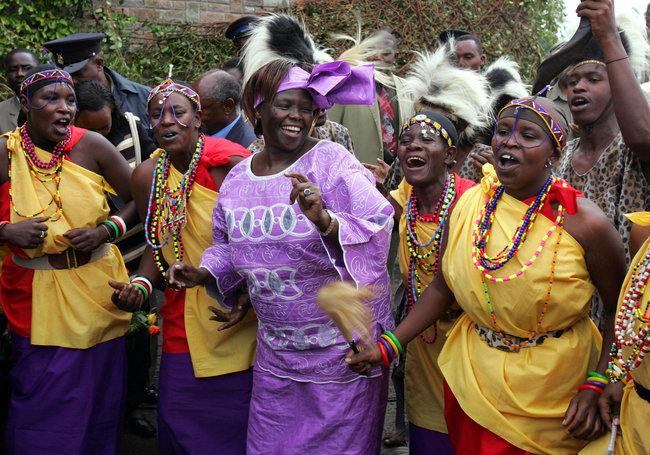
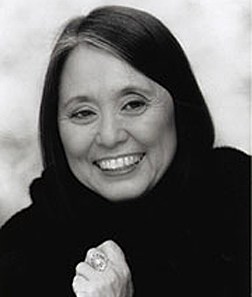
Wangari Maathai, Nobel Peace Prize Laureate, Dies at 71 – NYTimes.com

Wangari Maathai, Nobel Peace Prize Laureate, Dies at 71 – NYTimes.com.

Truly a great leader, I can’t believe she is gone.  So fast!  I can’t help but think that had she been living in the West, the cancer would have been caught earlier and she would still be with us.  A great loss for the world.  More later.

Songs of Freedom in New York

I can hardly bear to watch this video, but I feel compelled to share it.  You need to know what is being done in your name.

The right to peaceful protest?  The right to dissent?  Right.

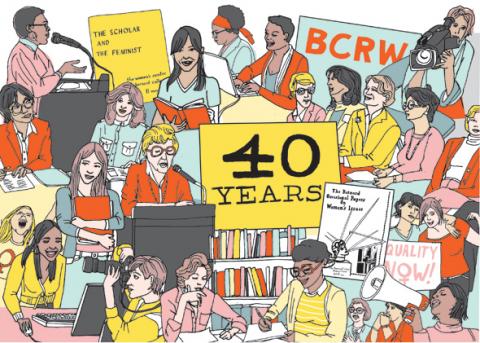
Meanwhile, up in another part of New York, I was at a conference this weekend celebrating “40 Years of Feminist Activism and Scholarship” at the Barnard Center for Research on Women.  Here all was decorous and polite–no protesters, no cops, no tight handcuffs or people being pulled down the sidewalk by their feet.

Instead we discussed “issues of translocation” in the Latino diaspora, and how there is a need for social theorists to serve as translators, transcultural workers, and border-crossers of all kinds.  Unfortunately, this information was presented in a kind of high-level theoretical drone that sucked the lifeblood out of the topic. When the presenter began to read us the annotated table of contents of her new anthology, I had to get up and leave.

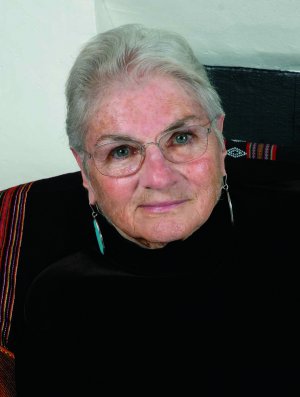
Fortunately, the panel I had organized, on “Living and Working in the Borderlands,” was up next, and it kicked us in to a whole different register.  Margaret Randall read poetry that wrenched us into the heart of the dangerous, shifting borders between past and present, safety and terror, life and death.

“They say you are not at home/until you have lived in a house/through all four seasons./What they don’t say is/you are never at home/when a part of that home/has been taken.” —As If the Empty Chair: Poems for the Disappeared, p. 20

Ruth Irupe Sanabria followed, reading her powerful poems about growing up in the long, sick shadow of the terror that marred her childhood in Argentina during the Dirty War.  Reading a poem about how the violence visited on her parents, political prisoners during the war, was reenacted in her own childhood, Ruth choked up, and I could not help but think of the first-trimester fetus curled in her womb, choking as well in this legacy of pain.

Finally the youngest of us spoke, my current B.A. student Michelle Gonzalez, who described her struggles to come to turns with all the jagged fault lines that mark her own identity.  Her honest self-exploration led us into a thoughtful, engaged discussion with the audience on how one’s location in the borderlands, whether chosen or imposed, can be both a spur and a hindrance to creative freedom.

There is a temptation to see a continuum in this, a continuum of creative protest going from the poet who writes in the blood of her own passion to the passionate young protester who is not afraid to put her body on the line and submit to the manhandling of the police.

One thing for sure is that the kind of jargon-laden social theory expressed in the keynote speech seems more and more clearly to be completely beside the point.  What is the good of talking about people’s struggles for freedom, self-determination and dignity in words they would not understand, on a platform to which they will never have access?

There is a reason that song lyrics continue to resonate with the young.  We may not all read poetry, but most of us do listen to music.  Simple, direct, powerful words are the ones that will stay with us, and perhaps even move us to action.

What songs do you hum to give yourself the courage to go on?  What songs might break through the spell of the men in blue and remind them who they are supposed to be working for?

I’ll end with the voice of a martyr for political freedom, Victor Jara, savagely murdered by the Chilean goon squad while still valiantly trying to sing his songs of peace:

It’s up to us now to keep his song alive.

Peace Day Travesties

Last night my son reminded me that it was Peace Day yesterday, and my heart sank even lower.  How could it be that on the day dedicated to world peace, the U.S. allowed an improperly tried man to be put to death by lethal injection?

Perhaps even worse, how could it be that our President chose this day to appear before the United Nations opposing the Palestinian government’s efforts to negotiate a two-state resolution with Israel?

Obama’s speech was laden with bitter irony for those who could hear between the lines.  How could he laud the people of other Middle Eastern states like Egypt, Libya and Yemen for taking matters in their own hands and violently overthrowing oppressive rulers, while at the same time telling the Palestinians that they should wait, be patient and let others decide their fate?

What difference is there, really, between an oppressive dictator like Qaddafi and an oppressive state dictatorship like the one Israel exercises over Palestine?  In both cases it’s a matter of people’s basic human rights being violated.  In neither case do the people have the “democracy” that Obama praised in his speech yesterday.  Why is it OK for the Libyans to rise up and throw out the oppressors, but not for the Palestinians?

Of course, we know the answer.  Because American Jews have too much invested in the success of the state of Israel, and are too afraid of the Palestinians to see them as anything other than potential terrorists.  Because American Jews wield considerable power in the U.S. government, and their support can make or break a political candidate here at home.

Under these circumstances, I am not proud to be an American of Jewish descent (I can’t call myself a Jew because I have never practiced the religion and am largely unfamiliar with it).

I’m not happy to be a white American either, given the clear racialization of the American criminal justice system, with people of color receiving much harsher treatment, from the police on the streets to the courts and the prisons, than people of European descent.

What do I do with my guilt over the way “my people” are treating others?  I can “pass” as a non-Jew and distance myself from that community, but I can’t exactly “pass” as a person of color.

What I have to do, and what all of us who deplore the oppression that was blazoned across the headlines on World Peace Day should do, is to ally myself firmly with those who stand for freedom.  In many cases, sad to say, this would mean opposing the policies of the U.S. government and many of its cronies, like the state of Israel.

Dissent from majority opinion has a long and proud history in our country and we should not be afraid to stand up for what we believe, even if we appear to be opposing the powers that be.

Yesterday the Supreme Court of the United States declined to step in and save the life of Troy Davis even though it was plain to hundreds of thousands of onlookers that he did not deserve execution.  Yesterday President Obama went on record as opposing the efforts of President Abbas of Palestine to finally take his rightful place among the league of nations at the U.N.

Justices and President, I respectfully disagree with you.  A lot of us disagree with you, a lot of the time.  You need to start listening to us ordinary folks again, and give us a government we can be proud of.

Otherwise, you might just wake up one morning and find the Arab Spring has come to America–with you, or at least the oppressive establishment you represent–as the targets this time.


Is College Worth Its Salt? Hint: It’s Worth More For Men…

My friend Audrey (with whom, it should be noted, I went to college) raises an interesting question.  Is college worthwhile at all?  Particularly for families for whom it’s a huge financial stretch, often involving bigtime loans that take many years to pay off–is it really worth it?

For most of us, I think the answer would be yes.  College is not just about a nice shiny credential to paste at the top of your resume, although I have seen many students, especially during my time at SUNY Albany, for whom the goal seemed to be little more than that.  For these students, the B.A. might prove to be simply a rubber stamp, a certification of having successfully jumped some hoops, scored some goals and not messed up too badly.

That is not the kind of education that’s worth much in the way of sacrifice and effort.

The kind of college education that is worth a young person’s time, effort and financial investment is the kind that opens up new pathways which they might very well never have found any other way.  For instance, I don’t think I would have ever sat down and read all of the novels of Virginia Woolf if Jamie Hutchinson hadn’t led me with passion and enthusiasm through my first one, To the Lighthouse.  His obvious delight at Woolf’s language and the way she structured her novel inspired me to go down into the musty stacks of the library and find some more of her books, and I’ll never forget the magic I felt reading Mrs. Dalloway, The Waves and Orlando for the first time.  Her books cast a spell on me from which I never wanted to wake up.

For my son, now a senior at Simon’s Rock, it was the world of science that opened up for him in college.  He had been bored in all his classes in the 10th grade, and had no idea what he was interested in focusing on for a potential career path, other than his original dream, first expressed when he was two years old, of being “an underwater photographer.”  A college class in marine biology showed him that his dream could become a reality, and started him off on a scientific journey that led him to study eels in the Hudson River as an intern on a faculty summer project; take a junior semester in Baja California studying octopi and other marine life there; win a summer fellowship to work as a paid intern at the Virginia Institute of Marine Science, working on a faculty project on eelgrass habitat; and now to do his senior thesis project on a major riverfront restoration project.  None of these doors would have been open to him, or would even have been visible to him, had he not been enrolled in college.

And of course, there’s the social side of college too.  From the social networking with like-minded peers to the ecstatic meeting of kindred souls, the late teens/early twenties are when the most sparks fly, socially speaking, and college is the best place to meet the kind of people who are likely to be focused, goal-oriented and at least relatively stable.  This is not to say that there aren’t all kinds of flakes and basket cases in college.  But even those people are there because their families care enough to make sure they have the best chances in life, and are willing to make whatever sacrifices are necessary to help them over the difficult shoals of early adulthood.  Having a peer group like that counts for a lot.

Much is always made of the value of a college degree in terms of increased earnings.  Interestingly, in looking at the census data, earnings still remain skewed by gender.

Even though more women are now finishing college than men, still, college-educated women earn significantly less than college-educated men:  “women earned 67 percent of what men earned overall and earned 76 percent of what men earned when working full-time, year-round. At the lowest attainment level (not a high school graduate), the difference was 63 percent overall and 75 percent within the full-time, year-round worker population. At the highest attainment level (advanced degree), the difference was 66 percent for the total worker population and 69 percent for the full-time, year-round worker population.”

Is it worth it to go to college? Yes.  But we women have got to learn to be more forceful in advocating for ourselves with our bosses!  There is no reason why in this day and age women should still be earning only 70 cents on the man’s dollar.  Could it be that our vaunted education has the subtle effect of making us reluctant to question authority and speak up for ourselves?  Why doesn’t it have the same effect on men?

Dr. Leonard Sax has proposed some interesting hypotheses in answer to these questions, namely that boys are socialized to show off and act aggressive in school, while girls are socialized to be demure and wait for recognition.  These behavior patterns can get boys into a lot of trouble in the early years of school, and may turn some off from school entirely.  But at the higher levels of schooling, being aggressive is often rewarded, just as it is in the marketplace.  Boys and men tend to exaggerate their strengths, while girls and women tend to exaggerate their own weaknesses.

These are complex socialization processes for which there is no quick fix.  We’re all only human.  But it’s important, particularly for young women, to be aware of the likelihood that we will not receive equal pay for equal work unless we step up and demand it.

If their college education was worth its salt, it would give young women the skills and confidence to do just that.  And it might just teach young men some humility along the way too.

How Did I Get Here?

Letting the days go by….

If there’s one thing that I can point to that landed me where I am today, it’s the fact that I chose to put my parenting ahead of my career.

Should I be feeling guilty about this?

What does it say about our society that I have to even ask myself that question?

I had my first child when I was 30 and two years away from finishing my doctorate. I wrote my dissertation while he napped as an infant.  When I finished, I half-heartedly went on the job market, but knew, even as I made the rounds of MLA interviews, that I was not willing to subject myself to the rigors of the tenure clock while also caring for a small child.

I ended up at my undergraduate alma mater, Simon’s Rock, teaching as an adjunct.  I thought it would be temporary, a way of “keeping my hand in,” and that when I was ready I would be able to get back on to the tenure track.

If I had known then what I know now–that making the leap from adjunct to tenured faculty is incredibly difficult, even if you have everything going for you–would I have chosen differently?

I don’t think so.  I wanted to work part-time so I would have time to mother my sons the way I myself had been mothered–carefully, tenderly, in a relaxed and open-hearted way.  I did not want to subject them to long hours at day care.  I didn’t want to have to commute long distances, making family dinners impossible.  I didn’t want to have to move far from their grandparents, my parents, who sustained our growing family in so many ways.

Still.  I didn’t realize how much of a stigma would be attached to a professional like me making a decision like that. I didn’t realize how even at Simon’s Rock, moving from adjunct to regular fulltime (the school has no tenure track) would be difficult, to say the least–notwithstanding my impressive publication record, teaching prowess and evident commitment to the institution.

And so I took on a second job, working two-thirds time at Simon’s Rock and half-time at SUNY.  Finally I was making a real living.

But over the nine years that I did both jobs, while also parenting, publishing, making the rounds of professional conferences and organizing my own major annual conference and now month-long festival, my marriage deteriorated.  I thought that as I made more income and had more responsibilities outside the home, my partner would step up and do more parenting.

If anything, he did less.  The more successful I appeared, the more insecure and irritable he became.  This is apparently a common pattern among husbands who are less professionally successful than their wives.

And so I got more and more burnt out.  I remember coming home one day after a full day of teaching, with a car full of groceries, and just being in tears carrying the heavy bags into the house while the boys and their dad looked on, apparently unmoved. It was too much.

Eventually my body said NO MORE and I had a major back spasm, forcing me to do less, and the boys to do more.  Not long after, my husband checked out.

I would never have chosen to give up my second job, but one month into this situation, I have to say that it feels like a blessing.  What a luxury it is to have time to properly prepare my classes, instead of being constantly on the run, playing catch up!  What a pleasure to have more time to visit with family and friends!

Apparently I’m not alone in feeling this way.  As Juliet Schor reports in this month’s YES Magazine, “people who voluntarily start working less are generally pleased. In the New Dream survey, 23 percent said they were not only happier, but they didn’t miss the money. Sixty percent reported being happier, but missed the money to varying degrees. Only 10 percent regretted the change. And I’ve also found downshifters who began with a job loss or an involuntary reduction in pay or hours, but came to prefer having a wealth of time.”

It’s been nine years since I’ve had this kind of luxury of time.  I want to use it wisely–making new networks of friends, being a kinder, less snappish mom, putting time into pleasures that cost nothing, like writing, weeding my garden, walking my dog.  Or just sitting still in the slanting afternoon sunshine, dreaming up another world.

On Becoming a Statistic

I have never felt like such a statistic as I do now.

As of the past few months, I have lost a job, and the health insurance that went with it; gotten divorced and become a single mom; and so suddenly found myself the proud possessor of a mortgage I can no longer afford.

The full catastrophe.

I take some small measure of comfort from the knowledge that it is not just me.  Women have been hit harder in this recession than men, and single women, especially single moms, worst of all.

“In today’s economic and political climate, women are being dealt a triple blow,” says Anika Rahman, President and CEO of the Ms. Foundation for Women. “Indeed, what was once termed a ‘mancession’ is now a ‘womancession.’ Women are losing jobs faster than men because of drastic cuts in areas like education and health care where they make up the majority of the workforce. As the majority of state and local public-sector workers, women are affected most by attacks on public-sector unions. And women suffer most from cuts to social services because they’re more likely to be poor and care for children and the elderly.”

As a matter of fact, the job I lost was in the public education sector. I taught for nine years at SUNY Albany as a Lecturer in Humanities (ie, a salaried professor on a three-year renewable contract), and I was a member of the union, United University Professionals (UUP).  Because it is very difficult for the university to fire individual union members who have been performing well in their jobs, the administration decided, in the interests of saving money, to terminate my entire program, an innovative first year “living & learning” community that had just been shown by external reviewers to have positively impacted students’ success rate at the university.

The administrators I talked with about the program termination made no bones about the fact that it made better financial sense for them to fire a salaried worker like me and hire a few adjunct professors instead.  Why would you pay someone a living wage and benefits when you can get away with paying someone else a pittance with no benefits?

Sadly this is the state of our higher education system these days.  At least 50% of college and university teachers are now adjunct; at many places, including Harvard and my alma mater, New York University, some 70% of the professors are employed on an adjunct basis.

And we’re not talking about graduate students; we’re talking about people with doctorates, who have worked very hard and spent a lot of time and money to attain the highest degree in their discipline, now reduced to working on a semester-to-semester contract, generally for about $4,000 a course (much less at community colleges), with no benefits.  And no end in sight.

So here I am, living in a house I love bought just before the housing bubble burst, when I was married to a man with a decent job, and working two jobs myself–a house that my current income will not cover.  I am lucky that I have the other job to fall back on; but because I worked two jobs all those years, I am still only part-time at Bard College at Simon’s Rock.  I have two teenage children to support, financially and emotionally, at a time when I myself feel like the one needing support.

There is no doubt that I am one of the lucky ones.  Coming even this close to the edge makes me empathize all the more with the millions of Americans, especially women, who are having to roll with the punches of unemployment and economic contraction.

The stresses on the family are huge.  How many men and women are turning up at the doctors’ office begging for anti-depressants to help them get through the day, or drinking too much, or simply zoning out in front of the TV set in order to escape a crushing reality?  Domestic violence is on the rise; so is suicide.

Listening to the political debate over jobs infuriates me because the whole discussion is so superficial.  We need more than a “stimulus” in our society.  We need more than “shovel-ready” jobs.  We need more than an extension of unemployment benefits, or even a restructuring of our tax system.

What we need is to put the soul back into our social relations.  We need to think deeply, as a society, about our priorities and goals.  Do we really want to become a society where the elite managers live in luxury and ease behind heavily guarded gates, while the masses toil miserably on the edge of ruin, and the prison populations grow ever larger, serving the function of Scrooge’s infamous “workhouses”?

We live in a country, and a world, that is rich in natural resources and talented people.  With proper stewardship, there could be enough for everyone to enjoy a decent existence on this planet, a life lived in dignity, with meaning and reward found in service to the common good.

Where is the social movement that will mobilize people like me to stand up and insist on a better future?  Who will throw the spark that ignites the fire for change?

9/11–Let’s Get Real!

All right, I have to say it.  I find the coverage of the 9/11 10-year anniversary nauseating.

The way we are collectively wallowing in our victimhood, while at the same time celebrating our oh-so-macho response to being attacked.

The way so few voices are talking about the reasons for the anger that launched those pilots at the US; the money that funded them; the horrendous aftermath of the attack, in which we rattled our sabers, swore vengeance against the “axis of evil,” and started a war in Iraq that cost hundreds of thousands of people their lives.

The way we aren’t talking about the corporate capitalist policies of exploitation and greed that led to widespread misery in the places where Al Qaeda operatives like to hide, places where starving parents opt to send their sons to the madrassa so they can eat, not knowing or caring what kind of indoctrination may be occurring between bites.

The way we aren’t talking about the indoctrination our children are getting here in our schools, through the sanitized version of the 9/11 story, in which the U.S. is always the good cop, policing the rest of the world in a superior and politically correct manner.

No one ever mentions anything about our status as the largest military operation in the world and the largest exporter of guns and military hardware—the biggest fomenter, therefore of violence on the planet.  How could we naively expect that this violence would not come home to roost?

And now those same policies of profit-seeking callousness have reached their limit in the natural world, and the violence we have wreaked on our environment can and will return to bite us—in fact, it is already visible in the erratic weather patterns of global warming, leading to natural disasters and food instability even here in the heart of Empire.

Instead of the obsessive repetition of schizophrenic patriotic self-congratulation alongside whining victimhood, we aren’t we talking about what really matters: moving forward in a way that radically changes the culture, both national and international, that produced 9/11?

Until we begin to have this forward-looking conversation, in which all the cards are put on the table and no credible way out of the morass of violence, greed and destructive exploitation is ignored, we will be stuck in a sick Groundhog Day of our own making, with no way to stop the repetitive madness.

I don’t know about you, but I want to wake up to a new day.

Pretty Ugly

“If this guy prints more money between now and the election, I don’t know what y’all would do to him in Iowa but we would treat him pretty ugly down in Texas. Printing more money to play politics at this particular time in American history is almost treacherous — er, treasonous, in my opinion.

Governor Rick Perry of Texas, speaking about Federal Reserve Chairman Ben Bernanke’s efforts to prevent deflation

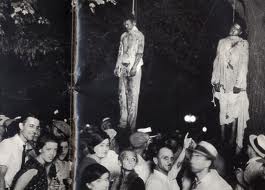
When I think about Texans “treating someone ugly,” what leaps to my mind is lynching.  Even so conservative a group as the Texas Historical Association is unable to whitewash the truth of white Texan oppression and brutalization of the Mexican Americans (“Tejanos”) and African Americans throughout the 19th and 20th centuries.

To be heading into a Presidential election year with this kind of hateful invective being thrown around, especially in a contest where a Black man is involved, is truly frightening.

We who are watching the slow-motion political lynching of Barack Obama unfold cannot afford to be silent bystanders.

The Rick Perrys of our country are treating our President “pretty ugly” every single day.

Although I share many progressives’ disappointment with Obama’s reluctance to call out these ugly folks and fight fire with fire, I recognize the bind he’s in, and I cannot stand by silently while he’s symbolically dragged through the mud (as happened to the victim of one of the most recent Texas lynchings, Brandon McClelland, in 2008).

I’ve spent a lot of time this past month wishing I could just move to Canada and be done with the ugliness here in the U.S.

But this is my country, at least for now, and I must do my best to make it a better place, a country I can be proud of.

My ancestors left Russia, Poland and Germany in the 19th century precisely because of the kind of slimy and dangerous hatred that we heard come out of Governor Perry’s mouth this week.  They believed they would find a more welcoming and ethical society here in shadow of the Lady of Liberty.

Of course, America they knew in the early 20th century had terrible problems of racism, elitism and sexism. People fought for change throughout the 20th century, and they won big victories.

We can’t let the clocks be turned back now.  We must fight on, now more than ever!

Women + Men = Change

The other day I, along with many thousands of others I’m sure, got an email from Jean Shinoda Bolen, the psychologist and activist–author of Goddesses in Everywoman, Urgent Message from the Mother, The Millionth Circle and many other books, most of them arguing that women have a special role to play in healing the world, and urging us to get busy.

This recent email said precisely that, but with a concrete focus: Jean is advocating that the United Nations support a Fifth World Conference on Women, as a follow-up to the Fourth World Conference held back in 1995, in Beijing.  Activists have been calling for another conference since 2004–when the hope was to mark the decade in 2005 with another big event by and for the women of the world.

At this point, we’ll be lucky to get the 5WCW, as insiders call it, in 2015.  But Jean’s letter brought up some deeper questions for me.

As I dutifully signed the online petition, I wondered whether it was really worth the time, effort and money it would take to create another major world conference on women again, UN-style.  Of course, now we have UNWomen, the new and much more powerful agency for women, headed up by the fabulous Michelle Bachelet.

But still–here come the deeper questions.

  • Do women really have some special role to play in peace-making and nurturing civil society, which would be strengthened for us by getting together in a symbolic–and also very real, remember the mud in Beijing?–conference on this scale?
  • If the men aren’t there in the meeting halls with us, will they be fully invested in whatever resolutions are brought forth?
  • Can women accomplish profound, lasting social change on our own, without bringing the men along with us?

Back to Eckhart Tolle for a moment.  I was struck while reading A New Earth that he, like so many other philosophers, seems to see women as fundamentally different from men.  He’s pretty unequivocal about it:

“Although women have egos, of course, the ego can take root and grow more easily in the male form than in the female.  This is because women are less mind-identified than men.  They are more in touch with the inner body and the intelligence of the organism where the intuitive faculties originate.  The female form is less rigidly encapsulated than the male, has greater openness and sensitivity toward other life-forms, and is more attuned to the natural world.

“If the balance between male and female energies had not been destroyed on our planet, the ego’s growth would have been greatly curtailed.  We would not have declared war on nature, and we would not be so completely alienated from our Being” (155).

He goes on to talk about the Inquisition and witch-burnings, and the ways in which, in all the major world religions, “women’s status was reduced to being child bearers and men’s property.  Males who denied the feminine even within themselves were now running the world, a world that was totally out of balance.  The rest is history or rather a case history of insanity….In time, the ego also took over most women, although it could never become as deeply entrenched in them as in men” (156-57).

The post-structuralist feminist in me says “whoa, Eckhart!  You’re claiming essentialism here, that women are essentially, that is, really and fundamentally different than men. Feminist philosophers have resisted this because so much oppression happened because women were said to be fundamentally different than (and lesser than) men. Do we really want to go there again?”

But then there are many older feminist camps, including the “goddess within” folks like Jean Bolen–and Audre Lorde, and Alice Walker, and Gloria Anzaldua, my heroines–who would be greatly cheered to hear this kind of admission coming out of a man like Eckhart.  He only talks about it for a couple of pages, and he makes a curious move of deflecting guilt onto “the ego,” which is oddly personified–see for yourself:

“Who was responsible for this fear of the feminine that could only be described as acute collective paranoia?  We could say: of course, men were responsible. But then why in many ancient pre-Christian civilizations such as the Sumerian, Egyptian and Celtic were women respected and the feminine principle not feared but revered?  What is it that suddenly made men feel threatened by the female?  The evolving ego in them.  It knew it could gain full control of our planet only through the male form, and to do so, it had to render the female powerless” (156).

This almost sounds like an angels and demons scenario, with demons, acting through “the ego” in each one of us, working to gain ascendancy, and being more successful in “the male form” than in women–because we women are more intuitive?  Or at least, we used to be, before the ego got to us too?

Eckhart finishes up his brief discussion of the differences between men and women on an upbeat note, saying that “because the ego was never as deeply rooted in woman, it is losing its hold on women more quickly than on men” (157).

And presumably, that means that he’d agree that women should step up and take a leadership role in helping humanity out of its current crises (environmental, economic, social) into “a new Earth.”

I think I’d have to agree.  But is convening thousands of women from all over the world in a physical place on Earth the way to go?  Or would it be a better strategy to focus on empowering women where we are, and maybe trying to do more with technology to link us so we can share strategies and become collectively empowered?

Just thinking about the amount of paper that would have to be shuffled at the United Nations to make a big women’s conference happen; and the amount of jet fuel and other resources that would have to be spent to get everyone into that one physical arena, makes me wince.

I’d rather see a series of smaller conferences, all happening simultaneously all over the world, linked by teleconferencing, with extensive, easily accessible video archives produced for later consultation.

And although these conferences would be led by women, I’d like to see men there in the audience too–and even at the podium, if they come to the microphone with their feminine half fully engaged.

Women do have something special to offer the world, but just as we need to activate our masculine side to become warrior leaders for change, we need men at our sides with their nurturing, peacemaking sides ascendant.

If we could manifest this vision, we could change the world.  For the better.

A great example of ordinary heroism at work….

It can be as simple as this: a group of Israeli women making the effort–and taking the risk–of taking a group of Palestinian women to the beach.

How sad is it that these Palestinian women, living so close yet so far from the coast, had never tasted the salty delight of the ocean before?

And how wonderful that their more privileged Israeli sisters broke ranks to make it happen….

This story is worth the read–