DIY Media: Reading the Oil Glut and Stock Slide Against the Backdrop of Climate Change

I have been puzzling over the lack of media coverage, let alone analysis, of the huge stock market slide this past week, coupled with the oil glut and consequent low gas prices for consumers. What does this mean?

I went on a hunt through the media for explanation, or at least discussion, and turned up precious little—not in the mainstream media, not in the progressive media, not even in the business media. The facts were being reported, but no one, not even the pundit/oracles, were trying to tease out the deeper meanings of the current scenario.

For example, take this article in business section of The New York Times. It reports the story of oil as though climate change and alternative energy were non-existent. It’s all about production, investment and returns—not only financial returns, but pipe-dream returns to the naiveté of the 20th century, when the ability of the planet to support endless growth of human activity seemed limitless.

When we bring alternative energy into the picture, the analysis gets a bit more complicated.

It seems that the oil glut is good news for the planet (less exploration, less extraction), good news for the consumer (lower prices at the pump) but bad news for investors who had been banking on fossil fuels to be a never-ending gold mine.

More importantly, it’s also bad news for alternative energy developers and producers, because low gas and oil prices diminish consumer demand—we’re less incentivized to make the investment in a home solar array or make sure our next car is a hybrid or electric vehicle when oil and gas prices are so low.

In my search through the media for more explanation of the oil glut, I found some suggestions (by commenters, not by journalists) that the low oil prices might be a Saudi manipulation precisely to dampen enthusiasm for shifting to alternative energy, in order to slow down the transition away from oil.

If that were the case, the Saudis would be digging their own graves and bringing the rest of the planet down with them.

Given the bigger picture of undeniable, stark and looming climate change, governments, investors and consumers must use their purchasing power to drive the market towards clean energy. We should not be fooled by the smoke and mirrors of low oil prices, or intimidated by the stock market jitters into backing into the traditional “safe” investments of fossil fuels.

That way does not lie safety—it lies collapse.
maxresdefault

It would be nice if the pundits of the mainstream media (The New York Times, for example) would focus more attention on the biggest story of our time: the race to adapt to and mitigate climate change. It would be nice if instead of just blandly reporting the news, journalists would reach out to scientific, political and economic experts for deeper analysis.

But thanks to the Internet, we can do that work of reporting for ourselves now. We can read publications from all over the world, of all political stripes, in any discipline, any time. If we care about what’s happening to our planet, we need to become more alert, placing the superficial narratives reported in the media against the backdrop of the bigger and deeper realities that often cast quite a different slant on the news.

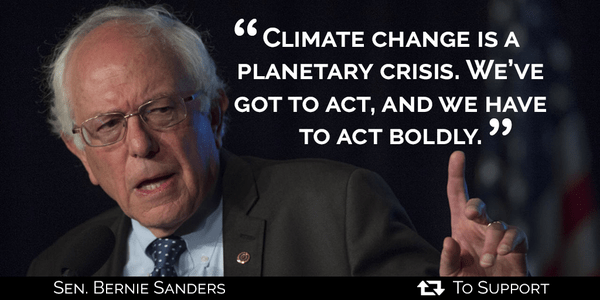
We live in a time when anyone with an Internet connection can become an engaged citizen of the world, able to exchange ideas, influence others, and galvanize social movements. The American rightwing, with their crude emotional ploys, seems to be doing a much better job of activating their base lately than the progressives, Bernie Sanders a lone and very active exception!

We can do better, and we must. It sounds weighty but it’s true: the future of the planet depends on the choices each of us makes now.
CKHjbf5WcAAD3JW


Why Paris? The Questions No One Is Asking About the Post-9/11, Post-11/13 World

cropped-1604741_560811498264_7010113564277153021_n.jpgOn the morning of the Paris terrorist strike, 11/13/15, I was trying to write and, uncharacteristically for me, I was totally blocked. I seemed to be wading through a thick mental fog, and nothing I could do would clear it. I gave up, went about my day, and it wasn’t until that night, when the first reports of the bombings came in, that I understood: my inner turmoil was what we used to call a “sixth sense,” picking up on the fog of fear and distress that was about to descend not just on Paris, but on the entire West that evening.

For me, this post-11/13 period has been a time of swirling, insistent questions and concerns, which I share in the hopes of promoting some productive discussion.

One: Did the timing of the Paris strikes have anything to do with the imminent global climate talks scheduled to begin there this month? Is it possible that the global oil lobby could have somehow instigated at least the time & place of the strike as a way of destabilizing the climate talks that should be leading us away from a reliance on fossil fuels?

Two: Could the military-industrial complex of the United States, Russia, and European powers like Germany, France and England, be subtly promoting war in the Middle East by their “containment” policy, which includes keeping demand for weapons high? Every bomb dropped is an order placed, after all. We saw this strategy revealed in all its grotesquerie in the Halliburton/U.S. government policy in Iraq—first manufacture a war, blow everything up and destabilize society, then rake in millions in “reconstruction” contracts. Is this happening again in Syria?

Three: Why are so few commentators talking about the role of Saudi Arabia in supporting the Islamic State? After 9/11, when all other commercial air traffic in the U.S. was grounded, there were the reports of the sketchy Saudi Arabian flights allowed to travel around the country picking up Saudi nationals and transporting them back home. We know that Osama bin Laden was a Saudi and was supported by Saudi funds. Then as now, ancient Sunni/Shia rivalries are coinciding with contemporary geopolitics to fuel proxy wars in the Middle East. Is the situation in Syria really all about the rivalry between Shia Iran and Sunni Saudi Arabia, with the lives of millions of people caught in the crossfire of these warring ideologies? Why is American policy aligning with the Sunnis when they have been shown to be promulgating the most violent, extremist religious intolerance and hatred?

In this last question, we circle back around, perhaps to oil and the climate. If the world really got behind the shift to renewable energy that we MUST accomplish if we are to keep human civilization stable, the oil wealth of the sheikdoms would become much less important. Could it be that behind the world events currently playing out lie some desperate fossil fuel barons, willing to risk the collapse of the world order as we know it in order to keep the black gold flowing from the ground into their pockets? Is the Islamic State really some kind of bizarre mercenary army, paid to destabilize the region, no questions asked about tactics?

I know this sounds like the scenario of a wonderfully gripping international thriller, which we would enjoy in the movie theater precisely because we know it’s just fiction. But what if it’s not fiction? What if this time it’s all too terribly real—and the fate of the planet, at least the planet as we know and love her, really does hang in the balance?

My sixth sense is telling me now that we ordinary people are just pawns in a high-stakes game played by the super-elite, the rulers of the military-industrial complex, the fossil fuel industry and their political henchmen. The final question becomes: what do we do about it?

Related:

After Paris, Searching Upstream for the Source of Terrorism

Thanksgiving Refugees, Past and Present

Resistance is the Secret of Joy–and of Social Revolution

The little old building that houses the offices of Orion Magazine was crowded with people of all ages, gathered around a data projector to see the just-released film, DISRUPTION: CLIMATE. CHANGE.

The film, made by the same folks who created the excellent climate advocacy film DO THE MATH, features stalwart activists like Naomi Klein, Van Jones and Bill McKibben, along with newer voices like Chris Hayes and Keya Chatterjee, all focused intently on a single goal: getting the viewing public—that’s us!—to understand that climate change is real, it’s happening now, it’s going to get worse before it gets better, and there is absolutely no more important cause to which to dedicate our lives.

According to the 2014 report by the IPCC, the Intergovernmental Panel on Climate Change, we are in for a rough century. If we don’t stop burning fossil fuels like there’s no tomorrow, we’ll drive the global temperature so high that severe climate change will result. Mega-storms, melting polar caps, coastal flooding, ocean acidification, damages to agriculture, human and ecosystem health, mass extinction, you name it.

Walker - from Beauty in Truth jpg

Alice Walker

How do we avoid despair when looking ahead at an uncertain and probably chaotic future? One of the scientists interviewed in the film quotes Alice Walker, who famously wrote that “resistance is the secret of joy.”

This is the title of one of Walker’s novels, and the quote comes from the protagonist, Tashi/Evelyn, who willingly submits to genital mutilation as a young woman eager to conform to her society’s idea of what is right and proper…only to spend the rest of her life dealing with the resulting pain and trauma.

She thinks to herself that “resistance is the secret of joy” as she’s on her way to be executed for the crime of having murdered the old woman who cut her clitoris out with a razor—the woman who performed this “operation” on hundreds and hundreds of young girls over the course of a long career as an exciser.

For us, as for Tashi, there comes a point where we can no longer go along with the path that our elders and leaders have laid out for us.

There comes a point where we have to begin to think for ourselves, and to see that the danger of going along with the status quo far outweighs the danger of standing up to declare that another world is possible.

In a much-quoted column on Truthdig.com, Chris Hedges writes that because of the stranglehold the fossil fuel industry has on our political process, ordinary democratic tactics are not going to work in the urgent struggle to radically rethink and retool our economy to run on renewable energy.

“We have known about the deleterious effects of carbon emissions for decades,” Hedges writes. “The first IPCC report was published in 1990. Yet since the beginning of the Kyoto Protocol Era in the late 1980s, we have emitted as much carbon dioxide as was emitted in the prior 236 years. The rising carbon emissions and the extraction of tar sands—and since the industry has figured out how to transport tar sands without building the northern leg of the Keystone XL pipeline, this delivery seems assured—will continue no matter how many police-approved marches are held. Play by the rules and we lose.

“Resistance will come from those willing to breach police barricades. Resistance will mean jail time and direct confrontation. Resistance will mean physically disrupting the corporate machinery. Resistance will mean severing ourselves from the dominant culture to build small, self-sustaining communities. This resistance will be effective only when we refuse to do what we are told, when we turn from a liberal agenda of reform to embrace a radical agenda of revolt.”

These are strong words from a middle-aged white guy, a media guru with a lot to lose.

Hedges is disdainful of the People’s Climate March on September 21, which, he says, has been coopted by some of the big fossil fuel companies themselves, and has failed “ to adopt a meaningful agenda or pose a genuine threat to power.”

Go ahead, “March if you want,” Hedges says. “But it should be the warm-up. The real fight will come once people disperse on 11th Avenue.” 

This is a point that is also made in the DISRUPTION film by the People’s Climate March organizers, who freely acknowledge that the march is only a first step in what will be a much more protracted struggle to, as one activist says, “take back our future” from what Bill McKibben calls the “rogue industries,” the criminal fossil fuel companies who are selling the future of every living being on the planet for a fourth-quarter profit report.

My favorite part of the film is right at the end, where Van Jones looks directly at us through the camera and says that change must start with each one of us taking a good hard look in the mirror.

photo

The author marching in Washington,DC, February 2014

Planetary and political change starts with personal awareness and responsibility. We can’t keep hanging around waiting for our political leaders to do the right thing. We can’t keep waiting for someone else to step up. If you have a vision of a better world, now is the time for you to start expressing it, finding others to share it, and together making it happen.

Next week I’ll be sharing my own story of coming to awareness, finding my way out of the straitjacket of convention and back into a deep connection with the natural world, which I had as a child but lost as I took my place among the young adults of my generation.

Entitled “The Personal is Planetary,” my talk is aimed at people like me—ordinary, people who work hard, take their responsibilities as parents and mentors seriously, and try to be kind and compassionate towards others.

How could it be that good people like us have let the planet come to the brink of disaster?

Human beings are like caribou—or like lemmings. We are instinctively compelled to run with our pack, even if the pack is running straight over a cliff. Those who try to buck this stampede can find themselves trampled.

The DISRUPTION film makes the point that we Americans are both bystanders to the tragedy of global climate change, and perpetrators. We have been enjoying the carbon-intensive lifestyle that is now driving the entire planet down the road to ruin.

True story. But regrets and guilt won’t get us anywhere now. We must find within ourselves the courage to look in that mirror, accept our culpability and deficiencies, and move on to do whatever we can, in the time that is left to us, to work towards a smooth transition to a sustainable future for children and grandchildren.

I’ll be in New York on September 21 for the People’s Climate March, will you? Let’s remember that resistance is not only the secret of joy. It’s the only way real social change has ever been accomplished.  

The Radioactive Imprudence of The New York Times Editorial Board

Why am I surprised each time The New York Times editorial board comes out with an opinion that demonstrates yet again how deeply indoctrinated the whole gang of them are into the logic of our industrial growth, more-energy-at-any-cost society?

I grew up reading The Times daily, poring over the Sunday edition, and believing its worldview to be objective, level-headed and virtually infallible. I believed that The Times was a watchdog over government that looked out for the good of ordinary people, the ones like me without any public power. I believed that when The Times issued an opinion, it was always going to be well-considered and trustworthy.

It’s only in the last few years that a veil has fallen from my eyes to reveal the extent to which The Times is simply a creature of the reckless, short-sighted, greedy elites that it serves. I grew up among those elites. But now, like many others, I have come to understand that the model of American society that I grew up with is not only unjust, it’s also deadly dangerous. Will The New York Times be playing its tune resolutely on deck as the whole global civilization built on extraction, exploitation and bottom-line myopia crashes, burns and sinks?

These reflections are prompted by a recent lead editorial, signed “The Editorial Board,” urging American policymakers to expand the use of nuclear power. The Board lauds the construction of a huge, and hugely expensive concrete shield over the leaking radioactive core of the Chernobyl power plant. The shield, The Times says blandly, will be good for 100 years.

No where does the editorial mention that radioactive waste associated with nuclear power plants can take tens of thousands of years to decay. The U.S. Nuclear Regulatory Commission, surely no tree-hugger, puts it this way in its public fact sheet:

images“The splitting of relatively heavy uranium atoms during reactor operation creates radioactive isotopes of several lighter elements, such as cesium-137 and strontium-90, called “fission products,” that account for most of the heat and penetrating radiation in high-level waste. Some uranium atoms also capture neutrons from fissioning uranium atoms nearby to form heavier elements like plutonium. These heavier-than-uranium, or “transuranic,” elements do not produce nearly the amount of heat or penetrating radiation that fission products do, but they take much longer to decay. Transuranic wastes, also called “TRU,” therefore account for most of the radioactive hazard remaining in high-level waste after a thousand years.

“Radioactive isotopes will eventually decay, or disintegrate, to harmless materials. However, while they are decaying, they emit radiation. Some isotopes decay in hours or even minutes, but others decay very slowly. Strontium-90 and cesium-137 have half-lives of about 30 years (that means that half the radioactivity of a given quantity of strontium-90, for example, will decay in 30 years). Plutonium-239 has a half-life of 24,000 years.

“High-level wastes are hazardous to humans and other life forms because of their high radiation levels that are capable of producing fatal doses during short periods of direct exposure. For example, ten years after removal from a reactor, the surface dose rate for a typical spent fuel assembly exceeds 10,000 rem/hour, whereas a fatal whole-body dose for humans is about 500 rem (if received all at one time). Furthermore, if constituents of these high-level wastes were to get into ground water or rivers, they could enter into food chains. Although the dose produced through this indirect exposure is much smaller than a direct exposure dose, there is a greater potential for a larger population to be exposed.”

Nevertheless, The Times Editorial Board chides Germany for “succumbing to panic” in aggressively phasing out its nuclear reactors after the Fukushima disaster “in favor of huge investments in renewable sources like wind and sun.”

The editorial concedes that “the world must do what it can to increase energy efficiency and harness sun, wind, ocean currents and other renewable sources to meet our ever-expanding needs for energy. But the time when these can replace all fossil and nuclear fuels is still far off, and in the meantime nuclear energy remains an important means of generating electricity without adding to the steadily increasing concentration of greenhouse gases in the atmosphere.”

Therefore, the Editorial Board concludes, America should “pay attention to the withering away of America’s fleet of 100 nuclear reactors,” and keep that nuclear energy burning brightly, exercising “Prudence in the design, maintenance and operation of all nuclear facilities. Prudence also in the sense that policy makers not be spooked into shutting down a vital source of clean energy in a warming world. The great shield over Chernobyl should also entomb unfounded fears of using nuclear power in the future.”

Given the incredibly unstable sociopolitical situation in the Ukraine, the “great shield” stands a good chance of never being completed. And even if it were to be finished, what is 100 years in the timeline of radiation, or of our planet?  Can we really consider nuclear energy to be “clean energy” given its deadly potential?

holding-the-sun_shutterstock_674327681-225x300This editorial should be rewritten to make Germany’s remarkable achievement in shifting quickly to renewables the central point, a rallying cry for other nations to swiftly follow suit.

Nuclear energy is part of our dark 20th century past. It has no more of a place in our future than its evil twin, nuclear bombs. Human beings have shown that we are still far too immature and imprudent to play with this kind of fire.

We need to let the sun take care of the fusion, and simply bask, like the other living beings with whom we share the planet, in the vast quantities of solar energy that bathe our planet every day.