Songs of Freedom in New York

I can hardly bear to watch this video, but I feel compelled to share it.  You need to know what is being done in your name.

The right to peaceful protest?  The right to dissent?  Right.
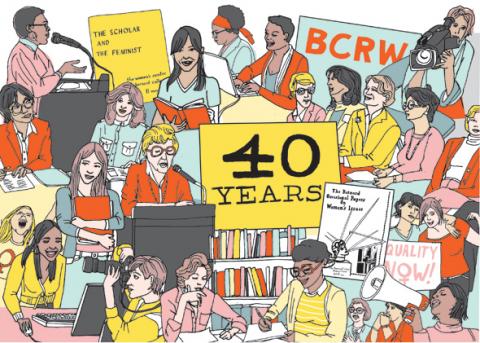
Meanwhile, up in another part of New York, I was at a conference this weekend celebrating “40 Years of Feminist Activism and Scholarship” at the Barnard Center for Research on Women.  Here all was decorous and polite–no protesters, no cops, no tight handcuffs or people being pulled down the sidewalk by their feet.

Instead we discussed “issues of translocation” in the Latino diaspora, and how there is a need for social theorists to serve as translators, transcultural workers, and border-crossers of all kinds.  Unfortunately, this information was presented in a kind of high-level theoretical drone that sucked the lifeblood out of the topic. When the presenter began to read us the annotated table of contents of her new anthology, I had to get up and leave.

Fortunately, the panel I had organized, on “Living and Working in the Borderlands,” was up next, and it kicked us in to a whole different register.  Margaret Randall read poetry that wrenched us into the heart of the dangerous, shifting borders between past and present, safety and terror, life and death.

“They say you are not at home/until you have lived in a house/through all four seasons./What they don’t say is/you are never at home/when a part of that home/has been taken.” —As If the Empty Chair: Poems for the Disappeared, p. 20

Ruth Irupe Sanabria followed, reading her powerful poems about growing up in the long, sick shadow of the terror that marred her childhood in Argentina during the Dirty War.  Reading a poem about how the violence visited on her parents, political prisoners during the war, was reenacted in her own childhood, Ruth choked up, and I could not help but think of the first-trimester fetus curled in her womb, choking as well in this legacy of pain.

Finally the youngest of us spoke, my current B.A. student Michelle Gonzalez, who described her struggles to come to turns with all the jagged fault lines that mark her own identity.  Her honest self-exploration led us into a thoughtful, engaged discussion with the audience on how one’s location in the borderlands, whether chosen or imposed, can be both a spur and a hindrance to creative freedom.

There is a temptation to see a continuum in this, a continuum of creative protest going from the poet who writes in the blood of her own passion to the passionate young protester who is not afraid to put her body on the line and submit to the manhandling of the police.

One thing for sure is that the kind of jargon-laden social theory expressed in the keynote speech seems more and more clearly to be completely beside the point.  What is the good of talking about people’s struggles for freedom, self-determination and dignity in words they would not understand, on a platform to which they will never have access?

There is a reason that song lyrics continue to resonate with the young.  We may not all read poetry, but most of us do listen to music.  Simple, direct, powerful words are the ones that will stay with us, and perhaps even move us to action.

What songs do you hum to give yourself the courage to go on?  What songs might break through the spell of the men in blue and remind them who they are supposed to be working for?

I’ll end with the voice of a martyr for political freedom, Victor Jara, savagely murdered by the Chilean goon squad while still valiantly trying to sing his songs of peace:

It’s up to us now to keep his song alive.

Justice for Troy Davis?

9/21/11, 8:59 p.m. He’s not dead yet.

There are thousands of people trying to save his life, this Black man in a Georgia penitentiary, who has already served more than 20 years in prison.  Troy Davis is a symbol of something much greater, a magnet for a deep rage, a deep and inchoate sorrow–the rage and despair of all those who rail against injustice.  He is neither the first, nor will he be the last to be snared in the U.S. “justice” system and ground to a pulp.

Clearly, his trial was a travesty of justice.  Whether or not he killed a man in 1989 (a white man who happened to be an off-duty cop), certainly he has served his time, and just from looking at him you can see that he would not be the same man who walked through those prison doors 20 years ago.

Isn’t the purpose of the criminal justice system rehabilitation?

Or is it revenge, the vengeful inflicting of an eye for an eye?

I would like to believe that if we go to the expense and trouble of housing, feeding and caring for a prisoner for 20 years, we’ve done it to accomplish more than simply warehousing him for his execution date.  What is the point of that?

As Bob Roberts showed so movingly in his memoir My Soul Said to Me, just about every convict has it in him (or her) to be rehabilitated.  All it takes is someone who is focused on seeing the good, rather than insisting on the irredeemable.

The Bard Prison Initiative, for example, is predicated on the assumption that every man behind bars is capable of learning, and will benefit from education.  So many of the young men and women behind bars never had the benefit of a decent education–which might have put them on quite a different path.

The Bard Prison Initiative, like Bob Roberts’ Project Return program for released ex-cons, demonstrates that justice does not have to wear an executioner’s hood.

Sure, those who do wrong should be punished.  But not forever.  Very few criminals deserve capital punishment–and sadly, those who most deserve it often manage to escape (for instance, the masterminds of genocide in places like Guatemala, Rwanda, Bosnia….).

What good does it do anyone to put Troy Davis, or many others like him, to death?  What good does it do to hold Leonard Peltier or Mumia Albu-Jamal in prison for decades?  Doesn’t the criminal justice system want to do good?

Doesn’t it?

Activist strategies for the times we live in: Flying under the radar

Josh Haner/The New York Times)

Some good old-fashioned protesting went on in lower Manhattan today, with folks coming out to tell the Wall Street tycoons and corporate elite that they do not rule unopposed.

Protests like these are a good thing, like online petitions and letters to Congressmen or to the editor.  But they’d have to get a lot bigger and fiercer to really create change–as they did in Egypt and other parts of the Middle East in the past year.  Things have to get ugly.  People have to get hurt.  It’s so much easier to just stay home and try to make the best of it.

I am really doing a lot of puzzling lately over what kind of protest movement would be most effective for the times we live in.  On a spectrum from the riots in London to the dignified sitdowns in front of the White House this fall, it seems like something inbetween is likely to get the most attention.

But it has to be a BIG movement.  The powers that be will not listen to a few hundred protesters, or even a few thousand.  It has to be big and national and coordinated, like the Civil Rights protests were.  Although there are a few movements going on now that are national, or even international–for example, Moving Planet, scheduled for next Saturday–there’s still nothing on the horizon that has anywhere near the draw power of, say, Monday night football.

So maybe protests are not the way to go, at least not until people are really hungry and desperate, at which point it might be much too late for any kind of harmonious transition to a new planetary paradigm.

Margaret Wheatley, whose work with the Berkana Institute I admire greatly, thinks that we need to think about leadership in a different way than we’re used to.  Instead of waiting for a charismatic leader–say, the next Martin Luther King Jr.–to step up and lead us all to sweeping changes, we need to think smaller and more locally, focusing on what we ourselves can accomplish within our own spheres.

“The process that creates change in the world is quite straightforward,” she says. “We notice something that needs to be changed. We keep noticing it. The problem keeps getting our attention, even though most people don’t notice that there’s even a problem. We start to act, we try something. If that doesn’t work, we try a different approach. We learn as we go. We become very engaged with the issue, spending more and more time on it. We become exhausted by our efforts, but still we keep going. The issue keeps calling to us. Any time we succeed, no matter how small the success, we gain new energy and resolve. We become smarter as we learn more about the issue and understand it better. We become more skillful at tactics and strategies. As we persevere, and if we are successful, more people join us. Sometimes we remain as just a small group, sometimes we give birth to a movement that involves tens of thousands, perhaps millions, of people.

“This is how the world always changes. Even great and famous change initiatives begin this way, with the actions of just a few people, when “some friends and I started talking.” Including those efforts that win the Nobel Peace Prize.”

So maybe each of the few hundred protesters gathered in New York City should go home to their own communities and continue to agitate locally against corporate monopolies and the stranglehold of Wall Street on Main Street.

Maybe someone decides to find out more about local currencies like BerkShares, and starts a movement to create a local currency or a time bank in her town.

Someone else decides to work with young people in his town to create a community garden that will bring fresh produce into the elementary school cafeteria.  Another group goes home and decides to file for a license for a low-power radio station, like WBCR-LP here in the Berkshires.

What we need now are a million local actions, all animated by the desire for community resilience, collaboration and service to the common good.  Put together, they’d make up a mighty movement for change.  But for now, I think they’ll be more effective staying small, local and under the radar.

Who needs those riot police coming around anyway?

How Did I Get Here?

Letting the days go by….

If there’s one thing that I can point to that landed me where I am today, it’s the fact that I chose to put my parenting ahead of my career.

Should I be feeling guilty about this?

What does it say about our society that I have to even ask myself that question?

I had my first child when I was 30 and two years away from finishing my doctorate. I wrote my dissertation while he napped as an infant.  When I finished, I half-heartedly went on the job market, but knew, even as I made the rounds of MLA interviews, that I was not willing to subject myself to the rigors of the tenure clock while also caring for a small child.

I ended up at my undergraduate alma mater, Simon’s Rock, teaching as an adjunct.  I thought it would be temporary, a way of “keeping my hand in,” and that when I was ready I would be able to get back on to the tenure track.

If I had known then what I know now–that making the leap from adjunct to tenured faculty is incredibly difficult, even if you have everything going for you–would I have chosen differently?

I don’t think so.  I wanted to work part-time so I would have time to mother my sons the way I myself had been mothered–carefully, tenderly, in a relaxed and open-hearted way.  I did not want to subject them to long hours at day care.  I didn’t want to have to commute long distances, making family dinners impossible.  I didn’t want to have to move far from their grandparents, my parents, who sustained our growing family in so many ways.

Still.  I didn’t realize how much of a stigma would be attached to a professional like me making a decision like that. I didn’t realize how even at Simon’s Rock, moving from adjunct to regular fulltime (the school has no tenure track) would be difficult, to say the least–notwithstanding my impressive publication record, teaching prowess and evident commitment to the institution.

And so I took on a second job, working two-thirds time at Simon’s Rock and half-time at SUNY.  Finally I was making a real living.

But over the nine years that I did both jobs, while also parenting, publishing, making the rounds of professional conferences and organizing my own major annual conference and now month-long festival, my marriage deteriorated.  I thought that as I made more income and had more responsibilities outside the home, my partner would step up and do more parenting.

If anything, he did less.  The more successful I appeared, the more insecure and irritable he became.  This is apparently a common pattern among husbands who are less professionally successful than their wives.

And so I got more and more burnt out.  I remember coming home one day after a full day of teaching, with a car full of groceries, and just being in tears carrying the heavy bags into the house while the boys and their dad looked on, apparently unmoved. It was too much.

Eventually my body said NO MORE and I had a major back spasm, forcing me to do less, and the boys to do more.  Not long after, my husband checked out.

I would never have chosen to give up my second job, but one month into this situation, I have to say that it feels like a blessing.  What a luxury it is to have time to properly prepare my classes, instead of being constantly on the run, playing catch up!  What a pleasure to have more time to visit with family and friends!

Apparently I’m not alone in feeling this way.  As Juliet Schor reports in this month’s YES Magazine, “people who voluntarily start working less are generally pleased. In the New Dream survey, 23 percent said they were not only happier, but they didn’t miss the money. Sixty percent reported being happier, but missed the money to varying degrees. Only 10 percent regretted the change. And I’ve also found downshifters who began with a job loss or an involuntary reduction in pay or hours, but came to prefer having a wealth of time.”

It’s been nine years since I’ve had this kind of luxury of time.  I want to use it wisely–making new networks of friends, being a kinder, less snappish mom, putting time into pleasures that cost nothing, like writing, weeding my garden, walking my dog.  Or just sitting still in the slanting afternoon sunshine, dreaming up another world.

On Becoming a Statistic

I have never felt like such a statistic as I do now.

As of the past few months, I have lost a job, and the health insurance that went with it; gotten divorced and become a single mom; and so suddenly found myself the proud possessor of a mortgage I can no longer afford.

The full catastrophe.

I take some small measure of comfort from the knowledge that it is not just me.  Women have been hit harder in this recession than men, and single women, especially single moms, worst of all.

“In today’s economic and political climate, women are being dealt a triple blow,” says Anika Rahman, President and CEO of the Ms. Foundation for Women. “Indeed, what was once termed a ‘mancession’ is now a ‘womancession.’ Women are losing jobs faster than men because of drastic cuts in areas like education and health care where they make up the majority of the workforce. As the majority of state and local public-sector workers, women are affected most by attacks on public-sector unions. And women suffer most from cuts to social services because they’re more likely to be poor and care for children and the elderly.”

As a matter of fact, the job I lost was in the public education sector. I taught for nine years at SUNY Albany as a Lecturer in Humanities (ie, a salaried professor on a three-year renewable contract), and I was a member of the union, United University Professionals (UUP).  Because it is very difficult for the university to fire individual union members who have been performing well in their jobs, the administration decided, in the interests of saving money, to terminate my entire program, an innovative first year “living & learning” community that had just been shown by external reviewers to have positively impacted students’ success rate at the university.

The administrators I talked with about the program termination made no bones about the fact that it made better financial sense for them to fire a salaried worker like me and hire a few adjunct professors instead.  Why would you pay someone a living wage and benefits when you can get away with paying someone else a pittance with no benefits?

Sadly this is the state of our higher education system these days.  At least 50% of college and university teachers are now adjunct; at many places, including Harvard and my alma mater, New York University, some 70% of the professors are employed on an adjunct basis.

And we’re not talking about graduate students; we’re talking about people with doctorates, who have worked very hard and spent a lot of time and money to attain the highest degree in their discipline, now reduced to working on a semester-to-semester contract, generally for about $4,000 a course (much less at community colleges), with no benefits.  And no end in sight.

So here I am, living in a house I love bought just before the housing bubble burst, when I was married to a man with a decent job, and working two jobs myself–a house that my current income will not cover.  I am lucky that I have the other job to fall back on; but because I worked two jobs all those years, I am still only part-time at Bard College at Simon’s Rock.  I have two teenage children to support, financially and emotionally, at a time when I myself feel like the one needing support.

There is no doubt that I am one of the lucky ones.  Coming even this close to the edge makes me empathize all the more with the millions of Americans, especially women, who are having to roll with the punches of unemployment and economic contraction.

The stresses on the family are huge.  How many men and women are turning up at the doctors’ office begging for anti-depressants to help them get through the day, or drinking too much, or simply zoning out in front of the TV set in order to escape a crushing reality?  Domestic violence is on the rise; so is suicide.

Listening to the political debate over jobs infuriates me because the whole discussion is so superficial.  We need more than a “stimulus” in our society.  We need more than “shovel-ready” jobs.  We need more than an extension of unemployment benefits, or even a restructuring of our tax system.

What we need is to put the soul back into our social relations.  We need to think deeply, as a society, about our priorities and goals.  Do we really want to become a society where the elite managers live in luxury and ease behind heavily guarded gates, while the masses toil miserably on the edge of ruin, and the prison populations grow ever larger, serving the function of Scrooge’s infamous “workhouses”?

We live in a country, and a world, that is rich in natural resources and talented people.  With proper stewardship, there could be enough for everyone to enjoy a decent existence on this planet, a life lived in dignity, with meaning and reward found in service to the common good.

Where is the social movement that will mobilize people like me to stand up and insist on a better future?  Who will throw the spark that ignites the fire for change?

California Black-out: Eco-terrorist Strike? Wake-up Call?

Last night, while all the pundits and news editors were focused on President Obama’s jobs speech to Congress, a small news item at the bottom of the page caught my eye: blackout in southern California.  1.4 million without power, from Arizona to Baja California, including San Diego and Tijuana. No explanation.

This morning, the blackout is still on, and there is still no explanation.

With a strange blend of fear and hope, I find myself wondering whether it could possibly be the result of a Deep Green Resistance strike.  According to the DGR website, the mission of the underground resistance movement is to “dismantle the strategic infrastructure of power” that has brought our planet to “the brink of complete biotic collapse.”

What could be more critical to the continued functioning of industrial civilization than electricity?

Really, folks, all of this dithering about tax cuts, monetary policy and jobs creation would instantly be totally beside the point if the energy that fuels our society were to sputter and die.  To say this is not to be alarmist, it’s simply to be real.

As anyone who has had to go through a power blackout of more than a few hours knows, we 20th-21st century Americans are uber-dependent on our electric juice.  We are so addicted that we no longer know how to live without it, in a literal sense: our food and water supplies are almost completely reliant on fossil fuel-based energy.

No gas, no ATMs, no refrigeration, no supermarkets, no water pumps, and for many of us, no heat in the winter, never mind AC in the summer.  Oh, and did I mention no internet?  No video games?  No email, voice mail or cell service?

Science fiction has tried to imagine what the collapse of civilization as we know it would look like.  We have all seen films like The Day After Tomorrow, or read books like Margaret Atwood’s chilling Handmaid’s Tale.  Mostly, our imagination of this kind of future seems pretty grim.

But it doesn’t have to be that way.

Just as there is already a guerilla movement bent on taking down industrial civilization, there is also an aboveground movement looking to put in place the building blocks for a new, sustainable civilization.  It’s called the Transition Town movement.  It started in the UK, and is now gathering steam in the US as well as around the world.

While the Deep Green Resistance folks seek an aggressive approach to dismantling what is, the Transition Town movement is more about working with what is to create something better.

It’s a bit tamer, but will be far more digestible to the majority of Americans.  It has a role for everyone, and a focus on the positive: on what can be done if we work together in the service of a strong vision of positive change to a sustainable future.

There is no doubt that the climate crisis is upon us.  The signs are apparent on a daily basis.  Wildfires out of control in Texas; flooding in the Northeast; blackouts in California; droughts in the Midwest.

Fear, panic or depression will get us nowhere.  Anger is useless unless channelled into positive action.

The most important thing you can do to prepare for what’s coming is to strengthen your relationships with your local friends, neighbors and community.  We are going to need each other in the months and years ahead.  We’re going to need all the love, resilience and solidarity we can muster.

The time to start is now.


Labor Day 2011: in which we watch capitalism dig its own grave, and plant the seeds for a better world

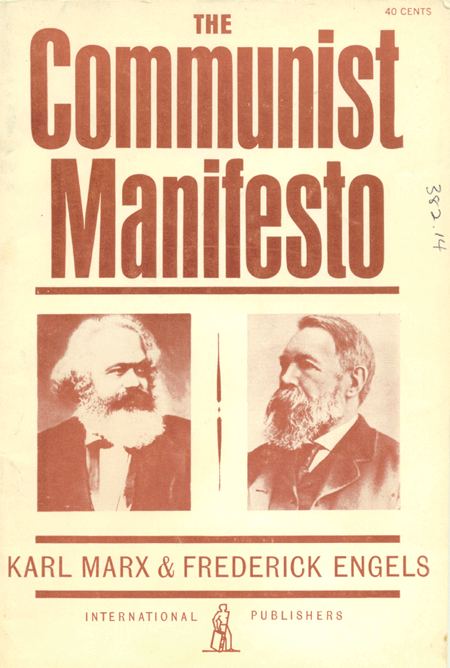
On Labor Day, my students and I discussed “The Communist Manifesto” by Marx & Engels.  We found the Manifesto remarkably prophetic, describing corporate globalization to a T long before either word had been invented, as well as the recurring, ever-more-destructive cycles of boom and bust that Marx predicted would cause capitalism to “dig its own grave.”

We talked about how Marx didn’t envision the final limit to growth being the carrying capacity of our planet, and how the climate crisis may be what finally does the job of sending capitalism over the edge.

But no one could muster much enthusiasm for Marx’s conviction that the proletariat–ie, working folks–would then rise, take over, and make the world a better place.

Looking at the disastrous social experiments in the USSR, China and Cuba, it’s hard to put much credence in Communism as a viable alternative.

It’s also hard to imagine that a social system led by the working class would automatically be any better than the one we have now, dominated by the technocrats and financiers. We’re all human, after all.

Human in our failings–but also human in our creative power to envision new possibilities.

We finished off Labor Day at Simon’s Rock yesterday by having the whole Sophomore class gather to watch “Metropolis,” a visionary film that shows how a young man from the ruling elite is moved by love to become the “heart” that joins the “head”–the technocratic elite–and the “hands,” the workers who actually do the physical labor that makes the vision a reality.

In the allegory of the film, this young, well-educated man provides the missing link, compassion, that can heal a society that has become terribly unhappy in its alienation–the coddled rulers as unhappy, apparently, as the oppressed workers.

It has always been the case that the educated elite have a powerful role to play in social change, if our action springs from the heart.  To survive the coming cataclysms of the 21st century, humanity is going to need all its technological prowess, joined with the age-old wisdom of the peoples who have never embraced western “civilization,” who still know how to make subsistence a happy and healthy way of life.

Head, hands and heart, joining in the common goal of survival.

There are groups now who are forming these kinds of alliances and working actively to create the path towards a sustainable future.  For instance, the Pachamama Alliance, and all the groups who worked on creating the Earth Charter.

The only way capitalism is likely to survive climate change is if the economic elites crack down on the masses with military power–mind controlling hands in heartless fashion. We’re seeing that happen now in various smaller countries in the world.

As a strategy for global domination, I don’t think it will work–it just takes too much in the way of resources.

How much better it would be to have a blueprint for planetary survival based on heart, growing out of our deep love for the natural world that created us and continues to sustain us, despite all we have done and continue to do to destabilize and destroy her.

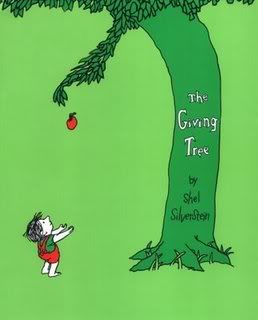
The Giving Tree is my least favorite book in the world, and I can’t imagine why parents continue to buy it for their children.  Let’s write a new book in which instead of destroying our giving tree, our planet, we nourish her and watch her grow with delight.

Let capitalism step off into the grave.  And let a new world be born, in love, light and laughter.

Building resilience: the time to start is now

What we need to weather these tough times is resilience, and that seems to be a buzzword for this decade; many people I know are talking about strategies for building resilience these days–my friends Maria Sirois  and Amber Chand are both working on workshops to help people build resilience in troubled times.

Resilience is about taking what comes in life, good and bad, with equanimity.  Eckhart Tolle talks about this a lot–the importance of acceptance.  That is all very well for me to think about while sitting in a beautiful place on a beautiful sunny day with my family around me.  Much harder for someone in pain to be asked to simply accept what is.

Tolle and Buddhist teachers like Pema Chodron and so many others teach us that we need to practice acceptance in the good times, so that when hardship occurs, we’ll have the mental discipline and habit of being accepting–by which I think they mean not freaking out and panicking when things go wrong, focusing on the present moment through the breath, and finding the light that lives within us, no matter how dark our external circumstances may be.

When you think of someone like Nelson Mandela, who managed to survive almost three decades in prison with his spirit, courage, and wisdom intact, you have to realize that this is more than just spiritual mumbo-jumbo.  How else could he have made it through unless he was able to access some deep inner well of equanimity and peace, an inner resilience that helped him get through each day of those terrible times, and emerge not only mentally sound, but ready to lead his country sanely and sagely.

Few of us will face the challenges that people like Nelson Mandela, Aung Sang Suu Kyi, or Mumia Abu Jamal have faced.  But every life has its dark periods, and right now humanity seems to be entering collectively into times that will test each one of us, and all of us as a society.

We shouldn’t wait until things turn rough to start building our own inner reserves of resilience and strength, and to reach out to others who are doing the same.  The time to start is now.