The question your grandchildren will ask: Where were you on May Day 2012?

Although you’d never know it from following the mainstream media, there are big plans afoot for this year’s May Day.

The global General Strike of the 99% called for May 1 is gaining steam as we move into the final days of preparation.

It’s going to be big.  It’s going to be loud.  It is meant to be an unsettling reminder to the 1% of how much their privilege depends on the cooperation and docility of the 99%.

What if everyone just decided to go on strike with their credit card interest payments?  Their student loan interest payments?  Their mortgage interest payments?

What if everyone decided to redirect their energies to revitalizing local economies, forming their own credit cooperatives, issuing their own currencies, reinstating barter and time banks, growing their own food?

What if everyone just opted out of the huge, unwieldy and oppressive structures that corporate globalization has imposed on us?


I am reminded of the Leo Lionni story about the snail who was so entranced with his creative power to build an ever bigger and more intricate shell that eventually he was pinned down by the enormous, gaudy fruits of his labors and had to abandon that monster shell and start anew, humbly admitting that bigger was not better.

Collectively, and with Americans in the lead, human civilization has created a monster that now holds us captive.

Collectively, we can work together to shift course and rebuild a more humane society where the wealth we generate with our creativity and hard work is shared fairly and is not used to destroy our beautiful planetary home.

It is true that the Obama administration has tried to move things in this direction, in important areas like health care and finance reform.  I believe Obama’s heart is in the right place, but he is held captive like all the rest of us by a rigid system created by the 1% to pander to the 1%.

When even our Supreme Court has been coopted to represent the super-elite above the vast majority of Americans, as was quite evident in the Citizens United decision, it becomes clear that working through the system is like swimming in place, swimming against an overwhelming tide.

So we need to try something different.  We are essentially at the same breaking point our American founding fathers were at back in the 1770s, when they knew that the only way they could move forward was to get the King’s boot off their necks—and the only way to do that was to fight.

I don’t want to see another armed revolution or civil war on American soil.  I am a pacifist through and through.

That’s why I support the concept of the General Strike as a peaceful way to withdraw from the system and remind the elites that the gears of their privilege won’t turn without the grease of our labor and cooperation.

This May Day, wherever you are, whatever you’re doing, take up the gauntlet Thoreau threw down back in 1849 in his famous essay on civil disobedience: “Let your life be a counter-friction to stop the machine.”

Opening to the energy that can change the world

In the course of any given day, I swing from hope to despair and back again at least three or four times.

On the one hand, it’s such an amazingly hopeful and alive time in terms of communication and discovery.  We are constantly learning so much more about our relationship with the natural world and with each other.  Every day brings fresh evidence of the myriad ways in which we are deeply interconnected with all Earth systems and with other Earth-based creatures.

On the other hand, that knowledge does not seem to be adding up to practical change in the real world.  Every day thousands of acres of virgin forests are cut and bulldozed.  Every day drills open up new spigots for deeply buried oil and gas deposits, which can only be extracted at great risk to the surrounding environment. Every day more chemicals are wantonly spread over the landscape and taken up in the bodies of mammals like us, as well as birds, fish and all the other creatures of the land and sea.  Every day hundreds of species, including us humans, move inexorably closer to extinction.

Why is it that despite all we know about the crucial importance of protecting our planetary home, we continue to desecrate and destroy it at ever-increasing speed?

Maybe the answer has something to do with that “we.”  Maybe the “we” who know that our survival as a species depends entirely on our responsible stewardship of the environment just isn’t the same “we” that is out there with the chain saws and the bulldozers.

Maybe the great challenge of our time is getting through to those other people, the destructive ones, the violent ones, the ones who do not seem to be able to perceive the bigger picture and how urgent it is now that we—as a global human civilization, united in our desire to survive and thrive on our finite planet—begin to practice radical sustainability at an accelerated pace.

The stakes are huge.  At this week’s international “Planet Under Pressure” conference in London, the stark statistics were rehearsed yet again.  They’ve gotten so familiar to me that I probably mumble them in my sleep every night.  The new video “Welcome to the Anthropocene” does an excellent 3-minute job at summarizing what we’re up against.

Still image from "Welcome to the Anthropocene"

But knowing the statistics and seeing what’s wrong is not at all the same as knowing what to do to make things right.

It’s so hard to know where to put one’s energies.

Do I go full-bore at the sustainable energy issue, following Bill McKibben?  Maybe a hunger strike in front of the White House would be an effective protest against the Keystone XL pipeline?

Do I go chain myself to a tree in the Amazon or in the rainforest of Indonesia, to protest the deforestation that is depriving us of the vital lungs of our planet?

Should I use my skills as a teacher to try to rouse the young people from their media stupor, using whatever scare tactics are necessary to get their attention and galvanize them to action?

Should I just be out there practicing “re-skilling,” in the Transition Town vernacular: relearning the old skills of surviving off the grid, living leaner and closer to the land that sustains us? Is it time to learn to keep chickens and pigs in my backyard, and finally set up the bee hives I’ve always wanted?

Or maybe I should be up on a mountaintop meditating and communing with the natural world, seeking the vision that will eventually show me the light?

What is it that I should be doing with this one wild and precious life I’ve been granted, in this fast-moving, tumultuous, unpredictable time in our planetary history?

Asking these questions is all I can do right now, just keep asking them and pondering and feeling my way towards my role in what lies ahead of us all.

I want to make an offering of my life.  I want to be a channel through which the positive, loving energy of the universe can flow out and make things right again with our world.

Living on the trigger’s edge

I am always worrying about our vulnerability as individuals living in a contaminated environment, or about the instability of our planetary ecosystem now that global heating is underway.

But one thing I don’t usually worry about is whether my son will be shot and killed on his way to buy candy at the corner store.

This is a mark of my privilege as a white person living in a predominantly white neighborhood in a small, relatively wealthy town in New England.

My sons are in fact half Hispanic—their father is of Mexican heritage—but they “look white.”

It would never have occurred to me, before learning of Trayvon Martin’s recent murder at the hands of a neighborhood vigilante, that one of my kids, coming home from the local convenience store wearing his hoodie up because of the rain, could be accused of robbery and fatally shot by one of my neighbors.

There is so much that is wrong about this scenario that I hardly know where to start.

I deplore the racial profiling that turned an innocent kid into a moving target.  I abhor the despicable behavior of the local police department, which chose to let the killer go free—with his gun!—without even holding an investigation.

But there is a more fundamental issue here that we as a society need to confront.

Why are there so many civilians with guns in our country?

This is at the heart of all the school shootings that have been occurring with alarming regularity in recent years.

It is of deep concern to the millions of victims of domestic violence in our country, who must live in fear of the gun in the drawer.

It is certainly at issue in the Trayvon Martin case, where a young man lost his life because of a trigger-happy “neighborhood watch” patrolman gone bonkers.

It is high time we as a nation stood up to the NRA “right to bear arms” folks and began a serious national conversation about gun violence in our country, and around the world.

***

I spend quite a bit of my professional life teaching and writing about violence that happens in other countries.

When you teach college classes in literature and human rights, you are often reading accounts of genocide, civil war and ethnic cleansing in places like Africa, in Asia, Central and South America, the Middle East.

My students and I regularly read horrifying stories of how civilians are caught in the crossfire between heavily armed warring groups.

One side is usually the state-funded military and police, the other side an oppositional force, labeled “terrorists,” “subversives,” “rebels,” or “freedom fighters” depending on your ideological viewpoint.

In between are the ordinary civilians who are generally just trying to keep their heads down and survive.  Women are especially at risk in these situations: vulnerable to rape themselves, they are often forced to watch their children raped and tortured, their husbands executed.

It’s easy for us to think about this kind of violence as something that only happens far away, and to feel that we here in the U.S. are morally superior and righteous.

Easy, that is, until we stop to consider two important aspects of these faraway conflicts that are almost never discussed in the news media or in college classrooms.

One, in virtually all cases of civil conflict worldwide in the past 50 years, the guns and other weapons have been supplied by U.S. arms manufacturers and dealers, or their European counterparts.

Two, in many cases, the folks on the ground in hot spots like Iraq, Afghanistan, or Congo are fighting proxy wars for First World corporate control of resources. In other words, they’re fighting Wall Street’s wars.

So we here in the U.S., despite our self-righteous sense of moral purity, are in fact deeply implicated in every violent confrontation taking place over there in other parts of the world.

***

What does this have to do with Trayvon Martin?

Let me spell it out.

The same gun manufacturers and dealers who are arming, say, the Syrian Army and the “opposition forces,” or the Ugandan Army and the Kony “rebels,” are also supplying guns to American servicemen like Sergeant Bales, who flipped out and massacred innocent Afghan civilians in their beds last week; to American police officers who regularly appear in the headlines for unwarranted use of lethal force; and to American civilians like George Zimmerman, who shot an unarmed teenager walking home through his own neighborhood—a supposedly safe gated community in Florida.

And this doesn’t even begin to touch on gang violence worldwide, or narco-violence, all of which is carried out at gunpoint.

With so many guns floating around in our society, it is inevitable that innocent people are going to get shot, all the time, every day.

Here in the U.S., and around the world, we need to rethink the heedless way we have given gun manufacturers and dealers such freedom to operate.

Giving anyone and everyone access to a semiautomatic weapon is just asking for violent confrontations among civilians, and between civilians and police.

As a global civilization, we have put too much emphasis for too long on unbridled freedom to create, even when what we are creating leads to destruction and mayhem.

Chemical companies are given a free hand to churn out thousands of new chemicals and put them into the market without sufficient testing for longterm effects on humans and the environment.

Car manufacturers are given a free hand to drive national transportation policy, prioritizing highways over mass transit at great cost to the environment.

Oil and gas companies are allowed to drill ever deeper, their profits pushing our entire political system into a status-quo paralysis just at the time when we need to be vigorously mounting a huge R&D effort in renewable energy sources.

Shooting a kid, bulldozing a rainforest, poisoning an aquifer…these are just differences in degree.

Next time it could be my kid, or yours—at the hands of a crazy civilian, or an enraged policeman.  It could be your tap water catching fire from gas fumes, or a tornado spawned by global heating running amok in your neighborhood.

I’m tired of living under the constant threat of violence.  I say it’s time to hold the gun manufacturers and dealers, the oil and chemical companies, the car manufacturers and all the other agents of destructive technologies accountable, and tell them in no uncertain terms that enough is enough.

Let’s use our prodigious technological capabilities to make our lives better, not to create ever more sophisticated means to take lives away.

Leadership revisited: from ruthless and reckless to thoughtful and wise

This week I finally had a chance to see the new documentary film that has a lot of people buzzing, MISSREPRESENTATION, written and produced by Jennifer Siebel Newsom.  The film clearly and graphically makes the argument that women are systematically objectified and dumbed down in the media, and that this is connected to the on-going gender disparity between men and women professionals.

Having taught women’s and gender studies classes for more than a decade, the film didn’t tell me anything I didn’t already know. But it presented the information in a slick, well-argued way that had the audience gasping, nodding and cringing by turns.

I was somewhat disappointed with the conclusion of the film, however, which mostly urged the audience to take personal action to challenge the misrepresentation of women in the media and in business and politics, and to personally resist social pressure on women to focus on how they look rather than how smart they are and what they do.

Yes, raising personal awareness and mounting personal resistance is important.  But what’s really needed is systemic change.

A great illustration of what I mean by systemic change came my way this morning through a New York Times reprint of a Reuters piece by Chrystia Freeland, “Cultural Constraints on Women Leaders.”

Freeland discusses a new study by University of Toronto business professors Soo Min Toh and Geoffrey Leonardelli, who asked a simple question: Why aren’t there more female leaders?

You can read the article yourself to find out more about how they answered the question.  What interested me most was the author’s conclusion: that even in societies that have been relatively open to women’s advancement, “the one thing women around the world have failed to do is create paradigm-shifting companies.

“None of the great technology start-ups — for example, Google, Apple and Facebook — were founded by a woman. Nor were any of the leading hedge funds, the innovators in the world of money, established by a women. Women are not just underrepresented in this space of transformative entrepreneurs — they are entirely absent.”

Freeland concludes that “the final frontier for women, even in societies that allow them to lead established institutions, is to be ruthless and to take big risks, essential qualities in world-changing entrepreneurs. Instead, as the authors found of female entrepreneurs in Malaysia, women often have to “lead as if they were mothers or teachers.”

This conclusion just demonstrates the extent to which even a very intelligent woman like Chrystia Freeland is still a prisoner of her social indoctrination.

Because the point is that it’s those risk-taking, world-changing entrepreneurs–all men–whose reckless leadership has so endangered our planet that we live in constant fear of the “sixth great extinction event.

It would be a profoundly GOOD THING for our planet and human civilization if our leaders guided us “as if they were mothers or teachers.”

Yes, I am writing this on an Apple laptop which I love, with my iphone on the desk beside me. Yes, I use Google and visit Facebook daily.

But is my attachment to these gadgets and conveniences more important to me, or the world, than our very survival as a species?

What good will my iphone do me when global heating goes out of control, leading to food shortages, storms of biblical proportion, and general lawlessness and fear?

The mother and teacher in me knows that those who look to me for guidance depend on me to choose a safe, wise path.  I will not lead them over a cliff.  I will weigh the risks and benefits and make the decision that benefits the group as a whole.

That is not true of the risk-taking cowboys who have led us to the brink of environmental, financial and social collapse as the 21st century dawns.

We need more men and women to come forward as responsible leaders and tell old-school folks like Freeland, in no uncertain terms, that her ideas of leadership are profoundly flawed.

It will do us no good if women achieve leadership success in the same old masculine terms.  If we are to survive the challenges that await us in the coming years, we need to change the paradigm of successful leadership.

Lead as if you were a mother or a teacher.  Let’s try that on for size.

IWD 2012: If not you, who? If not now, when?

Is it coincidence that on International Women’s Day 2012, Earth was bombarded by one of the most intense solar flares ever?

I can’t see them from my window, but apparently Northern Lights are visible way further south than normal tonight, thanks to the extra radiation from the Sun.

Could it be that the Sun is urging us on, sending us the pulse of a solar storm to motivate us to action?

What do I wish for women, this IWD? What do I want from women today?

I am tired of women being held hostage on the basis of their reproductive capabilities.

Yes, we are the ones who bear the babies after sex.

Sex happens and we love it.

Babies happen, too.

If a woman doesn’t want to bear the baby that takes root after sex, she has every right to decide what to do about it.

Period, end of statement.

Women have the right to be educated about their reproductive options.

Women have the right to have access to contraception, no matter their age.

Insurance companies have no right to treat contraception differently than they would treat any other drug.

Men are very happy to have insurance cover their Viagra so they can screw to their heart’s delight.

Fine.  But don’t deny women the same right to manage our reproductive capabilities as we see fit.

***

Today in class, when we briefly discussed IWD and women’s equality, it was inevitable that one young woman present had to tell the group how much she enjoyed cleaning house, so that she couldn’t imagine that the “second shift” would be a burden.

I just let it go.  Honey, let’s talk again in another 15 years, I wanted to say (my students are generally under 20 years old).

I would like you to come back to me in 15 or 20 years, when you have a toddler and an infant and are working fulltime, and tell me that you love cleaning and it’s perfectly OK that you do more of it than your so-called partner.

***

Yeah, OK, a little bit of anger there.

I was glad to see an article on Common Dreams today entitled “That’s Enough Politeness – Women Need to Rise Up in Anger.”

Hell yeah.

Women like me have been trained to be oh-so-polite.

We don’t rock the boat.

We are grateful for our jobs.

We are grateful for our mates.

We are grateful for our home and our children.

We don’t talk about the personal sacrifices needed to maintain all of the above.

As Laurie Penny puts it, “Women, like everyone else, have been duped. We have been persuaded over the past 50 years to settle for a bland, neoliberal vision of what liberation should mean. Life may have become a little easier in that time for white women who can afford to hire a nanny, but the rest of us have settled for a cheap, knock-off version of gender revolution. Instead of equality at work and in the home, we settled for “choice”, “flexibility” and an exciting array of badly paid part-time work to fit around childcare and chores. Instead of sexual liberation and reproductive freedom, we settled for mitigated rights to abortion and contraception that are constantly under attack, and a deeply misogynist culture that shames us if we’re not sexually attractive, dismisses us if we are, and blames us if we are raped or assaulted, as one in five of us will be in our lifetime….

“Politeness is a habit that what’s left of the women’s movement needs to grow out of. Most women grow up learning, directly or indirectly, how to be polite, how to defer, how to be good employees, mothers and wives, how to shop sensibly and get a great bikini body. We are taught to stay off the streets, because it’s dangerous after dark. Politeness, however, has bought even the luckiest of us little more than terminal exhaustion, a great shoe collection, and the right to be raped by the state if we need an abortion. If we want real equality, we’re going to have to fight for it.”

***

This International Women’s Day 2012, I want women to dare to take some risks. Dare to get angry!  Dare to think outside the box!  Dare to want more than whatever you think you should have!

Women of the world, you are needed as never before.

The Earth Mother herself lies bleeding, prostrate, raped and pillaged and on the edge of complete surrender—which will mean the death and destruction of all of us , her children.

She needs us to stand up for her, to stand up for ourselves, to insist that the old conquistador’s model of forced rape will not cut it in the 21st century.

This International Women’s Day, I want American women to stand with our sisters all over the world to insist that we are more than the sum of our reproductive organs.  We are more than house slaves.  We are more than corporate slaves.  We are not reducible to any of the ciphers by which some of us are regularly netted and ensnared.

Women of the world, there has never been a time when your input, your perspectives, your influence has been more important.

Don’t assume that someone else will take care of it for you.

We are depending on you now.

The Earth herself is depending on you now.

This International Women’s Day, I say to the world’s women: there has never been a more crucial time to step into your power and act to protect your communities and our planetary home.

If not now, when?

If not you, who?

Now.  You.  And us, together.  Men and women, all over the world.   Now, you.  Now.

Cancer blues

This is a post about cancer.

This is a post in honor of all the men, women and children who have died from cancer in the post-industrial age.

This is a post that acknowledges, fully, the extent to which American society has led the way in the extermination of these people–these cancer victims.

How many cancer victims do you know?  According to the World Health Organization, cancer accounts for millions of deaths worldwide each year (7.6 million deaths in 2008, more than died from the Nazi Holocaust).

Cancer is a Holocaust.  It is a disease, or disorder, that cuts across every economic boundary.  It is just as prevalent among the 1% as among the 99%.  It is just as prevalent among the highly educated as among the working class, although of course certain professions are more risky: industrial agriculture, factory work, anything involving radiation.

The truth is that most of the technologies we Americans love the most–cell phones, smart phones, wireless, for starters–are hazardous to our health.  Just like junk food, which we also love.  Or the wanton burning of fossil fuels in our beloved SUVs.

When climate change activists tell us we have to give up our fossil fuels to save the planet, we act like spoiled toddlers.  NO! We will NOT give up our toys!  NO!  We will NOT turn down our themostats, or buy smaller cars, or make a concerted effort to switch to solar.

As parents, we Americans are generally pretty permissive.  We let our kids have what they want, unless it is dangerous for them, or detrimental to their health.

I never let my kids drink Kool-Aid or eat Cheetos, because I knew very well that the junky chemicals in those products were harmful.

But I have let them have cell phones. We have wireless throughout our house.  From what I understand, smart meters, which communicate wirelessly, via electro-magnetic radio frequencies, are in the process of being installed on every home in America.

We can’t afford to eat exclusively organic in my home.  We live near a river polluted with PCBs by GE.  We breathe air labeled “hazardous” on many summer days.

And as a result, we are at risk for cancer, just like everyone else in the developed world.  Everywhere that chemicals are dumped into the environment, everywhere that the ozone layer is thinning, everywhere that the winds blow radiation around, living organisms, including human beings, are dying of cancer at elevated rates.

Last week my Human Rights, Activism and the Arts class at Bard College at Simon’s Rock watched a TED Talk by Eve Ensler, who has (so far) survived a run-in with cancer.  Eve brilliantly makes the point that the inner landscape of cancer mirrors the outer landscape.  What we do to the environment comes back to haunt us in our own bodies.

If we humans, of every class background, are now falling sick in record numbers, it’s a reflection of our sick our environment is.  How sick we have made our environment.

Heal our world, heal ourselves.

Eve Ensler has spent years fighting against the violence that men perpetrate on women’s bodies.  A survivor of an abusive father herself, she has waged a heroic battle against her own demons, and the demons that beset patriarchal cultures worldwide.

She is gearing up now for her biggest effort ever, One Billion Rising, a campaign by V-Day to galvanize men and women to stand up against violence, especially violence against women.

I salute Eve Ensler’s ground-breaking efforts to put her art in the service of social justice, and to link the quest for social justice to environmental health.

If we can’t heal our planet, we will not be able to heal ourselves.

We are the cancer on our planet.

Our own treatment approaches would dictate our eradication.  Radiation therapy: burn it out.  Chemotherapy: poison it to death.

But there is another way.

Look upstream, as Sandra Steingraber has been telling us for the past 20 years.

Find out what is causing the cancer, and CHANGE IT.

Find out why so many women are suffering from violence, and CHANGE IT.

CHANGE.

Where there is a will there is a way.  How sick do we have to become, how sick does our world have to become, before we find the will to change our ways?

Dare to love

Like most people I know, I have just a very narrow sphere of knowledge that I’m willing to let penetrate my consciousness at any given time.

There’s so much I know but don’t want to know. So much I choose not to acknowledge.

It’s a form of self-preservation, because if I were to allow myself to really feel the unnecessary pain and suffering that floods our world like an endless terrorized scream into the night wind, all the time…I could not bear it.  I would go insane.

What prompts these reflections today is the news that hundreds of thousands of seal pups are drowning in the Gulf of St. Lawrence this season, after a straight run of disastrously warm winters where the pack ice on which harp seal moms give birth has been too thin to provide the shelter the pups need to survive.

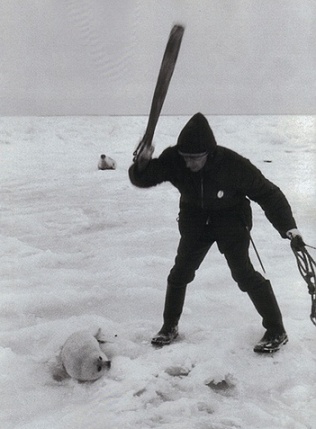
Add to this the fact that the Canadian government, knowing full well that the harp seal populations are in dramatic decline due to global heating, is still going ahead with the annual seal pup hunt, allowing as many as 330,000 pups to be clubbed to death by hunters this season.

This despite the fact that Russia and the European Union, the principal clientele for seal fur, have banned imports this year.  Despite the fact, too, that a huge backlog of seal pelts is sitting in warehouses.

It’s one thing to kill animals for food. Human beings are carnivores, after all.  But killing for sport…killing for unnecessary furs…killing for no good reason makes me feel deeply ashamed of my species, and heartsick for the loss of life.

I don’t know what to do with these feelings.  Signing yet another online petition or sending yet another contribution to a Save the Seals campaign does not seem anywhere near adequate.

I am not capable of practicing tonglen, taking in the suffering and sending out lovingkindness to both the victims and the perpetrators, as Buddhists like Pema Chodrun recommend.  I can neither bear to take in the suffering, nor stomach sending anything akin to kindness to the perpetrators.

So I do what most people do.  I close my eyes.  I grow some kind of hard shell around my heart.  I choose, without even consciously realizing what I’m doing, to ignore news and information that will upset me.

I remember clearly that as a child, I was not yet capable of this degree of callousness.  I very rarely was exposed to any suffering, since I grew up in a very sheltered environment, but every so often something would manage to get through into my sweetly padded cocoon, and leave me gasping in empathetic pain.

Once I was standing outside on the lawn in front of the house, and a bird whizzed by me and flew straight into a window.  It fell to the ground, stunned.  I ran to it and picked it up, cradling its trembling body in my arms.  Its neck was probably broken…it died within an hour.  I held it and cried over it and mourned it so deeply that even now, so many years later, I still tear up thinking about the sorrow that small death called up in me.

I can’t live with that kind of sorrow all the time; I would be paralyzed with grief.  And so I compartmentalize.  I go about my business and actively avoid thinking about the thousands of seal pups dying today.  Or the wolf pups being poisoned by the Canadian government to clear out the boreal forest in preparation to extract oil.  Or the millions of songbirds and waterfowl killed each year by US federal government agencies because they get in the way of industrial agriculture or airplanes or golf courses.

Just for a moment, let’s dare to imagine what the world could be like if adults like me did not deliberately silence and smother our empathy for the creatures who need our help to survive.

Love might just be the most radical gift we could bring to the world.

What could be more potent than action fueled by love?  Do we dare?  Can we afford not to?

A Crucible Moment in Education

There was some rolling of eyes in my community when President Obama announced he would like to see high school mandatory until age 18.  That’s because at Bard College of Simon’s Rock, my alma mater, where I’ve been teaching for the past 17 years, the standard procedure for students is to leave high school at about age 16, generally after 10th grade, and shift into our early college program.

Most Simon’s Rock students are motivated to step off the beaten path and try a different approach to college because they’re high achievers who are bored in high school.  A few come to us because they’ve been so socially mauled in high school that Simon’s Rock becomes not only an academic, but also a social refuge for them.

In any case, for my students, being compelled to stay in high school until they were 18 years old would have been torturous, and would not have improved their future chances of success any more than “dropping out” to try a more innovative form of education—early college.

President Obama’s instinct that staying in school is better than dropping out altogether is absolutely correct.  It’s just that if we’re going to compel kids to stay in school, we need to make their schooling compelling.

Lots of great minds have already weighed in on the question of how to make learning fun and meaningful, but somehow we do not seem to have made a dent in the great battleship Education, which is still plowing its way implacably through the cold waters of Teaching to the Test.

It’s true that there is a certain amount of knowledge that you simply have to be taught, in that passive sense of receiving information and committing it to memory.  For instance, the alphabet.  The multiplication tables.

And having got these basic tools, you need to be taught how to use them: how to read, how to manipulate numbers.  If you’re going to be a doctor, you need to be taught how human systems work, just the way an engineer learns how a mechanical system works, or a mechanic learns how a car works.  OK.

But beyond mastering these kinds of basics in any field, there are two things students most need to get out of their education: learning how to figure things out for themselves, and learning how important their educated selves are to their communities and the larger society as a whole.

In today’s networked world, we no longer need to have kids waste their time memorizing all the state capitols, or learning by rote anything that can be measured in a multiple-choice test.  What kids need to learn is how to find the information they need to answer the questions they have about the world.  They need to learn how to frame their questions, understanding that the way a question is asked will often guide or predetermine its answer.

Reading is still a fundamentally important skill, but what we need to be teaching kids is how to read between the lines.  How to see through propaganda that passes for “fair and balanced” journalism, for instance.  How to sift through multiple sources of information on a given topic, and understand the criteria for determining which source is most credible.

But even that is not enough. Students not only need to become active readers, but also nimble thinkers, capable of taking in a spread of ideas on a given topic, and responding with their own original thinking.  A society where kids only learn how to feed back to their elders old, predigested ideas is a stagnant society, and we can’t afford that kind of stagnation at this time.

And here we get to my second point: kids not only need to learn to think for themselves, they need to understand how important this activity is for our rapidly changing society.  And that means taking the skills they’ve gained through their education out of the school and the academy into the street.

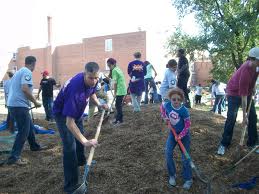
Students at every level, even the littlest ones, will benefit from a much more active engagement with the social and natural environment beyond the walls of their classrooms.  Little kids should be planting gardens in their schoolyards and composting the remains of their lunch. In Waldorf kindergartens like the one my sons attended, kids partake in preparing their mid-morning snack, and in keeping their classroom clean and neat.

What kids learn through activities like these is the importance of collaboration to community—an invaluable life lesson that needs to start early and be reinforced in different ways as they grow older.

Instead of our current competitive test-based system, we need collaborative learning that anticipates the kind of team-based environments of the most successful communities and businesses.  Instead of seeing kids hunched on their own behind raised folders taking a test—no cheating!—we should see groups of kids assembled around a problem, working collaboratively, noisily, joyfully to solve it.

The task of the teacher in this kind of learning environment would be to set the kids ever more challenging and interesting problems, with clearly visible and defined real-world applications, and guide the kids to the tools they need to solve the problems and evaluate their successes or setbacks.

Lord knows there is no shortage of serious problems in our world today, problems that demand every ounce of our most focused attention to surmount.  We need to get kids out of their classrooms and into their communities, bringing their creativity, their intelligence, their caring and their wonderful energy to bear on the challenges that lie just outside their classroom doors.

The Obama administration has just released a major new report, A Crucible Moment: College Learning and Democracy’s Future, prepared by the National Task Force on Civic Learning and Democratic Engagement, which brought together leaders in higher education from around the country to come up with recommendations for ways that education can help students become engaged, responsible local and global citizens.

The report concludes that given all the “pressing issues” facing us today—“growing global economic inequalities, climate change and environmental degradation, lack of access to quality health care, economic volatility, and more,” educators need to focus on “expanding students’ capacities to be civic problem-solvers using all their powers of intellect and inventiveness.

“The kind of graduates we need at this moment in history,” the authors say, “need to possess a strong propensity for wading into an intensely interdependent, pluralist world. They need to be agile, creative problem solvers who draw their knowledge from multiple perspectives both domestic and global, who approach the world with empathy, and who are ready to act with others to improve the quality of life for all.”

The report “urges every college and university to foster a civic ethos that governs campus life, make civic literacy a goal for every graduate, integrate civic inquiry within majors and general education, and advance civic action as lifelong practice.”

Specifically, the task force advocates developing service learning and community engagement programs that move beyond simple volunteerism to actually involving young people as active participants and innovators in making their social environments more vibrant, more responsible, and more equitable.

Sounds good, and sounds simple to implement, but as I know from trying to develop community engagement structures for students at my home institution, it takes staffing—and therefore funding—to provide the channels students need to quickly jump into productive off-campus programs.  Commitment to this kind of active learning environment needs to come from the top, and that’s why I am excited to see such an array of distinguished leaders in education come together as the signatories of this new National Task Force report.

Let’s hope some of that energy and enthusiasm will trickle down to schools and campuses all over the country, and soon.  The tone of urgency evident in the title of this report, A Crucible Moment, and in the President’s remarks about education this past week, is not exaggerated.

We are in a crucible moment in so many ways, and we desperately need to equip our young people with the skills and outlook they will require to bring us safely through the turbulence that awaits us in the foreseeable future as the globe heats up and pressures on human society increase.

Keeping our kids in high school until they’re 18 is only a good idea if high school becomes a meaningful, active learning environment.  Let’s do what needs to be done to make that so—or let’s come up with another model.  Early college, for example—a good idea whose time may finally have come.

A new generation rises, and with them, our hopes

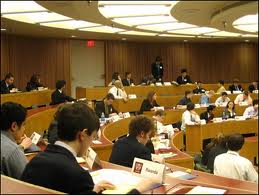
Today I gave the keynote address at the regional Model UN student conference sponsored by Bard College at Simon’s Rock.

On the one hand, it was heart-warming to look out and see that crowded lecture hall filled with bright, eager young faces, ready to step on to the world stage, if only in theory, and play leadership roles.

On the other hand, it was sobering to have to be the bearer of such grim tidings.

I started out by taking them back to a choral Ode in the Antigone that has always haunted me, the one where the Chorus sings the praises of human technological prowess, while at the same time sounding a warning note about how mankind’s “cunning…is the fertile skill which brings him, now to evil, now to good.

“When he honors the laws of the land, and that justice which he has sworn by the gods to uphold, proudly stands his city: no city has he who, for his rashness, dwells with sin.”

In other words, I told the students, we humans can do all kinds of amazing things with our great intelligence, but we will only prosper if we keep our moral compass and use our powers for good.

The Ode is basically a list of areas in which human beings have excelled, and that list is as valid today as it was in the 5th century B.C.: our power of navigation and transportation; agriculture; our dominion over other animals, wild and domestic; our ability to withstand the elements by building shelter and creating fire; our medical arts; our facility with language and “wind-swift thought.”

Truly we are a “wondrous” species.  And yet the fact that this list is recited in the tragedy of Antigone bears witness to the fact that our great “cunning” does not always guide us well.

In Antigone, Creon is a proud, vindictive tyrant who demands absolute allegiance from his subjects, including his niece Antigone.  When Antigone defies his order to let her brother’s remains be left in the open for the crows to feast on, and goes out alone to bury him, Creon goes into a fury and orders her arrested and sentenced to death.

It’s clear that the Chorus in this play believes Creon’s action is wrong.  Antigone was obeying her own moral judgement, putting her filial and religious obligations before her allegiance to the King. And just as the Chorus predicted in the initial Ode, because he is not using his power wisely and ethically, in the end Creon’s house will fall.

In our time, I told the students, the same kinds of battles rage, of good people standing up for their beliefs against oppressive tyrants, who don’t hesitate to imprison and even execute any who defy their power.

The Arab Spring showed us what can happen when enough people dare to speak truth to power and defy an authoritarian state  In the United States, the Occupy movements are now standing up, not so much against the state, as against the corporate capitalist elites—who often are the power behind the thrones of the various nations.

Even in our own country, the price of defying the status quo can be high.

But, I told the students, given the perilous state of the world today, the price of staying quiet and going along with the flow is inevitably going to be much higher.

I reminded them of the many dangers that face us today, including:

  • the homogenization of media and the reduction of education to multiple choice tests, instead of a media that stands strong in its watchdog role and an educational system that focuses on teaching students how to think creatively and question authority;
  • the tremendous militarization of police and national forces, with most countries fairly bristling with lethal weapons, from handguns to bombs;
  • environmental degradation and loss of biodiversity, including the contamination of our air, soils and waters with toxic chemicals caused by the very agriculture celebrated in the Antigone Ode;
  • serious health problems caused by environmental toxins and chemical additives in our food supply;
  • and above all, the looming menace of anthropogenic global warming.

These will be familiar themes to anyone who has been reading my blog these past few months.  But it was good to speak these ideas out loud this time, to the young people who are going to have to bear the brunt of the problems.

I quoted U.N. Secretary General Ban Ki-Moon, who told negotiators from 200 nations gathered at the recent COP17 climate conference in Durban that the situation was so urgent that they could not afford to wait for unified global action.

“Don’t wait for a binding agreement,” he said. “It could take years. All member states should take their own measures,” before it’s too late.

“Last year we saw the highest emissions ever,” Mr. Ban said. “If we carry on as though it is business as usual we will be out of business.”

Those are pretty stark, unequivocal words from the leader of the closest thing we have to a global government.

Given the need for drastic change in the way we do business as a civilization, I challenged the students to dare to think outside the box.

I encouraged them to let Antigone be their guide as they began their Model UN negotiations. “If you know that a policy is wrong, don’t be afraid to say so, and to fight for what you believe,” I told them.

I urged them not to let artificial boundaries like nation, race, class, religion or gender cloud their vision of what is needed to succeed in the goal of making human society safer, more nurturing, and more sustainable for us all.

“It is a deeply flawed, damaged world you will all soon be stepping out into as young adults,” I said.  “We live in a time of accelerated change and unprecedented transition.  None of us knows what lies around the bend.  But we do know that no matter what, we will be better off if we work proactively to overcome narrow national self-interests and begin to think in planetary terms—and not just about human interests, but in terms of the good of the entire web of life of which we are a part.”

Our only chance at changing the way we do business as a civilization, I said,  rests with our ability to successfully communicate with one another–to use the powers of “speech and wind-swift thought” commended by the Chorus of Antigone. 

What we need are not the stylized battles of debate, but the true, open-hearted communication of consensus building, where all viewpoints are listened to respectfully, and all positions are judged both on their own merits and on how well they’ll contribute to the collective goal of making the world a better place.

As I stepped away from the podium, I felt sad that I had to lay such a heavy burden on these bright young people, who through no fault of their own have inherited a planet in such disarray.

But I also felt the surge of hope that always rises again with each new generation.  Maybe this generation will be the one to turn off the beaten path and forge a new relationship with our planetary home.  Perhaps they will be able to resist the centripetal pull towards conformity.

As they all filed out of the room to take up their places at the Model UN negotiating tables, my heart went with them.  They are our last best hope.


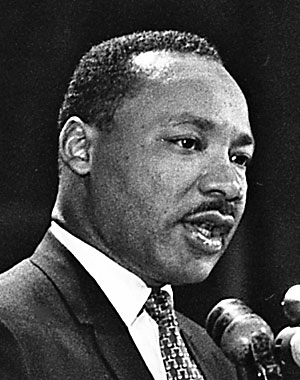
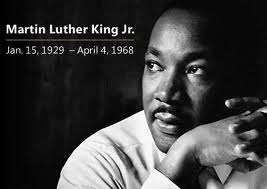
On MLK Day, Opening the Hearts of the Privileged

When I first heard the phrase “privilege is invisible to those who have it,” it seemed like the answer to a question I didn’t even know to ask:

How can people who are so nice, who would never hurt a fly, be so oblivious to the ways in which their lifestyles are deeply hurting others?

Oblivious is the operative word here.  Most privileged people really don’t have a clue as to how “the other half lives”–or make that, the other 90% or so. Just as I don’t understand how it is to be a child slave working on a cocoa farm in Africa, or for that matter a honeybee bringing poisoned pollen back to the hive and dying of it myself, people way up on the class ladder in the US can’t understand what deprivation feels like–and if you can’t get to that feeling place, it will be very hard to arrive at any sort of comprehension or even curiosity.

There are so many examples of what I’m talking about, but having just signed a petition to President Obama calling attention to the issue of contingent faculty, my mind is going to a memory I can’t shake, from my days of adjunct teaching.

I had been teaching as an adjunct at my alma mater for a couple of years, having decided to forgo a serious tenure-track search while my first son was an infant.  In the spring, after a busy year of adjunct teaching, I went to talk to the Dean, to see whether it would be possible to improve my status at the college so my salary would not be cut off during the summer.  I don’t remember the exact words of her response, but her attitude was plain: what happens to you over the summer, when we don’t need you, is none of our concern.  Next!

I was naive, I guess, to imagine that she would care that she was not paying me a living wage.  But I had grown up among the privileged, for whom it was really unfathomable, the idea of not making a living wage.  If you weren’t making enough to live on, then something must be wrong with you.  You’re not trying hard enough, you’re not talking to the right people, you just don’t have what it takes.

In this situation, I felt the duality of on the one hand being outraged, as any privileged person would be, at being treated in such an unfair, exploitative fashion, and on the other hand, feeling shamed and inadequate because of course it must be true, it must be my fault that I’m being treated so badly.

For people from a different background than mine, it would be quite easy to internalize those feelings of shame and self-doubt, to the point where one would begin to believe them.  I have studied many autobiographies by people who were marginalized and disadvantaged from birth by their race, ethnicity, gender, etc, and this self-loathing is a common feature of what W.E.B. DuBois called “double-consciousness,” seeing oneself through the eyes of another.

But I grew up with every advantage, and was always a star in the academic realm, a child prodigy in reading and writing who received a BA magna cum laude at 19 (it would have been summa if I hadn’t had to take those damned statistics classes!), a straight A student through grad school who excelled at jumping through every hoop set out for me.

Thus my amazement at finally attaining my goal of teaching at the college level, and being told that while I was doing a great job, there was no chance of being paid fairly for it.

My point in relating this story is that most people who grew up like me would never have such a story to tell.  For us the red carpet rolls out automatically wherever we go; people bow and beckon, smiling; life is easy and delightful. And when you live that kind of existence 24/7, when it’s your whole life from earliest childhood, it’s just inconceivable that it could be otherwise.  Or if it is, then as I said, there must be something wrong with you personally.  It’s not the system that’s at fault if things aren’t going your way, it’s your own personal inadequacies.

That seems to be the explanation that many among the 99% accept when they fall upon hard times.  Home foreclosed? What a fool you were for signing that mortgage!  Lost your job?  Why didn’t you go into a more stable field?  Single mom?  Honey, don’t you know how to keep a man?  And so on and so forth.

Both sides of the class divide need reminding that we are all born into a pre-existing social structure, some with gold spoons, and some with plastic spoons in our mouths.  The playing field is most assuredly not level.  Those who are living well need to realize that they owe their good fortune as much to their favorable placement in the Game of Life as to their own smarts and hard work; and those who are struggling need to realize that it’s not all their fault.

Pointing fingers at individuals is not going to lead to a fruitful discussion.

Was it the Dean’s fault that it was standard practice at the college to pay adjuncts by the semester?  She was just going along with the flow, wasn’t she?  Was it the mortgage lender’s fault that people took on more debt than they could repay?  The mortgage officer was bending over backwards trying to give that family the house of their dreams, wasn’t she?

Right. Rather than seeking to cast blame, we need to be looking for ways to make the system fairer for all the new children being born into it every minute.  One of the most basic steps we can take is making privilege visible to those who have it.  The privileged, who have more social power than the disadvantaged, need to know and understand how their complacency with a warped social system impacts the less well-placed.

Knowledge is the first step towards compassion, and from compassion comes the desire to make what’s wrong right.

It’s not about casting stones.  It’s about sharing experiences, and hoping that those in power will listen with open minds and hearts.

On the eve of MLK Day, that is my fervent wish and prayer.