Methane Burps and Political Disenfranchisement: People, Wake Up!

There are two pieces of news that have me really worried today, one environmental, the other political.

The environmental news, predictably, is about global warming.  I suppose most people have heard by now about the giant methane plumes being released into the atmosphere from the melting Arctic permafrost, but did you realize the scale of what is going on?  Here is a quote from the scientist who has spent more time than anyone else actually observing this issue in the Arctic, Dr. Igor Semiletov:

“In a very small area, less than 10,000 square miles, we have counted more than 100 fountains, or torch-like structures, bubbling through the water column and injected directly into the atmosphere from the seabed,” Dr Semiletov said. “We carried out checks at about 115 stationary points and discovered methane fields of a fantastic scale – I think on a scale not seen before. Some plumes were a kilometre or more wide and the emissions went directly into the atmosphere – the concentration was a hundred times higher than normal.”

As Andrew Revkin notes in his excellent Dot Earth NY Times blog, ““Given that methane, molecule for molecule, has at least 20 times the heat-trapping properties of carbon dioxide, it’s important to get a handle on whether these are new releases, the first foretaste of some great outburst from thawing sea-bed stores of the gas, or simply a longstanding phenomenon newly observed.”

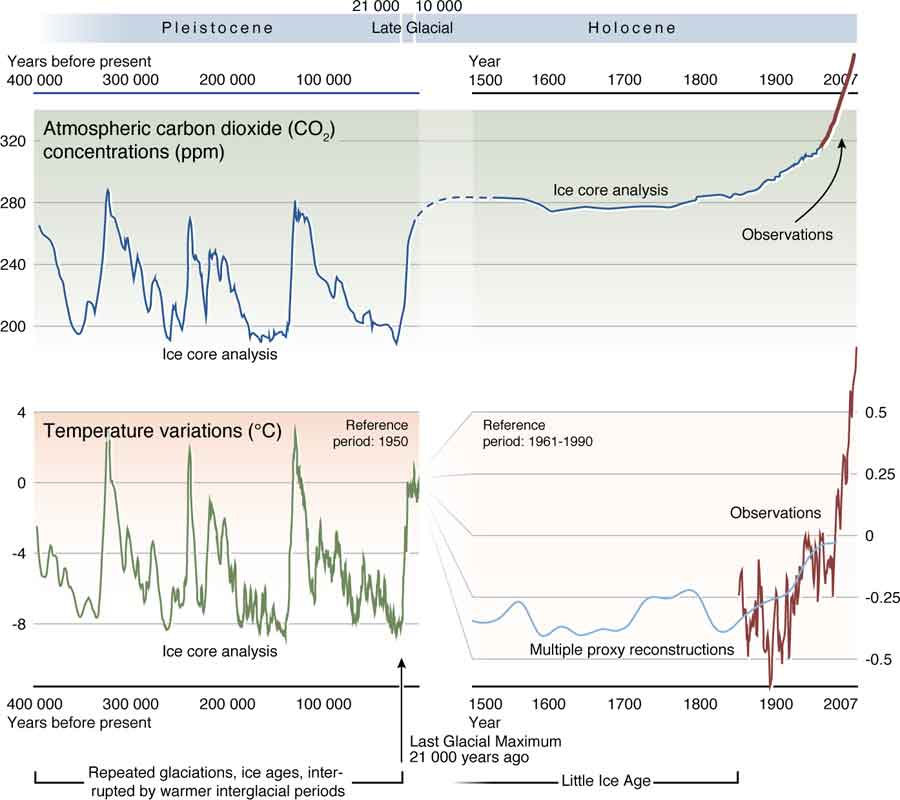
Dr. Semiletov and his team caution that it’s too soon in their research to answer this question definitively.  But it stands to reason that melting permafrost and sea ice would provide an escape hatch for methane that had previously remained sequestered for millennia.  It seems likely that this trend will continue and worsen in the coming years.  Global warming, here we come.

The other news I’m fretting over this morning is the massive Republican attack on voter franchise in the U.S.–also on a vast scale, and with potentially disastrous results.  As Amy Goodman spells out in a column today on Truthdig,  “Across the country, state legislatures and governors are pushing laws that seek to restrict access to the voting booth, laws that will disproportionately harm people of color, low-income people, and young and elderly voters.”

This has been going on for at least a year now, and only last week did Attorney General Eric Holder finally act to declare one such state action, in South Carolina, unconstitutional.  The Democratic Party is finally waking up to the sinister plot afoot by the Republicans to steal the election they are unlikely to win in a fair fight.

We know what right-wing Republicans stand for: unfettered big business, dismantling of social safety net programs, Boss Tweed-style oligarchy of the wealthy, and an “are there no workhouses” Scrooge mentality towards everyone else.

Is this the country we want to become?

The United States needs to regain its stature as a beacon of hope in dark and dangerous times.  The stakes are so high now; the danger is so real and so close.  Although I have been writing about the importance of strengthening local “transition town” resources, we cannot afford to ignore big politics, because of the undeniable power possessed by federal and state governments, which can be used for good or for ill.

Although we can’t do anything to control those methane burps, we can work to shape and direct our political systems towards moving full steam ahead to transition to renewable energy and prepare for the systemic climate change that is already upon us, whether we want to admit it or not.

As the Occupy movements regroup in the New Year, I want to see the young people of this country stand up for their rights and the sane governance of our country and our planet.

Occupy the Elections must become a rallying cry for the coming months.
Survival is not an academic skill

Yesterday I wrote that I intend to devote my second half of life (OK, let’s be real, we’re talking about  more like my last third of life at this point) to parenting and trying to change our global social systems to be sustainable and non-exploitative.  That intention rolled around in my head overnight, and I began to wonder how my role as a college teacher fits into this scenario.

Can I use my vocation as a teacher of comparative literature, media studies & gender studies/human rights to change the world?

As if in response to my unvoiced question, the inimitable professor Stanley Fish published an op-ed on the NY Times website last night, in which he used the occasion of the upcoming Modern Language Association annual convention to reflect on the state of the higher-ed humanities profession.

I’ve participated in many an MLA convention in my 25 years or so of professional involvement in the field of comparative literature, but this year I am not attending because my panel proposal, entitled “Strategies of Resistance: Women’s Writing and Social Activism in Iran, South Africa and the United States,” was not accepted.

Professor Fish’s analysis of the 2012 conference Program gave me a good insight into why my proposal, which I thought was comprised of excellent papers by well-qualified scholars, was rejected.

“Absent or sparsely represented,” he says, “are the topics that in previous years dominated the meeting and identified the avant garde — multiculturalism, postmodernism, deconstruction, post-colonialism, neo-colonialism, racism, racialism, feminism, queer theory, theory in general.”  My panel would have fit nicely into at least three or four of these categories.

The new hot topics at the convention this year, says Prof. Fish, can be lumped under the umbrella term “digital humanities,” which covers “new and fast-moving developments across a range of topics: the organization and administration of libraries, the rethinking of peer review, the study of social networks, the expansion of digital archives, the refining of search engines, the production of scholarly editions, the restructuring of undergraduate instruction, the transformation of scholarly publishing, the re-conception of the doctoral dissertation, the teaching of foreign languages, the proliferation of online journals, the redefinition of what it means to be a text, the changing face of tenure — in short, everything.”

Everything?

The problem with this brave new direction in literary studies is that even while it reaches out to the world through digital portals, it seems to have lost all interest in the real world beyond its own narrow and insular ivory halls.  Other than “the changing face of tenure,” which is certainly a meaningful labor issue for the small percentage of Americans who are college/university professors, there is no indication that the young literary Turks all fired up about the digital humanities care at all about material conditions for people, animals or the environment.  Politics becomes cyber-politics; people become avatars; electricity simply flows, and food appears like magic in supermarkets or restaurant dishes.

Let me be clear: I am no Luddite when it comes to digital technologies.  I’m writing a blog, after all, and I regularly teach a class in digital media studies, which changes radically every time I offer it because I try to keep up with the rapidly transforming media landscape.

But to me, digital technology is a vehicle, not an end in itself.  I want to involve myself in digital media and the digital humanities to further my material, political goals of remaking the world.  Otherwise it’s just so much more mental masturbation.  We don’t have time for that now, if indeed we ever did.

And here’s where I come back around to my starting question of whether my role as a teacher will be useful to my larger political goals of transitioning to a safer, kinder, happier human and inter-species landscape.

It depends what I teach, doesn’t it?

For years now I have been teaching a series of classes on “women writing resistance” in various areas of the world–Latin America, the Caribbean, Africa, the Middle East, the U.S.  The political writings of strong women who have successfully resisted both private and public oppression have taught me and my students so much about what it takes to stand up for one’s principles and put one’s visions of positive social change into action.  We’ve also learned a lot about the price activists often pay.

In the years ahead, I want to continue to use my vocation as a teacher to explore literature that is not afraid to speak truth to power.  I want to seek out visionary texts that look ahead fearlessly into the future and light the way for those who are following more slowly and cautiously down the path.  I want to amplify the voices of authors who advocate for those who do not have the same privileged access to the literary stage.  I want to become one of those authors myself.

I should not be surprised that this direction is of little interest to the crowd inside the insular tower represented by the MLA.  What was it that Audre Lorde said at another academic conference, long ago?

Survival is not an academic skill. It is learning how to stand alone, unpopular and sometimes reviled, and how to make common cause with others identified as outside the established structures in order to define and seek a world in which we can all flourish.”

Yes, Audre.  I’m with you.

De-coupling our wagons from the locomotive of global capitalism

There is a clear spectrum of response to the urgency of the environmental and economic challenges that face us.

On the one end is the Deep Green Resistance movement, calling for a complete take-down of industrialized civilization, violently if necessary (and it would be necessary, of course–industrial civilization won’t go down without a fight, unless it’s wiped out by natural disasters).

On the other end are those who believe we will be able to find our way into a sustainable world order via technology, ie, renewable energy sources that will keep the capitalist engines burning bright.

On this spectrum, I would have to locate myself somewhere in the middle.  While I see the necessity of deindustrialization, I don’t really want to live through the violent havoc a strong de-civ movement would cause.

But I know things can’t go on as they have been.  We must shift from an economic model built on endless growth to one that seeks to maintain a steady state, both for human societies and for the natural world (as if there were a separation between these two).

We must also shift from the capitalist system of accumulated wealth for the few based on the commodified labor of the masses, to a system in which people’s labor is more directly connected to their well-being, and wealth is not allowed to concentrate in a few disproportionately powerful, distant hands.

The only movement I’ve found so far that is actively working to accomplish a vision similar to what I’ve sketched out above is the Transition Town movement.  The brainchild of UK visionary activist Rob Hopkins, the movement describes itself as follows:

“The Transition Movement is comprised of vibrant, grassroots community initiatives that seek to build community resilience in the face of such challenges as peak oil, climate change and the economic crisis.

“Transition Initiatives differentiate themselves from other sustainability and “environmental” groups by seeking to mitigate these converging global crises by engaging their communities in home-grown, citizen-led education, action, and multi-stakeholder planning to increase local self reliance and resilience.

“They succeed by regeneratively using their local assets, innovating, networking, collaborating, replicating proven strategies, and respecting the deep patterns of nature and diverse cultures in their place.

“Transition Initiatives work with deliberation and good cheer to create a fulfilling and inspiring local way of life that can withstand the shocks of rapidly shifting global systems.”

What appeals to me about the Transition Town movement as a strategy for change is that it’s locally based and collaborative.  The first step is getting to know your neighbors, finding out what skills you can share, and taking stock of how you can prepare intelligently to cope with whatever environmental and economic shocks may lie ahead in our future.  It doesn’t dictate a one-size-fits-all model, but rather gives communities credit for being smart enough to figure out their own, locally adapted solutions.

As a society, America seems to be in collective denial about the reality of climate change.  We don’t want to hear that if we continue down the path of capitalist growth based on fossil fuels, the planet will heat up past the point where we could expect life as we know it to continue.  We don’t want to put the pieces together, because if we do, we will be forced to face the fact that we need to change. 

If we could accept this fact, we could begin to talk seriously about directions to take to make that change happen.  It would be nice if we could count on our world leaders to step up and face the challenge squarely, in a concerted effort.  But given the reality of global politics, still based on competition and armed power struggles, it seems very unlikely that we can look to the United Nations, or individual national governments, for the kind of decisive leadership we need now.

So we need to turn to each other, on the local level, and begin asking, as the Transition Town movement envisions, what can we do right here, together, to become more resilient?  What resources do we have, right here, that are not dependent on current systems of international or long-distance national trade?  How can we plan together for a sustainable future?

In a way, it’s an effort to de-couple our personal wagons from the locomotive of capitalist growth, which is proving so destructive to everything in its path, and seems to be on the verge of careening out of control.

I’ve been hearing a fair amount of fear expressed about “going backwards.” When people imagine stepping down from the capitalist growth model, they picture having to give up modern conveniences like advanced medical technologies, ready access to electricity, indoor plumbing, etc.

It doesn’t have to be that way.  We have to work on developing new ways of generating those conveniences, that are less destructive to the planet (the technological fix) and also work swiftly to dismantle those features of industrial civilization that are throwing our whole ecological system out of balance (de-industrialization).

The Transition Town movement calls this “the great re-skilling” approach.  We need to remember older, more sustainable ways of doing things, while also keeping the best of new technologies and learning how to apply them in smarter, more efficient and ecologically sound ways.

There are over 100 full-fledged Transition Town initiatives in the U.S., and hundreds more worldwide, along with many start-up groups forming all the time.  Although all of us seem to have so much to do, and so little time these days, this is really a movement we need to be focusing on now to prepare for the decade ahead.

Given the lack of effective top-down leadership, should we really be wasting our time worrying about national elections, for example?  Or bothering to go to international conferences on climate change?

Or is the smarter thing to do to begin, quietly and with determination and hopeful good cheer, to make our own preparations for a very different sort of future, in our own transition towns?

The Silence of the Bees

Usually during the holidays I catch the frenzied good cheer from everyone else and wind myself up to make merry.  This year, I just can’t seem to find the spark.

Maybe it’s a case of SAD (seasonable affective disorder).  Maybe it’s the fact that it’s the first holiday after my divorce was finalized, and that new reality is sinking in.  Maybe it’s the gloomy state of the economy, which is certainly negatively affecting my financial outlook.

But I think it goes deeper and broader than these personal issues.

I feel like I’m grieving, but not for any one person.  I’m grieving for the loss of my future, and all of our futures.  Even as I stoutly maintain that we can’t give up hope, and we need to keep fighting, there is something in me that keens, heartbroken, for the huge loss that we all face.

It’s already started, the great dying-off.

I keep remembering a certain perfect May morning in my childhood, when I waded out into the deep, fragrant grass under the old, half-wild apple trees, which were glorious in full pink-and-white bloom.  I lay in a grassy nest under one of the trees–no worries about ticks and Lyme disease in those days–looking up at the blossoms outlined against the startling blue of the sky.  The petals rustled gently in the breeze, and the sound of thousands of busy buzzing honey bees filled the air.  Watching carefully, I could see the bees moving from blossom to blossom, carrying their saddlebags full of bright golden pollen.  My heart swelled with the sheer joy of being alive in that moment, a part of the humming life of that orchard on that beautiful spring day.

Flash forward to last spring, when I went out into the same old orchard on another lovely May morning, and was aghast to realize that not a single bee was working the blossoms of the tree.  The silence was frightening, like the desolate silence of a wasteland, though visually it all looked very much the same.

This is just one small example of so many countless instances of the glorious richness of life on our planet, profoundly and irrevocably being silenced.

So yes, I am grieving.  And I am angry.  And I do not know the best way to try to head off the end that seems so inevitable now.

Sometimes it feels like I’m living in a sci-fi movie, where everything seems so hopeless, the bad guys are winning…and then at the last moment, the heroes sweep in and save the day.  I want to believe that we can be those heroes.  Perhaps it will be like the TV series “Heroes,” where many of us who are preparing ourselves now for the fight will come together and really be able to make a difference.

But I don’t count on it.  Because, in large part, the “bad guys” are us.  We’re doing this to the planet.  The laptop I type on is part of the problem, the electric lights I just strung up on my porch are part of the problem, the car I drive is part of the problem.

What would it mean, really, to stop being one of the bad guys?  To become one of the vast army of everyday heroes needed to save this planet?

I keep asking this question, and I will keep asking it until the answer becomes clear.  I feel I am taking some sort of step in the right direction just by asking the question in this public forum, seeking out like-minded people who may have answers I could not come to on my own.

I know we need each other now, more than ever.  The old individualist way of doing things is part of the problem.  Interconnection should be the buzzword of the second decade of this century.  As the planet heats up, our survival will depend on our being able to cooperate and collaborate on adapting to the new, much harsher environment.


 Sometimes I have moments of hysteria, when I feel like I’ve been diagnosed with a terminal illness, and need to decide how I want to spend my last days.  Maybe this isn’t so hysterical after all…this may be a rather sober assessment of the way things stand.

Of course, we are all living under a life sentence, all the time!  But I no longer feel I can count on living into old age, dying a natural death.  Saving for retirement seems like a pipe dream, left over from a 20th century mindset that no longer makes sense.

The only  antidote I know for the grief and depression born of full apprehension of the reality of our very bleak and uncertain future is simply this: carpe diem, seize the day.

Unless we ordinary heroes come together to create a mighty and unstoppable wave of change very soon, the planet will heat up beyond our comfort zone, causing severe weather that will send us floods, famine, conflict and extinctions on a biblical scale.

Yes, ultimately the planet will regenerate, and new forms of life will emerge.  But we will not be here to play our part–to love, appreciate, tend and respect the other living beings on Earth.

It is too soon to give in to grief.  I will shake it off, rouse myself, continue as long as I can to stand up and be counted among the opposition to the terrible destruction that our way of life has visited on so many others on this planet.

Meet me out in the apple orchard, listening for the bees….

Call to Action in Dark Times

This time of year in New England is cold and dark: short days and long, starry nights.  As the planet wheels towards the winter solstice, human beings, for thousands of years, have huddled around fires and turned to storytelling as a bridge back to warmth and the coming of springtime.

It’s no different now, except that now most of us burn oil for our heat, and hang up strings of electric lights to symbolize the return to light.  We watch movies, read books or play video games instead of listening to clan storytellers.

In America, as in much of the world, the dominant religious stories of this time of year have to do with keeping hope and faith alive in dark times.  Jews remember, with the lighting of the Menorah candles, the preservation of their faith in the 2nd century BCE, after the destruction of the Second Temple; Christians celebrate miraculous birth of Jesus Christ, the Redeemer who would bring the word of God to the people.

All of the traditional religious stories document a continuing human saga of light against dark, with light representing life and good energy, while dark represents death and possible danger.

More contemporary mystics also point to human life as a struggle between the forces of light and the forces of darkness.

Rudolf Steiner, for example, the influential psychic who reported many out-of-body experiences where he made direct contact with metaphysical beings, routinely talks about angels and demons in his copious writings, with angels representing the good forces of light and life, and demons being the dark forces of destruction.  Freud too, in a more secular register, described Eros and Thanatos as primal human drives that align along the same lines: light/life/love, dark/death/hatred.

Is there something to all this?

In a scientific age, it’s hard to write with a straight face about angels and demons.  We are trained to see them as figures of speech, metaphors for empirically definable natural phenomena.  To whit: Human beings tell stories about angels and miraculous births at the darkest time of year as a metaphorical way of talking about the winter solstice and the return to light.

Yes.  But there have always been persistent voices telling us that this is not just metaphorical.  That there really are forces of dark that are destructive and forces of light that represent goodness, and that human beings, as the most self-aware sentient beings on the planet, are able to recognize the grand struggle between Good and Evil playing out in our psyches, and on our battlefields.

For instance, take Derrick Jensen‘s latest book, Dreams, in which he talks about his growing belief that there are metaphysical realms that human beings access in dreams, and that in the dream world there are “sides”: the side of life and the side of death and destruction.  As humans, we have a choice, Jensen says; we can choose which gods to worship, those who represent the life-giving energies of the planet, or those who represent the blood-sucking zombies that are leading us down the capitalist/imperialist road to doom.

Even further out along the spectrum of contemporary metaphysical thinkers is Alex Kochkin, who has been sending out dispatches through email and Web for some time now, warning that the end times are coming.  One could mistake Kochkin for an Armageddon-spouting Christian fundamentalist, except that, like Jensen and Steiner, he has no religious scaffolding framing his ideas.

All of these thinkers agree with indigenous shamans the world over that there is much more to human beings than our physical bodies, and that we can interact with higher powers through individual psychic work–paying attention to our dreams, meditating, being open to the realms of human consciousness where, they say, we can connect with what Steiner called “higher worlds.”

Alex Kochkin: “”You” are the result of a portion of your larger being extending something of itself into this level of density. In this case, it is a human bio-vehicle that comes equipped with basic firmware and an operating system. Flawed as the whole package may be, it is still a viable and valuable way for individuations of The All of Creation to reach into its own deepest recesses, even those that have become overwhelmed by the disease of the Dark.”

Derrick Jensen gives the “disease of the Dark” more concrete names: capitalism, imperialism, and the science that justifies and extends the reach of these destructive ideologies that have, since the advent of the Industrial Revolution, been rapidly reducing bio-diversity and inexorably altering our eco-system.

Jensen recalls the Aztec sacrifices to their gods, and speculates that we too are unthinkingly making sacrifices to our contemporary gods of Science and Capitalism.

This is an idea that one of my mentors, Rigoberta Menchu, suggested years ago, talking about how destructive the Euramerican ideologies and technologies have been to the natural world and indigenous peoples: “I often wonder why people criticize the Aztecs for offering human sacrifices to their gods when they never mention how many sons of this America, Abia Yala, have been sacrificed over five hundred years to the god Capital,” Menchu said in her second testimonial, Crossing Borders.

Whether or not there are “higher powers” involved in the life-and-death battles we are seeing played out at ever-accelerating speed in these dark times, it is true that we human beings are the ones with the power to change the course of events we have set in motion.  The fish and the birds and the great bears cannot change what is happening to their environments because of human short-sightedness and greed.  The ancient forests that have stood for thousands of years cannot withstand the bulldozer and the chain saw.  The river that has flowed for eons cannot resist the concrete dam.

Only we have the power of reversing the “disease of the Dark.”  If there are higher powers involved, they are not going to do it for us–they will only work through us.

Which stories are we listening to now as we huddle around our mechanical fires?  The old stories of dominion and destruction, “manifest destiny” and technological prowess leading to “progress” have held sway long enough.  It’s time to listen to stories that are older and wiser than the Judeo-Christian myths, stories that remind us of our deep connection to the natural world that sustains us.

Let every candle lit this solstice season be a call to action on behalf of the life energies of this planet.  And then, let us act, before it’s too late.

An Eco-Humynist Manifesto for the 21st Century

Having watched with dismay as the Durban climate talks sputtered to a disappointing conclusion, with all parties knowing that every day that goes by without concerted international effort to address climate change means the inexorable shifting of life as we know it on Earth, I was moved yesterday to put fingers to keyboard and come up with a Manifesto for change.

Even as I was writing it, I was thinking that such radical changes would not be possible to put into place without resistance from the status quo powers that be; therefore bloodshed, which is specifically antithetical to the principles I lay out, would be inevitable.

But if a World War III must commence, I would rather it be for a good cause like this one, than for the petty greed, bigotry and hatred that have propelled humanity into previous wars.

If we want not only ourselves, but our entire eco-system to survive, do we have any other choice but to take decisive action now?

An Eco-Humynist Manifesto for the 21st Century

Whereas human beings have acted in a dominating fashion towards each other and towards other living species on this planet, using the excuse of difference to justify aggressive and destructive behavior;

Whereas competition has been used as a rationale for economic systems based on hierarchical systems of power;

Whereas social exclusion and systematic discrimination has been seen as the normative right of dominant groups;

Whereas privileged groups have felt entitled to take more than their fair share from the environmental commons, and to deprive less powerful groups, whether human or of other species, of the resources necessary for well-being;

Whereas it is quickly becoming apparent, in the age of climate change, that the dominant paradigm of capitalist patriarchal social relations is resulting in the dangerous destabilization of the entire natural ecosystem;

The time has come to take action to change this paradigm in the following ways:

1. Move from a top-down hierarchical system to a horizontal, egalitarian model of social relations based on inclusivity across all of the traditional boundaries used to keep different groups apart, including race, class, gender, sex, nationality, ethnicity, religion, and also opening up the possibility for cross-species collaboration based on respect and stewardship;

2. Shift the worldwide economic system to a model of global cooperation and collaboration, with the focus of human industry and government on providing a baseline of well-being for all life forms on this planet, regardless of geographic origin or antiquated ideas of relative importance (ie, who is to say that a human being is more important than a songbird, or a sardine?);

3. Tailor the education system to teaching the history of the destructive cultural practices of homo sapiens up to the 21st century, and opening up constructive conversations across disciplines, where alternatives to these traditions can be envisioned and developed;

4. Model egalitarian, collaborative, respectful social relations in the private sphere of the family as well as the public spheres of education, the profession, government and law;

5. Shift from a violent conflict and punishment model of resolving disagreements to a peaceful persuasive model, with the goal always being the well-being of the community as a whole first, and secondly each member of it.

6. Destroy all weapons of mass destruction, as well as all bio and chemical weapons, and their blueprints.

7. Disallow any one person’s or minority group’s interests (with rich people and businesses or industries rightly being considered minorities)  to take precedence over the interests of the majority, including the non-human majority on this planet.

8. Develop an appropriate representative global governing council to administer these principles.

In the name of Mother Earth and ALL of her children, I call on the peoples of the world to act without delay to become the stewards of the planet and the collaborative, respectful individuals we were always meant to be.

Thanks to the students of Gender, Culture & Society, Fall 2011, for the inspiration to write this Manifesto.

On Human Rights Day, Calling the Next ‘Greatest Generation’

Today, Human Rights Day, I call upon the peoples of the world to understand that if we don’t focus on reducing human impact on the global environment in this new century, all the other more isolated issues will be moot.

Issues from the militarization of the police, to the use of rape as a weapon of war, to the stifling of free speech and democracy, are important—but they’re just minor skirmishes.

The real battle for human rights is taking place in the realm of energy politics.

It’s taking place on the thousands of oil rigs out in the Gulf of Mexico.

It’s taking place in the hundreds of new hydro-fracking wells being dug in upstate New York and Pennsylvania.

It’s taking place in the coal mines of China and the tar sands of Canada.

All of us are players in this deadly game.  Every time we turn the key in the ignition of our car, or buy food produced by a factory farm, or pay our electric bill.  We participate as consumers, and as consumers, we have more power than we realize.

On Human Rights Day, we need to remember three things:

•   The Universal Declaration of Human Rights guarantees the human right to health

•   A healthy environment, including healthy food, water and air, is essential to human health

•   Corporations, not being people, must not be allowed to trample on human rights.

Indeed, corporations, being human creations, should be serving human rights.

If a healthy environment is essential to human rights, then corporations should be working on making our environment as healthy as possible.  Corporations work for us.  They need to meet our needs, and uphold our rights.

There is a new movement afoot to define and uphold the Rights of Nature, which is a totally laudable goal. But in my view, the rights of the natural world and the rights of human beings are inextricably intertwined.

To truly uphold human rights would be to truly uphold the rights of Nature.

We are animals.  We are part of the natural environment of this planet.  If we foul and destroy our environment, we will die, along with countless other living beings: animals, insects, marine life, birds and plants.

This is a big battle; these are momentous times. We need to step up and be the new “greatest generation.”  We need to hold corporations accountable for their destructive, life-threatening actions.  We need to insist on change.

If we don’t, will anyone be left to lament our failure?

Swept away for the holidays? C’mon, Occupy, Let’s Go!

Looking back over the week, it seems like we’ve settled into some kind of holding pattern. The Occupy protests keep spinning, including a jubilant rally in Boston last night, but there is a feeling that we’re all waiting for the next shoe to drop…the next big push, the next new thing.

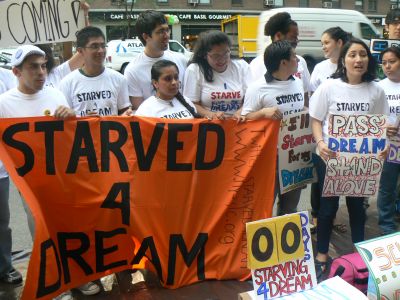
This week saw Occupy Foreclosures; next Monday there is a plan afoot to shut down the West Coast ports. The student protests are still sputtering; there is a group of hunger strikers in New York demanding a home for OWS;  and a stalwart group of climate activists has been braving relentless hostility to protest in at the COP 17 talks in Durban.

I’m glad to see all this stirring of outrage and energy.  I’m just starting to get confused by all the different tangents the movement is taking, and wishing for more focus and concentrated action.

I want the 99% to be like a biblical flood that will wash all the corruption and evil away, leaving a sparkling new world ready for re-occupation.

I know full well that’s unrealistic.  It’s not meant to be taken literally.  It’s just the kind of mood I’m in: impatient, restless, tired of the same old same old.

I have that same feeling about the holidays this year.

Are we really going to go through those motions again?  Are we going to fool our little children into believing in Santa Claus?  Are we going to laugh and clink glasses at innumerable holiday parties?  Are we going to go on shopping sprees for presents at the malls?

Again I’m reminded of the band that was ordered to keep playing as the Titanic sank.  There’s a new 3-D version of the Leo DiCaprio/Kate Winslett Titanic coming out soon–as if what we really needed was to watch that horrible tragedy again, in 3-D.

Folks, I hate to be the bearer of bad tidings, but we need to stop fooling ourselves, we need to get real. If we don’t profoundly change our ways NOW, Mother Earth will do it for us, and she won’t be pussy-footing around.

I was listening to a news report today about how many billions of dollars in damage Hurricane Irene caused back in late August. Then there was the October snowstorm, knocking down trees and powerlines for millions of people in the Northeast.

What’s next?  How bad does it have to get before we stop pouring good money after bad, cleaning up after natural disasters that could perfectly well have been avoided if we focused on prevention rather than on damage control?

We do the same thing with health issues.  We spend billions looking for the “cure” for cancer, when the real issue is lurking upstream, in all the toxic chemicals we’re dumping into the environment and our own bodies.

We know what makes us sick. We know what is making our climate “sick” and out of balance.  We know how to fix it too–we need to start converting to renewable energy as fast as we can, immediately!  All systems go!

And it’s the same with the sociopolitical system.  We know where it’s broken.  Campaign finance reform is not a new idea.  Bank and finance regulation is nothing new.  Social policies that bolster the middle class are obvious.

WHY AREN’T WE DOING THESE THINGS?

The Occupy movement has the potential to fire up enough people to get out there and demand change.  The movement just needs to articulate a few clear, incontestably worthy goals, and pour all the creativity of the 99% into finding ways to pressure the ruling class to get the job done–or be swept away.

I don’t know about you, but I don’t much feel like celebrating this holiday season.  I feel like rolling up my sleeves, joining forces with my neighbors, and getting to work.  There is so much to be done, and so little time.

Challenging rape culture

In my Gender Studies class this week, we’ve been talking about “rape culture.”  It’s a term that’s bandied about somewhat cavalierly on college campuses, and is probably much less familiar out in the ordinary workaday world.

Well, wake up world.  Rape culture is here.  And it doesn’t need the ironic scare quotes.  It’s real, and it’s not funny at all.

You know you’re living in a rape culture when women’s bodies are suggestively displayed, commodified, in sexually enticing poses obviously intended for the male gaze.

In the culture of rape, “no” means “try harder” and it’s always the woman’s fault if she doesn’t like what’s going on.  Stupid bitch, if she didn’t want it, she shouldn’t have worn those heels/had that drink/come to the party.

Rape culture sanctions violence when necessary to overcome resistance.  She was asking for it, anyway.

Rape culture oppresses dissenting men, too.  Men who fail to conform to the code of dominant masculinity are “faggots,” and being called out as anything akin to feminine–pussy, for example–is the worst insult you can throw at a guy.

Lately I’ve been realizing that rape culture extends a lot further than women’s bodies.  It’s also responsible for the prevailing attitudes towards our environment–our Mother Earth.

Not for nothing are both Mother Earth and Mother Nature gendered female.

Some patriarchal cultures manage to respect Mother Nature while still maintaining a stranglehold on her female children.  For instance, in Chinua Achebe’s Things Fall Apart, which I’m re-reading now for another class, the all-powerful Oracle of the Hills, a goddess, is interpreted by a priestess whose pronouncements no men dare question.  This doesn’t stop the protagonist, Okonkwo, from beating up his wives on a regular basis.

In Judeo-Christian and Islamic cultures, the patriarchy dispenses with goddesses.  Or at least, goddesses of the truly powerful, fearsome kind.

In Euramerican cultures, we have sex goddesses, who exist to pleasure their men.  Islamic cultures shroud their women in veils, but towards the same end: women exist to please their men.

The explosive growth of the international pornography industry, in which it is still rare for women’s pleasure to be of any interest at all, bears testimony to the extent to which rape culture rules.

In 2006, the pornography industry had larger revenues than Microsoft, Google, Amazon, eBay, Yahoo, Apple and Netflix combined–and it’s only grown in the past five years.

Porn is a vast unregulated jungle.  It’s not all bad.  But some of it is really terrible.  Some of it is sexualized violence–rape–thinly veiled as entertainment.

Yes, the girls get paid.  But many studies have shown that female porn stars often come from sexually abusive childhoods, or are teen runaways, or are lured into the trade through drug addiction and prostitution.

In Euramerican porn, women exist to give men pleasure.  Doesn’t matter if they get fucked over in the process.  Doesn’t matter if all that’s left in the end is a hollow shell.  There’s always another slut waiting in line.

Yeah.  It hurts me to talk like this, but I want to convey the mind-set of this industry.

And then I want you to think about how this mind-set translates to the Euramerican assault on the environment, our Mother Earth.

Or the sub-prime loan scandal (it’s Occupy Foreclosures Day, after all).  Fuck’em over, make a profit and move on.  All that matters is the bottom line, baby.

Sometimes it seems as though the more powerful actual women become in real life–ie, successful at playing the formerly all-male games of education and career–the more frantically obsessive men’s consumption of pornography becomes.  The power they miss in real life, they can find acted out for them in porn fantasies.

But the environment is another story.  Mother Earth is not going to play men’s games–that is, she doesn’t care to beat them at their own game.  When she starts to resist, the game will be over.

In porn, women go along with the game for a variety of reasons.  Generally speaking, women do it to survive.

Likewise, women collude with the patriarchy in the rape of the Earth because it’s just easier to go along than to resist.  And the lifestyle has been pretty comfortable over the last 50 years, hasn’t it.

I would like to see a frank discussion of the connections between rape culture as played out in porn and rape culture as played out between humans and the environment.

We need to acknowledge that there is a serious problem in both the private and the public realms (along these lines, we are just beginning to see confessions of “sex addiction” hit the media.  How about “fossil fuel addiction”?).

The problem is a symptom of much deeper ills in human social relations, which transgress the usual boundaries of race, class, gender & nation.

Why are porn and energy extraction biggest, the fastest growing industries in the world?

What does it mean to live in a rape culture?  Who benefits, and who loses?

Most importantly, how can a rape culture be transformed?  And what is our alternative vision?

My vision is this:

The one-sided model of domination and extraction (“getting some”) needs to shift to a dialogic model of sustainable mutual pleasure.

Human beings should serve in a steward relation to our Mother Earth, tending and enriching her in exchange for the nourishment and pleasure she can afford us.

Likewise, sex should not be about domination and debasement, but about mutual pleasure and uplift.

In these transition times, such a transformative shift should be possible, if each of us begins with our own selves, our own backyards, and lets the ripples of range move outward.

Let it be so.

From occupations to manifestations: Arundhati Roy imagines another world

I was excited to find in my inbox today an interview with one of my favorite women writers of resistance, Arundhati Roy.

Roy may be most famous for her novel, The God of Small Things, but I am most moved by her political writings.  She is the one who coined that very popular saying, which became a motto of the World Social Forum in the 1990s: “Another world is not only possible, she is on her way.  On a quiet day, I can hear her breathing.”

She has been a shrewd and no-holds-barred critic of transnational corporate capitalism for decades now, long before it became a trendy position to take.

As she wrote in An Ordinary Person’s Guide to Empire, “So much of what I write, fiction as well as non-fiction, is about the relationship between power and powerlessness and the endless, circular conflict they’re engaged in.”

Since she’s been thinking about these issues for so long, it’s not surprising that the comments she made to Arun Gupta, published today in The Guardian,” are right on target.

“I don’t think the whole protest is only about occupying physical territory, but about reigniting a new political imagination.

“I don’t think the state will allow people to occupy a particular space unless it feels that allowing that will end up in a kind of complacency, and the effectiveness and urgency of the protest will be lost.

“The fact that in New York and other places where people are being beaten and evicted suggests nervousness and confusion in the ruling establishment.

“I think the movement will, or at least should, become a protean movement of ideas, as well as action, where the element of surprise remains with the protesters.

“We need to preserve the element of an intellectual ambush and a physical manifestation that takes the government and the police by surprise.

It has to keep re-imagining itself, because holding territory may not be something the movement will be allowed to do in a state as powerful and violent as the United States.”

This certainly speaks to the question that has been worrying at me all day today, as news spread of the violent evictions of Occupy encampments in L.A. and Philadelphia.
Once the physical encampments are gone, will the movement die away?
Or can it keep bubbling up in guerilla fashion, as I advocated in an earlier piece on this blog, like the spontaneous street parties of European cities, that materialize, stage an intervention, and then vanish before they can be contained?
Also, what role will the internet continue to play over the winter?  Perhaps we should be moving from a stage of “occupations” to a new stage of “manifestations,” where the focus will be not on resistantly occupying a physical territory, but on proactively gathering, both virtually and actually, to manifest a new vision of social relations.
In the Guardian interview, Roy ends by pointing to indigenous people, and people who live close to the land, as key mentors in the days and months and years ahead.
As climate change and environmental degradation accelerates,  Roy says, “we are going to confront a crisis from which we cannot return. The people who created the crisis in the first place will not be the ones that come up with a solution.
“That is why we must pay close attention to those with another imagination: an imagination outside of capitalism, as well as communism. We will soon have to admit that those people, like the millions of indigenous people fighting to prevent the takeover of their lands and the destruction of their environment – the people who still know the secrets of sustainable living – are not relics of the past, but the guides to our future.”
There are many of us who are now waking up to the certain knowledge that the leaders we thought were our trusty guides have been taking us on a joy ride to nowhere, ending up barreling towards a cliff.
There have been those all along who have refused to go along for the ride, who have maintained their independent imaginations and worldviews despite intense efforts by the corporate capitalist world to beat them down.
Those are the people we need to heed now–if, as Roy says, we want to learn “the secrets of sustainable living” and survive.  And if, of course, they’ll have us.