You can’t evict an idea whose time has come

My title comes from the Occupy Wall Street website, posted on a gray, gloomy morning after the police eviction of protesters in Liberty Park.

Occupations are going on in cities and towns in all 50 states now.  What the mayors and police chiefs of these locales need to understand is that the more they try to contain and stamp out this protest movement, the faster it will spread.

Beatings, gassings, intimidation, arrests, evictions…history has shown time and again that the human spirit refuses to be quenched by such brutality, especially when we face the firing squad together.

Occupy is a “leaderless movement”; it’s multigenerational and cuts across many social differences that have previously been used by the status quo to divide us.

United by a fierce and ardent hope that refuses to be extinguished, the Occupy protests all across America call on each of us to stand up in support of a new American dream.

In this new vision, our government representatives will put the well-being of the majority ahead of any narrowly defined special interests.

This means that the health of our citizens will come before the profits of industries like agriculture and energy. It means that the health of our global environment will be more important than corporate competition for resource extraction.

It means that the social safety net will be expanded and strengthened, not allowed to fray or be deliberately shredded.

It means that American public education will once again rise like a beacon throughout the world, giving all children, regardless of their social background, the knowledge, tools and creativity to move boldly and joyfully into the 21st century.

It means that our democracy will once again be broadly participatory.  We are done with politicians who are slaves to their corporate owners.

And no, we will not accept higher taxes on the working families who can least afford to bear the brunt of holding our creaky and corrupt system together.

We want a new system, with a radical reorganization of priorities.  Let our foreign policy be run by diplomats, not by bombers and drones.  Let an age of international cooperation in the service of urgent global needs begin.

Working together across borders, we can solve the world’s problems and move forward into a new era of sustainable, widespread prosperity.

Truly the Occupy protesters have it right.  You can’t evict an idea whose time has come.

Watch out, Grey Lady! We’re watching you….

Maybe I should just do the right thing and swear off reading The New York Times. 

I’ve been reading The Times more or less every day since the time I could read–going on forty years now, give or take.

Never have I felt less confident that I can rely on the editors there for solid, unbiased information.  Never has it been more obvious to me that The Times represents the viewpoint of the 1%.  The liberal 1%, perhaps, but the 1% after all.

Why am I ranting about this today?  I just got around to reading a piece from the Sunday Magazine section, “It’s Not Just About the Millionaires,” in which author Adam Davidson, co-founder of NPR’s Planet Money show, argues that to solve our financial crisis in this country, “we have to go to where the money is — the middle class.”

Davidson constructs a cockamamie story about how it makes more financial sense to raise taxes on the middle class–families earning less than $68,000 a year–as well as close “despised loopholes (or beloved incentives)” for these middle class folks (we’re talking about the mortgage interest deduction, for example) than to raise taxes and close loopholes for corporations and those making more than $1 million a year.

Excuse me?

Has Mr. Davidson and his family ever tried to live on $68,000 a year?

As someone who is struggling as a single mom in this tax bracket right now myself–in a home that is now worth less than its mortgage–I can say with personal conviction that raising my taxes would have a huge impact on my life.  For most people in my position, it would mean the difference between starting a life of permanent credit card debt bondage, or staying very precariously in the black.

But that’s not all.  Mr. Davidson proposes that the middle class should also “give up some benefits (Social Security, Medicare).”

So not only are you proposing to raise my taxes, Mr. Planet Money, you’re also going to shrink the paltry benefits I may receive when I’m old and worn out and expecting at least some support from the society to which I’ve given all the best years of my life?

What’s wrong with this picture?

In Mr. Davidson’s scenario, a middle-class worker like me works hard every day, both in the public arena and at home (and remember, no benefits accrue for the years and years of unpaid home labor I’ve put in since I married and had children), and because of a downturn that I had nothing to do with, I am now going to be squeezed harder through taxes, and then hung out to dry in my old age with reduced Social Security and Medicare benefits.

This kind of attitude is EXACTLY what the Occupy America movements are protesting.

Hell no, we are not going to take this kind of B.S. anymore.

If you want to raise taxes, Mr. Planet Money, it will have to be on the wealthy and the corporations who are making out like bandits while the rest of us tighten our belts and do the best we can.

If that’s not enough money to make our national ends meet, then how about reducing the military budget?  How about reducing the billions we spent on the nuclear arms program?  How about directing more taxpayer funds into programs that actually benefit taxpayers?

I am beyond frustrated with the one-sided reporting of The New York Times.

I know statistics can be manipulated to support any side of an argument.  But I expect the most respected source of news on the planet to do a better job at being truly even-handed.  Sure, give Mr. Davidson and his monied folks some space.  But his should not be the only voice we hear.

Fortunately, in the internet age, there are plenty of alternatives to The New York Times.  

Watch out, Grey Lady, or even longterm devoted readers like me may be simply switching the channel.

Resisting the Energy Vultures

Today’s New York Times Sunday Review piece by White House correspondent Mark Landler, “A New Era of Gunboat Diplomacy,” gives disturbing insight into the mindset not only of the men and women who preside over national foreign policies, but also into the media lapdogs who cover them.

Landler reports that China and the U.S., along with practically every other country in possession of a serviceable Navy fleet, are entering into “a new type of maritime conflict — one that is playing out from the Mediterranean Sea to the Arctic Ocean, where fuel-hungry economic powers, newly accessible undersea energy riches and even changes in the earth’s climate are conspiring to create a 21st-century contest for the seas.”

Secretary of State Hillary Rodham Clinton, one of Landler’s sources, explains blandly that “This hunt for resources is going to consume large bodies of water around the world for at least the next couple of decades.”

Clinton has got the right metaphor there.  What Landler describes all too flippantly as “a watery Great Game” could well indeed “consume large bodies of water around the world.”

What neither Clinton nor anyone else interviewed for Landler’s article bring up is the cardinal question:  When the game is over, what will be left of the living beings that used to populate those waters in unimaginably vast numbers?

Landler describes the navies and drill ships of countries from China and the U.S. to Turkey and Israel jockeying for control of huge troves of oil and natural gas deposits that have been discovered beneath the sea.

Of especial interest to these circling energy vultures are the deposits beneath the Arctic ice.  Landler reports that “melting ice has opened up the fabled Northwest Passage,” making resource extraction in the Arctic more viable than before.

This offhand and veiled reference to climate change provides a window into the sociopathic mindsets of the men who rule the Energy Kingdoms.  The cowboys of global fossil fuel extraction are essentially warlords, relying on the national armies of their nominal countries of origin to clear the way of opposition to their reckless drilling.

From their warped point of view, global warming can be seen as a bonus.

If the Arctic ice melts, so much the better–it’ll make it easier to get those billions of barrels of oil out of the sea and into the global market.

No matter that deep sea drilling has been proven to be highly risky and lethal to the environment.  Hello, does anyone remember BP in the Gulf of Mexico?

Imagine a spill like that going on in frigid northern waters.

Imagine billions of barrels worth of oil or gas gushing into the Arctic Ocean, to be picked up by the currents and spread all over the world.

Imagine the destruction of marine wildlife, and indeed the entire marine food chain, that this would entail.

NY Times reporter Landler doesn’t waste time contemplating such grim scenarios.  The focus of his article is “gunboat diplomacy,” a glamorous new competition among national navies to dominate the oceans, seen strictly in utilitarian terms.  His only mention of fish, or indeed any maritime creature, is a brief aside that icebreakers are being sent into the Arctic circle by countries like China and Korea, “to explore weather patterns and fish migration.”

Landler’s article, which is billed as “news analysis,” reveals the extent to which the chillingly disturbing values of the Energy Kings have permeated not only the governments who are supposed to be regulating their industry and safeguarding the natural world, but also the media “watchdogs,” who are obviously sitting cozily in the laps of Big Oil.

Questions of environmental sustainability and health are simply outside the picture for these folks.  It’s not relevant to them whether or not the polar bears survive.  They don’t care about the coral reefs, or the plankton.  They don’t care about whales.  Their only concern is the bottom line.

What is the most effective opposition to such monomania?

Trying to think of persuasive strategies gives me a touch of hysteria.  We could appeal to their love of seafood!  Wouldn’t they miss their caviar and oysters?

They will figure out how to grow these in tanks.

We could appeal to them as property owners: what’s going to happen to their beachfront homes, not to mention their office towers in coastal cities around the world, when the waters begin to rise?
They will have armies of lawyers figuring out ways to make the taxpayers bear the burden of their lost properties.

We could appeal to their brand image.  Does Exxon-Mobil really want to go down in history as the biggest perpetrator of maritime omnicide in world history?

They will throw this back at us, and rightly so: they were just doing their job of giving the consumer what she wants, a steady supply of affordable energy.

It’s true that we all share the blame for this tragedy unfolding in front of our eyes. It’s also true that we have the power to stop it.

How? We need to demand that the rights of the denizens of the natural world be respected.  A new Declaration of the Rights of Nature has been written–it needs to be circulated, popularized and upheld.

We need to insist that our politicians report to the people, the taxpayers, not to the corporations. Yes, people want energy; we want cars, we want electricity.  But we want to direct our tax dollars into R&D of renewable sources of energy–solar, geothermal, wind–not into dangerous oil and gas extraction or nuclear fission, and not into dirty coal mining either.

We need to call the mainstream media on its dereliction of duty when it presents one-sided reports like Landler’s industry white paper today.

Extracting those billions of barrels of oil buried below the earth’s surface miles beneath the sea would not just be a death sentence for marine life.  It would drive the nails on the human coffin as well, along with all the other species on this planet who will not be able to adapt to the erratic climate extremes of floods, droughts and storms that will inevitably ramp up once the planet heats beyond the point of no return.

Under these circumstances, if the governments won’t listen, radical action may prove a necessity.  The French Resistance to the Nazis were considered criminals in their own time and place, but look like heroes to us today, with the power of hindsight.
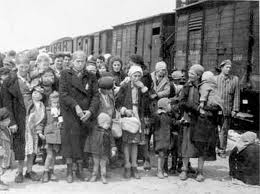
We are in the midst of a new, much larger Holocaust now, one that threatens not just one group of people, but all of us, and our natural world as well.

Each of us has a choice to make.  You can go along with the crowd, watching impassively as the train leaves the station for the gas chambers, or you can dare to raise your voice in opposition, and maybe even to throw a wrench in the gears of power.

Each of us is going to die sooner or later.  Wouldn’t you rather die knowing you had done your utmost to make a difference, to safeguard the world for your children and all life on this planet?

What do Derrick Jensen and George Washington Have in Common?

Derrick Jensen was speaking to the Occupy Oakland and San Francisco folks today, and I had hoped to catch the livestream, but ended up missing it.  I did find, however, a video from about a month ago, when Jensen spoke to Occupy DC via Skype.

True to form, Jensen told the crowd that when people ask him whether he’s calling for the overthrow of the U.S. Government, ie, real revolution, he answers that “this question comes far too late.

“For the government was long since overthrown.  And those who overthrew it are known as Exxon Mobil, British Petroleum, Halliburton, Monsanto, ADM, WalMart, Massey, Goldman Sachs, Citibank.

“They are the real governors, and the United States Government is a wholly owned subsidiary brought to you by McDonalds, Pfizer and Lockheed Martin.

“So then you can ask, am I advocating the overthrow of the corporations?  Am I advocating the overthrow of the corporate state?

“To which I will say hell yes!”

For someone like me who came of age in the 1970s and 80s, it’s very hard to imagine a world without corporations.  How would we get our stuff?  What would I type on if there was no Apple?  How would we communicate without Google, Facebook or WordPress, not to mention Twitter?

And of course, how would any of these products see the light of day without the industrial supply lines that go from oil extraction to factory production to tanker ships to retail store?

Well, somehow for the vast majority of human history, your ancestors and mine managed to live and procreate and die just fine without any corporate help or interference.

I’m no Luddite: I love my computer, car, cell phone and dishwasher just as much as the next American.

But somewhere along the way to the bank, we ceded far too much power to these corporations. Derrick Jensen has it right when he says that “a government worth a good goddamn” should answer to human beings, not corporations.

And not just to human beings, but to all of the beings on our planet who are fading away day by day–at the rate of 200 extinctions a day, as Jensen never tires of reminding us.

Will we join the polar bears and the wolves and the rhinos in fading away quietly into the night when our time comes, as it surely will if we do nothing to stop the steamroll of oil-driven climate change?

Or will we stand up now and demand that our government obey its mandate to be of the people, by the people, and for the people, recognizing that what is good for the people is what is good for the earth as an ecological system?

Jensen closed his talk in DC on a positive and galvanizing note:

“When the government becomes destructive of life, liberty and the pursuit of happiness, it is the right of the people to alter or abolish it.  It is long past time we made full use of our rights.”

Just like our colonial-era forebears, we have the right to throw off the yoke of oppressive government to found a better system.

The Occupy movements are the advance guard of what needs to be a massive campaign of civil disobedience and relentless pressure on the government to listen to us, the people–not them, the corporations.

We celebrate those rabble-rousers, Washington and Jefferson, as national heroes.  Let’s get behind today’s rabble-rousers and turn the corner into a new era.  It can’t happen too soon.

An older form of Deep Green Resistance rises from the rainforest. Euramericans, ignore this at your peril.

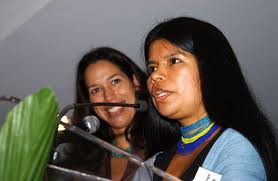
If you want to see something really inspiring, watch and listen to Patricia Gualinga, an Achuar woman from the Ecuadorian rainforest, talking about how her people are standing firm on the frontlines of the siege of the forest by multinational oil extraction companies.

Listening to this indigenous activist, you see shades of all the millions of indigenous peoples around the world who lived in harmony with their environment, respecting and sustainably stewarding their lands.

To say that this balance was altered when the Europeans began their voyages around the world is not to blame or guilt-trip.  It is simply to speak the truth.

To say that the European Enlightenment period, which gave us Manifest Destiny, “I think therefore I am,” the closing off of the commons and the capitalist drive to resource exploitation, was actually a time of deepening darkness, is simply to pronounce the self-evident.

While we contemporary heirs to this 500-year history may be individually blameless, collectively we have been bystanders who have followed the paths of least resistance and allowed the destruction of our planet to proceed apace.

The Pachamama Alliance, on whose behalf Patricia Gualinga spoke last week, is an unusual partnership between Euramericans and these South American indigenous survivors, warriors who are defending the great Amazonian rainforest, the dynamic lungs of the Southern Hemisphere, against rapacious encroachers.

We need another alliance like this between the peoples of the far North and those Euramericans who know that destroying the Canadian boreal forests would be equally catastrophic.

The Pachamama Alliance has developed a powerful model of collaboration across the boundaries of nationality and race in the service of a higher vision of earth-based spiritual activism.

This is a vision that needs to grow exponentially in the coming years.

For too long we have been held captive by the media-induced trance of relentless growth and consumerism.  It’s time to break the spell and allow the pendulum of human evolution on this planet to swing back to balance.

To do this, we need to listen to new voices, heed new calls.  We Euramericans have had our shot at leading the world our way.  It has been a disaster.

It’s time to cede the stage to our indigenous sisters and brothers, and try following their lead for a change.  This is a whole new level of Deep Green Resistance, based on creation rather than destruction.

 It’s time to co-create a new story with the indigenous peoples of the planet, who still know how to live harmoniously with the natural world.

Listen to the Pachamama story, and then it’s up to you–what comes next?  What role will YOU play?

Building on the Keystone “victory”–from endless growth to steady states

In his Op-Ed in today’s NY TimesMichael Levi, senior fellow for energy and the environment at the Council on Foreign Relations, argues that the Administration only agreed to put off the construction of the Keystone XL pipeline because of “not-in-my-backyard” pressure from Nebraskans, which had little or nothing to do with the urgent issue of cutting carbon emissions in order to avert climate disaster.

“For green groups,” Levi says, “the shortest route to blocking fossil fuel development appears to be leveraging local opposition.” The problem with this approach, from Levi’s point of view, is that there is going to be “local opposition” to green energy initiatives like solar and wind farms too.

What Levi, like most Beltway insiders, doesn’t seem to appreciate is that the green movement is not just about opposition.  It’s about positive action.  It’s not just about environmental protection.  It’s about social change.

It’s about a shift from a mentality that seeks to keep growing our energy-dependent economy indefinitely, to a mentality that seeks a sustainable steady state.

Steady states are anathema to capitalism–a quarter without growth is a quarter wasted, as any CEO would tell you.

But steady states are exactly what have made our planet a livable environment for the past several thousand years, during which the human species, along with countless others, has thrived.

Rejecting the Keystone XL Pipeline is just a small step in the right direction, towards a society that puts effort and money first into reducing energy consumption, and second into developing energy infrastructure that has the lowest possible impact on the ecological web of life.

The Michael Levis of America don’t understand that this is the real push behind the green movement today.

Yes, we’ll seek allies where we can find them, and make use of whatever sources of power we can find (even pro-oil Republican Nebraskans) to achieve our goals.

But our movement is not about “leveraging opposition.”  It’s about mobilizing support, through raising awareness about the threats to our civilization and our planet if we continue along with business as usual.

It’s also about leading the way towards the alternatives that are already within reach if we choose to veer off the beaten path into new, much more stable territory.

Endless growth is a social model that has proven itself to be highly unstable, whether we’re talking about national economies or energy systems.

It’s time to use our intelligence as a species for the good of ourselves and our planet.  There is really no other way forward.

Activists circle the White House; Obama plays golf

Mainstream media reports that some 8,000 people showed up in Washington D.C. today to link hands around the White House to protest the Keystone XL pipeline and the development of the Alberta boreal forest (aka “tar sands”).

The energy and determination of this crowd is wonderful. But It’s heartbreaking to learn that President Obama “missed most of the protest while he played golf at Fort Belvoir in Virginia.”

Last week I went for a walk on a golf course near my home, and was reminded again of how terrible these private parks are for the environment.

If lawns are destructive monocultures, just imagine the exponential scale of the golf mono-lanscape: acres and acres of closely cropped, artificially bright green  turf, with not a single broad-leaved plant to be seen.

Golf parks are anathema to butterflies and other insects, of course, since they are regularly treated with pesticides and herbicides.  They suck up precious water for a use that is 100% non-necessary: a pleasant game for the 1%.

I admit it, golf courses are one of my pet peeves.  I have never liked them, and never will.  So I suppose it was a sort of trigger to hear that Obama was off golfing this afternoon, instead of paying his respects to the thousands of activists streaming into Washington to communicate with him–the man we sent to represent us in the White House.

He is not the first American President to dodge attempts by the citizenry to communicate our wishes.  I think of President Bush off on his ranch while activists like Cindy Sheehan, whose son Casey died in the Iraq War, tried to send him an anti-war message.

Mr. President, if your citizens make the effort to go all the way to Washington DC to speak with you, I think the least you could do is show up.  We are depending on you to make the right decision on the tar sands/pipeline issue, which is clearly NO PIPELINE, and no development of the boreal forest.

We expect you to make a decision in favor of the health and well-being of your citizens.  Instead of investing in tired, dirty old energy platforms like oil and pipelines, we should be investing in solar and geothermal.  We need an Apollo Project for renewable energy, and we need it now!

Sure, you deserve your R&R on a Sunday afternoon, Mr. President.  But if you make the wrong call on this issue, those luxurious golf courses you enjoy may soon be relics of the wasteful bygone days.

Future social historians might point to golf as one of the many foolish 20th century habits that left us crouching bewildered in the 21st century in the midst of a full-blown climate crisis.

You’re the Decider now, Mr. President.  We are expecting you to make the right decision–for your precious children, and ours.

Challenging the culture of (white male) entitlement: Come on, Occupy, let’s do it!

I spent several hours today listening to a friend tell me, with much anger, sadness and frustration, the story of how her marriage of more than 20 years has crumbled.

Then I went up to see my son’s soccer game, and could not bring myself to say more than “hello” to my own ex-husband, who chose freedom and autonomy over his 25-year relationship with me, and the satisfaction of living in the same house as our children.

When I got home, I checked the Occupy Wall Street website and found a statement from the “sexual assault survivors team,” describing and condemning the recent attack on a female protester by a man who apparently already had a record of sexual assault.

I also got a blog post from a student in my gender studies class, about an organization called About Face, which strives to get viewers to question the fashion industry norm of presenting emaciated women as “beautiful.”

What connects these dots?

A culture in which men feel more interested in following their own selfish desires for personal fulfillment (aka, sexual fulfillment) than in upholding their roles as fathers and husbands.A society that makes it easy for them to choose this route: why struggle to please a demanding wife when you can have sex with someone else with no strings attached?

A society that tells women that the more pale, limp and weak-looking they appear, the more beautiful they are in the eyes of men.

A society where women have to be guarded, even at protests that supposedly entertain no gender disparity, because there could be sexual predators around any corner.

A society that makes it terribly difficult for women to find independent means to self-respect.

Too often, in previous revolutions, women have supported the movement but found that the men in charge were not willing to give women’s issues equal footing with class issues.

If the young men and women of the Occupy movements are serious about creating true social change, they must put the issue of entitlement squarely on the table.

Not just the entitlement of the 1%, but specifically male entitlement, and white entitlement.

We will not be able to bring a new social structure into being unless we hit these areas of privilege and entitlement head on.

And no, we are not substituting women’s empowerment for men’s.

We are after another world entirely, in which gender, class and race are not the arbiters of power.  In which power flows from the collective wisdom of the group, rather than top-down in hierarchical fashion.

The Occupy movements are on to this shift with the general assemblies and the consensual mode of decision-making.  Breaking with the gendered conditioning of Western society, which gives men all the power, all the time, is not going to be easy.  But if anyone could achieve it, it’s the young men and women of the Occupy movements.

I want to see these young people make this an explicit focus of their movements.  Because otherwise, on a certain level, it’s just business as usual, no matter if the masters of Goldman Sachs come out to lick your boots.

Change the disrespectful attitude of men towards women, and you REALLY change the world.

Let’s give it a try, and see what happens.  Things could not get much worse, and they could get a whole lot better if men and women worked together for the good of ALL.

Sweet stirrings of a new world: fringe politics overturning the barricades

The venerable social critic Hendrik Hertzberg of The New Yorker contrasts the Tea Party with the Occupy movement in this week’s magazine, and finds the Occupy movement lacking in precisely what has made the Tea Party so strong: a willingness to get involved in (and take money from) the established American political parties.

“Occupy Wall Street and the Tea Party are both protest movements, not interest groups,” Hertzberg says, “and while both are wary, or claim to be, of established political figures and organizations, each welcomes their praise, if not their direction. Both have already earned places in the long, raucous history of American populism. But only one, so far, has earned a place in the history of American government.”

Are we supposed to be proud that the Tea Party has “earned” an infamous place as the launching pad for the new cadre of rightwing Republican zealots who have spent their time in Congress obstinately shooting down and stampeding every effort by President Obama and the Democrats to steer this nation towards a more compassionate and forward-looking political stance?

In its few years of existence, the Tea Party has happily wormed its way into the main arteries of American political power.  Hertzberg offers an apt metaphor of this tea as a new wonder drug, “injected into the scarred veins” of the GOP, which has quickly become addicted to this mainlined source of entranced, stupified frenzy.

“Now the Democrats are hoping the drug might be available as a generic,” Hertzberg continues, eying the Occupy movement as a way to enliven its own moribund political base.

I firmly hope that the Occupy movement does not allow itself to be used in this way by the political establishment, and I think it’s a reasonable, if remarkable, hope.

Remarkable because for so long Americans have been asleep, indifferent or unaware of what Hertzberg calls “the astounding growth of what can fairly be called plutocracy.”

Why it took so long for the sleeping giant of American popular opinion to wake up is a question for historians of the turn of the 21st century to ponder.

Why is it that Americans have been voting against their own class interests so long?  Why is the persistent myth of American equality, liberty and justice for all so teflon-coated?

We all want to believe that our country represents the moral high ground in the world, and that our leaders in government are as invested in upholding our idealism as we are.

Our public education system, which is responsible for the education of a great portion of the 99%, aids and abets this self-delusion by giving students the most doctrinaire and uncritical version of American history and civics, and teaching docility and proficiency at standardized testing above all.

Our media doesn’t help much; with the exception of a few poorly funded but stalwart independent outlets, the vast social landscape of contemporary media is focused at best on distraction, and very often on outright deception.

Under the pressures of this kind of social conditioning, it’s remarkable that the young idealists in the Occupy movement have had such success in galvanizing the country to wake up, shake ourselves, and stare around us with new eyes.

Hertzberg obviously intends his column as a signpost for the Occupy movement, pointing towards Washington D.C. as a more important battleground than Wall Street.  “Ultimately, inevitably, the route to real change has to run through politics,” he concludes; “the politics of America’s broken, god-awful, immutably two-party electoral system, the only one we have.”

Here is a glaring example of the kind of civics mis-education that has made our country so hard to reform over the years.

Who says our political system is limited to two parties?  Or at least, to the two parties we have now?

The Republicans and the Democrats have shown themselves to be chronically unable to lead this country out of the morass of special interests and ruthless corporate-driven capitalism that has bulldozed right over our cherished ideals of equality, not to mention the sacred ecological web that forms the real foundation of all our wealth and prosperity.

The Occupy movements are showing their intelligence in shying away from engagement with the established political system.  If anything, their political allies are more likely to be found in those perennial political organizations that have always camped out on the fringes of our electoral parks: the Green Parties or the Rainbow Coalitions.

Remember Ralph Nader, for example?  Remember how Big Media colluded with the established parties in denying so-called “outside” candidates a seat at the table at the televised Presidential debates?

This year the Ralph Naders of the political world have suddenly swelled their ranks dramatically, but without the figurehead of a single leader at the head of the crowd.  As Nader knows only too well, one man at the head of a true opposition movement is open to all the slings and arrows that the establishment can muster.  Even Gore and Kerry have felt the force of the muddy vomit pitched their way out of the far-right Republican swampland.

Far better for the Occupy movements to stay plural and collective, strong in the anonymity of the multitudes.  Those of us who are serious about doing more than simply rearranging the deck chairs on the great hulking Titanic of American politics realize that “America’s broken, god-awful, immutably two-party electoral system” is exactly what has to go.

OK, Hendrik, it may be the only one we HAVE HAD, but now the veil has been torn down, the people are awake, and we realize that another world is possible.  As Arundhati Roy famously put it, “on a clear day, I can hear her breathing.”

That clear day has dawned.

Fighting for Change with Hearts Wide Open

The environmental philosopher Kathleen Dean Moore looks out at the Occupied social landscape and sees “The Big One”–a movement that will bring all the disparate struggles of our society together on common ground, and effect deep, lasting, structural changes.

“The lines that connect climate change to jobs to the environment to education to health to justice are strong and undeniable,” she says. “The time has passed for an environmental movement. The time has passed for a climate change movement. The time has passed for isolated grassroots movements. We stand on ground that trembles with tectonic movement. Along the straining fault lines of our civilization, we feel the forces building for justice, sanity, and lasting ecological and cultural thriving.”

She’s certainly right that isolated movements are not going to change the world. That’s what’s been so great about the Occupy movements–they’ve been widespread and inclusive,a big big tent spread out over a lot of ground, coast to coast.

As Moore says, the moral ground of the Occupy movements is quite simple and clear: “it’s wrong to wreck the world.”

That’s something I knew instinctively as a child, as most children do.  Part of the great tragedy of our society has been the way we slowly deaden and numb the compassionate, empathic instinct of our children, teaching them to ignore pain and injustice, to just keep walking and mind their own business.

I know that’s what I was taught as a privileged young American growing up in a deeply unequal, unjust and exploitative society.  I know now that it was wrong.

And thanks to Occupy Wall Street and the other Occupy movements, I am beginning to know what to do about it.

We need to stop going about our business as usual, and relearn how to see and feel suffering and inequity.

We need to think outside the box of our normalized capitalist assumptions, making well-being rather than profit the goal of human effort.

We need to make protecting our planetary home our highest priority, because without a healthy environment, we will never build a healthy society, and things are so far gone that bringing back ecological balance will take everything we’ve got.

One of the reasons that revolutions are almost always carried out by the young is because they are closer to the instinctual compassion of their childhoods.

If only the stuffed shirts in Congress and in corporate office buildings all over America could remember what it was like to live with their hearts wide open, we might start to see the great boulder of social change really start to pick up steam.