Be the change 2012

IMG_1102It is a dark, cold, winter’s morning, gray with a pelting mixture of sleet and freezing rain that has even the birds huddling for shelter in the thickest fir trees they can find.

I’ve just gotten up, lit the fire and the lights on the Christmas tree, made myself a cup of strong coffee, and thought to myself: where do I put my focus?

If I focus on the warmth and coziness inside the house right now, this seems like a wonderful morning, a perfect opportunity to curl up on the couch and make some progress on grading the papers students turned in to me before they left for the holidays.

If I focus on the sleet and wind outside, and begin to fixate on the way the trees are blowing around the icy power wires, I feel threatened, rather than protected, and start to worry in advance about whether or not I’ll be losing power later today.  Should I rush to take my shower and do some cooking before the power goes out?

Small dilemmas, and yet in the daily crucible of making these choices w of how to focus our attention, a lifelong habit is born of seeing the glass half-empty or half-full.

I must recognize that I have a tendency to see the glass half-empty.

I was a fearful, cautious, worrying sort of child, and I have not changed much as an adult.

In today’s age of aggravated climate change, random violence and the immediate potential for it all getting a whole lot worse in the near future, this attitude can make for a great deal of depression and anxiety.

But does it have to be that way?

Back in the 1980s, I spent a fair amount of time listening to recordings of Esther Hicks channeling the group of spiritual beings who called themselves Abraham.  The crux of their advice for us humans is to focus on what you want, with as much intensity and lavish detail as you can muster, and watch the Universe deliver it to you.

“You can have anything you want, if you exercise the Law of Attraction and call it to you,” Abraham would say over and over and over.

This idea has been picked up and popularized by others as well, and it is guaranteed to appeal to our can-do, feel-good American society.

We want to believe that we have the power to improve our lives, and it seems to happen often enough to keep the belief going.

But I always wondered, and wanted to ask Abraham, what about the people who were having terrible life experiences?  Did they “attract” these horrible situations to themselves too?

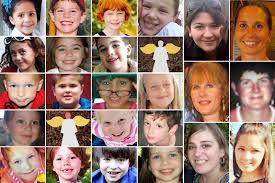
Did the 20 children who died in Newtown “attract” their destiny?

I cannot believe that they did.

It could be, however, that the killer’s vision was so strong that he was able to enact it, to make it come true.  Maybe he did what Abraham suggests, and replayed over and over again in his mind the details of what he wanted to do, until it was so well-thought-out and planned that he was able to unroll it in reality with no problem at all.

We need to pay more attention to the power of the human mind to affect reality.

It happens on an individual level, as when I can transform this gray, nasty morning into a warm, cozy one just by focusing on the peaceful interior of my house rather than the storm raging outside.
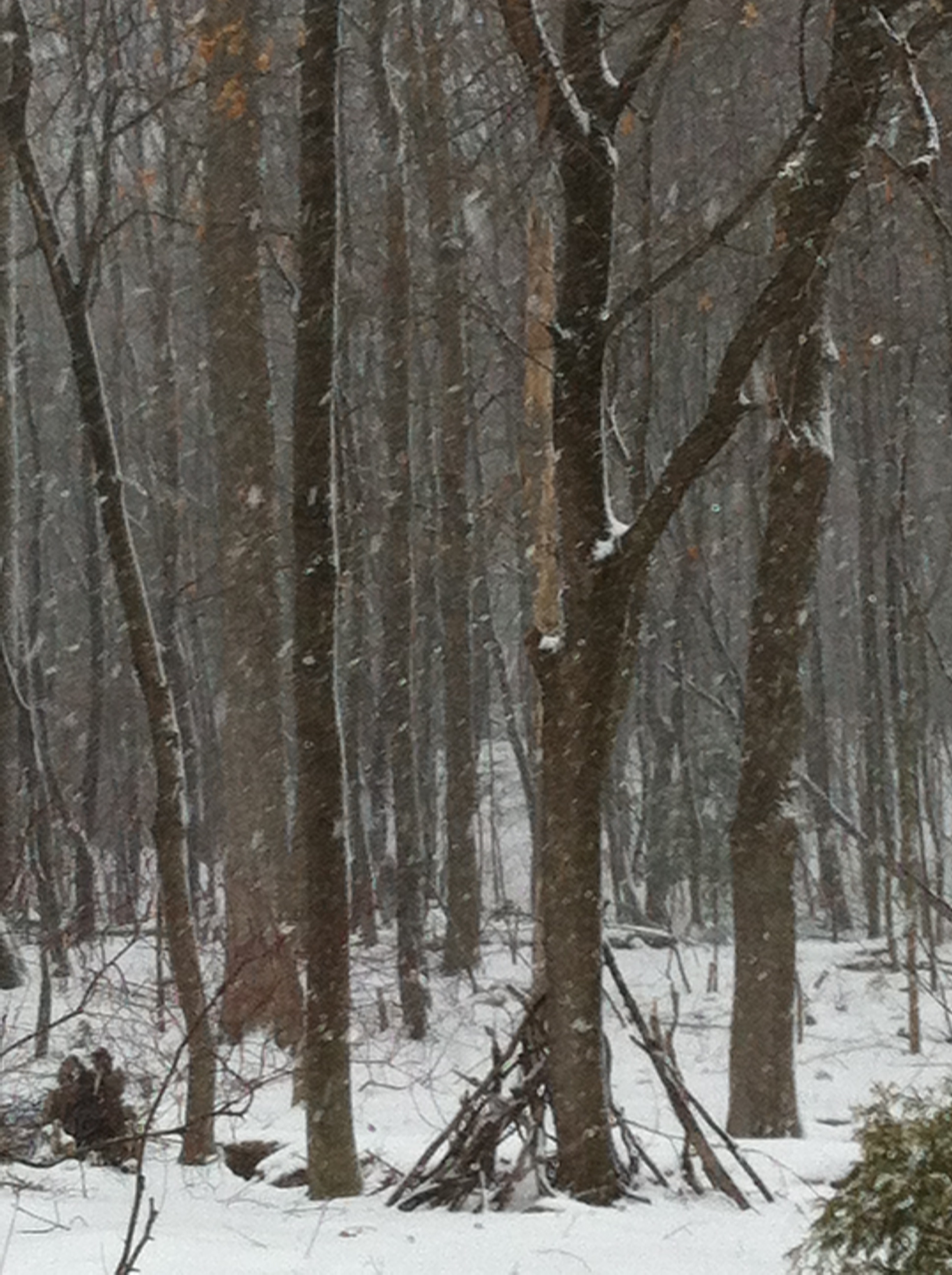
Focus on the outside
Focus on the outside

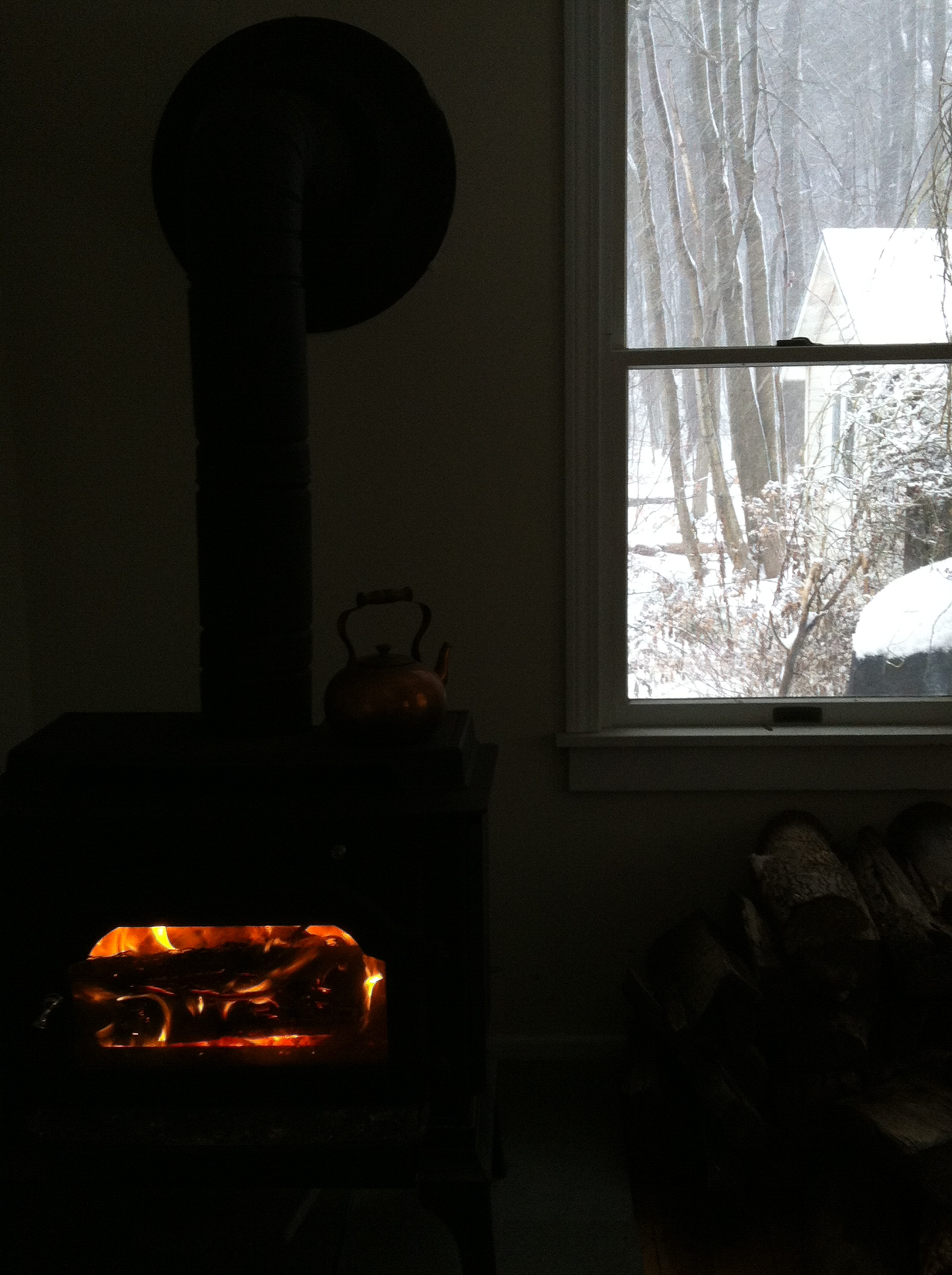
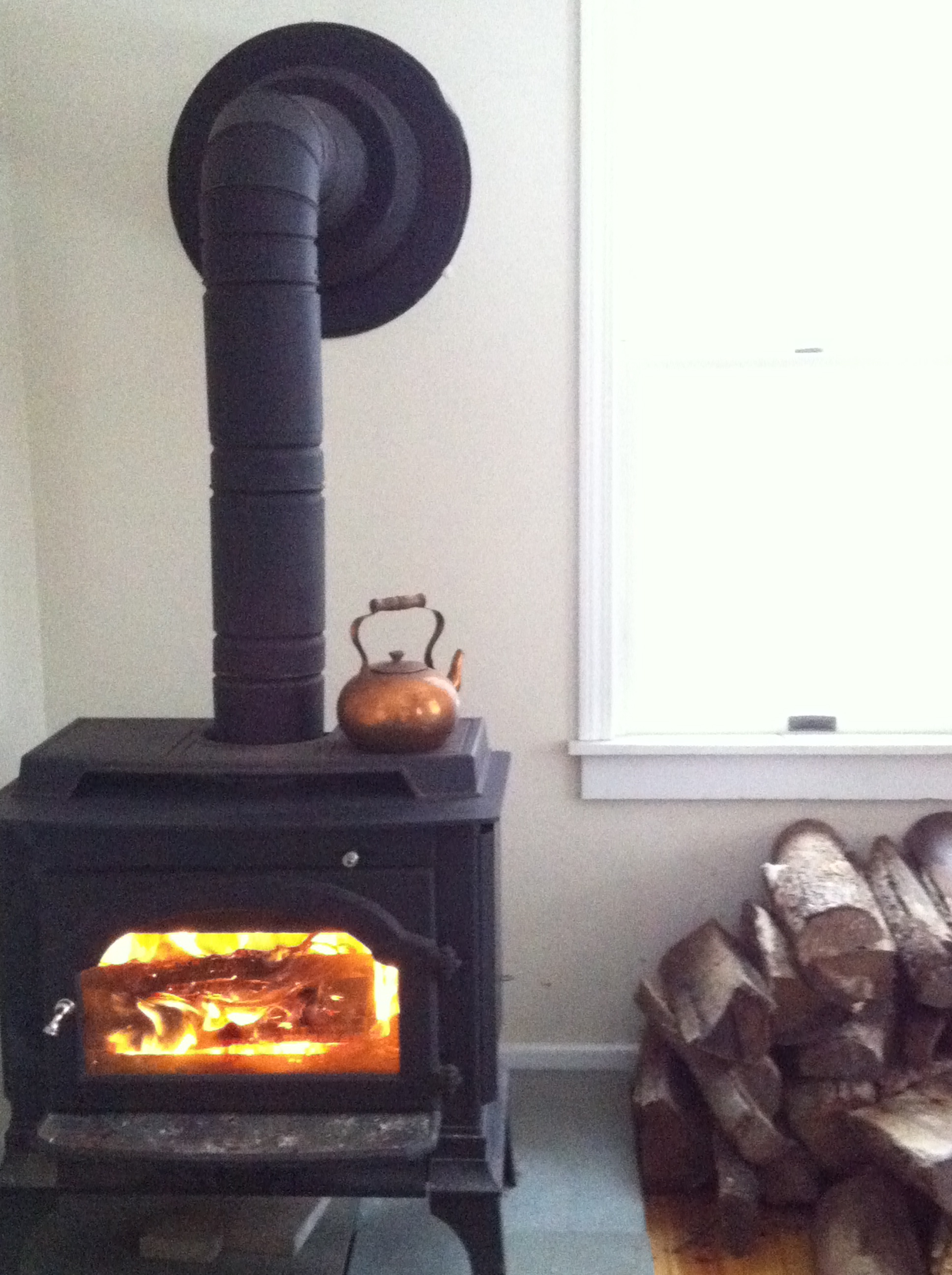
Focus on the inside

Focus on the inside

And it happens on a societal level, as when so many of us feel unsafe that we all start buying handguns and assault weapons, with the result that our feeling of peril becomes a self-fulfilling prophecy: with all those weapons circulating among our neighbors, we really are unsafe.

If we all settle into the mindset, amply seeded by the steady beat of the sci fi/disaster movies that have come out in the past decade, that the Earth is doomed and we are doomed with her, we will collectively give in to despair and simply go about business as usual while waiting passively for the end to come.

On the other hand, if we begin to collectively dream an alternative future, one based on respect for the Earth and respectful stewardship of her life systems, it is still possible that we may be able to manifest this positive vision.

The popular author Don Miguel Ruiz, whose book The Four Agreements has sold millions of copies worldwide, ends a recent interview by asserting that “We all came into this beautiful planet with a mission. The only mission, and it’s the same for every single human that we have on this beautiful planet earth, is to make ourselves happy.”

The only way I could agree with that principle of the human mission on Earth is if it is understood that we cannot be happy on an unhappy planet.

In other words, it is impossible for us to achieve real happiness when the dominant paradigm of human existence on the planet is based on oppression, suffering and violent destruction.

We may be able to achieve temporary “highs,” shelters in the storms of our lives, but real abiding happiness will elude us, at least those of us with enough sensitivity to be aware of the suffering always going on beneath the surface.

Events like the Newtown massacre break through the veneer of our superficially happy existence, here in the comfortable USA, and send many of us spiraling into depression.

And not just folks like me, who are habitually attuned to the malheur of life, but many more of us, who suddenly wake up and ask Why?

Why did this senseless massacre happen?

Perhaps it happened to remind us of the daily massacres of innocent wild creatures and feedlot animals, lab animals and vast flocks of birds, tons of fish in the sea and endless miles of coral and forest, all going down in a relentless bloodbath of human making.

Perhaps it happened to remind us of the children who are being trafficked into sex slavery or forced labor every day, of the children dying daily of hunger and preventable diseases, of the wasted lives of children whose poor-quality early education dooms them to lives of struggle and want.

When great tragedy strikes, survivors have a tendency to affirm to each other, Let their sacrifice not have been in vain. Let us learn from what happened and vow never to let it happen again.

Hence, in the wake of Newtown, the great outcry for better gun control laws, which may indeed, finally, be enacted in the coming year.

Abraham would say that you have to know what you don’t want in order to get clear on what you do want.

But the emphasis has to be on the positive; on building the vision, both personal and collective, of what we want for our society and our future.

We do not want an America where any random psychopath can get ahold of an assault weapon and wreak havoc in the neighborhood school or mall.

We do not want a lifestyle based on unsustainable consumption, oppression and callous disregard for the welfare of other living beings.

Now: what do we want?

We must get clear on our positive vision for a just and sustainable human civilization on our beloved planet, and then do the work of dreaming it into reality, day by day.

We must be intentional in where we focus our attention, not to ignore negative realities, but in order to put the power of our creative energies to work in manifesting the world we want to see.

In other words, as Gandhi said, be the change you want to see in the world, starting with your own thoughts and radiating outward.

Be the change.
IMG_1083

American Mothers Must Unite Against the Culture of Violence

A couple of weeks ago, when I heard that my 14-year-old son and his friend had been playing with the other boy’s air-soft pistols by shooting each other at close range, I saw red.

“But it just stings like a bee-sting, Mom,” my son protested.  “It just leaves a welt.  Why are you getting so upset?”

At the time, I wasn’t sure why I was getting so upset—after all, these were only toy guns.

My answer to my son was that a “bullet” could ricochet and end up hitting him in the eye, which is true and a rational explanation for why I flatly forbid him to engage in that kind of behavior any more with those guns.

“Target practice only!” I insisted. But of course, what he and his friends do when I’m not around is impossible to predict or monitor.

Nancy Lanza

Nancy Lanza

Now, after the Newtown massacre, I am thinking more deeply about the issue of guns, violence and kids.  I’m also thinking more about Nancy Lanza, the gunman’s mother, who he savagely shot in the face, leaving her dead in her pajamas in bed while he went out on his mission of mass murder.

I’m far from the only one who is asking what Nancy Lanza could have been thinking to make her home into an arsenal, complete with assault weapons and major ammunition, especially with a son living there who she knew to have social adjustment problems.

I hear that the good people of Newtown are shunning Nancy in death, focusing on the “26 victims” of Adam Lanza and refusing to light a candle in her memory.

This seems like a classic case of blaming the victim, and yet of course Nancy does bear responsibility for the horrific massacre of the 26 innocent victims.

If she hadn’t armed her son, he could not have carried out this crime.

So this begs the question of our responsibility as parents, especially, in this context, as parents to sons.

I have two sons, and like Nancy I am divorced, with my sons’ father very distant from their day-to-day lives.

It is my responsibility to raise them to be kind, good-hearted men, who use their warrior strength to protect and strengthen their communities, not to destroy.

But what a battle it is to keep the tremendously destructive tsunami of media and cultural violence at bay in our home!

I don’t have TV in my house, and my kids don’t own a Wii or Playstation.  But we do have computers, tablets and smartphones; we watch Netflix and go to the movies and have friends who are more casually accepting of (toy) guns than I am.

Unknown-1I have tried to hold the line on violent video games that the boys may have access to through the computer, and for the most part I think I’ve been successful.  Even if they may sneak a violent game or two when I’m not around, at least they don’t play these games obsessively, with impunity, the way most teenage boys do in America.

We’ve talked at length about my objections to media violence, and I know they understand, even if they occasionally express the wish that they could just join the crowd and go on a good virtual shooting rampage like all the other boys they know.

I’ve gotten into arguments with my older son, age 20, and some of my college students, who insist that there is no way they’d ever do in real life what they have so much fun doing in video games.

I hope they’re right.

But I want to know why, as Americans, we tolerate and indeed seem to relish representations of violence, while at the same time we’re so fearful of actual violence that some of us are stockpiling weapons in our homes to prepare ourselves for the worst.

In the old days—not that long ago, in the scale of human history—a whole town used to turn out for a festive viewing of a hanging.

Today in places where conservative Islam reigns, women are stoned to death in public spectacles of participatory violence.

But how different is that, really, from the great American past-time of engaging in virtual violence of the most vicious sort?

America is the most violent, militarized society on Earth and Americans are the greatest exporters of violence, both physical and virtual, to the rest of the world.

Most perpetrators of violence—again, both real and virtual—are men.  Men are the greatest victims of violence too, though women and children bear a disproportionate share, given that they are far less likely to be pulling the triggers.

We need to start looking much harder at the way our culture encourages violence by selling us the story that real men enjoy violence and can handle it with insouciance.

I don’t want my teenage son shooting an airsoft gun at his friend, and I don’t want him going on virtual “special ops” missions armed with a Bushmaster assault rifle.

I wish his father were on hand to back me up in this, and I think my situation as a mother trying to keep violence out of my home is probably far more common than we realize as a nation.

We know that half of marriages end in divorce, and I wouldn’t be surprised to learn that of the remaining married couples, half include men who enjoy guns, violent video games and violent movies, and teach their sons to do the same.

So that leaves a lot of us women either on our own trying to fight the prevailing winds of culture and raise peace-loving men, or tolerating or going along with the culture of violence within our most intimate relationships and the private sphere of our homes.

Yes, some women may themselves be violent.  We still don’t know why Nancy Lanza felt the need to arm herself with such terribly potent weapons.

But the fact remains that of the steadily mounting toll of mass shootings in this country, not one has been committed by a woman.

Women are way more likely to be victims of violence than perpetrators, and even as perpetrators they are generally acting in self-defense.

American women, I call on you to look deeply at this issue, and find the strength to stand up collectively against the violence.

Mothers, we need to support each other on this!

Just as the Mothers Against Drunk Driving took a stand and changed the pattern of teenagers driving drunk and killing themselves and others year after year, by forcing legislators, schools, merchants and other parents to take collective responsibility for raising responsible kids, we need to start a new movement against the culture of violence in our country, both virtual and physical.

Then perhaps we could say that the 27 victims of Adam Lanza did not die in vain.

Unknown

Something is rotten in the state of higher education: time for change!

Higher education today is like a feudal castle, with the King living in opulence, his knights doing well as long as they serve the king faithfully, and the servants toiling away in perpetual bondage.

President Shirley Ann Jackson of Rensselaer Polytechnic Institute in Troy, NY, is the highest paid private college president in the land

President Shirley Ann Jackson of Rensselaer Polytechnic Institute in Troy, NY, is the highest paid private college president in the land

Thoughts of Elsinore are rising to mind today because of a new report detailing just how wealthy those academic Kings are: The Chronicle of Higher Education reports that “In 2010, 36 private-college presidents earned more than $1 million,” and among the 493 presidents surveyed at private American colleges with budgets exceeding $50 million, the median compensation was $396,649.”

In contrast, a recent American Association of University Professors survey found the average faculty salary at American institutions of higher education to be $82,000—but this average is pulled way down by the inclusion of “instructors” in the mix, for whom the average salary was $47,000.

Tenured faculty, in the Elsinore analogy, would be the nobles of the realm, the knighted vassals who serve the King in the castle, and are richly rewarded for their allegiance.

They are supported by a legion of staff, including graduate teaching assistants and adjunct faculty, whose salary falls behind the cost of living a little more each year.

And then there are the serfs in the system, whose labor supports it all: the students and their parents, many of whom are forced into a new kind of debt bondage to attain the gold ring of that vaunted college degree—paying ever-increasing tuition, and ever-increasing taxes as well.

What would make young Hamlet really moody these days is the growing recognition that the college degree just isn’t worth what it used to be.

Kevin Carey, director of the education policy program at the New America Foundation, cites Academically Adrift, the damning study by Richard Arum and Josipa Ruksa, which “found that many students at traditional colleges showed no improvement in critical thinking, complex reasoning and writing, and spent their time socializing, working or wasting time instead of studying.”  And then, he adds, there are all the students who enter college but never end up graduating, often because the price is too high or the academic work too dull.

At the graduate level, too, there is a sense of crisis.

According to Chronicle of Higher Education reporter Stacey Patton, “The student-debt problem, coupled with the dearth of jobs, has sparked a national conversation about whether going to graduate school is worth it.”

At the Council on Graduate Schools annual meeting this month, Patton reports, the buzz was about whether it’s “unethical to keep admitting students to programs and training them for jobs that don’t exist while they are racking up piles of debt only to risk finding university employment as just an adjunct, or obtaining some other low-wage job for which a graduate degree is not necessary, or ending up on food stamps.

Poor Hamlet, who just wanted to go back to Wittenberg and bury himself in philosophy!

These days, the humanities are particularly beleaguered, with leaders among the humanities professoriate having to constantly deliver pep talks to the rank and file on why what we’re doing matters.

“We should keep telling our students (and their parents) that ‘doing the humanities’ prepares them generally in a way no narrow occupational degree can,” says Rosemary Feal, Executive Director of the Modern Language Association.

“When we say the word research,” she continues, “most people don’t think of the humanities, and they have trouble recognizing the product as useful. It’s true that “doing the humanities” doesn’t produce scientific knowledge that can, say, cure cancer. But it can yield imaginative works on cancer like Susan Gubar’s Memoir of a Debulked Woman and Mary Cappello’s Called Back: My Reply to Cancer, My Return to Life that change people’s lives.”

It’s interesting that when pressed to think of humanities work that “changes people’s lives,” Feal points to two memoirs as examples.

As someone who is currently writing a memoir, and who has studied personal narrative since my dissertation (entitled Hybrid Encounters: Postcolonial Autobiographies of the Americas), I have to agree with Feal that personal narratives have great educational value.

Human beings have been sitting around campfires telling stories since we first began to use language.

We have always learned by listening to our elders hand down traditional stories, and inventing new ones.

The tragedy of Hamlet, for example, was Shakespeare’s reworking of the older Scandinavian tale, and it illustrates vividly the dangers of puffed up pride, greed and ruthless ambition.

The desire of Claudius for wealth and power blinds his moral sense, and in killing his brother, marrying his sister-in-law, and plotting to kill his nephew, he sets the stage for the total destruction of the royal house of Elsinore, leaving it ripe for the plucking of the neighboring Prince, Fortinbras, who is as decisive and aggressive as Hamlet is moody and tentative.

In our current educational landscape, the Fortinbras army waiting in the wings might be robotic: the legions of online courses that are swiftly breeching the walls of Castle Academe.

Online learning has the potential to be as revolutionary as the rise of industrial capitalism back in the 19th century.  Suddenly the educational territory cannot be entirely controlled by the King in his castle, although to be sure he is dispatching his Knights left and right to try to secure his boundaries—every day brings word of new online learning consortiums or treaties being signed in the scramble to lock down the goldmines of higher learning.

But what kind of educational model are those Kings of Academe trying so hard to protect and secure?

The kinds of subjects that lend themselves best to MOOC virtual classrooms (that’s Massive Open Online Courses, for those new to the territory) are those that can be taught by lecture and multiple-choice exams.

But does young Hamlet, or any other thoughtful, creative young person, really want to be lectured to and tested on canned, pre-recorded knowledge?

Wouldn’t he rather be engaged in a dialogue with his elders, or a dynamic, free-ranging conversation among his peers and their mentors?

Online technology does have the power to help open up multiple conversational platforms.  Since the advent of the internet, we humans are conversing globally in ever-expanding ways, and the price of admission to the conversation is fairly low: a computer and an internet connection is all you need, for starters, to get into the game.

But to succeed in this brave new social landscape, you do need competence with those familiar old tools of the humanities trade: the ability to read and analyze critically; the ability to write and speak with precision and thoughtfulness; the ability to sort through, understand and analyze the massive amounts of complex data that are thrown at us every day through the media.

The Kings of Academe must not lose sight of this bedrock mission of higher education in their rush to consolidate their hold on the online learning market.

The old model of having students physically living on a campus with their professors on the outskirts may not hold up in the 21st century, other than at a few of the most fabulously wealthy castles like Harvard, Yale and Princeton.

Is it worth having students and their parents bury themselves in debt to afford the tuitions that keep brick-and-mortar campuses running?

Maybe not.

But in this transition time, let’s make sure we hold on to what’s best in the old system, while getting rid of what no longer works.

I am all for increasing the horizontal democratization of learning, which is the promise of online education, as long as it doesn’t lead to the pauperization of the professoriate, the students and their parents, all toiling beneath bloated administrators.

It’s possible that we may be able to transition to what is now being called “blended learning” environments, rather like today’s distance MFA programs, which convene students for intensive sessions four times a year, but otherwise have them working in small online learning groups facilitated by a professor.

But it’s also possible that it may be time for some really profound change.  What if, instead of having to choose between Elsinore and Wittenberg, young Hamlet could reject both these traditional poles and instead strike off on his own, relying just on his own creativity, wits and drive?

What if he could access the maps, equipment and tools he needed to succeed from other entrepreneurs like himself, free agents circulating their skills in the grand market of online ideas?

Maybe massive fortunes wouldn’t be made this way, but isn’t it becoming painfully clear that the growth and accumulation model of economics is crashing and burning these days, going down like Claudius under the weight of its own greed?

A new kind of barter system might work just as well or better, if the goal were happiness and productivity, rather than frantically making enough cash to stay ahead of the debt collectors.

Joi Ito

Joi Ito

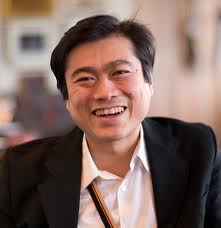
I am excited by the vision of Joi Ito, the dynamic new director of MIT’s influential Media Lab program.  Ito, profiled in a recent issue of WiredUK magazine, wants to break down the castle walls of academe, and get students and their professors out into the streets where the action is.

“In the old days,” he told WiredUK,  “being relevant was writing academic papers. Today, if people can’t find you on the internet, if they’re not talking about you in Rwanda, you’re irrelevant. That’s the worst thing in the world for any researcher.”

At the Media Lab, it’s not about students passively sitting and taking in a professor’s canned words of wisdom.  Instead, posses of students and professors work together in the labs and out on the streets to find creative solutions to real-world problems.

“By opening up the Media Lab,” WiredUK reports, “Ito hopes to move closer towards his goal of  ‘a world with seven billion teachers,’ where smart crowds, adopting a resilient approach and a rebellious spirit, solve some of the world’s great problems.

“His is a world of networks and ecosystems, in which unconstrained creativity can tackle everything from infant mortality to climate change.

“‘We want to take the DNA [of the lab], the secret sauce, and drop it into communities, into companies, into governments,’ he says. ‘It’s my mission, our mission, to spread that DNA. You can’t actually tell people to think for themselves, or be creative. You have to work with them and have them learn it themselves.’”

Ito has just placed his finger on the prime value of education at any level: helping young people learn how to think for themselves and be creative.

Young Hamlet had that gift, which is why he was able to escape the clutches of Claudius and maintain his own principles in even the poisonous atmosphere of Elsinore.

Laertes, whose poisoned sword kills both Hamlet and himself, is the other kind of student: the kind easily influenced by a corrupt mentor like Claudius into playing foul in the quest for personal gain.

In this day and age, we need to be teaching our young people not only to be creative problem-solvers, but also to be ethical, principled human beings who are willing to take risks and stand up for what is right and just—even if this means foregoing easily attainable blood money.

The Media Lab’s Ito has observed that “a lot of the kids at the Media Lab today don’t want to make more money, don’t want to become immortal, they just want to figure out how to fix this unhealthy system we have. There are lots of kids who are not happy with this massive consumerism, this unsustainable growth, but who have really smart science and technology values. That’s a type of person we can draw into what I think will become a movement.”

What kind of movement? A creative commons movement (Ito, by the way, was one of the founders of Creative Commons and the Mozilla Foundation), in which some of the key principles would be, in Ito’s words: “Encourage rebellion instead of compliance”; “Practice instead of theory”; ” Constant learning instead of education”; “Compass over map.”

Exactly the kind of principles that Hamlet employed to successfully navigate Elsinore—until he was undone by the treachery of Claudius and Laertes.

But get a billion young Hamlets–and Ophelias!–going, and there will be no stopping them.

“In the old days,” Ito told WiredUK,  “you needed hundreds of millions of dollars and armies of people to do anything that mattered. Today a couple of kids using open-source software, a generic PC and the internet can create a Google, a Yahoo! and a Facebook in their dorm room, and plug it in and it’s working even before they’ve raised money.

“That takes all the innovation from the centre and pushes it to the edges — into the little labs inside the Media Lab; inside dorm rooms; even inside terrorist cells. Suddenly the world is out of control — the people innovating, disrupting, creating these tools, they’re not scholars. They don’t care about disciplines. They’re antidisciplinary.”

This kind of talk, as Duke University professor Cathy N. Davidson observes, has many traditional educator-types quaking in their boots.

Tenured faculty tend to be rather complacent as a group, since their jobs are assured for life—unless, that is, their institutions fail.  The truth is that we are in a sea-change time when many of the weaker institutions of higher learning are likely to be weeded out.

We have, right now, a fantastic opportunity now to break out of what Davidson calls the “Fordist, production-line compartmentalizations and hierarchies of knowledge,” including ossified disciplines and stifling pedagogical models.

Those of us within the profession now need to be tunneling from within towards the freedom of creative expression that we and our students so desperately need.

Every discipline has a role to play, but only to the extent that we allow the disciplinary walls to become permeable, fostering the free germination of potent new ideas.

In the fresh air that will then begin to circulate in the musty corridors of academe, we will be able to hear rumors of the coming of a better world.

Honoring the wisdom of Native Americans on Thanksgiving

Before I understood the real history behind the American tradition of Thanksgiving, I used to just innocently enjoy the chance to gather with family and friends to share a delicious meal.

I believed the story taught to me in grade school, about how the Pilgrims and their Native hosts sat down to a feast together, and lived happily ever after.

Such innocence, once lost, is impossible to recapture.

Now I know that the same Pilgrims who gave thanks for their delivery from starvation by the generous Native people of the region that would come to be known as New England would be the ones to turn on their benefactors and do their utmost to exterminate them.

My own ancestors were still fighting their own battles back in Europe at this time, but as an American, this is a shameful legacy that I need to confront and acknowledge.

As I wrote in my Thanksgiving post last year, the holiday of Thanksgiving should really be more of a day of atonement than a celebration of abundance, especially as we begin to realize that the abundance of food and natural resources that Americans have enjoyed over the past 500 years is not endless.

As we hit up against the limits to growth predicted years ago by Donella Meadows and others, we must recognize that the Native peoples who were so unceremoniously shoved aside during the Conquest of the Americas had so much more to offer Europeans than corn, squash, beans and turkey.

Indigenous worldviews, the world over, privilege balance over growth and accumulation, and this is the wisdom we need to pay attention to now.

Some argue that such a conservative position would not support the kind of technological innovation in which Europeans have excelled.

But I would ask whether our technological innovations have succeeded in making us happy as a culture, or as individuals within our culture?

Isn’t it true that the vast majority of our technological inventions have been used to foment and practice ever-more violent warfare?

Even our vaunted advances in medicine are primarily used, these days, to try to heal us from the sicknesses and imbalances our own technological inventions have afflicted upon us, by the poisoning of our food, air, water and earth with toxic chemicals and the byproducts of burning fossil fuels.

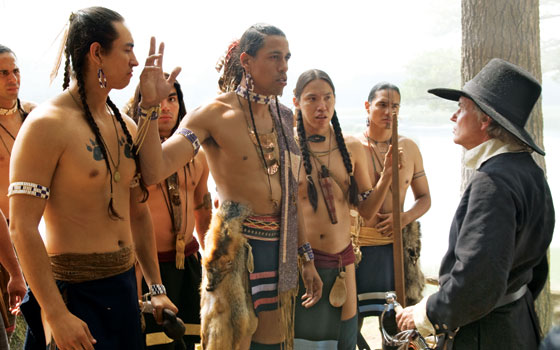
This image, from the PBS series “American Experience,” depicts members of the Wampanoag tribe meeting a white settler.

Before the Pilgrims landed in Massachusetts and started their inexorable push west, the indigenous people living here were happy, healthy, strong and long-lived.  They enjoyed the abundant food stocks of the ocean, rivers and forests, and lived in harmony with the land.

Yes, there were territorial skirmishes, but there were also strong intertribal councils and confederations, in many cases led by matriarchs who valued peace and did not want to lose their sons and grandsons to needless warfare.

This Thanksgiving, I give thanks that the Native peoples of this continent are still with us, despite all the brutality visited upon them by the European conquerors.

This Thanksgiving, I pray that all Americans begin to honor indigenous people as they deserve to be honored, by giving credence to the Native value of harmony with the Earth, and actually trying to live it.

Election 2012: Avoiding the Same Old, Same Old In the Redistribution of Power

Bravo to Maureen Dowd, who nailed the delusion of the Republican party with her typical biting humor.  “Mitt Romney is the president of white male America,” she said. Just not of the rest of us.

And—surprise!—we are a hell of a lot more numerous and, in an honest-to-God democracy, more powerful than they are.

White male America did turn out to elect Mitt their hero of the privileged status quo.  Imagine their surprise to discover that a status quo they thought undefeatable was already gone!

Karl Rove

It was interesting to see the little white men behind the curtain coming out after their Mitt-marionette went down in flames—men like Karl Rove, who flat-out refused to believe, on national TV (Fox News, of course) that his horse had actually lost the race.

It’s true that there wasn’t anything inherently “less Presidential” about Mitt than about that other wealthy political scion, George W. Bush—unless perhaps it was Romney’s conservative, highly patriarchal Mormonism, evidenced in the remarkable spread of his lily-white grandchildren—even if, as far as we know, he and his five sons only have one wife each.

Romney family

Both Bush Jr. and Romney expected the Republicans wizards to deliver them the White House with minimal effort on their part; and in return they would deliver the Supreme Court and the dismantling of regulatory inconveniences for Big Business, while keeping the women in the parlor and the help in the kitchen.

As Dowd pointed out, “the more they tried to force chastity belts on women, and the more they made Hispanics, blacks and gays feel like the help, the more these groups burned to prove that, knitted together, they could give the dead-enders of white male domination the boot.”

And so we did, so resoundingly that even the most obtuse of Republican strategists must have gotten the point.

Women, Latinos, Blacks and queer folk in this country make up a majority, and if you goad us with sticks and prods, you will see us turn out at the polls in record numbers to kick you out and get our own people to represent us in the halls of power.

The election of 2012 marks the dawn of a new age in America, when the so-called “minorities,” buoyed by a wave of powerful women voters of every ethnic, religious and even political stripe, showed the Man who’s boss.

No, Obama may not be the perfect hero to lead this charge, but as a mixed race American and a thoughtful man who obviously loves and respects his wife and daughters, he will do for now.

Obama family on Election night 2012

After all, as Dowd concludes: “If 2008 was about exalting the One, 2012 was about the disenchanted Democratic base deciding: “We are the Ones we’ve been waiting for.”

The newly empowered voting block of women, gays and ethnic “minorities” (a quaint term that will soon bite the dustbin of history) must take a good hard look at the hierarchical structure upon which the white male patriarchy was founded, and which it upheld so religiously for so long.

Our Founding Fathers were as guilty of this as their old masters back in Europe.  And indeed those who have studied colonialist and post-colonialist politics tell us that the biggest obstacle for newly emerging political bodies, whether they be newly independent nations or, as in 21st century America, newly emerging political landscapes, is that as humans we tend to replicate what we know, rather than take the risk of imagining and executing something truly new.

Thus we found, in state after state, the ideals of Communism crushed beneath the iron boots of dictators who used the banner of Communism to re-enact the oppressive structures of the past.

The challenge for all politically engaged Americans as we move on from Election 2012 is to keep the momentum going, rather than subsiding back into the same old, same old of structural American power hierarchies.

President Obama introduces Sonia Sotomayor

President Obama, over the past four years, was not able to resist the immense gravitational pull of the Beltway, although he did have a few shining moments of independence, like his successful appointment of Sonia Sotomayor to the Supreme Court.

The truth is, it’s not only unrealistic to expect him to be our knight in shining armor, it’s antithetical to the spirit of true liberty and democracy.

The 21st century is about the redistribution of power in all its forms, including wealth, politics and energy.

We are the ones we’ve been waiting for, and we have to create change ourselves—in our homes, in our workplaces, in our schools, in our stores, and in local politics.

We have to change our relation to the natural world, which has long held the sad position of totally disrespected base in the patriarchal white hierarchy.

No one is going to do this for us—not Obama, and not even Jill Stein.  We have to do it ourselves, and the time to start is now.

Lessons of the Wreck of the Bounty

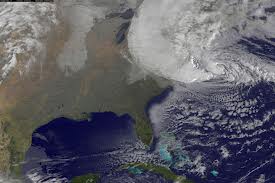
Although it is a small tragedy compared with the multifarious disasters occurring in the New York region in the wake of Hurricane Sandy, I can’t get the wreck of the tall ship Bounty out of my mind.

As someone who has written about 18th century pirates quite a bit over the past decade, I have an abiding fascination with sailing ships of that era.

HMS Bounty at Lunenburg, NS, August 2012

Last summer, when I heard the Bounty was docked for a few days at the Maritime Museum wharf in Lunenburg, Nova Scotia, I made sure I was at the head of the line at the gangplank.

The crew welcomed us aboard, and we had the vessel nearly to ourselves to explore at leisure.

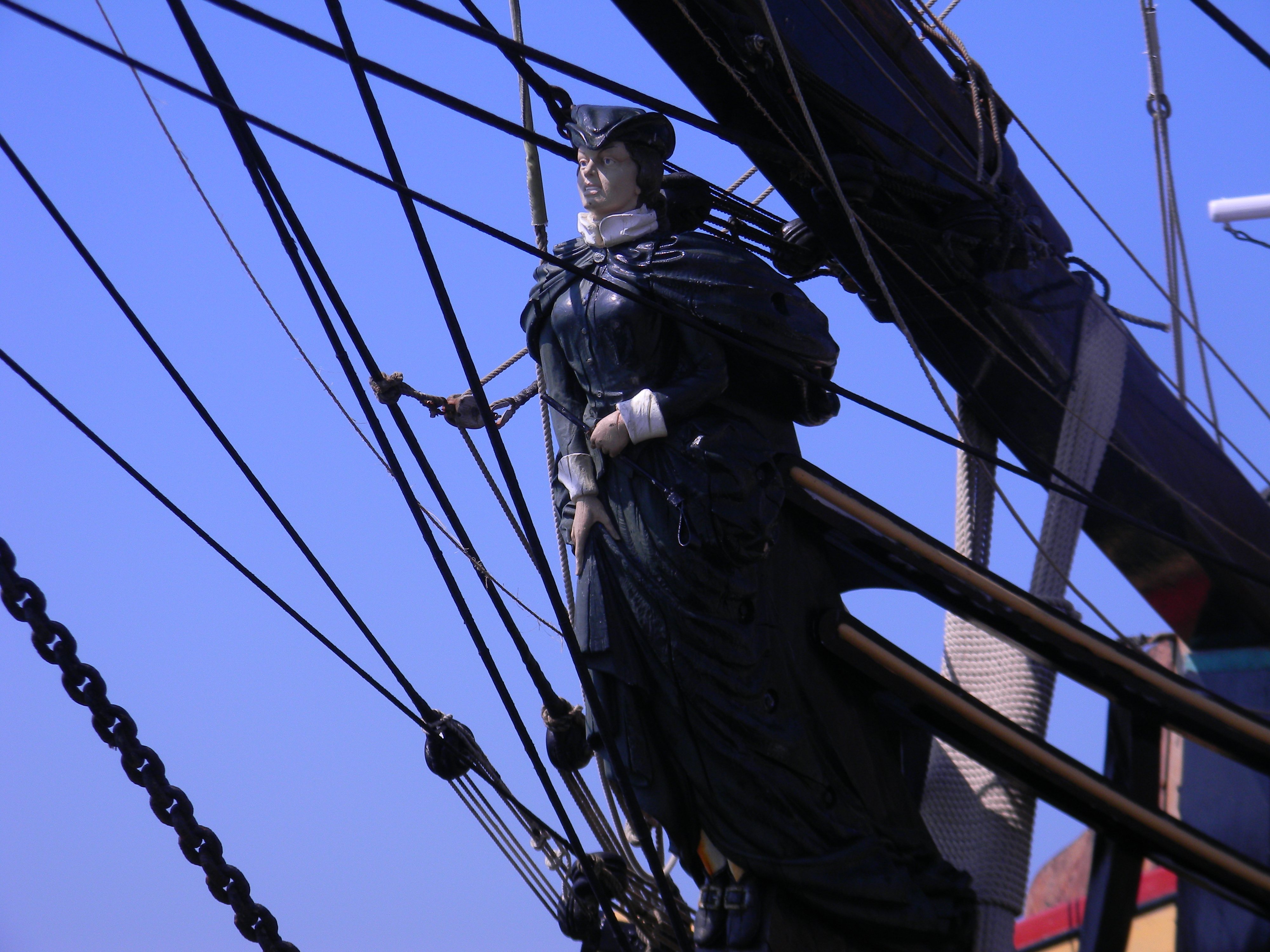
The Bounty, a 1962 replica of the original 18th century British ship, was obviously built with great attention to authenticity of detail.  The timbers above and below looked rough-hewn and weathered, the sails dingy and hardworking, the masthead newly painted and resolute.

She was a solid piece of work, and her captain, Robin Walbridge, had steered her well for 17 years.


But last week something went badly awry in his thinking.

Lunenburg photos by Eric Hernandez

He decided to take the Bounty out to sea knowing full well that Hurricane Sandy was making directly for his route from New London, CT to St. Petersburg, Fla.

Bounty masthead on a clear day

It seems that Captain Walbridge decided to try to “skirt” the storm, heading far out to sea in an effort to miss the brunt of it.

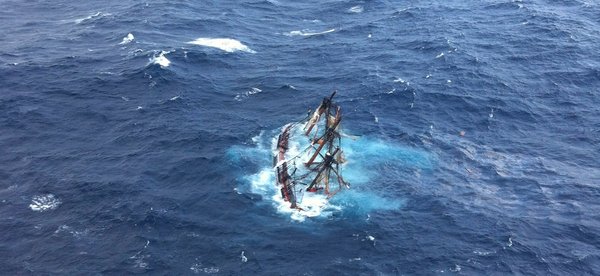
Sandy proved far to big to avoid, and by the night of Sunday, Oct. 28, the Bounty was facing 10 to 30-foot seas about 90 miles off the coast of North Carolina.  A first distress call put out to the Coast Guard at about sundown that evening was rescinded, as the crew must have been frantically working the pumps and still hoping to save the ship.

Not until 4 a.m. did the crew receive the order to abandon ship, and by then the deck was awash.

Fourteen of the fifteen crew members made it into the life rafts and were rescued by the Coast Guard  within a few hours.  A fifteenth crew member, Claudene Christian, was found floating nearby, and was pronounced dead at the scene.

Claudene Christian

Captain Walbridge’s body has not been recovered as of this writing.  The last one to abandon ship, he may simply have not made it out in time.

Captain Robin Walbridge

Here is a tragedy that could easily have been avoided if the captain had been more respectful of the forces of nature.  Apparently he thought the ship would be safer out at sea than docked during the hurricane; but in trying to save the ship he endangered the crew, and two lives were lost, one of them his own.

The story reminds me of the tale of Moby Dick, where the recklessness of the captain resulted, ultimately, in his being dragged to his death by the great white whale.

There is a lesson here for all of us.

We cannot underestimate the forces of nature.  We cannot “skirt” the climate change disaster that is staring us in the face.  We cannot outrun the storm, and we cannot hide from her.

As people in the wealthy enclaves of New Jersey and Long Island are finding out now, we are all equal before the awesome might of the natural world.

True, the plight of New Yorkers in dark, cold public housing is far more serious than that of coastal Long Islanders who have had to seek shelter with inland friends and family.

Class still matters.

But on the Bounty, the captain’s quarters were swamped just like those of the sailors.

So it will be with us all, if we fail to heed Sandy’s warning.

The Bounty sinking on Oct 29; Coast Guard photo

This is not a movie, and it’s not child’s play.  It’s real, and we’d better be paying attention, because next time it could be my turn, or yours.

We need to be taking measures now to make sure that the next time the winds start to blow, we will be prepared.

First things first: we need to go to the polls to defeat Mitt Romney and his fossil fuel masters on Tuesday.

And then on Wednesday, it will be time to start making plans to pressure President Obama to do the right thing when it comes to climate change.

Some say he’ll be a lame duck in his second term, but I think he’ll have more leeway to be his own man.  We have to prevail on his intelligence and good sense to use the power of the executive office to stand up to Big Oil on behalf of ordinary folks the world over, who trust their leaders to make the right decisions to keep them out of harm’s way.

And if he can’t or won’t do the right thing, well…there may have to be yet another “mutiny on the Bounty….”

Thank you, Hurricane Sandy

Hurricane Sandy did the planet a favor by hitting hard right at some of our most elite enclaves.

This time it’s not the poor residents of the Ninth Ward facing the horror of flooding, it’s the wealthy owners of some of the most valuable coastal property in the country.

When I heard Mayor Bloomberg of New York, one of the richest men on the planet, finally come and out say the words “climate change” with urgency, I had to smile despite the seriousness of the context, because it meant that at last the rich and powerful are getting the message that the status quo cannot go on—at least, not if we expect to survive as a civilization into the 22nd century.

The truth is that Americans in the ruling class—the business owners, the politicians, the finance and computer wizards, the media producers, the educators, even the artists–have been living in a luxurious gated community our whole lives.

We have been watching the travails of those outside, including the accelerating extinction of other species and the poisoning of the environment, from what has seemed like a safe, secure vantage point, behind several layers of bullet-proof glass.

Americans have watched impassively as people in other parts of the world have been forced to deal with terrible storms, flooding, and droughts with increasing regularity over the past decade.

As long as the electricity stays on and the supermarkets and gas stations are full and open for business, we just don’t pay much attention to what’s going on with the weather.  As long as our homes are heated in the winter and cooled in the summer, what’s the problem?

People like James Hansen, Bill McKibben, and Elizabeth Kolbert have been knocking futilely on the windows for years, trying to get the ruling class to wake up and pay attention to the looming threat of climate change before it’s too late.

They’ve made little progress up to now.

But Hurricane Sandy is a game changer.  Blowing into town the week before the Presidential elections, she put climate change on to the front page of the New York Times at last.  She forced her way into the bland discourse of Presidential politics.

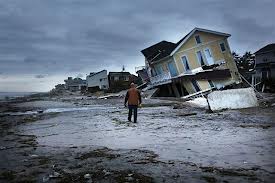
She tossed her windy head and in just a few hours paralyzed the “greatest city on Earth,” creating $50 billion of damage that will take weeks if not months to clean up.

All of a sudden, city planners are talking seriously about flood gates, and some are saying it might be foolish to rebuild in the same way, right down along the coast.

I don’t hear many in our ruling class yet saying what needs to be said, which is that our entire lifestyle has been built up in an unsustainable way, and must be changed if we are to leave a livable legacy to our children and grandchildren.

We must wean ourselves from the addiction to fossil fuels.  We must shift from highways and cars to mass transit.  We must immediately start reducing emissions in every way possible, with special attention to the agriculture sector, which has to be completely redesigned with sustainability and health—our own, and that of the animals and plants we cultivate—in mind.

We must build a much more resilient, collaborative culture.  Competition and aggression may have been the watchwords of the capitalist and imperialist 19th and 20th century, but following their star has landed us in our current grave circumstances. We can’t go any further down that path.

For thousands of years prior to the Christian era, human beings lived tribally and cooperatively in harmony with the land.  Our population has now grown so large that we are reduced to fighting each other for increasingly scarce resources.

Going forward, if we are to survive, we must transcend the pettiness of national boundaries and ethnic differences, recognize our common goals as humans, and start to work together to provide strategically for the good of all.

This may seem like an impossibly idealistic goal, but if there is one thing that I believe can unite human beings, it is the awareness now dawning about how interconnected we are through our dependence on the life support of our planet.

It is sad that the Earth has had to sink to such an unbalanced, depleted state before we began to pay attention.  I would not wish a Hurricane Sandy on anyone.  But it seems that we need wake-up calls of her magnitude to get us up and out of the stupor of denial and inaction.

As I step over the threshold into my sixth decade today, I can feel a new resoluteness building in me; a new determination to use my time in a more focused way.

I vow to give the best of myself to the struggle for a sustainable future, and to encourage others to join me in this effort.  There is nothing more important any of us can be doing now.

Malala Yousafzai Stands Up for Us All

There are a couple of old saws that I was taught as a young journalist, which I continue to pass on to my media studies students now.

One is: if it bleeds, it leads.

And another: one powerful human interest story is worth a million statistics.

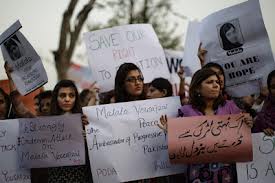
We saw both of these principles in action with this week’s news of Malala Yousafzai, a 14-year-old Pakistan girl who New York Times columnist Nicholas Kristof calls “one of the world’s most persuasive advocates for girls’ education.”

Everyone probably knows by now of how the Taliban viciously shot Malala in the neck as punishment for her outspoken insistence that girls should be allowed—and indeed, encouraged—to go to school, just like boys.

She is now the face of millions of girls worldwide who are denied the chance to get an education and empower themselves and their communities.

This week the Times also reports that in Africa, unprecedented wealth is being generated by the efforts of a rising tide of entrepreneurs—many of them women.

UN Women, formerly known as UNIFEM, has argued for years that by educating a girl, you help her whole family, including the children she will one day bear.

After all, as the Chinese say, “Women hold up half the sky.”

I am glad to see that Pakistanis have come together to reject the extremist politics of the gunmen who shot Malala.

We should all light a candle for her today as she is flown to the West for more treatment, and pray that this brave girl survives the attack and returns to the fray to serve as a defiant model for all girls, whose instinctive human desire for education will not be extinguished so easily.

In the Christian tradition, Eve takes the blame for the fall from Paradise, and here in the U.S., too, we can see many examples of strong women being sharply checked: for instance, in the shooting of U.S. Representative Gabby Giffords or the mocking of Hillary Clinton for wearing pants suits and acting tough.

The story of Malala Yousafzai is one particularly emblematic story among many that could be told, of women and girls who dare to stand up to patriarchal power, and learn quickly that such defiance has its price.

Lately we’ve been seeing a steady drumbeat of reports—most of them disapproving—of how women are becoming more successful in school and in careers, threatening traditional male dominance in the public sphere.

Maybe it’s time for a reminder that feminism was never about dominance—it was and is about equality.

What’s so threatening about that?

I’m sorry, but real men don’t shoot 14-year-old girls under any circumstances.

To me a real man is the one who encourages his children, regardless of their gender, to stay in school and work hard to be prepared to step out into a future that is sure to be challenging.

A real man applauds his wife’s successes, and stands by her side when things are rough.

Real women do the same.

The truth is that gender is just another one of those culturally conditioned differences, like eye shape or skin tone, that fade to irrelevance before the profound reality of our human similarities.

Having unlocked the secrets of the genome, we now know that human beings are genetically 99% the same as field mice.

Isn’t that enough to convince us that men and women are only different in the most superficial ways?

Sure, women can bear children; men are more muscular.  But our brains are close to identical, and our hearts are the same.

Our spirits, freed of our physical bodies, know no differences.

It’s time to soar above the petty in-fighting of gender, and work together for the good of all.


Will the Eagle and the Condor Land Together in the New Millennium?

At the Peace and Justice Studies Association annual conference, held this week at Tufts University with the theme “Anticipating Climate Disruption: Sustaining Justice, Greening Peace,” I presented a paper entitled “Changing the narrative and crafting alliances between Western and indigenous worldviews to create a sustainable global future.”

In it, I sketched out the standard Western triumphalist narrative of technological domination of Nature and the New World, starting with the voyages of Columbus and Darwin, continuing with the Manifest Destiny doctrine of the takeover of North America, and on into the present, where we continue to tell ourselves the story of living happily ever after in the brave new world established by the subduing and harnessing of the natural world, the routing of resistance, and the triumph of a technologically advanced global civilization.

Given that the premise of the conference theme anticipates serious climate disruption that will take the story to a very different, and much less rosy kind of conclusion, it’s clear that we need to start telling ourselves stories that reflect a different kind of understanding of our relation as humans to the natural world.

The kinds of stories we need to embrace are not new; in fact, they are ancient. I believe that the indigenous peoples left on the planet, who have survived the intense onslaught of Western culture over the past 500 years, are in the best position to survive the coming cataclysms, and to teach us how we can survive too. We just need to start listening to the stories they tell, rather than remaining spellbound by our own Western narratives.

I shared with the audience the voices and visions of two indigenous elders, Rigoberta Menchu Tum of Guatemala and Malidoma Some of Burkina Faso, who have both spent much of their adult lives reaching out to Westerners, trying to get us to see our relation to the natural world in a more holistic, less destructive way.

Rigoberta Menchu

Menchu, who won the Nobel Peace Prize in 1992 and ran for President of Guatemala in 2007, was a leader in the pan-indigenous drive to get the Declaration of the Rights of Indigenous Peoples ratified by the General Assembly of the United Nations, which it finally was in 2007.  She has worked tirelessly to promote the rights and improve the living conditions of the indigenous peoples in Guatemala, who are a majority in that country, but have little national political representation or power.

Central to Menchu’s political activism is her Mayan understanding of the importance of ecological balance.  “An indigenous people’s cosmovision is centered on their relationship with Mother Earth and Mother Nature,” Menchu says.  “In contrast, the majority of the world doesn’t give it a thought, doesn’t know what the source of life is.  They pollute the earth and do more and more damage.  One day the earth will exact a price for this disdain and destruction. When this happens, we will see that the earth is not just good and bountiful, it can also be vengeful.

“Indigenous people see Nature as a living mother, not as an inert organism that would allow itself to be destroyed,” she continues.  “All those who violate its laws must accept the consequences, because it is alive and will react. My grandfather always used to say that the day human beings violate our universe, they will receive signs and messages.  These messages will be very forceful, and will bring severe punishment.”

These words of Menchu’s come from her second book, Crossing Borders, in which she tried to reach out to the non-indigenous world with a challenge to the dominant narrative of “development,” which has been so terribly damaging not only to indigenous peoples, but to the ecological web of life itself. As she remarks bitterly in the book, “I often wonder why people criticize the Aztecs for offering human sacrifices to their gods while they never mention how many sons of this America…have been sacrificed over the past 500 years to the god Capital.”

These biting words would no doubt resonate with Dagara shaman Malidoma Somé, who was taken as a child by Catholic missionaries to be educated at their school some hundred miles from his village, and was not allowed to go home to visit his family or village for 20 years.

Malidoma Some

On the point of being sent to France to finish his Catholic education, he rebelled and ran away from the missionary school, somehow finding his way back to his village on foot, unaided.  Once there, he insisted that he be given the initiation he had missed out on, and he started on the path to becoming a traditional shaman, or healer.

His healing practice has taken the form of trying to reconnect Westerners with the indigenous knowledge that our culture long ago left behind and rejected as “primitive.”  Malidoma, whose name means  “he who makes friends with the stranger/enemy,” spends much of his time in the U.S. and traveling around the world, guiding groups of Westerners into a different kind of understanding of self, community, and natural world.

Both Menchu and Malidoma stress that they do not reject all of Western technology —just the way it has been used, and the narrative vision that guides and undergirds it.  “What indigenous and Western peoples have in common is the desire to understand the intricacies and complexities of the world we live in, and to harness the power of nature for certain practical purposes,” Malidoma says in his book The Healing Wisdom of Africa.

“Where we have taken different routes, however, is the context within which we have developed our technologies and the purposes for which we have used them.  In the West, technology is oriented toward industrial, commercial and military uses; among indigenous people, it serves to heal and help people remember and fulfill their purpose in life.”

Malidoma continues, “Individuals, as extensions of Spirit, come into the world with a purpose. At its core, the purpose of an individual is to bring beauty, harmony and communion to Earth.  Individuals live out their purpose through their work.  Thus the human work of maintaining the world, to indigenous people, is an extension of the work that Spirit does to maintain the pulse of nature.  The villager’s quest for wholeness is an extension of nature’s wholeness.”

Both Malidoma and Menchu describe a human relationship to the earth rooted not in dominion and conquest, but in a cyclical give and take that takes ecological balance as a core value.

I believe that theirs is the vision that must animate the narrative arc of our future as a species on the planet, if we are to survive the environmental challenges that are speeding towards us now.

The good news is that though you won’t find much about this in the mainstream media, there is a quiet but forceful movement building on several fronts that is heeding the call to craft a different kind of human life story.

There is the Transition Town movement, which is imagining communities that are less dependent on multinational corporations, and more interdependent as individuals and cooperatives working together to meet needs on the local level.  And there is the Pachamama Alliance, which I talked about in my Tufts presentation, which has been partnering with indigenous peoples to, as they put it, “change the dream” of Western-style domination, development and destruction.

The Pachamama Alliance is quite remarkable in that it sees itself as a solidarity movement guided by its indigenous partners, the Achuar and Shuar peoples of the Amazon rainforest in Ecuador.  It grew out of the connection with indigenous shamans established by John Perkins, who began in the 1990s to bring small groups of Americans and Europeans into the Andes and the rainforest to meet with indigenous shamans to learn a different way of understanding our relationship to the natural world.

Ecuador is one of the most beautiful places on earth, but is also one of the places that has been most devastated by the plundering of oil companies, specifically Texaco and Chevron.  Millions of acres of rainforest have been polluted by oil spills and the byproducts of unregulated drilling—and a landmark case has just been won against Chevron, ordering the company to pay $18 billion in damages to Ecuador for a clean-up.  The case is still in litigation, and meanwhile the people there are coming down with cancers and birth defects in astronomical numbers.  It is truly a place where you can see the worst conclusion of the Western narrative of development in action.

But it is also a place where another story is being told, and broadcast out into the world with increasing urgency.  It is a story that has been told by indigenous peoples of South America and beyond for hundreds of years.

According to the ancient prophecy of the Eagle and the Condor, which animates the work of the Pachamama Alliance, we are at a moment in history when the Eagle – representing intellect and the mind – and the Condor – representing wisdom and the heart – must come together to ensure the continued existence of humankind.

The human intellect and heart must realize that without the natural world we are nothing.  All the computers and synthetic chemicals and megawatts of electricity in the world will not enable us to survive in a world without plants and insects and animals.

It is that simple, and we know it scientifically, but we have not yet absorbed it in our hearts, and put our knowledge into practice in a different way of relating to the natural world.

So the question going forward, as Menchu so pointedly asked, is:

Will we sacrifice ourselves and most of the life forms currently on the planet to the great god Capital?

Or will we begin to understand wealth in a more balanced, ecologically sound way?

Will we have the strength to build a groundswell of resistance to the top-down hierarchies that hold such sway over our lives and the narratives we live by?

I believe we can do it.  I want to believe that we will.

Finding the fire in the belly to combat climate change

OK, I admit it, I fell asleep during the Presidential debate.

I got the lay of the land: the sober, restrained President; the overly aggressive, bulldog-style challenger; and poor Jim Lehrer, looking overly made up and rather frantic, trying to maintain order.

The truth is, I don’t like debates as a form of political discourse, especially not when we’re talking about something as important as who gets to hold the American presidency for the next four years.

This shouldn’t be decided on the basis of who is more aggressive at sniping at the opponent.

Pundits were quick to fault President Obama for not displaying sufficient fire in the belly, and I have to agree, I would have liked to see him put his rapier wit to better use.

But can we say that Mitt Romney “won” the debate simply because he showed more aplomb at throwing around inaccurate statistics?

Who do you want as your President, the man who can keep his cool and who believes in telling the truth, or the man who is all bombast and blather, and is quite comfortable with stretching the truth as need be?


The elephant in the room of this debate, and I suspect in the next debates as well, is climate change.

Neither candidate wants to talk about it, although it’s true that Romney is Mr. Fossil Fuel, while Obama is a tad more amenable to alternative energy.

All the projections about deficits and economic growth, etc etc ad nauseum, will be totally moot when and if the earth’s atmosphere goes way out of balance.  And all indications are that this is already happening, faster than anyone expected.

What we should be doing now is preparing for a brave new world that we have brought upon ourselves.  A world of violent storms, droughts, floods and wildfires, a world of acidified, dying oceans and rainforests turned to deserts.


No, this is not science fiction, this is real, and it’s already happening.

What we desperately need is a politician who will dare to stand up and tell the truth about where we’re heading, and the truth about what needs to be done to head off total catastrophe.

Obviously, neither Romney nor Obama is that leader.

Are we going to simply follow them over the cliff of climate change?


Although it may be hard to recognize, we do have other choices.

All involve taking the risk of stepping further off the beaten path. The lifestyle that most of us Americans were raised to see as normal is, in fact, a big part of what has brought the entire world to the brink of disaster.

We have to change.

And if we can’t find any leaders to show us the way, we have to do it ourselves.

Look into your heart and try to hear the deep, wise voice that lives there.

We know what to do.  It’s just a matter of summoning the courage to actually take those first baby steps into a new world.