Winter Solstice Reflections: Returning to Light, Swimming Against the Tide

Lately I have been feeling that I am constantly struggling against a strong current pulling me away from the work I want to be doing.

The current is composed of all the day-to-day chores of life, along with all the busyness of the holiday season, and the relentless tide of bad news about the state of our beloved planet and her living communities, from trees to fish to birds and bees.

The more I become aware of the dire ecological state of our planet, the more I want to devote myself to swimming against that current of devastation, trying to bring our planetary systems back into balance.

I want to do that work on the personal level, starting with my own life, and moving out into my community and the broader Earth communities in which we all live.

The climate issue, like no other in human history, has made our planetary connectedness clear. We must work together, from pole to pole, to solve the problem of climate instability that industrial civilization has wrought.

If we don’t get on in immediately, we may very well spiral into another Great Extinction, possibly soon enough for current generations of humans—me and my children and their children—to live and die through.

Faced with a negative reality of this magnitude, many of us tend to just turn away in numbed grief and try to ignore it because, sadly, “there’s nothing we can do about it.”

My own sense of being caught in a tidal current pulling me back from whatever it is I’m supposed to be doing may have a lot to do with the despairing feeling that whatever I try to do will not be enough.

But I have to do it anyway, and so do you.

Winter Solstice is the time of year when I try to retreat from the furious churning of life and recalibrate, retune, reflect.

How can I use the gifts I have been given to make a positive difference, moving outward from myself, my family and local community, to the larger circles of life I love?

My greatest gift and abiding passion has always been writing. As soon as I learned to write, I began writing stories and poems that celebrated the natural world and honored the spirits of the Earth.

As a 21st century writer, I have the ability to project my words and perspectives far beyond the confines of the old spiral-bound notebooks I used to keep as a child. I have the potential to engage in dialogue with people all across the globe, and if you’re reading this, so do you.

As a teacher, I have the ability to begin conversations with students about the difficult ecological crises that are already beginning to unfold, and the social and environmental injustices that they are spawning. I can offer students the tools and strategies for continuing these conversations across the globe through our amazing new digital technologies.

In the past year, without a great deal of focus on my part, my blog has been viewed more than 20,000 times by visitors from more than 130 countries around the world.

My little blog is just a very small drop in the great ocean of digital conversations, but even so, it is possible that some of those 20,000 readers came away with a new idea or an affirmation of their own thinking, or a challenge to their habitual perspectives, that could start a chain reaction among their friends and digital connections that could, seriously, change the world.

Rupert Sheldrake argues that “The fields organizing the activity of the nervous system are inherited through morphic resonance, conveying a collective, instinctive memory. Each individual both draws upon and contributes to the collective memory of the species. This means that new patterns of behaviour can spread more rapidly than would otherwise be possible.”

Sheldrake’s theory is exciting and controversial because if it’s true, it means that none of us has to be bound by the heavy burden of habit and cultural inertia, the industrial tide that seems to sweep us along so inexorably.

We have a choice. We can pick up our heads, think for ourselves, seek out others who also want to preserve the ecological health of the planet, and together use our great digitally connected human brain trust to steward and safeguard this planet, not destroy her.

Working together, we could, within a couple of generations, be swimming together joyously in an entirely different sea.

As the Earth wheels slowly back towards the Sun today, this is my steady vow: to keep my head above water, to reach out a hand to others who share my reverence for our beautiful planet and its magnificent life, and to give myself without reserve to the mission of building a strong interconnected movement dedicated to the shift into a sustainable, ecologically sound, joyful future.

Browdy de Hernandez 2013

c. Browdy de Hernandez 2013

Time for change

Jen light 3 copyIf my blog posts have been a bit few and far between lately, it’s because I’ve been focusing my writing efforts this summer on the bigger project I have underway, the personal/political memoir I’ve been working on for some years now.

The political subtext will be somewhat familiar to followers of my blog these past two years: the necessity for more ordinary folks like me to wake up to the realities of climate change and environmental destruction, and begin to take action in both the personal and the political spheres.

The personal narrative will be somewhat familiar to friends and family who have followed my life, or pieces of my journey, these past 50 years.  Good moments and bad, easy stretches when everything seemed to be going right, followed by inevitable patches of heartache and turmoil.

In the course of charting my experiences in depth through this memoir project, I’ve realized that I have two qualities that have often led me into troubled waters.

One, probably because I grew up in a family with strong values of caring, respect and integrity, I have tended to be very trusting—to believe that people mean well and want to do the right thing by others.

And two, I have been slow to respond to situations that make me unhappy.  I tend to try to stick with whatever I’ve started or gotten myself into, to try make it work even when it’s become quite obvious—even to me!—that things are never going to change for the better.

I’m trying to make some connections between these personal traits of mine, and the larger social landscape that I inhabit.

For example, it seems to me that we have all tended to be too trusting of authority figures like politicians and business leaders, expecting that they have our best interests at heart.

As a kid growing up, it would never have occurred to me that corporations would produce, package and market products aimed to appeal to children, that would, over time at least, make us seriously sick.

I remember begging my mom to buy me Froot Loops and Lucky Charms breakfast cereal, which looked so yummy and appealing on TV.

I wanted Ring Dings, too, and Yodels, and Twinkies.  I wanted Coke, of course, and Dr. Pepper.  I wanted McDonald’s hamburgers, fries, and McMuffins.

I was lucky that my mom was not swayed by the seductive advertising, and went her own way with food, raising my brother and me on fresh fruits and vegetables (often grown in our own garden), premium meats, and homemade, preservative-free desserts.

Others, who bought the advertising and fell for the products, are finding themselves now, at midlife, with diabetes, cancer, asthma, arthritis and all the rest of our common American ailments.  To some degree at least, the explosion of health problems in the developed world can be directly traced back to our societal trust that Big Business, Big Agriculture and Big Government were doing their best to safeguard our health.

Turns out we needed to be more discerning—a theme that runs through both my private and public spheres.

Likewise, I can relate my own slowness to realize and respond to untenable situations in my personal life to our broader social reluctance, as human beings, to go against the flow.

Let’s face it, we humans are herd animals, as Nietzsche saw clearly more than a century ago. We run in packs, and we fear nothing so much as social isolation and disapproval.

For me personally, the kinds of situations that I’ve been slow to wake up to and act upon have been ones in which taking action means going against the grain of social expectations.

For example, my marriage.  It was very hard for me to let go of my own attachment to being married.  There are so many positive perceptions surrounding married people, while divorced people, on the other hand, are perceived as unstable, difficult, dissatisfied, disloyal, probably neurotic, bad parents, bad partners, bad lovers—in short, failures overall.

Even though some 50% of marriages in the U.S. end in divorce, these stigmas still hold a great deal of power, and for me it was hard to finally concede that I could go no further in my marriage.  After more than 20 years, I had to cry uncle and admit that yes, I had failed.  I could not make it work.

The thing is that once I got to that nadir, I didn’t care anymore what people thought, and I came to see the major life change of divorce as a positive liberation, not a failure at all.

Once I’d made the leap and let go of my inertia and fear of change, I discovered that it wasn’t nearly as hard as I’d imagined, nor were the repercussions as severe.

It turns out that most of the fears I’d had around becoming single—and a single parent—at midlife had much more to do with my own perceptions than with any reality out there in the world.

I believe that these kinds of fears in the personal realm apply just as much in the political realm.

CWindmillhome

Wind turbines on the Bay of Fundy, Nova Scotia

For instance, we know that our longterm relationship to fossil fuels is, in the words of JT, “driving us down the road to ruin,” but so many of us feel stuck, afraid to go against the tribe in seeking out new, more positive relations to energy use on the planet.

We tend to just go with the flow, running our AC on hot days, driving our cars, using our oil furnaces for heat in the winter.  Even though we’re beginning to see that this makes us unhappy—who, after all, enjoys prolonged heat waves, out-of-control wildfires, destructive storms and raging floods?—we still stick to what’s familiar, what appears to be socially acceptable, what everyone else is doing.

It’s time for each one of us to stiffen our backbones and be honest with ourselves about the situation we’re in now.

Climate change is upon us.  It’s past time to start working hard to cut carbon emissions by reducing use and switching to cleaner energy like wind, solar and geothermal.  We need to stand with 350.org and other environmental groups to pressure our government to do the right thing—to put the health and welfare of we, the people, ahead of the profits of them, the corporations.

On a personal level, too, we can also make changes.  We can use bicycles more, and AC less.  We can hang out our laundry to dry.  We can start weaning ourselves off disposable plastics, and put some raised beds in our backyards or on our rooftops.

It used to be that only “granola people” did things like this—“granola people” pronounced with a dismissive smirk.

It turns out that those crunchy folks had it right, and we’re the ones who have stayed in our unhappy fossil fuel-based relationship too long.

We may imagine that breaking with the herd and striking out alone on the path of ecological sanity is going to earn us smirks and sneers.  But a) this is probably just in our heads; and b) who cares, if it makes us happier in the long run?

Here’s what I’ve finally realized, at midlife, on both the personal and the political levels: life is way too short to waste time being unhappy if a path toward happiness is available.

Letting go of our attachment to the status quo is the crucial first step on that path, and it’s not easy.  But it is necessary now, given the critical juncture we’re at as a planet and a human civilization.

Think about it.  And then—act.

Being the change–beyond hope, beyond fear

Every time I write an exhortatory post like the last one, I imagine my readers getting to the end and clucking their tongues in frustration.

“OK, we get it, now the is time to act—but what does she want us to DO?  Doesn’t she have any practical suggestions on what to do in this terrible transition time?  Isn’t she going to lead by example?”

Well, yeah.  In relentlessly focusing my attention, and by extension my readers’ attention, on the frightening facts of environmental degradation–from climate change to toxic pollution to the precipitous decline of millions of species—I am doing something.  It may not be much, but at least it’s better than sticking my head in the sand and ignoring the gathering storm, or selfishly trying to live it up as long as possible—let the band play on!

There are many things I dream of doing, but right now simply cannot.

I cannot build myself an environmentally sustainable, off-the-grid house, nor can I pick myself up and move to an eco-village at this time.

I cannot spend all my time sitting in trees to protest logging or marching on Washington D.C. to protest inaction on climate change.

I cannot devote myself 100% to environmental communications work.

And I can’t wave my wand and stop the poles from melting, or make all the toxic chemicals just go away.

What I can do is take the strengths I’ve been given, in writing and communicating, and use them to try to spread awareness among others, in the hope that the little ripple I may be able to start will grow to a mighty wave of positive change.

***

I need to think more about this question of hope, though.

Margaret Wheatley

Margaret Wheatley

Lately I’ve been reading and re-reading Margaret Wheatley’s latest book, So Far From Home, in which she talks, rather surprisingly, about the need for activists to move beyond hope.

The problem with hoping for change, she says, is that “fear is the constant, unavoidable companion of hope. What this simply means is that I hope for a certain outcome and I’m afraid I won’t get it. I hope for a certain result and I’m fearful it won’t happen. This is the way that hope and fear are wedded together….So, it might be that the road to fearlessness is only found by giving up hope. By giving up outcomes, by giving up goals.”

This is a challenging idea.  If we give up on goals, doesn’t it mean that we give up, period?  That we just bow our heads in resignation and accept the anthropogenic destruction of our planet as inevitable?

Not according to Wheatley.

Quoting from Thomas Merton, who says that we need to “concentrate not on the results but on the value, the rightness, the truth of the work itself,” Wheatley gently asks:

“What if we could offer our work as a gift so lightly, and with so much love, that that’s really the source of fearlessness? We don’t need it to be accepted in any one way. We don’t need it to create any certain outcome. We don’t need it to be any one thing. It is in the way we offer it, that the work transforms us. It is in the way we offer our work as a gift to those we love, to those we care about, to the issues we care about. It is in the way we offer the work that we find fearlessness. Beyond hope and fear, I think, is the possibility of love.”

Could this be a kind of answer to those skeptics who would take me to task for writing about environmental issues without doing enough to be the change I want to see?

By giving myself to this work of raising the alarm, motivated by my deep love for the planet and my awareness of the inter-being of all her denizens, am I doing the work I came here to do in this lifetime?

The truth is that I don’t have much hope, anymore, that we will be able to “save the world.”  Nevertheless, I keep on writing, because writing is my way of working through and releasing myself from fear.

Having spent a lot of my life in fear, and having come to know it intimately, I can say with some authority that fear is a useless, paralyzing emotion.  Fear holds us back, it pinions our wings, it pushes us to do things we will later regret.

What we need, Wheatley says, is the clarity that resides beyond fear and its twin sister, hope.  The clarity that comes with knowing that since our time is going to come sooner or later, what’s important is how we spend each one of our days.

We need to do the work we came here to do, as well as we can, without expecting reward or recognition, without depending on external acclaim or tangible, material successes.

Beyond hope, beyond fear, I will keep going on, day to day, raising my children, doing my teaching and writing, enjoying beauty, pleasure and loving-kindness as they cross my path, and conjuring them myself in the way I live my life.  In that sense, yes, I will be the change.

100_2487 copy

The Alchemy of Privilege

Nancy Slonim Aronie

Nancy Slonim Aronie

At the Berkshire Festival of Women Writers last night, Nancy Slonim Aronie, author of Writing from the Heart: Tapping into the Power of Your Inner Voice, declared that every powerful writer must be an alchemist: “every writer must turn shit into gold.”

She told the story of the life and death of her angry, terminally ill son, Dan, as an example of how the bad stuff that happens to you can be turned into gold—in her case, a documentary film about her son, whose death, she says, taught her so much about life.

Aronie said that the video editor working with her on the movie decided at one point to cut out a scene where Dan’s girlfriend struggles with his urine bag, which had gotten snagged on a bedpost.

“No!” she roared.  “Don’t cut out the urine bag!  Don’t try to protect us from the tough stuff!  Go ahead and make us uncomfortable!  That’s the stuff we most need to hear and learn from.”

She led a short writing exercise, in which she told the group to “start with your brain, drop into your heart, then your gut, and let it out onto the page.”  Writing from your brain alone, she said, will not get you into the zone of authentic, powerful expression that every writer seeks.

She gave us the starting prompt: “Dinner at our house was…” and told us to go back to our childhood dinner table.

When people stood up to read their pieces afterwards, I was astonished how most of them reported dinner tables that were frightening and painful.  One woman remembered how no one listened to her at the dinner table, leading to a lifetime of wondering whether she had anything valuable to say.  Another wrote about how she couldn’t wait for dinner to be over so she could get away from her threatening, angry father.

Nancy Aronie applauded them all, and kept insisting that powerful writing needs to write out of that “core wound.”

But what if you don’t have a core wound?

What if you grew up in a happy, peaceful household, with kind, productive, harmonious parents who did not wound you in any way?

Can your writing still be powerful?

In the memoir that I am working on, I recognize that I had an almost magically privileged childhood.  No, it wasn’t perfect, but it was pretty damned good, and my good fortune continued well into my adulthood.  I sum it up in the memoir by describing the feeling I got in my twenties, when I was working as a journalist in Manhattan, of a “red carpet rolling out in front of me wherever I went.”

It didn’t last forever, of course, but it is that early experience of privilege that I am interrogating in my book, not just in my own personal experience, but also in our general culture as Americans in my lifespan of the past 50 years.

For all the bumps in the road we’ve had, we have still been extraordinarily privileged and comfortable as Americans, relative to so many of the other billions on the planet.  While we’ve been riding around in our air-conditioned Cadillacs, figuratively speaking at least, so many others have been living and dying precariously on the garbage heaps and slums, the brothels and the prisons of tough, violent cities.

As a scholar of comparative literature, I’ve made a career of studying texts by women from all over the world that tell stories of suffering and oppression in order shine a light in dark corners, raise awareness among the more privileged, and act as catalysts for political action and positive change.

In introducing these stories to generations of students, and editing the related anthologies that have made their way out into the world, I have felt myself to be working on the side of justice, doing my small part to help make things right.

Now, in my memoir, I want to shine the light in a different direction: back at myself, as someone who grew up in privilege yet did not become inured and deaf to the suffering cries of others.

I am certainly not alone. I believe that most people of privilege do have a social conscience; do care about how the other half live; and are willing to be part of a movement for positive change if they can see a clear, trustworthy channel through which to pour their energies.

The “shit” that I need to alchemize in my memoir is precisely the lovely bubble of privilege itself, which protected me–and others who grew up like me–from setting foot outside of our comfort zones.

We enjoyed ourselves poolside and planned our next vacation; got married and had children; bought houses and cars and ever-faster computers and gadgets; and had no clue at all how our lifestyles were contributing to the accelerating disaster of global heating and climate change.

In my case, the “shit” I need to write about is as squeaky clean and wide-eyed as my own innocence as a young woman seeing Third World poverty for the first time and having no clue, none at all, of the role of my country in creating and sustaining it.

That cluelessness seems to be the “core wound” that I have to interrogate in my memoir, recognizing how very comfortable it has been to be so protected, and yet how destructive it has been too, as generations of elite young people like me have been raised to take our place in established social frameworks without questioning the underpinnings of social and environmental injustice on which we stand.

It is not easy to call out your tribe, to criticize a way of life that has been so easy and sweet. I have only gratitude for the gentle, loving upbringing my parents gave me, and the support they provided that made it possible for me to step out into the world on a strong footing. I am not being glib when I say that everyone should be so lucky.

It’s the bigger picture that I am questioning: how all of us privileged Americans, without realizing it, have contributed to the twin crises of social inequality and environmental holocaust that we now must face today.

It’s not about casting blame; it’s about accepting responsibility and putting our shoulders to the wheel of the enormous task of making things right again on our planet.

That is the alchemy I seek as a writer in these dark transition times.

Morning pages for humanity…and the Earth

Julia Cameron

Julia Cameron

This week, in preparation for Julia Cameron’s presentation at the Berkshire Festival of Women Writers, I have been doing quite a bit of thinking about creativity.

Cameron’s great insight, back in the late 1980s when she was doing the teaching that led to her blockbuster creativity self-help guide The Artist’s Way, was that human beings are all naturally creative.  We just tend to get “blocked” by our upbringing, and need to work on ourselves in a systematic way to unlearn bad habits of self-doubt and defeatism, so that our creative juices can flow freely out into the world.

One question I wish I’d asked Julia at her lecture last night at Kripalu is this: I wonder whether women have any particular creative challenges, different from those faced by men?

The Artist’s Way does not seem to draw any distinction. Cameron uses the gender-neutral term “creatives” and her examples are drawn from the experiences of both men and women.

And yet it seems to me that women are particularly susceptible to the kind of distraction, hyperactive multi-tasking and withering self-doubt that Cameron says are anathema to artists.

One woman in the audience at Cameron’s lecture described herself as “frantic,” or maybe she said “panicked,” facing such a huge to-do list of projects she’d like to accomplish that she was paralyzed by the enormity of it all.

Julia’s response was characteristically calm and pragmatic: slow down, write your morning pages faithfully, ask for guidance from your higher self, and be patient—it will come.

This is certainly good advice for anyone who wants to accomplish creative goals, but it seems especially relevant for me, and all the busy women like me who so often do not take the time out for ourselves, to recharge our own creative batteries.

Cameron’s “morning pages” are deliberately unfocused.  They are not meant to be a to-do list, or an outline for a project, or a mission statement.  They are simply meant to provide a regular, rhythmic opening for the creative spirit, which Cameron clearly conceptualizes as coming from a higher source.

“I learned to turn my creativity over to the only god I could believe in, the god of creativity,” she says in The Artist’s Way, “the life force Dylan Thomas called “the force that through the green fuse drives the flower.”

By allowing ourselves the time and space to be open to the creative life force that gave birth to us, we are allowing ourselves to become channels through which those creative juices can flow out into the world, manifesting all in kinds of ways, depending on our particular gifts.

As Cameron said last night, this can sound a bit “woo-woo.”

But the life force is in a way the final frontier for human understanding, the one mystery we still have not been able to penetrate via science.

We argue about when life begins—at conception?  in utero?  at birth?—and we recognize that there seems to be much more to the universe than we can measure with our physical senses or scientific instruments.

We know in an intuitive way that when we are “in the flow,” allowing ourselves to be creative channels, things can start happening that seem entirely beyond our control, and not at all coincidental.

Julia Cameron calls this synchronicity: “we change, and the universe furthers and expands that change….It is my experience both as an artist and as a teacher that when we move out on faith into the act of creation,” she says, “the universe is able to advance.”

The thing is that not all creations are equal.

Human creativity is not always a good thing.

It’s fair to say that over the past 500 years, since the Catholic Inquisition began its war on the older, nature-based religions and the European powers began their colonial assault on the rest of the world, the dominant paradigm of human creativity on the planet has been materialistic, channeled by our rulers into paths shaped by greed and lust.

Domination and aggression have driven the leading edges of human invention: we have proven very adept at creating guns, machinery and synthetic chemicals, haven’t we?

We have also created a might-makes-right philosophy that has literally bulldozed away any impediments to the harnessing of the natural resources of our planet, including the vast majority of humankind, in the service of short-term gain for the elite.

But at the same time, human creativity has always flowered anew, with each new generation having the potential to choose a different way of channeling that divine universal flow.

We stand at a juncture in history when it seems that the planet is poised to hit the evolutionary reset button, sweeping human beings away to make room for the emergence of new physical vessels for its irrepressible life force.

I believe there is still time for human beings to come to our collective senses and begin to shape our creative output into inventions and ethical paradigms that support and enhance life, rather than torture and destroy it.

I worry about the role the media plays today in limiting and predefining children’s creative imagination.  Little children who used to spend hours playing pretend games, making up elaborate stories complete with visualizations and acting, now spend those same hours playing violent video games or passively watching commercial television, with its monotonous message that consumption equals happiness.

But I take heart from the teenagers I teach, who continually show themselves able to see through the mesmerizing power of the media and think creatively for themselves.

We human beings all need to be doing our “morning pages” in these crucial final years of the modern era, seeking to tap into the “pure positive energy of the universe” and open ourselves to the possibility of different, more harmonious and balanced creative forms.

Because I believe that women have an important role to play in this shift, I am totally dedicated to the work I’m undertaking in this month’s Berkshire Festival of Women Writers, opening up lots of opportunities for women to share their creative visions.

Women sharing their creative visions at the Deb Koffman open mic in Housatonic, MA

Women sharing their creative visions at the Deb Koffman open mic in Housatonic, MA

This is not just about women writers patting each other on the back and trying to advance our individual careers.

This is about women forming what Julia Cameron unabashedly calls “Sacred Circles” to propel humanity beyond the destructive domination-and-extraction model of the human relationship to our Mother Earth.

Next year’s Festival will have a special focus on women, creativity and environmental sustainability, to help us train our focus on the most urgent matter at hand: the destruction and contamination of the planet, with the resulting drastic climate change shifts that are coming in this century no matter what we do now.

Women and men worldwide need to rise to this challenge with every ounce of our creative energies.  On this International Women’s Day, 2013, I call on women, especially, to make a commitment to using our creative power for the good of the planet and all her denizens.

We need new stories to help us imagine a new, brighter future

Will someone please do the math on how adding thousands of Americans to the unemployment rolls, thanks to the new “sequester,” is going to save the country money?

Not only will we (as in, we the taxpayers supporting the Federal government) be paying unemployment compensation for those folks, but their communities will also be suffering as they cut back on personal spending…perhaps lose their cars or their homes…and end up needing a lot more in the way of social services.

Sometimes when I check in with American politics, I have to wonder who is writing the scripts.

President Obama sailed into office in 2008 promising that as an outsider to Beltway machinations, he would champion the ordinary American and set the country on a kinder, more humane path.

The Republicans, perhaps rightly, read his conciliatory gestures as weakness, and have taken the bully’s path of stonewalling, denunciation and manipulation of the truth.

Presidential Inauguration, 2013

Presidential Inauguration, 2013

Speaker Boehner’s sour face as he sat behind the President on Inauguration Day this year said it all.  He would not—could not—cooperate in any way with our country’s popularly elected leader.  Not even if his obstinacy brought America to its knees.

The whole scenario was eerily reminiscent of the script from the one-season TV show Commander in Chief, starring Geena Davis as the first woman President of the United States.

She too was pitted against a demonic Speaker, who would stop at nothing to discredit, provoke and undermine her, even if his reckless bullying endangered the welfare of the country overall.

Interestingly, Commander in Chief was cancelled after just one season, just as Ms. Davis’s character, President Mackenzie Allen, was gearing up to run for re-election against—of course—her nemesis, the Speaker of the House.

At the time the explanation given for the cancellation was that audiences were not yet ready for a woman President (the show ran in 2005-06).

But watching the first 18 episodes again recently, it was clear that what really did it in was the daring script, which showed a powerful woman POTUS who was a popular Independent determined to stand up for ordinary Americans and to keep her hands clean of the usual muck of party politics.

Geena Davis as Mackenzie Allen, President of the United States

Geena Davis as Mackenzie Allen, President of the United States

In the last couple of episodes, President Allen decides to champion the Equal Rights Amendment for women, which still to this day has not been ratified by enough states to make it federal law.

Her political advisor tells her it’s suicidal to touch that hot potato if she’s seriously thinking about running for a second term, but she’ll have none of his cynical advice, and indeed ends up summarily firing him.

Could it be that the TV Gods cancelled Commander in Chief precisely because the show demonstrated that there is no reason why our country has to be held hostage to the Republicans—or the Democrats?

11-geena-davis-commander-in-chief-2005-2006Did they cancel the show because it showed that there is no reason why a woman can’t govern with equal or greater smarts, decisiveness and wisdom as a man—even as she remains a loving mother, wife and daughter?

President Allen was shown in every episode facing down stereotypes, garnering the respect of even her crustiest generals and most ruthless homeland security czars.

And the more she succeeds, the more ordinary people applaud and support her, the more determined her political adversaries become to take her down.

The show didn’t end with a bullet to her head; it didn’t have to.  It just got struck from the airwaves by one wave of a TV executive’s red pen.

So ended the daring career of the nation’s first television representation of a woman President of the United States.

***

Cronogram-BFWW-ad-webThis week I have been busy preparing for the opening of the Berkshire Festival of Women Writers, a month-long, grassroots, homegrown Festival that I founded three years ago to give women writers more opportunities to raise our voices in the public sphere.

My whole professional career has been dedicated to this mission of amplifying the voices of women writers, bringing them into classrooms and conference halls, into print and on to stages, because I firmly believe that if women had more power in the world, we would change human society for the better.

Gender is a spectrum: all men and women have both estrogen and testosterone pumping through our hearts, and all of us need to call on both the warrior energy of testosterone and the nurturing energy of estrogen to heal our damaged planet and create a stronger, wiser, more sustainable human civilization.

We cannot afford to wait for our political leaders to grow up and stop playing games with our future, and the future of our children.

We have to each do what we can, in our own spheres, to balance out the bullying and the guns and the lack of compassionate imagination with new stories, different voices speaking a different truth into being.

For me this means shutting out the cacophony of political heckling and sniping and tuning into the voices of the women of my community and our invited guests during this Festival month, as together we change the tenor of public discourse by daring to step out on stage and speak our truths to power.

No matter what happens down in Washington D.C.—no matter if our political representatives continue to lick the boots of the oil and gas industries, build billion-dollar fighter planes instead of mass transit, kick our veterans and young people to the gutter, deny women equal pay for equal work and make young women fight for the right to say no to pregnancy—we still have something they cannot take away from us.

We have our capacity for independent thought and we have our voices.

We must rise to the occasion and write our own scripts, bridges of words and dreams that will carry us into a livable future.

Great Barrington Select Board representative and author Alana Chernila reads her work--an open letter to Fox News anchor Bill O'Reilly--on opening night of the Berkshire Festival of Women Writers (3-1-13)

Great Barrington Select Board representative and author Alana Chernila reads her work–an open letter to Fox News anchor Bill O’Reilly–on opening night of the Berkshire Festival of Women Writers (3-1-13). Author Janet Reich Elsbach looks on.

Telling the story of climate change: a call to action

You probably didn’t notice, but this past week another round of major international climate talks were held in Doha, Qatar, surely one of the least “green” locations on the globe.

The mainstream press barely bothered to give a nod to what has come to be a mind-numbing ritual of bait, switch and dodge.

The alternative press knew better than to look to the assembled ministers in Doha for any real news, focusing instead on the grim report released early last week by the Potsdam Institute for Climate Impact Research and Climate Analytics.

The 84-page report, titled “Turn Down the Heat” and funded by that radical fringe group known as the World Bank, demonstrates that if we continue our reckless heating of the planet at the present rate, all the scenarios of which readers of this blog are well aware—sea level rise, droughts and floods leading to severe food shortages, more frequent and more severe storms, loss of biodiversity and loss of human life on a biblical scale—will come to pass.

The executive summary of the report concludes with a measure of urgency:

“A 4C world is likely to be in which communities, cities and countries would experience severe disruptions, damage and dislocation, with many of these risks spread unequally.  It is likely that the poor will suffer most and the global community could become more fractured and unequal than today.  The projected 4C warming simply must not be allowed to occur–the heat must be turned down.  Only early, cooperative, international actions can make that happen.”

But this takes us in circular fashion back to Doha, where as we know, nothing substantive is going on.

Those of us who are aware of what’s happening on the climate front—and let’s face it, there aren’t that many of us, we probably form our own little 1% club—find it frustrating and frightening to have to sit by and watch as our beloved planet goes into drastic human-induced traumatic shock while our leaders bicker and fiddle and run down the clock.

I find myself constantly pulled between A) wanting to support political efforts like Bill McKibben’s “Do the Math” tour, which aims to educate and inspire action (specifically, divestment from fossil fuel companies to pressure them to reinvent themselves as bonafide green energy companies) and B) wanting to simply hunker down and build resilience at the local level, perhaps enrolling myself and my sons in a crash course in how to survive a disaster.

For the moment, I am focusing on doing what I can within my purview as a teacher to help the upcoming generation of young adults get a handle on what’s happening to our climate, and do their own productive thinking about how to engage in the struggle to turn things around.

Yesterday I was fortunate to have had a chance to participate in a small way in my colleague Eban Goodstein’s C2C Fellows Workshop, a national program based at Bard College that seeks to give young people the skills and understanding to become successful leaders in the global effort to stabilize our climate and create a sustainable economy.
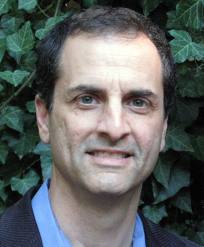
Eban Goodstein

Eban Goodstein

This is an ambitious undertaking, and Goodstein is going at it full tilt, holding weekend workshops several times a year at college campuses across the country, and bringing graduate students to Bard, with generous funding, to undertake Master’s degree programs in environmental policy with a special emphasis on climate-related policy and advocacy.

As Goodstein puts it, “Stabilizing the climate is not the work of a year, of a presidential term, or of a decade. It is the work of a generation.”

I see it as an essential commitment and responsibility to use my skills as a writer, scholar and teacher to help equip the upcoming generation for this great work we must all undertake now.

Goodstein is a unique blend of science policy wonk and communications guru, and I’m convinced that it’s at this very nexus that real change on the climate front will be forged.

All the dire scientific reports in the world won’t get people to wake up and change their daily habits, or insist that policy changes are made at the local, state, national and international levels, if the information is not presented in clear, compelling language.

A significant portion of the C2C Workshop, therefore, is spent in developing students’ storytelling skills.

It was interesting, and somewhat disheartening, to watch the students’ puzzled reaction when asked by Goodstein to talk about a favorite storyteller in their family.  Very few hands went up.

This is because most Americans today are reared listening to the TV tell us stories, not cherished individuals in our actual lives.  We are avid but passive consumers of prepackaged stories, and as a result most of us—unless we have the ambition to become stand-up comedians—don’t see storytelling as a skill we need to master.

Goodstein’s important insight is that storytelling is key to getting people’s attention, and telling a good story is essential to success in environmental advocacy and politics.

Good persuasive communication, he said, starts with a personal story, and then moves into the political.  Hook your audience with a personal anecdote, keep their attention with a strong narrative, and then finish up with a call to action.  And once you’ve got a strong story developed, practice telling it, over and over again, until you can do it in your sleep.

Armed with this advice, the group of some 80 students broke into smaller groups of five, each accompanied by a faculty or graduate student facilitator, for a two-hour intensive storytelling workshop.  Our task was to each come up with a short story about an inspiring person or event, write it up and tell it three times, to three different partners, then refine it and tell it again to the whole group.

The stories would be refined further the next day, told again to new audiences, and several would be singled out for telling to the entire big group, and given awards.

This is the kind of work for which I have been preparing my whole life.  There is nothing I would rather do than facilitate a writing workshop on inspiring stories!  And it gives me special joy to do it as part of a program aimed at giving young people the skills and mojo to tell the climate change story in a way that galvanizes action.

It may be that in the end, I would have been better served by spending my time learning survival tactics in the woods, but the truth is that even in the most dire circumstances, human beings have always needed their storytellers.  A good story well told can keep us warm in ways that may not be measurable, but that are profound nevertheless.

Here is the story that I wrote and told the students yesterday in our workshop.  I offered it to them—and now to you—with love and an earnest desire that it may inspire us all to each get to work on the climate change issue—in our own ways and spheres—before it’s too late.

My friend Pauline tells the story of how she came home from work one day and discovered that a civil war had started in her country, Congo-Brazzaville.  Suddenly she had ten people, mostly women and children, sheltering in her house as gunfire and bombs shook the streets of the city. 

When a bomb hit the house, she and her family and friends knew they needed to make a run for it.  They gathered what food and supplies they could carry, and left the house in the middle of the night, heading for the countryside. 

What followed was weeks of deprivation and terror as they huddled in the forest waiting for the conflict to die down so that it would be safe to return home.

I tell this story because it is emblematic of the many stories I have studied over the years, in which women and children are disproportionately affected as victims of social conflict and war. 

I tell it because I fear that in the age of climate change this is a story that will be repeated over and over again. Whether the violence is human—men with guns—or natural—hurricanes or droughts—the effects will be the same: women and children on the run, vulnerable and afraid.

Recent studies indicate that hundreds of millions of people will become climate refugees in the next half-century.  And they won’t all be in Bangladesh or the Maldives, either.  Just ask a former resident of Breezy Point in New York City, devastated by Hurricane Sandy, how it feels.

In our lifetimes we will all witness–and many of us will likely experience—the kind of fear and hardship that Pauline lived through, when the social order disintegrated and violence became the norm. 

There are many, many guns in America.  It would not take much in the way of food and energy shortages to trigger violence.

Sometimes I find myself wondering whether I should be learning and then teaching others survival skills, instead of critical thinking and writing. 

What good will my PhD in literature do me in an age of relentless, recurring Hurricane Sandys?  What good will a vaunted college degree do my students?

But I do continue to believe that the stories of survivors like Pauline matter, and increasingly these are the stories I offer students in my classes on human rights, environmental justice, politics and literature.

We all need to learn from Pauline and other survivors about the amazing resilience of the human spirit.  Even in the face of terror and chaos, people can choose to be compassionate, generous and respectful of one another. We don’t all choose the violent path. 

It will not help any of us to focus on fear right now, as the climate change crisis gains momentum and threatens to engulf us.  What we must concentrate on instead is hope, resilience and solidarity.  That’s what the world needs from us now.

Homage to Adrienne Rich

Adrienne Rich

Adrienne Rich has just died at 82 years of age.  That is a good long life, and it is truly inspiring how active she remained until the end, publishing and mentoring so many of us who follow in her path.

Although she was primarily a poet, there is an essay of hers that has remained very powerful for me, being the autobiography junkie that I am.  It’s “Notes Towards a Politics of Location,” the one where she talks about growing up as a Jew in the American South, and how she always felt like such an outsider.  It connects very much with her general recommendation for women, that we consider our outsider status a blessing, rather than a curse.  That we continue to see things with outsider’s eyes, rather than assimilating to the dominant mode of seeing and being.

This message has resonated strongly with me because I have always felt myself to be an outsider.  It doesn’t seem to matter which group I am with, or how long I have been affiliated with them, or even if I am, in name at least, the principal of that group.

I am the perennial outsider.

And thanks to Adrienne Rich, I no longer feel that as a handicap or a slur.  Rather, I wear it as a badge of pride.

Rich was someone who could have chosen to take her privileged status as a white American Jew and spend her life comfortably at the country club.

Instead, she chose to ally herself with Black Americans (notably Audre Lorde), gay Americans, and anyone who needed a powerful and articulate ally.

Alliance is a tricky business. A would-be ally from a more powerful social class needs to be very careful to offer help without coming on too strong; to use one’s power to open up spaces for one’s allies to speak and act independently. It’s not about us—it’s about them. Adrienne Rich made it look easy, but it’s not.

Three of my most important mentors have now passed on: Audre Lorde, Gloria Anzaldua and now Adrienne Rich.

Such a huge legacy to try to continue and move forward.

Sisters, I promise each of you that I will do my best to keep your spirits alive.

Pleasure plus meaning equals happiness: homage to my mom

Maria Sirois

Yesterday I went to a Berkshire Festival of Women Writers workshop facilitated by psychologist and inspirational speaker Maria Sirois.  The workshop was called “Happiness: Writing as a Path to Positive Transformation,” and since I am always looking for ways to link all those terms—happiness, writing, path, positive, transformation—I was eager to see how Maria would lay it out for us.

I was not disappointed.  She quickly got the group writing about happiness, and not surprisingly, when I started freewriting about joy, it wasn’t long before I began writing about my childhood summers spent at my family’s country house…long, endless, happy weeks where my brother and I seemed to be perfectly in synch with our mother’s rhythm, where life was peaceful, idyllic and beautiful…the epitome of joy.

Later, when we went around the room and everyone shared a short bit of their freewriting, I was struck by how many of the women present (we were all women that day) associated joy with childhood, and with nature.

Many people shared moments of joy connected with childhood memories of trees—climbing trees, wandering in the forest, listening to the wind in the trees.  Others had written about communion with animals, or remembered ecstatic time spent by the ocean in childhood.

A small corner of my mother's garden

What I remembered was watching my mother dig a rock garden out of the cow pasture in which she and my father had built their small country house when I was 5 years old.  Here are the two sentences I wrote during the workshop, and shared aloud:

“My mother would be quietly exultant as her shovel and trowel revealed new curves or deep, smooth walls of rock, and at the end of a hot morning’s work she would stand, sweaty and red-faced with a fine layer of black earth coating her bare shoulders, drinking iced tea out of a tall green glass and surveying her landscape with a squinted sculptor’s eye.  The work progressed slowly, since it was all done by hand, just one small, determined woman with a strong back and great patience, tracing out the rock with hand tools and as much love as if she were carving out the sweet, benevolent face and voluptuous body of the Earth Mother herself.”

***

Later in the workshop, Maria shared with us a memorable formula for happiness.

Happiness, she said, is the balance of pleasure and meaning.

If life is all pleasure, it can feel empty and meaningless.  If it’s all meaning, then you’re working too hard.

But if you can find the right balance of pleasure and meaning, you can hit that sweet spot of joy, in which you thrive and grow like a well-cultivated garden.

Maria suggested that there is something about creativity itself that brings us to this sweet spot.

My mother, spending her summers relaxing with her children and turning her surroundings into a beautiful landscape sculpture, was drinking from that creative well.

For me there are various creative taps I draw from: writing, teaching, creating programs like the Festival, bringing people together in harmonious, productive alliances.

Platter and dinner by my mom!

My brother recently observed that our mother has always been a wonderful model of someone who is completely focused, passionate about and committed to her art—whether that art is tonight’s dinner, or her magnificent pottery, or her lovingly tended garden.

Since earliest childhood, it has always been clear to me that she put every ounce of creativity she possessed into everything she did—not for external recognition or praise, but just because it was the right way—the most pleasurable way—to approach any task at hand.

Pleasure plus meaning equals happiness.

It strikes me that although my mom has had her share of ups and downs, hers has been by and large a very happy life.

No wonder when Maria asked me to write about joy, I went straight to my primary teacher: Sue Browdy, my mom.