After Charlie Hebdo: Tuning Out, Tuning In to the Violence that Beseiges Us

When the news of the Charlie Hebdo attack flashed into the headlines last week, with all its chaotic blood, gore and terror, I had a surreal feeling of detachment and déjà vu. Similar scenarios have been hitting us so often in recent months and years—the Boston Marathon bombing…the Times Square attempted bombing….Sandy Hook Elementary School…. Virginia Tech…Ferguson….the list could go on and on, and that’s just the incidents on American soil.

How do we cope with the constant background noise of violence against which our lives play out in the 21st century? How do we avoid either extreme: numbing out/tuning out, or becoming overwhelmed with fear and grief?

If you thought I might have the answer, I’m sorry to disappoint. I don’t know. It seems to me that I go back and forth from one reaction to another, depending on my mental resilience when the latest instance of violence surges into my awareness.

Asterix creator Albert Uderzo, 87, came out of retirement to draw this tribute to the victims of the Charlie Hebdo attack, published in Le Figaro newspaper. Uderzo was where Uderzo is quoted in Le Figaro as saying: “I am not changing my work, I simply want to express my affection for the cartoonists that paid for their work with their lives.”

Asterix creator Albert Uderzo, 87, came out of retirement to draw this tribute to the victims of the Charlie Hebdo attack, published in Le Figaro newspaper. Uderzo was where Uderzo is quoted in Le Figaro as saying: “I am not changing my work, I simply want to express my affection for the cartoonists that paid for their work with their lives.”

If I’m feeling strong and stable, I can hit a balance, which seems like the healthiest response; I can honor the victims with appropriate grief and anger at the perpetrators, while maintaining the psychic distance I need to go about my daily business without being blown away by fear and sorrow.

Is this really “the healthiest response,” though? Or am I kidding myself here? How can it be healthy and sane to be so compartmentalized that I am able to acknowledge the pain and suffering on one hand, while at the same time going on with my life in an ordinary way?

Digging a little further into this, I have to ask: who does it benefit for me to be able to carry on with a stiff upper lip, remaining calm, cool and collected in the face on ongoing tragedy? Does it benefit me, or the status quo of the society I live in, which has generated this endless loop of repetitive tragedy?

What would happen if one day we all suddenly started to feel fully empathetic with the victims of violence—and not just gun violence, or military violence, but also rape, domestic violence, violence against animals, violence against the forests and the waters of our planet?

In the #BlackLivesMatter and #WeAreSenecaLake protests, and now in the #JeSuisCharlie meme and rallies in Paris, we are seeing a hint of the powerful force that can be unleashed by human compassion.

What if I, and other Americans like me, started to actively fight the conditioning that has made us believe that the healthiest, sanest response to ubiquitous violence is to turn our gaze away and keep moving?

What if we began to lean in to the deep wellsprings of compassion and empathy that are our birthright as human beings, and act out of the power we find there?

What if instead of accepting the constant static of violence as a given of modern existence, we began to actively tune in to it, in order to serve—each one of us—as antennae capable of picking up the signal and disrupting it, transforming it from cacophony to an entirely different, new form of activist harmony?

In their own satirical way, the Charlie Hebdo team was engaged in doing just this. They were holding a mirror up to our sick society, and forcing us to gaze at ourselves and recognize the extent of our own complicity in the violence that besieges us.

I believe, with Arundhati Roy, that another world is possible. On a quiet day, I can hear her breathing. But on a typical, violent day, all I can hear is the labored thumping of my own heavy heart.

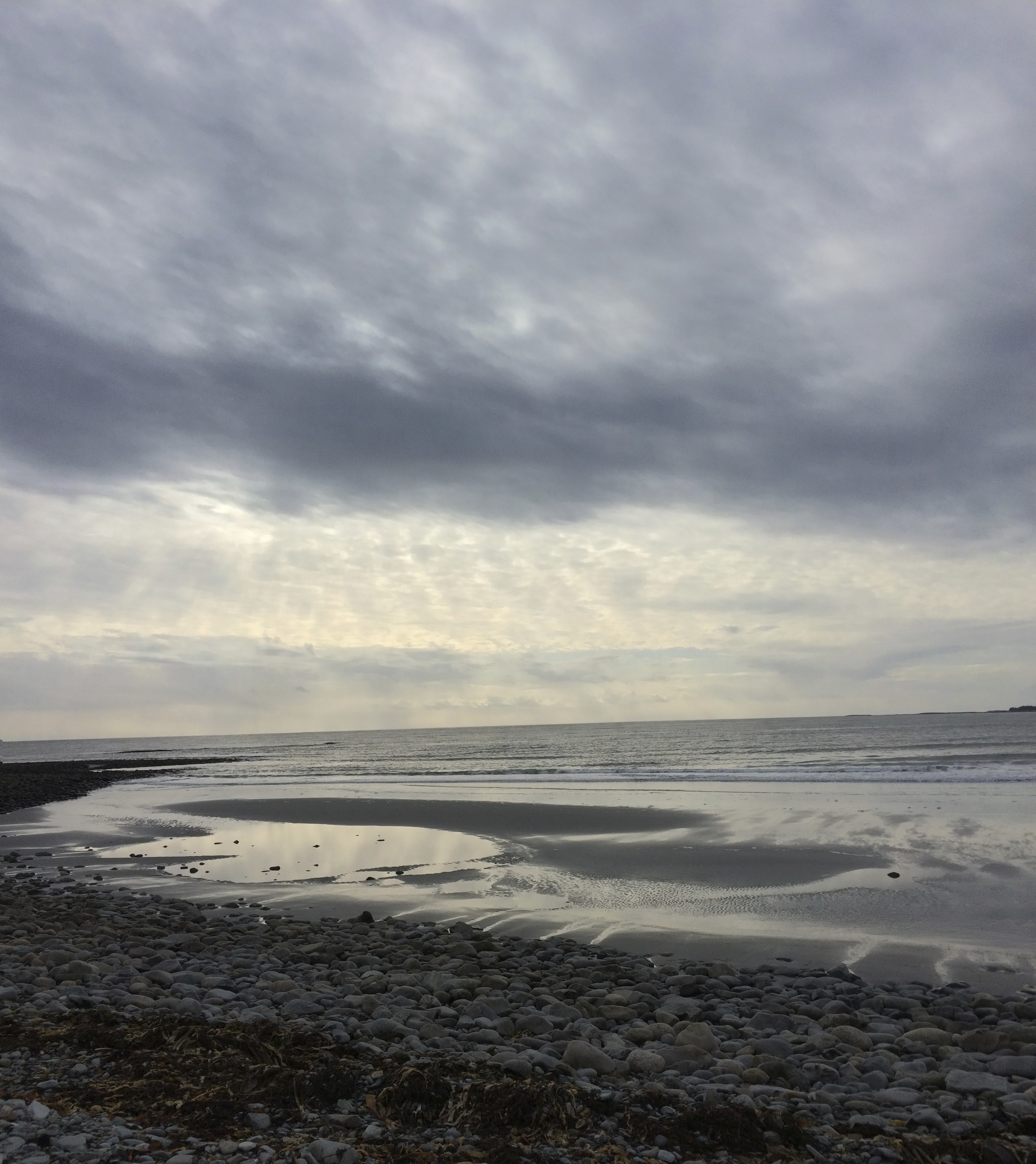
Photo c. J. Browdy, 2015

Photo c. J. Browdy, 2015

New Year’s Resolution 2015: Re-entering Sacred Communion with Gaia

What would the world be like if the majority of us humans began to align our personal and political values with the ecological ethos of our Mother Earth?

Gaia believes in abundance. When she is in balance, each living being has its niche, and lives out its life in grace, receiving all the sustenance it needs, and taking no more than it requires to be healthy and fulfilled.

Gaia believes in equality. Every single aspect of the planet, from the needles on the fir tree to the whales in the sea, is essential and valuable. The rocks and the water and the bacteria in the soil are all equally beloved, and equally tended.

Gaia believes in synergy. Each element of the planet is seamlessly wound in to the whole, the web of life that functions simply and elegantly, nothing wasted, nothing forgotten, nothing in excess.

Gaia believes in communion. She lives in the present moment, eon after eon, entirely immersed in the creative beauty which she expresses in her every pore. She doesn’t live for the future, ambitiously, or dwell in the past, nostalgically. She focuses on the present and knows that in walking a path of balance and harmony now, she is unfurling a solid, loving bridge to the future for all time.

How hard could it be to bring our personal and political modes of being into alignment with the vast, pulsating beauty of Gaia’s model?

If we could rise above the narrow confines of the political and personal labyrinths in which we’re habituated to spend our time, we would see, with the sudden clarity of a lightening flash on a dark night, how simple and obvious it is. The Earth is our Mother, and she is showing us the way every second of every day. All we have to do is pay attention.

This New Year’s, I resolve to listen to my Mother and do my best to heed her call and follow her example.

This will not be work; it’s as natural as breathing. I just need to re-learn what I knew as a baby: that my primary relationship with my Mother is paramount. There is nothing more important than the sacred, reciprocal communion of our love.

New Year's Day 2015 Nova Scotia Photo J. Browdy

New Year’s Day 2015
Nova Scotia
Photo J. Browdy

Joining Humanity’s Immune System: In the Body, in the Classroom, in the World

I had a tough day today in the classroom. I guess I brought it on myself by daring to raise unmentionable issues like violence against women and cancer….daring to follow Eve Ensler’s lead by assigning my students to read her remarkable cancer/incest survivor memoir, In the Body of the World. Unknown I assigned it for my class on “Media Strategies for Social and Environmental Justice.” The first book we read was Bill McKibben’s activist memoir Oil and Honey, about how he founded 350.org in a college classroom and how it grew to be a hugely successful global movement aimed at raising awareness about climate change and pressing for swift transition to renewable energy models.
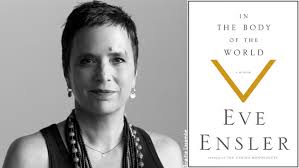
This week we’ve been looking at Eve Ensler’s trajectory from a theater artist interviewing women about their vaginas and creating the series of monologues that would become “The Vagina Monologues,” to founding the V-Day movement to end violence against women, and now the One Billion Rising for Justice global phenomenon. Eve Ensler TED

But along the way, Eve Ensler got cancer. It arrived, she says in her viral TED Talk “Suddenly My Body,” with the force of a bird smashing into a plate glass window.

Her cancer memoir, In the Body of the World, is remarkable in its fearless interweaving of the personal and the political, the individual and the global, the violent rape of a daughter (Eve herself) with the violent rape of our Mother Earth by Western capitalist culture.

 ***

My plan for the class was to focus mostly on the cancer issue…to look at the horrifying statistics of cancer in the U.S., to name it as the runaway pandemic it is, and to think with the students about how we might most effectively employ media tactics and tools to raise awareness and push for social change. But I didn’t realize how deeply Eve Ensler’s description of violence against women, as related the violence of our chemical assault on Mother Earth, would resonate with these young people. Some of them were deeply troubled, even to the point of having to leave the class.

With the students who stayed, I had a good discussion about cancer itself. We looked at the most recent statistics of cancer in the U.S. (1.6 million NEW cases projected for 2014 by the American Cancer Society) and discussed the most common media strategies for dealing with the issue of cancer in the U.S.: walks, runs and galas “for the cure.” LivingDownstream_Portrait1

It took some pushing, but eventually I got the students to begin to discuss how activism that only focuses on “the cure” is missing the huge point: we need to focus on preventing cancer, not just curing it once it’s appeared. In Sandra Steingraber’s famous formulation in her cancer memoir Living Downstream, we need to start looking upstream.

What would looking upstream really mean? Buried deep in the American Cancer Society report is a short section on the environmental causes of cancer. This is what it says: “Environmental factors (as opposed to hereditary factors) account for an estimated 75%-80% of cancer cases and deaths in the U.S.”

Let me say that again.

“Environmental factors (as opposed to hereditary factors) account for an estimated 75%-80% of cancer cases and deaths in the U.S.” Environmental factors in the context of this report mean manmade chemicals and toxins present in our environment, from water to air to soils to our bloodstreams and mothers’ milk.

So what would it mean, I asked the students, to really probe this issue with the intent of stopping cancer before it begins—going to the source of the problem? It would mean, of course, we agreed after some discussion, pursuing the mining, chemical, pharmaceutical, atomic energy, fossil fuel and industrial agriculture companies. Oh yes, those—the ones that rule the world. It’s a tall order. Just like stopping violence against women, or reining in the carbon polluters and shifting to renewable energy. These are the major issues of our time, though. If we’re not stepping up to work on these issues, what are we doing with our brief, precious lifetimes?

***

In my next class, “Islamic Women Writing Resistance,” we were talking about violence against women, this time in the geographical context of Afghanistan.
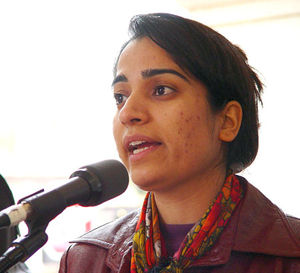
Malalai Joya

Malalai Joya

Since we were reading the autobiography of Malalai Joya, the young woman who was elected a member of the Afghan Loya Jirga and famously called out the mullahs on their oppression of women, I steered the conversation into a discussion of leadership. How was it that despite the horrifically violent Afghan society under the Taliban and the warlords, where 90% of women are subjectd to physical, mental and sexual abuse, Malalai had managed to retain her confidence and bravado, her sense of herself as a leader?

And more importantly, what are the costs to a society that not only doesn’t respect and include the talents of 50% of the population, but actively works to suppress these gifts?

The answer to the first question has everything to do with Malalai’s father, who encouraged her to go to school, to become a teacher, and eventually to become an activist politician. Without his support, she could never have succeeded as she did. Chalk one up to the power of allies.

The second question is the one that really interests me. It seems to me that it takes tremendous energy to oppress half the population. Eventually so much is going into terrorizing the women and their potential male allies that there is nothing left over, in terms of psychic energy, to build a healthy, vibrant society.

It’s a true zombie society, with the powerful preying on the weak and the whole social fabric fraying into oblivion.

Is it an accident that the societies where women are being most savagely oppressed are also the societies that are poorest, most chaotic and most violent? Think Somalia, Afghanistan, Democratic Republic of Congo, Bosnia….

There are some countries where wealth has made it possible for strict patriarchal control of women to proceed without terrible violence and disorder: Saudi Arabia and the other Emirates, Iran, Iraq, Egypt. Even, maybe, the U.S., Russia and the E.U., where women tend to self-regulate their own subservience to the patriarchy, conditioned by high doses of media and peer education.

In every case, though, what we’re talking about is the same. We’re losing millions of bright, talented, gifted people to cancer every year. We’re losing millions of bright, talented, gifted women to violence and self-sabotage every year. And at the same time, this is happening against the backdrop that Eve Ensler describes so movingly in her book: the interweaving of the violence against women, the violence against individual bodies, and the violence human civilization is perpetuating against the Earth.

“Cancer is essentially built into our DNA, our self-destruction programmed into our original design—biologically, psychologically,” she says. “We spend our days, most of us consciously or unconsciously doing ourselves in. Think building a nuclear power plant on a fault line close to the water. Think poisoning the Earth that feeds us, the air that lets us breathe. Think smoking, drugging. Think abusing our children who are meant to care for us in old age, think mass raping women who carry the future in their bodies, think overeating or starving ourselves to look a certain way, think unprotected sex in the age of AIDS. We are a suicidal lot, propelled toward self-eradication” (194).
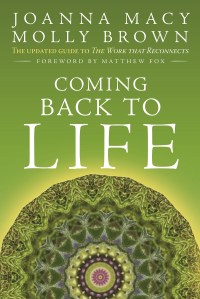
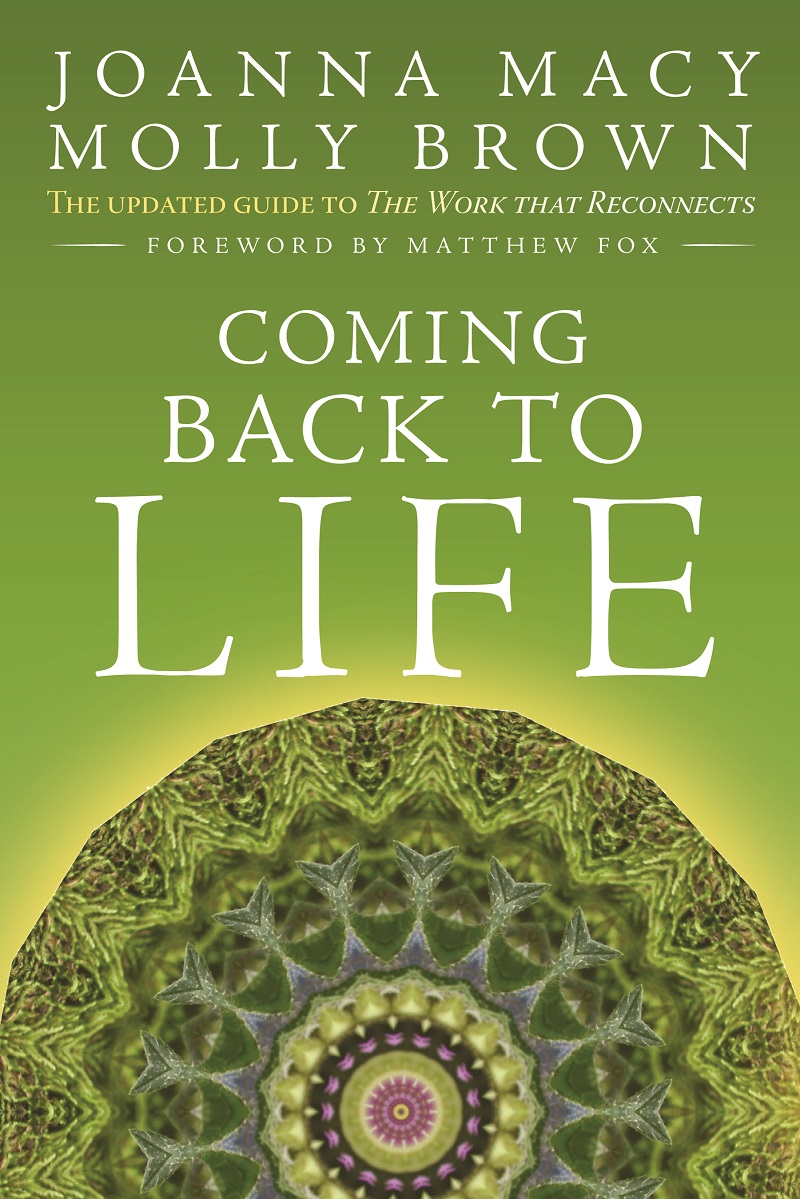
??????????????????????It doesn’t have to be this way. I am so glad to be reading the new edition of Joanna Macy’s classic work Coming Back to Life, as an antidote to the darkness described by Ensler and Joya. Macy quotes Paul Hawken, who refers to activists and activist organizations as “humanity’s immune system to toxins like political corruption, economic disease and ecological degradation.”

This immune system, Hawken continues, “can best be understood as intelligence, a living, learning, self-regulating system—almost another mind. Its function does not depend on its firepower but on the quality of its connectedness….The immune system depends on its diversity to maintain resiliency, with which it can maintain homeostasis, respond to surprises, learn from pathogens and adapt to sudden changes” (qtd in Macy, 55).

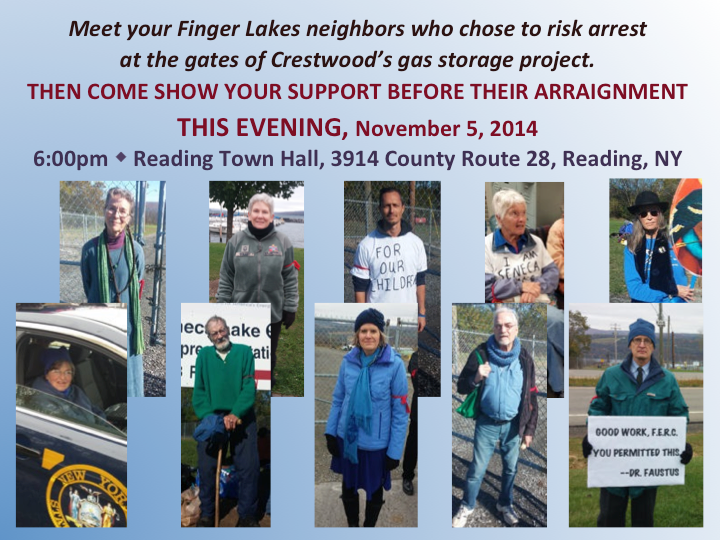
A current example of such an immune system in action is Sandra Steingraber’s anti-fracking movement in upstate New York. She and her Seneca Lake defenders have come to the rescue of the fragile environment of the Finger Lake region and its jewel, Seneca Lake, putting their own bodies on the line just like Eve Ensler did when she allied herself with the women of the Congo, vowing to stop the violence. 10470955_854714074549076_2405675760464249402_n Any one of us has the power to become a defender of life. All we have to do is to pay attention to what’s happening, start asking the hard questions, stop going along with the flow. We need to do this is in a proactive way. We’re not looking for a cure to violence against women/against the Earth—we want to address the underlying causes of the violence, to look upstream and stop it at the source.

This necessitates a willingness to spend some time outside of our own comfort zones of denial and voluntary blindness. It involves looking at painful, messy, upsetting aspects of human existence, and taking responsibility for the ways in which each of us contribute to the status quo, if only by looking away. It will be personal as well as political in ways that will often hit entirely too close to home.

We need to open our eyes and really look at what our Industrial Growth Economy and the society it has created is doing to our bodies and the body of the world. We need to look at the way women’s bodies, in particular, are forced to bear the brunt of the pain, even though women account for just a fraction of inflicted violence in the world.

Don’t look away. Take it in. And then think about what you can do to join “humanity’s immune system.” Look for me on the front lines—I’ll meet you there. Dandelion_seeds_Computer_backgrounds

As We Dance the Spiral Dance of Life, Death and Rebirth, We Build Bridges to the Future Every Step of the Way; What Future Do You Choose?

We’re now going into the darkest time of the year, the time when many cultural traditions contend that the veils between the living and the dead grow thinnest, most penetrable.

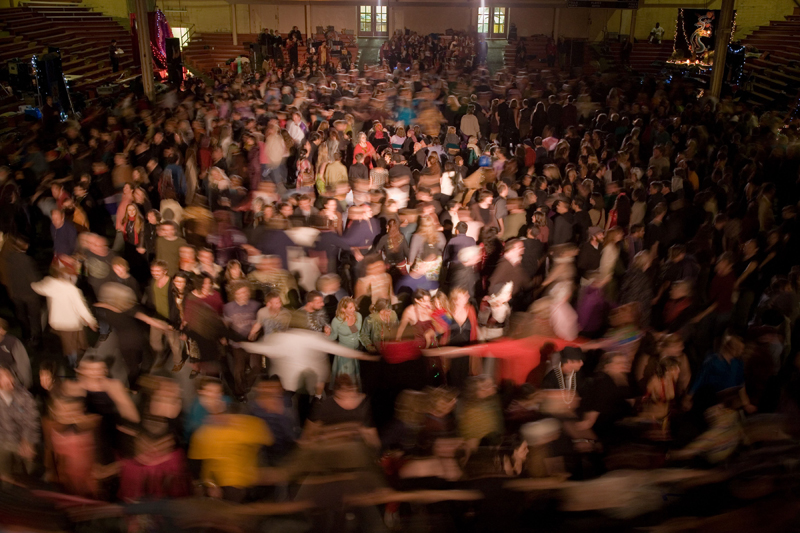
In San Francisco tonight, Starhawk and her Reclaiming coven will be dancing a grand spiral dance with thousands of people, all united under this banner: “2014 Intention: With the help of ancestors, descendants, and the great powers of nature, we weave magic and action to save our home! A ritual to honor our beloved dead and dance the spiral of rebirth.”

M_R_spiral_126800x800

Having participated in one of Starhawk’s circle dances, focused on raising energy through the power of collective intention, I can begin to imagine what a spiral dance on this scale will accomplish.

We Americans too often ignore the significance of energetics in our lives.

We imagine that it doesn’t matter that we spend more and more of our time bathed in low-level radiation from all our electronic devices, from computers to cell phones to electric meters and on.

We don’t pay attention to the way we are similarly taking in steady doses of negative information day after day, from Ebola and cancer to corruption, violence and poverty.

In these dark days of the year, at least in my gloomy northern corner of the world, I can feel my own energy levels sinking, my will to rise and dance on behalf of my ancestors, descendants and Nature wavering.

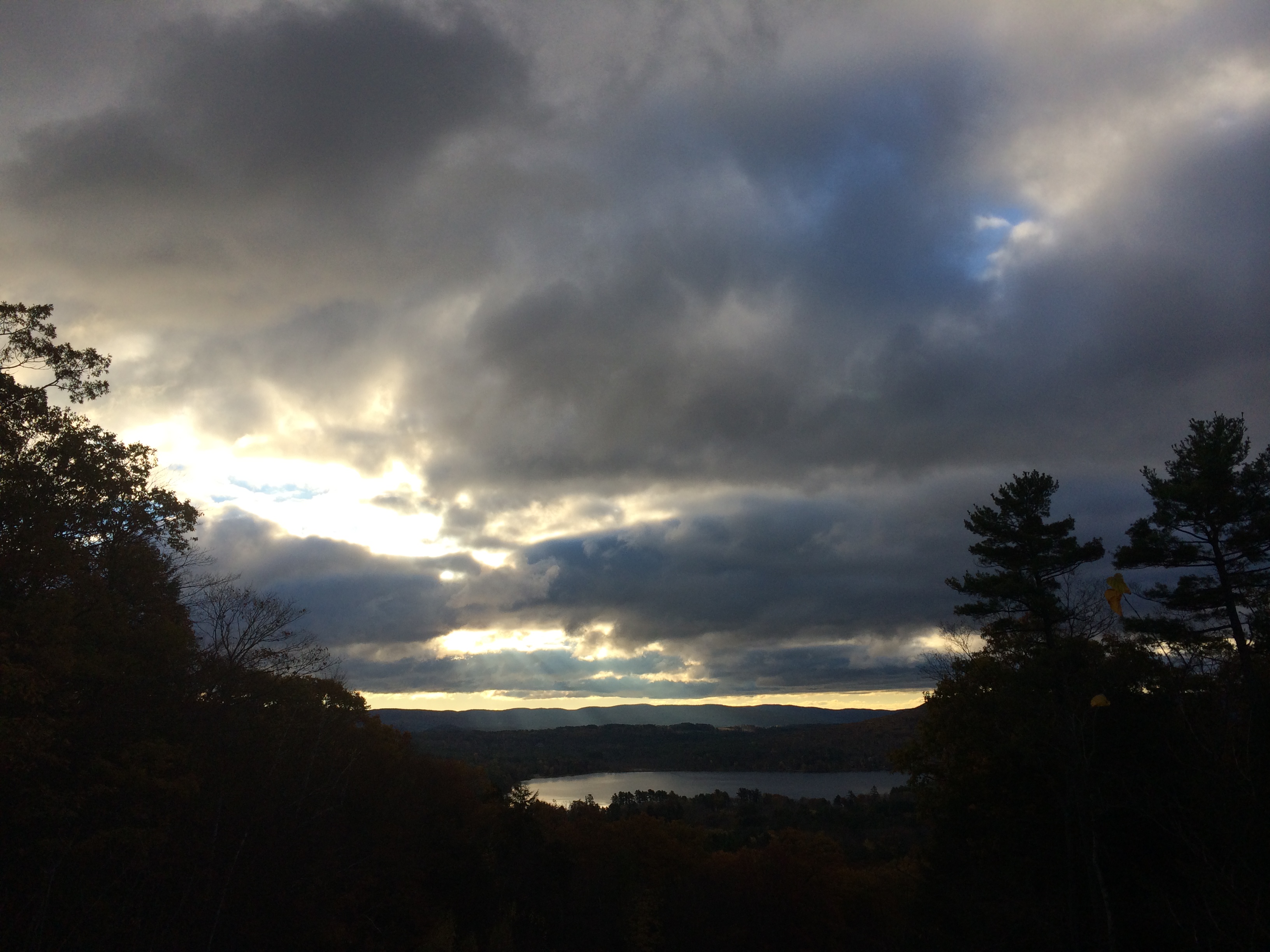
Morning clouds over Stockbridge Bowl. Photo J. Browdy, 2014

Morning clouds over Stockbridge Bowl. Photo J. Browdy, 2014

So I give myself pep talks. I remind myself that the dark days of the year are among the most powerful times for focusing inward and setting new intentions for what will be accomplished with the return of the light.

I get out the photos of my grandparents and my children and remind myself that I must be a strong link on the hereditary chain that stretches back untold generations, if my descendants are to have the good fortune of enjoying the kind of safe, happy, fulfilled lives on Earth that I have had.

Fannie Ashe Browdy and Philip Browdy, my paternal grandparents, around the time of their marriage.

Fannie Ashe Browdy and Philip Browdy, my paternal grandparents, around the time of their marriage.

I remember that I came to this lifetime full of the rising sap of positive energy, loving nothing more than to rise early to watch the dawn, and stay up late to look for shooting stars.

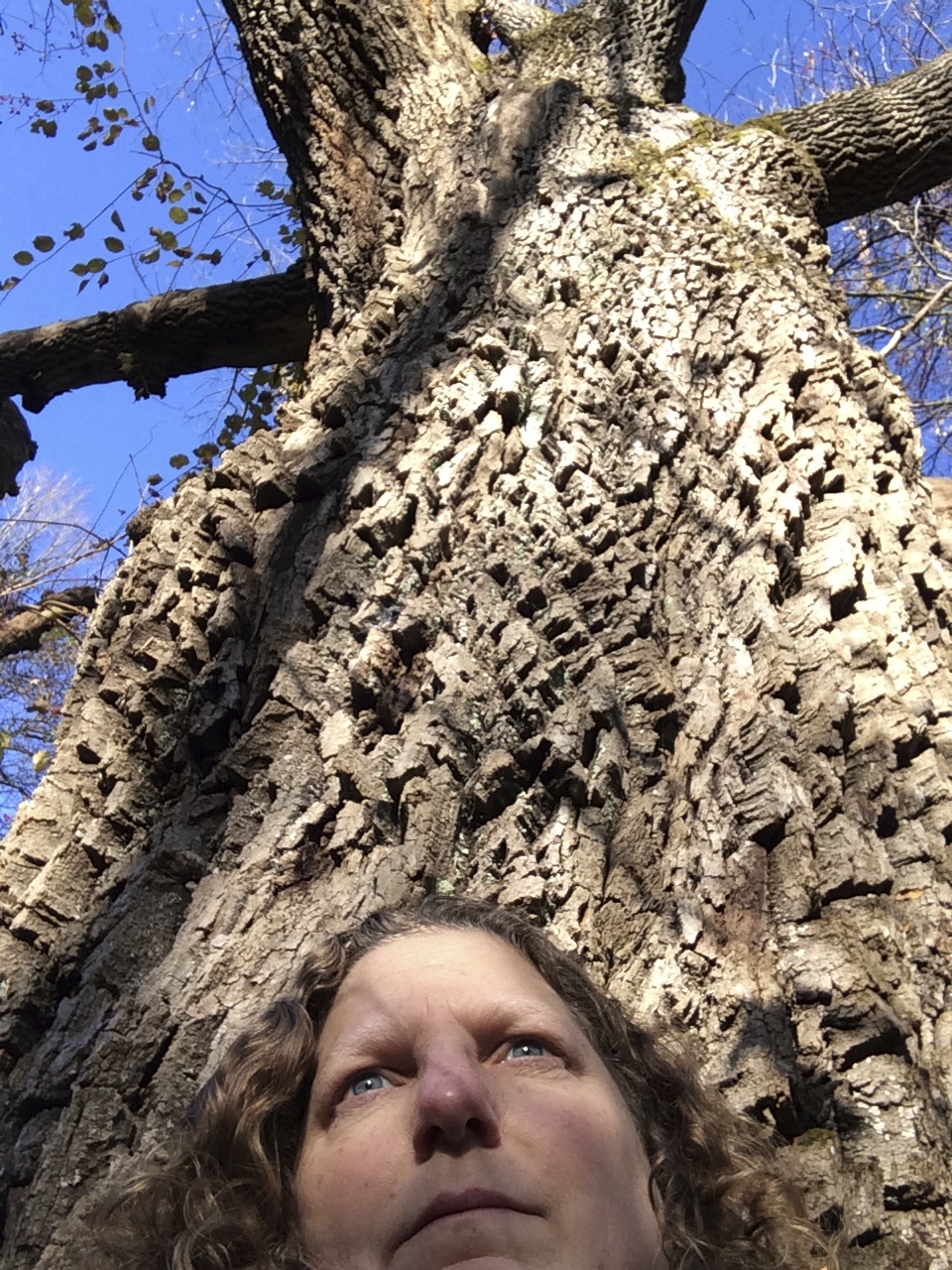
Rooted like the trees that shelter and inspire me

Rooted like the trees that shelter and inspire me

Like the great old trees I love, I have rooted myself deeply in the glacial rocks and rich soil of my life, and now have a wide network of students, friends, colleagues and relatives that I help to nourish with my ideas and initiatives.

And I am not only connected to human friends and relatives, but also to the intricately woven biosphere, with which I interact on a cellular level with every breath I take, every ray of sunshine I absorb, every drop of water I drink.

We are all dancing a great spiral dance together on this planet, weaving our intentions and our gifts into the actions that will build a bridge into our collective future.

Every step we take matters. Will we work day by day towards aligning our love for the planet with our individual actions?

For example, will we invest in fossil fuels or solar panels this year? Will we support local farmers, or buy packaged food that’s trucked in from far away? Will we take a break from eating fish to allow the wild fish stocks to recover? Will we lend our political and financial support to those working to make the human relationship to the planet life-enhancing, rather than destructive?

Reminding ourselves that literally or metaphorically speaking, our ancestors and descendants are relying on us to do the best we can to keep the chain of life strong and unbroken into the future, can help us to make decisions that are forward-looking and mature.

My maternal grandmother, Mildred Louis Rubenstein, with my younger son, Eric

My maternal grandmother, Mildred Louis Rubenstein, with my younger son, Eric

The dance we weave today and every day is about much more than just our own individual lives. We can be and do much more than we imagine, if we resist the downward pressures of negative thinking, and keep the channels of positive energy open to the cosmic flow.

Remember that the Earth and the Cosmos are one and the same, and we humans are just another manifestation of that endlessly circulating energy.  Photo J. Browdy 2014

Remember that the Earth and the Cosmos are one and the same, and we humans are just another manifestation of that endlessly circulating energy. Photo J. Browdy 2014

Help Wanted: Willing Ring Bearer Seeks Quest

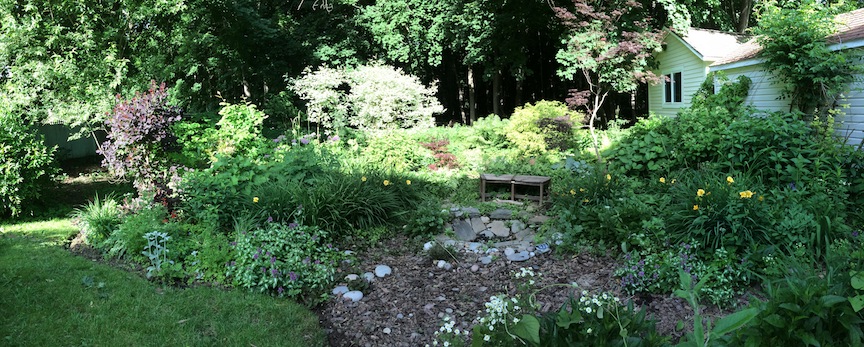
All week the energy of the summer solstice seemed to build in me. After a week of rain, the sun burst through and we had a whole week of clear, low-humidity days in which it appeared that you could see the plants growing happily, stretching their roots down into the soil and their leaves up towards the bright sky.

My peaceful backyard in the Shire

My peaceful backyard in the Shire

In anticipation of several weeks away (I’ll be making my annual pilgrimage to Nova Scotia soon) I spent a lot of time out in the garden, planting vegetables and annuals, weeding flower beds, mulching and staking and tending.

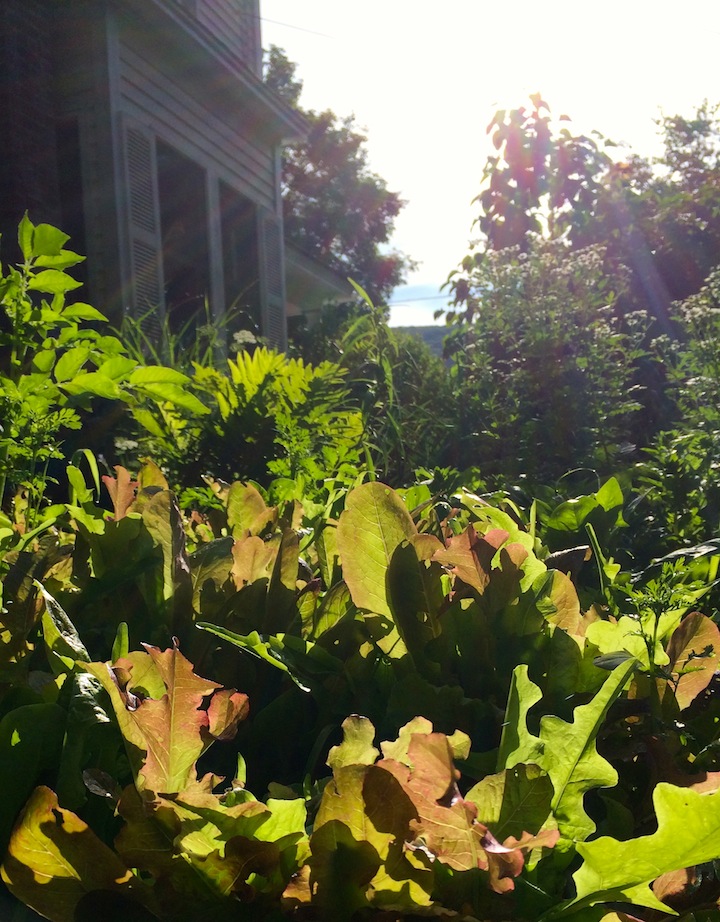
morning lettuce

morning lettuce

pumpkins

pumpkins

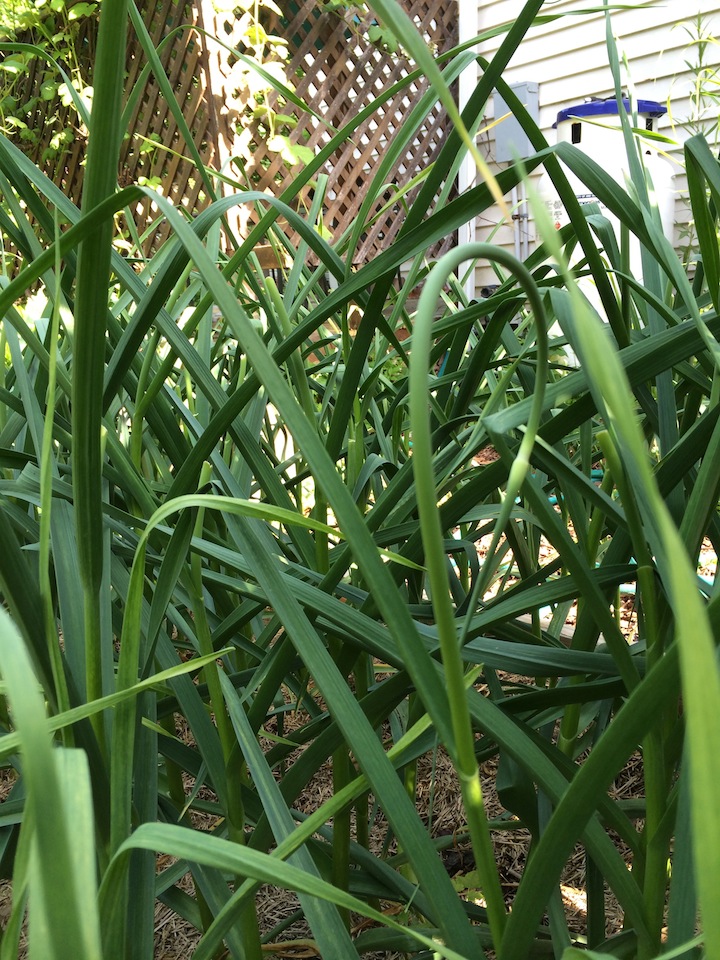
Garlic; note the gas tank in the background

Garlic; note the gas tank in the background

It’s always hard to leave a garden in the summer, when you know the minute your back is turned the invasive weeds will grow with vindictive vigor, the slugs will multiply and munch away at the lettuce, and the Japanese beetles will arrive to decimate the roses.

However, I must get away from the confines of my little corner of the world to clear my head and ready myself for another year—for me, as a lifelong academic, the year always starts with the fall semester of school.

Last night, in honor of the longest day of the year, my son and I took an evening hike up a local mountain, and sat on a rock ledge facing west as the sun slowly and majestically dropped towards the horizon.

Eric in woods

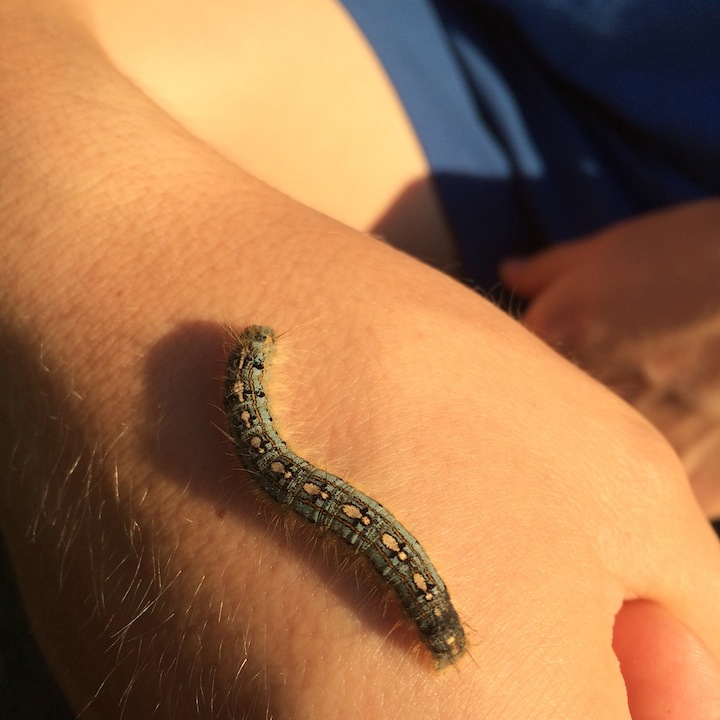
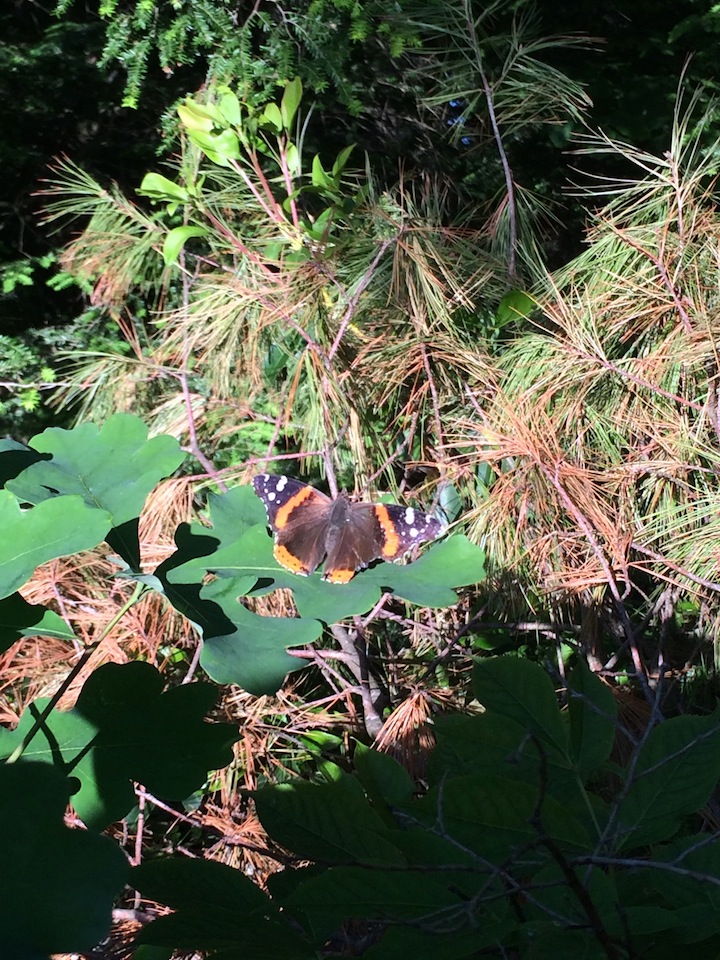
We were happy to find some friends up there—a caterpillar with beautiful markings, making its way up an oak sapling, and a pair of orange-and-black butterflies, sunning themselves just like we were.
caterpillar

butterfly

solstice sunset

As we walked down again in the last rays of sunshine, I couldn’t help thinking about the strong contrast between the peaceful, lovely landscape of my home ground, where for many of us the most urgent question of the day is “what shall we have for dinner?” or “what movie shall we watch tonight?” and the social landscapes that cry out to me every day when I read the news headlines—arid, violent, rigid, harsh.

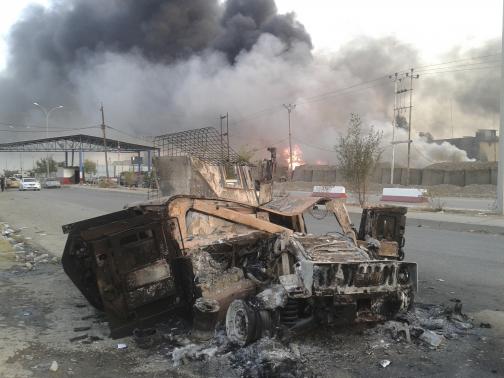
Reuters photo taken June 11, 2014 in Mosul, Iraq

Reuters photo taken June 11, 2014 in Mosul, Iraq


This summer solstice, as I sit in my peaceful green American haven, Iraq is again descending into crazed sectarian violence. The news reports that “militias are organizing” or “Mosul was taken” focus on the politicians playing the mad chess game of war, and the young men drawn into the armies as battlefield pawns. There is no mention of the mothers, sisters and grandmothers of those politicians and young men. The women rarely surface in the headlines, and when they do, the news is not good: a woman who dared to go out to a rally stripped and gang-raped, for example.

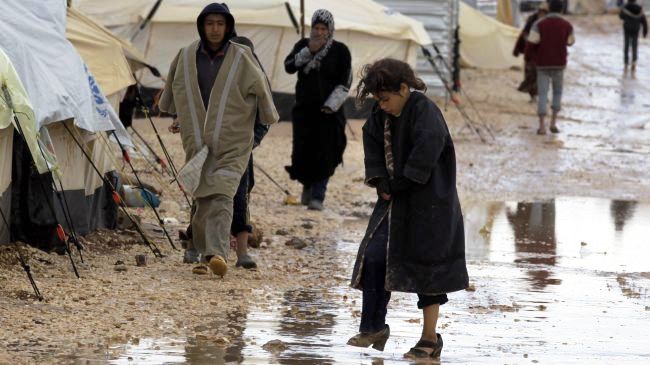
We hear about women obliquely in the reporting about the incredible surge of refugees living in camps this year: of the 51 million people living in refugee camps under U.N. supervision, half are children—which means that a high percentage of the other half are probably mothers and grandmothers. But that is in inference I am making by reading between the lines; those women are invisible in the official story.

Syrian refugee camp in Jordan, now Jordan's fifth largest city

Syrian refugee camp in Jordan, now Jordan’s fifth largest city

jammas.hussain20130212012158677

I have to recognize the incredible privilege I have as an American woman, living in the heart of the heavily guarded gated community that this country has become.

Other people around the world are paying the price for the peace and plenty I have here in my home. And not just people—the animals and insects and birds and forests are paying the hugest price of all to maintain my privileged lifestyle.

How long can I continue to live comfortably with this knowledge?

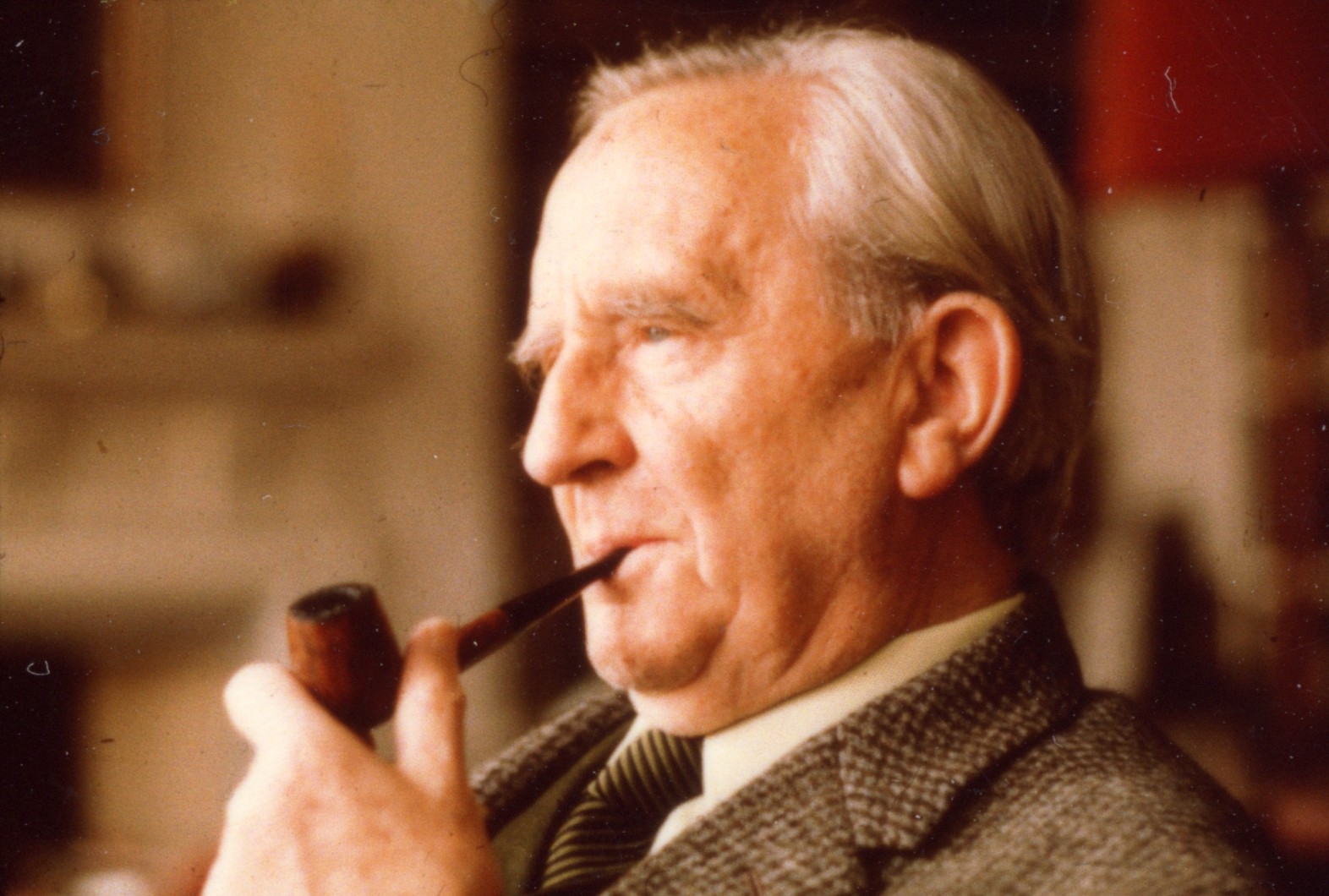
The more time goes on, the more I see how prescient J.R.R. Tolkien was with his Lord of the Rings series. Berkshire County, where I live, is indeed “the Shire” of legend—peaceful, productive, green and jolly. Outside our borders, far, far away, the armies of Mordor are mobilizing in the midst of lands laid waste by the industries of the Dark Lord. Few in the Shire are worried; the chance of those nasty people and industries actually coming here seem remote indeed.

JRR Tolkien

JRR Tolkien

In Lord of the Rings, it is Gandalf the wizard who serves as the bridge between these two very different landscapes. He gives Bilbo, and later Frodo, the charge of becoming the change agents who can make all the difference. The fight against the Dark Lord is fought on many fronts, but the quest to destroy the Ring of Power is paramount, and in order to destroy the ring Frodo must journey to the heart of the dark Empire itself.

I can’t escape the feeling that here in the quiet Shire where I live, ordinary people like me are being called upon, as Bilbo and Frodo were, to step up to the immense and dangerous challenge of resisting the darkness that is brewing on our borders.

But in our case there does not seem to be a Gandalf who can give us a mission and guide us as we set off on the quest. Not even the wisest leaders of the environmental and peace movements seem to be able to provide that kind of leadership. Worldwide, those leaders who claim to know with absolute certainty what is right and what to do are precisely the ones who are fomenting war and leading us down the path to environmental, civilizational suicide.

That must be why I am drawn to study with those who are exploring other epistemologies, outside of the normative range of politics, science, philosophy and religion.

Right now my bedside reading includes Anne Baring, Pam Montgomery and Pamela Eakins, along with Brian SwimmeMartin Prechtel, Bill Plotkin,  and Daniel Pinchbeck.

spring meadowWhen I look out into the green world stretching up towards our beneficent Sun, or glowing brightly under our sweet white Moon, I can see and hear the harmony that life on Earth evolved to sing. Put water and sunlight together, wait a few billion years, and you get this incredible lush planet, pulsating with life.

Human beings have flourished so well that now we have become overpopulated, an invasive species that is destructively taking over every last environmental niche on the planet. In a normal terrestrial cycle, we would go bust, our civilization would collapse, and with time the earth and the sun would gradually rebuild life in endlessly new creative forms.

Is that what is coming? Or will we be able to be the Gandalfs of our own generation, waking ourselves up out of our complacency here in the beautiful American Shire, and conquering the inner and outer Dark Lords that are laying waste to the planet?

What is the quest that is mine to carry out? What is yours? If we at least start asking these questions, with the greater good of the Earth in mind, perhaps the answers will emerge in time to set humanity on a better path.

solstice sunset dark

Generations to Come: Mother’s Day Reflections on the Future

1013976.largeMy son and his girlfriend say they’re going to have a pig instead of a child.  They mean that literally—they’ve fallen in love with the idea of small pet pigs—and they’ve thought long and hard about the issue of whether or not to bring a child into this world.  Both confess to strong maternal/paternal inclinations, and there’s no doubt in my mind that they would make wonderful parents.

But unlike most people, they are hyper-aware of the troubled times humanity is moving into, as we sail along on our spaceship Earth.

“There’s no future for a child today,” my son says with resignation, and goes back to talking about the virtues of pet pigs, leaving me to sadly ponder the prospect of a piglet for a granddaughter.

When I was their age, in my early twenties, I reached for motherhood as a flower reaches toward the sun.  It was only a question of finding the right partner to make a baby with, and I put quite a bit of energy and focus into that search.  I married at 26 and had my first child at 30, the second at 36.  My role as a mother has determined my life choices ever since.

If I had been thinking as rationally as my son and his girlfriend, well, he might never have been born.  By 1992, his birth year, things were already looking grim, though we were all much less aware of the dark trends at work because the feel-good American media filtered out so much.

Now, social media does an incredible job of keeping us constantly informed about everything that’s going on in our world.

A granddaughter is born and Facebook lights up with pictures and congratulations.  Canada starts its seal hunt, and photos of bloody baby seals flood the web, with boos and hisses and calls for change.

When schoolgirls are abducted in Nigeria, or a boatload of teenagers drown in a sinking ferry, or thousands of people die in a landslide, we hear about it instantly, and as instinctively empathetic humans, we sense another portion of our emotional landscape darkening with grief.

It’s true that there is a lot of sadness, fear, pain and darkness in our world today.  It’s true that the future of human civilization as we know it is highly uncertain.  It’s true that we live in transition times.

But as I look around me on this sunny Mother’s Day morning and hear the birds singing and working busily on their nests in the trees around my house, I know it is far too soon to give up on our future.

Every living being in the ecological web of this planet reaches instinctively for the sun and dedicates itself to providing the ground for the next generation to stand on.

I understand that my son is acting out of an altruistic heroism when he thinks about renouncing fatherhood.  He has always wanted to be a father, and known he’d be a good one: he has been a wonderful older brother, and as a teenager quickly became a beloved camp counselor and mentor to younger kids.  He has an easy, charismatic way with children, and as a father he’d raise just the kind of bright, secure, grounded children that will be needed to lead humanity through the transitions ahead.

OK, so in part I just would much rather have a baby than a piglet for a grandchild.  But I also believe that we must resist the tendency to get so caught up in all the negative news that we forget to simply look around and remember that the sun is still shining, the leaves are unfurling, the birds are singing and a new day is here, full of untapped potential.

Maybe the question we need to be asking ourselves is not only “what will we do with our own precious lives,” but “what will we do for the lives of those precious children—of all species—to come?”  How can we spend our days wisely working to help our ever-loving Mother Earth continue providing the nurturing support she has always offered freely to all of her children?

IMG_2213

Taking the Leap into a Better World

Lately I’ve been feeling like I am straddling two banks that are rapidly moving away from each other, leaving me performing ever more of a balancing act in the middle of a rushing stream.

One foot is still hanging on to the familiar dry land on which I was born and bred: the safe, predictable world of a privileged existence within the capitalist empire, where every problem has a technological solution, all needs are met, and there is nothing really to worry about, beyond what to have for dinner, or where to go on the next vacation.

This is the world in which I am a true-blue Democrat, I pay my taxes without question, and I work hard in expectation of an eventual pleasant retirement.

But I also have a foot in quite another realm, one that is still quite foreign to most of my peers.

In this other, parallel universe, security and predictability are rapidly becoming a thing of the past, as the weather turns ever more erratic, leading to food shortages and a survivalist mentality.  Clashes between unarmed protesters and heavily armed police are common, with the protests mainly concerning lack of basic food and supplies.

No one knows where this is all heading, but it does not appear to be anywhere positive. The elites have hidden themselves away in their own privately funded strongholds, and other than the military folks it does not seem that anyone is really in charge.

Most people I know are clinging to the first bank, even though it’s beginning to seem ever more unstable, as if beset by internal tremors that are slowly but surely breaking it up. They are positioned like Walter Benjamin’s Angel of History, looking resolutely backward, away from the chaos of the future.

I don’t know why I am unable to join them in their denialist party.  It sure looks like a good time.

But having become aware of the crisis through which we’re living, I can’t just turn a switch and pretend I don’t know what’s going on. The second bank is like a mirage that is slowly coming into focus, no matter how much I try to turn away and not look.

I’ve spent long enough studying narratives of social upheaval and moments of violent crisis to know one when I see it coming.

A recent article in the New York Times Sunday Review provided an unusual window into the curious calm before the storm of all-out societal dissolution—in this case, the unfolding Syrian civil war.

The author, Janine di Giovanni, begins with a series of questions: “What does it feel like when a war begins? When does life as you know it implode? How do you know when it is time to pack up your home and your family and leave your country? Or if you decide not to, why?”

When does life as you know it implode?

When is it time to pack up and leave?

Where can we go to find safety?

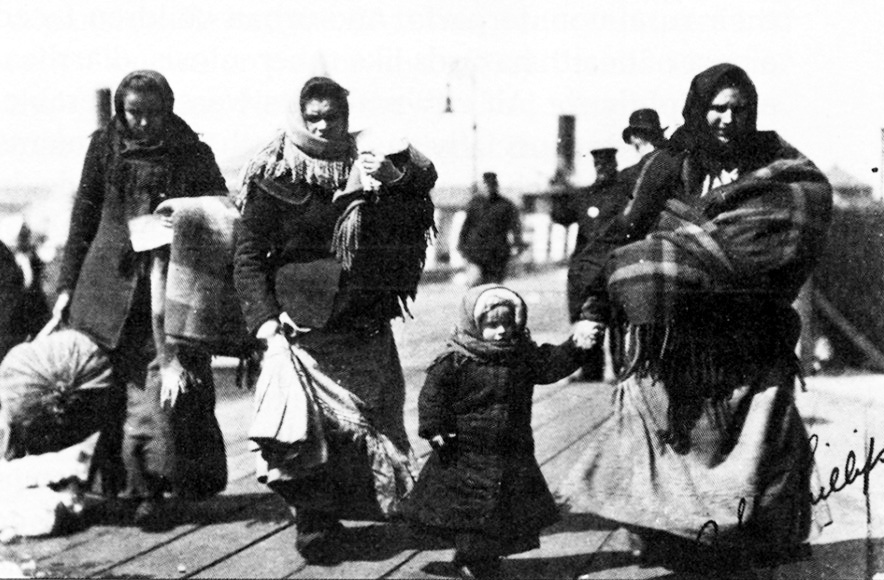
Eastern European immigrants entering New York

These are questions that my ancestors asked, back in the 19th century Europe of ever-narrowing restrictions and ever-more-violent pogroms.  I am here because they had the courage and the foresight to get away to safety before it was too late.

But now the safely cushioned existence that so many of us have enjoyed here in the U.S. and other privileged enclaves on the planet is threatened by a crisis of our own making.

We didn’t realize that everything about our lifestyle, politics and ideology would contribute to the downfall not just of American empire, but of human civilization itself.

We didn’t realize what a deadly game we were playing.

But we can no longer plead ignorance.

Unlike our predecessors, we 21st century folk are going to have a very hard time finding any place to go that is safe, where we can ride out the climate shocks unscathed.

We can’t run, we can’t hide from the environmental shocks that are only just beginning to hit. 

We have to stay and see this through.

What that will mean I am not sure.  In part it depends on how many of us wake up now and begin to take some proactive steps towards reorganizing our society, before we’re reduced to reactive crisis control.

Our political system is locked in a kind of stasis from which there does not seem to be any forward movement possible—just endless round and round and round.

We must move forward—grow, evolve, adapt—if we are to survive.

Today I caught a glimmer of something new that may be the early stages of the kind of change we need to successfully weather the coming storms.

The International Organization for a Participatory Society (IOPS) is an emergent (or is it insurgent?) movement to create a decentralized, highly participatory catalyst for urgent social change.

It’s not clear yet whether it will be a flash in the pan or an idea whose time has come.

So far it has just over 2,000 members worldwide.

Including me.

Maybe it’s time to stop straddling both banks.  Time to take the leap and jump fully into new territory, both feet on the ground.