Will the Eagle and the Condor Land Together in the New Millennium?

At the Peace and Justice Studies Association annual conference, held this week at Tufts University with the theme “Anticipating Climate Disruption: Sustaining Justice, Greening Peace,” I presented a paper entitled “Changing the narrative and crafting alliances between Western and indigenous worldviews to create a sustainable global future.”

In it, I sketched out the standard Western triumphalist narrative of technological domination of Nature and the New World, starting with the voyages of Columbus and Darwin, continuing with the Manifest Destiny doctrine of the takeover of North America, and on into the present, where we continue to tell ourselves the story of living happily ever after in the brave new world established by the subduing and harnessing of the natural world, the routing of resistance, and the triumph of a technologically advanced global civilization.

Given that the premise of the conference theme anticipates serious climate disruption that will take the story to a very different, and much less rosy kind of conclusion, it’s clear that we need to start telling ourselves stories that reflect a different kind of understanding of our relation as humans to the natural world.

The kinds of stories we need to embrace are not new; in fact, they are ancient. I believe that the indigenous peoples left on the planet, who have survived the intense onslaught of Western culture over the past 500 years, are in the best position to survive the coming cataclysms, and to teach us how we can survive too. We just need to start listening to the stories they tell, rather than remaining spellbound by our own Western narratives.

I shared with the audience the voices and visions of two indigenous elders, Rigoberta Menchu Tum of Guatemala and Malidoma Some of Burkina Faso, who have both spent much of their adult lives reaching out to Westerners, trying to get us to see our relation to the natural world in a more holistic, less destructive way.

Rigoberta Menchu

Menchu, who won the Nobel Peace Prize in 1992 and ran for President of Guatemala in 2007, was a leader in the pan-indigenous drive to get the Declaration of the Rights of Indigenous Peoples ratified by the General Assembly of the United Nations, which it finally was in 2007.  She has worked tirelessly to promote the rights and improve the living conditions of the indigenous peoples in Guatemala, who are a majority in that country, but have little national political representation or power.

Central to Menchu’s political activism is her Mayan understanding of the importance of ecological balance.  “An indigenous people’s cosmovision is centered on their relationship with Mother Earth and Mother Nature,” Menchu says.  “In contrast, the majority of the world doesn’t give it a thought, doesn’t know what the source of life is.  They pollute the earth and do more and more damage.  One day the earth will exact a price for this disdain and destruction. When this happens, we will see that the earth is not just good and bountiful, it can also be vengeful.

“Indigenous people see Nature as a living mother, not as an inert organism that would allow itself to be destroyed,” she continues.  “All those who violate its laws must accept the consequences, because it is alive and will react. My grandfather always used to say that the day human beings violate our universe, they will receive signs and messages.  These messages will be very forceful, and will bring severe punishment.”

These words of Menchu’s come from her second book, Crossing Borders, in which she tried to reach out to the non-indigenous world with a challenge to the dominant narrative of “development,” which has been so terribly damaging not only to indigenous peoples, but to the ecological web of life itself. As she remarks bitterly in the book, “I often wonder why people criticize the Aztecs for offering human sacrifices to their gods while they never mention how many sons of this America…have been sacrificed over the past 500 years to the god Capital.”

These biting words would no doubt resonate with Dagara shaman Malidoma Somé, who was taken as a child by Catholic missionaries to be educated at their school some hundred miles from his village, and was not allowed to go home to visit his family or village for 20 years.

Malidoma Some

On the point of being sent to France to finish his Catholic education, he rebelled and ran away from the missionary school, somehow finding his way back to his village on foot, unaided.  Once there, he insisted that he be given the initiation he had missed out on, and he started on the path to becoming a traditional shaman, or healer.

His healing practice has taken the form of trying to reconnect Westerners with the indigenous knowledge that our culture long ago left behind and rejected as “primitive.”  Malidoma, whose name means  “he who makes friends with the stranger/enemy,” spends much of his time in the U.S. and traveling around the world, guiding groups of Westerners into a different kind of understanding of self, community, and natural world.

Both Menchu and Malidoma stress that they do not reject all of Western technology —just the way it has been used, and the narrative vision that guides and undergirds it.  “What indigenous and Western peoples have in common is the desire to understand the intricacies and complexities of the world we live in, and to harness the power of nature for certain practical purposes,” Malidoma says in his book The Healing Wisdom of Africa.

“Where we have taken different routes, however, is the context within which we have developed our technologies and the purposes for which we have used them.  In the West, technology is oriented toward industrial, commercial and military uses; among indigenous people, it serves to heal and help people remember and fulfill their purpose in life.”

Malidoma continues, “Individuals, as extensions of Spirit, come into the world with a purpose. At its core, the purpose of an individual is to bring beauty, harmony and communion to Earth.  Individuals live out their purpose through their work.  Thus the human work of maintaining the world, to indigenous people, is an extension of the work that Spirit does to maintain the pulse of nature.  The villager’s quest for wholeness is an extension of nature’s wholeness.”

Both Malidoma and Menchu describe a human relationship to the earth rooted not in dominion and conquest, but in a cyclical give and take that takes ecological balance as a core value.

I believe that theirs is the vision that must animate the narrative arc of our future as a species on the planet, if we are to survive the environmental challenges that are speeding towards us now.

The good news is that though you won’t find much about this in the mainstream media, there is a quiet but forceful movement building on several fronts that is heeding the call to craft a different kind of human life story.

There is the Transition Town movement, which is imagining communities that are less dependent on multinational corporations, and more interdependent as individuals and cooperatives working together to meet needs on the local level.  And there is the Pachamama Alliance, which I talked about in my Tufts presentation, which has been partnering with indigenous peoples to, as they put it, “change the dream” of Western-style domination, development and destruction.

The Pachamama Alliance is quite remarkable in that it sees itself as a solidarity movement guided by its indigenous partners, the Achuar and Shuar peoples of the Amazon rainforest in Ecuador.  It grew out of the connection with indigenous shamans established by John Perkins, who began in the 1990s to bring small groups of Americans and Europeans into the Andes and the rainforest to meet with indigenous shamans to learn a different way of understanding our relationship to the natural world.

Ecuador is one of the most beautiful places on earth, but is also one of the places that has been most devastated by the plundering of oil companies, specifically Texaco and Chevron.  Millions of acres of rainforest have been polluted by oil spills and the byproducts of unregulated drilling—and a landmark case has just been won against Chevron, ordering the company to pay $18 billion in damages to Ecuador for a clean-up.  The case is still in litigation, and meanwhile the people there are coming down with cancers and birth defects in astronomical numbers.  It is truly a place where you can see the worst conclusion of the Western narrative of development in action.

But it is also a place where another story is being told, and broadcast out into the world with increasing urgency.  It is a story that has been told by indigenous peoples of South America and beyond for hundreds of years.

According to the ancient prophecy of the Eagle and the Condor, which animates the work of the Pachamama Alliance, we are at a moment in history when the Eagle – representing intellect and the mind – and the Condor – representing wisdom and the heart – must come together to ensure the continued existence of humankind.

The human intellect and heart must realize that without the natural world we are nothing.  All the computers and synthetic chemicals and megawatts of electricity in the world will not enable us to survive in a world without plants and insects and animals.

It is that simple, and we know it scientifically, but we have not yet absorbed it in our hearts, and put our knowledge into practice in a different way of relating to the natural world.

So the question going forward, as Menchu so pointedly asked, is:

Will we sacrifice ourselves and most of the life forms currently on the planet to the great god Capital?

Or will we begin to understand wealth in a more balanced, ecologically sound way?

Will we have the strength to build a groundswell of resistance to the top-down hierarchies that hold such sway over our lives and the narratives we live by?

I believe we can do it.  I want to believe that we will.

Finding the fire in the belly to combat climate change

OK, I admit it, I fell asleep during the Presidential debate.

I got the lay of the land: the sober, restrained President; the overly aggressive, bulldog-style challenger; and poor Jim Lehrer, looking overly made up and rather frantic, trying to maintain order.

The truth is, I don’t like debates as a form of political discourse, especially not when we’re talking about something as important as who gets to hold the American presidency for the next four years.

This shouldn’t be decided on the basis of who is more aggressive at sniping at the opponent.

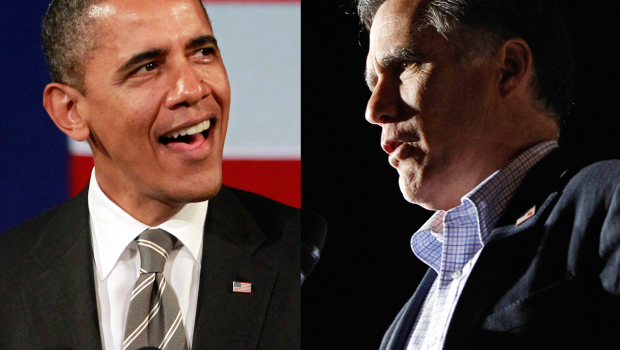
Pundits were quick to fault President Obama for not displaying sufficient fire in the belly, and I have to agree, I would have liked to see him put his rapier wit to better use.

But can we say that Mitt Romney “won” the debate simply because he showed more aplomb at throwing around inaccurate statistics?

Who do you want as your President, the man who can keep his cool and who believes in telling the truth, or the man who is all bombast and blather, and is quite comfortable with stretching the truth as need be?


The elephant in the room of this debate, and I suspect in the next debates as well, is climate change.

Neither candidate wants to talk about it, although it’s true that Romney is Mr. Fossil Fuel, while Obama is a tad more amenable to alternative energy.

All the projections about deficits and economic growth, etc etc ad nauseum, will be totally moot when and if the earth’s atmosphere goes way out of balance.  And all indications are that this is already happening, faster than anyone expected.

What we should be doing now is preparing for a brave new world that we have brought upon ourselves.  A world of violent storms, droughts, floods and wildfires, a world of acidified, dying oceans and rainforests turned to deserts.


No, this is not science fiction, this is real, and it’s already happening.

What we desperately need is a politician who will dare to stand up and tell the truth about where we’re heading, and the truth about what needs to be done to head off total catastrophe.

Obviously, neither Romney nor Obama is that leader.

Are we going to simply follow them over the cliff of climate change?


Although it may be hard to recognize, we do have other choices.

All involve taking the risk of stepping further off the beaten path. The lifestyle that most of us Americans were raised to see as normal is, in fact, a big part of what has brought the entire world to the brink of disaster.

We have to change.

And if we can’t find any leaders to show us the way, we have to do it ourselves.

Look into your heart and try to hear the deep, wise voice that lives there.

We know what to do.  It’s just a matter of summoning the courage to actually take those first baby steps into a new world.

Enough Political Reality TV: Time to tune in to the planet

I tuned into the Democratic National Convention (DNC), thinking I’d catch a few minutes of the action before going to bed, and I was quickly entranced by the spectacle.

This, of course, is what political conventions are all about.  They’re a great primetime opportunity to dazzle the video-feed audience, and energize the base.

Deval Patrick

I enjoyed watching Deval Patrick, governor of my home state of Massachusetts, give a moving speech focusing on the right of all children to a good education.

I loved meeting a rising political star, Mayor Julian Castro of San Antonio, Texas, who was winningly introduced by his identical twin brother, state Representative Joachin Castro, currently running for a seat in the U.S. House of Representatives.

The Castro brothers are handsome, talented, and are buoyed by a classic American success story, coming from a poor background, working hard in school, winning scholarships to Stanford and Harvard Law, and moving on and up into politics.

Julian and Joaquin Castro

Who wouldn’t be charmed?

Michelle Obama

And then there was the woman we were all waiting for, First Lady Michelle Obama, looking tall, muscular, vigorous—and very beautiful.

Mrs. Obama was introduced not by a politico, but by an “ordinary woman,” a military mom with four sons serving in four different branches of the U.S. military, and a fifth still in high school, bound for the U.S. Coast Guard.  It was moving to hear her tell of how she had written to Michelle and been invited with her husband to the White House, to receive the Obamas’ thanks for the service their family provides to our country.

And it was moving to hear Michelle roll out the by-now familiar story of her humble family background, and how her parents’ hard work enabled her and her brother to go to college and on to graduate school, where she met Barack—himself a scholarship boy who chose to work as a community organizer in Chicago rather than take a high-paying job as a corporate lawyer in New York right out of law school.

Who wouldn’t enjoy hearing Michelle praise her husband as a father, a partner, and a dedicated professional, who truly cares about his country and ran for office not for the glory but because he believed he could make a positive difference?

I came away from the couple of hours of speeches with just the feel-good sensation the scriptwriters had worked so hard to achieve.

But that’s the problem.  It all felt too scripted.  Too perfect.  Too much like entertainment—maybe some kind of weird political reality TV show.

I didn’t watch the Republican National Convention, so I can’t compare and contrast the two, but from all I’ve read about it, it was more or less the same in form, if not in content.

The DNC emphasized the multicultural, hardworking, can-do ethos of the 99%, while the RNC emphasized the white-skinned, inherited-wealth, party-animal ethos of the 1%.

If those are my choices, I clearly belong with the Democrats.

But I can’t help but wonder what I’d see if the Green Party were able to have a  primetime convention opportunity like this.

Of course, the Greens probably wouldn’t even want to put on a big expensive consumerist circus typical of our American political conventions, so wasteful of energy and resources.

Stein and Honkala

Looking at the Green Party platform of Presidential hopeful Jill Stein and her running mate Cheri Honkala, it’s clear that  the Green Party would not just talk about personal rags-to-riches stories of success, but about the structural barriers that keep the 99%–or at least, let’s say, the bottom 50% of our population—locked in generational cycles of poverty and unfulfilled promise.

They would not just repeat the monotonous mantra of jobs creation, but would talk about the most daunting issues facing us today.

The tsunami of climate change that is like the elephant in the room of American politics.

What good will a better K-12 education or the promise of a job be if our climate becomes so compromised that food shortages become rampant?

I want to hear a politician talk candidly about the stranglehold that the chemical companies and the fossil fuel industry currently has on our children’s future on this planet.

I want to hear a politician who is not afraid to talk about the effects we can expect from the rapid melting of the ice packs at the poles.

A politician who is committed to building local resiliency, rather than continuing the death march down the road to globalization, which benefits only the corporate elite and the finance wizards who serve them.

Is Jill Stein that politician?

I wish I knew.  The problem is that I have to work pretty hard to find out what she’s all about.  And that makes me worry that she, and the party behind her, just don’t have the strength to compete in our political gladiators’ ring.

Perhaps it’s time to acknowledge that we are not going to find a political messiah who can part the seas and lead us to safety.

No one person, or even one party, can do that.

We individuals have to assume responsibility for our collective, interdependent future, and begin working harder in our own spheres, where we can have the most impact.

It matters who sits in the White House.  I believe the Obamas should get another four years, and hopefully a saner Congress to work with as well.

But it matters just as much what we do in our own states, cities and towns, with or without federal aid.

Mayor Castro and the Governor Patrick and Michelle Obama have been remarkable for working hard to make a difference at the local level.

Thanks to Michelle’s efforts, my son now has a mandated healthier lunch, with no sugary drinks or white bread allowed.

Governor Patrick continues to stand by our Massachusetts state health care program, one of the best in the nation (instituted under Mitt Romney, who now, to please his billionaire buddies, disavows it).

Massachusetts is working on alternative energy sources like wind and solar, with incentives for local municipalities and individuals to convert.

We need to continue to build community resilience and mutual support as we move into the brave new world that awaits us.

It is the only way we are going to make it through the coming climate-driven catastrophes.

We’ve got two more nights of DNC speeches ahead.  Is anyone going to acknowledge the climate elephant in the room, move us out of the polished entertainment arena and speak frankly to us about what’s ahead, and how to pull together to get through it?

American insanity

I admit to a feeling of dejection at being back in the USA again.

Same old callous attitude towards women vomiting out of the Republican Party (“legitimate rape,” my ass!).  Same old desperate pleas for money from the Democrats, who are forced to beg for funds from small fry like me to try to compete with the billionaire Republican funders.  Same old blithe disconnect between the reality of climate change (drought, anyone?) and the steady roar of the fracking drills in Pennsylvania and the oil rigs in the Gulf of Mexico.  Shrimp and fish turning up grotesquely deformed by tumors, eyeless and burned, for hundreds of miles around the BP spill.  Whatever.

Not that things were paradise in Canada.  The crash of the fish populations there is alarming, and they too are involved in the dirtiest of business in the Alberta boreal forest (which I refuse to call by the euphemism “tar sands,” implying as it does that there’s nothing there worth saving).  They clearcut forests and pollute rivers and all the rest of it.

But from just a few weeks of tuning into the media there, I can tell that there is much more clarity and focus there on environmental issues.  Every single issue of the Halifax Chronicle Herald has at least one article, and usually several, about energy or agricultural or fishery policy in relation to climate change.  They are actually working towards meeting the goal they set for themselves of generating 15% of the nation’s energy needs by renewable means by 2020, and many are calling for a more ambitious target.

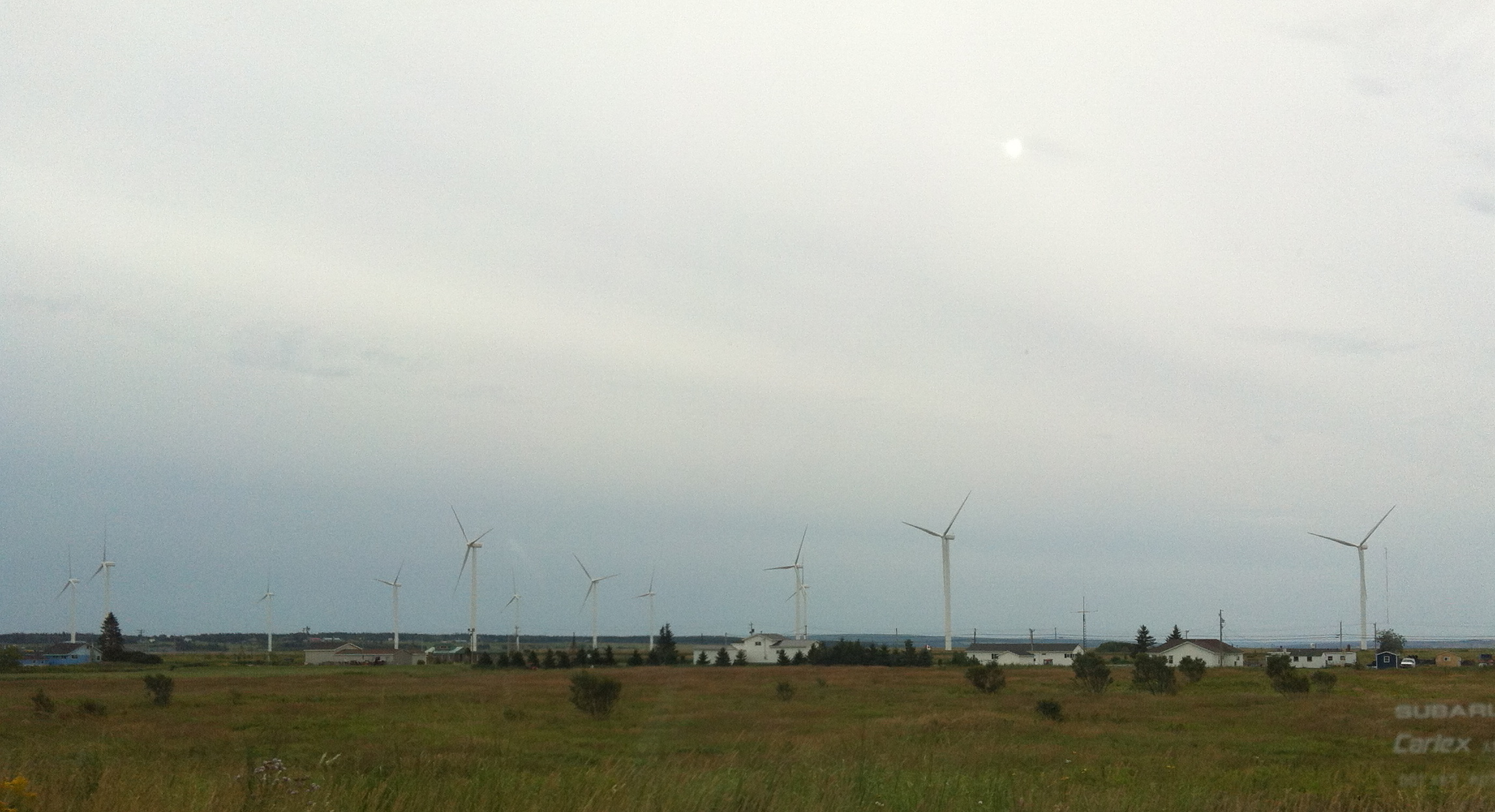
Coming across the land bridge into Nova Scotia one is now greeted by a newly erected forest of huge wind turbines, and there are water turbines churning in the nearby waters of the Bay of Fundy, too.  Many more are in the works.

Although there is political strife in Canada, such as has boiled up in Quebec in recent months, there is none of the viperous, self-destructive attack politics that goes by the bland name of “the election year cycle” here in the States.  Politicians campaign on the issues rather than on smearing and sniping at each other. Voter turnout is about 60%, as compared to the dismal 40% in the U.S.

Why do so many people feel disengaged, disillusioned, and disgusted with politics here in the U.S.?  Why do we feel like no matter how we vote, our values will not be reflected in Washington?

Because it’s true.

I happen to believe that Barack Obama shares my values.  I believe he is a genuinely caring, ethical man who sincerely wants to create a country in which politicians collaborate rather than backstab each other; in which government and corporations serve the public good; in which the goal of economic activity is raising all boats, rather than creating a few luxury liners for the richest 1% of Americans.  I believe he’s a good man.

And yet, he has been unable to make a dent in politics as usual in Washington.  The Republicans have shown repeatedly that they are the party of the wealthy boardrooms of Big Business and Big Finance, and since they own so much of the news media, and so many think tanks, and so many political seats, including Supreme Court seats, well, they can do as they wish and everyone else be damned.

I have noticed a certain grim set to Obama’s jaw in the last year, as the reality of his fly-in-the-web position has sunk in.  He knows that even if he wins re-election, he will be foiled at every turn.  And it doesn’t help that it’s getting harder and harder for him to inspire his base—people like me who are beyond frustrated with the status quo, and no longer believe he and his team can make a change.

When I get those daily emails from Democratic headquarters pressing me to donate to the campaign (just $12!), and then I hear about how the Koch brothers are donating millions to the Romney campaign, the little sprout of hope that springs eternal in me just starts to wither.

Yes, if 100 million Americans donated $12 to Obama it would make a big difference.  But frankly I would rather see some savvy crowdsourcing through social media, with the goal less raising money to burn up on TV than getting more people out to the polls on election day, and empowering ordinary Americans to rise up and insist on real representation in Washington.

I am not interested in betting on the horse race.  I can’t sanction the wasteful spending of huge sums on campaigning, while our planet burns and billions of people are locked in poverty.

Romney will be bad—very, very bad—for the health of the environment and all living things, including humans.

He, and all the slimy bastards who prop him up, must be defeated.

But this battle is about much more than just one country’s Presidential race.  It’s about our future on this planet.  A vote for Romney is a vote for business as usual, and then some—drill, baby, drill.

Why is it that so many Americans are so suicidal?

Maybe we need some collective social therapy more than anything else.

It really does seem that as a nation, we are insane.

Taking the Leap into a Better World

Lately I’ve been feeling like I am straddling two banks that are rapidly moving away from each other, leaving me performing ever more of a balancing act in the middle of a rushing stream.

One foot is still hanging on to the familiar dry land on which I was born and bred: the safe, predictable world of a privileged existence within the capitalist empire, where every problem has a technological solution, all needs are met, and there is nothing really to worry about, beyond what to have for dinner, or where to go on the next vacation.

This is the world in which I am a true-blue Democrat, I pay my taxes without question, and I work hard in expectation of an eventual pleasant retirement.

But I also have a foot in quite another realm, one that is still quite foreign to most of my peers.

In this other, parallel universe, security and predictability are rapidly becoming a thing of the past, as the weather turns ever more erratic, leading to food shortages and a survivalist mentality.  Clashes between unarmed protesters and heavily armed police are common, with the protests mainly concerning lack of basic food and supplies.

No one knows where this is all heading, but it does not appear to be anywhere positive. The elites have hidden themselves away in their own privately funded strongholds, and other than the military folks it does not seem that anyone is really in charge.

Most people I know are clinging to the first bank, even though it’s beginning to seem ever more unstable, as if beset by internal tremors that are slowly but surely breaking it up. They are positioned like Walter Benjamin’s Angel of History, looking resolutely backward, away from the chaos of the future.

I don’t know why I am unable to join them in their denialist party.  It sure looks like a good time.

But having become aware of the crisis through which we’re living, I can’t just turn a switch and pretend I don’t know what’s going on. The second bank is like a mirage that is slowly coming into focus, no matter how much I try to turn away and not look.

I’ve spent long enough studying narratives of social upheaval and moments of violent crisis to know one when I see it coming.

A recent article in the New York Times Sunday Review provided an unusual window into the curious calm before the storm of all-out societal dissolution—in this case, the unfolding Syrian civil war.

The author, Janine di Giovanni, begins with a series of questions: “What does it feel like when a war begins? When does life as you know it implode? How do you know when it is time to pack up your home and your family and leave your country? Or if you decide not to, why?”

When does life as you know it implode?

When is it time to pack up and leave?

Where can we go to find safety?

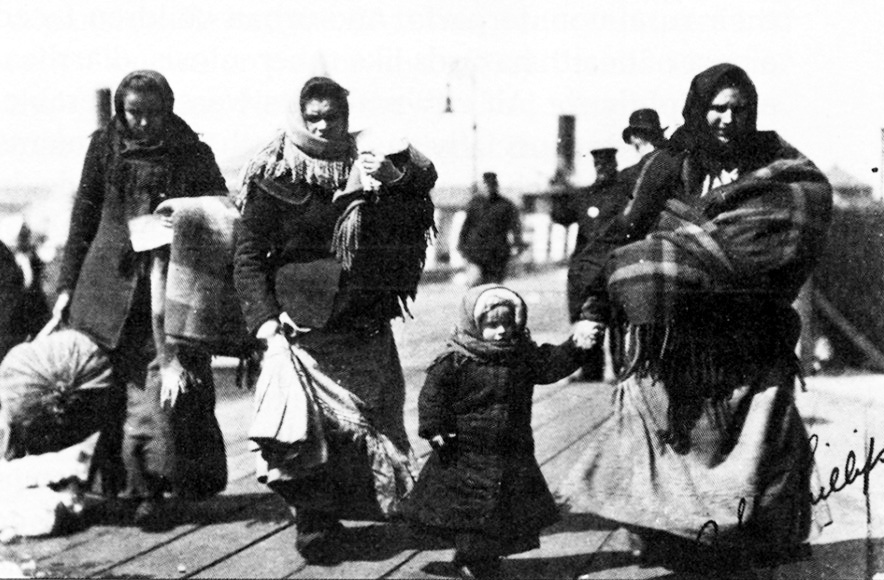
Eastern European immigrants entering New York

These are questions that my ancestors asked, back in the 19th century Europe of ever-narrowing restrictions and ever-more-violent pogroms.  I am here because they had the courage and the foresight to get away to safety before it was too late.

But now the safely cushioned existence that so many of us have enjoyed here in the U.S. and other privileged enclaves on the planet is threatened by a crisis of our own making.

We didn’t realize that everything about our lifestyle, politics and ideology would contribute to the downfall not just of American empire, but of human civilization itself.

We didn’t realize what a deadly game we were playing.

But we can no longer plead ignorance.

Unlike our predecessors, we 21st century folk are going to have a very hard time finding any place to go that is safe, where we can ride out the climate shocks unscathed.

We can’t run, we can’t hide from the environmental shocks that are only just beginning to hit. 

We have to stay and see this through.

What that will mean I am not sure.  In part it depends on how many of us wake up now and begin to take some proactive steps towards reorganizing our society, before we’re reduced to reactive crisis control.

Our political system is locked in a kind of stasis from which there does not seem to be any forward movement possible—just endless round and round and round.

We must move forward—grow, evolve, adapt—if we are to survive.

Today I caught a glimmer of something new that may be the early stages of the kind of change we need to successfully weather the coming storms.

The International Organization for a Participatory Society (IOPS) is an emergent (or is it insurgent?) movement to create a decentralized, highly participatory catalyst for urgent social change.

It’s not clear yet whether it will be a flash in the pan or an idea whose time has come.

So far it has just over 2,000 members worldwide.

Including me.

Maybe it’s time to stop straddling both banks.  Time to take the leap and jump fully into new territory, both feet on the ground.

Love in the end times

The political horserace in American politics has begun, with both Presidential candidates running full-tilt but ponderously towards each other like armored knights on horseback, wielding the lances of millions of dollars’ worth of attack ads and backed up by slick, smart campaign pages.

Meanwhile, it continues to be hot, hotter and unbearably hot here in the Northeast.  It was a blessing to wake up this morning to a brief soaking rain, breaking weeks of drought.

But there is no way to fool myself into hoping that things will go back to normal, weather-wise.

As many people have been saying lately, this is the new normal.

Just as we’ve gotten used to a political climate in which it’s normal for a Presidential candidate to hide his tax returns, refuse to comment on moving his millions into off-shore tax havens, and totally repudiate everything he once stood for in order to lick the shoes of his political bosses, we’re going to have to get used to a climate that lurches from one extreme to another–from blizzards to heat waves, from floods to droughts.

Those extremes also characterize the new economic normal.  These days, I’m having trouble convincing myself that the global economy that has been built up over my lifetime, since the end of World War II, is ever going to be able to function in such a way as to provide security and prosperity for the majority of the world’s people.

Maybe it never did.  There has always been a vast underclass of the disenfranchised, for whom globalization was just another name for displacement, oppression and exploitation.

The difference is that now we’re seeing a huge spike in the ranks of the poor right in the heart of what used to be called the First World—right in our backyards.

For a middle-class earner like me, it is getting harder and harder to make ends meet, and there are no substantial raises or bonuses in sight.

For the millions who are unemployed or under-employed or scraping by with under-the-table jobs in the informal economy, this new normal has got a distinctly  Dust Bowl feel to it.

Jill Stein and Cheri Honkala

The Occupy encampments have faded away, victims perhaps of effective police surveillance, infiltration and undermining.  The only Presidential candidate who has any new ideas to offer about improving the economy is the one we never see or hear on prime time, Green Party candidate Jill Stein, along with her running mate Cheri Honkala.

Most people aren’t saying much about the panic that runs like a live wire through their interior lives.

We are trying to enjoy this hot summer in the usual ways: going to the beach, having barbecues with friends and family, taking in a nice air-conditioned movie now and then.

But every once in a while a voice will break through our heat-addled stupor, crying to us to Wake up, wake up, before it’s too late!!

So, for example, we hear marine scientist Roger Bradbury shouting out from the Opinion Pages of the New York Times today, telling us to pay attention now, in these crucial last years before the planet’s entire coral reef ecosystem collapses, setting off a chain reaction of events that may very well include the starvation of millions of people, particularly in the tropics, who depend on the ocean for food.

Bleached coral

“Overfishing, ocean acidification and pollution are pushing coral reefs into oblivion,” Bradbury says. “What we will be left with is an algal-dominated hard ocean bottom, as the remains of the limestone reefs slowly break up, with lots of microbial life soaking up the sun’s energy by photosynthesis, few fish but lots of jellyfish grazing on the microbes. It will be slimy and look a lot like the ecosystems of the Precambrian era, which ended more than 500 million years ago and well before fish evolved.”

Bradbury advocates “an enormous reallocation of research, government and environmental effort” towards the “ecological engineering” necessary “to make the economic structural adjustment that communities and industries that depend on coral reefs urgently need.”

Even though Bradbury aims to be pragmatic and forward-thinking with his wake-up call, I still wonder if he’s living in a dream world.

Governments and the United Nations can’t even agree on basic protocols to begin to cut carbon emissions and pump up our renewable energy industries.  They don’t appear to give a damn about the hundreds of millions of poor, hand-to-mouth folk who are already being hard hit by climate change pressures, and they are not even willing to act when it comes to trying to assure the safe passage of the elites into the Anthropocene, air conditioners and all.

What should we be doing in these end times?  Where should we be putting our energies?

Not in the political side show of the Presidential race.

Not in the mindless distractions of our media-saturated cultural environment.

No, I believe we need to do two things above all as the world warms and our precious days of “normal” existence come to a close.

One: stay close to friends and family; strengthen the bonds of community.  We will be needing each other more than ever in the times ahead.

Two: Try to stay in the present moment as much as possible.  We humans are very good at casting our minds forward into the future, but in this case, the scenarios are only going to be pushing our panic buttons.  It’s important to stay calm and focused.

Tend the parts of the earth you can reach.  Keep your love flowing.

Floods, drought: the Earth needs us now

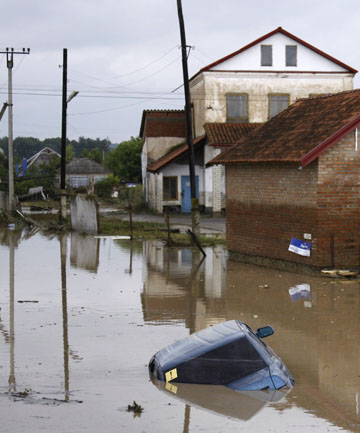
floods in southern Russia

I could hardly believe it when I read in the paper today that major floods in Russia have caused nearly 200 deaths this week.

Floods?

It is bone dry here in the hills of western Massachusetts.  It is so dry that if I did not water my vegetable garden every day, all my beautiful plants would be drying up in the merciless drought.

When I walk by the half-dry river in the afternoons, I am struck by all the yellow and brown leaves on the path—the forest has the golden cast of September now, the dry spell fast-forwarding us from mid-summer to fall.

The first veiled hints of trouble have made their way into the mainstream media, with crop losses due to drought expected to push up the prices of food in the U.S.

Barely a mention of shortages yet.  No rationing.  Just higher prices, which will make it harder for those of us on fixed incomes—not to mention all the unemployed—to afford to buy what we want to eat.

Clearly there is a shocking imbalance between the torrential rains in Europe and the parched drought here in the US.

Clearly it’s anthropogenic climate change rearing its scary hydra head.

I have heard tell of Native Americans calling on the rain gods to bring rain clouds to a dry landscape.

Our own techno-engineers talk about seeding the clouds to provide rain.

In both cases, it’s a matter of human beings applying our great brain power to find solutions to problems that threaten our existence.

Each of us has some gift to contribute to the common cause of survival—remembering that the survival of human beings is entirely intertwined with the survival of every other life form on the planet, from plankton to trees to bees.

Truly, this is no time to wait shyly on the sidelines to be invited, or to wait for others to take the lead.

As the saying goes, we are the ones we’ve been waiting for. If ever a time called for brilliant and dramatic solutions, that time is now.

Looking Forward with Orion Magazine

The spirit of Henry David Thoreau was in the air last week at a gathering at his old stomping grounds at the top of Mount Greylock, the tallest mountain in Massachusetts, hosted by Orion Magazine to celebrate the launch of its new anthology, The Thirty Year Plan.

Keynote speakers at the event were Orion contributing writers Ginger Strand, Elizabeth Kolbert and Bill McKibben, all of whom seemed to have a common concern on their minds as they looked into the future: climate change.

Thoreau’s legacy of using writing as a vehicle for civil disobedience is a mantle that all three writers have already assumed, particularly McKibben, who is very much following in Thoreau’s footsteps in going beyond simply writing about activism to actually standing at the forefront of a growing activist movement.

Characteristically, McKibben wasted no time in reminding his listeners that it’s high time for decisive action in the quest to transition our global economy off fossil fuels.

“It’s not enough to go around changing lightbulbs or even buying hybrid vehicles,” he said.  “Individual change won’t do it, the math doesn’t add up.  We have to change the price of carbon to reflect its true cost to our environment.

“We will never be able to match ExxonMobil and the other fossil fuel corporations in money, but we do have people power, and we have to use it.  A lot of you are going to have to come down to Washington DC and get arrested with me!” he said to applause.

McKibben also suggested using the shareholder pressure that was successfully applied against apartheid in South Africa back in the 1980s, but this time putting pressure on the fossil fuel industry to reinvent itself as a renewable energy industry based on wind, solar, hydropower and geothermal.

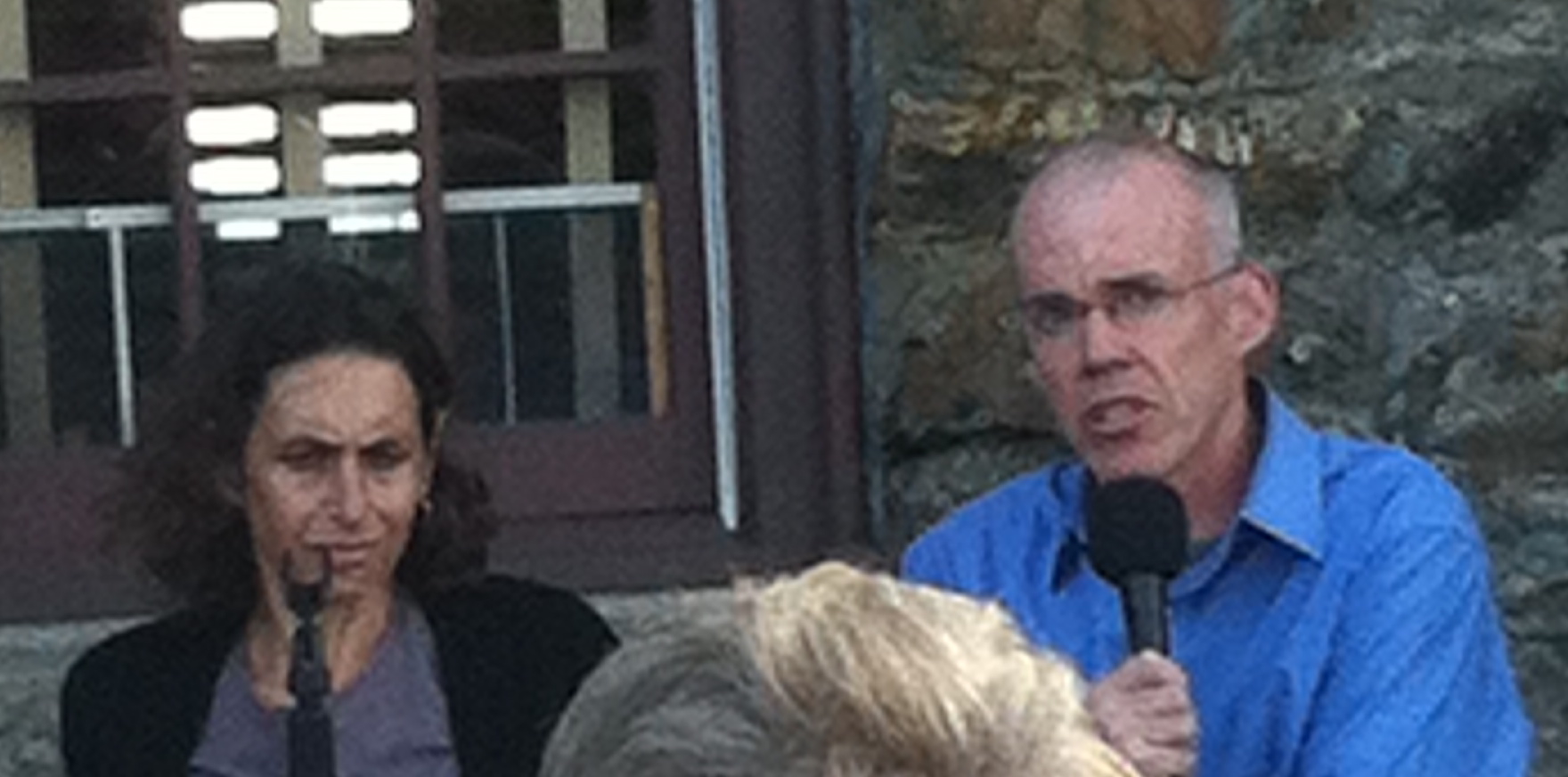
Elizabeth Kolbert and Bill McKibben speaking at Bascom Lodge, Mount Greylock, mA

The Beauty of Renewable Power

 From the top of Mount Greylock there is a striking view of eight huge spinning wind turbines on a ridge not far away, over by Jiminy Peak.  Wind power has become controversial in New England, with some towns and neighborhoods arguing vociferously against the location of wind turbines in their backyards.

In Massachusetts there has been great opposition to the proposal to build a windfarm out in Nantucket Sound, and here in the Berkshire hills we have also had many people of the NIMBY mindset.

When asked to comment on the prospect of wind turbines being set up on mountaintops in wilderness areas, Bill McKibben was unequivocal.

“I love the wilderness as much as anyone, and I’ve spent a lot of time out in the Adirondacks, as far away from it all as you can get.  But I’d have absolutely no problem with a wind turbine being set up overlooking my favorite patch of forest,” he said.

“The real threat to the places we love is fossil fuels, not wind towers,” McKibben said, adding that he has little sympathy for Americans who complain about wind towers being unattractive.

“Our sense of what’s beautiful is going to have to change,” he said.  Wind turbines located in Vermont or Massachusetts force people living in these exclusive areas to see the results of our impact on the climate, McKibben said, unlike our usual practice of making people in other parts of the planet—the Maldives, or Bangladesh, or the mountaintops of Virginia, for example—do all the suffering.

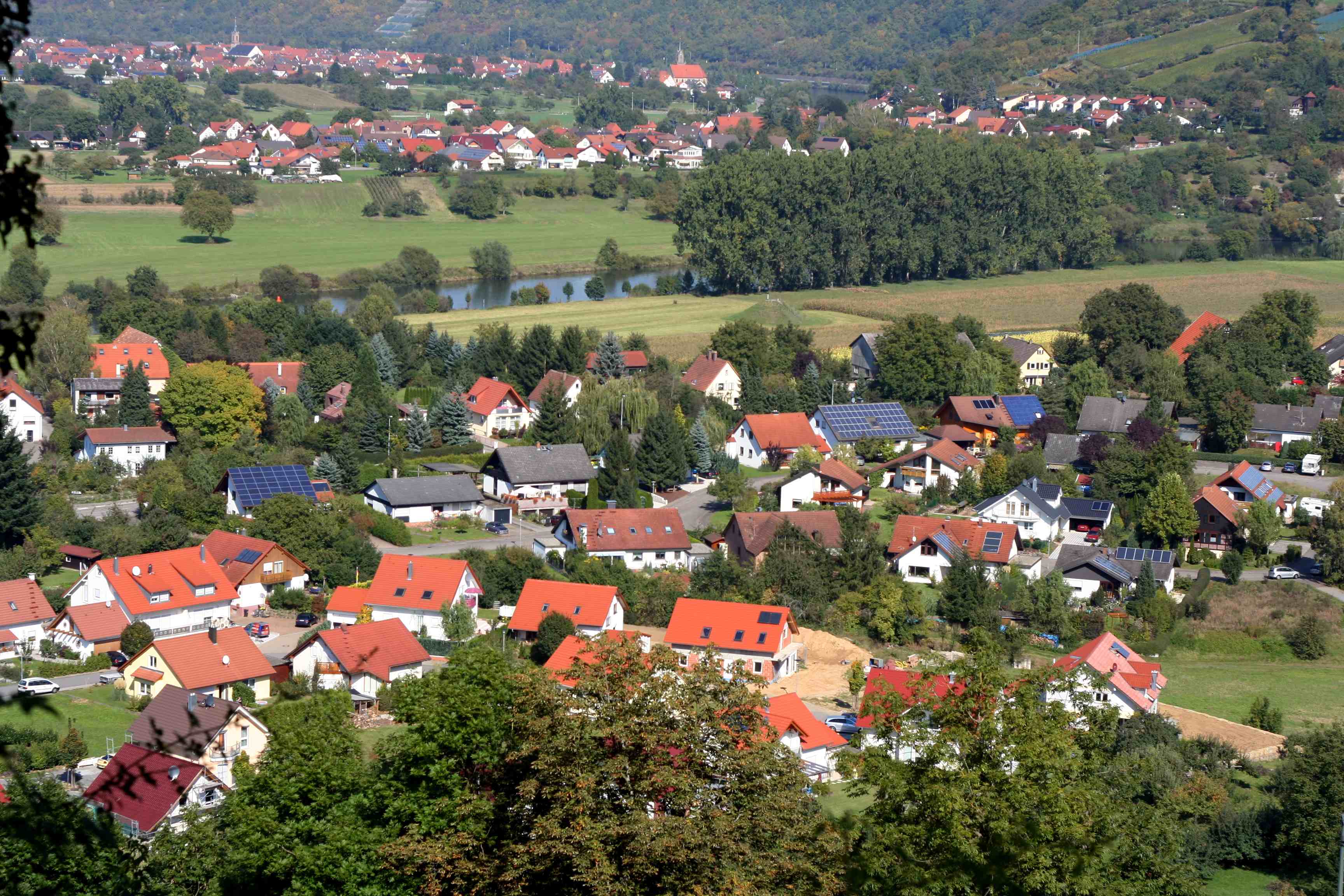
Emphasizing that the technology already exists to shift to renewable energy, McKibben pointed to the fact that Germany is already breaking records with its distributed solar energy model.

In May, German solar plants produced a record 22 gigawatts of electricity in two days, equal to the output of 20 nuclear power plants.

According to a recent Reuters article, “Germany has nearly as much installed solar power generation capacity as the rest of the world combined and gets about four percent of its overall annual electricity needs from the sun alone. It aims to cut its greenhouse gas emissions by 40 percent from 1990 levels by 2020.”

Solar panels sprout on roofs in Heidelberg, Germany

The Challenge of Getting People’s Attention

The contributors to the Orion Thirty Year Plan vision agree that the challenges we face in getting off fossil fuels are much more socio-political than they are technical.

One of the questions that remains intractable is how to get the public fully engaged with the issue of climate change, so that more people are willing to try Thoreau-style civil disobedience to force the politicians to do the right thing when it comes to regulating Big Oil—ending the subsidies on fossil fuels and giving incentives for the shift to renewable energy sources.

Elizabeth Kolbert said she was perplexed at the fact that she got a far greater response to a recent New Yorker article on child rearing than she generally gets on her much longer, more meticulously researched pieces on global heating.

“It’s something I think about a lot,” Kolbert said; “how to get people as interested in climate change as they are in raising their kids.”

Kolbert agreed with writers like Mark Hertsgaard, who suggested in his book Hot: Living Through the Next Fifty Years on Earth that it’s pathological to do the kind of intensive parenting Americans are known for while at the same time ignoring the biggest danger of all looming over our kids and grandkids: anthropogenic global warming.

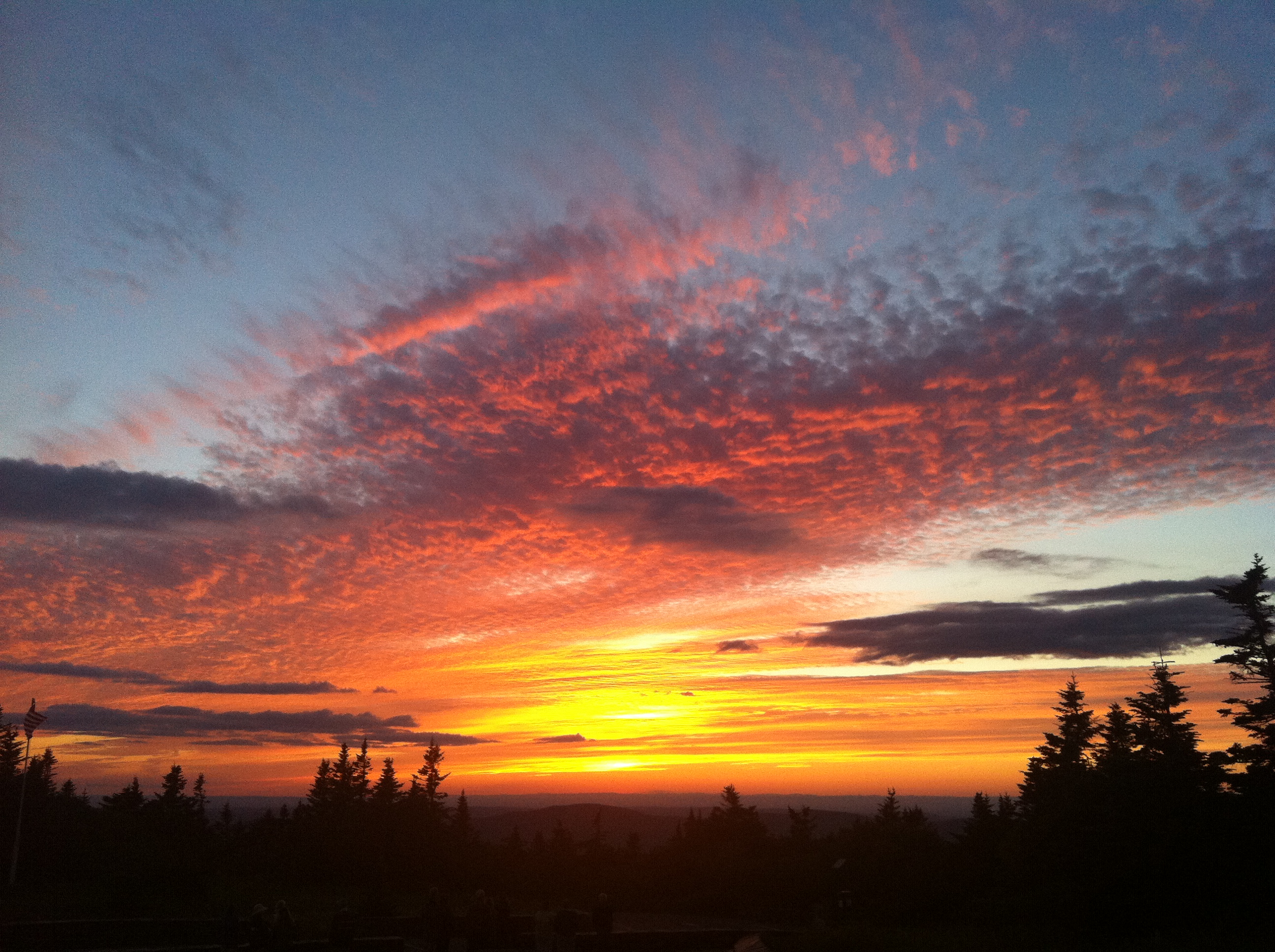
Sunset from Mount Greylock

As the sun began its spectacular descent towards the west side of the Greylock summit, and the assembled group went in to dinner and animated discussion at Bascom Lodge, it seemed to me that our charge was clear: to join leaders like Kolbert and McKibben in becoming change agents in our own spheres and out in the public eye.  We need to build a movement with a broad enough base of committed supporters to seriously challenge the entrenched power of the fossil fuel industry, as well as the massive inertia of the American public, which still has a tendency to imagine that life as we knew it growing up can go on for the next thirty years virtually unchanged.

Life will go on, with or without us humans.  But the story of our species does not have to end in disaster.  There is still time to write a new ending to our 10,000-year adventure on this planet, if we get up the courage and the dedication to get moving now.

What Good is a Higgs Boson When the Planet is Burning?

Call me sour, but I really can’t find much to get excited about by the news that physicists have moved one step closer to figuring out how the universe began.

Yes, the Higgs Boson is an amazing phenomenon.  “Without it,” writes Dennis Overbye in The New York Times, “all the elementary forms of matter would zoom around at the speed of light, flowing through our hands like moonlight. There would be neither atoms nor life.”

Yes, it’s an amazing feat, to which hundreds of scientists have dedicated their lives, to have actually nailed the elusive Higgs Boson in the giant particle accelerator built for that purpose.

But while the champagne corks are popping at the physicists’ convention in Melbourne Australia today, all the myriad problems confronting us physical beings still fester unchecked.

What good will it do us to understand how matter formed back at the beginning of the universe while we are succumbing to drought, wildfires, violent storms and floods?

What good will that marvelous particle accelerator do us when the climate is so disrupted that we can no longer rely on a steady stream of electricity, or a steady food supply to keep us going?

We really need all those super-smart people to pull their heads out of the air and start focusing much closer to our own time and place.

We need more scientists like Lonnie Thompson, who has spent the past forty years traveling to remote glaciers and mountain peaks all over the world to collect ice core samples that give us insight into climate change in the much more recent past—the last 10,000 years or so.

“Dr. Thompson,” writes Justin Gillis in The New York Times, “became one of the first scientists to witness and record a broad global melting of land ice. And his ice cores proved that this sudden, coordinated melting had no parallel, at least not in the last several thousand years.

“To some climate scientists, the Thompson ice core record became the most convincing piece of evidence that the rapid planetary warming now going on was a result of a rise in greenhouse gases caused by human activity.”

Do we really need any more convincing?

The latest storms to hit the U.S. struck the wealthy suburbs of Washington D.C., and surprise surprise, those Beltway folks were just as susceptible to power loss as the rest of us out in the hinterlands.  Forced to cope with triple-digit heat with no air conditioners, their sweat smells no sweeter than ours.

Likewise, the wildfires out West are burning up the homes of the wealthy as fast as they’re burning the millions of acres of dead trees decimated by the surge in the pine bark beetle population, another gift of warmer weather.

Wealth is not going to protect us from climate change.

Abstract particle physics is not going to mean a damn once the extreme weather really sets in, just a few short years from now at our current pace of greenhouse gas emissions.

We have the technology now to engineer a rapid shift to renewable energy sources that will immediately curb the pace of global heating to keep our planet livable.

If the greatest minds of our time trained their attention on this fundamental issue, I have absolutely no doubt that we could solve it.

And if the rest of us not only went along with the technological changes, but actively pressured our political representatives to enact policies that would force big business to do the same, worldwide, we could make sure that the new technology was broadly implemented, quickly.

Hell, it will be good for business! We are potentially at the start of a whole new age, where demand for brand new products like solar panels and geothermal pumps could keep factories running for decades.

We don’t need any more oil rigs or gas wells.  That way lies suicide, on a species-wide scale.

We cannot afford to waste any more time, or to allow ourselves to be distracted by anything less important than the urgent question of survival—our own, and that of all the beautiful life forms on this planet we love.

Let them eat crude!

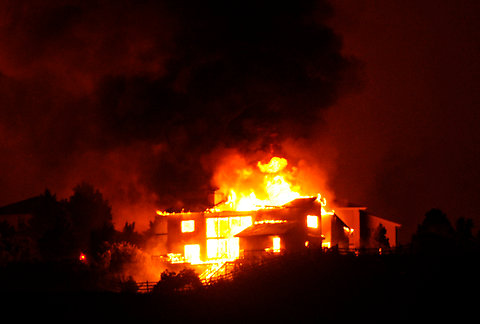
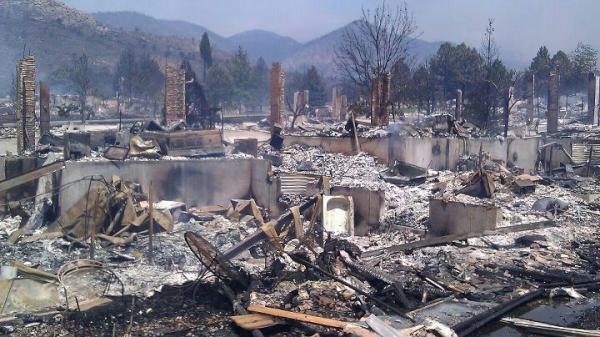
The wildfires burning through densely populated neighborhoods in Colorado this week are on my mind.

Fire burning in Colorado Springs June 26, 2012

I clicked a link about “how to help,” and found the familiar call for financial contributions to aid the dispossessed, as well as the firefighters.

No mention of the underlying cause of these fires—drought brought on by climate disruption.

No mention of how the real way to help would be to insist that our country start converting to renewable energy, immediately, to slow the relentless buildup of greenhouse gases and show international leadership that could be emulated by other nations.

Just send donations, so we can get back to business as usual ASAP.


***

Yesterday I was thinking about going cherry-picking at the local farm where I’ve been picking cherries every summer since I was a little girl.

Going on the website to check the orchard hours, I was aghast to discover that the entire crop had been ruined by a hailstorm last Friday—part of the cold front that broke the excessive heat we were sweltering under last week.

This week it’s been delightfully chilly here in Massachusetts. I love the cool weather, but my tomato plants sure don’t.

***

Is it so far-fetched to imagine a time when it’s impossible to rely on the steady, rhythmic progression of the seasons to bring us just the right sun and rain to grow our crops?

What will we do when the food shortages begin?

Let them eat crude!  ExxonMobil, Shell, BP and the rest will cry, as the climate guillotine puts our entire human civilization on the block.

We’ll be frackin’ whacked then, won’t we.