Scheherezades of the 21st Century

I have been following the progress of the Rio+20 UN Conference on Sustainable Development from a distance, feeling jaded about the process and the possibility of positive outcomes resulting from this gathering of diplomats and social engineers.  It’s good to see the lively and vibrant displays of people passion outside the gates of the conference, but the real question is, when will those gates come down?

Gar Alperovitz

At the Strategies for a New Economy conference earlier this month, veteran progressive economist Gar Alperovitz pointed to our time as the moment when enough people wake up and notice that something is wrong.

“This is a critical moment in history,” he said; “the moment when people realize something is gravely wrong and are willing to think outside the box to find solutions.”

Alperovitz suggested that we are currently in “the prehistory of a major shift,” and that now is the time for those of us who are aware of what’s happening to “lay the foundations for new institutions and new systems” that are tailored to meet the coming challenges.

Who would have thought, a decade ago, that the cell phone would take Africa by storm, Alperovitz reminded us.  In the same way, it could be that distributed solar-generated power—each home and business hosting its own power generator on the roof–will become the standard in the decade to come, particularly if the real costs of fossil fuels are brought home to industries and consumers.

Yesterday in the course of a desultory lunchtime conversation about changing weather patterns, one of the people around the table, a bigtime financial executive, mentioned that he’d heard the Arctic ice was melting at an unprecedented rate.

I took his comment to be about the negative impact of climate change on the environment, and began talking about the methane bubbles that have been rising up out of the deepwater beneath the ice pack, suddenly and disastrously finding access to the open air.

But no—his point was quite different. To him, what was interesting about the melting of the ice was that it put previously inaccessible oil beds suddenly within range of development.

Groan.

What difference will all the UN treaties in the world make to the health of our planet if the power brokers sitting in their comfortable climate-controlled glass towers in New York don’t understand the urgency of moving away from fossil fuels?  My financier friend was actually planning to fly down to Rio this week on business, but it was news to him that the Rio+20 conference was going on at all.

Gar Alperovitz described our current economic system as “stalemated, stagnating and in decay—neither reforming nor collapsing,” and this sounds like an accurate description to me of our tightly intertwined political, financial and industrial sectors.

All of us ordinary people are held like flies in the sticky web of corporate capitalism, which is squeezing us ever more tightly in the bonds of rising prices, scarce jobs and inescapable debt.

Where will it end?  Alperovitz called on the conference attendees to become the historical change agents within our communities—to go home and seize every opportunity to develop the frameworks for the transition to a different kind of future.

To me, as a writer and teacher of literature, it was interesting to hear him calling in particular for an emphasis on new kinds of narrative.  In order to imagine new solutions to what seem like insurmountable problems, he said, “we need to tell new stories.”

Maybe 350.org’s Twitterstorm yesterday, in which hundreds of thousands of people from all over the world besieged Twitter with messages in support of ending the fossil fuel subsidies, is the start of a new story—a global story, authored collectively by kindred spirits worldwide.

It remains to be seen whether we will be able to figure out a way to preserve and extend our current technological sophistication while moving into a sustainable, harmonious relation with our planetary home.  Many who are currently trying to read the future predict a violent collapse of our human civilization, with a dramatic loss of human population and a return to a much simpler, low-tech kind of life for those who survive.

The only way the latter scenario will be avoided is if the technocrats and the bureaucrats and the financiers start listening to the ordinary people outside the gates, and understanding the full implications of their dependence on a capitalist economic system of endless growth fueled by destructive fossil fuels and the despoiling of the environment.

So yes, let’s start telling those new stories by every means possible—by Twitter, by blog, by radio, TV and film—around the lunch table and across the backyard fence.

Tell new stories as though your life depended on it. As in fact, it does.
Bill McKibben: Stand up to the fossil fuel industry, or start growing some gills!

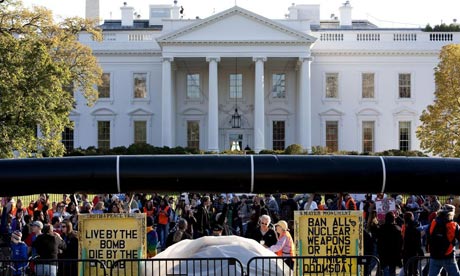
Last summer Bill McKibben and 350.org, the organization he and a group of Middlebury College seniors founded in 2006 to fight global heating, brought thousands of protesters to Washington DC to protest the Keystone XL Pipeline. As you’ll recall, they circled the White House in a ring five people deep; thousands were arrested over the course of two weeks; and the construction of the Keystone was at least delayed, if not entirely crushed.

This summer Bill will be at it again, taking on the fossil fuel companies even more directly. As he told us last night during his keynote address to the Strategies for a New Economy conference, put on by the New Economics Foundation and hosted by Bard College, the focus of this summer’s activism will be joining Sen. Bernie Sanders (I-VT) and Rep. Keith Ellison (D-MN) in pressing for the removal of some $113 billion in annual federal subsidies for American fossil fuel companies.

Bill reminded us that Exxon Mobil and the other big oil, coal and gas companies are by far the richest in the world.  Why should they be getting subsidies for doing business when those funds are sorely needed by citizens for basic services like education, health care and retirement?

And why should we be rewarding companies that not only pollute the environment, but also are responsible for spewing the greenhouse emissions that are rapidly making our planet uninhabitable for many current species, including humans?

“No other industry is allowed to dump its garbage in the streets,” Bill declared.  “Why should it not only be allowed, but subsidized, for the industry that is responsible for the most dangerous product of all, the CO2 that could totally destabilize our planet?”

Bill began his speech by noting apologetically that he has become known as a “professional bummer-outer,” and it was true: it was impossible to come away from his hour-long talk without feeling shaken by the severity of the future he laid out for us.

He gave several hard-hitting statistics and anecdotes of the gathering steamroller of global heating: the melting of the Arctic ice pack, the acidification of the ocean, the increase of floods, droughts, storms and disease.

Bill laid the blame squarely in the laps of the fossil fuel industry, which, he said, has been using its vast wealth to forestall political action on moving to renewable energy.

“Their business model is the problem,” he said.  “It’s either wreck their business model or wreck the planet.”

He’s not talking about destroying Exxon-Mobil and the other oil giants; just about forcing them to re-invent themselves as clean energy companies, and start putting their great resources behind the swift transition to renewable energy technologies.

How to accomplish this sea change?

“We’ll never match their money, so we need to deal in a different currency,” he said, “the currency of movements: passion, spirit, and creativity.”

Bill showed pictures from around the world of climate activists, most of whom, as he observed drily, “do not look like Sierra Club environmentalists, but they care just as passionately about saving our planet.” The movement he envisions must be international, but since Americans and Europeans bear most of the blame for the dramatic rise in greenhouse gases we have a special responsibility to work hard to make things right.

“I’m a writer,” Bill said.  “I’d rather be sitting home in Vermont typing.” Instead, he’s on the road much of the time now, addressing groups and working behind the scenes to build a climate movement powerful enough to take on the fossil fuel lobbies and head off disaster.

At this conference of economists, there were many gray heads in the hall, and many people wearing conservative professional clothing.  Bill called on the older folks, in particular, to join the movement to head off global heating, because “once you’re past a certain age, it doesn’t matter so much if you have an arrest record.”

“We have to get more confrontational,” he said, recalling the civil disobedience campaigns of Dr. Martin Luther King Jr.

Among the confrontational tactics we can look forward to this summer are “Nascar-style” blue blazers for members of Congress, with the logos of all the corporations from which they’ve accepted cash blazoned on their backs. 350.org will also be hosting an online Congressional scoreboard, so that citizens can easily see how each  senator or congressional representative has voted with regard to climate stabilization and environmental health.

“We’re not radicals or militants,” Bill insisted. “We’re actually quite conservative.  We want the planet to stay the way it is, or go back to the way it was when we were born.  The radicals work at the oil companies,” he declared to applause.

Bill ended by reminding the audience that the U.S. Chamber of Commerce recently issued a statement saying that there was no cause for alarm about climate change, because human beings will be able to adapt our behavior and physiology as the planet warms.

“What are they imagining?” Bill asked indignantly. “Are we going to start growing gills?”

It’s not gills we need, but guts—to follow Bill McKibben’s lead and force the politicians to represent the will of the people, rather than the will of the industries that are destroying our planet in the name of the next quarter’s profits.

Something tells me it’s going to be a hot summer.

Rio+20: Fiddling While Earth Burns

I am having trouble summoning any enthusiasm over the upcoming Rio+20 UN Conference, which will begin on June 20.

When you go to the conference website, everything sounds so benign, forward-looking and responsible.  For example, talking about food security, the conference framers call for the promulgation of sustainable agriculture, meaning “the capacity of agriculture over time to contribute to overall welfare by providing sufficient food and other goods and services in ways that are economically efficient and profitable, socially responsible, and environmentally sound.”

It sounds marvelous.  But we all know that during the last 20 years, since the first Earth Summit in 1992, industrial agriculture has only gotten bigger and badder, more focused on profit at the expense of social responsibility or environmental stewardship.

Food security for the majority of people on the planet has become a pipe dream, and even the most privileged of us are growing increasingly vulnerable to disruptions in food supplies caused by climate change, monoculture and the superweeds and superbugs that have developed resistance to our chemicals.

I was not surprised to find in my inbox this morning an eloquent position paper from La Via Campesina, seeing right through the rosy language of the “sustainable development” engineers to recognize that “beneath the deceptive and badly intentioned term “green economy”, new forms of environmental contamination and destruction are now rolled out along with new waves of privatization, monopolization, and expulsion from our lands and territories.”

Here is how La Via Campesina, which represents indigenous and peasant farmers worldwide, but particularly in South America, sees the “green economy”:

“The green economy does not seek to reduce climate change or environmental deterioration, but to generalize the principle that those who have money can continue polluting. Up to now, they have used the farce of purchasing carbon bonds to continue emitting greenhouse gases. They are now inventing biodiversity bonds. This is to say, businesses can continue destroying forests and ecosystems, as long as they pay someone to supposedly conserve biodiversity somewhere else. Tomorrow they may invent bonds for water, natural “views”, or clean air.”

I am afraid that this analysis is right on target.  The whole premise of the REDD agreements, under which communities were to be paid for conserving their forests, has only resulted in a land rush to purchase the forests so as to collect the international funding.  And to add insult to injury, REDD has allowed the destruction of virgin forests and replanting of, say, palm oil plantations, to “count” as forest conservation.

So the international capitalists make out like bandits, and the local people who have lived peacefully and harmoniously in the forests for thousands of years suddenly find themselves given the boot.

In the first anthology I edited, Women Writing Resistance: Essays on Latin America and the Caribbean (South End Press, 2004), I included an essay by Rigoberta Menchu, the 1992 Nobel Peace Prize winner from Guatemala, who has become a major voice for global indigenous rights and environmental stewardship.  The essay describes Menchu’s unofficial visit to the Earth Summit in Rio in 1992.

Rigoberta Menchu Tum

“I had gone to find out what their idea of the earth, plants and nature might be, and what I found was a commercial version of ecology,” she said.  “There were T-shirts with tigers, lions and parrots painted on them, and plastic bags with animals’ faces.  It was a case of businessmen making money out of the environment.”

Although Menchu ended on a more hopeful note back in the ‘90s when this essay was first published, I have no doubt that today she is less optimistic, given the way events have played out over the past 20 years.  It is no exaggeration to say that the capitalist assault on the natural world combined with the human population overload of the planet has brought us to the brink of civilization collapse.

The calm, rationalist language of the Rio+20 architects reveals no sign of awareness of the dire state of the planet.  They seem to have constructed their conference materials in an air-conditioned bubble, through which the voices of the billions of ordinary people on the ground cannot penetrate.

La Via Campesina is calling for a return to small-scale agriculture as the solution to the Earth’s problems. They argue that a relocalization of agriculture is necessary, with indigenous and peasant farmers given cooperative control over their lands, as it was for the thousands of years preceding our own unfortunate era.

We will never get the diplomats, technocrats and financial oligarchs in the air-conditioned conference halls to agree to such a simple, unprofitable solution to food security.

But the feedback loops that have made our planet stable since the last Ice Age are now becoming severely disrupted, and so Earth may take matters into her own hands, forcing a relocalization in which only those who still remember how to subsist in small groups close to the land will be able to survive.

Is this the great transition prophesied by the Mayans long ago?  The end of the age of technocratic capitalism, and the return to a simpler way of life?

Global meetings such as Rio+20 should be occasions for making plans, together with the small-scale farmers on the ground all over the world, for intelligent transitions to truly sustainable communities. There is still time to prepare for the coming ecological shocks so as to prevent mass misery.

Instead, governments are using this precious time to build up armies and police forces to ensure the control of ever-shrinking resources by the wealthy, and selling small-scale arms to local gangs to encourage violence and terror outside of the gated communities of the rich nations.

This is a strategy that keeps us all in line—we in the wealthy nations are terrified of the violence we see outside our borders, and so we docilely do as we are told, which is to say, continue to participate in the aggressive policies that are bringing us all to ruin.

I see the twin monsters of the weapons and the chemical industries as the most destructive forces on our planet today.  If these two industries could be stopped, and their destructive products destroyed, imagine what a different world we’d be living in.

We may not be able to put those evil genies back into the bottle ourselves.  But the planet will take care of it, sooner or later.

Right now, it’s looking like it’s going to be soon.

If I had been asked to speak at Commencement….

This is what I would have said:

It’s become a cliché to say that every day is the first day of the rest of your life, and yet like most clichés this one holds truth to it.

When you walk down that aisle today holding your B.A. diploma, achieving a goal which you have worked towards for many years, you will be stepping into your adulthood with all the rights and privileges, but also all the responsibilities that this maturity brings.

The year 2012, long prophesied as a time of great change and transition, is not an easy time to be reaching adulthood.

I don’t have to tell you that times are tough economically, or that our planetary environment is facing its own severe shifts due to anthropogenic global heating.  You have probably heard tell of a “sixth great extinction event” on the horizon, if climate change projections continue unabated on their current course, causing the heating and acidification of the oceans and resulting drought, floods and violent storms on land.

Most of us “know” about these issues the same way we “know” that toxic chemicals in our food, water, air and household products cause cancer.

We do our best not to think about it too much, because thinking about it just makes us scared and depressed, and what can we do about it, anyway?

I want to suggest to you, as you step out into the world this afternoon with your newly minted B.A., that you are stepping into an unprecedented opportunity to do more than any previous human generation has ever done.

It is not an exaggeration to say that you have the opportunity to turn this great Titanic of an earthship around, sailing her away from the iceberg and into safer waters.

There have been “greatest generations” before now.  But their challenges have been far less global and all-encompassing than the challenges we face now.

Now it’s not just a nation or even a group of nations that are faced with disaster.  It is the entire globe, human civilization writ large, which could in fact be toppled if the earth gives a great climatic shrug of her shoulders and goes back to the evolutionary drawing board.

Even the most sober earth scientists are predicting that if we do not change our habits of carbon emission, the resulting global heating will make the world uninhabitable for some 90% of current species on the planet by the year 2050, including 90% of current human populations.

I lay this out for you starkly not to depress you on what should be a happy and auspicious day, but to impress upon you the importance of the decisions you will be making and actions you will be taking in the coming years.

While it is true that lifestyle changes of individuals can only have limited effect on climate change, they are a start.  We can choose to support alternative energy whenever and however possible.  We can choose to push our elected representatives to shift subsidies and incentives away from fossil fuels and towards renewables.  We can encourage sustainable agricultural practices in our own communities and through our consumer choices.

What I would ask of you above all is to stay informed and engaged with these issues as you move forward into adulthood, and seize all opportunities to push governments and corporations to do the right thing not just for the bottom line or the national interest, but for the good of our planetary home and her current life forms, including humanity.

I am not proud of the condition of the world that my generation is now handing off to you.  I am not proud of what I and my cohort have allowed to happen on our watch.

The past cannot be undone.  But the future is yours to shape.

Don’t be afraid to try out completely new ideas. Listen to your dreams, listen to your intuition.  Be alert, be thoughtful, be creative.  Tune out the background buzz that will try to lull you into complacency and inaction.

I hope that when it’s your turn to witness your children stepping out into their adulthood, you will be able to be proud of the world you have created for them.

Truly, their future is in your hands.

Embracing the Monster of Climate Change

Finally, a mainstream media reporter has the courage to bring up the elephant in the newsroom: CLIMATE CHANGE!!!

In a blog post—not a front page or prime time news story, alas–ABC News reporter Bill Blakemore writes candidly of the fear that a realistic assessment of the threat of climate change must raise in anyone who cares about the future of human civilization on this planet.

“Established scientists, community and government leaders and journalists, as they describe the disruptions, suffering and destruction that manmade global warming is already producing, with far worse in the offing if humanity doesn’t somehow control it, are starting to allow themselves publicly to use terms like “calamity,” “catastrophe”, and “risk to the collective civilization,” Blakemore writes.

“Sooner or later, everyone who learns about the rapid advance of manmade global warming must deal with the question of fear.”

Blakemore advises us to take a page out of the U.S. Air Force playbook and learn to “hug the monster” of climate change, rather than recoiling into fearful paralysis.

“If you freeze or panic — if you go into merely reactive “brainlock” — you’re lost,” he says.

“But if your mind has been prepared in advance to recognize the psychological grip of fear, focus on it, and then transform its intense energy into action — sometimes even by changing it into anger — and by also engaging the thinking part of your brain to work the problem, your chances of survival go way up.”

It is absolutely clear that we stand on the edge of the greatest crisis ever to confront human civilization.

It is also quite clear that almost NO ONE WANTS TO TALK ABOUT IT.

Sometimes when I bring up the reality of impending climate change I really feel like the drip, the drone, the total wet blanket in the room.  People actually give me dirty looks and do their best to change the topic ASAP.

Okay, people.  You go your way and I’ll go mine.

I don’t know whether it’s possible for humanity to survive the coming catastrophe of global heating.

If we survive, it will only be through a drastic change in our ethos and way of life.

We cannot continue to treat the planet as our private killing field, burning and hacking at all other life forms as if they did not matter a damn.

We in the Western world cannot continue to pretend that our wasteful, profligate lifestyles are a given that cannot be questioned, touched or changed.

To me the monster in the room is not so much global heating itself, as the destructive, predatory mindset that has brought it about.

If we are going to embrace the monster, as the Air Force suggests, and even employ anger as a tool of resistance, than we need to start getting angry at ourselves.

We Americans and Europeans have brought the planet to the brink of the next “global extinction event”—aka, the brink of total annihilation for the majority of current life forms on Earth.

Where is the anger? Where is the outrage?  Where is the will to change?

First step: acknowledge that the problem exists.

Thanks, Bill Blakemore, for getting us just a little bit closer to taking that first baby step.

Help Wanted: Strong Leadership on Climate Change, Starting Immediately

Now if only President Obama could show the same leadership on climate change as he has just demonstrated on the divisive same- sex-marriage issue.

The same narrow-minded interests that made same-sex marriage such a boogeyman for the President are also controlling the GOP-dominated boardrooms of Big Oil, from Mr. Cheney on down.

These people seem to be motivated by one thing only: the bottom line.  And they seem to be able to think only as far as a quarter or two ahead.

They don’t see that they are driving us as fast as possible over a cliff from which there will be no recovery.  Or maybe they see, but just don’t care.

It was with great appreciation that I opened up The New York Times Opinion pages today and saw the indefatigable James Hansen offering the lead op-ed, once more displaying his vision and leadership in 1) insisting that the comfortable NYT readers pay attention to the imminent and grave threat of climate change, and 2) offering a practical solution for bringing about the swift change of course we need to avert disaster.

Those of us who have been thrown into gloom by the prospect of Canada scraping down the boreal forest to exploit their tar sands will be somewhat heartened by the strong language Hansen uses to condemn this approach to “solving” the peak oil crisis.

Alberta, Canada: from boreal forest to tar sand devastation

“Canada’s tar sands, deposits of sand saturated with bitumen, contain twice the amount of carbon dioxide emitted by global oil use in our entire history. If we were to fully exploit this new oil source, and continue to burn our conventional oil, gas and coal supplies, concentrations of carbon dioxide in the atmosphere eventually would reach levels higher than in the Pliocene era, more than 2.5 million years ago, when sea level was at least 50 feet higher than it is now. That level of heat-trapping gases would assure that the disintegration of the ice sheets would accelerate out of control. Sea levels would rise and destroy coastal cities. Global temperatures would become intolerable. Twenty to 50 percent of the planet’s species would be driven to extinction. Civilization would be at risk.”

This is not some crazy Armageddon-spouting evangelical talking here.  This is James Hansen, senior scientist and director of the NASA Goddard Institute for Space Studies.

The way to head off this catastrophic scenario, as Hansen and many other scientists have been telling us now for at least a decade, is to reduce our use of fossil fuels.

It’s not rocket science, it’s common sense, and Hansen has an easy, no-nonsense solution for forcing Americans to change our ways and start doing what we have to do to save our planet and our civilization.

“We should impose a gradually rising carbon fee, collected from fossil fuel companies, then distribute 100 percent of the collections to all Americans on a per-capita basis every month. The government would not get a penny,” Hansen says. “This market-based approach would stimulate innovation, jobs and economic growth, avoid enlarging government or having it pick winners or losers. Most Americans, except the heaviest energy users, would get more back than they paid in increased prices. Not only that, the reduction in oil use resulting from the carbon price would be nearly six times as great as the oil supply from the proposed pipeline from Canada, rendering the pipeline superfluous, according to economic models driven by a slowly rising carbon price.”

As Hansen observes, in practice what we have been doing is just the opposite: “instead of placing a rising fee on carbon emissions to make fossil fuels pay their true costs, leveling the energy playing field, the world’s governments are forcing the public to subsidize fossil fuels with hundreds of billions of dollars per year. This encourages a frantic stampede to extract every fossil fuel through mountaintop removal, longwall mining, hydraulic fracturing, tar sands and tar shale extraction, and deep ocean and Arctic drilling.”

These subsidies must stop.

Canada and the US must stop playing poker with the future of our children and our planetary epoch.

All of us, from President Obama and Prime Minister Harper right on down to each one of us ordinary folks who drive cars, heat our houses and run our air conditioning, need to stop pretending that business-as-usual can continue any longer.

To Avert Climate Change Disaster, Connecting the Dots Must Go Viral

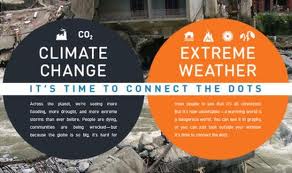
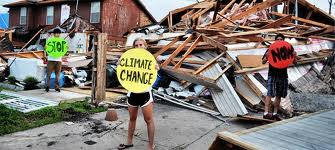
As of 8:30 a.m. EST this morning, 10,000 Facebook folks had already “liked” the new 350.org “Connect the Dots” campaign, which encourages people around the world to connect the dots between climate change and extreme weather.

That’s a good number of “likes.” But what we really need is for the concept to go viral, the way the Kony 2012 campaign did a few weeks back.

It will require the attention of millions of people, particularly those in the driver’s seat of climate change—that’s you and me, my fellow Americans—to turn this global heating juggernaut around.

Lately I can’t seem to stop asking myself why it is that so few people I know are willing to focus their attention on the crucial issues of our time: climate change, the chemical poisoning of our environment, the steadily accelerating wave towards what scientists call “the sixth great extinction event on Earth.”

I often feel like Cassandra of Troy, who was able to see disaster in the future of her beloved community, but was under a curse, imposed by the god Apollo, of never being believed or listened to.

It’s not so much that people don’t believe what’s coming (although we certainly have our share of climate change deniers in the U.S.)—it’s that they just don’t want to hear it.  They don’t want to know.

Maybe this is simply the animal in us coming out.  Like my peaceful dog, who sleeps by my side without any thought or concern for the future, we humans focus on the immediate tasks at hand—making a living, bringing up children, keeping the house clean, exercising, shopping, planning birthday parties, you name it—and we get so wrapped up in all that busyness that we are able to blot out the daily dying screams of millions of birds and animals, the rip and tear of millions of acres of forest going down before the chain saw and bulldozer, the sobbing of millions of children who go to bed hungry every night, the ever-increasing militarization of our world civilization, and the sinking knowledge that those in control of all those weapons and surveillance systems do not stand for good.

Sometimes I really envy my friends and neighbors who are able to cheerfully ignore what’s going on in the background, and focus on making the best of each day they’re given.

Sometimes I think that’s what I should be doing too.

Why torment myself with the constant awareness of spiraling crisis, especially if I can’t do anything about it anyway?

But there’s the rub.  I do have something to offer to the fight to connect the dots and raise the necessary momentum to push Americans, potentially the most powerfully innovative, can-do people on earth, off their couches and out into the trenches of turning this crisis around.

I have my voice, which thanks to the internet can be amplified around the world and swelled into a great chorus that cannot be ignored.

Over the last few years, I have made a study of change agents—otherwise known as activists.  I know full well that every single one began as I am beginning, just sitting with the burning knowledge that things are not right, and that change is possible.

The great Bill McKibben began his climate change work in his classroom, working with a group of tech-savvy college students who realized that the Web could be used to raise awareness about the necessity of keeping carbon emissions to under 350 ppm in order to head off extreme and irrevocable climate change.

In 2007, Bill and his students launched the first iteration of 350.org and were off and running, using the incredible tools of social media to connect people, places and events all over the world.

This is the thing.  We have the ability, as never before, to see the Earth as a whole system; to understand that every creature and community on the planet is vital to the functioning of the whole and has the right to a peaceful, prosperous life.

We as humans have the ability to distinguish between right and wrong, and we know full well that the damage we are causing with our reckless, destructive, indifferent ways is wrong.

We need people from all over the world, but especially Americans and Europeans, who have been responsible for so much of the damage, to come down on the side of right, on the side of life, on the side of justice.

Yes, it’s going to mean making lifestyle changes.

Yes, it’s going to take some focused attention on the local, national and international levels.

But if we do nothing—if we continue in our unconcerned merry ways, too busy and distracted to get involved—then we will wake up one morning facing some much more severe lifestyle changes.

One morning it will be us waking up to a howling tornado flattening our town, or a raging flood sweeping away our Main Street, or an oil slick blackening our local beach, or a spike in food prices that makes even the basics no longer affordable.

It’s time to connect the dots, people, and pay attention.  Add your voice to mine, and let’s go viral with a campaign for a sustainable planetary future that cannot be ignored.

Opening to the energy that can change the world

In the course of any given day, I swing from hope to despair and back again at least three or four times.

On the one hand, it’s such an amazingly hopeful and alive time in terms of communication and discovery.  We are constantly learning so much more about our relationship with the natural world and with each other.  Every day brings fresh evidence of the myriad ways in which we are deeply interconnected with all Earth systems and with other Earth-based creatures.

On the other hand, that knowledge does not seem to be adding up to practical change in the real world.  Every day thousands of acres of virgin forests are cut and bulldozed.  Every day drills open up new spigots for deeply buried oil and gas deposits, which can only be extracted at great risk to the surrounding environment. Every day more chemicals are wantonly spread over the landscape and taken up in the bodies of mammals like us, as well as birds, fish and all the other creatures of the land and sea.  Every day hundreds of species, including us humans, move inexorably closer to extinction.

Why is it that despite all we know about the crucial importance of protecting our planetary home, we continue to desecrate and destroy it at ever-increasing speed?

Maybe the answer has something to do with that “we.”  Maybe the “we” who know that our survival as a species depends entirely on our responsible stewardship of the environment just isn’t the same “we” that is out there with the chain saws and the bulldozers.

Maybe the great challenge of our time is getting through to those other people, the destructive ones, the violent ones, the ones who do not seem to be able to perceive the bigger picture and how urgent it is now that we—as a global human civilization, united in our desire to survive and thrive on our finite planet—begin to practice radical sustainability at an accelerated pace.

The stakes are huge.  At this week’s international “Planet Under Pressure” conference in London, the stark statistics were rehearsed yet again.  They’ve gotten so familiar to me that I probably mumble them in my sleep every night.  The new video “Welcome to the Anthropocene” does an excellent 3-minute job at summarizing what we’re up against.

Still image from "Welcome to the Anthropocene"

But knowing the statistics and seeing what’s wrong is not at all the same as knowing what to do to make things right.

It’s so hard to know where to put one’s energies.

Do I go full-bore at the sustainable energy issue, following Bill McKibben?  Maybe a hunger strike in front of the White House would be an effective protest against the Keystone XL pipeline?

Do I go chain myself to a tree in the Amazon or in the rainforest of Indonesia, to protest the deforestation that is depriving us of the vital lungs of our planet?

Should I use my skills as a teacher to try to rouse the young people from their media stupor, using whatever scare tactics are necessary to get their attention and galvanize them to action?

Should I just be out there practicing “re-skilling,” in the Transition Town vernacular: relearning the old skills of surviving off the grid, living leaner and closer to the land that sustains us? Is it time to learn to keep chickens and pigs in my backyard, and finally set up the bee hives I’ve always wanted?

Or maybe I should be up on a mountaintop meditating and communing with the natural world, seeking the vision that will eventually show me the light?

What is it that I should be doing with this one wild and precious life I’ve been granted, in this fast-moving, tumultuous, unpredictable time in our planetary history?

Asking these questions is all I can do right now, just keep asking them and pondering and feeling my way towards my role in what lies ahead of us all.

I want to make an offering of my life.  I want to be a channel through which the positive, loving energy of the universe can flow out and make things right again with our world.

Occupy Health–Our Planet’s, Our Own–this May Day

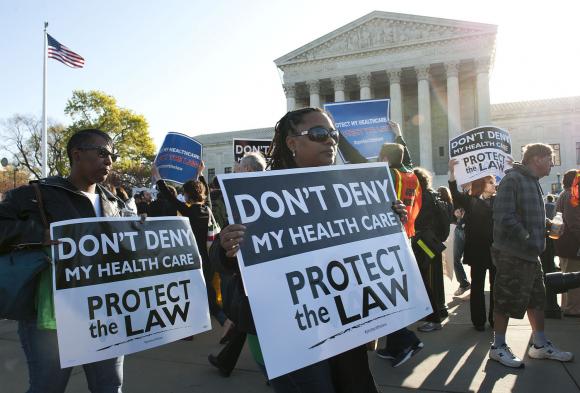
It doesn’t take a genius to understand the premise of the new health care law, which is that all Americans should buy health insurance so that the healthy can help subsidize the sick.

I don’t hear anyone whining about the fact that we are all required to buy car insurance, even though many of us, like me, hardly ever have cause to use it.

Health insurance could and should operate under the same principle. If everyone pays their share, the costs will also be shared.

And the so-called individual health insurance mandate will most likely be much less expensive for society in the long run, since it will result in increased preventive care and far fewer expensive emergency room visits.

Of course a universal single-payer system—Medicare for all—would be much better than the “free-market” insurance system that is under discussion today.  But at least having everyone insured, with subsidies to help those who can’t afford to pay, is a good step in the right direction.

The new law also prevents insurance companies from denying people health care because they’re sick, a truly barbaric Americanism, and allows families to continue to cover their children’s insurance up to age 26.  Who could argue with that?

The truth is that our nation could easily afford to cover all its citizens’ health care, and then some, if we took several crucial steps:

  • Properly tax the rich: close tax loopholes, tax financial transactions, make a genuine commitment to closing the abyss between the 10% at the top and everyone else.
  • Shut down the war machine; spend money on butter, not guns—or better yet, on organic vegetables that will keep people healthy.  It’s insane to put so many trillions into weapons aimed at blowing people up, and then throw a hissy fit about government spending on keeping people healthy.
  • Raise the minimum wage substantially, so that people can afford to eat healthy food, live a healthy lifestyle, and buy own their health insurance policies.

We live in a nation besieged with ill health.  From cancer to diabetes to heart disease and asthma, not to mention depression, ADHD and autism, we are a country of chronically ill people.  I blame much of this on the toxic food that has been sold to us over the past 60 years, since the end of World War II, by the industrial agriculture and food packaging giants, which have irresponsibly poisoned our waters, air, soil—and our bodies.

The powers that be want us to believe that the solutions are very, very complicated. So much so that we should just leave it to the experts—go back home and eat some more antibiotic-laced hamburgers, why don’t you, and watch some more mind-numbing reality TV.

Actually, it’s just the opposite. It is not complicated at all, it’s very simple.

We the people pay our taxes so that our government will work for us.  We have a right to healthy food, water and air.  We have a right to health care.  We have a right to expect that our elected representatives, as well as our Supreme Court Justices, will act in our best interests.

Since the Citizens United decision, it has become starkly apparent that corporations, not people, get preference when it comes to rights.  Money talks: they have the billions to buy the politicians and the media, and the rest of us be damned.

Well, enough is enough.  This is exactly where the Occupy movement has to step in and show that Americans have not become the catatonic stooges that the media giants aimed to produce.

We know what’s going on.

We have been so, so patient. So law-abiding.  So earnestly hopeful, with each election, that things would get better.

Things have only gotten worse, and there is no end in sight.

President Obama has done far better than a President McCain would have done, but he is no knight in shining armor.

No one politician can do this on his or her own.

It’s going to take the collective will of a great coalition of ordinary folks to get this nation to focus on what’s really important in this new century.

And let me tell you, it does not have to do with health insurance.

It has to do with climate.

Tonight in New England a bitter wind is blowing, and the temperature is expected to drop to the single digits, with a wind chill below zero Farenheit.  After a week of balmy summery temperatures in the 80s, the blooming trees and flowers are going to get a harsh night of frost.

This is apparently the new normal as regards our climate.  Even if we were to immediately do everything possible to slow down carbon emissions, a ship the size of our planet would take several of our little lifetimes to rectify itself.

So we need to get used to it.  And if we don’t want it to get worse—that is, absolutely uninhabitable for most current life forms—we need to roll up our sleeves and put all our intelligence to work at creating new, sustainable forms of agriculture, industry and lifestyle.

It can be done.

But not while we fritter away our precious time in begging the entrenched powers to give us some crumbs.

No, we need to unseat those powers and dramatically reorganize our social priorities.

It can be done.

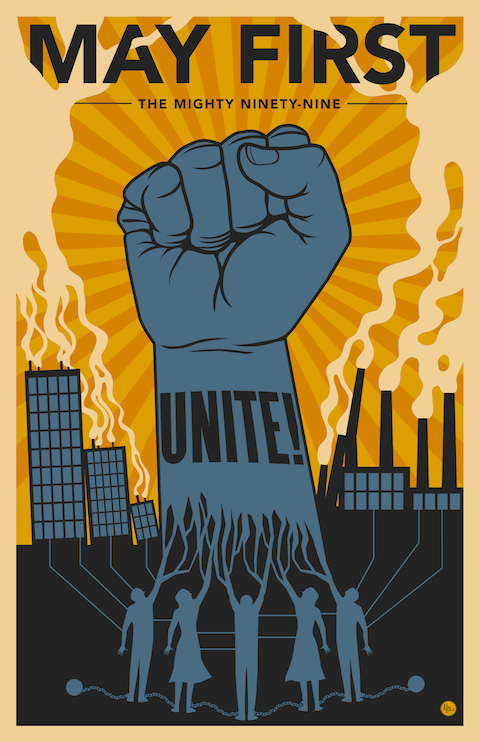
May Day is coming.  It must be a day of reckoning, the gateway to a hot summer of the hard work needed to provoke serious, transformative change.

Silent Spring Dawns Hot, Dry and Merciless

This week, turning the corner into the astronomical Spring, we have gone abruptly from warm winter to hot summer.  And I mean hot: it was 84 degrees Farenheit in western Massachusetts today, brightly sunny, with puffy white cumulus clouds against a brilliant blue sky, unobstructed by any leaves.  No shade.

Today reminded me of a wax model: beautiful but blank.  The façade of beauty, with the crucial vital spark missing.

When I went for a walk up the mountain early this morning, the woods were eerily silent.  I remembered mournfully the spring mornings of my childhood, where I would be awakened by the joyful singing of the dawn chorus of thousands of birds each happily greeting each other and the new day.  Reaching the top of the mountain having heard only the distant cry of a single phoebe, I stopped to sit on a rock and listen for a few minutes.  All I heard was the dim rushing of the traffic on the road far below me, and the drone of an airplane churning its way across the sky.

Coming down again, a few chipmunks hurried out of sight along the path, and I was keenly aware that there were no acorns underfoot, despite the oak trees towering overhead. Last fall was a terrible year for acorns, so all the animals that depend on them for overwintering must be very hungry now.  I know the bears are on the move, as one came and pulled down my bird feeder yesterday. I am thinking of bringing some sunflower seeds along on my walk tomorrow, to spread by the path as an offering of atonement.

While no one of us can shoulder personal responsibility for this tragedy of the commons, all of us who have benefited from the heedless extraction of oil and relentless destruction of the forests and the oceans must be aware of the extent to which we have brought this on ourselves, and taken the rest of the natural world along with us.

Will there come a day when the sun rises in the brilliant blue sky and looks down on a hot, dry planet, silent except for the hardiest of species, like the cockroaches and the ants, who survived previous major extinction events, and will once again continue about their business single-mindedly, able to wait out the eons while life reboots and resurges again anew?

***

Rigoberta Menchu Tum, who bore witness to genocide in Guatemala, and won the Nobel Peace Prize in 1992

This weekend filmmaker Pamela Yates came to Bard College at Simon’s Rock to screen her film GRANITO: HOW TO NAIL A DICTATOR, as part of the Berkshire Festival of Women Writers.

This powerful film makes quite clear how the genocide in Guatemala was about land rights, with U.S.-backed military juntas working for the landowners and the corporations to clear the land of indigenous people and peasants so that big internationally funded projects like dams and mines could proceed unobstructed.

Two hundred thousand people, mostly indigenous Mayans, were massacred in the 1970s and 1980s in the service of American-fueled greed, in Guatemala alone.

It strikes me that this story is repeating now—if indeed it ever stopped—as we continue to fight over resources and land on our finite planet.

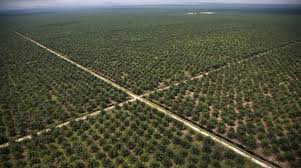
It is happening now in the forests of Indonesia, where on the island of Sumatra plantations the size of the United Kingdom, the size of Belgium—unimaginably huge tracts of magnificent rain forest with some of the richest stores of biodiversity on the planet—are being bulldozed and replanted with palms to feed international demand for palm oil.

The indigenous people who made the forest their home for millennia are being mercilessly deprived of their natural habitat just as surely as the rest of the flora and fauna there.

Endangered Sumatran Orangutan

The loss of biodiversity, including the loss of ancient indigenous human cultures, is a tragedy that cannot be quantified.  What is being lost is priceless.

It may seem like it’s all very sad, but all very far away, too.

But our summer temperatures in March have everything to do with the destruction of the last remaining old-growth forests in Indonesia, in Africa, in South America, in Canada.

Once the forest is gone, the topsoil will begin to erode.

Desert will prowl the borders of what used to be forest.

When, as in the Indonesian palm oil plantations, diverse ecosystems are replaced with monocultures, those monocultures more vulnerable to pest and climate disruption.

And then?

***

Lately I have been having recurring waking nightmares about food shortages.  Already I am concerned, as a backyard gardener, that these hot, dry spring days will not provide the proper growing conditions for spring crops like peas and lettuce.

Imagine conditions like these being replicated across the globe.

Imagine a growing season where all over the planet we lurched from heat and drought to torrential rains and tornadoes.

In the US we have become accustomed to thinking of food insecurity as something that happens in other parts of the world.

Famine stalks Asia and Africa.  It doesn’t come near us.

Or it hasn’t come near us for a very long time.

This year, as I see how the natural world around me is struggling to provide for the chipmunks, the bear and the turkeys; as I greet the arrival of the few straggling migrant birds who have managed to run the gauntlet of a landscape devastated by chemical warfare and industrial agriculture; as I gaze out at the bare trees shimmering in the unnatural midday heat, I know in my heart that it is only a matter of time before our turn comes.

Today it is the indigenous people of Indonesia who are going down with their forests.

It is the desert people of North Africa who are starving, and the teeming masses of Asia who are fleeing the floods of torrential rains.

We in the huge, pampered gated communities of North America and Europe will be insulated from these shocks for much longer than those on the outside.

But our time will come.

And when it comes, it will be with the full force of every violent futuristic film we’ve ever dreamed up.

Waterworld, anyone?  Mad Max?

***

Usually I try to stay positive and keep the flame of hope burning brightly, a beacon for myself and for others.

But today this stark, in-your-face, first-day-of-spring evidence of the coming train wreck of climate change has guttered my hope.

Time is running short for us, just as it is for the bears and the birds and the native peoples of the forest.

We are coming inexorably into Rachel Carson’s Silent Spring.