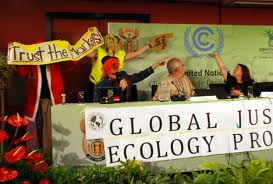
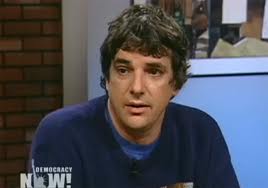
College climate activists lead the way at COP 17 in Durban

You have to hand it to the college students attending the U.N.-sponsored climate talks in Durban.  They know how to cut through the nonsense and tell it like it is.

Watch 21-year-old Middlebury College junior Abigail Borah telling the august assembly that they can no longer afford to drag their feet on curbing carbon emissions.

“I am speaking on behalf of the United States of America because my negotiators cannot,” said Ms. Borah, a representative of the International Youth Climate Movement. “The obstructionist Congress has shackled justice and delayed ambition for far too long. I am scared for my future. 2020 is too late to wait. We need an urgent path to a fair, ambitious and legally binding treaty.”

The response to her entreaty?  A swift escort off the premises.

Another group of students dressed as “corporate clowns” to bring some levity to the grim discussions.  As documented by the Climate Connections blog, they too were met with hostility by the powers that be.

While talking with the press, student clown Kevin Buckland “was grabbed and hauled away. His badge was taken, and he was barred from the International Conference Center.”

Then there was the group of Canadian students who were removed from the assembly hall just for displaying tee-shirts with the words “Turn Your Back on Canada,” a criticism of the Canadian government’s support for the oil extraction of the Alberta boreal forests (aka “tar sands”).

What kind of message are these young people going to take away from these incidents about the efficacy of trying to participate peacefully in global assemblies?  No wonder they’re turned off and turning to their own “people’s assemblies.”

As Laura Carlsen points out in an article posted on Common Dreams today, climate change activists need to “broaden the focus from once-a-year meetings in high-carbon conference centers, to the fields, communities and town halls where alternatives are already growing and a stronger political consensus can be built from the bottom up.”

The top-down approach favored by the U.N. and the international governmental community is showing itself to be not only ineffectual, but morally bankrupt.

Challenging rape culture

In my Gender Studies class this week, we’ve been talking about “rape culture.”  It’s a term that’s bandied about somewhat cavalierly on college campuses, and is probably much less familiar out in the ordinary workaday world.

Well, wake up world.  Rape culture is here.  And it doesn’t need the ironic scare quotes.  It’s real, and it’s not funny at all.

You know you’re living in a rape culture when women’s bodies are suggestively displayed, commodified, in sexually enticing poses obviously intended for the male gaze.

In the culture of rape, “no” means “try harder” and it’s always the woman’s fault if she doesn’t like what’s going on.  Stupid bitch, if she didn’t want it, she shouldn’t have worn those heels/had that drink/come to the party.

Rape culture sanctions violence when necessary to overcome resistance.  She was asking for it, anyway.

Rape culture oppresses dissenting men, too.  Men who fail to conform to the code of dominant masculinity are “faggots,” and being called out as anything akin to feminine–pussy, for example–is the worst insult you can throw at a guy.

Lately I’ve been realizing that rape culture extends a lot further than women’s bodies.  It’s also responsible for the prevailing attitudes towards our environment–our Mother Earth.

Not for nothing are both Mother Earth and Mother Nature gendered female.

Some patriarchal cultures manage to respect Mother Nature while still maintaining a stranglehold on her female children.  For instance, in Chinua Achebe’s Things Fall Apart, which I’m re-reading now for another class, the all-powerful Oracle of the Hills, a goddess, is interpreted by a priestess whose pronouncements no men dare question.  This doesn’t stop the protagonist, Okonkwo, from beating up his wives on a regular basis.

In Judeo-Christian and Islamic cultures, the patriarchy dispenses with goddesses.  Or at least, goddesses of the truly powerful, fearsome kind.

In Euramerican cultures, we have sex goddesses, who exist to pleasure their men.  Islamic cultures shroud their women in veils, but towards the same end: women exist to please their men.

The explosive growth of the international pornography industry, in which it is still rare for women’s pleasure to be of any interest at all, bears testimony to the extent to which rape culture rules.

In 2006, the pornography industry had larger revenues than Microsoft, Google, Amazon, eBay, Yahoo, Apple and Netflix combined–and it’s only grown in the past five years.

Porn is a vast unregulated jungle.  It’s not all bad.  But some of it is really terrible.  Some of it is sexualized violence–rape–thinly veiled as entertainment.

Yes, the girls get paid.  But many studies have shown that female porn stars often come from sexually abusive childhoods, or are teen runaways, or are lured into the trade through drug addiction and prostitution.

In Euramerican porn, women exist to give men pleasure.  Doesn’t matter if they get fucked over in the process.  Doesn’t matter if all that’s left in the end is a hollow shell.  There’s always another slut waiting in line.

Yeah.  It hurts me to talk like this, but I want to convey the mind-set of this industry.

And then I want you to think about how this mind-set translates to the Euramerican assault on the environment, our Mother Earth.

Or the sub-prime loan scandal (it’s Occupy Foreclosures Day, after all).  Fuck’em over, make a profit and move on.  All that matters is the bottom line, baby.

Sometimes it seems as though the more powerful actual women become in real life–ie, successful at playing the formerly all-male games of education and career–the more frantically obsessive men’s consumption of pornography becomes.  The power they miss in real life, they can find acted out for them in porn fantasies.

But the environment is another story.  Mother Earth is not going to play men’s games–that is, she doesn’t care to beat them at their own game.  When she starts to resist, the game will be over.

In porn, women go along with the game for a variety of reasons.  Generally speaking, women do it to survive.

Likewise, women collude with the patriarchy in the rape of the Earth because it’s just easier to go along than to resist.  And the lifestyle has been pretty comfortable over the last 50 years, hasn’t it.

I would like to see a frank discussion of the connections between rape culture as played out in porn and rape culture as played out between humans and the environment.

We need to acknowledge that there is a serious problem in both the private and the public realms (along these lines, we are just beginning to see confessions of “sex addiction” hit the media.  How about “fossil fuel addiction”?).

The problem is a symptom of much deeper ills in human social relations, which transgress the usual boundaries of race, class, gender & nation.

Why are porn and energy extraction biggest, the fastest growing industries in the world?

What does it mean to live in a rape culture?  Who benefits, and who loses?

Most importantly, how can a rape culture be transformed?  And what is our alternative vision?

My vision is this:

The one-sided model of domination and extraction (“getting some”) needs to shift to a dialogic model of sustainable mutual pleasure.

Human beings should serve in a steward relation to our Mother Earth, tending and enriching her in exchange for the nourishment and pleasure she can afford us.

Likewise, sex should not be about domination and debasement, but about mutual pleasure and uplift.

In these transition times, such a transformative shift should be possible, if each of us begins with our own selves, our own backyards, and lets the ripples of range move outward.

Let it be so.

Outsourced pollution rides the trade winds home

How timely, that just as the U.N.-sponsored climate talks are going on in Durban, a new report comes out  from the Global Carbon Project informing us that global greenhouse gas emissions grew by a whopping 5.9 percent last year, the largest leap in any year since the Industrial Revolution began.

The U.S. remains the world’s second-largest greenhouse gas emitter, trailing only China.  But as we all know, China has become a factory state of the U.S. and Europe–isn’t virtually every manufactured thing you own “made in China”?

As I hear all the time from travelers to China, air quality is noticeably bad there.  Most cities seem to be in a permanent miasma of smog, sometimes approaching the sooty fog Charles Dickens used to describe as veiling London in the coal-burning 19th century.

Here in the U.S., air quality has improved since I was a kid in New York, when smog was a daily occurrence and you just learned to live with noxious blue bus fumes blown in your face on every street corner.

But apparently what we’ve done is simply outsource our pollution to China.  Let them deal with the smog over there; we’re paying for the goods they produce aren’t we?  If they can’t figure out how to manufacture cleanly, that’s not our problem.

So goes the smug line of American entitlement.

But welcome to the new century.

First of all, the great American credit bubble has burst, and the middle class is having trouble affording those imported manufactured goods, no matter how “cheap” they are.

Second, it’s obvious that the trade winds are blowing Chinese smog our way, in the form of global climate change that will affect us here as much as it affects them over there.

Politicians the world over continue to take a short-sighted view of both of these issues, imagining that a little re-tooling is going to get us past the bumps in the road.

The media isn’t helping matters–you will have to peer deeply into the New York Times this morning to find the small buried news story about the biggest leap in global carbon emissions on record.

People who are already living on the edge understand the stakes.  Thousands of African women farmers have been marching in Durban, along with indigenous forest defenders from around the globe.  They’ve been kept away from the politicians inside the gates by riot police.

Guess what?  All the riot police in the world cannot keep climate change havoc from our doorstep.  Here in the U.S., in China, in Africa, and all over the world.

It’s time to deal with it.

Occupy the Climate Talks in Durban–Virtually

If you lived on a small island nation that was losing precious feet of shoreline every year due to rising seas and storm erosion, you might be forgiven for having high expectations for the current international climate change negotiations going on in Durban, SA.

In the the heart of the developed world, meanwhile, you’d have a hard time finding any news about the climate talks.  You have to search the Web pretty carefully to even find a mention.

That goes to show how it’s all about location, location, location.

I learned yesterday, by careful Web search, that Canada is planning to pull out of the Kyoto treaty, just like the U.S.

Canadians want developing countries like China and India to also agree to reduced emissions.

But meanwhile, Canada’s government is pushing the extraction of oil from the Alberta boreal forests.

As Tom Zeller of the Huffington Post reports,””What’s astonishing is watching Canada emerge as a rogue among developed countries,” said Bill McKibben, the author and activist who has spearheaded a grassroots movement aimed at combatting a pipeline proposal designed to deliver some 700,000 barrels of oil each day from the tar sands to refineries and ports on the Texas Gulf Coast. “Of course, they have no choice but to ditch serious climate policy if they want to develop the tar sands in a big way — and that pool of gunky oil is clearly the tail wagging the dog up there.”

We’re all the dog that’s being wagged by powerful oil extraction companies.  If we don’t watch out, we’re going to be wagged right into extinction.

Notice how the climate talks are always held in inaccessible places where it’s hard for activists to congregate.  Who can afford a ticket to Durban, SA?

But now, with the World Wide Web, we can all hold ring seats to the climate talks, and we need to make our voices heard.

Read the Climate Connections blog, produced in Durban by the Global Justice Ecology Project, for up-to-the-minute information about what’s going on in Durban.

Check out the results of the General Assembly held there today under the Occupy Durban banner: #OccupyCop17

The climate talks may be far away, but they are one of the most crucial sites for “occupation” as we move into the 21st century.  We can’t let the big oil companies, with their deep pockets created from our dependence on an oil-based economy, dominate the agenda.

If you care about leaving a healthy planet to the next generation, the time to speak up is NOW.

Dispatch from Washington DC: On History and the Human Spirit

In Washington DC this weekend, I couldn’t help but be impressed by the majesty and wealth of the buildings and institutions spread out grandly in the heart of the city.

The many museums of the Smithsonian, all of which are free, boast what must be the best-displayed, best-run, most impressive set of collections to be found in such concentrations anywhere.  They are a reminder of what American wealth and ingenuity can accomplish, when tax dollars are put to good use!

But there is a darker side on display in the museums too, which links back to the political establishment and the way the reality of this country has never quite lived up to our ideals.

At the Museum of Natural History there is a remarkable exhibit, funded by David Koch no less, on the origins of the human species.  The scale of human evolution is made quite clear: our ancestry reaches back millions of years, but homo sapiens as we know ourselves today is a young species, a mere footnote to the huge sweep of terrestrial mammalian existence.

In that very short period of time, we have managed to wipe out millions of other species, many of them also present the museum in stuffed form, or as skeletons, or—in the case of the butterfly and insect exhibit—as specimens locked behind glass.

Most of that destruction occurred since the 1950s, when the American corporate capitalist assault began in earnest, with chemical warfare-style agriculture, the razing of the forests, the strip mines, and the suburban sprawl.

The Museum of American History tells more of this sad story, albeit inadvertently, in an unspoken subtext.  The transportation exhibit is the biggest and best I’ve ever seen, but makes no mention of how the invention of the combustion engine paved the way for human destruction of wildlife and wild lands on a vast and unprecedented scale.

The huge exhibit on the military history of the United States, from the American Revolution to Afghanistan, brilliantly illustrates the military development of the country, from our start as “rebels” fighting against heavy taxation by the King, through the trench warfare of World War I, the ignoble nuclear bombing of Hiroshima and Nagasaki, to Vietnam and beyond.

The exhibits are lavish and beautifully curated, but the untold story is the staggering waste of human life, treasure and creativity, drawn to the service of Thanatos, Freud’s famous “death instinct.”

The American Indian Museum, built like a sandstone mesa with its prow defiantly facing the U.S. Capitol, reminds us that the human spirit has many facets, and it’s hard to keep Eros down.

From the ashes of near annihilation by savage Euramerican military forces, as well as the ravages of disease and cultural tyranny, the native tribes of North America built this beautiful museum as a testament to the resilience and creativity of their peoples, as well as their South American brethren, who are also represented at the museum.

This is no monument to vanished cultures, but rather a tribute to peoples who have survived, proud and independent and eager to tell their stories and preserve their cultures for the future.

In Washington DC I found much to be proud of, and also many reminders of the shamefulness of our history over the past 235 years of our official existence as a nation.

Time is a funny thing—it certainly seems like history has been speeding up in the past 50 years, as our technological innovations continue to connect, concentrate and expand our collective knowledge base at an exponential rate.

What happens between now and November 2012, the next Presidential election, could have the power to radically change the course of history yet again.  The key seems to lie in those restive crowds turning out in ever larger droves under the Occupy banners.

Will we be creative and innovative enough as a people to reinvent ourselves as a nation truly dedicated to life, liberty and the pursuit of happiness—not just for the 1%, and not just for human beings, but for all the magnificent living beings, flora and fauna, with whom we have shared this planet since we all first emerged out of the frozen wastelands of the Holocene thousands of years ago?

Resisting the Energy Vultures

Today’s New York Times Sunday Review piece by White House correspondent Mark Landler, “A New Era of Gunboat Diplomacy,” gives disturbing insight into the mindset not only of the men and women who preside over national foreign policies, but also into the media lapdogs who cover them.

Landler reports that China and the U.S., along with practically every other country in possession of a serviceable Navy fleet, are entering into “a new type of maritime conflict — one that is playing out from the Mediterranean Sea to the Arctic Ocean, where fuel-hungry economic powers, newly accessible undersea energy riches and even changes in the earth’s climate are conspiring to create a 21st-century contest for the seas.”

Secretary of State Hillary Rodham Clinton, one of Landler’s sources, explains blandly that “This hunt for resources is going to consume large bodies of water around the world for at least the next couple of decades.”

Clinton has got the right metaphor there.  What Landler describes all too flippantly as “a watery Great Game” could well indeed “consume large bodies of water around the world.”

What neither Clinton nor anyone else interviewed for Landler’s article bring up is the cardinal question:  When the game is over, what will be left of the living beings that used to populate those waters in unimaginably vast numbers?

Landler describes the navies and drill ships of countries from China and the U.S. to Turkey and Israel jockeying for control of huge troves of oil and natural gas deposits that have been discovered beneath the sea.

Of especial interest to these circling energy vultures are the deposits beneath the Arctic ice.  Landler reports that “melting ice has opened up the fabled Northwest Passage,” making resource extraction in the Arctic more viable than before.

This offhand and veiled reference to climate change provides a window into the sociopathic mindsets of the men who rule the Energy Kingdoms.  The cowboys of global fossil fuel extraction are essentially warlords, relying on the national armies of their nominal countries of origin to clear the way of opposition to their reckless drilling.

From their warped point of view, global warming can be seen as a bonus.

If the Arctic ice melts, so much the better–it’ll make it easier to get those billions of barrels of oil out of the sea and into the global market.

No matter that deep sea drilling has been proven to be highly risky and lethal to the environment.  Hello, does anyone remember BP in the Gulf of Mexico?
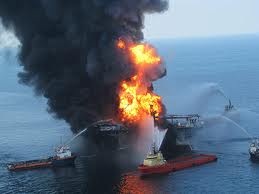
Imagine a spill like that going on in frigid northern waters.

Imagine billions of barrels worth of oil or gas gushing into the Arctic Ocean, to be picked up by the currents and spread all over the world.

Imagine the destruction of marine wildlife, and indeed the entire marine food chain, that this would entail.

NY Times reporter Landler doesn’t waste time contemplating such grim scenarios.  The focus of his article is “gunboat diplomacy,” a glamorous new competition among national navies to dominate the oceans, seen strictly in utilitarian terms.  His only mention of fish, or indeed any maritime creature, is a brief aside that icebreakers are being sent into the Arctic circle by countries like China and Korea, “to explore weather patterns and fish migration.”

Landler’s article, which is billed as “news analysis,” reveals the extent to which the chillingly disturbing values of the Energy Kings have permeated not only the governments who are supposed to be regulating their industry and safeguarding the natural world, but also the media “watchdogs,” who are obviously sitting cozily in the laps of Big Oil.

Questions of environmental sustainability and health are simply outside the picture for these folks.  It’s not relevant to them whether or not the polar bears survive.  They don’t care about the coral reefs, or the plankton.  They don’t care about whales.  Their only concern is the bottom line.

What is the most effective opposition to such monomania?

Trying to think of persuasive strategies gives me a touch of hysteria.  We could appeal to their love of seafood!  Wouldn’t they miss their caviar and oysters?

They will figure out how to grow these in tanks.

We could appeal to them as property owners: what’s going to happen to their beachfront homes, not to mention their office towers in coastal cities around the world, when the waters begin to rise?

They will have armies of lawyers figuring out ways to make the taxpayers bear the burden of their lost properties.

We could appeal to their brand image.  Does Exxon-Mobil really want to go down in history as the biggest perpetrator of maritime omnicide in world history?

They will throw this back at us, and rightly so: they were just doing their job of giving the consumer what she wants, a steady supply of affordable energy.

It’s true that we all share the blame for this tragedy unfolding in front of our eyes. It’s also true that we have the power to stop it.

How? We need to demand that the rights of the denizens of the natural world be respected.  A new Declaration of the Rights of Nature has been written–it needs to be circulated, popularized and upheld.

We need to insist that our politicians report to the people, the taxpayers, not to the corporations. Yes, people want energy; we want cars, we want electricity.  But we want to direct our tax dollars into R&D of renewable sources of energy–solar, geothermal, wind–not into dangerous oil and gas extraction or nuclear fission, and not into dirty coal mining either.

We need to call the mainstream media on its dereliction of duty when it presents one-sided reports like Landler’s industry white paper today.

Extracting those billions of barrels of oil buried below the earth’s surface miles beneath the sea would not just be a death sentence for marine life.  It would drive the nails on the human coffin as well, along with all the other species on this planet who will not be able to adapt to the erratic climate extremes of floods, droughts and storms that will inevitably ramp up once the planet heats beyond the point of no return.

Under these circumstances, if the governments won’t listen, radical action may prove a necessity.  The French Resistance to the Nazis were considered criminals in their own time and place, but look like heroes to us today, with the power of hindsight.

We are in the midst of a new, much larger Holocaust now, one that threatens not just one group of people, but all of us, and our natural world as well.

Each of us has a choice to make.  You can go along with the crowd, watching impassively as the train leaves the station for the gas chambers, or you can dare to raise your voice in opposition, and maybe even to throw a wrench in the gears of power.

Each of us is going to die sooner or later.  Wouldn’t you rather die knowing you had done your utmost to make a difference, to safeguard the world for your children and all life on this planet?

What do Derrick Jensen and George Washington Have in Common?

Derrick Jensen was speaking to the Occupy Oakland and San Francisco folks today, and I had hoped to catch the livestream, but ended up missing it.  I did find, however, a video from about a month ago, when Jensen spoke to Occupy DC via Skype.

True to form, Jensen told the crowd that when people ask him whether he’s calling for the overthrow of the U.S. Government, ie, real revolution, he answers that “this question comes far too late.

“For the government was long since overthrown.  And those who overthrew it are known as Exxon Mobil, British Petroleum, Halliburton, Monsanto, ADM, WalMart, Massey, Goldman Sachs, Citibank.

“They are the real governors, and the United States Government is a wholly owned subsidiary brought to you by McDonalds, Pfizer and Lockheed Martin.

“So then you can ask, am I advocating the overthrow of the corporations?  Am I advocating the overthrow of the corporate state?

“To which I will say hell yes!”

For someone like me who came of age in the 1970s and 80s, it’s very hard to imagine a world without corporations.  How would we get our stuff?  What would I type on if there was no Apple?  How would we communicate without Google, Facebook or WordPress, not to mention Twitter?

And of course, how would any of these products see the light of day without the industrial supply lines that go from oil extraction to factory production to tanker ships to retail store?

Well, somehow for the vast majority of human history, your ancestors and mine managed to live and procreate and die just fine without any corporate help or interference.

I’m no Luddite: I love my computer, car, cell phone and dishwasher just as much as the next American.

But somewhere along the way to the bank, we ceded far too much power to these corporations. Derrick Jensen has it right when he says that “a government worth a good goddamn” should answer to human beings, not corporations.

And not just to human beings, but to all of the beings on our planet who are fading away day by day–at the rate of 200 extinctions a day, as Jensen never tires of reminding us.

Will we join the polar bears and the wolves and the rhinos in fading away quietly into the night when our time comes, as it surely will if we do nothing to stop the steamroll of oil-driven climate change?

Or will we stand up now and demand that our government obey its mandate to be of the people, by the people, and for the people, recognizing that what is good for the people is what is good for the earth as an ecological system?

Jensen closed his talk in DC on a positive and galvanizing note:

“When the government becomes destructive of life, liberty and the pursuit of happiness, it is the right of the people to alter or abolish it.  It is long past time we made full use of our rights.”

Just like our colonial-era forebears, we have the right to throw off the yoke of oppressive government to found a better system.

The Occupy movements are the advance guard of what needs to be a massive campaign of civil disobedience and relentless pressure on the government to listen to us, the people–not them, the corporations.

We celebrate those rabble-rousers, Washington and Jefferson, as national heroes.  Let’s get behind today’s rabble-rousers and turn the corner into a new era.  It can’t happen too soon.

An older form of Deep Green Resistance rises from the rainforest. Euramericans, ignore this at your peril.

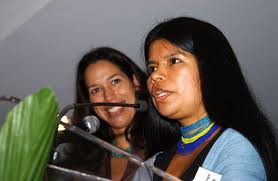
If you want to see something really inspiring, watch and listen to Patricia Gualinga, an Achuar woman from the Ecuadorian rainforest, talking about how her people are standing firm on the frontlines of the siege of the forest by multinational oil extraction companies.

Listening to this indigenous activist, you see shades of all the millions of indigenous peoples around the world who lived in harmony with their environment, respecting and sustainably stewarding their lands.

To say that this balance was altered when the Europeans began their voyages around the world is not to blame or guilt-trip.  It is simply to speak the truth.

To say that the European Enlightenment period, which gave us Manifest Destiny, “I think therefore I am,” the closing off of the commons and the capitalist drive to resource exploitation, was actually a time of deepening darkness, is simply to pronounce the self-evident.

While we contemporary heirs to this 500-year history may be individually blameless, collectively we have been bystanders who have followed the paths of least resistance and allowed the destruction of our planet to proceed apace.

The Pachamama Alliance, on whose behalf Patricia Gualinga spoke last week, is an unusual partnership between Euramericans and these South American indigenous survivors, warriors who are defending the great Amazonian rainforest, the dynamic lungs of the Southern Hemisphere, against rapacious encroachers.

We need another alliance like this between the peoples of the far North and those Euramericans who know that destroying the Canadian boreal forests would be equally catastrophic.

The Pachamama Alliance has developed a powerful model of collaboration across the boundaries of nationality and race in the service of a higher vision of earth-based spiritual activism.

This is a vision that needs to grow exponentially in the coming years.

For too long we have been held captive by the media-induced trance of relentless growth and consumerism.  It’s time to break the spell and allow the pendulum of human evolution on this planet to swing back to balance.

To do this, we need to listen to new voices, heed new calls.  We Euramericans have had our shot at leading the world our way.  It has been a disaster.

It’s time to cede the stage to our indigenous sisters and brothers, and try following their lead for a change.  This is a whole new level of Deep Green Resistance, based on creation rather than destruction.

 It’s time to co-create a new story with the indigenous peoples of the planet, who still know how to live harmoniously with the natural world.

Listen to the Pachamama story, and then it’s up to you–what comes next?  What role will YOU play?

Building on the Keystone “victory”–from endless growth to steady states

In his Op-Ed in today’s NY TimesMichael Levi, senior fellow for energy and the environment at the Council on Foreign Relations, argues that the Administration only agreed to put off the construction of the Keystone XL pipeline because of “not-in-my-backyard” pressure from Nebraskans, which had little or nothing to do with the urgent issue of cutting carbon emissions in order to avert climate disaster.

“For green groups,” Levi says, “the shortest route to blocking fossil fuel development appears to be leveraging local opposition.” The problem with this approach, from Levi’s point of view, is that there is going to be “local opposition” to green energy initiatives like solar and wind farms too.

What Levi, like most Beltway insiders, doesn’t seem to appreciate is that the green movement is not just about opposition.  It’s about positive action.  It’s not just about environmental protection.  It’s about social change.

It’s about a shift from a mentality that seeks to keep growing our energy-dependent economy indefinitely, to a mentality that seeks a sustainable steady state.

Steady states are anathema to capitalism–a quarter without growth is a quarter wasted, as any CEO would tell you.

But steady states are exactly what have made our planet a livable environment for the past several thousand years, during which the human species, along with countless others, has thrived.

Rejecting the Keystone XL Pipeline is just a small step in the right direction, towards a society that puts effort and money first into reducing energy consumption, and second into developing energy infrastructure that has the lowest possible impact on the ecological web of life.

The Michael Levis of America don’t understand that this is the real push behind the green movement today.

Yes, we’ll seek allies where we can find them, and make use of whatever sources of power we can find (even pro-oil Republican Nebraskans) to achieve our goals.

But our movement is not about “leveraging opposition.”  It’s about mobilizing support, through raising awareness about the threats to our civilization and our planet if we continue along with business as usual.

It’s also about leading the way towards the alternatives that are already within reach if we choose to veer off the beaten path into new, much more stable territory.

Endless growth is a social model that has proven itself to be highly unstable, whether we’re talking about national economies or energy systems.

It’s time to use our intelligence as a species for the good of ourselves and our planet.  There is really no other way forward.

Fighting for Change with Hearts Wide Open

The environmental philosopher Kathleen Dean Moore looks out at the Occupied social landscape and sees “The Big One”–a movement that will bring all the disparate struggles of our society together on common ground, and effect deep, lasting, structural changes.

“The lines that connect climate change to jobs to the environment to education to health to justice are strong and undeniable,” she says. “The time has passed for an environmental movement. The time has passed for a climate change movement. The time has passed for isolated grassroots movements. We stand on ground that trembles with tectonic movement. Along the straining fault lines of our civilization, we feel the forces building for justice, sanity, and lasting ecological and cultural thriving.”

She’s certainly right that isolated movements are not going to change the world. That’s what’s been so great about the Occupy movements–they’ve been widespread and inclusive,a big big tent spread out over a lot of ground, coast to coast.

As Moore says, the moral ground of the Occupy movements is quite simple and clear: “it’s wrong to wreck the world.”

That’s something I knew instinctively as a child, as most children do.  Part of the great tragedy of our society has been the way we slowly deaden and numb the compassionate, empathic instinct of our children, teaching them to ignore pain and injustice, to just keep walking and mind their own business.

I know that’s what I was taught as a privileged young American growing up in a deeply unequal, unjust and exploitative society.  I know now that it was wrong.

And thanks to Occupy Wall Street and the other Occupy movements, I am beginning to know what to do about it.

We need to stop going about our business as usual, and relearn how to see and feel suffering and inequity.

We need to think outside the box of our normalized capitalist assumptions, making well-being rather than profit the goal of human effort.

We need to make protecting our planetary home our highest priority, because without a healthy environment, we will never build a healthy society, and things are so far gone that bringing back ecological balance will take everything we’ve got.

One of the reasons that revolutions are almost always carried out by the young is because they are closer to the instinctual compassion of their childhoods.

If only the stuffed shirts in Congress and in corporate office buildings all over America could remember what it was like to live with their hearts wide open, we might start to see the great boulder of social change really start to pick up steam.