It’s Up to Us Now: Carrying on the Work of Pete Seeger

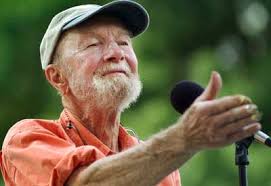
Unknown-1When I heard the news that Pete Seeger had died, my first thought was “oh no!” and my second thought was “now there goes a man who lived a good life.”

At 94, he had accomplished so much and lived so fully.  Even during his final months and weeks on the planet, he was still playing concerts to packed houses and inspiring people everywhere with his unwavering dedication to using music as a means of raising awareness and fomenting social change.

The New York Times obituary quotes him as saying in 2009 (the year he sang at President Obama’s Inauguration): “My job is to show folks there’s a lot of good music in this world, and if used right it may help to save the planet.”

Pete’s gift was for making music and getting others to sing along with him, and he used it not for fame, fortune or glory, but for the good of those who most needed him.

Whether he was singing in support of the Civil Rights Movement or the anti-war movement, singing for freedom against the red-baiting of the McCarthy era, singing against apartheid or singing for the environmental movement, he was always out in front leading the charge and showing others what true courage and conviction looked like—in a joyous register.

Image: File photo of Pete Seeger and his grandson Tao attending the We Are One - Inaugural Celebration at the Lincoln Memorial in Washington

That upbeat, “we-shall-overcome” personality probably played a big role in Pete’s longetivity—research shows that people who think positively tend to live longer, happier lives than those who tend to see the glass half-empty.

When I saw Pete play, at one of his last concerts last fall, there was a joyous glow about him that lit up the whole stage, and those of us in the audience would have followed him anywhere.

Well, it’s up to us now.  Pete has moved on, and we are left to carry on his legacy—to keep singing his songs and working for the positive social change he believed in and created.

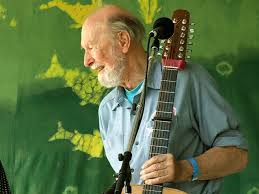
Unknown-2Pete was so deeply engaged with humanity during his lifetime that in death he will still stay lodged in our hearts.

His is the kind of soul that will rise into heaven showering sparks and spores of bright beckoning energy, encouraging us to carry his tune, to keep his good spirit alive.

Today I start a new semester of classes, and I am excited to be teaching two classes that will enable me to do just that: “Women Write the World” and “Writing for Social and Environmental Justice.”

Pete, I’ll be thinking of you with love and admiration as I go to greet my students this morning.  I hope a little of your sweet, positive, hardworking energy will carry us forward this year, and forever.


If you get there before I do

Comin’ for to carry me home

Tell all my friends I’m comin’ too

Comin’ for to carry me home.


Swing low, sweet chariot

Comin’ for to carry me home

Swing low, sweet chariot

Comin’ for to carry me home.


Dark Universe, Brightening

Socrates had it right long ago when he acknowledged that to the extent that he was wise, it was because he knew how much he did not know.

During my lifetime, the trend has been for homage to be paid to all the cocky, smart human beings who think they know everything.

The slicker and more self-confident the guy (and this is mostly about guys), the more rewards and adulation he gets.

Collectively, especially in the United States, arrogance has been the name of the game.  I think this collective hubris may have reached its apex with the splitting of the atom and the knowledge that he who controls atomic energy controls the world.

Or so we thought.

Climate change is ushering in a whole new, and much more humble era.

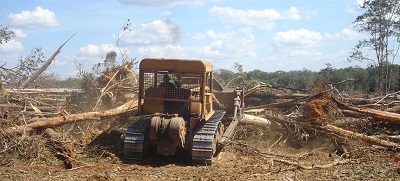
imageIt turns out that just because we can bulldoze forests and mountaintops, change the course of rivers, drill beneath the sea and through solid rock, and completely saturate the earth with satellite, drone and in-home surveillance devices, we are still just as vulnerable as we ever were to the simple, earthbound necessities of food and shelter.

As the big, climate-change-induced storms continue to roll in from the ocean, so frequently that they all begin to blur into an anguished nonstop disaster montage, a slow but steady sea-change in collective human consciousness is beginning to occur.

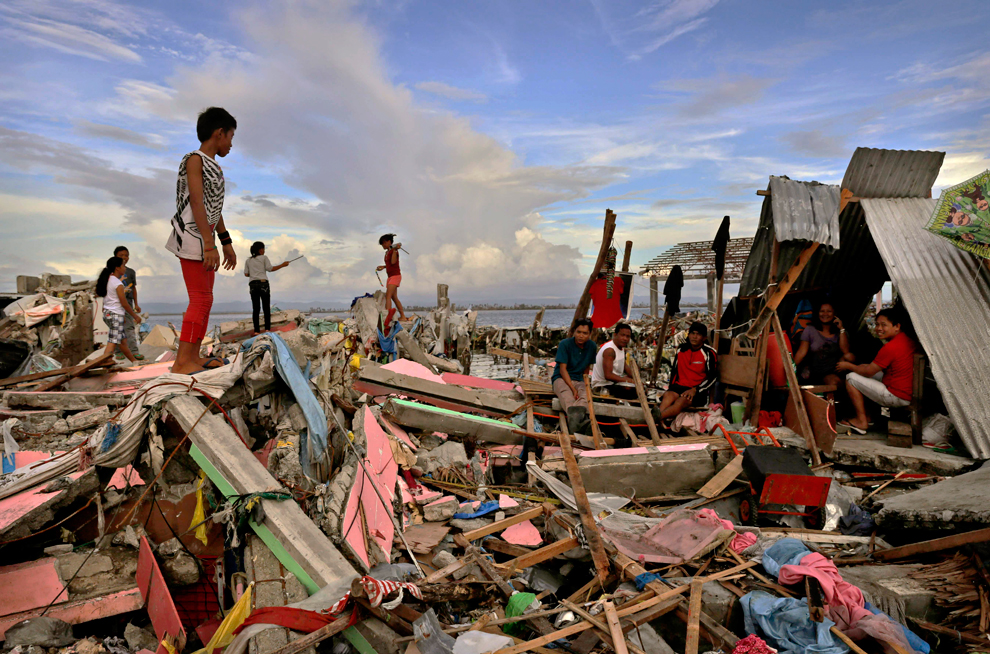
Aftermath of Typhoon Haiyan, Philippines, 2013

Aftermath of Typhoon Haiyan, Philippines, 2013

We are beginning to recognize how much we still don’t know, and how dangerous our ignorance, combined with arrogance, is becoming.

There is no doubt now that we who are alive today, along with our children and grandchildren, are going to be living through a remarkable transition time as the planet we have destabilized and plundered during the past few hundred years of industrialization seeks to return to equilibrium.

We must acknowledge that human over-population has played a major role in this process of destabilization.  Our very success as a species is what is driving the current unfolding disaster.  By reducing our numbers through disease, drought, flooding and the competition for shrinking natural resources that leads to war, the planet is doing what it must to return to a steady state where the ecosystem as a whole can flourish.

It is sobering to live with this knowledge.

Perhaps it is my sadness at knowing that I am going to be living through (and dying in) a veritable Holocaust of earthly creatures, that has me searching outside the box of science and common knowledge for signs of hope.

IMG_4150 copyI was not raised with religion, but I have always been an instinctive spiritual animist, seeing the divine in the beauty of the natural world, and in my unbounded love for all the elements of our Earth—rock, water, air and all the myriad living beings that inhabit every strata of our planet.

I have also been open, since I was a child, to the possibility that there is more to our experience than meets the eye.  I have always been fascinated by the occult, shamanism, and science fiction involving time travel to other dimensions of space/time.

I don’t know if it is just because I am paying more attention, but lately I have been perceiving a definite uptick in collective awareness that the key to fixing what ails us in the physical world may lie not in better “hard science,” but in a deeper connection to knowledge that can only be accessed through a different kind of perception.

The doors to this under-tapped realm of wisdom are accessible to us through what has poetically been called “our mind’s eye.”

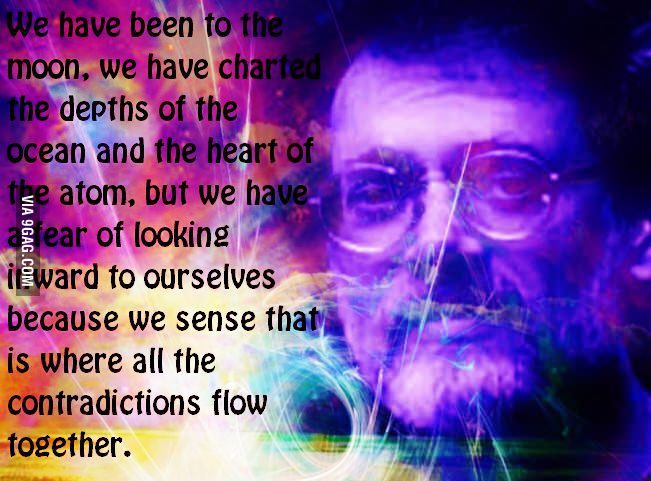
There have always been humans who have been explorers in this realm—Socrates was one, the Biblical sages and prophets were others, and modern esoteric explorers like Rudolf Steiner, Terrence McKenna, Mary Daly, Martin Prechtel, Starhawk and many more.

Terrence McKenna

Terrence McKenna

In the 1960s psychedelic drugs opened the doors for many people who were not at all prepared for the “trips” they encountered.

Now we seem to be coming around again to a period where, as conditions in the physical world deteriorate, more of us are seeking understanding and reassurance in the non-physical.

The more we know of how bad things are here in the physical realm, the more we want to know that “another world is possible.”  And the more we look, the more we find that indeed, there is much more to the universe than meets the eye.

Even scientists are beginning to align with the spiritists they previously disdained. In our age of quantum physics, the whole idea of a “spiritual dimension,” accessible through human consciousness, is becoming much less far-fetched to rational hard science types.

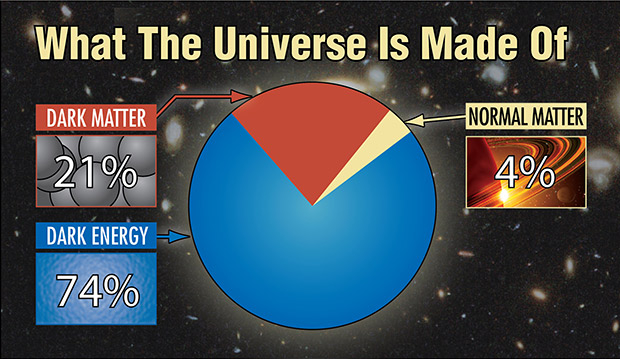
The new Hayden Planetarium show, “Dark Universe,” ends with a graphic that could be right out of “Twilight Zone,” showing that roughly three-quarters of the universe is composed of “dark energy,” a term invented to represent in language something we know enough to know we do not understand at all.

It could be that waking, embodied life is to human consciousness what the physical, hard-matter universe is to the cosmos as a whole.  Just a tiny fragment of a much larger, and potentially much more interesting, whole.

What if the reason every living thing on this planet sleeps (whether in the daytime or the nighttime) is in order to reconnect with the non-physical realm that spiritually sustains us?  We know that if we are deprived of sleep for any length of time, we go crazy and die.

What if “the dreams that come,” whether in sleep or in death, are just as valid a form of experience as the waking hours of our day, and our lives?

What would it mean to be able to think beyond the brief timelines of our individual lives, or even the eons of evolutionary cycles on the planet, and know that we are all part of a much grander cosmic dream?

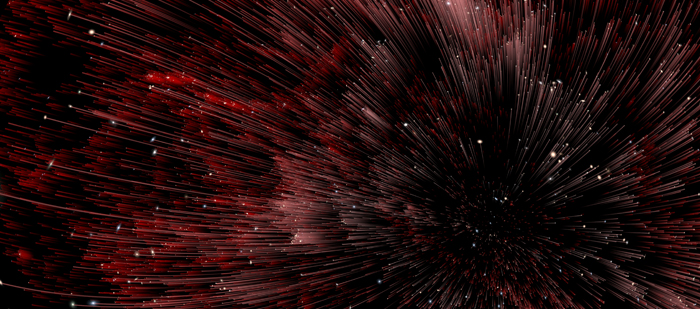
dark-universe-red-shift-interior

Photo source: American Museum of Natural History, Rose Space Center, Hayden Planetarium, “Dark Universe”

Thinking this way does not give me license to let go of my focus on making a difference here on earth, now in my lifetime.

In some ways this imperative becomes even stronger, as it was for Socrates, Steiner and so many other visionaries who were also powerful initiators and guides during their lifetimes.

During this winter solstice season of introspection and questioning, I have been reading and re-reading the writings of one such contemporary guide, the Sufi mystic and spiritual ecologist Llewellyn Vaughan-Lee.  I leave you with a passage to ponder:

In the book of life we can see the energy patterns of creation, the rivers of light that flow between the worlds.  We can see how the individual relates to the whole and learn the secret ways to bring light into the world; we can understand the deeper purpose of the darkness and suffering in the world, of its seeming chaos.  And the attentive reader can glimpse another reality behind all of the moving images of life, a reality that is alive with another meaning in which our individual planet has a part to play in the magic of the galaxy.  Just as there are inner worlds, each deeper and more enduring, there are also different outer dimensions whose purposes are interrelated and yet different.  The inner and outer mirror each other in complex and beautiful ways, and in this mirroring there are also levels of meaning.  As we awaken from our sleep of separation, we can come alive in a multifaceted, multidimensional universe that expresses the infinite nature of the Beloved.

–Llewellyn Vaughan-Lee, Spiritual Power: How It Works

Let it be so.

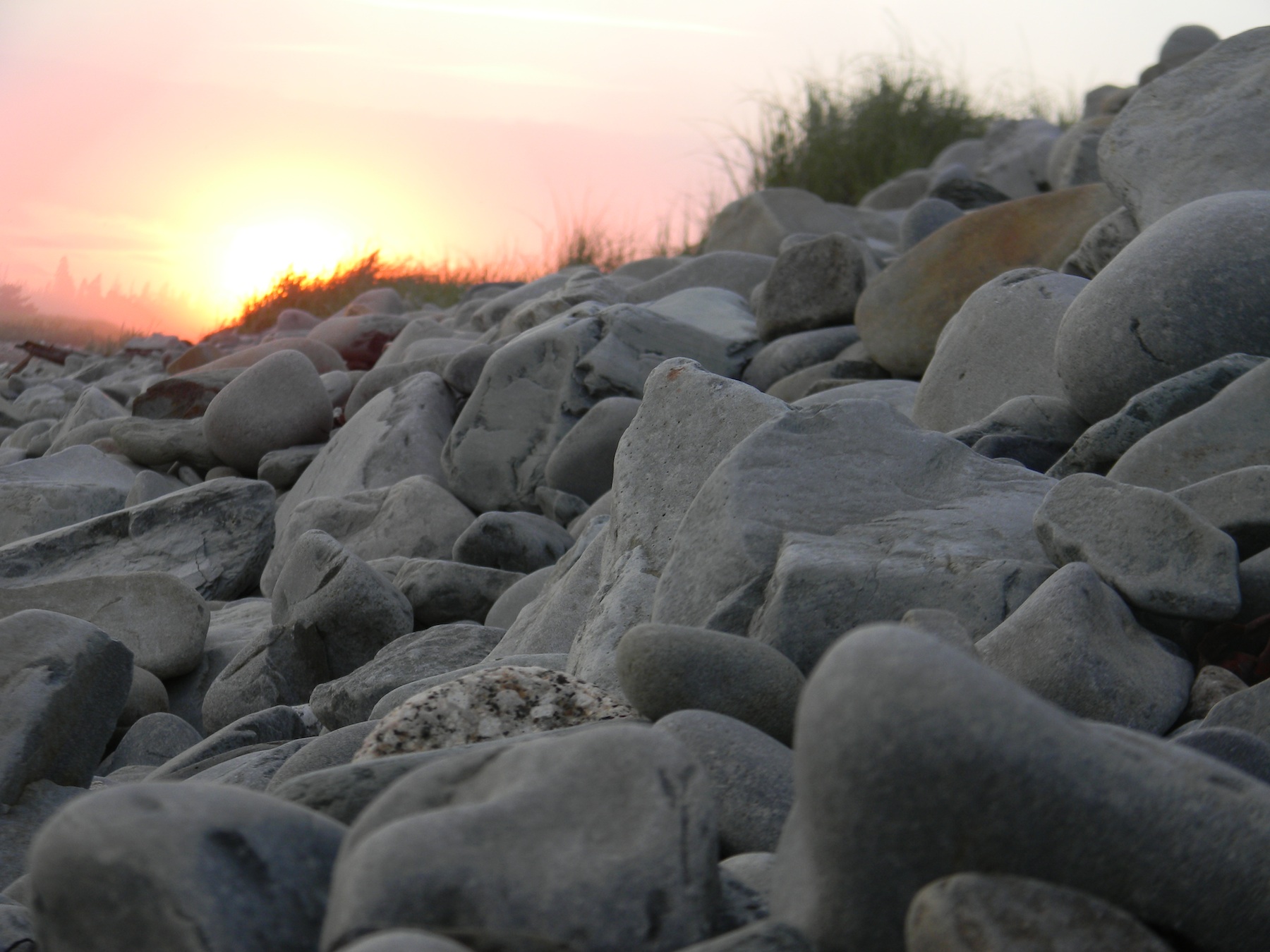
Sunset on Cherry Hill Beach, Nova Scotia.  Photo by Eric  B. Hernandez

Sunset on Cherry Hill Beach, Nova Scotia. Photo by Eric B. Hernandez

I have a dream: the 20th century visions of King and Obama and the “fierce urgency” of our time

mlkihaveadreamgogoFifty years ago today Dr. Martin Luther King Jr. shared his dreams with the American nation:

“I have a dream that one day this nation will rise up and live out the true meaning of its creed: We hold these truths to be self-evident, that all men are created equal.’

“I have a dream that one day on the red hills of Georgia, the sons of former slaves and the sons of former slave owners will be able to sit down together at the table of brotherhood.

“I have a dream that one day even the state of Mississippi, a state sweltering with the heat of injustice, sweltering with the heat of oppression, will be transformed into an oasis of freedom and justice.

“I have a dream that my four little children will one day live in a nation where they will not be judged by the color of their skin but by the content of their character.

“I have a dream today!”

Today President Obama, himself the fulfillment of Dr. King’s dream, honored the legacy of the Civil Rights movement, telling us that because people in Dr. King’s generation marched for justice, “America changed. Because they marched, the civil rights law was passed. Because they marched, the voting rights law was signed. Because they marched, doors of opportunity and education swung open so their daughters and sons could finally imagine a life for themselves beyond washing somebody else’s laundry or shining somebody else’s shoes. Because they marched, city councils changed and state legislatures changed and Congress changed and, yes, eventually the White House changed.”

967-16eslj.AuSt.55

But Obama’s dream remains too limited.  He is still dreaming a 20th century dream of middle class jobs and security: the longing for a society offering  “decent wages, fair working conditions, livable housing, old age security, health and welfare measures — conditions in which families can grow, have education for their children and respect in the community.”

Such a scenario assumes the stability of the real workers of our economy: the trees and plankton that supply our oxygen and the microorganisms that make our crops grow.  It takes for granted steady, predictable rains and moderate temperatures.

We can no longer make such assumptions, and President Obama is wrong to preach to the nation as though 20th century problems and concerns were still paramount today.

Yes, the problem of the color line still exists in 21st century America.  The unemployed still need jobs.  The racial disparity in prison populations is disgraceful.  But these are not the most pressing issues of our time.

President Obama lauded the young of the 1960s for being “unconstrained by habits of fear, unconstrained by the conventions of what is. They dared to dream different and to imagine something better.”

He argued that “that same imagination, the same hunger of purpose serves in this generation.   We might not face the same dangers as 1963, but the fierce urgency of now remains.”

In fact, we face even greater dangers today than in 1963, and it was dishonest of our President not to allude to the much more serious problems now bearing down on us full force: the juggernaut of global climate change.

The wildfires burning in California this week are the among largest ever recorded in the United States.

The rate of species extinction is faster now than it ever has been in the history of human civilization.

The ice melting at the poles promises to release heat-trapping methane gas at rates not seen since prehistoric eras.

Human population is on track to reach 9 billion or more in this century, way beyond the carrying capacity of the Earth.

We don’t know where all this is leading, but surely we cannot expect positive outcomes from these dramatic planetary shifts.

These interconnected environmental issues are the great challenges of our time, and it is to them that President Obama should have alluded, if he was being honest with himself and with the American people.

Whether or not the Syrians used chemical weapons against their own people; whether or not African Americans get to the voting booth; whether or not the American middle class sinks into poverty…all this will not matter at all when accelerating climate change begins to bring food shortages even to the most cosseted Americans.

Here is what our President should have said today:

‘I have a dream that Americans will step into a leadership role in the great fight of our time, the transition to a sustainable, renewable-energy-based society.

‘I have a dream that people of all nations, all creeds and from every culture on Earth will embrace our common challenge of finding ways to mitigate human damage to the planet, and adapt to the changes that are rapidly coming our way.

‘I have a dream that men and women from all over the globe will stand together, knowing that divided we will fall, but united we have a chance to safely ride out the storms that face us.’

My own personal dream is that our political leaders will stop lying to us, and will summon us to step up to the great ethical and empirical challenge of our time: creating lifeboats on which our children and grandchildren may sail safely into a sustainable future.

R.O.I.—From Mother Earth’s P.O.V.

imagesPeter Buffett, one of billionaire Warren Buffett’s sons, published a brave, thoughtful op-ed piece in the New York Times the other day.  In it, Buffett takes to task what he calls “the Charitable-Industrial Complex,” the philanthropic crowd who piously seek to save the world, as long as the R.O.I. is sufficiently rosy and the status quo is not upset.

Buffett knows he sounds like a class traitor here as he proffers this description of “Philanthropic Colonialism” (his term):

“As more lives and communities are destroyed by the system that creates vast amounts of wealth for the few, the more heroic it sounds to “give back.” It’s what I would call “conscience laundering” — feeling better about accumulating more than any one person could possibly need to live on by sprinkling a little around as an act of charity.

“But this just keeps the existing structure of inequality in place. The rich sleep better at night, while others get just enough to keep the pot from boiling over. Nearly every time someone feels better by doing good, on the other side of the world (or street), someone else is further locked into a system that will not allow the true flourishing of his or her nature or the opportunity to live a joyful and fulfilled life.”

Buffett says he’s “really not calling for an end to capitalism; I’m calling for humanism…. It’s time for a new operating system,” he declares. “Not a 2.0 or a 3.0, but something built from the ground up. New code.”

Buffett says that philanthropy should be dedicated to  “trying out concepts that shatter current structures and systems that have turned much of the world into one vast market. Is progress really Wi-Fi on every street corner? No. It’s when no 13-year-old girl on the planet gets sold for sex. But as long as most folks are patting themselves on the back for charitable acts, we’ve got a perpetual poverty machine.

“It’s an old story,” he concludes; “we really need a new one.”

Yes.  And philanthropy is not the only sector of our society that needs to reinvent itself.

Although I respect Buffett for his willingness to sound what will be taken as a heretical note in his own social circles (at one point he adds self-consciously “now I’m going to upset people who are wonderful folks and a few dear friends”), I don’t think he goes far enough.

I don’t want to see a merely “humanist” social system, I want to see humans develop an ecological understanding of our place and role on the planet.

I want us to repudiate our colonialist mindset, which persists not only in our tendency to give “humanitarian aid” with one hand while seizing economic control of a country’s most valuable resources with the other, but also in predatory capitalism at home and abroad—the debt bondage that the majority of people on the planet who buy into the system find themselves lashed to, laboring to pay the bank without ever being able to accumulate enough capital, social or financial, to buy their way into the promised land of security and ease.

The “new story” I’d like to see us live by would rewrite human attitudes towards other animals, insisting on the rights of every living being on this planet to a decent life.

That doesn’t mean a pig needs a condo with a swimming pool, but she does need enough space to breathe and move around in, healthy food and a clean, sanitary living environment.  Her wastes need to be disposed of the same way human wastes are—not sent into the rivers to create dead zones the size of states out in the sea.

100_2435Every aspect of the planet, from trees to minerals to water to fossil fuels, should be seen as precious resources to be safeguarded and cherished for the good of all who rely on them, not merely as sources of income for the few who sit on the boards or own stock in the mega-companies that develop, extract, exploit, and sell before moving on, leaving the devastated land as “collateral damage”— someone else’s problem.

The question is, how to get through to the corporate titans who are very happy with the status quo?

These are the folks who live their whole lives in such a fabulous cocoon of wealth and privilege that they have the illusion that they and their families can remain entirely insulated from the shocks of our poisoned, over-populated, over-heated planet.

If even in their philanthropy these people are thinking in terms of R.O.I., it must be a totally foreign concept to them to imagine conducting business in terms of gross social gain rather than gross individual profit.

Andrew Harvey, in his book The Hope: A Guide to Sacred Activism, recounts a lunch conversation he had with one such business tycoon, “the head of a major agribusiness corporation.”  The businessman chews Harvey out for being a “naïve do-gooder” who does not understand how the real world functions.

“Most of you that I have met truly believe that if the CEOs—like me, for instance—really knew what harm their corporate policies were doing, they would rend their Armani suits, fling out their Rolex-wreathed arms, burst into tears and change.  This is madness and shows how little you dare to know about what is really going on.  And how can you even begin to be effective until you understand what you are up against?

Of course, the businessman then enlightens Harvey on what he and other “naïve do-gooders” are up against in the quest to change the world for the better.

“You are up against people like me,” the man says.  “I know exactly what my company is doing and what devastation it is causing to thousands of lives.  I should know; I am running it.  I know and I do not care.  I have decided I want a grand gold-plated lifestyle and the perks and jets and houses that go with it and I will do anything—bend the law, have people ‘removed,’ bribe local governmental officials, you name it—to get what I want.  I know, too, that none of my shareholders care a rat’s ass what I do or how I do it, providing I keep them swimming in cash.”

I thought of this blunt, self-satisfied description of the view from the top of the capitalist heap when I read recently about how the American electricity industry is responding to the rising popularity of home-based solar panels.

images-1Rooftop solar panels are being compared to cell phones, which, if you remember, created a major sea change in the telecom industry.  In the end, the telecom giants made out like bandits, after initially having spent a lot of money and political capital to try to put the brakes on what was perceived as a threat to the traditional landline phone system.

Today it’s the turn of the electricity industry, which is terrified of losing market share if every homeowner can make their own energy on their own roof.

If homeowners are no longer paying the fees that subsidize the public grid, industry officials argue sanctimoniously, how will this public system be maintained?

No where in the New York Times article about this, which appeared in the Business section, was there any mention of the broader social, global benefits of distributed solar electric generation as compared to fossil fuels or nuclear electric sources.

No mention of the many reasons why every government on the planet should be encouraging homeowners and businesses to convert their energy sources to solar, along with wind, hydro and geothermal, just as fast as they possibly can.

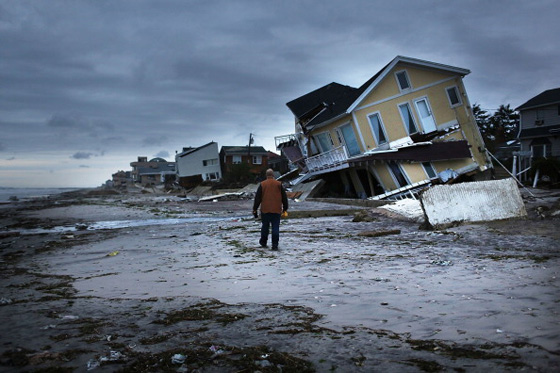
When are the CEOs who are so busy buying off Congressional delegations and creating expensive self-advertising campaigns going to realize that what they really need to be worrying about is not thrifty homeowners taking advantage of tax incentives to install solar panels, but the mega-storms, wildfires and floods that will be coming our way every year, increasing in intensity the longer we wait to make up our minds, as a global society, to give up our addiction to fossil fuels?

hurricane-sandy-damage

Apparently most human beings can only be swayed by self-interest.

OK—we can work with that.  It’s quite clear that it’s in the interests of every human being on the planet to develop a sustainable relationship with our Mother Earth.

If we don’t, she will just give a great shrug of her climatic shoulders and be done with us.

Where will the R.O.I. be then?

Time for change

Jen light 3 copyIf my blog posts have been a bit few and far between lately, it’s because I’ve been focusing my writing efforts this summer on the bigger project I have underway, the personal/political memoir I’ve been working on for some years now.

The political subtext will be somewhat familiar to followers of my blog these past two years: the necessity for more ordinary folks like me to wake up to the realities of climate change and environmental destruction, and begin to take action in both the personal and the political spheres.

The personal narrative will be somewhat familiar to friends and family who have followed my life, or pieces of my journey, these past 50 years.  Good moments and bad, easy stretches when everything seemed to be going right, followed by inevitable patches of heartache and turmoil.

In the course of charting my experiences in depth through this memoir project, I’ve realized that I have two qualities that have often led me into troubled waters.

One, probably because I grew up in a family with strong values of caring, respect and integrity, I have tended to be very trusting—to believe that people mean well and want to do the right thing by others.

And two, I have been slow to respond to situations that make me unhappy.  I tend to try to stick with whatever I’ve started or gotten myself into, to try make it work even when it’s become quite obvious—even to me!—that things are never going to change for the better.

I’m trying to make some connections between these personal traits of mine, and the larger social landscape that I inhabit.

For example, it seems to me that we have all tended to be too trusting of authority figures like politicians and business leaders, expecting that they have our best interests at heart.

As a kid growing up, it would never have occurred to me that corporations would produce, package and market products aimed to appeal to children, that would, over time at least, make us seriously sick.

I remember begging my mom to buy me Froot Loops and Lucky Charms breakfast cereal, which looked so yummy and appealing on TV.

I wanted Ring Dings, too, and Yodels, and Twinkies.  I wanted Coke, of course, and Dr. Pepper.  I wanted McDonald’s hamburgers, fries, and McMuffins.

I was lucky that my mom was not swayed by the seductive advertising, and went her own way with food, raising my brother and me on fresh fruits and vegetables (often grown in our own garden), premium meats, and homemade, preservative-free desserts.

Others, who bought the advertising and fell for the products, are finding themselves now, at midlife, with diabetes, cancer, asthma, arthritis and all the rest of our common American ailments.  To some degree at least, the explosion of health problems in the developed world can be directly traced back to our societal trust that Big Business, Big Agriculture and Big Government were doing their best to safeguard our health.

Turns out we needed to be more discerning—a theme that runs through both my private and public spheres.

Likewise, I can relate my own slowness to realize and respond to untenable situations in my personal life to our broader social reluctance, as human beings, to go against the flow.

Let’s face it, we humans are herd animals, as Nietzsche saw clearly more than a century ago. We run in packs, and we fear nothing so much as social isolation and disapproval.

For me personally, the kinds of situations that I’ve been slow to wake up to and act upon have been ones in which taking action means going against the grain of social expectations.

For example, my marriage.  It was very hard for me to let go of my own attachment to being married.  There are so many positive perceptions surrounding married people, while divorced people, on the other hand, are perceived as unstable, difficult, dissatisfied, disloyal, probably neurotic, bad parents, bad partners, bad lovers—in short, failures overall.

Even though some 50% of marriages in the U.S. end in divorce, these stigmas still hold a great deal of power, and for me it was hard to finally concede that I could go no further in my marriage.  After more than 20 years, I had to cry uncle and admit that yes, I had failed.  I could not make it work.

The thing is that once I got to that nadir, I didn’t care anymore what people thought, and I came to see the major life change of divorce as a positive liberation, not a failure at all.

Once I’d made the leap and let go of my inertia and fear of change, I discovered that it wasn’t nearly as hard as I’d imagined, nor were the repercussions as severe.

It turns out that most of the fears I’d had around becoming single—and a single parent—at midlife had much more to do with my own perceptions than with any reality out there in the world.

I believe that these kinds of fears in the personal realm apply just as much in the political realm.

CWindmillhome

Wind turbines on the Bay of Fundy, Nova Scotia

For instance, we know that our longterm relationship to fossil fuels is, in the words of JT, “driving us down the road to ruin,” but so many of us feel stuck, afraid to go against the tribe in seeking out new, more positive relations to energy use on the planet.

We tend to just go with the flow, running our AC on hot days, driving our cars, using our oil furnaces for heat in the winter.  Even though we’re beginning to see that this makes us unhappy—who, after all, enjoys prolonged heat waves, out-of-control wildfires, destructive storms and raging floods?—we still stick to what’s familiar, what appears to be socially acceptable, what everyone else is doing.

It’s time for each one of us to stiffen our backbones and be honest with ourselves about the situation we’re in now.

Climate change is upon us.  It’s past time to start working hard to cut carbon emissions by reducing use and switching to cleaner energy like wind, solar and geothermal.  We need to stand with 350.org and other environmental groups to pressure our government to do the right thing—to put the health and welfare of we, the people, ahead of the profits of them, the corporations.

On a personal level, too, we can also make changes.  We can use bicycles more, and AC less.  We can hang out our laundry to dry.  We can start weaning ourselves off disposable plastics, and put some raised beds in our backyards or on our rooftops.

It used to be that only “granola people” did things like this—“granola people” pronounced with a dismissive smirk.

It turns out that those crunchy folks had it right, and we’re the ones who have stayed in our unhappy fossil fuel-based relationship too long.

We may imagine that breaking with the herd and striking out alone on the path of ecological sanity is going to earn us smirks and sneers.  But a) this is probably just in our heads; and b) who cares, if it makes us happier in the long run?

Here’s what I’ve finally realized, at midlife, on both the personal and the political levels: life is way too short to waste time being unhappy if a path toward happiness is available.

Letting go of our attachment to the status quo is the crucial first step on that path, and it’s not easy.  But it is necessary now, given the critical juncture we’re at as a planet and a human civilization.

Think about it.  And then—act.

Floods, drought: the Earth needs us now

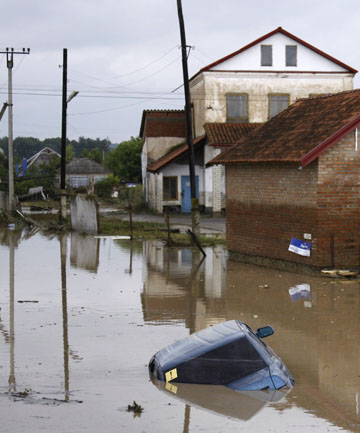
floods in southern Russia

I could hardly believe it when I read in the paper today that major floods in Russia have caused nearly 200 deaths this week.

Floods?

It is bone dry here in the hills of western Massachusetts.  It is so dry that if I did not water my vegetable garden every day, all my beautiful plants would be drying up in the merciless drought.

When I walk by the half-dry river in the afternoons, I am struck by all the yellow and brown leaves on the path—the forest has the golden cast of September now, the dry spell fast-forwarding us from mid-summer to fall.

The first veiled hints of trouble have made their way into the mainstream media, with crop losses due to drought expected to push up the prices of food in the U.S.

Barely a mention of shortages yet.  No rationing.  Just higher prices, which will make it harder for those of us on fixed incomes—not to mention all the unemployed—to afford to buy what we want to eat.

Clearly there is a shocking imbalance between the torrential rains in Europe and the parched drought here in the US.

Clearly it’s anthropogenic climate change rearing its scary hydra head.

I have heard tell of Native Americans calling on the rain gods to bring rain clouds to a dry landscape.

Our own techno-engineers talk about seeding the clouds to provide rain.

In both cases, it’s a matter of human beings applying our great brain power to find solutions to problems that threaten our existence.

Each of us has some gift to contribute to the common cause of survival—remembering that the survival of human beings is entirely intertwined with the survival of every other life form on the planet, from plankton to trees to bees.

Truly, this is no time to wait shyly on the sidelines to be invited, or to wait for others to take the lead.

As the saying goes, we are the ones we’ve been waiting for. If ever a time called for brilliant and dramatic solutions, that time is now.

Commencement reflections, 2012

This weekend my first-born son will graduate at age 20 with a B.A. in Biology.  He will join thousands of other graduates across the country marching to the dais to accept his hard-earned degree from school officials dressed in the medieval cap and gowns we still wear for such occasions.

And then he will march out into the world to join the hordes of recently graduated young adults, confronting one of the worst job markets ever seen in American history.

When I graduated college back in 1982, there was also a bit of a recession on, but things quickly rallied, and I had no trouble finding a job in journalism, and working my way up from reporter to staff writer to editor at publications in New York City.

When I chose to go to graduate school, it wasn’t hard to find a part-time job as an assistant editor to make room in my schedule for my studies.

And so it went, one step leading to the next with a steady predictability.

For my son, now, that kind of reliable future is out of the question.

We live in such a fast-changing world that there is no way to predict with certainty what kind of challenges we’ll be facing in, say, the next five years.

Will climate change come to a head and rain environmental devastation down on us?  Will an antibiotic-resistant bacteria strike?  Will the risky behavior of the financial sector finally put us completely at the economic mercy of the Chinese?

We can’t know the answers to any of these big global questions, any more than we can know the answer to the very small, local question that I am sure is in the minds of all the parents and grandparents who will be watching their graduates march this weekend: will s/he be able to find a job next year?

Many of the graduates will choose to put off confronting that question by diving back into graduate school.  That is certainly what my son has in mind, and it is the right thing to do, given his desire to work as a marine biologist.

Even a Ph.D. is no guarantee of a living wage anymore, although things are somewhat brighter in the sciences than for those of us stuck in the doldrums of the humanities.

I am proud of what my son has accomplished in his first two decades, and proud of the fine human being he has become.

I am much less proud of the world we, his elders, have created, into which he’ll now be stepping as a young adult.

As a teacher, I see clearly that what is needed is a collaboration of older, more experienced minds, with the open, energetic and passionate young minds who are now coming into their full powers.

I don’t want my son and all the other graduates to follow blindly in our path, doing things as they’ve always been done, which is largely what I myself did as a young adult.

Knowing how desperately we need to change our habits in order to shift our society on to a sustainable path, we can’t afford to give young people the luxury of just following along the paths that are already established.

We need them to be blazing new trails, and we older folk need to work with them closely in this crucial undertaking.

As my son strides off the dais with his BA in hand on Saturday, this is the blessing that will be in my mind:

May you take your knowledge and talents and use them for the benefit of our planetary home.  May you be a warrior for good, and become a leader in your sphere.  May you prosper and find happiness in working for the prosperity and happiness of all. 

Opening to the energy that can change the world

In the course of any given day, I swing from hope to despair and back again at least three or four times.

On the one hand, it’s such an amazingly hopeful and alive time in terms of communication and discovery.  We are constantly learning so much more about our relationship with the natural world and with each other.  Every day brings fresh evidence of the myriad ways in which we are deeply interconnected with all Earth systems and with other Earth-based creatures.

On the other hand, that knowledge does not seem to be adding up to practical change in the real world.  Every day thousands of acres of virgin forests are cut and bulldozed.  Every day drills open up new spigots for deeply buried oil and gas deposits, which can only be extracted at great risk to the surrounding environment. Every day more chemicals are wantonly spread over the landscape and taken up in the bodies of mammals like us, as well as birds, fish and all the other creatures of the land and sea.  Every day hundreds of species, including us humans, move inexorably closer to extinction.

Why is it that despite all we know about the crucial importance of protecting our planetary home, we continue to desecrate and destroy it at ever-increasing speed?

Maybe the answer has something to do with that “we.”  Maybe the “we” who know that our survival as a species depends entirely on our responsible stewardship of the environment just isn’t the same “we” that is out there with the chain saws and the bulldozers.

Maybe the great challenge of our time is getting through to those other people, the destructive ones, the violent ones, the ones who do not seem to be able to perceive the bigger picture and how urgent it is now that we—as a global human civilization, united in our desire to survive and thrive on our finite planet—begin to practice radical sustainability at an accelerated pace.

The stakes are huge.  At this week’s international “Planet Under Pressure” conference in London, the stark statistics were rehearsed yet again.  They’ve gotten so familiar to me that I probably mumble them in my sleep every night.  The new video “Welcome to the Anthropocene” does an excellent 3-minute job at summarizing what we’re up against.

Still image from "Welcome to the Anthropocene"

But knowing the statistics and seeing what’s wrong is not at all the same as knowing what to do to make things right.

It’s so hard to know where to put one’s energies.

Do I go full-bore at the sustainable energy issue, following Bill McKibben?  Maybe a hunger strike in front of the White House would be an effective protest against the Keystone XL pipeline?

Do I go chain myself to a tree in the Amazon or in the rainforest of Indonesia, to protest the deforestation that is depriving us of the vital lungs of our planet?

Should I use my skills as a teacher to try to rouse the young people from their media stupor, using whatever scare tactics are necessary to get their attention and galvanize them to action?

Should I just be out there practicing “re-skilling,” in the Transition Town vernacular: relearning the old skills of surviving off the grid, living leaner and closer to the land that sustains us? Is it time to learn to keep chickens and pigs in my backyard, and finally set up the bee hives I’ve always wanted?

Or maybe I should be up on a mountaintop meditating and communing with the natural world, seeking the vision that will eventually show me the light?

What is it that I should be doing with this one wild and precious life I’ve been granted, in this fast-moving, tumultuous, unpredictable time in our planetary history?

Asking these questions is all I can do right now, just keep asking them and pondering and feeling my way towards my role in what lies ahead of us all.

I want to make an offering of my life.  I want to be a channel through which the positive, loving energy of the universe can flow out and make things right again with our world.

Parents, listen up! You need to know, and you need to act–now.

We raise our children so carefully, so thoughtfully.  We make them eat their vegetables, organic if possible.  We send them to the best schools we can find and afford.  We screen their friends and text them anxiously if they’re late coming home.  We worry about their careers, their futures. Will there be any jobs for our precious children when we finally, with great effort and care, get them through high school and college?

Jobs are important, sure.  But why is it easier for us to think about the economy than about the biggest issue confronting our children, and all of us, in the next few years?  I’m talking about the climate crisis and the degradation of the environment. The loss of species, the toxifying of the air, soil and water.  The fact that the planet our children are inheriting is not the planet we were born on to.

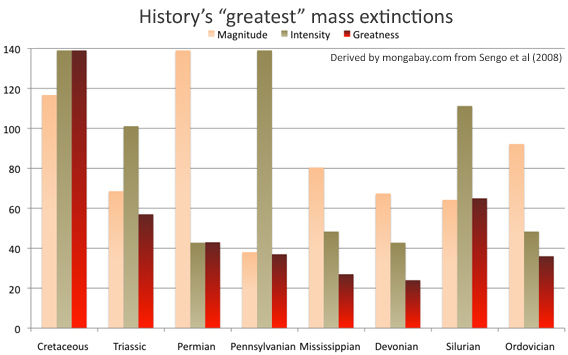
Of course, that’s always been true.  The planet has always been changing, evolving, sometimes in violent increments.  But it’s different now.  It’s different because never before, in the history of homo sapiens, have we been so close to the brink of a major, fast shift in our climate.  Never before, at least since we humans have been on the planetary stage, have we come so close to a global extinction event.

Global extinction event.  Where did I get a phrase like that?  It’s surely not my own language.  It’s one of those memes making the rounds of the Web.  But it’s not part of the lexicon of any of the parents I know.  They don’t want to think about it.  They don’t want to talk about it.  They don’t want to know.

How irresponsible is that, and how surprising, for parents who have been so conscientious, so completely invested in their role as primary caretakers and nurturers of their children.

It’s the privileged parents to whom I address myself most fervently. Parents who put so much time, energy and money into the task of raising their children, and do so with all their intelligence, responsibility and good will.  Parents who often have extra money to put towards a winter vacation someplace warm, or a summertime break by the beach.  Parents who are happy to send their kids to specialty camps in the summer, and who come up with the cash for school trips, afterschool lessons, an educational weekend in the city, a junior year abroad.

Privileged parents, listen up!  If you continue to turn a blind eye to the intertwined issues of environmental degradation and climate change, both of which are caused above all by enforced, ruthless economic growth based on the heedless consumption of fossil fuels and distribution of chemicals in the water, earth and air, your beloved children will face a future in which they cannot thrive.

A future in which none of us can thrive, unless it be perhaps the cockroaches, the ants and—for a while at least—scavengers like vultures and crows.

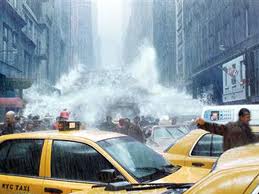
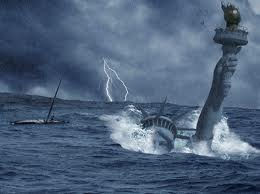
There have been so many disaster movies produced in the past few years—The Day After Tomorrow, 2012, WALL-E—putting out on the big screen our fears about what kind of future awaits us in an age of climate crisis and ecological collapse.  These movies represent our collective unconscious talking to us, presenting worse-case scenarios so that we can prepare ourselves for what may come.

We seem to like these movies because they give us the pleasure of stepping back afterwards and reassuring ourselves that it was just fantasy, not real.

The reports of the International Panel on Climate Change have none of the glamour of the big screen.  But they are saying the same thing as those disaster pictures.  They paint the same picture in different language.

It turns out that those disaster scenarios are real.

Sit with that knowledge for a bit, and then check in with yourself as a parent.  Once you accept that the looming environmental crisis is real, how can you continue to live your life blithely as though everything is OK?

Parents above all have a responsibility not just to take this knowledge seriously, but to act on what we know.  And parents of privilege–the 10%, the 25%–most of all.

We should be vehemently protesting the poisoning of our food, air and water.  We should be doing our utmost to stop the corporations who are wreaking this havoc, to change our own participation in the system, and to envision and manifest a better society that engages sustainably with the planetary ecological systems upon which we all depend.

Never before have we stood at such a juncture as a species.  Now is the tipping point.  Now is the time for us to stand up and be counted.  Now is the time for us to dare to take a path less traveled, to think for ourselves, to do what’s right for us and our children and the world we live in, before it’s too late.

It will not be easy, the road ahead.  There is so much to be done to turn this environmental train wreck around, and so little time.  We may not succeed.

But we cannot continue to play dumb any more.  We cannot continue to keep playing the game as if nothing were wrong, as if the biggest crisis of the past 10,000 years of human history were not on the horizon.  We cannot keep dancing to the band on deck as the iceberg looms before us.

There is too much at stake, for ourselves and especially for our children, whose lives—with any luck, and a lot of hard work—will reach further into the 21st century than ours.  If we care about our world—if we care about our children—we must act decisively, do whatever it takes.  Now.

They don’t play nice. Should we?

So manifestoes are all very well, in the visionary department, but things get harder when you get down into the nitty-gritty of making transformative change happen.  I thought I might take some time this New Year’s season, 2012, to reflect more deeply on what it would mean to turn my dreams into reality.

Let’s start with the first point in my recently penned Manifesto for a Sustainable Future, which is:

1. Move from a top-down hierarchical system to a horizontal, egalitarian model of social relations based on inclusivity across all of the traditional boundaries used to keep different groups apart, and also opening up the possibility for cross-species collaboration based on respect and stewardship.

People have been talking about coalition across artificial differences between humans for a long, long time, and in some cases it has worked: for instance, the privileged white folks who believed in “equality, fraternity and liberty for all” played a huge role in freeing the enslaved Africans during the 19th century, and then a later generation of freedom-loving people from various heritages worked together again in the 1960s to extend the earlier gains through civil rights, women’s rights, decolonization, etc.

It’s not that hard to get people to agree in principle that all human beings deserve equal treatment before the law, or that children should have equal access to quality education, good food and health care.  The Universal Declaration of Human Rights is based on just such agreement.  The problem is that principles and declarations are one thing–like manifestoes–while actions on the ground are quite another.

In practice, we know full well that people of color, poor people and immigrants are not treated equally before the law in the U.S. We also know that there are millions of children in this country whose public schooling is inadequate, sometimes terribly so, and who do not have access to healthy food or good quality health care.

We know this, and yet we choose to ignore what we know.

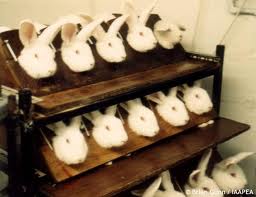
It’s the same thing with what is happening to animals in this country.  We know that scientific research, aka torture, is conducted on thousands, if not millions of defenseless animals every year.  We know that millions of pigs, cows and poultry are treated with total disregard for their well-being, as if they were machines being assembled for market, instead of living, sentient beings.  We know that millions of wild mammals, birds and marine life are relentlessly being pushed into extinction by the pitiless advances of human “civilization.”

We know this, but we choose to pretend we don’t know it.

Maybe that’s because if we really took this information in, the knowledge would be unbearable.  How could we live with ourselves, knowing that just by conforming to the status quo, we are responsible for so much suffering of others on this planet?

But we need to stop pretending and closing our eyes and turning away.

Because it is out of this deep knowledge of our connection with other living beings on this planet, and the inescapable awareness of the suffering we humans are causing, that a movement of solidarity, resistance and change will grow.

To bring up the term “movement” is to be clear that the kind of transformative change I’m envisioning could not possibly be the work of one person, or even a few people.  It has to be an unstoppable wave, demanding change and taking nothing less for an answer.

In the 19th century, the abolition movement ended up sparking a civil war in the United States.

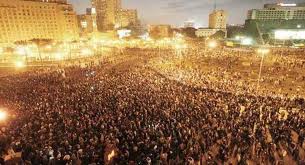
A second American civil war seems rather unthinkable to most of us now, even as we watch with amazement as regimes fall to enraged mobs all across the Middle East and North Africa.

In the US, free expression is tolerated far more widely than, say, in China, where journalists and bloggers are regularly beaten up and thrown in prison for daring to speak an unpopular truth.  The U.S. was shocked–shocked!–when the government called out the military and tanks began firing into the crowds at Tiananmen Square back in 1989.

But you have to wonder, watching the ruthless way city police are now trained to deal with street protests, how much it would take to provoke a similarly harsh response from our federal government.

What if there were a real movement of people united in their demands for “equality, liberty and justice for all,” as schoolchildren in the US are still trained to recite piously every morning, hands over hearts, when the Pledge of Allegiance is played over the PA system?

What if people got fed up enough with our bungling and corrupt national leaders, our deeply unfair and wildly overpriced medical system, the outrageous skewing of entitlements of all kinds to the wealthy, the militarization of our relations with other countries, the poisoning of our environment, the killing off of the natural world–fed up enough that we were willing to take to the streets and demand change, and not back down even when they brought out the tear gas, the tanks and the guns?

Then we might just have a Civil War II on our hands.  And like the first Civil War, it would be bloody, chaotic and uncertain in outcome.  But if the vision that guided it was sure and true, it might just lead to a whole new country arising out of the ashes of the old.

In this globalized age, such a civil war might easily turn into a global war, as the 99% the world over rose up against the tyranny of the rich corporate interests that are ruining the welfare of humans and the planet as a whole.

And here’s where I need to get back to the Manifesto, where I imagined a new social order based on a horizontal, inclusive, respectful, egalitarian model of social relations, with the welfare of the poor as important as the welfare of the rich; the welfare of the coral reef as valued as the welfare of the watershed feeding a city; the welfare of a livestock animal as important as the welfare of a cherished pet.

Not to say that everyone would necessarily be treated exactly the same–a cow wouldn’t want the same treatment as a dog, after all.  But whatever it takes to give a cow a comfortable, dignified life, should be undertaken.  Whatever it takes to give every child access to a high-quality education, should be done.  Decisions should be made in truly representative fashion, with no possibility of wealthy interests buying votes, no PAC lobbies or media manipulation allowed.

The devil is in the details in putting such a new world order in place, I know.  Many smart people maintain that human beings are irredeemably aggressive, competitive and greedy, and so we are incapable of creating such an ideal world.

But many other smart people say the opposite: that human beings are naturally empathic creatures, whose first instinct as infants is to love, not to hate.  Very few children are instinctively cruel to others.  The majority of us seem to be naturally good-natured, though easily swayed and corrupted by our social conditioning.

As Jeremy Rifkin has argued, “What is required now is nothing less than a leap to global empathic consciousness and in less than a generation if we are to resurrect the global economy and revitalize the biosphere. The question becomes this: what is the mechanism that allows empathic sensitivity to mature and consciousness to expand through history?”

Rifkin’s own answer to this question has to do with what he calls the “distributed Internet revolution,” which is “changing human consciousness” by “extending the central nervous system of billions of human beings and connecting the human race across time and space, allowing empathy to flourish on a global scale, for the first time in history.”

Rifkin envisions just the kind of transformation in social relations that I have also been dreaming of.  His description of a new human relation to what he calls our “biosphere” is worth quoting in full:

“The biosphere is the narrow band that extends some forty miles from the ocean floor to outer space where living creatures and the Earth’s geochemical processes interact to sustain each other. We are learning that the biosphere functions like an indivisible organism. It is the continuous symbiotic relationships between every living creature and between living creatures and the geochemical processes that ensure the survival of the planetary organism and the individual species that live within its biospheric envelope. If every human life, the species as a whole, and all other life-forms are entwined with one another and with the geochemistry of the planet in a rich and complex choreography that sustains life itself, then we are all dependent on and responsible for the health of the whole organism. Carrying out that responsibility means living out our individual lives in our neighborhoods and communities in ways that promote the general well-being of the larger biosphere within which we dwell.”

It would be nice if we could simply persuade the 1% corporate types of the necessity of this shift in human consciousness. But these people don’t play nice.

That’s why we dreamers who share this kind of transformative vision may have to toughen up, if we want to achieve our goals.

As Derrick Jensen keeps saying, how long will we wait until we realize that action is necessary to avoid annihilation?  It’s the birds, the bees and the bats who are dying now, but these creatures form the base of the pyramid on which current hierarchical human society rests.  If their populations crash, can ours be far behind?

Can we afford to wait and see?