An Eco-Humynist Manifesto for the 21st Century

Having watched with dismay as the Durban climate talks sputtered to a disappointing conclusion, with all parties knowing that every day that goes by without concerted international effort to address climate change means the inexorable shifting of life as we know it on Earth, I was moved yesterday to put fingers to keyboard and come up with a Manifesto for change.

Even as I was writing it, I was thinking that such radical changes would not be possible to put into place without resistance from the status quo powers that be; therefore bloodshed, which is specifically antithetical to the principles I lay out, would be inevitable.

But if a World War III must commence, I would rather it be for a good cause like this one, than for the petty greed, bigotry and hatred that have propelled humanity into previous wars.

If we want not only ourselves, but our entire eco-system to survive, do we have any other choice but to take decisive action now?

An Eco-Humynist Manifesto for the 21st Century

Whereas human beings have acted in a dominating fashion towards each other and towards other living species on this planet, using the excuse of difference to justify aggressive and destructive behavior;

Whereas competition has been used as a rationale for economic systems based on hierarchical systems of power;

Whereas social exclusion and systematic discrimination has been seen as the normative right of dominant groups;

Whereas privileged groups have felt entitled to take more than their fair share from the environmental commons, and to deprive less powerful groups, whether human or of other species, of the resources necessary for well-being;

Whereas it is quickly becoming apparent, in the age of climate change, that the dominant paradigm of capitalist patriarchal social relations is resulting in the dangerous destabilization of the entire natural ecosystem;

The time has come to take action to change this paradigm in the following ways:

1. Move from a top-down hierarchical system to a horizontal, egalitarian model of social relations based on inclusivity across all of the traditional boundaries used to keep different groups apart, including race, class, gender, sex, nationality, ethnicity, religion, and also opening up the possibility for cross-species collaboration based on respect and stewardship;

2. Shift the worldwide economic system to a model of global cooperation and collaboration, with the focus of human industry and government on providing a baseline of well-being for all life forms on this planet, regardless of geographic origin or antiquated ideas of relative importance (ie, who is to say that a human being is more important than a songbird, or a sardine?);

3. Tailor the education system to teaching the history of the destructive cultural practices of homo sapiens up to the 21st century, and opening up constructive conversations across disciplines, where alternatives to these traditions can be envisioned and developed;

4. Model egalitarian, collaborative, respectful social relations in the private sphere of the family as well as the public spheres of education, the profession, government and law;

5. Shift from a violent conflict and punishment model of resolving disagreements to a peaceful persuasive model, with the goal always being the well-being of the community as a whole first, and secondly each member of it.

6. Destroy all weapons of mass destruction, as well as all bio and chemical weapons, and their blueprints.

7. Disallow any one person’s or minority group’s interests (with rich people and businesses or industries rightly being considered minorities)  to take precedence over the interests of the majority, including the non-human majority on this planet.

8. Develop an appropriate representative global governing council to administer these principles.

In the name of Mother Earth and ALL of her children, I call on the peoples of the world to act without delay to become the stewards of the planet and the collaborative, respectful individuals we were always meant to be.

Thanks to the students of Gender, Culture & Society, Fall 2011, for the inspiration to write this Manifesto.

Swept away for the holidays? C’mon, Occupy, Let’s Go!

Looking back over the week, it seems like we’ve settled into some kind of holding pattern. The Occupy protests keep spinning, including a jubilant rally in Boston last night, but there is a feeling that we’re all waiting for the next shoe to drop…the next big push, the next new thing.

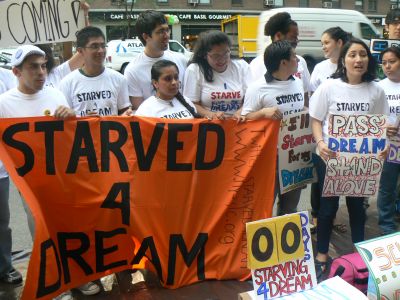
This week saw Occupy Foreclosures; next Monday there is a plan afoot to shut down the West Coast ports. The student protests are still sputtering; there is a group of hunger strikers in New York demanding a home for OWS;  and a stalwart group of climate activists has been braving relentless hostility to protest in at the COP 17 talks in Durban.

I’m glad to see all this stirring of outrage and energy.  I’m just starting to get confused by all the different tangents the movement is taking, and wishing for more focus and concentrated action.

I want the 99% to be like a biblical flood that will wash all the corruption and evil away, leaving a sparkling new world ready for re-occupation.

I know full well that’s unrealistic.  It’s not meant to be taken literally.  It’s just the kind of mood I’m in: impatient, restless, tired of the same old same old.

I have that same feeling about the holidays this year.

Are we really going to go through those motions again?  Are we going to fool our little children into believing in Santa Claus?  Are we going to laugh and clink glasses at innumerable holiday parties?  Are we going to go on shopping sprees for presents at the malls?

Again I’m reminded of the band that was ordered to keep playing as the Titanic sank.  There’s a new 3-D version of the Leo DiCaprio/Kate Winslett Titanic coming out soon–as if what we really needed was to watch that horrible tragedy again, in 3-D.

Folks, I hate to be the bearer of bad tidings, but we need to stop fooling ourselves, we need to get real. If we don’t profoundly change our ways NOW, Mother Earth will do it for us, and she won’t be pussy-footing around.

I was listening to a news report today about how many billions of dollars in damage Hurricane Irene caused back in late August. Then there was the October snowstorm, knocking down trees and powerlines for millions of people in the Northeast.

What’s next?  How bad does it have to get before we stop pouring good money after bad, cleaning up after natural disasters that could perfectly well have been avoided if we focused on prevention rather than on damage control?

We do the same thing with health issues.  We spend billions looking for the “cure” for cancer, when the real issue is lurking upstream, in all the toxic chemicals we’re dumping into the environment and our own bodies.

We know what makes us sick. We know what is making our climate “sick” and out of balance.  We know how to fix it too–we need to start converting to renewable energy as fast as we can, immediately!  All systems go!

And it’s the same with the sociopolitical system.  We know where it’s broken.  Campaign finance reform is not a new idea.  Bank and finance regulation is nothing new.  Social policies that bolster the middle class are obvious.

WHY AREN’T WE DOING THESE THINGS?

The Occupy movement has the potential to fire up enough people to get out there and demand change.  The movement just needs to articulate a few clear, incontestably worthy goals, and pour all the creativity of the 99% into finding ways to pressure the ruling class to get the job done–or be swept away.

I don’t know about you, but I don’t much feel like celebrating this holiday season.  I feel like rolling up my sleeves, joining forces with my neighbors, and getting to work.  There is so much to be done, and so little time.

Challenging the culture of (white male) entitlement: Come on, Occupy, let’s do it!

I spent several hours today listening to a friend tell me, with much anger, sadness and frustration, the story of how her marriage of more than 20 years has crumbled.

Then I went up to see my son’s soccer game, and could not bring myself to say more than “hello” to my own ex-husband, who chose freedom and autonomy over his 25-year relationship with me, and the satisfaction of living in the same house as our children.

When I got home, I checked the Occupy Wall Street website and found a statement from the “sexual assault survivors team,” describing and condemning the recent attack on a female protester by a man who apparently already had a record of sexual assault.

I also got a blog post from a student in my gender studies class, about an organization called About Face, which strives to get viewers to question the fashion industry norm of presenting emaciated women as “beautiful.”

What connects these dots?

A culture in which men feel more interested in following their own selfish desires for personal fulfillment (aka, sexual fulfillment) than in upholding their roles as fathers and husbands.A society that makes it easy for them to choose this route: why struggle to please a demanding wife when you can have sex with someone else with no strings attached?

A society that tells women that the more pale, limp and weak-looking they appear, the more beautiful they are in the eyes of men.

A society where women have to be guarded, even at protests that supposedly entertain no gender disparity, because there could be sexual predators around any corner.

A society that makes it terribly difficult for women to find independent means to self-respect.

Too often, in previous revolutions, women have supported the movement but found that the men in charge were not willing to give women’s issues equal footing with class issues.

If the young men and women of the Occupy movements are serious about creating true social change, they must put the issue of entitlement squarely on the table.

Not just the entitlement of the 1%, but specifically male entitlement, and white entitlement.

We will not be able to bring a new social structure into being unless we hit these areas of privilege and entitlement head on.

And no, we are not substituting women’s empowerment for men’s.

We are after another world entirely, in which gender, class and race are not the arbiters of power.  In which power flows from the collective wisdom of the group, rather than top-down in hierarchical fashion.

The Occupy movements are on to this shift with the general assemblies and the consensual mode of decision-making.  Breaking with the gendered conditioning of Western society, which gives men all the power, all the time, is not going to be easy.  But if anyone could achieve it, it’s the young men and women of the Occupy movements.

I want to see these young people make this an explicit focus of their movements.  Because otherwise, on a certain level, it’s just business as usual, no matter if the masters of Goldman Sachs come out to lick your boots.

Change the disrespectful attitude of men towards women, and you REALLY change the world.

Let’s give it a try, and see what happens.  Things could not get much worse, and they could get a whole lot better if men and women worked together for the good of ALL.

Fighting for Change with Hearts Wide Open

The environmental philosopher Kathleen Dean Moore looks out at the Occupied social landscape and sees “The Big One”–a movement that will bring all the disparate struggles of our society together on common ground, and effect deep, lasting, structural changes.

“The lines that connect climate change to jobs to the environment to education to health to justice are strong and undeniable,” she says. “The time has passed for an environmental movement. The time has passed for a climate change movement. The time has passed for isolated grassroots movements. We stand on ground that trembles with tectonic movement. Along the straining fault lines of our civilization, we feel the forces building for justice, sanity, and lasting ecological and cultural thriving.”

She’s certainly right that isolated movements are not going to change the world. That’s what’s been so great about the Occupy movements–they’ve been widespread and inclusive,a big big tent spread out over a lot of ground, coast to coast.

As Moore says, the moral ground of the Occupy movements is quite simple and clear: “it’s wrong to wreck the world.”

That’s something I knew instinctively as a child, as most children do.  Part of the great tragedy of our society has been the way we slowly deaden and numb the compassionate, empathic instinct of our children, teaching them to ignore pain and injustice, to just keep walking and mind their own business.

I know that’s what I was taught as a privileged young American growing up in a deeply unequal, unjust and exploitative society.  I know now that it was wrong.

And thanks to Occupy Wall Street and the other Occupy movements, I am beginning to know what to do about it.

We need to stop going about our business as usual, and relearn how to see and feel suffering and inequity.

We need to think outside the box of our normalized capitalist assumptions, making well-being rather than profit the goal of human effort.

We need to make protecting our planetary home our highest priority, because without a healthy environment, we will never build a healthy society, and things are so far gone that bringing back ecological balance will take everything we’ve got.

One of the reasons that revolutions are almost always carried out by the young is because they are closer to the instinctual compassion of their childhoods.

If only the stuffed shirts in Congress and in corporate office buildings all over America could remember what it was like to live with their hearts wide open, we might start to see the great boulder of social change really start to pick up steam.

Hope, Struggle, Dream, Persist: A Mantra for Dark Times

It is the day after Halloween, the Day of the Dead, and the day before my birthday.  It is one of the darkest days of the year, and a week from now, when American standard time “falls back,” it will seem darker still.

I was born in 1962, just after the Cuban Missile Crisis, as the Civil Rights movement and the Vietnam War began to pick up steam.  Each decade of my life has been marked by war and conflict, by a struggle between the forces of ruthless global capital, and the push-back from those who valued peace and a more equitable sharing of resources.

In my nearly half a century of life, I have witnessed a sharp decline in the ecological health of this planet.  Great flocks of many different types of birds have dwindled to a few sad outliers.  Clouds of multi-colored butterflies and swarms of busily working bees have vanished.  Delicate native wildflowers in the woods have been overrun by voracious invasive weeds, and the woods themselves have been overrun by a stampede of cookie-cutter tract housing in suburb after ugly suburb.

In my time, cancer has become a terrible epidemic, followed closely by diabetes and heart disease.  We humans have been sickened, just like the wild creatures, by the heedless spread of chemical treatments, pesticides, herbicides, fungicides, fertilizers, preservatives, additives and so many other toxins in our diet, soil, air and water.

What is there to celebrate on this birthday, the last in my fifth decade?

I look to my ancestors for hope and guidance, as is traditional on the Day of the Dead.

I see my Grandma Fannie, who believed in the power of the word, and practiced it by writing poems and stories that kept the wisdom of her Yiddish forebears alive.

I see my Grandma Mildred, who raised three kids, hosted and entertained her extended family frequently, and worked fulltime for a salary as well, year after year.  In her retirement she began the work she loved most of all, volunteering in her local public elementary school helping kids learn to read.

I see the ancestors I claim as kindred spirits, even though we do not share a blood relation: Gloria Anzaldua, who stands there arms akimbo telling me to “put my shit on paper,” no matter what the obstacles; and Audre Lorde, who reminds me constantly that “none of us is free as long as one of us is still shackled.”

As the Scorpio moon wheels overhead and I make my way to bed on my birthday eve, I can celebrate my own place as a link in this chain of strong women who spent their time on Earth trying to make it a better place for those who come after.

This has been a tough half-century, a period of decline and crisis in many ways.  It is a dark time.  But still the lights continue to shine defiantly: young people gather to Occupy the common ground and revive the dream of social equality; a Monarch butterfly sips a last meal at my butterfly bush before spiraling up to find the trade winds down to Mexico; the sun rises once again.

On this Day of the Dead, life goes on.  And while life goes on, we must hope and struggle for our children and their children, and the young creatures all over this planet that are being born today.  For their sakes, we must continue to work for a better future, and insist on our right to dream, and to make our dreams manifest.

This is my birthday mantra: hope, struggle, dream, persist, hope, struggle, dream, persist, endure.  And again.

Never underestimate the value of JUST SHOWING UP

In response to “Beyond Occupy” in today’s NY Times:

Dear Bill Keller,

I was surprised and pleased to see that on your recent trip to India, you made time to talk with the social activist Anna Hazare–or at least, with a member of his team, since the great man himself, “exhausted by his latest hunger strike and weary of the media melodramas that have bedeviled his team,” had just “announced that he had taken an indefinite ‘vow of silence.’”

Obviously you didn’t think much of this as a tactic for activism, but you went ahead and talked to his associate, a woman, “Kiran Bedi, who battled for reforms as India’s first policewoman before joining Hazare.”

Despite this conversation, and despite the name of Hazare’s organization, Team Anna, you came away from this encounter with the impression that the movement is dependent on the personal charismatic leadership of Mr. Hazare.  You also noted approvingly that Hazare is “always very explicit about his objectives”–he makes specific, winnable demands.

You used this information to criticize the American Occupy movement for its “consensus-oriented and resolutely leaderless” character, and its stance as a “composite of idealistic causes, many of them vague.”

You also took the occasion to contrast the Occupy Wall Street movement, which you say is “scornful of both parties and generally disdainful of electoral politics,” with Team Anna, which “uses Indian democracy shrewdly” to advance its aims.  And while you say that the Occupy movement “has at least a strong undercurrent of anticapitalism,” the Indian movement of Hazare is, according to spokeswoman Bedi, “not anticapitalist,” but rather “pro-integrity.”

You ended your column by sticking it to the Occupy Wall Street crowd with a pithy zinger that I’m sure had you chuckling to yourself:

“I’m prepared to celebrate when the Occupiers…accomplish something more than organizing their own campsite cleanup, demonstrating their tolerance for tear gas, and distracting the conversation a little from the Tea Party. So far, the main achievement of Occupy Wall Street is showing up.”

Well, Mr. Former Executive Editor of the New York Times, I think you need to get over yourself and wipe that self-congratulatory smirk from your face.

You are among the 1% who “showed up” to be crucial cogs in the capitalist and electoral wheel that cranked us inexorably to where we are now, mired in an economic and political system so corrupt and so destructive that it has effectively locked out the millions of young people in this country who might have wanted to give American-style democracy and capitalism a chance.

Despite having covered the news for the past thirty years or so, you don’t seem to have realized that there are very few American dissenters today who can evade capture and imprisonment or even worse, assassination.  Noam Chomsky and the late Howard Zinn got away with it.  Malcolm X, Martin Luther King, Mumia, Peltier and even Tim DeChristopher have not.

The strength of the Occupy movement is precisely in its “resolutely leaderless” quality.  It’s also, as Slavoj Zizek perceptively noted recently, being strategic in not coming up with a unified “platform,” with planks that can be shot down by snipers from all sides.

Yes, the Occupy movement is suspicious of electoral politics.  That’s because it’s smart enough to figure out that if even someone as apparently idealistic and populist as Barack Obama enters the maw of American “democracy” and comes out zombified, the system itself is not worth trying to win. It has to be changed from the ground up.

And that’s what those resolute, leaderless people on the ground at Liberty Parks all over the country are out to do.  By just showing up, day after day, they slowly pull the Bill Kellers of the world out of their insulated comfort zones and into the conversation.

I may not like what Keller has to say, but I’m glad he’s talking about these issues, and I’m glad to have the opportunity to engage him in dialogue about what’s wrong with our society, and how we might go about making it better.

Never underestimate the power of a company of dedicated activists who JUST SHOW UP, day after day, to change the world. They just might be able to do it.

Let’s give them credit, let’s give them a chance, and let’s give them a hand!

A Realist Assessment of Where We Are Now

Human beings are like crows.  We are attracted to glitter.  We make a lot of noise.  We are social and travel in flocks. We are not terribly sensitive.

It has taken us a long, long time to realize how our presence here on Earth has been harming the planet.  You would think, with our tremendous intelligence, that we would have realized it sooner.  But we are masters at denial.  200 species a day go extinct because of human activity, and we just shrug and go about our business, focusing on the glitter at hand.  Perhaps it’s the animal in us, that refuses to recognize peril as long as, in a material way, we ourselves are OK.

Well, that long period of denial is coming to an end.  Or at least, it’s coming to a head.  We can no longer deny that it makes no difference to us if the ocean acidifies to the point where it can no longer support life.  Or the deforestation of the planet begins to interfere with oxygen production and the sequestration of CO2.  Or that the fresh waters that sustain us are increasingly toxic.

Yes, this affects every one of us. At some point, not very far in the future, it could be the case that our local supermarket will no longer be able to supply our nutritional needs, because the agri-socio-economic system that supplies the supermarket will be totally disrupted by climate change.

No, I am not being alarmist.  I am being realist.

We need to focus on this with all the amazing intelligence of our species.  We have brought the Earth to the brink of catastrophe, and alone among all the species on the planet we have the power to turn things around.

Will we seize this opportunity?  Will the current upswelling of activism associated with the Occupy movement get that the issues go far beyond the little hopes, dreams and disappointments of the middle class individual?

I refuse to give up hope.  I refuse to give up hope.  I refuse to give up hope.

Stand with me.  Let’s turn things around, before it’s too late.

Calling all Occupiers: Join the Deep Green Resistance of the Earth, before it’s too late

Occupy the Machine – Stop the 1%, Literally | Deep Green Resistance.

I had a feeling that the Deep Green Resistance movement would have something interesting to say about the Occupy movement, and I wasn’t disappointed.

As might be expected from a radical environmental group, they are envisioning a massive escalation of the movement, swelling the numbers and multiplying the targets so as to overwhelm the police who will be called in to maintain order.

DGR is imagining an occupation at the sites of worst destruction of the environment, like the boreal forest of Alberta, known to the energy mafia as the tar sands; the coal-burning power plants; the pipelines and the shipping routes.

I might add factory farms to the list, like the beef and hog farms out West that generate the toxic runoff that is poisoning the ocean for miles around the outlet of the Mississippi River.

Naming targets is one thing, but what’s really important is being clear on what the occupations are for. I don’t think the Occupy movement is especially focused on the environment.  It seems to be focused on social inequality–excessive wealth that has destabilized our economy, and the lack of jobs for the middle class.

These are all worthy issues.  But as I’ve said before, it won’t matter a rat’s ass if you have a job–or if you’re dripping in gold or starving and naked–if the climate changes decisively due to global warming.

To turn global warming around will require a movement like the Occupy movement, filled with idealistic, dedicated, thoughtful people who are willing to give it their all.  This struggle has to be linked with a critical rethinking of the industrial capitalist economic model of ruthless extraction and production in the name of profit.

That is the model that has driven our planet to the brink of systemic correction.

Not collapse.  The planet will be fine, she will regenerate.  She has time.  But to do it she will need to effect a serious correction of a species gone haywire, the human species, which in a very short time has altered the planetary environment to such an extent that millions of other species have gone extinct, and supplies of the basic life support systems like oxygen and water are threatened.

The Earth has survived such challenges before, and she will survive this time again.  But human beings, and most of the countless other beautiful life forms that share the planet with us at this time, will be doomed if industrial civilization is not rebooted and recreated as an ecologically sustainable system.

That is where the pressure of the Occupy movement needs to be applied.

Will the Occupiers step up to such an enormous challenge, much bigger than the one they initially envisioned?  Hard to say.  But at the moment they seem to be the best hope of deep change of our society and our terribly destructive economic system.

It’s in the Liberty Parks all across the world that the conversations are beginning that might have the potential to lead to real change.

All the money in the world is not going to buy safety or plenty once the Earth herself begins her own form of Deep Green Resistance.

The inimitable Pete Seeger, always out in front….

Here’s something bound to give you goose bumps: Pete Seeger, the great man himself, leading a huge spontaneous crowd at Columbus Circle in singing “We Shall Overcome!” last night. Listen:

Pete apparently left Symphony Space and starting walking downtown, accompanied by a big crowd that quickly got bigger, and sang along with something like reverence, and a deep sense of longing.  Shall we overcome?

The stakes seem even higher now than when Pete sang this song for the Civil Rights and Vietnam War protesters of the 1960s.  It’s really the same struggle, though: for peace and social justice, against the militarized forces of capitalist greed.

Thank you, Pete Seeger, for always being there out in front of us, leading the way.  Thanks to you I am a little more hopeful tonight that yes, we shall overcome, someday….

The minefield of unearned privilege: tread carefully!

It was not surprising when in a discussion of privilege in class the other day, we spent more time talking about affirmative action in higher education than we did about, say, white or male privilege.

When I paused the conversation to point this out, some students suggested it might be due to their firsthand knowledge of the inequities of the affirmative action system.  Many in the room had conflicted feelings and ideas about the question of merit vs. need-based scholarships.  Why should a student who can afford to pay for college, they asked, be granted a scholarship on the basis of merit, thus denying a place and funds to a student who may be less well-prepared, but is far more needy?

One can argue these issues for a long time without coming anywhere near the deeper issues that lie buried under the surface, like mines just waiting to go off.

Why are white students more likely to be both better-prepared and less needy than students of color?

WHITE PRIVILEGE.  It’s the elephant in the room that no one really wants to deal with, because it doesn’t feel good to admit that if your skin is pinkish beige in color, it’s given you systematic unearned advantages your whole life long.

There are also students—generally white male–who will complain that women now get unfair preferential treatment in higher education admissions.  This may have been true a decade ago, but in fact what’s happened of late is that affirmative action for women has been so successful that now it is men, especially men of color but white men too, who are sought after by college recruiters.

Does this mean that MALE PRVILEGE is all over and done with?  Hell no.  Men still earn at least 20% more than women doing the same job, whether blue collar, white collar or CEO.  Women still have a tougher time rising to leadership positions, and are judged much more harshly if and when they do succeed.  Women still have disproportionate responsibility for keeping the home fires burning and the children taken care of, even when they’re happily married and earning the same as or more than their husbands.

Male privilege is alive and well—but no one really wants to talk about it, not even women.

At least at the college level, students seem more comfortable talking about HETEROSEXUAL PRIVILEGE than about race/class/gender privilege.  It seems trendy to be aware of how queer folk are bullied and discriminated against, and to be sympathetic about it.  But there’s a lot less sympathy when it comes to women who point to male privilege, or people of color pointing to white privilege, or poor folks pointing to elite privilege.

Why is that?

For one thing, if the complaint comes from someone who belongs to the subordinate group, there is an immediate perception that they are speaking in self-interest, and overt action on behalf of one’s self-interest is never well-received by dominant groups when it comes from subordinates, particularly from women.  It’s labeled as “strident” or “whining.”

All the while, dominant groups–say, men, or white people–may be acting in their own self-interest, but it’s just accepted as normal striving, part of the great American way.

For people in subordinate groups and their allies, it can be a difficult challenge to raise the issue of dominant groups’ unearned privilege without setting off all kinds of defensive reactions or tricky deflections, as when a whole class is spent talking about affirmative action instead of about unearned privilege.

If I knew the answer to this conundrum, I would be a much better teacher than I am.  All I can do is keep trying to pull students’ attention back to that minefield of privilege and oppression, and tread carefully–but without turning back.