Against Mono-cropping, both Agricultural and Cultural

Did you know that there are more living organisms in a cup of healthy soil than there are humans on this blessed planet of ours?

This week I’ve been reading Judith Schwartz’s book Cows Save the Planet with my classes (“Women Write the World” and “Writing for Social and Environmental Justice”); the book makes a strong case for the importance of maintaining biodiversity not just in the plants and animals we can see (big ones like trees and polar bears) but also in all the infinitesimal life that crowds into every square inch of our Tierra Madre, Mother Earth.

As I think about the teeming life in a teaspoon of soil, what really strikes me is how biological loss of diversity is a mirror of cultural diversity loss.

Human beings are relentlessly narrowing the sphere of possibility for many life forms on the planet.  And at the same time, our global culture is becoming more homogenous and limited.

Take the consolidation of the media, whether it be in publishing, TV and radio channels, or newspapers.  Where a thousand different voices used to sound, now there are only the monolithic behemoths: Comcast, TimeWarner, Random House, Bloomberg.

UnknownWhere there used to be a thousand different ideals of female beauty, now there is just this.

How different is this from the reduction of thousands of different varieties of corn, rice, wheat and other seeds, to just the One Great GMO Variety?

Well, as hard as the intellectual property lawyers try to clamp down on diversity, the unauthorized weeds spring up anew.

I feel like the work I’m doing to create the Berkshire Festival of Women Writers is part of the resistance to cultural mono-cropping.

Instead of bowing to conventional celebrity culture, where the only important voices are the ones that have been anointed by the media gatekeepers, the Festival insists that every woman who writes from the heart has a story to tell that matters.

Conventional media dictates that anyone who gets a microphone must be media-pretty, articulate under pressure, and non-threatening to the political and cultural status quo.

Those who don’t fit this mold are consigned to the margins.

At the Berkshire Festival of Women Writers, the margins come to the center, with spectacular results!

The Festival aims to provide platforms for those would not otherwise be heard—teenage women alongside older women, women who have never published before alongside seasoned published authors in a wide variety of genres.

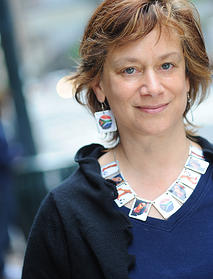
Unknown-1

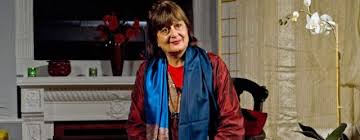
Festival presenter Amber Chand

While few of the 150 women presenting in the Festival have celebrity status or “name recognition,” they have something more special: they are women who write and present from their hearts, not for financial gain but for the pleasure and the power of sharing their perspectives and ideas with others.

The Festival aims to change the world one woman at a time by shifting from a celebrity-based mono-crop cultural landscape dominated by centralized media, to a diverse, vibrant, locally grown environment in which women are celebrated not for how they look but for what they think and write about the most important issues of our time.

Could it be that as more women speak from outside the mold of popular culture, the external world will change as well?

Changing the storyline: from limitless growth to sustainable planetary happiness

Today in my Writing for Social and Environmental Justice class we began to talk about the power of storytelling.

The challenge for the students in my class is to figure out the best narrative strategy, the best rhetorical approach, the best genre and format to inspire others to work with them for positive social change.

To get people’s attention, especially in the media-saturated social landscapes many of us inhabit, the story has to be well-narrated, fast-paced and compelling.  It has to deliver information succinctly and have a memorable “take-away” line.  It has to give us interesting, admirable protagonists and a complex plot, complete with tragedy, catharsis and antagonists we can love to hate.

It’s a pretty tall order!

The first step, of course, is being clear on your own values—what you think is important, what issue is the one that most grabs your own heart and mind.  Great change writing speaks out of a place of passionate commitment.

Great change writing says: “I believe this so deeply I am going to open my heart and let you see how this great injustice or destructive practice is tearing me apart.  I am going to let you see me in all the vulnerability of my rage, grief and passion…and I am going to convince you to care about this issue too—enough to be willing to stand up and take action.”

That’s the second part of great change writing—you have to give people a clear call to action, and at least show them the starting point of a path towards change.

It’s not enough to wail and point blaming fingers at all the injustices of the world.  You have to point the way towards remedies, solutions, action.

I ended both my classes today declaring my feeling of optimism in the future. I feel more optimistic today than I have in a long time that we will be able to solve all the many problems human civilization has created in its childhood—the past 500 years or so.

The tremendous challenges that beset us, particularly the environmental challenges which have the potential to completely wipe us out, can be solved.

We already know what we have to do.  Reduce emissions, yes, but also restore the ability of the planet to absorb the emissions we do produce.

Judith D. Schwartz

Judith D. Schwartz

We are reading Judith Schwartz’s book Cows Save the Planet this week, which is all about the potential of soil to become an incredibly effective carbon sink, if we just stop our bad agricultural practices and let the billions of microbes that inhabit each teaspoon of healthy soil do their work.

If we were to stop killing our soil, plants and forests with herbicides, fungicides, fertilizer-dependent agriculture and clear-cutting, it is possible that we could radically shift the whole disaster-scenario of climate change—fast enough to make a difference.

What we need is to start telling a new story, to which the broadest possible base of people can hear and respond.

It will be a story about how a beleaguered, tired, hungry, thirsty, oppressed people—that is, the majority of people on this Earth—realized that with just a few adjustments, they could live a much richer, happier life in harmony with the natural world.

It will be a story about how the economics of endlessly growing national product gave way to the economics of sustainable planetary happiness. How competition gave way to collaboration, with the recognition that we have the capacity to give everyone on this planet a good life if we shift our focus from rising profits for the few to steady well-being for the many.

If we were to start telling this story loud and clear, in beautiful, compelling, persuasive and well-researched ways, broadcast over the billion megaphones of the World Wide Web, how could people fail to listen?

Especially if we backed up the vision with concrete strategies for making it happen down on the ground.

345570804_640I am heartened by initiatives such as the C40 Cities Climate Leadership Group, a working group of mayors from the major cities of the world who have decided not to wait around for the United Nations to get its act together, but to start working together independently towards a sustainable future.

C40 is changing the dominant narrative of gridlock and impossibility with its muscular can-do insurgency.

We can’t wait around for others to do it for us.  Each one of us has the power to be the starting point for ripples of change that can reach further than ever before in our brave new interconnected world.

What story will you tell?  What life will you lead?  What are you waiting for?

A true agricultural revolution has NOTHING to do with genetic engineering!

When I hear the term “genetic engineering” I cringe.

Could anything good come out of tweaking the DNA of plants and animals, and maybe someday humans too?

Is it safe—is it wise—for humans to play with evolutionary fire?

A recent New York Times  op-ed by a professor of agricultural economics and a physician from the Hoover Foundation warns that humans would be fools not to try to engineer wheat and other crops in order to tailor them to our rapidly changing environment.

Given that drought is going to be more common in the future, as aquifers are depleted and erratic weather patterns take hold, why not tweak the DNA of wheat and other crops essential for human survival, so that they are more likely to withstand the harsh conditions that will become the new normal?

I don’t want to be a knee-jerk Luddite, but really now—can we be sure that it will be safe to alter the genes of a plant that took thousands, if not millions of years to reach its present incarnation?

I actually think it might be possible to do genetic engineering of food crops in a safe and sustainable way.  But as long as Monsanto remains in control of agricultural genetic engineering, I cannot be trusting.  The track record of that company is just too abysmal.

According to the NYT op-ed, “Monsanto recently said that it had made significant progress in the development of herbicide-tolerant wheat,” which “will enable farmers to use more environmentally benign herbicides.”

Is there such a thing as an environmentally benign herbicide?

Monsanto, along with its henchmen in government, academia and think tanks, is still stuck in the old 20th century idea of unlimited growth.

0,,5924142_4,00

In that mind-set, we have to grow as much wheat as we possibly can to feed our burgeoning population.  No matter how many birds, butterflies or bats have to die under the plow of “progress.”  No matter if natural biodiversity is chemically poisoned to make way for the mono-crop.

No.

What if Monsanto had its way and all the wheat planted was drought-resistant.  And what if that year it never stopped raining?  Where would we be then?

We are fortunate to have seed-saving champions like Vandana Shiva who are working hard to make sure that our human heritage of genetically diverse, tried-and-true seeds are not totally lost in the rapacious maw of Monsanto.

What we need is a true agricultural revolution that has nothing to do with genetic engineering and everything to do with returning to local, regional food production.

To withstand the crazy weather that lies in our future we need more biodiversity, not techno-modified mono-cropping.

Or if we’re going to tweak those genes, just because we can, let’s do it in ways that tailor crops to small regional environments, and forget about the herbicides!

Right?

Coming your way: the first-ever Sustainable Civilization Olympics

I know I’m exposing myself to hailstorms of rotten tomatoes and eggs, but I’m going to say it anyway: I don’t care about the Super Bowl, or the Winter Olympics either!

Every time one of these big annual sports events come around, all I can think about is if only people would put the same energy and enthusiasm into sustainable living on our planet, what a beautiful world it would be!

It’s fine that people want to spend all their time and energy toning up their bodies and becoming world-class athletes.  Hey, whatever floats your boat!

But if you’re going to become a badass athlete, why don’t you put your strength and prowess to work for the planet, super-hero style, rather than settling for winning medals and giving your ego some strokes?

The bare truth is that if we human beings put our collective minds to it, we can solve any problem.

Melting-Glaciers_in_Himalayas_top-10-list.org_-300x198Global warming, water shortages, acidification of the oceans, clean energy, you name it, we can handle it—if we just focus our time, resources and energies behind being part of the solution instead of part of the problem.

Here’s an idea: why don’t we have a Sustainable Civilization Olympics, complete with livestreams in the labs and testing grounds so that we can all follow along as various teams make progress on solving our global problems?

For those who can’t get excited about anything unless competition is involved, well, go for it!  We can have teams, play-offs, Super Bowls, you name it!

Just let’s get the job done, for heaven and earth’s sake!

And then, once we’re back on an even planetary keel, maybe we can spare the time for the kind of mindless entertainment that floods our airwaves each year on SuperBowl Sunday.

We Are All Noah Now

We are all Noah now.

These words have been sounding in my head like a mantra these past few weeks, and this morning I woke from strong dreams of animals in trouble—a big lone fox, a frantically hopping toad—and felt the need to make my inchoate awareness of danger and responsibility more tangible by writing it down and sharing it with others.

Derrick Jensen asks with desperate, angry sadness how long it will take us to finally wake up and start resisting the accelerating extinction of species happening on our watch.

How can we love our pets so much (I ask with my purring cat on my lap and my snoring dog at my feet) and remain unmoved by the news that hundreds of sweet, innocent reptiles and amphibians, many of them from fragile, endangered species, were cruelly murdered by callous neglect last week, crushed into hot plastic tubs without food or water for days in a crate bound from Madagascar to the U.S. pet store market?

_72676565_mada3

_72680861_mada4

How can we continue to give our children adorable stuffed lions and tigers and bears to hug and cuddle (my own boys were devoted to their respective stuffed animal friends, a gray kitty and a green froggy) while turning a blind eye to the fact that all of the large animals on Earth are staring extinction in the face?

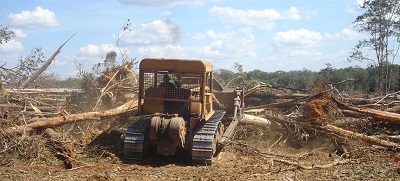
Indonesian palm oil plantation.  First the forest was bulldozed.  Never mind all the fragile species that called it home, including our primate cousins, the highly endangered orangutans.

Indonesian palm oil plantation. First the forest was bulldozed. Never mind all the fragile species that called it home, including our primate cousins, the highly endangered orangutans.

How can we blithely talk about international agreements like REDD and cap-and-trade markets, ignoring the fact that when these lofty agreements are translated into action on the ground in the remote tropical forests that most need protection, they too often result in the worst kinds of greedy destruction—for example, so-called protected forests being bulldozed, sprayed with herbicides and turned into palm oil plantations, but still sold as “protected forest” in the international carbon market.

Americans spend royally on landscaping around our own homes, but fail to appreciate that if we don’t snap out of our trance and start acting forcefully on behalf of the planet as a whole, the storms and droughts that are coming will make short work of all our careful planting and pruning.

Wake up people!  We are all Noah now.  The Ark that will help us weather the storms we have brought upon ourselves is the Mother Ship, sweet Gaia herself.

Headlands, Puerto Rico. Photo by Eric B. Hernandez

Headlands, Puerto Rico.
Photo by Eric B. Hernandez

It’s past time to start focusing on doing all we can to conserve the living beings on this planet—ours to protect, not to destroy.

We are all Noah now.

Respecting Our Elders

I was fascinated to learn recently that trees, especially big old trees, can communicate with each other and with their entire grove or forest of younger ones.

Apparently they do this through a network of fungi that grow in a symbiotic relationship with tree roots.  The larger the tree, the bigger the root network, and the more other trees the old one is in contact with.

What do they talk about? According to forest ecologist Dr. Suzanne Simard of the University of British Columbia, trees share nutrients and chemical signals through the network.  A big old tree can help the younger ones who may be less able to withstand drought, for example, or an insect onslaught.

That’s what we know for sure now, but who knows what other wisdom the trees may be sharing?

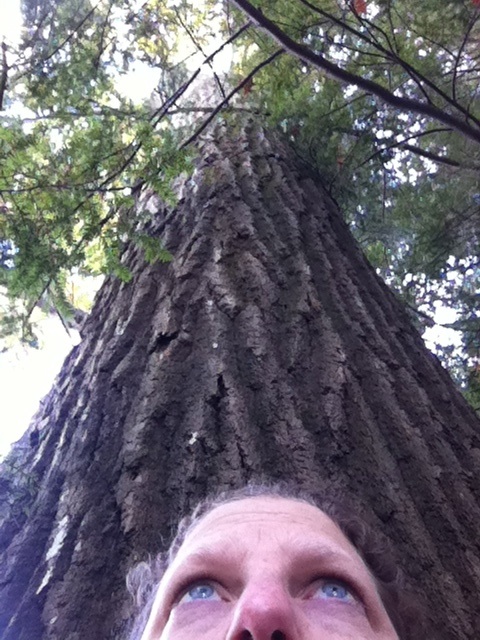
IMG_3928 copy

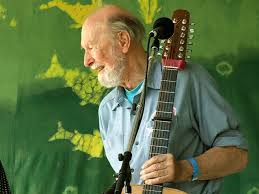
I was reminded of this forest phenomenon this week as two things happened simultaneously: the news broke that folk music giant Pete Seeger had died, and I started discussing with students in my Women Write the World class the first book of the semester, The Legacy of Luna by Julia Butterfly Hill.

juliahillLuna, you may recall, is a 200-foot-high California redwood that Julia Hill single-handedly saved from the chainsaw by obstinately camping out on a platform high in the tree, for more than two years.

In the book she wrote later, Julia describes how she came to regard Luna as a living consciousness, a kindred spirit with whom she could connect.

I thought the students in my class would pooh-pooh that idea, but many of them were willing to entertain the notion that there might have been some actual cross-species communication going on between the massive old tree and the young woman perched in its branches.

What is certain is that living in Luna taught young Julia Butterfly Hill many lessons that she never could have learned elsewhere.

If Luna had been cut down, as so many of the great old trees have been in forests around the world, all her accumulated wisdom would have been lost too, an incalculable loss to the younger trees around her.

We are fortunate that Pete Seeger and other great old ones like him—Nelson Mandela springs to mind, and Wangari Maathai and Rachel Carson, both of whom died of cancer far too young—have been able to leave a written and recorded legacy to us younger ones coming along in their wake.

We will be listening to Pete sing, watching Mandela give speeches, and reading the books of Maathai and Carson for years to come.

But when we cut down a wise old tree, we silence its network entirely.

Forests can  regenerate—if they are not sprayed with herbicides, if their topsoil doesn’t wash away and if they’re not turned into artificial factory-style plantations.

In many tropical countries the natural forest is destroyed and replanted like this.

In many tropical countries the natural forest is destroyed and replanted like this.

But even in the best of circumstances, the younger trees will be more vulnerable and less resilient without the oldest trees to shelter and guide them.

During the European colonial period, it was an accepted strategy for would-be conquerors to kill or enslave the tribal leaders first, under the theory that their followers would be less able to resist.

The Americans took a page out of the same playbook in their treatment of Native Americans, trying to demoralize the tribes by killing, imprisoning and humiliating their leaders.

It has been no different with logging.  The big old trees are the most highly prized, and are chopped down first, with longstanding and poorly understood consequences.

IMG_4053 copy 2

Dr. Simard is arguing for a different kind of forest management plan, one that is respectful of what she calls “the mother trees”—those old survivors who can help the regenerate the forest after the loggers have moved on.

Just as we honor outstanding human elders like Seeger and Mandela, we should be honoring the most ancient living things among us, the old trees.

It makes scientific sense (older, larger trees trap more carbon and hence help reduce global warming) and it also makes moral sense.

It’s the right thing to do.

Photo by Patxi Pierce

Julia at the top of Luna
Photo by Patxi Pierce

It’s Up to Us Now: Carrying on the Work of Pete Seeger

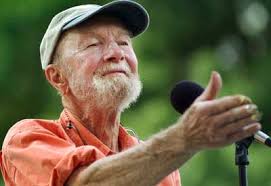
Unknown-1When I heard the news that Pete Seeger had died, my first thought was “oh no!” and my second thought was “now there goes a man who lived a good life.”

At 94, he had accomplished so much and lived so fully.  Even during his final months and weeks on the planet, he was still playing concerts to packed houses and inspiring people everywhere with his unwavering dedication to using music as a means of raising awareness and fomenting social change.

The New York Times obituary quotes him as saying in 2009 (the year he sang at President Obama’s Inauguration): “My job is to show folks there’s a lot of good music in this world, and if used right it may help to save the planet.”

Pete’s gift was for making music and getting others to sing along with him, and he used it not for fame, fortune or glory, but for the good of those who most needed him.

Whether he was singing in support of the Civil Rights Movement or the anti-war movement, singing for freedom against the red-baiting of the McCarthy era, singing against apartheid or singing for the environmental movement, he was always out in front leading the charge and showing others what true courage and conviction looked like—in a joyous register.

Image: File photo of Pete Seeger and his grandson Tao attending the We Are One - Inaugural Celebration at the Lincoln Memorial in Washington

That upbeat, “we-shall-overcome” personality probably played a big role in Pete’s longetivity—research shows that people who think positively tend to live longer, happier lives than those who tend to see the glass half-empty.

When I saw Pete play, at one of his last concerts last fall, there was a joyous glow about him that lit up the whole stage, and those of us in the audience would have followed him anywhere.

Well, it’s up to us now.  Pete has moved on, and we are left to carry on his legacy—to keep singing his songs and working for the positive social change he believed in and created.

Unknown-2Pete was so deeply engaged with humanity during his lifetime that in death he will still stay lodged in our hearts.

His is the kind of soul that will rise into heaven showering sparks and spores of bright beckoning energy, encouraging us to carry his tune, to keep his good spirit alive.

Today I start a new semester of classes, and I am excited to be teaching two classes that will enable me to do just that: “Women Write the World” and “Writing for Social and Environmental Justice.”

Pete, I’ll be thinking of you with love and admiration as I go to greet my students this morning.  I hope a little of your sweet, positive, hardworking energy will carry us forward this year, and forever.


If you get there before I do

Comin’ for to carry me home

Tell all my friends I’m comin’ too

Comin’ for to carry me home.


Swing low, sweet chariot

Comin’ for to carry me home

Swing low, sweet chariot

Comin’ for to carry me home.


Writing of Disaster, Writing of Hope

As a professor of literature, I tend to pay special attention to what my son is reading in school.  I wish I could say I paid attention to what he reads at home, for pleasure, but the truth is that he does not read for pleasure.  He reads on assignment, and that’s it.

So what is he reading, in his typical 9th grade American public high school?

So far this year he’s read 1984, Lord of the Flies, and Night. Now he’s reading a contemporary novel, How the Light Gets In, by a British author, M.J. Hyland, billed as a 21st century girls’ version of Catcher in the Rye.

In short, it’s been one depressing, upsetting book after another.  Thought-provoking would be the kind term to use, but it saddens me to recognize that generally speaking, “serious” literature is about the things that frighten us.

And it’s not just in literature that this is true.  In pop culture too, the violence that plays out over and over in every form of media entertainment is catering to what seems to be a human need to imagine and play out in fantasy our deepest fears.

Almost all science fiction series and movies that try to imagine the future show us disasters and social dystopias.  These are considered “realistic” (a positive attribute), as distinct from “utopian” scenarios (dismissed as unrealistic, hence not to be taken seriously).

As a parent, a teacher, and a member, like you, of the transitional generation on this planet, I worry about our apparent addiction to what 20th century philosopher Maurice Blanchot called “the writing of disaster.”

Certainly I have not shied away, in my own career, from making myself aware of the ugly side of human experience.  I have studied human rights abuses of every stripe and geographic origin, including sexual abuse, torture, war and genocide.

I have confronted the grotesque truth of the devastation we humans are wreaking on non-human animals and on our planetary environment—the chemical poisoning of air, waters, earth, along with the life forms that inhabit these strata; the factory farms; the mountaintop removal, clear-cutting and strip-mining; the plastics pollution of the oceans; and on and on.

I don’t bury my head in the sand, by any means.

But I question the wisdom of inundating our imaginations, especially those of young people, with violent stories.

Whether they’re historical like Night or futuristic fiction like 1984; whether they’re video game scenarios like GTA or Call of Duty; or TV series, movies, or the daily news—if all we see in virtual reality is human beings being violent, doesn’t this begin to affect the way we understand ordinary reality?

Doesn’t it make us more guarded with each other, less likely to trust, less likely to build community and bring out the best in each other?

Mary Pipher

Mary Pipher

In preparation for my new class this spring, “Writing for Social and Environmental Justice,” I’ve been re-reading Mary Pipher’s 2006 book Writing to Change the World. Mary Pipher, you may remember, is the psychologist who wrote Reviving Ophelia, a book from the late 1980s that provoked a major surge of attention to the way American girls self-sabotage as young teens, and what societal factors made their swan-dive of self-esteem more likely to occur.

In recent years, Pipher has become an environmentalist, leading the charge in her home state of Nebraska against the Keystone XL.  Although the pipeline is not dead yet, it has at least been re-routed away from the ecologically sensitive Sand Hills region.

In Writing to Change the World, she offers a how-to book for those, like me, who see writing as one of the best tools to raise awareness about the issues that matter most.

Pipher writes: “The finest thing we can do in life is to grow a soul and then use it in the service of humankind.  Writers foster the growth of readers’ souls, and the best soil for growth is love.  Writing can be love made visible….This is our challenge: to cultivate lives of reflection, love and joy and still manage to do our share for this beautiful broken planet of ours” (241-2).

However, it seems to me that the kinds of writing we are consuming as a culture, and especially what we’re feeding to our young people, will neither “cultivate lives of reflection, love and joy” nor inspire us to take arms against the sea of troubles that is our planet today.

On the contrary, the dominant narratives I see, at least in American culture, are violent, cynical and despairing, showing us the worst of humanity rather than enticing us forward with dreams of what could be.

I’d like to see the start of a new global literary movement of change narratives in every genre aimed at holding a positive mirror up to human nature, giving us examples of the good we have done and the good we are capable of doing if we draw on our positive qualities—our ability to love, to nurture, to steward, to protect.

Even our oh-so-human violence has a place, if it is used to protect rather than to abuse and wreak wanton havoc.

I would like school curricula to stop replaying the horrific stories of our past—or at least, to balance these negative stories with narratives that give students some positive, hopeful models of human beings as well.

Trying to “grow a soul” in today’s social climate is like trying to grow a plant without sunshine.

Writers, let’s take on the challenge of using our gift with words to change the world for the better.  Let’s be the sunshine, not the shadow.

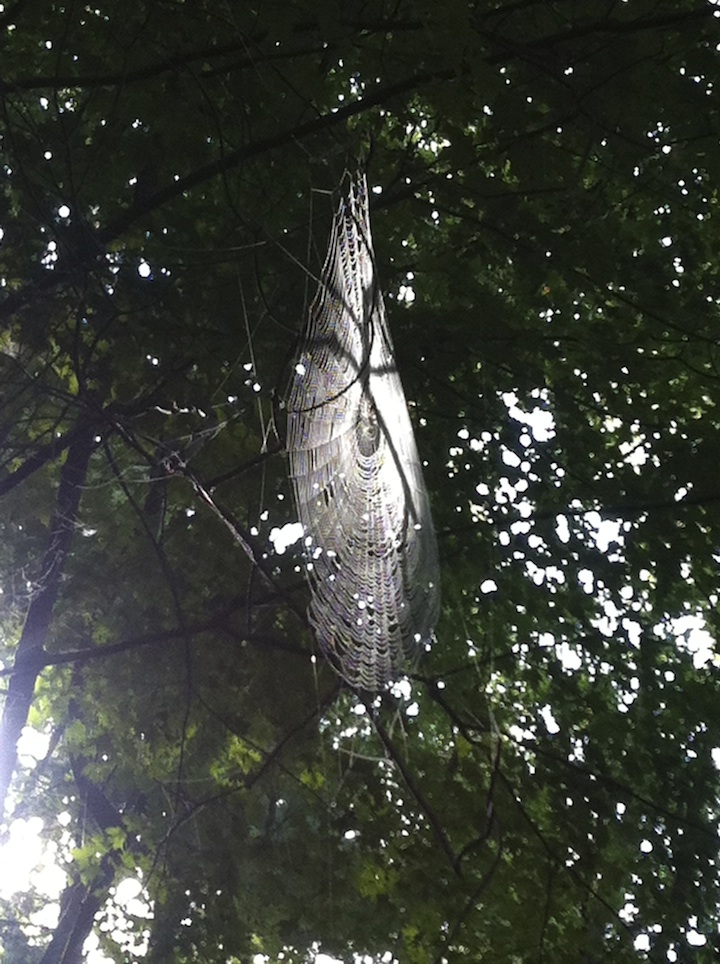
Spiderweb

Dark Universe, Brightening

Socrates had it right long ago when he acknowledged that to the extent that he was wise, it was because he knew how much he did not know.

During my lifetime, the trend has been for homage to be paid to all the cocky, smart human beings who think they know everything.

The slicker and more self-confident the guy (and this is mostly about guys), the more rewards and adulation he gets.

Collectively, especially in the United States, arrogance has been the name of the game.  I think this collective hubris may have reached its apex with the splitting of the atom and the knowledge that he who controls atomic energy controls the world.

Or so we thought.

Climate change is ushering in a whole new, and much more humble era.

imageIt turns out that just because we can bulldoze forests and mountaintops, change the course of rivers, drill beneath the sea and through solid rock, and completely saturate the earth with satellite, drone and in-home surveillance devices, we are still just as vulnerable as we ever were to the simple, earthbound necessities of food and shelter.

As the big, climate-change-induced storms continue to roll in from the ocean, so frequently that they all begin to blur into an anguished nonstop disaster montage, a slow but steady sea-change in collective human consciousness is beginning to occur.

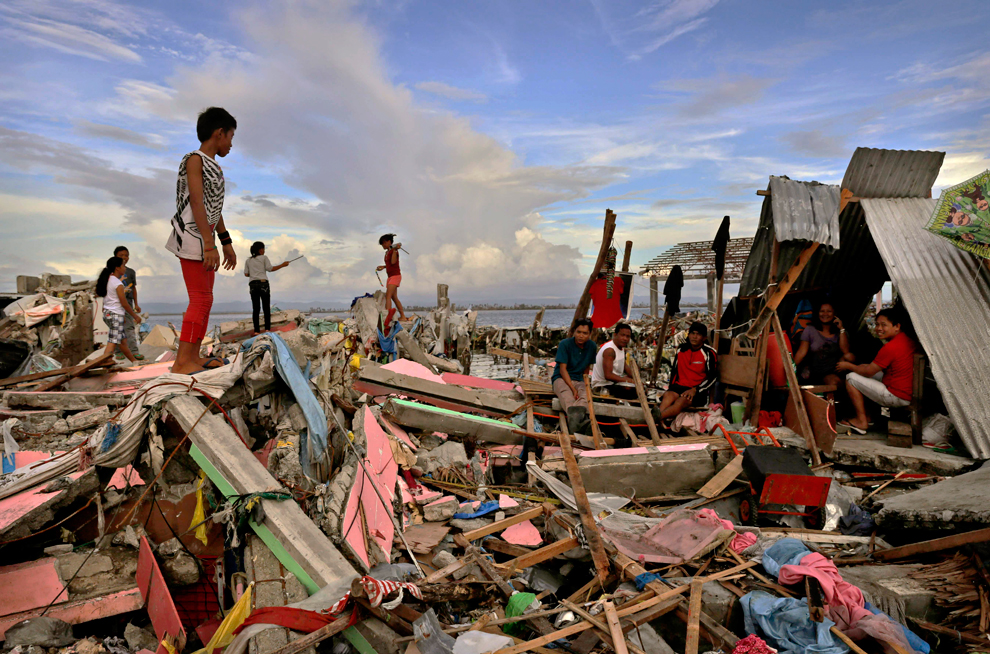
Aftermath of Typhoon Haiyan, Philippines, 2013

Aftermath of Typhoon Haiyan, Philippines, 2013

We are beginning to recognize how much we still don’t know, and how dangerous our ignorance, combined with arrogance, is becoming.

There is no doubt now that we who are alive today, along with our children and grandchildren, are going to be living through a remarkable transition time as the planet we have destabilized and plundered during the past few hundred years of industrialization seeks to return to equilibrium.

We must acknowledge that human over-population has played a major role in this process of destabilization.  Our very success as a species is what is driving the current unfolding disaster.  By reducing our numbers through disease, drought, flooding and the competition for shrinking natural resources that leads to war, the planet is doing what it must to return to a steady state where the ecosystem as a whole can flourish.

It is sobering to live with this knowledge.

Perhaps it is my sadness at knowing that I am going to be living through (and dying in) a veritable Holocaust of earthly creatures, that has me searching outside the box of science and common knowledge for signs of hope.

IMG_4150 copyI was not raised with religion, but I have always been an instinctive spiritual animist, seeing the divine in the beauty of the natural world, and in my unbounded love for all the elements of our Earth—rock, water, air and all the myriad living beings that inhabit every strata of our planet.

I have also been open, since I was a child, to the possibility that there is more to our experience than meets the eye.  I have always been fascinated by the occult, shamanism, and science fiction involving time travel to other dimensions of space/time.

I don’t know if it is just because I am paying more attention, but lately I have been perceiving a definite uptick in collective awareness that the key to fixing what ails us in the physical world may lie not in better “hard science,” but in a deeper connection to knowledge that can only be accessed through a different kind of perception.

The doors to this under-tapped realm of wisdom are accessible to us through what has poetically been called “our mind’s eye.”

There have always been humans who have been explorers in this realm—Socrates was one, the Biblical sages and prophets were others, and modern esoteric explorers like Rudolf Steiner, Terrence McKenna, Mary Daly, Martin Prechtel, Starhawk and many more.

Terrence McKenna

Terrence McKenna

In the 1960s psychedelic drugs opened the doors for many people who were not at all prepared for the “trips” they encountered.

Now we seem to be coming around again to a period where, as conditions in the physical world deteriorate, more of us are seeking understanding and reassurance in the non-physical.

The more we know of how bad things are here in the physical realm, the more we want to know that “another world is possible.”  And the more we look, the more we find that indeed, there is much more to the universe than meets the eye.

Even scientists are beginning to align with the spiritists they previously disdained. In our age of quantum physics, the whole idea of a “spiritual dimension,” accessible through human consciousness, is becoming much less far-fetched to rational hard science types.

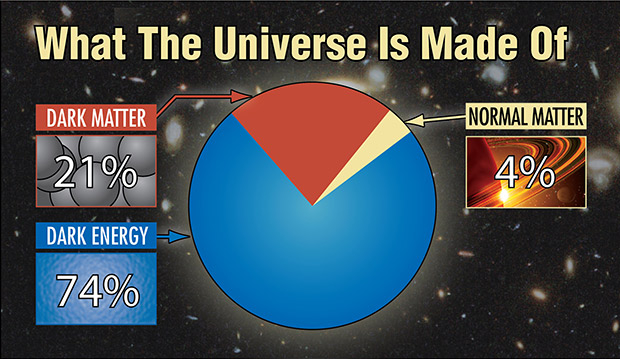
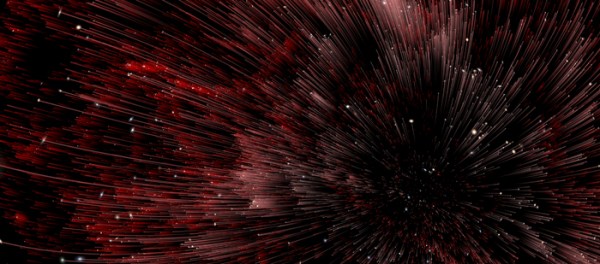
The new Hayden Planetarium show, “Dark Universe,” ends with a graphic that could be right out of “Twilight Zone,” showing that roughly three-quarters of the universe is composed of “dark energy,” a term invented to represent in language something we know enough to know we do not understand at all.

It could be that waking, embodied life is to human consciousness what the physical, hard-matter universe is to the cosmos as a whole.  Just a tiny fragment of a much larger, and potentially much more interesting, whole.

What if the reason every living thing on this planet sleeps (whether in the daytime or the nighttime) is in order to reconnect with the non-physical realm that spiritually sustains us?  We know that if we are deprived of sleep for any length of time, we go crazy and die.

What if “the dreams that come,” whether in sleep or in death, are just as valid a form of experience as the waking hours of our day, and our lives?

What would it mean to be able to think beyond the brief timelines of our individual lives, or even the eons of evolutionary cycles on the planet, and know that we are all part of a much grander cosmic dream?
dark-universe-red-shift-interior

Photo source: American Museum of Natural History, Rose Space Center, Hayden Planetarium, “Dark Universe”

Thinking this way does not give me license to let go of my focus on making a difference here on earth, now in my lifetime.

In some ways this imperative becomes even stronger, as it was for Socrates, Steiner and so many other visionaries who were also powerful initiators and guides during their lifetimes.

During this winter solstice season of introspection and questioning, I have been reading and re-reading the writings of one such contemporary guide, the Sufi mystic and spiritual ecologist Llewellyn Vaughan-Lee.  I leave you with a passage to ponder:

In the book of life we can see the energy patterns of creation, the rivers of light that flow between the worlds.  We can see how the individual relates to the whole and learn the secret ways to bring light into the world; we can understand the deeper purpose of the darkness and suffering in the world, of its seeming chaos.  And the attentive reader can glimpse another reality behind all of the moving images of life, a reality that is alive with another meaning in which our individual planet has a part to play in the magic of the galaxy.  Just as there are inner worlds, each deeper and more enduring, there are also different outer dimensions whose purposes are interrelated and yet different.  The inner and outer mirror each other in complex and beautiful ways, and in this mirroring there are also levels of meaning.  As we awaken from our sleep of separation, we can come alive in a multifaceted, multidimensional universe that expresses the infinite nature of the Beloved.

–Llewellyn Vaughan-Lee, Spiritual Power: How It Works

Let it be so.
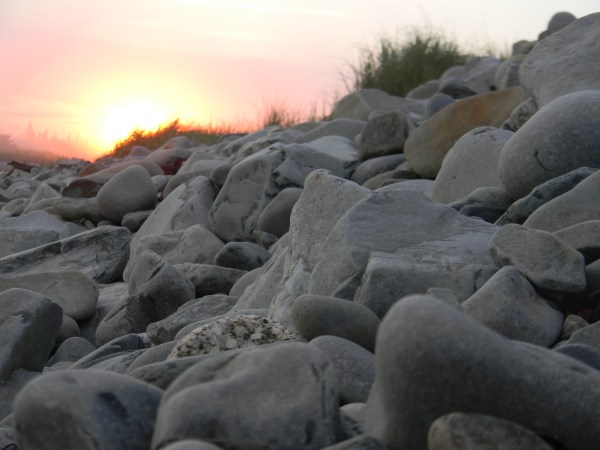
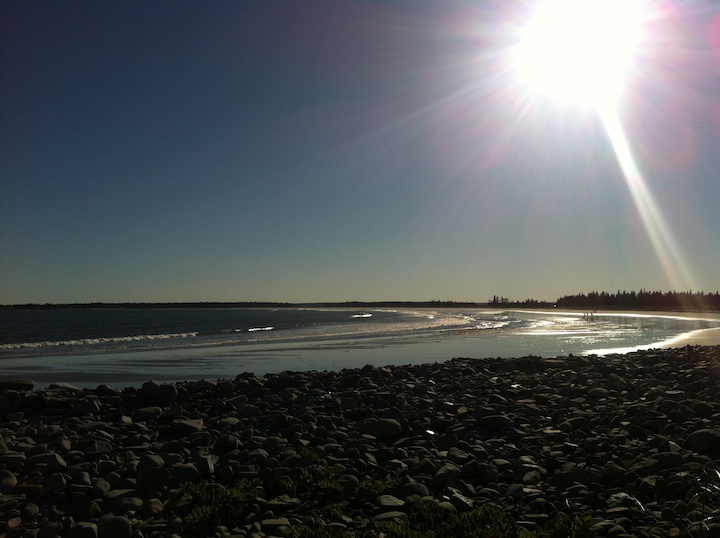
Sunset on Cherry Hill Beach, Nova Scotia.  Photo by Eric  B. Hernandez

Sunset on Cherry Hill Beach, Nova Scotia. Photo by Eric B. Hernandez

Drinking Deep from the Elixir of the Berkshire Festival of Women Writers

BFWW-vertical-logoJanuary is the season when I must work like mad to get the Program for the 2014 Berkshire Festival of Women Writers out to the printers, so that it will be ready to distribute in February.

For months now, program coordinator Jan Hutchinson and I have been finalizing all the details, gathering the descriptions and bios and photos for no fewer than 58 separate events, featuring more than 150 women and girls at some thirty different venues throughout Berkshire County, including of course our principal sponsor Bard College at Simon’s Rock.

We’ve also been soliciting advertising and sponsors with the help of our hard-working Miss Hall’s School Horizons interns, supervised by organizing committee volunteers Judy Nardacci and Lorrin Krouss.

And committee members Maureen Hickey, Joanne Cooney, Vera Kalm and Johanna Janssen have been helping to generate the funds necessary to sustain a growing Festival like this one, with considerable success—we have dozens of contributors to thank this year.

Once I finish my part of the Program, I’ll send the copy over to Festival graphic designers Alice and Anna Myers, who will work their magic and send it off to our fabulous printer, John DiSantis at Quality Printing, who always does such a stellar job for us.

Then we’ll turn out attention to getting the website up to speed, and getting out our own publicity in local and regional publications and calendars, aided by the very capable and calm Lynnette Lucy Najimy of Beansprout Productions.

In short, our Festival is a huge effort, representing the combined forces of so many talented people in the Berkshires, all coming together to brighten up the often drab month of March with readings, workshops, performances and discussions highlighting the creative energy of women and girls.

I may be grumbling about the frenetic workload now, but I know once March 1 rolls around and our Festival starts to gather steam, the delicious vitality of women’s words will carry me along to inspirational highs I could never have conjured on my own.

1528653_548356822534_515979881_nThat’s what the Festival is all about—it’s a grand collaborative gift that we give to our community, and not only in March.  This year we’ve begun to offer year-round programming as well: the monthly Lean In group for women writers, co-hosted by Lesley Ann Beck and yours truly at the Berkshire Museum; the Writing from the Heart readings, which we’ll be offering next on February 13 at The Mount; a special Mother’s Day event planned for May at the Sandisfield Arts Center; and the new weeklong Writing Workshops for Women, going on right now and again in June.

The energy of so many creative women and girls coming together to share their ideas and perspectives in the public sphere ignites an alchemical combustion that produces a heady, exhilarating kind of mental/emotional elixir.

We all feel it, presenters and audiences alike—the sheer joy of coming together to shine our creative lanterns at each other, beckoning and inspiring each other on to new heights.

Clarissa Pinkola Estes would call what we do in the Festival “displaying the lantern of the soul.”  In a recent blog post she said that “to display the lantern of soul in shadowy times like these – to be fierce and to show mercy toward others; both are acts of immense bravery and greatest necessity.
Struggling souls catch light from other souls who are fully lit and willing to show it.”

Meet us out on deck at the Berkshire Festival of Women Writers, and bring your lantern!  Let’s create beacons bright enough to illuminate the way forward, together.

Cherry Hill Beach copy