Enough Political Reality TV: Time to tune in to the planet

I tuned into the Democratic National Convention (DNC), thinking I’d catch a few minutes of the action before going to bed, and I was quickly entranced by the spectacle.

This, of course, is what political conventions are all about.  They’re a great primetime opportunity to dazzle the video-feed audience, and energize the base.

Deval Patrick

I enjoyed watching Deval Patrick, governor of my home state of Massachusetts, give a moving speech focusing on the right of all children to a good education.

I loved meeting a rising political star, Mayor Julian Castro of San Antonio, Texas, who was winningly introduced by his identical twin brother, state Representative Joachin Castro, currently running for a seat in the U.S. House of Representatives.

The Castro brothers are handsome, talented, and are buoyed by a classic American success story, coming from a poor background, working hard in school, winning scholarships to Stanford and Harvard Law, and moving on and up into politics.

Julian and Joaquin Castro

Who wouldn’t be charmed?

Michelle Obama

And then there was the woman we were all waiting for, First Lady Michelle Obama, looking tall, muscular, vigorous—and very beautiful.

Mrs. Obama was introduced not by a politico, but by an “ordinary woman,” a military mom with four sons serving in four different branches of the U.S. military, and a fifth still in high school, bound for the U.S. Coast Guard.  It was moving to hear her tell of how she had written to Michelle and been invited with her husband to the White House, to receive the Obamas’ thanks for the service their family provides to our country.

And it was moving to hear Michelle roll out the by-now familiar story of her humble family background, and how her parents’ hard work enabled her and her brother to go to college and on to graduate school, where she met Barack—himself a scholarship boy who chose to work as a community organizer in Chicago rather than take a high-paying job as a corporate lawyer in New York right out of law school.

Who wouldn’t enjoy hearing Michelle praise her husband as a father, a partner, and a dedicated professional, who truly cares about his country and ran for office not for the glory but because he believed he could make a positive difference?

I came away from the couple of hours of speeches with just the feel-good sensation the scriptwriters had worked so hard to achieve.

But that’s the problem.  It all felt too scripted.  Too perfect.  Too much like entertainment—maybe some kind of weird political reality TV show.

I didn’t watch the Republican National Convention, so I can’t compare and contrast the two, but from all I’ve read about it, it was more or less the same in form, if not in content.

The DNC emphasized the multicultural, hardworking, can-do ethos of the 99%, while the RNC emphasized the white-skinned, inherited-wealth, party-animal ethos of the 1%.

If those are my choices, I clearly belong with the Democrats.

But I can’t help but wonder what I’d see if the Green Party were able to have a  primetime convention opportunity like this.

Of course, the Greens probably wouldn’t even want to put on a big expensive consumerist circus typical of our American political conventions, so wasteful of energy and resources.

Stein and Honkala

Looking at the Green Party platform of Presidential hopeful Jill Stein and her running mate Cheri Honkala, it’s clear that  the Green Party would not just talk about personal rags-to-riches stories of success, but about the structural barriers that keep the 99%–or at least, let’s say, the bottom 50% of our population—locked in generational cycles of poverty and unfulfilled promise.

They would not just repeat the monotonous mantra of jobs creation, but would talk about the most daunting issues facing us today.

The tsunami of climate change that is like the elephant in the room of American politics.

What good will a better K-12 education or the promise of a job be if our climate becomes so compromised that food shortages become rampant?

I want to hear a politician talk candidly about the stranglehold that the chemical companies and the fossil fuel industry currently has on our children’s future on this planet.

I want to hear a politician who is not afraid to talk about the effects we can expect from the rapid melting of the ice packs at the poles.

A politician who is committed to building local resiliency, rather than continuing the death march down the road to globalization, which benefits only the corporate elite and the finance wizards who serve them.

Is Jill Stein that politician?

I wish I knew.  The problem is that I have to work pretty hard to find out what she’s all about.  And that makes me worry that she, and the party behind her, just don’t have the strength to compete in our political gladiators’ ring.

Perhaps it’s time to acknowledge that we are not going to find a political messiah who can part the seas and lead us to safety.

No one person, or even one party, can do that.

We individuals have to assume responsibility for our collective, interdependent future, and begin working harder in our own spheres, where we can have the most impact.

It matters who sits in the White House.  I believe the Obamas should get another four years, and hopefully a saner Congress to work with as well.

But it matters just as much what we do in our own states, cities and towns, with or without federal aid.

Mayor Castro and the Governor Patrick and Michelle Obama have been remarkable for working hard to make a difference at the local level.

Thanks to Michelle’s efforts, my son now has a mandated healthier lunch, with no sugary drinks or white bread allowed.

Governor Patrick continues to stand by our Massachusetts state health care program, one of the best in the nation (instituted under Mitt Romney, who now, to please his billionaire buddies, disavows it).

Massachusetts is working on alternative energy sources like wind and solar, with incentives for local municipalities and individuals to convert.

We need to continue to build community resilience and mutual support as we move into the brave new world that awaits us.

It is the only way we are going to make it through the coming climate-driven catastrophes.

We’ve got two more nights of DNC speeches ahead.  Is anyone going to acknowledge the climate elephant in the room, move us out of the polished entertainment arena and speak frankly to us about what’s ahead, and how to pull together to get through it?

All that solid melts in air: Labor Day reflections on Marx, Darwin and the need for new paradigms

As always around Labor Day, I am getting ready to talk with young people about some old, dead people: Darwin, Marx, Nietzsche, Freud, all of whom loom large in the curriculum of the General Education seminar required of sophomores at my college.

Rereading Darwin and Marx, who we’ll be discussing this week, it’s not hard at all to find ways to make these old thinkers, whose ideas are more than 100 years old now, relevant for our times.

Darwin

Darwin believed that life is a constant battle for limited resources, with the “struggle for existence” being entirely material, rather than spiritual.  When a dominant species overruns a weaker species, it is always for the best:

“It may be said that natural selection is daily and hourly scrutinizing, throughout the world, every variation, even the slightest; rejecting that which is bad, preserving and adding up that which is good; silently and insensibly working, whenever and wherever opportunity offers, at the improvement of each organic being in relation to its organic and inorganic conditions of life.”

He believed that humans are the highest, most important species, and that within the species men are higher than women, and white-skinned, “civilized” people are better than dark-skinned “savages.”  And implicit in his theory of natural selection is the ideology of Manifest Destiny: that strong, rich people got that way because they were “better” than poor, weak people.

It’s the logic that paved the way for the ruthless capitalist paradigm that presided over the industrial revolution of the late 19th and 20th centuries, along with the relentless search for new markets and new sources of raw materials: colonialism, imperialism, globalization.

Marx

Writing back in the mid-19th century, Marx was incredibly prescient.  His description, in “The Communist Manifesto,” of the process of colonial globalization could have been written last week:

The bourgeoisie has through its exploitation of the world market given a cosmopolitan character to production and consumption in every country…. All old-established national industries have been destroyed or are daily being destroyed. They are dislodged by new industries, whose introduction becomes a life and death question for all civilized nations, by industries that no longer work up indigenous raw material, but raw material drawn from the remotest zones; industries whose products are consumed, not only at home, but in every quarter of the globe. In place of the old wants, satisfied by the production of the country, we find new wants, requiring for their satisfaction the products of distant lands and climes. In place of the old local and national seclusion and self-sufficiency, we have intercourse in every direction, universal inter-dependence of nations. And as in material, so also in intellectual production. The intellectual creations of individual nations become common property. National one-sidedness and narrow-mindedness become more and more impossible, and from the numerous national and local literatures, there arises a world literature.

This actually doesn’t sound like much of a critique—Marx describes the positive side of capitalist globalization first.  But then he shows, with remarkable foresight, how the capitalists are unable to control the economic system they have created:

Modern bourgeois society, with its relations of production, of exchange and of property, a society that has conjured up such gigantic means of production and of exchange, is like the sorcerer who is no longer able to control the powers of the nether world whom he has called up by his spells….It is enough to mention the commercial crises that by their periodical return put the existence of the entire bourgeois society on its trial, each time more threateningly. In these crises, a great part not only of the existing products, but also of the previously created productive forces, are periodically destroyed. In these crises, there breaks out an epidemic that, in all earlier epochs, would have seemed an absurdity — the epidemic of over-production. Society suddenly finds itself put back into a state of momentary barbarism; it appears as if a famine, a universal war of devastation, had cut off the supply of every means of subsistence; industry and commerce seem to be destroyed; and why? Because there is too much civilization, too much means of subsistence, too much industry, too much commerce. The productive forces at the disposal of society no longer tend to further the development of the conditions of bourgeois property; on the contrary, they have become too powerful for these conditions, by which they are fettered, and so soon as they overcome these fetters, they bring disorder into the whole of bourgeois society, endanger the existence of bourgeois property. The conditions of bourgeois society are too narrow to comprise the wealth created by them. And how does the bourgeoisie get over these crises? On the one hand by enforced destruction of a mass of productive forces; on the other, by the conquest of new markets, and by the more thorough exploitation of the old ones. That is to say, by paving the way for more extensive and more destructive crises, and by diminishing the means whereby crises are prevented.

We have just lived through one of these episodic crises that Marx is talking about here—the bursting of the housing bubble, and the broad financial crisis that was generated by an over-reliance on debt.

The “enforced destruction of a mass of productive forces” is a nice way of saying “war”; and indeed, our adventures in Iraq and Afghanistan have kept the military-industrial complex humming, along with companies like Halliburton that snapped up all the rebuilding contracts.

Marx believed that the capitalist system would fail because it is structurally unable to support the needs of the masses.  It is built on inequality—on the Darwinian framework of the “struggle for existence” where might makes right, the strong survive and the weak perish, and the spoils of industry are concentrated tightly in the hands of a small dominant class, the bourgeoisie.

The modern laborer… instead of rising with the process of industry, sinks deeper and deeper below the conditions of existence of his own class. He becomes a pauper, and pauperism develops more rapidly than population and wealth. And here it becomes evident, that the bourgeoisie is unfit any longer to be the ruling class in society, and to impose its conditions of existence upon society as an over-riding law. It is unfit to rule because it is incompetent to assure an existence to its slave within his slavery, because it cannot help letting him sink into such a state that it has to feed him, instead of being fed by him. Society can no longer live under this bourgeoisie, in other words, its existence is no longer compatible with society.

Marx thought it inevitable that the middle class would sink into the proletariat as wealth became more and more concentrated in the hands of the few capitalists controlling government and industry.  And the proletariat, having nothing left to lose, would eventually rise up and seize power, overthrowing the capitalist system and instituting a new economic system, more truly “by the people, for the people.”

However, Marx was still a prisoner of his time as regards his understanding of humans’ relation to our natural environment.  He was not able to foresee that industrial growth, whether under the leadership of the bourgeoisie or the proletariat, would bump up against the carrying capacity of the planet, providing a natural (in Darwin’s terms) limit to growth.

Darwin would look out at what’s happening to our planet today, in the age of climate change, and see it quite dispassionately, as part of the process of natural selection. People in low-lying areas will have to migrate or die. We will figure out ways to adapt to our new climate reality, or we will be swept away.  The strong will survive, the weak will perish.

Marx, on the other hand, would be ranting about how the bourgeoisie have, in his own words, “dug their own graves,” and taken everyone along with them.  He would be calling for the international proletariat to rise up and fight for a better social system, in which labor is rewarded with well-being and the profits circulate among the many, rather than being concentrated in the hands of the few at the top.

We know with the power of hindsight that no Communist system has ever actually been successful at making people happy.

This is because the old hierarchical structures that have pervaded human civilizations for thousands of years still tend to creep back, no matter what name we give our socio-economic structure.

The challenge of our time is to envision a social structure that is horizontal, circular and interdependent, rather than vertical, linear and unidirectional.

A social structure in a harmonious give and take with the natural world, rather than one that only takes and takes to feed the maw of human industry.

Darwin may be right that the strong will survive and the weak will perish, but our concept of strength needs to change to meet our new reality.

Strength is not about domination and the ability to force others to bend, it is about cooperation and the ability to bring people and the natural world into productive harmony.

Black Elk

What we need now is a renaissance of indigenous tribal social systems, based on reverence for the natural world, and respect for one another.

Those people Darwin dismissed as “savages” may turn out to be the only ones who are able to survive in our new planetary epoch, as “All that is solid melts into air, all that is holy is profaned, and man is at last compelled to face with sober senses his real conditions of life, and his relations with his kind.”


Once in a blue moon: thoughts on death and the hereafter

It’s a clear, warm night, breezy and calm with a languorous quality to the air.  A night for strolling arm in arm along the surging beach; a night for hiking to the top of the mountain to gaze out at the moonlit landscape below.

It’s a blue moon night, the second full moon of the month–a rare occurrence, like a leap year, that feels like a gift of cosmic significance.

Such a night makes me want to take a chance and send out into the world some ideas that I have been holding close, not daring to share for fear of—of what?  Being scoffed at or ignored, I suppose.

But once in a blue moon, it’s important to reach beyond those fears and write from the heart.

So here it is.

***

On this quiet, moonlit night, I am thinking about death.

Every near-death experience describes a peaceful opening up to the light in the seconds after death—a state of rapture, a sense of leaving the body with all its frailties behind and moving into a new state of consciousness.

If death is just a transition into a different relation to matter and spiritual consciousness, then it is not something to be afraid of.  It is a change, but not a negative one, except to the extent that we remain attached to those we love and our dear, familiar places.

No other being on the planet frets so over death as does humankind.  All others simply pass, unworried, into the next stage of existence, whatever it may be.

If there is no reason to fear or worry about our individual deaths, then maybe there is no reason to fear or worry about the coming planetary cataclysm.

All of us living beings on the planet now will simply transition into whatever comes next, as we have many many times before in our cosmic journey from stardust to our current terrestrial physical forms.

Even the fear that we have of destroying our planet to such an extent that it will become unlivable is not tenable.  I don’t believe we could do such a thorough job of destruction as to make the environment completely and irrevocably toxic.

It may take millennia, but eventually, as it has in the past, the Earth will regenerate and give birth to new life forms.

And we, because we are part and parcel of this ecological sphere, will be part of those too.

Just as now we “remember” our past as sea creatures through the saltiness of our blood and the way we are able to swim underwater in our mother’s wombs, we will in some way retain the traces of our time as humans on the planet.

Hopefully the traits that have proven so destructive and psychotic will not persist: our violence, our fears and insecurities, our short-sightedness, our competitiveness, our greed.

It is possible that we are now living through a blue moon period of a much greater magnitude than just one lunar cycle.

Once in a blue moon, a dominant species—like the dinosaurs—collapses.  It is our fortune, for better or worse, to be living through this rare epoch, the last days of a closing era—and unlike the dinosaurs, to be conscious of what is taking place as it happens.

Of course, once in a blue moon, too, a species is able to pull back from the brink of extinction and keep going a while longer.

 ***

On this blue moon evening, I pay loving homage to the white hydrangeas glowing in the dusky interlude between sunset and moonrise.  The perky round sunflowers, the curly purple kale standing stiff and tall in my garden, the pulsing background chorus of crickets—I gather them round in a loving embrace and give thanks for this quiet blue moment, however long it may last.

Mitt Romney Blah Blah Blah

I refuse to listen to Mitt Romney’s speech.

Why bother?

It will only be tissue of lies and deceptions pandering to the fears and vulnerabilities of Americans who have gotten so used to being duped that they expect no more of their politicians.

Here is the truth as I see it:

The Republicans stole the 2000 election by voter suppression tactics and the willingness of the Supreme Court to be used as a political tool.

Thereafter, the Bush-Cheney criminals instigated two wars that bankrupted the country and used the threat of “terrorism” at home to justify the curtailing of civil rights through the Homeland Security Act.

The build-up of the police as a quasi-military force and the FBI as the tool of domestic surveillance proceeded apace throughout the Bush years, accompanied, let us not forget, by the creation of Guantanamo and various other secret off-shore detention sites where torture could be conducted outside of the public eye.

It was on Bush’s watch, too, that the economy crashed and burned, deregulation of the financial sector leading, just as Marx predicted, to “the bourgeoisie digging its own grave.”

Obama inherited this total mess.

All things considered, he’s done a heroic job at trying to make progress while blocked at every turn by hysterical, idiotic, crazy Tea Party Republicans.

It’s true that he hasn’t been able to do more than keep his finger in the dyke.

That he was able to pass a very positive and beneficial health care reform act is miraculous.

Given the constraints he has been forced to live with, how could we expect him to be our hero on the climate change front?  To lead the charge to renewable energy?

Isn’t it enough that he has pushed through significant new fuel economy standards for U.S. vehicles?

I’m sorry, folks, but I think we have to cut the President some slack.

None of us could do better given the stresses he lives with.

One President Obama is worth twenty Mitt Romneys, no matter what your unit of value might be.

Blah, blah, blah, says Mitt tonight.  Why bother listening?  We can’t trust one word he says.

No, we’re not crying wolf

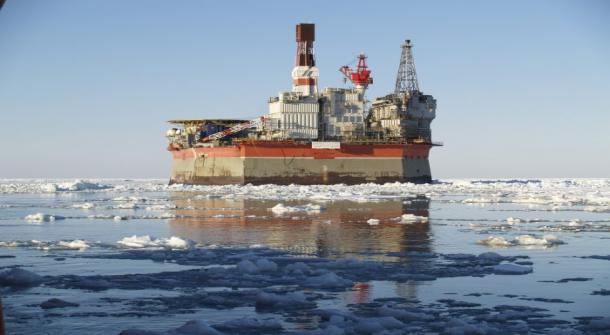
I gain a shred of hope for the future when I read about the heroic efforts of Kumi Naidoo, Executive Director of Greenpeace International, to draw attention to the criminal exploitation of the Arctic by fossil fuel prospectors.

Last week Naidoo braved hosing with cold water in the frigid temperatures of the North to take a stand on a huge Russian oil platform.

It was a publicity stunt, yes.  But how else are we going to attract the attention of the multitudes who need to know what is being done under the radar in the new Arctic Oil Rush?

As the pack ice melts at a historic pace, the fossil fuel industry is moving in.  Never mind the fact that oil spills in these waters will be almost impossible to stop.  Never mind the fact that this is the last refuge for so many endangered species, from polar bears and seals to whales and seabirds. Never mind that the more oil we pump out of the bowels of the earth, the faster we’ll wreck our fragile climate.

I am doing a lot of pondering lately about tactics.

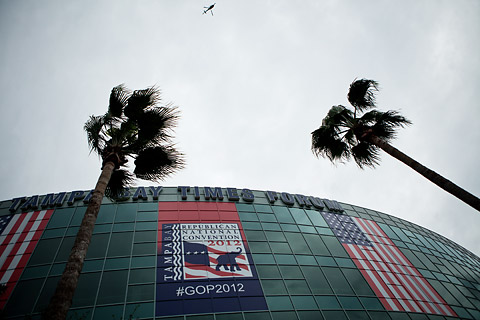
The Occupy movement here in the States seems to have largely fizzled.  Oh yes, a couple of busloads of protestors did go down from NYC to Tampa to protest at the RNC—and it’s true that the hurricane warnings put a damper on people’s enthusiasm to venture forth.

But if Kumi Naidoo and his team can brave the Arctic to climb the side of an oil rig, it seems to me that we ought to be able to mount a better protest at our Stateside behemoth, the Republican National Convention.

But no.  The mainstream media is reporting on the Convention in level terms, as though it weren’t a circus aimed at gutting what is left of the social contract that, at least since FDR’s time, Americans have come to consider a birthright. It reminds me of how reporters went along with the “WMD mushroom cloud” nonsense in the build-up to the invasion of Baghdad, or how they all but waved American flags in our faces when publishing the photos of the American soldiers killed in Iraq.

Hardly anyone has bothered to remark on the fact that we just passed our two-thousandth dead American soldier in Afghanistan this summer.

These deaths just creep upon us, the same way that oil rigs spring up like weeds in previously pristine waters, along with aquaculture farms, chemical runoff, GMO seeds and fracking wells.

It all happens so quietly and so deftly, while we are busy trying to pay our bills, or getting in a little vacation, or saying farewell to another loved one who has succumbed to cancer.

The Kumi Naidoos and the Tim DeChristophers and the Rachel Corries of the world jerk us back to reality and remind us that while we weren’t paying attention, the thieves got in and began “minding the store.”  In their own fashion.

Their tactics are always the same.  Catch people unawares; get them to sign documents ceding their rights; then systematically go about the business of resource extraction as quickly as possible, with as high a profit margin as possible.  Get it done before the sleeping populace awakes, before the regulators notice anything amiss, before people and animals begin to sicken and the lawsuits begin.  After all, the legal process can be held up in appeals for generations, and meanwhile how many fortunes can be made?

What should our countering tactics be?

Visibility is important: hence the merit of the Greenpeace approach.

Building a movement is important—not just among those willing to camp out in city parks, but among senior citizens and the middle class, unemployed white collar workers and soccer moms, as well as the marching band kids.

People need to realize that this is deadly serious.  No one is crying wolf here.

If we don’t act now to break our fossil fuel addiction, our time on this planet is almost over.

Maybe if we’re lucky, we can come back as bacteria or cockroaches.  But humans?  We’re just about done.


Swept Away

There are times when I wish I had the skills to be a political cartoonist, and this is one of those times.

I am imagining a huge hurricane bearing down on the huddles of Republicans and Democrats, each hunched in conspiratorial circles around their own little campfires, plotting away about TV ads and televised speeches, while the lightening sears the electrical grid, huge ships get washed up on the streets of coastal cities, and homes are blasted and flattened. Those crazy strategists don’t even look up until the pouring rain puts out their fire, and by then the storm is on them and it’s too late to run and there’s nowhere to hide.

Reading the latest political blog from The New York Times “Caucus” column makes me feel sick.

Here comes a storm that may cost lives and billions in property damage, and all the brightest minds in Washington DC can think about is how best to play it politically?

If that is the way all threats to our wellbeing are treated by our politicians, it is no wonder that we’re in such trouble today.

I expect better from the Democrats, but as so many of my readers have insisted vociferously lately, maybe I need to take off my rose-colored glasses and see my party for what it is.

Just another political party whose main goal and raison d’etre is simply Power.  Politicians who try to play by more humanitarian rules don’t seem to get too far in Washington.  Once they get into the clutches of the political strategists, their lives and minds are not their own.

There must be another way.

I can take off my rose-colored glasses as regards what we have now, the players currently on the ground.  But I refuse to let go of my hope that the system can be better.

True, the Marxist experiment has not worked, and nothing has come along to offer another vision of a more ideal socio-political-economic system.

But there are some interesting ideas brewing on the margins now.  The Living Economies movement, the Green Party agenda, the whole ethos of sustainability as opposed to limitless growth.

Maybe the real end to that cartoon strip I’m imagining is what happens the day after the storm.

The Republicans and Democrats are standing on soapboxes making speeches about how much they care about the damage, but no one is listening to them. People are going about the business of clean-up with determination and good cheer, and it’s quite clear that they have no use at all for the out-of-touch pols.

Yes, those elected officials do control the purse strings of “disaster relief.”   But that’s our money they’re parsing out!  Our tax dollars, far too much of which goes to blowing things up in the military, rather than in constructing a solid, sustainable economy.

The question I am mulling over this morning is, what will it take to achieve fundamental political changes in our country?   Can we do it by reform, or is it going to take all out revolution?

Or will Mother Earth do it for us, sweeping it all away to make way for a new epoch?

Gale Force: A Republican Tragedy

It seems entirely appropriate to me that the Republican National Convention should coincide with a hurricane.

Those crazy libertarians are a gale force until themselves, threatening to blow the center right out of our democratic republic.

Let’s all spin out to an each-man-for-himself anarchy, they cackle with glee!

Who needs Medicaid, Medicare, food stamps, unemployment compensation, tax breaks for the middle class?

Just as long as the billions for the military keep pouring in unhindered, the right to bear arms remains unobstructed, women are kept pregnant and barefoot and gay marriage is outlawed, all will be well.

And let’s build a few more prisons while we’re at it, shall we?  Ryan might add dourly, echoing his more famous counterpart Scrooge.  Are there no workhouses?

While the hurricane rages outside the convention center, the GOP celebrants within will be feasting like vultures on the carrion remains of our once-noble country.

FDR will be rolling over in his grave as the New Deal goes up in smoke.

But the message of the wind and flooding outside is unmistakeable, and has been declaimed in tragic tones for many a century now:

To-morrow, and to-morrow, and to-morrow, 


Creeps in this petty pace from day to day 


To the last syllable of recorded time, 


And all our yesterdays have lighted fools 


The way to dusty death. Out, out, brief candle!


Life’s but a walking shadow, a poor player 


That struts and frets his hour upon the stage 


And then is heard no more: it is a tale 


Told by an idiot, full of sound and fury, 


Signifying nothing.

How many heads will roll in the 21st century tragedy of our America?

Who will be left, Horatio-like, to tell the tale of woe?

Blow winds, blow!

I foresee that as in Shakespeare—or the Bible—it will take a storm of catastrophic magnitude to shake our rotten political timbers to their foundations, and pave the way for a new dawn.

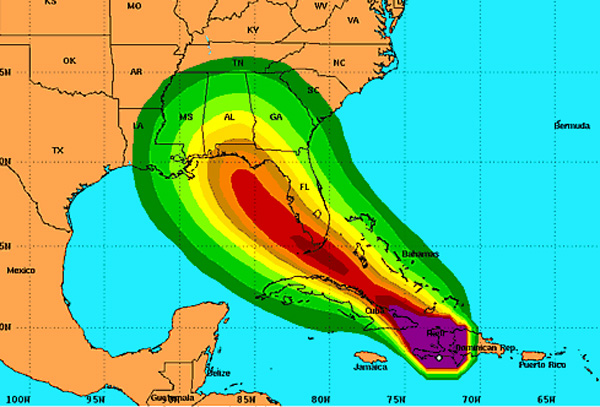
Predicted path of Tropical Storm Isaac as of Aug. 25, 2012

The Foxification of Our Public Sphere

These days when I send one of my columns to Common Dreams, I do so with an inward cringe.  I know that CD has become infested with slavering rightwing drones, who lie in wait just waiting to do their best Bill O’Reilly imitation from the comment balcony.

In recent months, CD has tried to address the issue of attack-dog commenters, instituting a comment policy that is now posted at the bottom of every published article.

It doesn’t seem to have had much effect, and I am beginning to wonder:

a) Is it worth my time and effort to open myself up to this kind of harsh, superficial debate?  When I write, I write from the heart, and while I certainly welcome spirited discussion of my ideas, including intelligent disagreement, the vicious savaging of my ideas, usually taken out of the context of the column’s overall message, feels unproductive at best.

b) If I bow out of CD, am I allowing myself to be “silenced”?  Shouldn’t I stand up for freedom of speech and stand my ground, even if it means opening myself up to the snipers?  Public speakers have to have a thick skin, after all, right?

c) Are there other fora I might join where the level of commentary is more elevated, more thoughtful?  Am I being an elitist snob for even wishing for such a space?

d) If I can’t beat’em, should I join’em?  In other words, should I be jumping in and giving as good as I get?  Or would that be stooping to their level and just encouraging their attack-dog mentality all the more?

As I ready myself to teach my media studies class this fall, these certainly seem like important questions to be pondering.

For years now I have been celebrating and advocating “citizen journalism” in my classes, encouraging students to start their own blogs and get their voices into the public sphere.

But if even Common Dreams has been overrun by the Bill O’Reilly wannabes of the world, then our public sphere has become a skewed and dangerous place.

However, if people like me and my students opt out of it, that only leaves a greater vacuum for the rightwing ideologues to fill.

Anyone have any advice on how to grow a thicker skin?

American insanity

I admit to a feeling of dejection at being back in the USA again.

Same old callous attitude towards women vomiting out of the Republican Party (“legitimate rape,” my ass!).  Same old desperate pleas for money from the Democrats, who are forced to beg for funds from small fry like me to try to compete with the billionaire Republican funders.  Same old blithe disconnect between the reality of climate change (drought, anyone?) and the steady roar of the fracking drills in Pennsylvania and the oil rigs in the Gulf of Mexico.  Shrimp and fish turning up grotesquely deformed by tumors, eyeless and burned, for hundreds of miles around the BP spill.  Whatever.

Not that things were paradise in Canada.  The crash of the fish populations there is alarming, and they too are involved in the dirtiest of business in the Alberta boreal forest (which I refuse to call by the euphemism “tar sands,” implying as it does that there’s nothing there worth saving).  They clearcut forests and pollute rivers and all the rest of it.

But from just a few weeks of tuning into the media there, I can tell that there is much more clarity and focus there on environmental issues.  Every single issue of the Halifax Chronicle Herald has at least one article, and usually several, about energy or agricultural or fishery policy in relation to climate change.  They are actually working towards meeting the goal they set for themselves of generating 15% of the nation’s energy needs by renewable means by 2020, and many are calling for a more ambitious target.

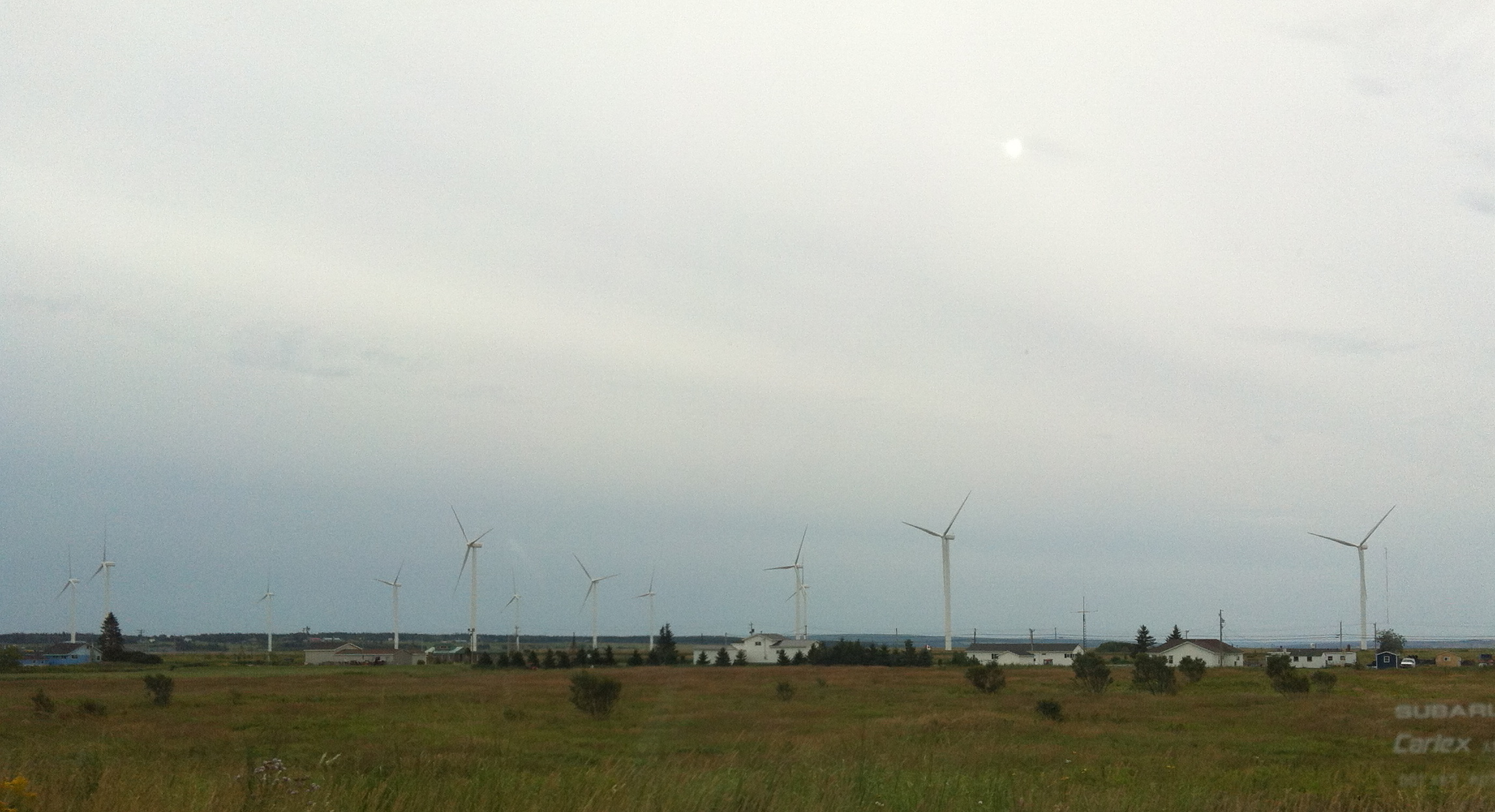
Coming across the land bridge into Nova Scotia one is now greeted by a newly erected forest of huge wind turbines, and there are water turbines churning in the nearby waters of the Bay of Fundy, too.  Many more are in the works.

Although there is political strife in Canada, such as has boiled up in Quebec in recent months, there is none of the viperous, self-destructive attack politics that goes by the bland name of “the election year cycle” here in the States.  Politicians campaign on the issues rather than on smearing and sniping at each other. Voter turnout is about 60%, as compared to the dismal 40% in the U.S.

Why do so many people feel disengaged, disillusioned, and disgusted with politics here in the U.S.?  Why do we feel like no matter how we vote, our values will not be reflected in Washington?

Because it’s true.

I happen to believe that Barack Obama shares my values.  I believe he is a genuinely caring, ethical man who sincerely wants to create a country in which politicians collaborate rather than backstab each other; in which government and corporations serve the public good; in which the goal of economic activity is raising all boats, rather than creating a few luxury liners for the richest 1% of Americans.  I believe he’s a good man.

And yet, he has been unable to make a dent in politics as usual in Washington.  The Republicans have shown repeatedly that they are the party of the wealthy boardrooms of Big Business and Big Finance, and since they own so much of the news media, and so many think tanks, and so many political seats, including Supreme Court seats, well, they can do as they wish and everyone else be damned.

I have noticed a certain grim set to Obama’s jaw in the last year, as the reality of his fly-in-the-web position has sunk in.  He knows that even if he wins re-election, he will be foiled at every turn.  And it doesn’t help that it’s getting harder and harder for him to inspire his base—people like me who are beyond frustrated with the status quo, and no longer believe he and his team can make a change.

When I get those daily emails from Democratic headquarters pressing me to donate to the campaign (just $12!), and then I hear about how the Koch brothers are donating millions to the Romney campaign, the little sprout of hope that springs eternal in me just starts to wither.

Yes, if 100 million Americans donated $12 to Obama it would make a big difference.  But frankly I would rather see some savvy crowdsourcing through social media, with the goal less raising money to burn up on TV than getting more people out to the polls on election day, and empowering ordinary Americans to rise up and insist on real representation in Washington.

I am not interested in betting on the horse race.  I can’t sanction the wasteful spending of huge sums on campaigning, while our planet burns and billions of people are locked in poverty.

Romney will be bad—very, very bad—for the health of the environment and all living things, including humans.

He, and all the slimy bastards who prop him up, must be defeated.

But this battle is about much more than just one country’s Presidential race.  It’s about our future on this planet.  A vote for Romney is a vote for business as usual, and then some—drill, baby, drill.

Why is it that so many Americans are so suicidal?

Maybe we need some collective social therapy more than anything else.

It really does seem that as a nation, we are insane.

Looking backward, looking forward, being here

When I started Transition Times a year ago, I was in a state of emotional turmoil.  I had just become fully awake to the scary reality of climate change, and was allowing myself for the first time to recognize the extent of the terrible environmental degradation of our planet that had taken place in my lifetime, on my watch as it were.

I was also smarting from some direct hits on the economic front, having just lost my second teaching post to state budget cuts.  I was looking at a yearlong evaluation process for a longterm contract at my primary institution (our equivalent of tenure), and the outcome was far from secure.

Added to that, I was just emerging from a yearlong divorce battle—nowhere near as vicious as some I’ve witnessed, but still painful and emotionally debilitating.

So all in all, I was in a pretty distressed and tender state of mind a year ago, when Transition Times grew from the flicker of a thought to a fully formed weblog.

Thinking back over the year, I see that I have grown a lot, and my blog has grown with me.

Many of my posts have charted the ups and downs of my outlook on the future: our planetary future in a time of precipitous loss of biodiversity, rapid, out-of-control global heating, and growing food insecurity for all inhabitants of the planet, humans included; our future as Americans, citizens of a nation that controls the largest military, police and prison forces in the world and seems to revel in showing off its ruthless muscle, even against its own children; and my own future as a newly single mom parenting two teenage boys, working more than fulltime, and trying to keep an even keel through turbulent economic waters.

As I embark on the second year of Transition Times, and close in on my 50th birthday, I am glad to find myself in a fairly calm, even mildly positive state of mind.

Although the past year has given us little to celebrate in terms of the environment, the global economy or the political scene, at least on the home front things are—well—okay.

A year into my life as a divorcee I am finding a comfort level with being on my own that I remember from years ago, before I married.  It’s been 25 years since I was single, which is a long, long time.  But I am beginning to get a remembered twinge of anticipation, the awareness that as a single woman doors may open for me that would have remained closed were I still married.

Stepping through any doors—meeting new people, visiting new places, making new choices—necessarily involves risk.  Twenty-five years ago, I took the risk of marrying—and it paid off in my two handsome, talented, charming (for the most part) sons, as well as many good times with my husband before and during our marriage.

A year ago I was so emotionally battered from the divorce that I could not have imagined opening myself up to that kind of attachment again.

Now I think—well, maybe someday.  There’s no rush.  I am pretty content as I am, just me and my family, as it was for the first 25 years of my life.

In the meantime, I will be doing a lot of thinking aloud on Transition Times about how best to channel my passions, concerns and talents in the coming years.

I am just one small woman with many limitations but I want to give the best of myself to the beautiful world I love so much—the birds and insects, the ocean creatures, the furry mammals and the cool reptiles, and the green forests, waving grasslands and flowering marshes that nourish us all.