Bill McKibben: Stand up to the fossil fuel industry, or start growing some gills!

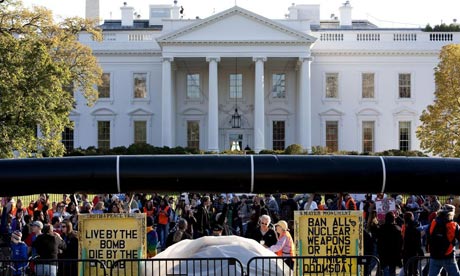
Last summer Bill McKibben and 350.org, the organization he and a group of Middlebury College seniors founded in 2006 to fight global heating, brought thousands of protesters to Washington DC to protest the Keystone XL Pipeline. As you’ll recall, they circled the White House in a ring five people deep; thousands were arrested over the course of two weeks; and the construction of the Keystone was at least delayed, if not entirely crushed.

This summer Bill will be at it again, taking on the fossil fuel companies even more directly. As he told us last night during his keynote address to the Strategies for a New Economy conference, put on by the New Economics Foundation and hosted by Bard College, the focus of this summer’s activism will be joining Sen. Bernie Sanders (I-VT) and Rep. Keith Ellison (D-MN) in pressing for the removal of some $113 billion in annual federal subsidies for American fossil fuel companies.

Bill reminded us that Exxon Mobil and the other big oil, coal and gas companies are by far the richest in the world.  Why should they be getting subsidies for doing business when those funds are sorely needed by citizens for basic services like education, health care and retirement?

And why should we be rewarding companies that not only pollute the environment, but also are responsible for spewing the greenhouse emissions that are rapidly making our planet uninhabitable for many current species, including humans?

“No other industry is allowed to dump its garbage in the streets,” Bill declared.  “Why should it not only be allowed, but subsidized, for the industry that is responsible for the most dangerous product of all, the CO2 that could totally destabilize our planet?”

Bill began his speech by noting apologetically that he has become known as a “professional bummer-outer,” and it was true: it was impossible to come away from his hour-long talk without feeling shaken by the severity of the future he laid out for us.

He gave several hard-hitting statistics and anecdotes of the gathering steamroller of global heating: the melting of the Arctic ice pack, the acidification of the ocean, the increase of floods, droughts, storms and disease.

Bill laid the blame squarely in the laps of the fossil fuel industry, which, he said, has been using its vast wealth to forestall political action on moving to renewable energy.

“Their business model is the problem,” he said.  “It’s either wreck their business model or wreck the planet.”

He’s not talking about destroying Exxon-Mobil and the other oil giants; just about forcing them to re-invent themselves as clean energy companies, and start putting their great resources behind the swift transition to renewable energy technologies.

How to accomplish this sea change?

“We’ll never match their money, so we need to deal in a different currency,” he said, “the currency of movements: passion, spirit, and creativity.”

Bill showed pictures from around the world of climate activists, most of whom, as he observed drily, “do not look like Sierra Club environmentalists, but they care just as passionately about saving our planet.” The movement he envisions must be international, but since Americans and Europeans bear most of the blame for the dramatic rise in greenhouse gases we have a special responsibility to work hard to make things right.

“I’m a writer,” Bill said.  “I’d rather be sitting home in Vermont typing.” Instead, he’s on the road much of the time now, addressing groups and working behind the scenes to build a climate movement powerful enough to take on the fossil fuel lobbies and head off disaster.

At this conference of economists, there were many gray heads in the hall, and many people wearing conservative professional clothing.  Bill called on the older folks, in particular, to join the movement to head off global heating, because “once you’re past a certain age, it doesn’t matter so much if you have an arrest record.”

“We have to get more confrontational,” he said, recalling the civil disobedience campaigns of Dr. Martin Luther King Jr.

Among the confrontational tactics we can look forward to this summer are “Nascar-style” blue blazers for members of Congress, with the logos of all the corporations from which they’ve accepted cash blazoned on their backs. 350.org will also be hosting an online Congressional scoreboard, so that citizens can easily see how each  senator or congressional representative has voted with regard to climate stabilization and environmental health.

“We’re not radicals or militants,” Bill insisted. “We’re actually quite conservative.  We want the planet to stay the way it is, or go back to the way it was when we were born.  The radicals work at the oil companies,” he declared to applause.

Bill ended by reminding the audience that the U.S. Chamber of Commerce recently issued a statement saying that there was no cause for alarm about climate change, because human beings will be able to adapt our behavior and physiology as the planet warms.

“What are they imagining?” Bill asked indignantly. “Are we going to start growing gills?”

It’s not gills we need, but guts—to follow Bill McKibben’s lead and force the politicians to represent the will of the people, rather than the will of the industries that are destroying our planet in the name of the next quarter’s profits.

Something tells me it’s going to be a hot summer.

Rio+20: Fiddling While Earth Burns

I am having trouble summoning any enthusiasm over the upcoming Rio+20 UN Conference, which will begin on June 20.

When you go to the conference website, everything sounds so benign, forward-looking and responsible.  For example, talking about food security, the conference framers call for the promulgation of sustainable agriculture, meaning “the capacity of agriculture over time to contribute to overall welfare by providing sufficient food and other goods and services in ways that are economically efficient and profitable, socially responsible, and environmentally sound.”

It sounds marvelous.  But we all know that during the last 20 years, since the first Earth Summit in 1992, industrial agriculture has only gotten bigger and badder, more focused on profit at the expense of social responsibility or environmental stewardship.

Food security for the majority of people on the planet has become a pipe dream, and even the most privileged of us are growing increasingly vulnerable to disruptions in food supplies caused by climate change, monoculture and the superweeds and superbugs that have developed resistance to our chemicals.

I was not surprised to find in my inbox this morning an eloquent position paper from La Via Campesina, seeing right through the rosy language of the “sustainable development” engineers to recognize that “beneath the deceptive and badly intentioned term “green economy”, new forms of environmental contamination and destruction are now rolled out along with new waves of privatization, monopolization, and expulsion from our lands and territories.”

Here is how La Via Campesina, which represents indigenous and peasant farmers worldwide, but particularly in South America, sees the “green economy”:

“The green economy does not seek to reduce climate change or environmental deterioration, but to generalize the principle that those who have money can continue polluting. Up to now, they have used the farce of purchasing carbon bonds to continue emitting greenhouse gases. They are now inventing biodiversity bonds. This is to say, businesses can continue destroying forests and ecosystems, as long as they pay someone to supposedly conserve biodiversity somewhere else. Tomorrow they may invent bonds for water, natural “views”, or clean air.”

I am afraid that this analysis is right on target.  The whole premise of the REDD agreements, under which communities were to be paid for conserving their forests, has only resulted in a land rush to purchase the forests so as to collect the international funding.  And to add insult to injury, REDD has allowed the destruction of virgin forests and replanting of, say, palm oil plantations, to “count” as forest conservation.

So the international capitalists make out like bandits, and the local people who have lived peacefully and harmoniously in the forests for thousands of years suddenly find themselves given the boot.

In the first anthology I edited, Women Writing Resistance: Essays on Latin America and the Caribbean (South End Press, 2004), I included an essay by Rigoberta Menchu, the 1992 Nobel Peace Prize winner from Guatemala, who has become a major voice for global indigenous rights and environmental stewardship.  The essay describes Menchu’s unofficial visit to the Earth Summit in Rio in 1992.

Rigoberta Menchu Tum

“I had gone to find out what their idea of the earth, plants and nature might be, and what I found was a commercial version of ecology,” she said.  “There were T-shirts with tigers, lions and parrots painted on them, and plastic bags with animals’ faces.  It was a case of businessmen making money out of the environment.”

Although Menchu ended on a more hopeful note back in the ‘90s when this essay was first published, I have no doubt that today she is less optimistic, given the way events have played out over the past 20 years.  It is no exaggeration to say that the capitalist assault on the natural world combined with the human population overload of the planet has brought us to the brink of civilization collapse.

The calm, rationalist language of the Rio+20 architects reveals no sign of awareness of the dire state of the planet.  They seem to have constructed their conference materials in an air-conditioned bubble, through which the voices of the billions of ordinary people on the ground cannot penetrate.

La Via Campesina is calling for a return to small-scale agriculture as the solution to the Earth’s problems. They argue that a relocalization of agriculture is necessary, with indigenous and peasant farmers given cooperative control over their lands, as it was for the thousands of years preceding our own unfortunate era.

We will never get the diplomats, technocrats and financial oligarchs in the air-conditioned conference halls to agree to such a simple, unprofitable solution to food security.

But the feedback loops that have made our planet stable since the last Ice Age are now becoming severely disrupted, and so Earth may take matters into her own hands, forcing a relocalization in which only those who still remember how to subsist in small groups close to the land will be able to survive.

Is this the great transition prophesied by the Mayans long ago?  The end of the age of technocratic capitalism, and the return to a simpler way of life?

Global meetings such as Rio+20 should be occasions for making plans, together with the small-scale farmers on the ground all over the world, for intelligent transitions to truly sustainable communities. There is still time to prepare for the coming ecological shocks so as to prevent mass misery.

Instead, governments are using this precious time to build up armies and police forces to ensure the control of ever-shrinking resources by the wealthy, and selling small-scale arms to local gangs to encourage violence and terror outside of the gated communities of the rich nations.

This is a strategy that keeps us all in line—we in the wealthy nations are terrified of the violence we see outside our borders, and so we docilely do as we are told, which is to say, continue to participate in the aggressive policies that are bringing us all to ruin.

I see the twin monsters of the weapons and the chemical industries as the most destructive forces on our planet today.  If these two industries could be stopped, and their destructive products destroyed, imagine what a different world we’d be living in.

We may not be able to put those evil genies back into the bottle ourselves.  But the planet will take care of it, sooner or later.

Right now, it’s looking like it’s going to be soon.

Finding Hope in Heartbreak

There has been a steady beat of heart-breaking news lately from various fronts.  Did you hear that the flame retardants required by law to be sprayed on American sofas are highly toxic chemicals that continue to break down in your living room? And those sofas, by the way, if they’re the nice wood-framed ones from Ikea, are being made from irreplaceable 600-year-old trees.  When you lie on your sofa to breast-feed your baby, you’re getting a whopping dose of PCB-type chemicals, and your infant is too, since toxic chemicals pass right into breast milk.

Or maybe you caught the long article in the New York Times the other day about American zoos becoming Arks for modern-day Noahs, who have to choose which species to try to preserve and which to let go into extinction.  This was one of the most candid acknowledgements I’ve seen in the mainstream media of the explosive pace of extinctions occurring around the world, partly due to the loss of those ancient trees to logging.

And meanwhile, in my corner of the world, there was more bad weather—record heat in May, followed by violent electric storms, complete with hail and the threat of twisters, which knocked out my power last night, including permanent damage to my DSL box, leaving me without internet access this morning.

The relentlessness of this kind of information, combined with the evidence I can see before my eyes of climate change and the contamination of our landscapes, is like a steady drag on my spirit, a weight around my neck.

Even when I’m enjoying myself with friends and family, as I did this past weekend, I have one mental foot in the future, imagining a time when such happy, peaceful and bountiful gatherings will exist only in memory.

I am always giving myself silent pep talks, hanging on to the hope that we will accomplish the switch to renewable energy sources; that we will stop the deforestation and the industrial agriculture; that we will become responsible stewards of our home planet, rather than the armed pirates and chemical warriors that we have come to be in the last hundred years or so.

Joanna Macy

Lately I have been finding some comfort in Joanna Macy’s 1991 volume World as Lover, World as Self, reissued in 2007 by Parallax Press.  When I think of how oblivious I was back in 1991 about global heating and toxic contamination, I am amazed at Macy’s prescience.

Rather than simply bemoaning, or even exhorting her readers to change their ways before it’s too late, Macy offers us a way to understand and process what is happening to our world, principally through coming to the recognition that the traditional human individualist view of the self is a misconception.

“The crisis that threatens our planet, whether seen in its military, ecological or social aspect, derives from a dysfunctional and pathological notion of the self,” she says.  “It derives from a mistake about our place in the order of things.  It is the delusion that the self is so separate and fragile that we must delineate and defend its boundaries; that it is so small and so needy that we must endlessly acquire and endlessly consume; and that as individuals, corporations, nation-states or a species, we can be immune to what we do to other beings.”

In place of this, Macy draws on the work of systems theorists and ecological philosophers like Arne Naess, as well as the Buddhist notion of “inter-being,” to argue for a “greening of the self,” a way of self-understanding that recognizes our essential connectedness with all other life forms on our planet.

Arne Naess

Once we have understood that we are integrals parts in the living system of Earth, we should no longer have to appeal to human beings’ dubious moral sense to prompt a shift to a more sustainable way of living.  We can simply appeal to self-interest, Macy says.

“For example, it would not occur to me to plead with you, “Don’t cut off your leg.  That would be an act of violence.” It wouldn’t occur to me (or to you) because your leg is a part of your body.  Well, so are the trees in the Amazon rain basin.  They are our external lungs.  We are beginning to realize that the world is our body.”

One of the ideas I find most exciting about this part of Macy’s work is her application of the concept of “inter-being” to temporality.

“By expanding our self-interest to include other beings in the body of Earth, the ecological self also widens our window on time.  It enlarges our temporal context, freeing us from identifying our goals and rewards solely in terms of our present lifetime.  The life pouring through us, pumping our heart and breathing through our lungs, did not begin at our birth or conception.  Like every particle in every atom and molecule of our bodies, it goes back through time to the first spinning and splitting of the stars.

“Thus the greening of the self helps us to re-inhabit time and own our story as life on Earth.  We were present in the primal flaring forth, and in the rains that streamed down on this still-molten planet, and in the primordial seas. In our mother’s womb we remembered that journey wearing vestigial gills and tail and fins for hands. Beneath the outer layers of our neocortex and what we learned at school, that story is in us—the story of a deep kinship with all life, bringing strengths that we never imagined.  When we claim this story as our innermost sense of who we are, a gladness comes that will help us survive.”

When I think of my place in time and space in these terms, I do feel that gladness.  It is true that we are living through the sixth great extinction on the planet now.  It is true that we are producing and spreading contaminants in the air, water and soils that will last, some of them, for billions of years.

But the Earth has time.  And who knows, perhaps what we think of today as toxic waste can in time become the building blocks of new forms of life.  Our planet has shown itself to be remarkably adaptive.

Macy is unusual in working across disciplines and discourses that are generally kept apart, speaking fluently and persuasively in the tongues of sociology, systems theory, psychology, neurology, geology, ecology, theology, and even spirituality.  We are going to need the wisdom from all of these avenues of inquiry to begin to understand what will be happening to us in the coming years, as individuals, as a species, and as a part of the living fabric of Earth.

Perhaps that is what most distinguishes us most as human beings.  We want to understand.

And perhaps there is still a chance that if we can understand in time, we can, as Macy says, survive.

Memorial Day Memories

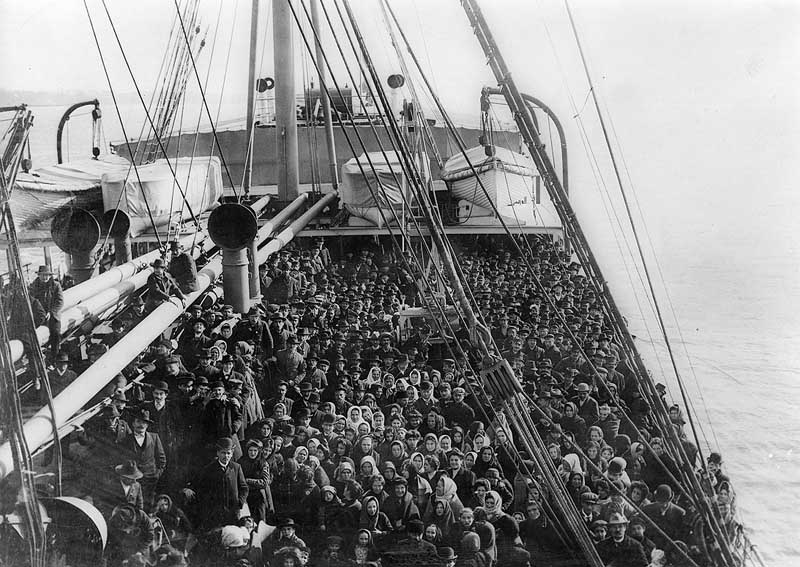
This Memorial Day, I want to honor my ancestors, at least as far back as my family memory goes.  On both sides of my family, my ancestors were hounded out of Europe by the dogs of anti-Semitism and greed.  Under great pressure, facing an uncertain future in a faraway land, in a time when leaving home very likely meant never again seeing or speaking with family and friends, they bravely gathered what they could carry and set off to try to establish a better future for their descendants.

They succeeded.  My family has prospered here in America.  On my father’s side, the three surviving children of my Russian immigrant great-grandparents became a doctor, a lawyer and (my grandmother) a teacher.  On my mother’s side, the German emigrants of the late 19th century became comfortable businessmen, doctors and dentists.

The Depression took its toll on my family, but by and large they did well, creating generations of hard-working, honest, loving people who entered energetically into building the American Dream.

Just because none of them died in war doesn’t mean we shouldn’t honor them on Memorial Day.  There are many forms of service to one’s country and one’s family.

This Memorial Day, I raise a toast to the departed, to peace, and to life!

A la recherche du temps perdu

I have always been very sensitive to the passage of time.  As a child, I often began a long, golden summer season grieving in advance for its end.

I remember how, during long car rides with my family—my mother, my father, my brother, my dog and cat—I was aware of a sense of perfect contentment, thinking ‘if only this moment could go on forever, for here we all are, everyone I love, complete and whole and happy.’

Now, looking into the future and knowing how close our planet is to a major realignment of living systems, it seems there is always a part of me that is engaged in the long, drawn-out process of grieving in advance.

No moment can last forever.  Grief is inevitable for those of us who open our hearts to attachment.

These thoughts are at the forefront of my mind today because this weekend I am having the odd experience of participating in my 30-year college reunion, seeing people with whom I shared some of my most formative, impressionable teenage moments, now grown older, grayer, wider, hopefully wiser too.

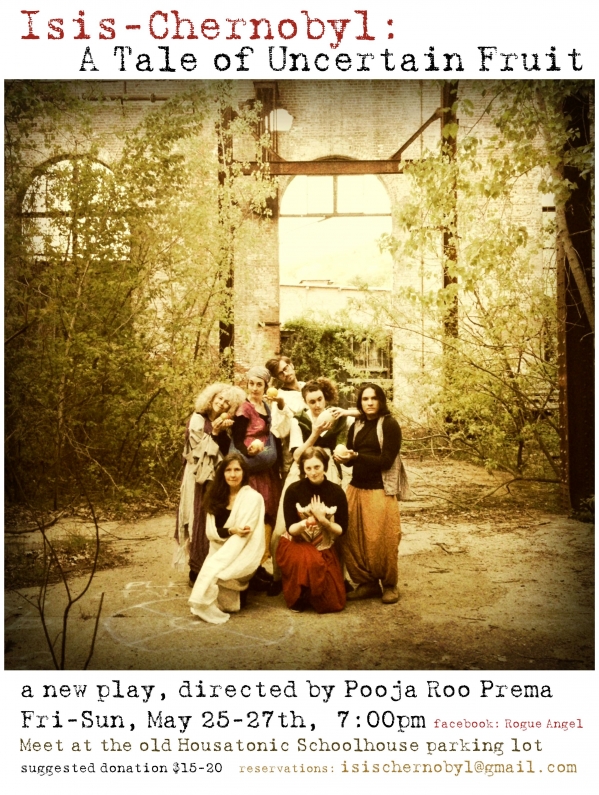
At the start of the weekend, I attended a play written and directed by Simon’s Rock alum Pooja Roo Prema, featuring a cast composed mostly of different generations of Simon’s Rock graduates.  Called “Isis-Chernobyl: A Tale of Uncertain Fruit,” the play is impossible to summarize in a nutshell, other than to say that it is an extended allegory of grief.

Pooja describes it as more a ritual enactment than an entertainment, which is certainly true; it has elements of high Greek tragedy, as well as Shakespearian clowning, but the thread that runs through it all is the resilience of the human spirit in the face of the unimaginable desolation of a post-apocalyptic landscape.

Isis, wandering the earth seeking the lost, dismembered parts of her beloved Osiris, could be any one of us wandering the haunted landscapes of our own memories, seeing people, places and events that once were woven into the warp of our being, but have become lost in the forward rush of life’s unfolding.

Reuniting now with generations of Simon’s Rock alumni, my own cohort past midlife and facing a future likely to be shorter than our past, I am reminded once again of how important it is to seize each moment, make the most of each day, appreciate one’s friends and family before they are torn from us by the relentless cyclical forces of life and death.

Isis can never be satisfied in her quest to feel again the smooth living skin and warm kisses of her lover, but she can reanimate his spirit in her own grieving flesh and mind.

Just as every car ride of my childhood came inevitably to an end, these days too shall pass, living on only in our memories.

This Memorial Day, I celebrate memory: the living memories of past happiness that glow within us like shining stars as well as the dark, grieving memories of people and places lost to us forever.

If I had been asked to speak at Commencement….

This is what I would have said:

It’s become a cliché to say that every day is the first day of the rest of your life, and yet like most clichés this one holds truth to it.

When you walk down that aisle today holding your B.A. diploma, achieving a goal which you have worked towards for many years, you will be stepping into your adulthood with all the rights and privileges, but also all the responsibilities that this maturity brings.

The year 2012, long prophesied as a time of great change and transition, is not an easy time to be reaching adulthood.

I don’t have to tell you that times are tough economically, or that our planetary environment is facing its own severe shifts due to anthropogenic global heating.  You have probably heard tell of a “sixth great extinction event” on the horizon, if climate change projections continue unabated on their current course, causing the heating and acidification of the oceans and resulting drought, floods and violent storms on land.

Most of us “know” about these issues the same way we “know” that toxic chemicals in our food, water, air and household products cause cancer.

We do our best not to think about it too much, because thinking about it just makes us scared and depressed, and what can we do about it, anyway?

I want to suggest to you, as you step out into the world this afternoon with your newly minted B.A., that you are stepping into an unprecedented opportunity to do more than any previous human generation has ever done.

It is not an exaggeration to say that you have the opportunity to turn this great Titanic of an earthship around, sailing her away from the iceberg and into safer waters.

There have been “greatest generations” before now.  But their challenges have been far less global and all-encompassing than the challenges we face now.

Now it’s not just a nation or even a group of nations that are faced with disaster.  It is the entire globe, human civilization writ large, which could in fact be toppled if the earth gives a great climatic shrug of her shoulders and goes back to the evolutionary drawing board.

Even the most sober earth scientists are predicting that if we do not change our habits of carbon emission, the resulting global heating will make the world uninhabitable for some 90% of current species on the planet by the year 2050, including 90% of current human populations.

I lay this out for you starkly not to depress you on what should be a happy and auspicious day, but to impress upon you the importance of the decisions you will be making and actions you will be taking in the coming years.

While it is true that lifestyle changes of individuals can only have limited effect on climate change, they are a start.  We can choose to support alternative energy whenever and however possible.  We can choose to push our elected representatives to shift subsidies and incentives away from fossil fuels and towards renewables.  We can encourage sustainable agricultural practices in our own communities and through our consumer choices.

What I would ask of you above all is to stay informed and engaged with these issues as you move forward into adulthood, and seize all opportunities to push governments and corporations to do the right thing not just for the bottom line or the national interest, but for the good of our planetary home and her current life forms, including humanity.

I am not proud of the condition of the world that my generation is now handing off to you.  I am not proud of what I and my cohort have allowed to happen on our watch.

The past cannot be undone.  But the future is yours to shape.

Don’t be afraid to try out completely new ideas. Listen to your dreams, listen to your intuition.  Be alert, be thoughtful, be creative.  Tune out the background buzz that will try to lull you into complacency and inaction.

I hope that when it’s your turn to witness your children stepping out into their adulthood, you will be able to be proud of the world you have created for them.

Truly, their future is in your hands.

Commencement reflections, 2012

This weekend my first-born son will graduate at age 20 with a B.A. in Biology.  He will join thousands of other graduates across the country marching to the dais to accept his hard-earned degree from school officials dressed in the medieval cap and gowns we still wear for such occasions.

And then he will march out into the world to join the hordes of recently graduated young adults, confronting one of the worst job markets ever seen in American history.

When I graduated college back in 1982, there was also a bit of a recession on, but things quickly rallied, and I had no trouble finding a job in journalism, and working my way up from reporter to staff writer to editor at publications in New York City.

When I chose to go to graduate school, it wasn’t hard to find a part-time job as an assistant editor to make room in my schedule for my studies.

And so it went, one step leading to the next with a steady predictability.

For my son, now, that kind of reliable future is out of the question.

We live in such a fast-changing world that there is no way to predict with certainty what kind of challenges we’ll be facing in, say, the next five years.

Will climate change come to a head and rain environmental devastation down on us?  Will an antibiotic-resistant bacteria strike?  Will the risky behavior of the financial sector finally put us completely at the economic mercy of the Chinese?

We can’t know the answers to any of these big global questions, any more than we can know the answer to the very small, local question that I am sure is in the minds of all the parents and grandparents who will be watching their graduates march this weekend: will s/he be able to find a job next year?

Many of the graduates will choose to put off confronting that question by diving back into graduate school.  That is certainly what my son has in mind, and it is the right thing to do, given his desire to work as a marine biologist.

Even a Ph.D. is no guarantee of a living wage anymore, although things are somewhat brighter in the sciences than for those of us stuck in the doldrums of the humanities.

I am proud of what my son has accomplished in his first two decades, and proud of the fine human being he has become.

I am much less proud of the world we, his elders, have created, into which he’ll now be stepping as a young adult.

As a teacher, I see clearly that what is needed is a collaboration of older, more experienced minds, with the open, energetic and passionate young minds who are now coming into their full powers.

I don’t want my son and all the other graduates to follow blindly in our path, doing things as they’ve always been done, which is largely what I myself did as a young adult.

Knowing how desperately we need to change our habits in order to shift our society on to a sustainable path, we can’t afford to give young people the luxury of just following along the paths that are already established.

We need them to be blazing new trails, and we older folk need to work with them closely in this crucial undertaking.

As my son strides off the dais with his BA in hand on Saturday, this is the blessing that will be in my mind:

May you take your knowledge and talents and use them for the benefit of our planetary home.  May you be a warrior for good, and become a leader in your sphere.  May you prosper and find happiness in working for the prosperity and happiness of all. 

Embracing the Monster of Climate Change

Finally, a mainstream media reporter has the courage to bring up the elephant in the newsroom: CLIMATE CHANGE!!!

In a blog post—not a front page or prime time news story, alas–ABC News reporter Bill Blakemore writes candidly of the fear that a realistic assessment of the threat of climate change must raise in anyone who cares about the future of human civilization on this planet.

“Established scientists, community and government leaders and journalists, as they describe the disruptions, suffering and destruction that manmade global warming is already producing, with far worse in the offing if humanity doesn’t somehow control it, are starting to allow themselves publicly to use terms like “calamity,” “catastrophe”, and “risk to the collective civilization,” Blakemore writes.

“Sooner or later, everyone who learns about the rapid advance of manmade global warming must deal with the question of fear.”

Blakemore advises us to take a page out of the U.S. Air Force playbook and learn to “hug the monster” of climate change, rather than recoiling into fearful paralysis.

“If you freeze or panic — if you go into merely reactive “brainlock” — you’re lost,” he says.

“But if your mind has been prepared in advance to recognize the psychological grip of fear, focus on it, and then transform its intense energy into action — sometimes even by changing it into anger — and by also engaging the thinking part of your brain to work the problem, your chances of survival go way up.”

It is absolutely clear that we stand on the edge of the greatest crisis ever to confront human civilization.

It is also quite clear that almost NO ONE WANTS TO TALK ABOUT IT.

Sometimes when I bring up the reality of impending climate change I really feel like the drip, the drone, the total wet blanket in the room.  People actually give me dirty looks and do their best to change the topic ASAP.

Okay, people.  You go your way and I’ll go mine.

I don’t know whether it’s possible for humanity to survive the coming catastrophe of global heating.

If we survive, it will only be through a drastic change in our ethos and way of life.

We cannot continue to treat the planet as our private killing field, burning and hacking at all other life forms as if they did not matter a damn.

We in the Western world cannot continue to pretend that our wasteful, profligate lifestyles are a given that cannot be questioned, touched or changed.

To me the monster in the room is not so much global heating itself, as the destructive, predatory mindset that has brought it about.

If we are going to embrace the monster, as the Air Force suggests, and even employ anger as a tool of resistance, than we need to start getting angry at ourselves.

We Americans and Europeans have brought the planet to the brink of the next “global extinction event”—aka, the brink of total annihilation for the majority of current life forms on Earth.

Where is the anger? Where is the outrage?  Where is the will to change?

First step: acknowledge that the problem exists.

Thanks, Bill Blakemore, for getting us just a little bit closer to taking that first baby step.

Celebrating the DIY Mom on Mother’s Day

Although I feel it’s my duty to write a celebration of mothers on Mother’s Day, every time I think about what I might write for this post, all that comes up in my mind is a kind of lament.

Becoming a mother was definitely the best thing I’ve done in my life.  When I look at my two big, handsome, talented boys, I am thrilled beyond measure with the knowledge that I nurtured them in my womb for nine months, I gave birth to them, I did all the loving labor a mother must do to successfully bring children up from helpless infants to strong, independent young men.

My boys setting sail

So where does the lament come in?

Shift to a small, smothered voice: I just wish I hadn’t had to do so much of it all by myself.

I suppose I am writing the lament of the single mom, or the “do-it-all” mom, the mom who doesn’t get much help or support from her partner in bringing up baby.

Even when I was married, I did the lioness’s share of the household and child care labor, while also bringing home a paycheck that grew in time to be the larger portion of the family bacon.

My marriage foundered on my partner’s inflexibility when it came to the idea of a man doing housework, and my exhaustion and resentment over having to do it all.

In addition to working two demanding jobs for nine years straight, while also publishing two books and organizing a major annual conference and doing all the other extra labor of being a fulltime academic, I also did all the shopping, cooking, laundry, cleaning and yard work; all the supervising of homework and staying involved with my children’s schools through parent-teacher meetings, volunteer work and car pooling; I made sure all the medical appointments were taken care of, I did all the bill-paying and taxes, and if there was anything left over for a small vacation or a purchase for the house, I handled that too.

I am sure this is sounding very familiar to all those single and DIY moms out there, right?  We know the list could go on and on.

My own mom did all that household stuff too, but without the added pressure of bringing home the paycheck.

It’s probably my traditional upbringing, where my dad went out to earn the money and my mom stayed home to run a smooth, highly functioning household and do her creative work on the side, that makes me feel like having to play both roles myself is somehow too much.

I should be able to do it all with grace and good cheer, without getting crabby with my children or frustrated when things don’t go quite as planned.

That’s what a mother does, right?

At least I can take some comfort in knowing I am not alone.

There were some 10 million single moms in the U.S. as of 2010, and the number keeps climbing.

This Mother’s Day, I want to give a big shout-out to all of us single moms, and the DIY moms who may someday decide that enough is enough, and go down the single mom route.

We need to keep our chins up and not let the pressures, obligations and yes, sacrifices of our position get us down.

We have to just do our best, and not beat ourselves up when we get overwhelmed.

We must remind ourselves that we are doing the most important work in this nation, bringing up the next generation to take their place responsibly and soberly in the difficult social and environmental landscape we must confront together.

I love this picture of me because I look the way I feel: as weathered, but as solid, as the rock behind me

Grassroots heroism: what we need now

The image that stays with me most from the blockbuster superhero action film The Avengers is not the thrilling climax when the hero uses all his power to wrest a nuclear missile away from its collision course with Manhattan and up into space, where it explodes a waiting battleship of nasty intergalactic invaders—although that was pretty thrilling I have to admit, especially in 3-D!  Man, that movie packs some powerful special effects!

But no, what really struck me were the scenes of ordinary human beings on the ground, dressed in their regular 21st century civilian clothing, sipping their lattes and strolling about midtown Manhattan one moment, and the next moment being terrorized from above by sinister alien rampaging monsters and soldiers.

Without Captain America, the Black Widow, the Incredible Hulk and the other heroes, all those people would certainly have been totally destroyed within minutes—and not just by the aliens, but by “friendly fire” as well.

This scene resonates with me on two levels.

On the one hand, it goes to show yet again how quickly an apparently normal, peaceful morning can turn to nightmare when militarized violence shows up unexpectedly.

And on the other hand, it underlines how deeply dependent we human beings are on the idea of the charismatic leader, the savior, the hero who will leap into action and save the day for us.

This has been true since ancient times, and it appears to be cross-cultural: every culture has its heroic myths and legends, in which men and women with superhuman strengths and powers do battle with dark forces on behalf of the rest of humanity.

Watching politicians of The Avengers decide to send a nuclear missile to destroy the entire city in order to kill off these alien soldiers, an order that their general resists but an ordinary pilot obeys, I am uncomfortably reminded of how much danger we are probably all in, every day, thanks to decisions made by the men in charge, who sit in remote splendor in faraway bunkers like the gods on Mount Olympus of old.

I want to see a movie made that points the way to a different model of heroism.

Instead of the superhero, David against Goliath type tale, I want to see, on the big 3-D screen with all the lavish special effects and brilliant actors, a tale that celebrates the ordinary heroism of people on the ground, who—understanding the danger of militarism and the mechanized violence that pervades human civilization, from agriculture to energy to education and entertainment—come together to offer whatever skills, talents and gifts they have to the common pool of resistance.

In this movie, the human beings would not cower on the ground while the battle of the titans raged overhead; they would not sink to their knees before the might of an alien invader; they would not follow blindly wherever the men with guns and uniforms told them to go.

Instead they would use the power of their collective will and determination to demand a change of course, and insist that it happen.

What I want to see celebrated on the big screen is the kind of grassroots resistance that we saw on the ground this past year in Egypt and other Arab Spring hotspots, or in the General Assemblies and protests of the Occupy movement.

Egyptian women protest in Cairo, April 2011

It is happening already in real life.  Hollywood and Marvel Comics, maybe it’s time to break with the fixation on the past and try a new story.