We Are All Noah Now

We are all Noah now.

These words have been sounding in my head like a mantra these past few weeks, and this morning I woke from strong dreams of animals in trouble—a big lone fox, a frantically hopping toad—and felt the need to make my inchoate awareness of danger and responsibility more tangible by writing it down and sharing it with others.

Derrick Jensen asks with desperate, angry sadness how long it will take us to finally wake up and start resisting the accelerating extinction of species happening on our watch.

How can we love our pets so much (I ask with my purring cat on my lap and my snoring dog at my feet) and remain unmoved by the news that hundreds of sweet, innocent reptiles and amphibians, many of them from fragile, endangered species, were cruelly murdered by callous neglect last week, crushed into hot plastic tubs without food or water for days in a crate bound from Madagascar to the U.S. pet store market?

_72676565_mada3

_72680861_mada4

How can we continue to give our children adorable stuffed lions and tigers and bears to hug and cuddle (my own boys were devoted to their respective stuffed animal friends, a gray kitty and a green froggy) while turning a blind eye to the fact that all of the large animals on Earth are staring extinction in the face?

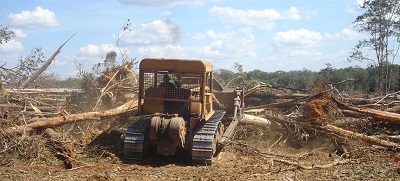
Indonesian palm oil plantation.  First the forest was bulldozed.  Never mind all the fragile species that called it home, including our primate cousins, the highly endangered orangutans.

Indonesian palm oil plantation. First the forest was bulldozed. Never mind all the fragile species that called it home, including our primate cousins, the highly endangered orangutans.

How can we blithely talk about international agreements like REDD and cap-and-trade markets, ignoring the fact that when these lofty agreements are translated into action on the ground in the remote tropical forests that most need protection, they too often result in the worst kinds of greedy destruction—for example, so-called protected forests being bulldozed, sprayed with herbicides and turned into palm oil plantations, but still sold as “protected forest” in the international carbon market.

Americans spend royally on landscaping around our own homes, but fail to appreciate that if we don’t snap out of our trance and start acting forcefully on behalf of the planet as a whole, the storms and droughts that are coming will make short work of all our careful planting and pruning.

Wake up people!  We are all Noah now.  The Ark that will help us weather the storms we have brought upon ourselves is the Mother Ship, sweet Gaia herself.

Headlands, Puerto Rico. Photo by Eric B. Hernandez

Headlands, Puerto Rico.
Photo by Eric B. Hernandez

It’s past time to start focusing on doing all we can to conserve the living beings on this planet—ours to protect, not to destroy.

We are all Noah now.

Writing of Disaster, Writing of Hope

As a professor of literature, I tend to pay special attention to what my son is reading in school.  I wish I could say I paid attention to what he reads at home, for pleasure, but the truth is that he does not read for pleasure.  He reads on assignment, and that’s it.

So what is he reading, in his typical 9th grade American public high school?

So far this year he’s read 1984, Lord of the Flies, and Night. Now he’s reading a contemporary novel, How the Light Gets In, by a British author, M.J. Hyland, billed as a 21st century girls’ version of Catcher in the Rye.

In short, it’s been one depressing, upsetting book after another.  Thought-provoking would be the kind term to use, but it saddens me to recognize that generally speaking, “serious” literature is about the things that frighten us.

And it’s not just in literature that this is true.  In pop culture too, the violence that plays out over and over in every form of media entertainment is catering to what seems to be a human need to imagine and play out in fantasy our deepest fears.

Almost all science fiction series and movies that try to imagine the future show us disasters and social dystopias.  These are considered “realistic” (a positive attribute), as distinct from “utopian” scenarios (dismissed as unrealistic, hence not to be taken seriously).

As a parent, a teacher, and a member, like you, of the transitional generation on this planet, I worry about our apparent addiction to what 20th century philosopher Maurice Blanchot called “the writing of disaster.”

Certainly I have not shied away, in my own career, from making myself aware of the ugly side of human experience.  I have studied human rights abuses of every stripe and geographic origin, including sexual abuse, torture, war and genocide.

I have confronted the grotesque truth of the devastation we humans are wreaking on non-human animals and on our planetary environment—the chemical poisoning of air, waters, earth, along with the life forms that inhabit these strata; the factory farms; the mountaintop removal, clear-cutting and strip-mining; the plastics pollution of the oceans; and on and on.

I don’t bury my head in the sand, by any means.

But I question the wisdom of inundating our imaginations, especially those of young people, with violent stories.

Whether they’re historical like Night or futuristic fiction like 1984; whether they’re video game scenarios like GTA or Call of Duty; or TV series, movies, or the daily news—if all we see in virtual reality is human beings being violent, doesn’t this begin to affect the way we understand ordinary reality?

Doesn’t it make us more guarded with each other, less likely to trust, less likely to build community and bring out the best in each other?

Mary Pipher

Mary Pipher

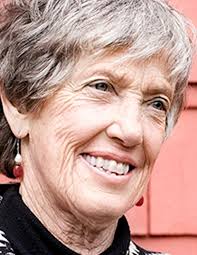
In preparation for my new class this spring, “Writing for Social and Environmental Justice,” I’ve been re-reading Mary Pipher’s 2006 book Writing to Change the World. Mary Pipher, you may remember, is the psychologist who wrote Reviving Ophelia, a book from the late 1980s that provoked a major surge of attention to the way American girls self-sabotage as young teens, and what societal factors made their swan-dive of self-esteem more likely to occur.

In recent years, Pipher has become an environmentalist, leading the charge in her home state of Nebraska against the Keystone XL.  Although the pipeline is not dead yet, it has at least been re-routed away from the ecologically sensitive Sand Hills region.

In Writing to Change the World, she offers a how-to book for those, like me, who see writing as one of the best tools to raise awareness about the issues that matter most.

Pipher writes: “The finest thing we can do in life is to grow a soul and then use it in the service of humankind.  Writers foster the growth of readers’ souls, and the best soil for growth is love.  Writing can be love made visible….This is our challenge: to cultivate lives of reflection, love and joy and still manage to do our share for this beautiful broken planet of ours” (241-2).

However, it seems to me that the kinds of writing we are consuming as a culture, and especially what we’re feeding to our young people, will neither “cultivate lives of reflection, love and joy” nor inspire us to take arms against the sea of troubles that is our planet today.

On the contrary, the dominant narratives I see, at least in American culture, are violent, cynical and despairing, showing us the worst of humanity rather than enticing us forward with dreams of what could be.

I’d like to see the start of a new global literary movement of change narratives in every genre aimed at holding a positive mirror up to human nature, giving us examples of the good we have done and the good we are capable of doing if we draw on our positive qualities—our ability to love, to nurture, to steward, to protect.

Even our oh-so-human violence has a place, if it is used to protect rather than to abuse and wreak wanton havoc.

I would like school curricula to stop replaying the horrific stories of our past—or at least, to balance these negative stories with narratives that give students some positive, hopeful models of human beings as well.

Trying to “grow a soul” in today’s social climate is like trying to grow a plant without sunshine.

Writers, let’s take on the challenge of using our gift with words to change the world for the better.  Let’s be the sunshine, not the shadow.

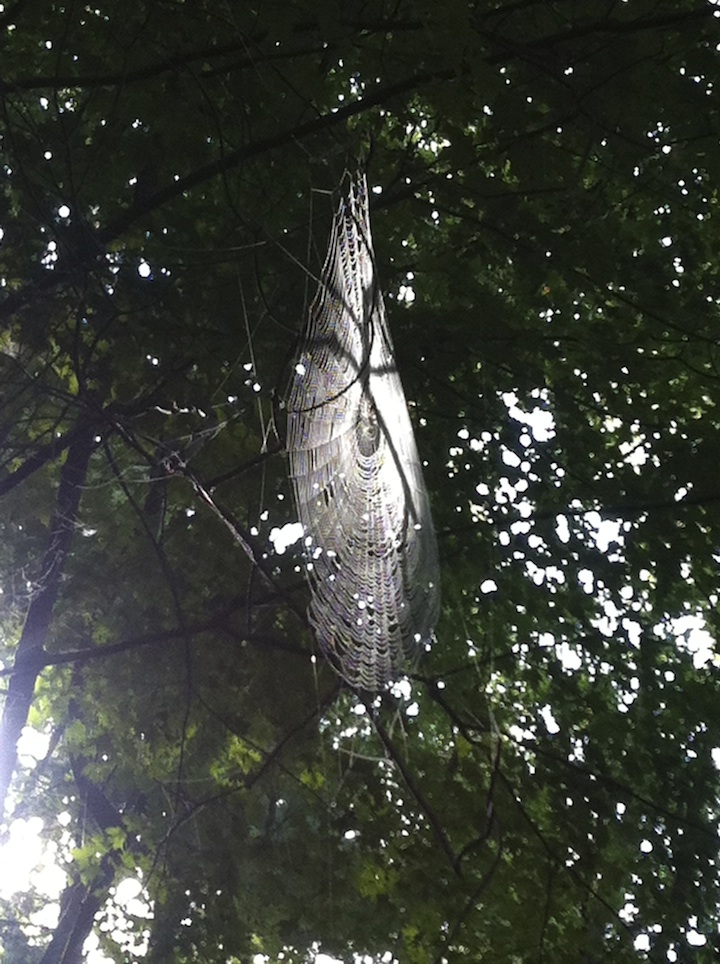
Spiderweb

Dark Universe, Brightening

Socrates had it right long ago when he acknowledged that to the extent that he was wise, it was because he knew how much he did not know.

During my lifetime, the trend has been for homage to be paid to all the cocky, smart human beings who think they know everything.

The slicker and more self-confident the guy (and this is mostly about guys), the more rewards and adulation he gets.

Collectively, especially in the United States, arrogance has been the name of the game.  I think this collective hubris may have reached its apex with the splitting of the atom and the knowledge that he who controls atomic energy controls the world.

Or so we thought.

Climate change is ushering in a whole new, and much more humble era.

imageIt turns out that just because we can bulldoze forests and mountaintops, change the course of rivers, drill beneath the sea and through solid rock, and completely saturate the earth with satellite, drone and in-home surveillance devices, we are still just as vulnerable as we ever were to the simple, earthbound necessities of food and shelter.

As the big, climate-change-induced storms continue to roll in from the ocean, so frequently that they all begin to blur into an anguished nonstop disaster montage, a slow but steady sea-change in collective human consciousness is beginning to occur.

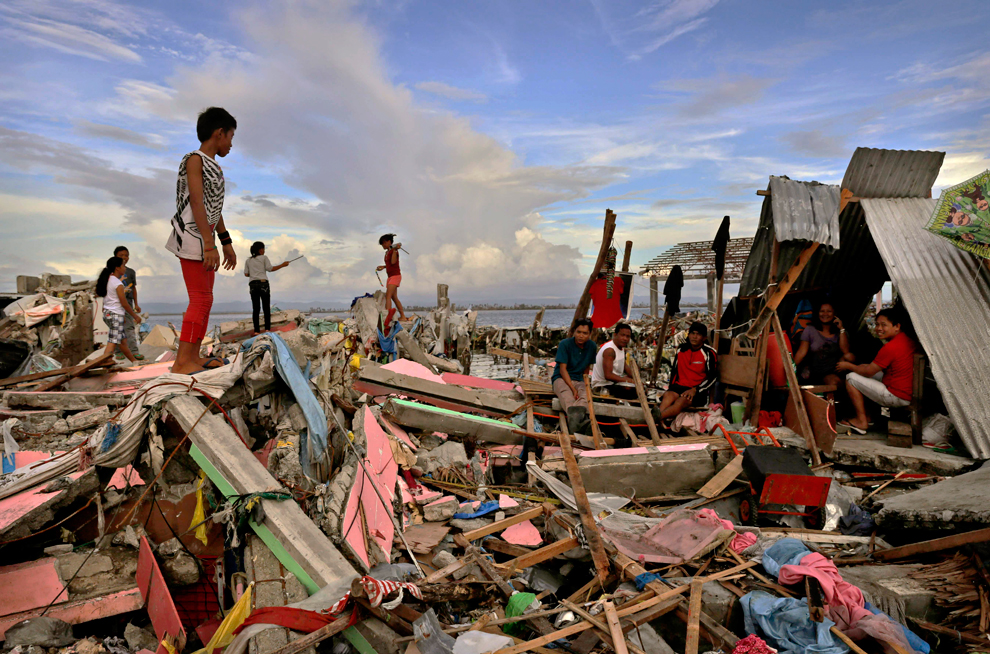
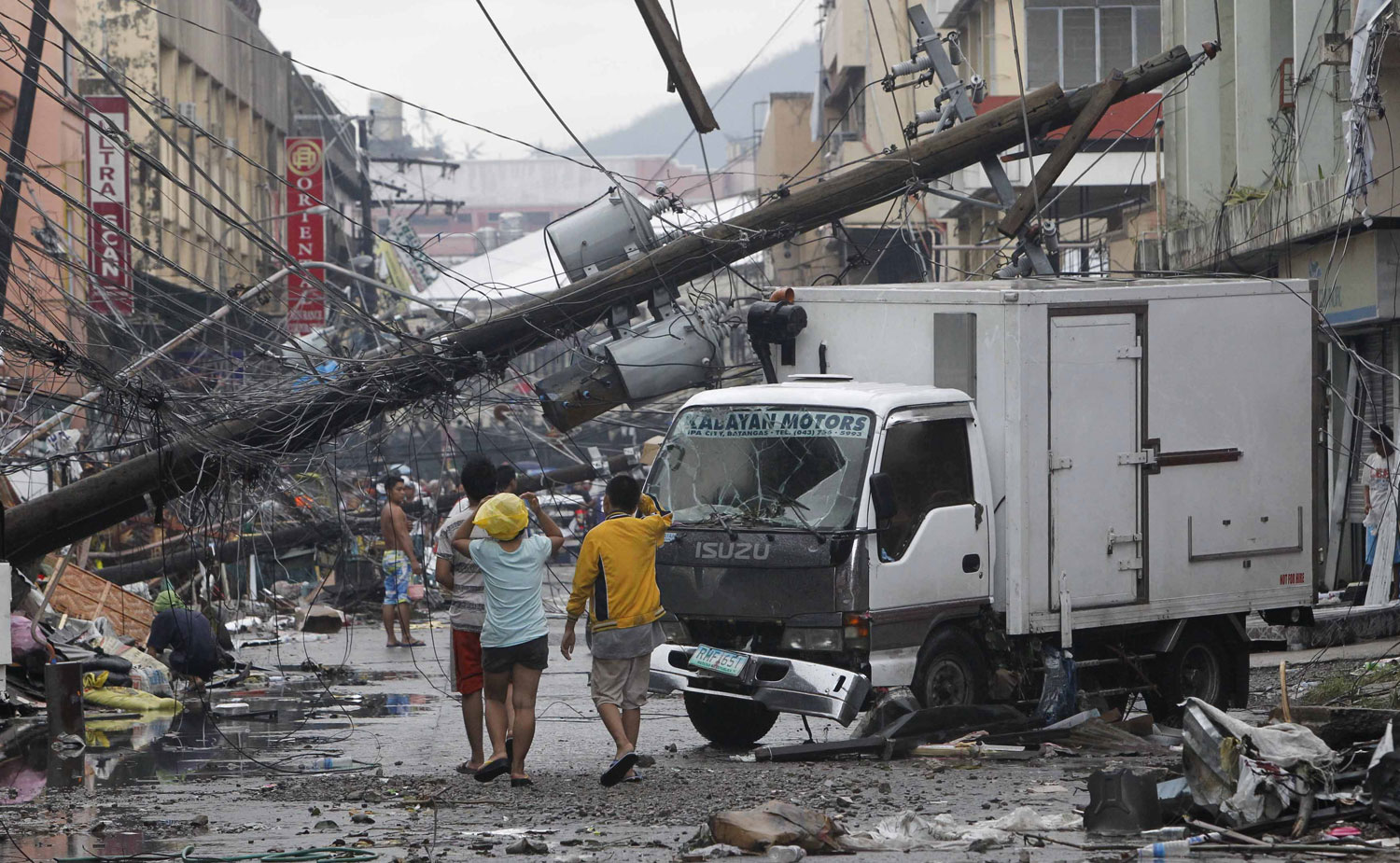
Aftermath of Typhoon Haiyan, Philippines, 2013

Aftermath of Typhoon Haiyan, Philippines, 2013

We are beginning to recognize how much we still don’t know, and how dangerous our ignorance, combined with arrogance, is becoming.

There is no doubt now that we who are alive today, along with our children and grandchildren, are going to be living through a remarkable transition time as the planet we have destabilized and plundered during the past few hundred years of industrialization seeks to return to equilibrium.

We must acknowledge that human over-population has played a major role in this process of destabilization.  Our very success as a species is what is driving the current unfolding disaster.  By reducing our numbers through disease, drought, flooding and the competition for shrinking natural resources that leads to war, the planet is doing what it must to return to a steady state where the ecosystem as a whole can flourish.

It is sobering to live with this knowledge.

Perhaps it is my sadness at knowing that I am going to be living through (and dying in) a veritable Holocaust of earthly creatures, that has me searching outside the box of science and common knowledge for signs of hope.

IMG_4150 copyI was not raised with religion, but I have always been an instinctive spiritual animist, seeing the divine in the beauty of the natural world, and in my unbounded love for all the elements of our Earth—rock, water, air and all the myriad living beings that inhabit every strata of our planet.

I have also been open, since I was a child, to the possibility that there is more to our experience than meets the eye.  I have always been fascinated by the occult, shamanism, and science fiction involving time travel to other dimensions of space/time.

I don’t know if it is just because I am paying more attention, but lately I have been perceiving a definite uptick in collective awareness that the key to fixing what ails us in the physical world may lie not in better “hard science,” but in a deeper connection to knowledge that can only be accessed through a different kind of perception.

The doors to this under-tapped realm of wisdom are accessible to us through what has poetically been called “our mind’s eye.”

There have always been humans who have been explorers in this realm—Socrates was one, the Biblical sages and prophets were others, and modern esoteric explorers like Rudolf Steiner, Terrence McKenna, Mary Daly, Martin Prechtel, Starhawk and many more.

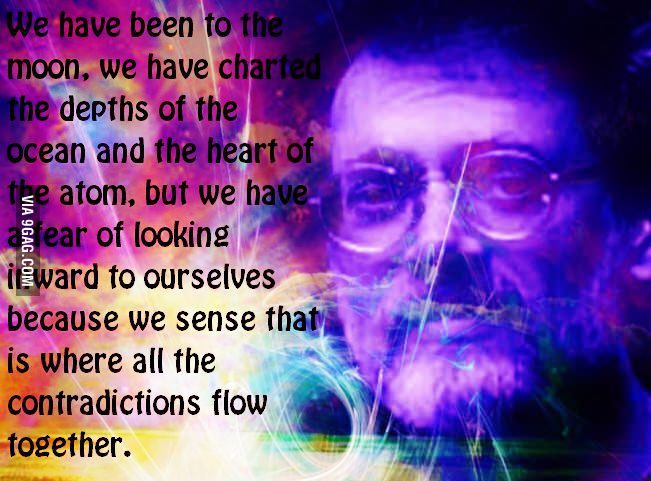
Terrence McKenna

Terrence McKenna

In the 1960s psychedelic drugs opened the doors for many people who were not at all prepared for the “trips” they encountered.

Now we seem to be coming around again to a period where, as conditions in the physical world deteriorate, more of us are seeking understanding and reassurance in the non-physical.

The more we know of how bad things are here in the physical realm, the more we want to know that “another world is possible.”  And the more we look, the more we find that indeed, there is much more to the universe than meets the eye.

Even scientists are beginning to align with the spiritists they previously disdained. In our age of quantum physics, the whole idea of a “spiritual dimension,” accessible through human consciousness, is becoming much less far-fetched to rational hard science types.

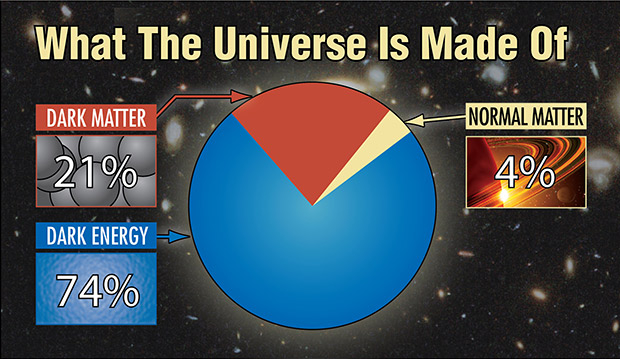
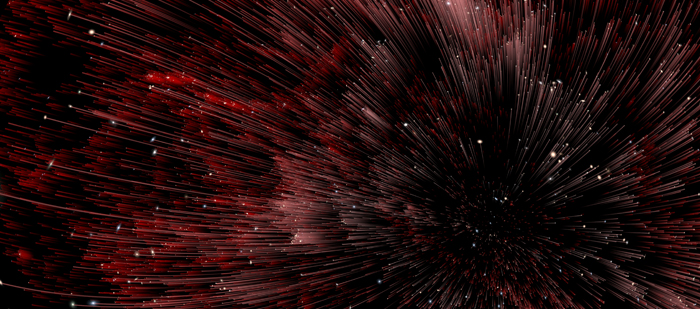
The new Hayden Planetarium show, “Dark Universe,” ends with a graphic that could be right out of “Twilight Zone,” showing that roughly three-quarters of the universe is composed of “dark energy,” a term invented to represent in language something we know enough to know we do not understand at all.

It could be that waking, embodied life is to human consciousness what the physical, hard-matter universe is to the cosmos as a whole.  Just a tiny fragment of a much larger, and potentially much more interesting, whole.

What if the reason every living thing on this planet sleeps (whether in the daytime or the nighttime) is in order to reconnect with the non-physical realm that spiritually sustains us?  We know that if we are deprived of sleep for any length of time, we go crazy and die.

What if “the dreams that come,” whether in sleep or in death, are just as valid a form of experience as the waking hours of our day, and our lives?

What would it mean to be able to think beyond the brief timelines of our individual lives, or even the eons of evolutionary cycles on the planet, and know that we are all part of a much grander cosmic dream?

dark-universe-red-shift-interior

Photo source: American Museum of Natural History, Rose Space Center, Hayden Planetarium, “Dark Universe”

Thinking this way does not give me license to let go of my focus on making a difference here on earth, now in my lifetime.

In some ways this imperative becomes even stronger, as it was for Socrates, Steiner and so many other visionaries who were also powerful initiators and guides during their lifetimes.

During this winter solstice season of introspection and questioning, I have been reading and re-reading the writings of one such contemporary guide, the Sufi mystic and spiritual ecologist Llewellyn Vaughan-Lee.  I leave you with a passage to ponder:

In the book of life we can see the energy patterns of creation, the rivers of light that flow between the worlds.  We can see how the individual relates to the whole and learn the secret ways to bring light into the world; we can understand the deeper purpose of the darkness and suffering in the world, of its seeming chaos.  And the attentive reader can glimpse another reality behind all of the moving images of life, a reality that is alive with another meaning in which our individual planet has a part to play in the magic of the galaxy.  Just as there are inner worlds, each deeper and more enduring, there are also different outer dimensions whose purposes are interrelated and yet different.  The inner and outer mirror each other in complex and beautiful ways, and in this mirroring there are also levels of meaning.  As we awaken from our sleep of separation, we can come alive in a multifaceted, multidimensional universe that expresses the infinite nature of the Beloved.

–Llewellyn Vaughan-Lee, Spiritual Power: How It Works

Let it be so.

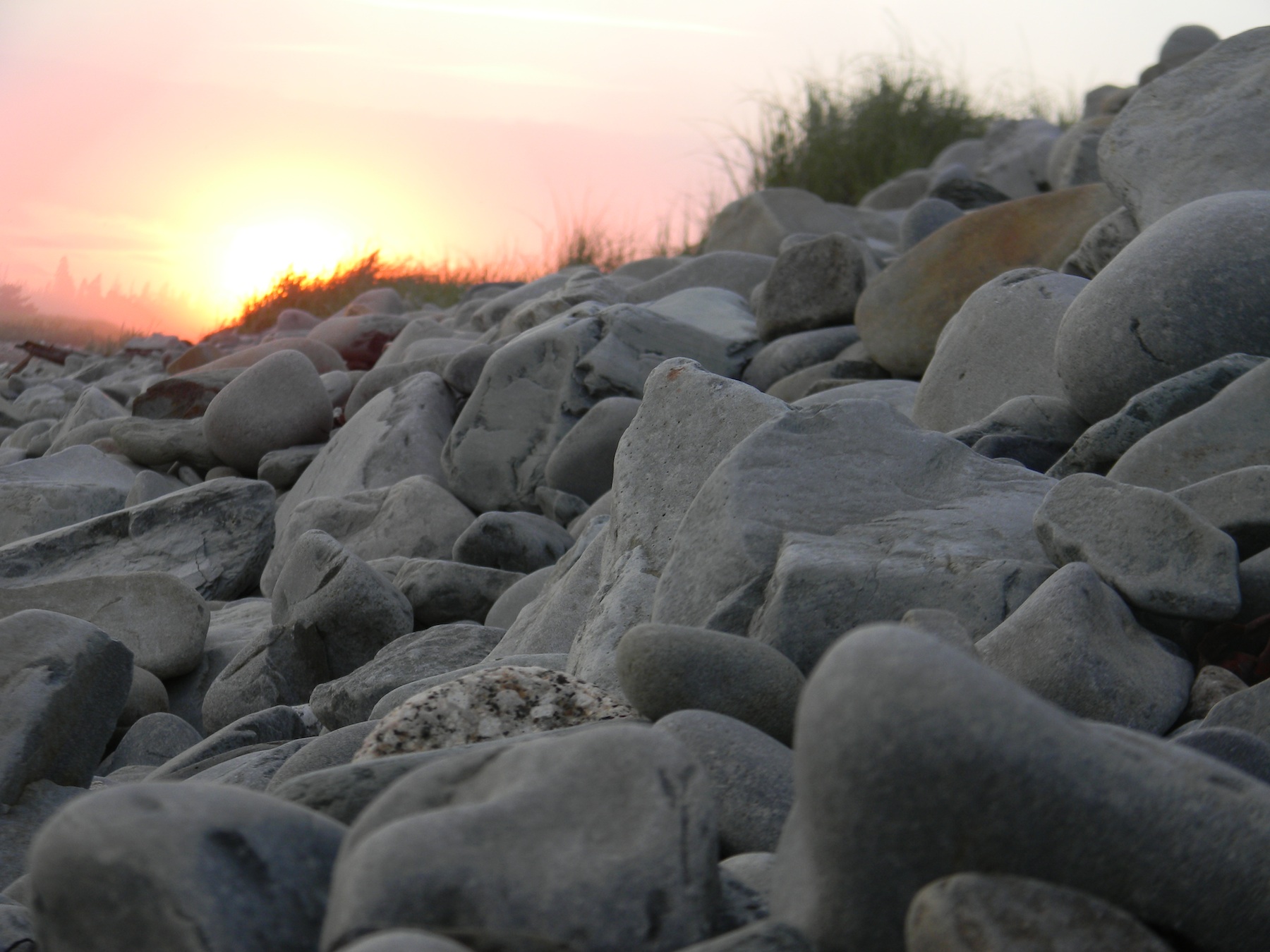
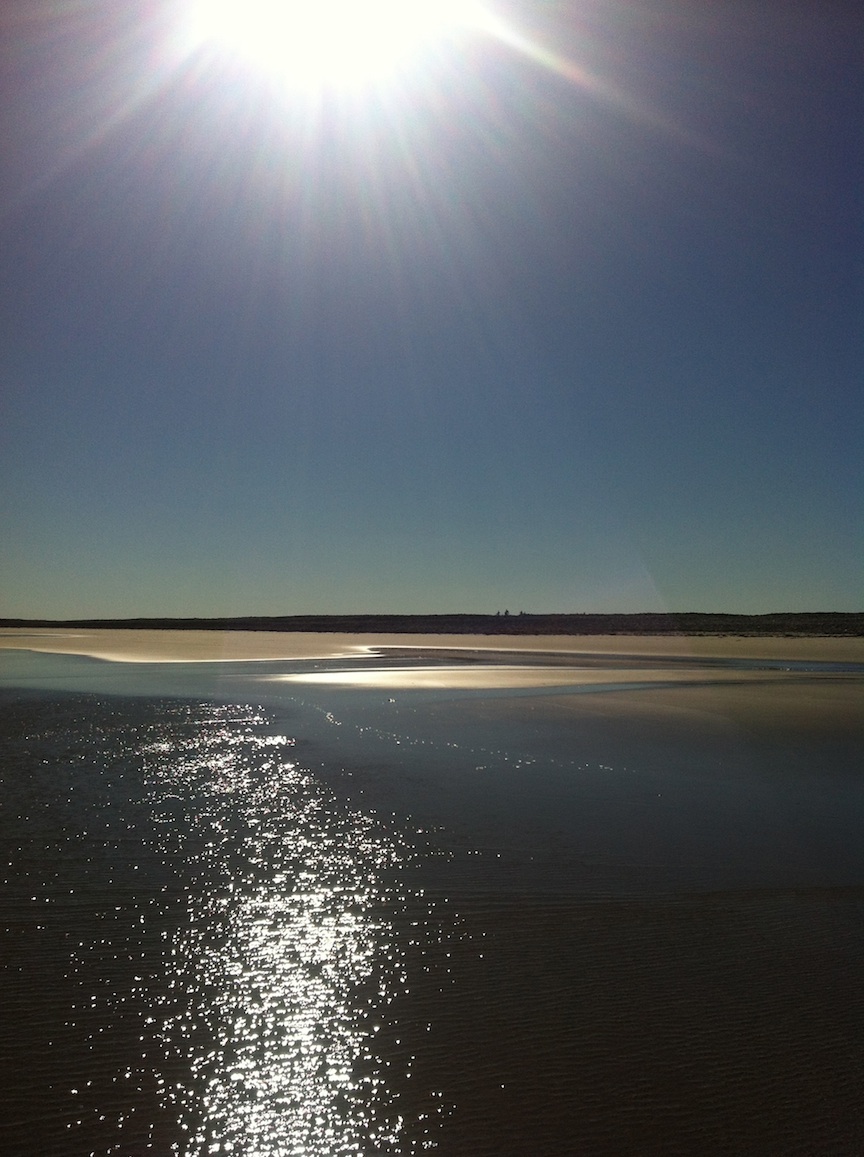
Sunset on Cherry Hill Beach, Nova Scotia.  Photo by Eric  B. Hernandez

Sunset on Cherry Hill Beach, Nova Scotia. Photo by Eric B. Hernandez

A New Year’s Vision for 2014

IMG_4297 copyAs the year wheels slowly to a close, I am distracted and repelled by the frantic pleading coming into my email inbox…it seems that every nonprofit and political organization I have ever expressed the least interest in is desperately vying for a few pennies from my ever-shrinking purse.

I too have been fundraising these last few months, trying to raise enough money to sustain the Berkshire Festival of Women Writers, which I founded on a shoe-string and a dream three years ago.  The more successful it becomes, the more time it takes to organize, and the more money is required to keep the wheels turning.

I certainly understand the need to seek funds to support these worthy endeavors, and yet I find myself wishing there was some other way.

Wouldn’t it be a better use of my time, talents and energy to focus on creating the vibrant programs the Festival is known for, rather than constantly having to cast about for financial support?

And what is true for me must be true for the organizers of all these causes that are flooding my inbox with urgent last-minute appeals for funding.

This New Year’s Eve, let me pause to envision a social landscape in which people are encouraged to do what they’re best at doing—whether it’s planting a tree or building a house or writing a poem—without having to worry about whether or not they will be paid in cash for their labor.

What if good ideas could just grow vigorously like weeds in the warm, pungent, nurturing earth of collective human society?

What if instead of all fighting amongst each other to be heard and rewarded for our cleverness, sex appeal and charm, we worked graciously together to create the vast interlocking human machine of collective creative endeavor, each of us contributing the pieces we do best and knowing we’ll be fairly rewarded for work done well?

What if instead of working for dollars and cents, we worked for goods and services that we needed, on a barter system to which everyone could contribute and rely on?

I know this is a pie-in-the-sky fantasy, but on this night, when the Earth wheels around the Sun into a brand new calendar year, I want to allow myself to dream big—to imagine that the impossible could come true.

What a beautiful world it would be.

Happy New Year everyone!

Winter Solstice Reflections: Returning to Light, Swimming Against the Tide

Lately I have been feeling that I am constantly struggling against a strong current pulling me away from the work I want to be doing.

The current is composed of all the day-to-day chores of life, along with all the busyness of the holiday season, and the relentless tide of bad news about the state of our beloved planet and her living communities, from trees to fish to birds and bees.

The more I become aware of the dire ecological state of our planet, the more I want to devote myself to swimming against that current of devastation, trying to bring our planetary systems back into balance.

I want to do that work on the personal level, starting with my own life, and moving out into my community and the broader Earth communities in which we all live.

The climate issue, like no other in human history, has made our planetary connectedness clear. We must work together, from pole to pole, to solve the problem of climate instability that industrial civilization has wrought.

If we don’t get on in immediately, we may very well spiral into another Great Extinction, possibly soon enough for current generations of humans—me and my children and their children—to live and die through.

Faced with a negative reality of this magnitude, many of us tend to just turn away in numbed grief and try to ignore it because, sadly, “there’s nothing we can do about it.”

My own sense of being caught in a tidal current pulling me back from whatever it is I’m supposed to be doing may have a lot to do with the despairing feeling that whatever I try to do will not be enough.

But I have to do it anyway, and so do you.

Winter Solstice is the time of year when I try to retreat from the furious churning of life and recalibrate, retune, reflect.

How can I use the gifts I have been given to make a positive difference, moving outward from myself, my family and local community, to the larger circles of life I love?

My greatest gift and abiding passion has always been writing. As soon as I learned to write, I began writing stories and poems that celebrated the natural world and honored the spirits of the Earth.

As a 21st century writer, I have the ability to project my words and perspectives far beyond the confines of the old spiral-bound notebooks I used to keep as a child. I have the potential to engage in dialogue with people all across the globe, and if you’re reading this, so do you.

As a teacher, I have the ability to begin conversations with students about the difficult ecological crises that are already beginning to unfold, and the social and environmental injustices that they are spawning. I can offer students the tools and strategies for continuing these conversations across the globe through our amazing new digital technologies.

In the past year, without a great deal of focus on my part, my blog has been viewed more than 20,000 times by visitors from more than 130 countries around the world.

My little blog is just a very small drop in the great ocean of digital conversations, but even so, it is possible that some of those 20,000 readers came away with a new idea or an affirmation of their own thinking, or a challenge to their habitual perspectives, that could start a chain reaction among their friends and digital connections that could, seriously, change the world.

Rupert Sheldrake argues that “The fields organizing the activity of the nervous system are inherited through morphic resonance, conveying a collective, instinctive memory. Each individual both draws upon and contributes to the collective memory of the species. This means that new patterns of behaviour can spread more rapidly than would otherwise be possible.”

Sheldrake’s theory is exciting and controversial because if it’s true, it means that none of us has to be bound by the heavy burden of habit and cultural inertia, the industrial tide that seems to sweep us along so inexorably.

We have a choice. We can pick up our heads, think for ourselves, seek out others who also want to preserve the ecological health of the planet, and together use our great digitally connected human brain trust to steward and safeguard this planet, not destroy her.

Working together, we could, within a couple of generations, be swimming together joyously in an entirely different sea.

As the Earth wheels slowly back towards the Sun today, this is my steady vow: to keep my head above water, to reach out a hand to others who share my reverence for our beautiful planet and its magnificent life, and to give myself without reserve to the mission of building a strong interconnected movement dedicated to the shift into a sustainable, ecologically sound, joyful future.

Browdy de Hernandez 2013

c. Browdy de Hernandez 2013

Let’s Face It, Charity is Not Enough

When I was a kid, I didn’t read “the funny pages” of the newspaper; in fact, the only newspaper that came into my parents’ home did not stoop to such trivia.  We read, exclusively, The New York Times.

I remember the first time—it must have been around sixth grade—that I happened upon “The Neediest Cases” articles in The Times.

The stories hit me like a ton of bricks.

Comfortably ensconced in my parents’ Park Avenue apartment, I had no idea—no idea—that just a few blocks away, on the other side of the 96th Street divide between the wealthy Upper East Side and dirt-poor Spanish Harlem, ordinary people just like me and my family were living in abject poverty.

With a kind of morbid fascination, I read about the kids whose parents were locked away in prison; the kids whose parents were drug users; the kids whose parents were homeless, sleeping in the dark, rat-infested recesses of the infamous New York City train tunnels.

Unknown-2Every article ended with the same words: Give to The New York Times Neediest Cases Fund.

This went on year after year.  Every year there were more “neediest cases,” each one more dire and depressing than the last.

Eventually I began to actively avoid reading those pages in December.  The contrast between the clean, glowing, opulent New York I knew and the dark, dank margins of poverty I was reading about was just too much for me to take.

And it was clear to me, at least on a subliminal level, that giving to the Neediest Cases Fund did not accomplish much—not if every year the need continued, unabated and even growing worse.


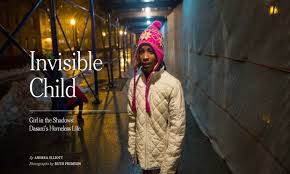
This week I opened my Ipad while still in bed and found myself drawn, despite myself, into a Neediest Cases article on 21st century media steroids—complete with an elegant magazine presentation and fabulous photographs of the squalor of homelessness.

It was the story of a 12-year-old girl named Dasani (after the bottled water), the oldest child of two methadone-dependent former addicts.  Unemployed and homeless, the parents live in a single room in a mouse-infested city shelter with their seven children, from Dasani on down to an infant.

As with the 19th century New York tenement photographs of Jacob Riis, the pictures themselves tell a powerful story.  Dasani is still full of optimistic determination to succeed at school; she hasn’t yet been beaten down, like her sad-faced mother.

I can just imagine Park Avenue New Yorkers—at least The New York Times readers among them—reaching in droves for their checkbooks to send some relief to Dasani and her family.

It happens every time there is a story about a disaster or a particularly shocking needy case.  Wealthy people open up their wallets and give what they can.

But the need goes on, and on.

Photo by Ruth Fremson of The New York Times

Photo by Ruth Fremson of The New York Times

What will happen to Dasani’s little sister, the one who is legally blind?  What will become of her rambunctious little brothers?  What will prevent them from following the same path that ensnared their parents, drug addiction born of desperation?  What will keep them out of prison and make them into the productive citizens our society claims to admire?


When I was a girl, I naively believed that the “neediest cases” were an aberration.  I thought that most people lived the way I did, in comfortable security.

In fact, it’s the other way around in our America.  More and more Americans are falling into poverty day by day.  Our minimum wage cannot sustain a family, not even with both parents working.  We don’t have decent health care or child care for lower income working people.  Food pantries are scarcely able to keep up with the need, as food prices continue to rise.

There are 22,000 homeless children in New York City alone, according to The Times.

Nationally, according to the U.S. Department of Education, there are 1,168,354 homeless students, a figure that many believe to be an underestimate.

It’s outrageous that the richest, most powerful nation on Earth is willing to allow more than a million of its children to go homeless year after year.

We spend billions on nuclear weapons annually, which Lord knows we do not need and cannot use.  This taxpayer money could provide a stellar education for all American children—not just the ones who are fortunate enough to live in a wealthy school district.

Dasani and her siblings have as much right to the American dream as any other American child.

Donating to the charities that hand out teddy bears at Christmastime is just not enough.

The great activist Eve Ensler wrote in her latest memoir that she “despises charity.”

Why?  Because it doesn’t go far enough.

It’s a sop to the consciences of those who give, without addressing the root causes of the need in a way that might actually alleviate it in the longterm.

Structural changes are needed at every level of our society.  For starters, let’s do away with the policy that ties school district funding to property tax revenues.

American public schools should provide a level playing field for all children, regardless of where they live.

Next, don’t just warehouse poor families like Dasani’s in miserable rundown housing.  Give them jobs, give them respect, give them an incentive to work their way out of poverty.

At the very least, they could be organized to clean up their city-run housing, plant gardens and provide services to each other as a way to supplement their welfare checks.

Nothing breeds hopelessness faster than powerlessness, and charity perpetuates the illusion of powerlessness in its recipients.

Dasani’s resilience and determination, as brought to light in the outstanding reporting of Andrea Elliot and her photographer Ruth Fremson, needs no charity.  All Dasani needs is a fair chance.

Photo by Ruth Fremson of The New York Times

Photo by Ruth Fremson of The New York Times

A Milkweed Railroad for Monarch Butterflies

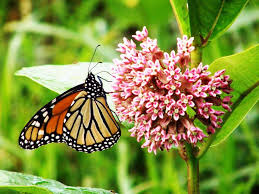
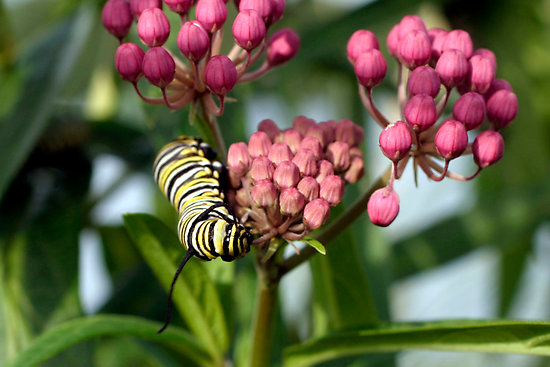
I will never forget that sun-washed September day back in the 1970s, when a Monarch butterfly landed on my finger and hung on there trustingly, resting its gaudy black-and-white polka-dotted abdomen on my warm skin.

close-up-of-monarch-butterfly-on-fingerA girl of about ten, dreamy and prone to tree-climbing and rock-sitting, I froze and observed the butterfly’s gorgeous gleaming wings, which beat back and forth slowly as it perched; and then, to my great delight, it unfurled its long, slim black tongue and began gently probing my skin, daintily sipping the beads of sweat it found there.

After a few minutes, it gave a carefree beat of its wings and caught an updraft over to a nearby stand of purple asters.  I watched it with delight, wishing it luck and Godspeed on its long migration south to Mexico, which I knew about thanks to my avid reading of Ranger Rick and National Wildlife.

Many years later, my son, also a keen observer of the natural world, brought a Monarch butterfly caterpillar that he’d found on a stand of milkweed home to munch milkweed on our kitchen counter.

UnknownWe watched, fascinated, as the caterpillar hung itself upside down in a J-form from a branch of milkweed.  Overnight, the soft striped body of the caterpillar hardened into a glossy green cocoon, and its the rear feet solidified into a strong stem, firmly cemented to the branch.

The cocoon hung quietly, quivering now and then as the mysterious transformation took place inside.

One morning we began to see the familiar black and orange outlines of the Monarch wings coming into view just beneath the green wall of the cocoon, now turning translucent.

65207-004-57F046F4

“You’d better put it outside,” I told my son.  “We don’t want it to hatch in the house!”

He put the vase with the milkweed and the trembling cocoon out on the porch, and we left for work and school.  By the time we came back, the miracle had occurred—the cocoon had been abandoned, and the beautiful Monarch had sailed away regally, following its destiny.

images

This year not a single Monarch butterfly visited our garden, although I planted two butterfly bushes for them, and a stand of Asclepias, a whole bed full of bee balm, phlox and asters, and even left a few stubborn stalks of milkweed growing up through my roses.

“Did you see any Monarchs?” my son and I kept asking each other, knowing the answer but still hopeful.

No.

This is how extinction happens.  One year, a beloved species just doesn’t show up.  Life goes on.  But a hole opens  in the tightly stitched fabric of the ecosystem.  When there are enough holes like this, the whole fabric begins to unravel.

Jim Robbins wrote last Sunday in The New York Times:

Monarch butterflies on tree trunks

Monarch butterflies turn the forest orange. They return to a specific mountain forest in Michoacan, Mexico, year after year.

“On the first of November, when Mexicans celebrate a holiday called the Day of the Dead, some also celebrate the millions of monarch butterflies that, without fail, fly to the mountainous fir forests of central Mexico on that day. They are believed to be souls of the dead, returned.

“This year, for or the first time in memory, the monarch butterflies didn’t come, at least not on the Day of the Dead. They began to straggle in a week later than usual, in record-low numbers. Last year’s low of 60 million now seems great compared with the fewer than three million that have shown up so far this year.”

Why are the butterflies disappearing?  It’s not just the Monarchs, although these large, showy insects are among the most beloved.  I saw very few butterflies of any stripe in my garden last summer.

As with the precipitous decline in the wild bee population, the culprit is industrial agriculture.

Butterflies rely on wildflowers for their bread and butter during the summer breeding months.  For Monarchs, milkweed is especially crucial.

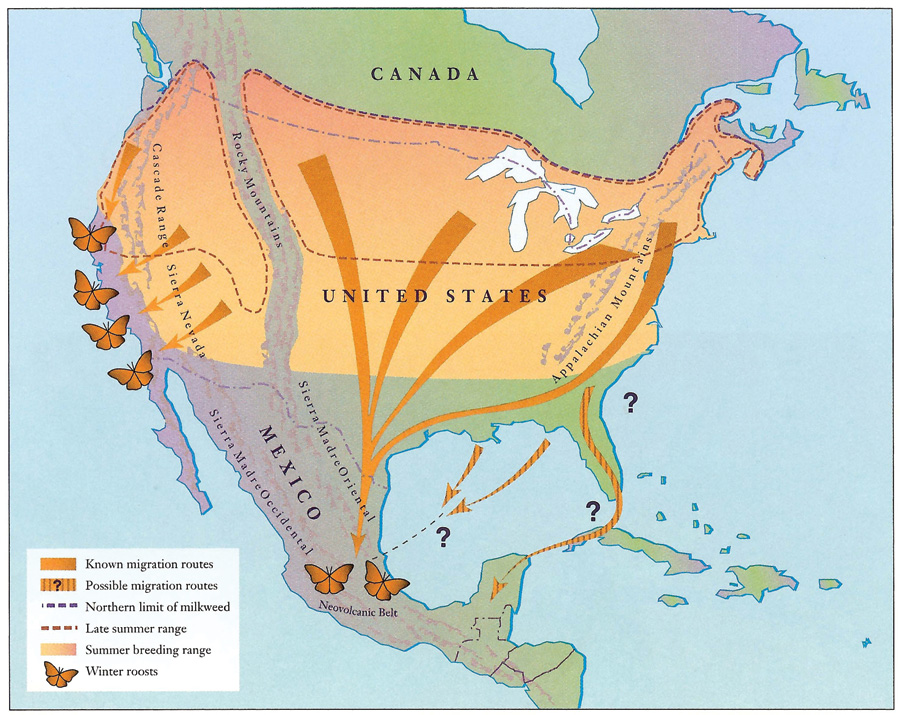
tam_map_webThe long route from the Mexican forest where they winter to their North American breeding grounds used to be lushly planted with native wildflowers like milkweed.  No single butterfly makes the round-trip from Mexico up to my garden in New England.  Rather, each generation lives long enough to lay its eggs on a convenient stand of milkweed, and those caterpillars hatch, eat their milkweed, cocoon and turn into butterflies to carry the migration on.

It’s a mysterious, miraculous process, the knowledge of the route handed down across scores, perhaps hundreds of generations each season, year after year for untold millennia.

And then human beings invented Round-up.

agriculture-impact-climate-change-monoculture-farm-photoThe tragic decline, not just in the Monarch population but in all our native insects, can be traced directly to the use of chemicals in agriculture.  The herbicide Round-up, sprayed indiscriminately on the ever-spreading farmlands of the American Midwest, kills everything except those seeds genetically engineered to withstand it.

That is, it kills everything a butterfly would need to survive.

Thanks to Round-up and all the other pesticides, herbicides and fungicides used in American agriculture—combined with suburban sprawl, golf courses, lawns, malls and parking lots—much of the U.S. has become an ecological desert, from a butterfly’s point of view.

And without the butterflies and other insects, the bird populations crash too.

The bats die off.  The run-off from these poisoned fields kills the frogs and toads.  And before we know it, that one small hole left by the disappearance of the Monarchs has turned into a gaping, hemorrhaging wound from which there is no recovery.

What can we do?

Hawthorne Valley Farm, Ghent NY--biodynamic & organic

Hawthorne Valley Farm, Ghent NY–biodynamic & organic

One thing we can do as consumers is to support organic agriculture as much as we possibly can.  Yes, it’s more expensive, but think of those extra pennies as a donation to the Save the Bees, Birds and Butterflies effort.

You can also think of buying organic as an investment in your own health.  Pesticides and herbicides build up in our bodies too—we’re at the top of the food chain after all, just like the eagles and hawks who were dying from DDT back when that poison was still being sprayed on the fields.

It’s no accident that we have a cancer epidemic in America today.  What goes around comes around.

We can also be more thoughtful in how we compose our landscapes.  Those of us who are fortunate enough to have green space around our homes can get rid of grass lawns, which are green deserts to butterflies, and plant vegetable and flower beds instead.

05517F2I often find Swallowtail butterfly caterpillars munching away on my dill in the early summer, and I’m happy to share my crop with them.

Even the big tomato hornworm, which can chomp through a whole tomato branch in a single day, is cause for celebration in my backyard, especially now that I know they turn into the spectacular sphinx moth, a daytime moth so big and fast I’ve sometimes mistaken it for a hummingbird.

Imagine a Milkweed Railroad for the Monarchs, running from their winter home in Mexico all the way up to the far reaches of their breeding grounds in Canada.

Stands of milkweed would be planted in every park in every town along the way, so that wherever the butterflies spiraled down from the high updrafts that carry them along the ancient migratory route, there would be milkweed waiting to host their eggs, feed their caterpillars and provide sturdy stalks for their cocoons.

This is not a dream.  This is how it used to be, until the last few decades when human sprawl and wanton chemical use got out of hand.

What humans broke, we can fix.  We just need to set our hearts and minds to the task of repairing the holes in the fabric of our beautiful planet.  And in tending to the planet, we’ll be tending to ourselves.

flat,550x550,075,f

Dreams of terror, dreams of peace

This morning my son came down to breakfast with a queasy look on his face.  “I had a dream that I killed a baby,” he said.  “I was shooting with a machine gun at these guys, and the baby was in the way.”

I hate the fact that this kind of violence, which kids are exposed to through the media constantly these days, creeps insidiously into their sleep, invading their dreams.

The subliminal violence is everywhere.   This same son, a 9th grader in a typical American public high school, is reading Lord of the Flies for English class and All Quiet on the Western Front for Social Studies.

Lord-of-the-Flies-1963-fi-007Lord of the Flies, you’ll remember, is about how a group of adolescent boys, turned loose on an island without any adult authority present, morph into “beasts” who bully, torture and kill one another.

All Quiet on the Western Front is about World War I, and my son’s teacher is sparing the class none of the gory details of that war; in fact, a whole section of the paper my son has to write about the book is supposed to enumerate all the challenges ordinary soldiers in that war faced, from freezing muddy trenches to disease to field amputations, rats and artillery fire.

Last month, this same teacher had the kids reading 1984 and spent a lot of class time talking about how the surveillance tactics and physical brutality in that book related to real-life episodes of torture and detention camps in the history of China and the Soviet Union.

In short, my son’s imaginative life lately has been saturated with violence, for which the peacefulness of our home is no match.  And he is one of the more sheltered boys growing up today; I do my best to keep him away from violent movies or military-style and gangster video games.  We don’t even have TV at home.

When dreams like this emerge at our breakfast table, they remind me that the apparent peacefulness of a small American town like mine is terribly fragile.

With every mass-murder shooting incident that occurs, the fine veil of civility frays just a little more.

The truth is that the United States has one of the most heavily armed civilian populations in the world.

It would not take much, in terms of social unrest, for those guns to come out and the “beastly” side of humanity to emerge, a la Lord of the Flies.

That’s what worries me when I contemplate climate change scenarios involving catastrophic storms like Haiyan that result in power outages, fuel and food shortages—which could happen here in the U.S. just as easily as anywhere else.

What we should be doing now, in the time we have left before climate change gets truly out of hand, is strengthening our bonds as communities.

Never mind the dysfunctionality of our Congress, the bashing and competitive trash-talking that too often passes for ordinary public discourse in America today.

On the local level, we can do better, and indeed we must.

Every community in America should be starting to plan for how it would respond to disruptions in power, fuel and food supplies.

We can’t rely on FEMA to ride in to the rescue.  We can’t afford to entrust our survival to the guys with the biggest guns in our area.

The Transition Town movement has it right in their focus on building strong, resilient communities and re-learning valuable pre-industrial skills.  But they need a greater sense of urgency.

My son’s dream is a warning that we ignore at our peril.  There is no time to waste.

The Civilization We Grew Up In Is Already Dead. So now what?

“If we want to learn how to live in the Anthropocene, we must first learn how to die.”

This is the last line in a fine essay by Roy Scranton, former U.S. soldier and currently a doctoral candidate in English at Princeton University.  The essay, published in the New York Times philosophy blog “The Stone,” is one of those rare attempts to really lay out the gravity of the situation we face today, as humans on a rapidly destabilizing planet.

Readers of Transition Times have been hearing me give my doom-and-gloom warnings for years now.  But it’s very rare that such grim scenarios break into the gilded precincts inhabited by readers of The New York Times.

Here is Scranton:

“The challenge the Anthropocene poses is a challenge not just to national security, to food and energy markets, or to our “way of life” — though these challenges are all real, profound, and inescapable. The greatest challenge the Anthropocene poses may be to our sense of what it means to be human.

“Within 100 years — within three to five generations — we will face average temperatures 7 degrees Fahrenheit higher than today, rising seas at least three to 10 feet higher, and worldwide shifts in crop belts, growing seasons and population centers.

“Within a thousand years, unless we stop emitting greenhouse gases wholesale right now, humans will be living in a climate the Earth hasn’t seen since the Pliocene, three million years ago, when oceans were 75 feet higher than they are today.

Aftermath of Typhoon Haiyan

Aftermath of Typhoon Haiyan

“We face the imminent collapse of the agricultural, shipping and energy networks upon which the global economy depends, a large-scale die-off in the biosphere that’s already well on its way, and our own possible extinction.

“If homo sapiens (or some genetically modified variant) survives the next millenniums, it will be survival in a world unrecognizably different from the one we have inhabited.”

Yes.  We know this.  It’s actually what Scranton does next in his essay that most interests me.

He makes a turn into the humanities, arguing that since “studying philosophy is about learning how to die,” then we have now “entered humanity’s most philosophical age — for this is precisely the problem of the Anthropocene. The rub is that now we have to learn how to die not as individuals, but as a civilization.”

Scranton reminds us that “the biggest problems the Anthropocene poses are precisely those that have always been at the root of humanistic and philosophical questioning: ‘What does it mean to be human?’ and ‘What does it mean to live?’

“In the epoch of the Anthropocene, the question of individual mortality — ‘What does my life mean in the face of death?’ — is universalized and framed in scales that boggle the imagination. What does human existence mean against 100,000 years of climate change? What does one life mean in the face of species death or the collapse of global civilization? How do we make meaningful choices in the shadow of our inevitable end?”

These are the kind of questions I ruminate about daily.  It comes back to Mary Oliver’s signature question, in her haunting poem “The Summer Day”—“What will I do with my one wild and precious life?”

We never know if our own deaths are right around the corner.  Will the truck driver around the next bend be distracted by his phone, cross the yellow line and blow me to oblivion?  Will my next physical exam reveal a terminal illness?  It could happen any time.

But as Scranton says, the climate change issue is much bigger than any of our individual lives.  It’s about the future of human civilization on the planet.

He ends his essay provocatively, saying that the problem of climate change cannot be solved by “buying a Prius, signing a treaty, or turning off the air-conditioning.” What is needed is a profound philosophical shift; to go from a civilization built on the illusion of endless growth and consumption, to a steady-state civilization that the planet can sustain.

We need to realize, Scranton says, that the human civilization all of us grew up in “is already dead. The sooner we confront this problem, and the sooner we realize there’s nothing we can do to save ourselves, the sooner we can get down to the hard work of adapting, with mortal humility, to our new reality.”

Yeb Sano breaks down speaking about the devastation in the Philippines after Typhoon Haiyan, and begs the climate negotiators to act decisively to curb carbon emissions

Yeb Sano breaks down speaking about the devastation in the Philippines after Typhoon Haiyan, and begs the climate negotiators to act decisively to curb carbon emissions

Watching the desperation on the faces and in the voices of the climate negotiators from sea-level nations like the Philippines, Bangladesh, and the Maldives, it’s clear that these folks have already absorbed the lesson we in the higher-terrain countries have yet to confront.

We cannot go on with business as usual any longer.

Not if we want to bequeath a livable Earth to our descendants.

Severn Suzuki speaking out

Severn Suzuki speaking out

Severn Suzuki said it all, so eloquently, speaking to a climate change summit way back in 1992, when she was just a girl of 12.  Are we ready to listen yet?

In the Body of the World: Cancer as Catalyst for Revolution

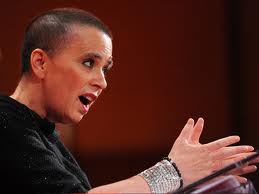
Eve Ensler

Eve Ensler

I have been reading Eve Ensler’s incredibly powerful cancer memoir, In the Body of the World, with my students this week.  We watched Ensler’s 2010 TED Talk, “Suddenly My Body,” given while she was still practically bald from the chemo treatments; and you could have heard a pin drop in the room, everyone was so swept away by Ensler’s passionately delivered paean to the intricate interconnections between the individual body and what she later came to call “the body of the world.”

This is a concept I have most often heard expressed in Buddhist circles.  Thich Nhat Hanh and the Dalai Lama talk about “inter-being,” and how it is egotistical, arrogant, androcentric and just plain wrong for human beings to imagine that we are somehow separate, over and above other livings beings on the planet.

Joanna Macy

Joanna Macy

Joanna Macy, extending Arne Naess’ concept of the “ecological self,” uses the body as a metaphor to describe the futility of imagining ourselves as immune from the destruction we are wreaking on our planet.

The concept of the “ecological self,” Macy says, is important now because “moral exhortation does not work.  Sermons seldom hinder us from following our self-interest as we conceive it.

“The obvious choice, then, is to extend our notions of self-interest.  For example, it would not occur to me to plead with you, ‘Don’t saw off your leg.  That would be an act of violence.’ It wouldn’t occur to me (or to you) because your leg is part of your body.  Well, so are the trees in the Amazon rain basin.  They are our external lungs.  We are beginning to realize that the world is our body” (World as Lover, World as Self, 157).

Eve Ensler has spent much of her life recovering from violence (she was a sexually assaulted and battered by her father as a child), bearing witness to violence against other women and girls, and creating powerful creative works, organizations and movements to end violence against women and girls.

And yet, she says, it was not until the jolt of realizing that her body had been invaded by cancer that she was able to overcome her ingrained alienation from her own body, born of the dissociation that was a survival tactic in her childhood.

Once she allowed herself to become fully connected with her body, it was but a short step to see the cancer in her uterus as symbolic of the much greater cancers of over-consumption and unsustainable growth afflicting the body of the world.

“Cancer is essentially built in our DNA, our self-destruction programmed into our original design—biologically, psychologically.  We spend our days, most of us consciously or unconsciously doing ourselves in.  Think building a nuclear power plant on a fault line, close to the water.  Think poisoning the Earth that feeds us, the air that lets us breathe….We are a suicidal lot, propelled toward self-eradication” (194).

But as Ensler discovers how fiercely she wants to live, to survive the cancer, she realizes that human beings are propelled as much toward life as toward death.  In a further twist of Freud’s insight into the immortal battle between Eros and Thanatos, she realizes that love is the answer—a fierce, unstoppable love for the battered, assaulted but still beautiful Earth, our mother, our home, our self.

Like Eve Ensler, I have spent much of my life focusing on the stories of women, and working to empower women to speak our truths and change the world for the better.

As I ponder the way forward now, in these end times of environmental tragedy, I am wondering whether women have a special role to play in bringing about the kind of radical social change that we need to survive into the future.

City of Joy openingEnsler uses the City of Joy, which she worked so hard to build in Bukavu, DRC (with the help of women all over the world contributing through the V-Day infrastructure), as a model for the kind of new life-giving, life-enhancing community that the world needs now.

It’s a City of Women, founded on the following ten principles:

1. TELL THE TRUTH

2. STOP WAITING TO BE RESCUED; TAKE INITIATIVE

3. KNOW YOUR RIGHTS

4. RAISE YOUR VOICE

5. SHARE WHAT YOU’VE LEARNED

6. GIVE WHAT YOU WANT THE MOST

7.  FEEL AND TELL THE TRUTH ABOUT WHAT YOU’VE BEEN THROUGH

8. USE IT TO FUEL A REVOLUTION

9. PRACTICE KINDNESS

10. TREAT YOUR SISTER’S LIFE AS IF IT WERE YOUR OWN

These seem like sound principles on which to base any human community, and particularly one founded on ashes, corpses and pain, as is the case in the Congo (but isn’t almost every human society founded, as Marx said, on blood?).

Women stay for six months at the City of Joy, during which they recover their physical and mental health with all kinds of therapies, participate in skills training, and get ready to return to their homes as leaders who can become change agents for peace and sanity in one of the most brutal and brutalized regions of the planet.

I know that there can be no lasting change that doesn’t also include men.  There can be no “City of Women” that survives past a single generation.

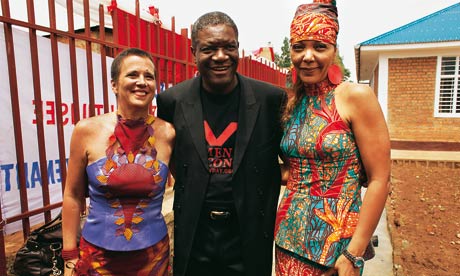
Eve Ensler, Dr. Denis Mukwege and Christine Deschryver, co-founders of the City of Joy.  Dr. Mukwege is a Congolese gynecologist who has operated on hundreds of women and girls left incontinent by tears in their vaginas due to violent rape.

Eve Ensler, Dr. Denis Mukwege and Christine Deschryver, co-founders of the City of Joy. Dr. Mukwege is a Congolese gynecologist who has operated on hundreds of women and girls left incontinent by tears in their vaginas (fistulas) due to violent rape.

I also know that it is important to recognize and acknowledge righteous anger at those responsible for all the destruction and violence.

We have to speak the truth that in the Congo, as on Earth overall, it has been men, acting with the blessing of our patriarchal religious, political, legal and social structures, who have been responsible for the machines, technologies and brutalities that have been so destructive to individual women and men, as well as to the environment without which we cannot live.

Women have often been complicit and have enjoyed the fruits of industrialization.  Women, especially privileged women, have gone along for the ride.

But it was never the vision of women that created the weapons and bulldozers, the chain saws and cars, the nuclear power plants and oil rigs.  All of those implements were envisioned, created and deployed by the men in charge of human society—especially the Europeans and their colonized offshoots—these last few centuries.

We can’t know now whether it would have been different if women had been allowed education and access to the board rooms and laboratories and congressional chambers where society-changing decisions got made, particularly during the crucial two centuries of industrialization.

We can’t change the past.  We can only look forward and, as mandated in the City of Joy’s Guiding Principles, “stop waiting to be rescued, tell the truth, and use it to fuel a revolution.”

eve-ensler-approved-photo_193x290[1]At death’s door, Eve Ensler realized that human beings and the world we have so profoundly altered are now at the threshold of a new era.

“What is coming is not like anything we have known before,” she says. “Your dying, my dying, is necessary and irrelevant and inevitable.  Do not be afraid, no, death will not be our end.  Indifference will be, disassociation will be, collateral damage, polar caps melting, endless hunger, mass rapes, grotesque wealth.

“The change will come from those who know they do not exist separately but as part of the river….You worry about germs and stockpile your herbs, but they will not save you, nor will your fancy house or gated villages.  The only salvation is kindness.  The only way out is care” (214).

I would like to quote the entire last chapter of Ensler’s remarkable memoir, but I won’t—just go buy the book and read it for yourself.  And then, as she says, “let us turn our pain to power, our victimhood to fire, our self-hatred to action, our self-obsession to service” (216).

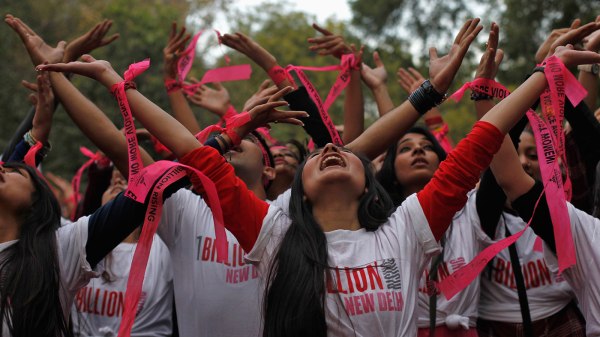
Unknown-1Women, it’s time for us to rise and give birth to a new human relationship with the planet and with each other.  It’s past time.

Men are most welcome to join us in this life-saving mission, as long as they are men in touch with their feminine side, their life-giving, nurturing, relational side.

All of us humans possess both masculine and feminine energies and traits.  What we need now is balance.  Balance within each one of us that can become a catalyst for the balance our planet so desperately needs.
1billion-home-india

PS: Check out this TED Talk by Eve from just before she came down with cancer, talking, miraculously, about the importance of the “girl cell” in both men and women.