Ronan Farrow’s Beacon of Hope

“One of the most difficult things to do is to infuse in young people a sense of empathy and a larger world…to give them a perspective that is more macro and less narcissistic,” Jon Stewart said in his recent interview with Ronan Farrow.

Ronan Farrow

Ronan Farrow

Farrow, when asked how he came by his desire to make a positive difference in the world, replied that it was growing up in a “mini-United Nations” sort of family (many of his 13 siblings were adopted from all over the world, some with serious physical or mental disabilities) that gave him the desire to become an agent for positive change on a worldwide scale.

Mia did something right to have set such a force in motion!

Ronan Farrow was a prodigy, going to college at my home institution, Bard College at Simon’s Rock, at the tender age of 11.  Although I never had him in class, I remember seeing him on campus, his bright blond hair always a stand-out, his small frame bent beneath a heavy backpack of books.

He went on to Yale Law School at 18, after serving a two-year stint as a youth ambassador at the United Nations; then became a Rhodes Scholar, worked at the State Department, and is now about to launch his own cable news show.

At 26, he’s done more than most of us will ever do.

I am quite impressed by the agenda he’s set for his show.  It will be news aimed at a youth audience, specifically designed to spark the empathy Stewart referred to, and not only that but to give his audience concrete options for taking action on the issues and situations presented.

Every show will have a “call to action,” Farrow said, and “a menu of things to do”; ways “to move the needle” on important issues.

I have noticed from my years of working with young people on social and environmental justice issues that they get very impatient and turned-off by discussions of problems that don’t also include solutions, preferably along with ways that they can get involved in moving the solutions forward.

It must be his twenty-something instinct that is prompting Ronan Farrow to put his talents and connections to work in creating just the kind of show his own generation is longing for.

It will have the celebrity pizzazz that his handsome face and famous name brings; the erudition and seriousness of purpose that his education and professional experience has provided; and with any luck, it will be a real beacon of active hope for millions of potential young change agents.

Go Ronan!  It is great to see a young person who is so clearly in the flow of living his purpose.

Writing of Disaster, Writing of Hope

As a professor of literature, I tend to pay special attention to what my son is reading in school.  I wish I could say I paid attention to what he reads at home, for pleasure, but the truth is that he does not read for pleasure.  He reads on assignment, and that’s it.

So what is he reading, in his typical 9th grade American public high school?

So far this year he’s read 1984, Lord of the Flies, and Night. Now he’s reading a contemporary novel, How the Light Gets In, by a British author, M.J. Hyland, billed as a 21st century girls’ version of Catcher in the Rye.

In short, it’s been one depressing, upsetting book after another.  Thought-provoking would be the kind term to use, but it saddens me to recognize that generally speaking, “serious” literature is about the things that frighten us.

And it’s not just in literature that this is true.  In pop culture too, the violence that plays out over and over in every form of media entertainment is catering to what seems to be a human need to imagine and play out in fantasy our deepest fears.

Almost all science fiction series and movies that try to imagine the future show us disasters and social dystopias.  These are considered “realistic” (a positive attribute), as distinct from “utopian” scenarios (dismissed as unrealistic, hence not to be taken seriously).

As a parent, a teacher, and a member, like you, of the transitional generation on this planet, I worry about our apparent addiction to what 20th century philosopher Maurice Blanchot called “the writing of disaster.”

Certainly I have not shied away, in my own career, from making myself aware of the ugly side of human experience.  I have studied human rights abuses of every stripe and geographic origin, including sexual abuse, torture, war and genocide.

I have confronted the grotesque truth of the devastation we humans are wreaking on non-human animals and on our planetary environment—the chemical poisoning of air, waters, earth, along with the life forms that inhabit these strata; the factory farms; the mountaintop removal, clear-cutting and strip-mining; the plastics pollution of the oceans; and on and on.

I don’t bury my head in the sand, by any means.

But I question the wisdom of inundating our imaginations, especially those of young people, with violent stories.

Whether they’re historical like Night or futuristic fiction like 1984; whether they’re video game scenarios like GTA or Call of Duty; or TV series, movies, or the daily news—if all we see in virtual reality is human beings being violent, doesn’t this begin to affect the way we understand ordinary reality?

Doesn’t it make us more guarded with each other, less likely to trust, less likely to build community and bring out the best in each other?

Mary Pipher

Mary Pipher

In preparation for my new class this spring, “Writing for Social and Environmental Justice,” I’ve been re-reading Mary Pipher’s 2006 book Writing to Change the World. Mary Pipher, you may remember, is the psychologist who wrote Reviving Ophelia, a book from the late 1980s that provoked a major surge of attention to the way American girls self-sabotage as young teens, and what societal factors made their swan-dive of self-esteem more likely to occur.

In recent years, Pipher has become an environmentalist, leading the charge in her home state of Nebraska against the Keystone XL.  Although the pipeline is not dead yet, it has at least been re-routed away from the ecologically sensitive Sand Hills region.

In Writing to Change the World, she offers a how-to book for those, like me, who see writing as one of the best tools to raise awareness about the issues that matter most.

Pipher writes: “The finest thing we can do in life is to grow a soul and then use it in the service of humankind.  Writers foster the growth of readers’ souls, and the best soil for growth is love.  Writing can be love made visible….This is our challenge: to cultivate lives of reflection, love and joy and still manage to do our share for this beautiful broken planet of ours” (241-2).

However, it seems to me that the kinds of writing we are consuming as a culture, and especially what we’re feeding to our young people, will neither “cultivate lives of reflection, love and joy” nor inspire us to take arms against the sea of troubles that is our planet today.

On the contrary, the dominant narratives I see, at least in American culture, are violent, cynical and despairing, showing us the worst of humanity rather than enticing us forward with dreams of what could be.

I’d like to see the start of a new global literary movement of change narratives in every genre aimed at holding a positive mirror up to human nature, giving us examples of the good we have done and the good we are capable of doing if we draw on our positive qualities—our ability to love, to nurture, to steward, to protect.

Even our oh-so-human violence has a place, if it is used to protect rather than to abuse and wreak wanton havoc.

I would like school curricula to stop replaying the horrific stories of our past—or at least, to balance these negative stories with narratives that give students some positive, hopeful models of human beings as well.

Trying to “grow a soul” in today’s social climate is like trying to grow a plant without sunshine.

Writers, let’s take on the challenge of using our gift with words to change the world for the better.  Let’s be the sunshine, not the shadow.

Spiderweb

Let’s Face It, Charity is Not Enough

When I was a kid, I didn’t read “the funny pages” of the newspaper; in fact, the only newspaper that came into my parents’ home did not stoop to such trivia.  We read, exclusively, The New York Times.

I remember the first time—it must have been around sixth grade—that I happened upon “The Neediest Cases” articles in The Times.

The stories hit me like a ton of bricks.

Comfortably ensconced in my parents’ Park Avenue apartment, I had no idea—no idea—that just a few blocks away, on the other side of the 96th Street divide between the wealthy Upper East Side and dirt-poor Spanish Harlem, ordinary people just like me and my family were living in abject poverty.

With a kind of morbid fascination, I read about the kids whose parents were locked away in prison; the kids whose parents were drug users; the kids whose parents were homeless, sleeping in the dark, rat-infested recesses of the infamous New York City train tunnels.

Unknown-2Every article ended with the same words: Give to The New York Times Neediest Cases Fund.

This went on year after year.  Every year there were more “neediest cases,” each one more dire and depressing than the last.

Eventually I began to actively avoid reading those pages in December.  The contrast between the clean, glowing, opulent New York I knew and the dark, dank margins of poverty I was reading about was just too much for me to take.

And it was clear to me, at least on a subliminal level, that giving to the Neediest Cases Fund did not accomplish much—not if every year the need continued, unabated and even growing worse.


This week I opened my Ipad while still in bed and found myself drawn, despite myself, into a Neediest Cases article on 21st century media steroids—complete with an elegant magazine presentation and fabulous photographs of the squalor of homelessness.

It was the story of a 12-year-old girl named Dasani (after the bottled water), the oldest child of two methadone-dependent former addicts.  Unemployed and homeless, the parents live in a single room in a mouse-infested city shelter with their seven children, from Dasani on down to an infant.

As with the 19th century New York tenement photographs of Jacob Riis, the pictures themselves tell a powerful story.  Dasani is still full of optimistic determination to succeed at school; she hasn’t yet been beaten down, like her sad-faced mother.

I can just imagine Park Avenue New Yorkers—at least The New York Times readers among them—reaching in droves for their checkbooks to send some relief to Dasani and her family.

It happens every time there is a story about a disaster or a particularly shocking needy case.  Wealthy people open up their wallets and give what they can.

But the need goes on, and on.

Photo by Ruth Fremson of The New York Times

Photo by Ruth Fremson of The New York Times

What will happen to Dasani’s little sister, the one who is legally blind?  What will become of her rambunctious little brothers?  What will prevent them from following the same path that ensnared their parents, drug addiction born of desperation?  What will keep them out of prison and make them into the productive citizens our society claims to admire?


When I was a girl, I naively believed that the “neediest cases” were an aberration.  I thought that most people lived the way I did, in comfortable security.

In fact, it’s the other way around in our America.  More and more Americans are falling into poverty day by day.  Our minimum wage cannot sustain a family, not even with both parents working.  We don’t have decent health care or child care for lower income working people.  Food pantries are scarcely able to keep up with the need, as food prices continue to rise.

There are 22,000 homeless children in New York City alone, according to The Times.

Nationally, according to the U.S. Department of Education, there are 1,168,354 homeless students, a figure that many believe to be an underestimate.

It’s outrageous that the richest, most powerful nation on Earth is willing to allow more than a million of its children to go homeless year after year.

We spend billions on nuclear weapons annually, which Lord knows we do not need and cannot use.  This taxpayer money could provide a stellar education for all American children—not just the ones who are fortunate enough to live in a wealthy school district.

Dasani and her siblings have as much right to the American dream as any other American child.

Donating to the charities that hand out teddy bears at Christmastime is just not enough.

The great activist Eve Ensler wrote in her latest memoir that she “despises charity.”

Why?  Because it doesn’t go far enough.

It’s a sop to the consciences of those who give, without addressing the root causes of the need in a way that might actually alleviate it in the longterm.

Structural changes are needed at every level of our society.  For starters, let’s do away with the policy that ties school district funding to property tax revenues.

American public schools should provide a level playing field for all children, regardless of where they live.

Next, don’t just warehouse poor families like Dasani’s in miserable rundown housing.  Give them jobs, give them respect, give them an incentive to work their way out of poverty.

At the very least, they could be organized to clean up their city-run housing, plant gardens and provide services to each other as a way to supplement their welfare checks.

Nothing breeds hopelessness faster than powerlessness, and charity perpetuates the illusion of powerlessness in its recipients.

Dasani’s resilience and determination, as brought to light in the outstanding reporting of Andrea Elliot and her photographer Ruth Fremson, needs no charity.  All Dasani needs is a fair chance.

Photo by Ruth Fremson of The New York Times

Photo by Ruth Fremson of The New York Times

Solstice dreams–an endangered resource!

So we’ve turned the corner on Thanksgiving, and now we’re going full-throttle into “the holiday season.”

Christmas-lights-on-Fiedler-HouseHere in the Northeast, that means the dwindling hours of daylight are aggressively bolstered with burgeoning strings of Christmas lights, endless shopping trips to the mall and so many holiday parties that they all begin to blur into one long month of compulsive merrymaking, carefully manufactured to cancel out the intrinsic darkness of the shortest days of the year.

I suggest that we consider actually focusing on that quiet solstice darkness, instead of working so hard to hold it at bay with our artificial lights and nonstop motion.

It worries me to see the way kids today, including my own two sons, have a hard time relaxing enough to simply space out and enjoy the quiet of a long winter evening.

They hardly even notice the festive lights that are twinkling all around us, much less the cold, distant glitter of the stars, because their eyes are so consistently trained on the soul-less white light of their smart phone screens.

506b04f7d9127e30f00016a6._w.270_s.fit_

My younger son, age 15, never leaves home without his i-phone gripped in his hand.  When we drive together I have to prompt him to look up and take in the lovely sunset, or the crescent moon hanging low on the horizon.

If I weren’t there to nag him about looking up and taking a break from his phone, it’s possible to imagine that he might literally be glued to it all day, playing shoot-em-up games or sports games, watching mainstream TV shows and movies, or texting with his friends.

When he does take a break, he often bounces around restlessly, not sure how to amuse himself.

Just sitting and staring into space—allowing oneself the luxury of quiet unfocused space-out time—doesn’t even occur to him, so accustomed is he to constantly consuming the pre-packaged ideas of others.

Fuego del HogarI know for myself that my most creative ideas come when my brain is most relaxed and open…when I am walking in the woods, or staring aimlessly into a fire, or curled up in bed with my purring cat on my chest.

If I didn’t allow myself those unfocused moments—if I was incessantly plugged into the collective internet brain that was constantly feeding me pre-packaged stimulation—I might never have an original thought.

How sad would that be!  And multiplied out across millions of others like me, how impoverishing for humanity!  Do we really want to turn into a kind of collective species like ants, bees or termites, where the creativity of the individual is completely irrelevant?

This solstice season, I suggest you detach yourself from the busy-ness and the artificial lights for a bit, take your loved ones by the hand and see if you can all slow down for a good long while.  A whole weekend would be good, or at least a long winter’s night.

IMG_3811Find a fire to stare at.  Bundle up well and find a dark hillside from which to watch the constellations wheeling overhead.  Banish those smart phones and tablets, at least for a night, and try making some music together.  Try telling some stories, or reading a good book out loud.

Everything great that human beings have achieved has come out of the freedom of our creative dreams.  We can’t afford to let that precious dreamtime be taken away from us by our own addiction to the constant stimulation of virtual reality.

Give your overworked, over-stimulated computer brain a break this solstice and enjoy the season of darkness.  Go to bed early!  Dream!

Of Climate Change and the Humanities

This week, most unusually, two topics that are of great interest to me, but which rarely make it into the mainstream media, suddenly surfaced in The New York Times.

It was not glad tidings.

ipcc_altlogo_full_rgbAn article about a “leaked draft” of a report by the United Nations Intergovernmental Panel on Climate Change, strategically placed in the Saturday edition of the NYT–generally the least read—warned that global warming is going to severely disrupt food supplies in the near future.

A burgeoning global human population, expected to reach 9.6 billion by 2050, is going to need more food—but climate change is predicted to reduce agricultural production by as much as 2 percent each decade for the rest of this century, with predictable results in terms of famine and civil unrest.

Meanwhile, back on the higher-education ranch, it was doom and gloom for the humanities this week, with a “Room for Debate” discussion in the New York Times about whether or not the study of the humanities has become vestigial in these science-focused times, just an “academic luxury.”

The answer I liked best to the question “what good are the humanities today” came from Lisa Dolling, an associate professor of philosophy, and dean of the College of Arts and Letters at Stevens Institute of Technology, who said:

“While science and engineering can tell us the “what” and “how” of the world, the humanities and social sciences provide insights to answering the “why” — along with the skills necessary to communicate it all to others.”

i-f38d8b0bf62d6e656f1e4bf2c111d9b2-IPCCScience and engineering can tell us all about the problems we face due to global warming, but it is the humanities that will be able to tell us why it is so impossible for human beings to agree on reducing carbon emissions and shifting into a sustainable economic framework.

And perhaps it is the humanities that will be able to persuade us to overcome our collective inertia…find the necessary fire in our bellies…and insist that corporations and politicians join hands to make a livable future for us all.


Personally, I have never been more excited to be a humanities professor than I am today.

All of my courses this year are focusing on urgent issues of social and environmental justice, giving students the models and tools they need to become the kinds of change agents our world so desperately needs.

In science & engineering courses, students will learn how to measure and impact biofeedback systems.

But in my courses, they will learn how to communicate these statistics in ways that not only inform, but also inspire a thoughtful response in others.

It is not enough today to understand what is going on, although that is a crucial first step.

We must also be able to take the next steps of a) explaining to others why global warming is important and b) creating channels through which people’s fear, passion and courage can flow into positive efforts at social change.

According to the Stanford University website, “the humanities can be described as the study of the myriad ways in which people, from every period of history and from every corner of the globe, process and document the human experience. Since humans have been able, we have used philosophy, literature, religion, art, music, history and language to understand and record our world.”

I find it sad that humanities scholars have to defend the utility and validity of our field today.

Science without the humanities would be a cold social environment indeed, and I think even scientists probably recognize this.

In the age of climate change, we need the humanities more than ever to understand where we are, and to provide the moral framework for where we want to go.

It is not enough to simply describe population growth or agricultural decline. We need to explain why it is imperative that we work to curb human populations and create economic and biological systems for sustainable growth.

We need history to show us how we got here; philosophy to show us our ethical responsibility; and literature and rhetoric to show us how to most effectively communicate with others.

What an impoverished human society it would be if empirical evidence was all we focused on.

Scientists need the humanities, and vice-versa.  To suggest otherwise is to greatly undersell the capacity of human beings to think with both sides of our large, ambidextrous brains—with potentially disastrous results for human society and planet Earth.

We can do better than that.  And we will.

Of Oil, Honey and the Future of Human Civilization

do_the_math_image_1I have been reading Bill McKibben’s new book, Oil and Honey: The Education of an Unlikely Activist, with a group of students in a course called Media Strategies for Social and Environmental Justice Advocacy that I’m offering for the first time this semester at Bard College at Simon’s Rock.

Oil and Honey tells the story of how McKibben founded 350.org with a group of his students at Middlebury College in 2009, and how together they went on to become the most visible American environmental organization of our time, leading the U.S. protests against the Keystone XL pipeline and creating an international movement to put pressure on governments and policy makers to quickly and decisively address the mounting threats of climate change.

Most recently, McKibben has been focusing on divestment as a tactic to push the fossil fuel industry to shift into cleaner forms of energy production.

Taking its cue from the successful anti-apartheid divestment campaigns of the 1980s, the strategy is to awaken enough ordinary citizens–including college students, church-goers and workers of every stripe–to the perils of climate change, and get them to press their hometowns, companies, churches and colleges or schools to divest their endowments, retirement funds and other collectively held investment portfolios from the fossil fuel industry.

It seems like a good strategy, and yet it did not elicit much enthusiasm from the students in my class.

They were more interested in thinking about how to educate younger kids about the beauty and value of the natural world, and moving from that basic platform out into activism.

Kids today spend so much time indoors, in front of screens, that they have little sense of connection to nature, my students said.  And without that connection, it’s very hard to understand why it’s important.  What’s all the fuss about?

This is what it’s about.

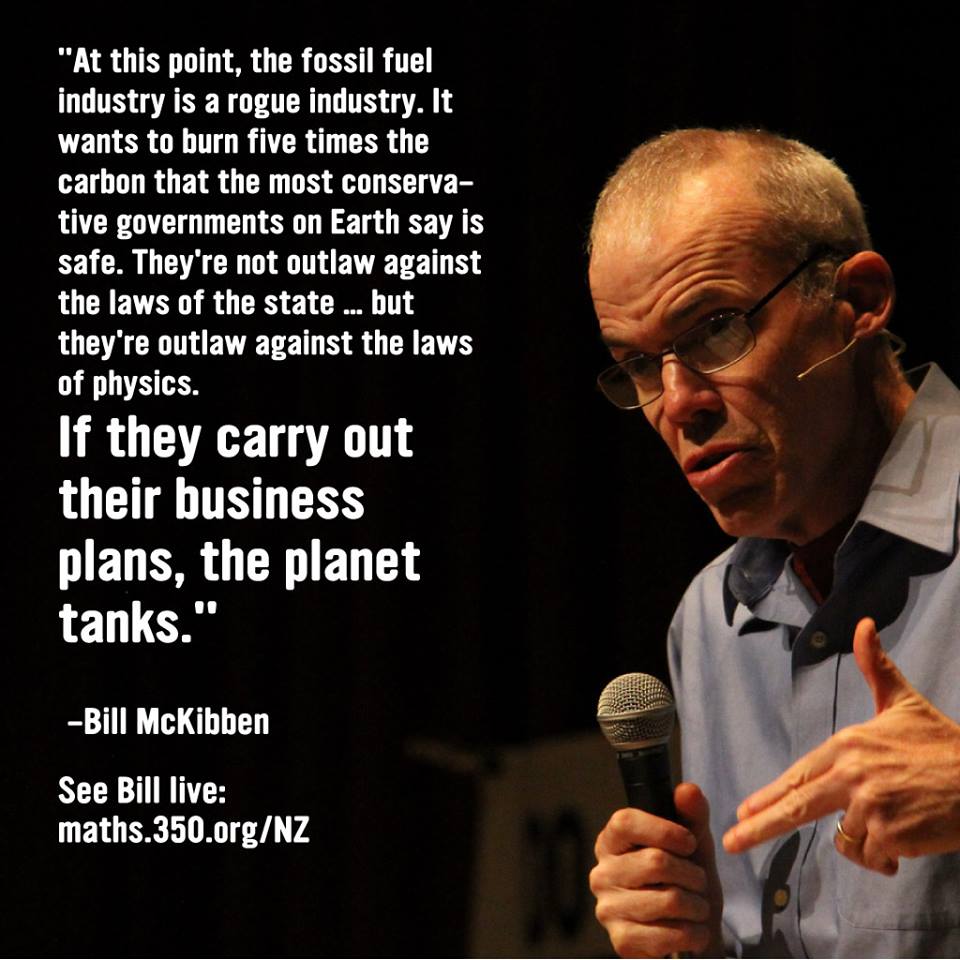
Bill McKibben asks us to “do the math” and understand that if we were to actually succeed in burning all the fossil fuels that are currently in the ground, we would heat our planet to a level not seen for millions of years.

It would definitely be game over for human civilization, and it would take millions of years for the planet to restabilize.

What it is about this simple math that human beings today do not want to see and understand?

Part of it is simply that we’re so easily distracted.

The big news yesterday was that Federal Aviation Administration will now allow airline passengers to use their computers and tablets right through take-off and landing.  We can be in front of our screens to the very last second of the day!

Meanwhile, while we’re busy on our computers, not paying attention, the fossil fuel industry is going around the resistance to the Keystone XL pipeline by massively investing in railway terminals, lines and cars for carrying its tar sands oil down to refineries and tankers on the coasts.

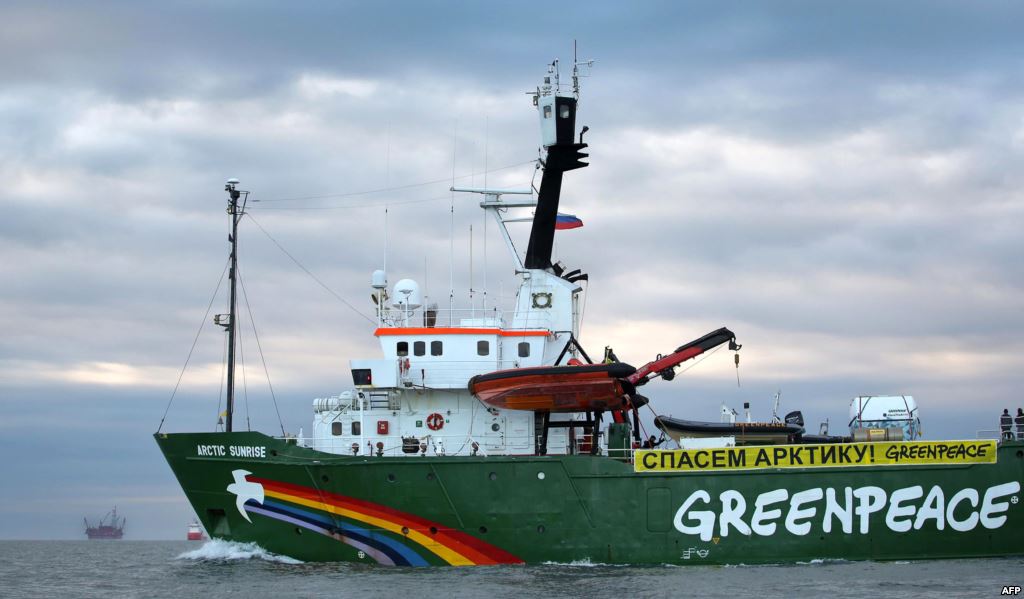
B3029FCC-5228-4E57-B879-F8A83ABF036B_mw1024_n_sAnd up in the darkness of the Russian tundra, 30 Greenpeace activists are languishing in cold solitary prison cells, held without trial for the crime of trying to raise awareness about the destruction of the Arctic by Russian and international oil drilling.

Where is the outrage?

In the book Oil and Honey, McKibben ingeniously compares corporate behavior to bee behavior.  Corporations are like bees, he says, in being relentlessly “simple” and focused on their one crucial task—for bees, making honey; for corporations, making profit.

They don’t change their focus, no matter what.

But humans are more complex than that.  We can change and adapt to new circumstances.  We can recognize and act upon moral imperatives.  We don’t have to follow suicidal corporations blindly over a cliff of their own making.

Although it’s true that the alarming dependence of Americans on screens of every size can get in the way of a connection to the natural world, on the other hand, the fact that so many people are networked together through the media presents great opportunities for activism and change.

With my students this semester, I’ll be thinking about how to harness the power of the media to create a different kind of swarm—not following our current corporate leaders, but moving in an entirely different direction.

We’re not alone—there are many groups working on this now, from the Transition Town movement to the Pachamama Alliance to even such formerly mainstream organizations as the Sierra Club.

The task: to awaken a critical mass of people, worldwide, to the reality that we are living in an end-time of biblical stature; and to get them to understand that we have the power to change the storyline from doom-and-gloom cataclysm to a positive shift into a whole new relationship of humans to our planetary home.

Working cooperatively, bees are able to turn small grains of pollen into vast tubs of honey.  Human beings can do that too–when we work together for a common cause we can do almost anything.

So what are we waiting for?

images-1

We are the Albatross

Lately I have been wondering how on earth it was possible to live without plastic.

I’m not even talking about marvelous inventions like disposable contact lenses, PVC piping, or neoprene wetsuits.

I’m just thinking about my kitchen routine, and how much I rely on—and take for granted—a never-ending stream of plastic wrap, plastic bags, and plastic containers as I go about my daily business.

I am so habituated to using plastic that I really had to ponder a while on the question of alternatives, until finally I remembered glass.  Of course, my grandmothers must have had a big shelf full of glass jars that they washed and re-used to store food in.

I also remembered that back in the 1980s, when I visited my in-laws in Mexico, I was surprised to see that they did not have any plastic wrap or boxed plastic bags in their kitchen.  They put things like cold cuts on plates, covered with another plate.  They left their leftover soups, stews and rice in the cooking pots, and placed them in the refrigerator with the lids on.

It also astounded me to see that in that household of seven, with numerous friends and relatives always dropping in for a meal, there was no trash container in the kitchen.  My mother-in-law saved plastic bags that she got when she went, once every couple of weeks, to the supermarket, and used these to collect the small amount of garbage that accumulated day to day.  Their little dog ate most of the food scraps, and they just didn’t generate that much of any other kind of garbage.

Why?

Because they bought their meat and produce from the little market down the street, carrying it home in their heavy-duty mesh bags (once made of straw, by the 1980s these were made of plastic threads).  My mother-in-law had a round wire egg basket that she’d bring to the market to refill.  The poultry would come from the butcher stand wrapped in paper, and rice or beans would come in brown paper bags.

There was just hardly any packaging.  And packaging, I’ve come to realize, is what generates most of the kitchen garbage in an ordinary American household like mine.

Here in Canada, we are mandated to separate our garbage carefully.  The bottles, cans and plasticized paper containers go in one bin, the paper and cardboard in another, and the compostable items in a small bin under the sink.  Then there’s the “trash.”  That’s the one where all the miscellaneous plastic packaging and used plastic bags go, and it tends to be the most bulky.

Since I watched the marvelously poignant and persuasive film BAG IT a few weeks ago (shout out to my friend and neighbor Anni Crofut for making us dinner and sitting us down to watch the film!), I have not been able to look at plastic trash in the same way.

The film starts from a simple question: why on earth would we use as our primary disposable material an indestructible synthetic chemical known to be an endrocrine disrupter and carcinogen?

And yet we do, over and over, in vast quantities.  We buy our drinks in plastic bottles and toss the empties in the trash.  We walk out of the superstore with carts piled high with groceries packed into small plastic bags.  We bring home our carrots in one plastic bag, our potatoes in another, and if they don’t come pre-bagged, we pull off a plastic bag from the conveniently placed roll and fill it ourselves.

Most of these bags will be dumped into the trash bin by the next day, and we’ll put them out of our houses in bigger plastic trash bags, and not give another thought to what may become of them next.

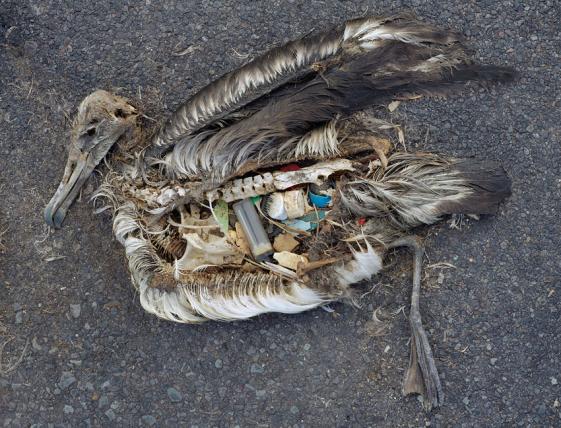
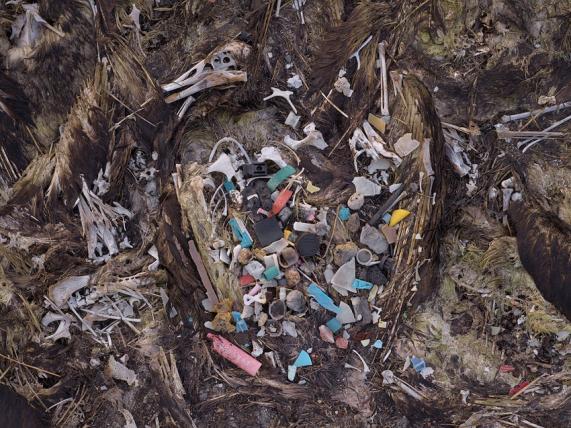
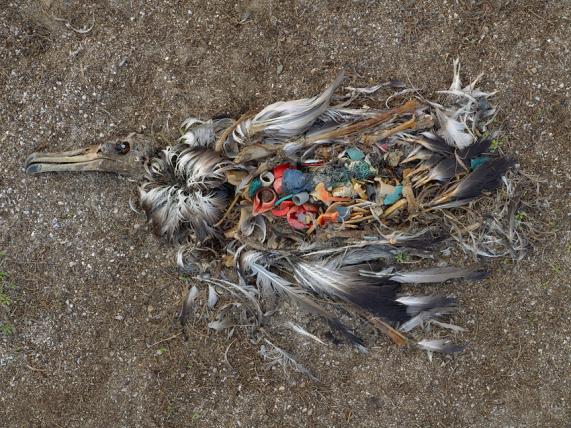
Some of our plasticized culture is being used to build huge land-fill mountains visible from space.  But a lot more of it is ending up in the oceans, where it becomes an indigestible, non-degradable part of the food chain.

These photographs by artist Chris Jordan, of dead albatross on Midway Atoll, near Hawaii, tell a tragic story.
 chrisjordan7

chrisjordan2

chrisjordan1

Look a little deeper into what’s happening to our thoughtless use and disposal of plastic, and you’ll learn about the vast gyres of rotating plastic trash out in the oceans, some as big as the state of Texas.

You’ll discover that the chemicals that compose plastic are gyrating around in human blood streams and fat as well, causing cancer and hormonal malfunction. 

American plastics are exported all over the world.  My Mexican mother-in-law now has plastic wrap and plastic bags in her kitchen, and if the plastics industry had its way, so would households from Azerbaijan to Zimbabwe and beyond.

Plastic is a fabulous, miraculous material and of course it’s not something we can imagine of doing without.  But there is such a thing as compostable plastic, made of  plant-derived chemicals that do break down again.

IMG_2956IMG_2954Once the Canadian government mandated that compost had to be disposed of in compostable bags, manufacturers like Glad stepped right up and began producing the necessary product.

It’s not even much more expensive than petroleum-based plastic bags—this box of 20 bags sells for $2.99 here in Nova Scotia, and I bet if I shopped around I could find them for less.

This is an issue where ordinary consumers can have a big impact.

We can remember to bring our reusable bags to the grocery store, including the small bags or containers for produce and bulk foods.

We can wean ourselves off plastic bottles for drinks, except on those unavoidable occasions, like in airports where we’re not allowed to bring in our own bottles of water or other liquids.

We can be much more thoughtful about our use of plastic wrap and other disposable plastics in the kitchen.

We can talk with our friends and families like my friend Anni did with me, trying to gently raise awareness.  We can even bring it up with our local government officials and see if we can get local ordinances passed banning plastic bags in supermarkets.

I am proud to say that the little town of Great Barrington, MA, where I live, is one of the first towns in the country to do just that.

The plastics industry would like nothing better than for everyone to use as much plastic as we possibly can, and throw it away just as fast.  What happens to the trash is not their concern.

But if we care about the health of our oceans, airs and land, as well as the very chemistry of our bodies, it is our concern.

And we have more power than we realize.  The fossil fuel industry depends on the docile cooperation of all of us fossil fuel addicts.  Sometimes I really think that there’s some kind of conspiracy going on between the fossil fuel, agri-chemical, pharmaceutical and insurance industries, who act as a giant many-tentacled cabal that sucks us in, addicts us to their products, and then watches complacently as we become sick and dependent on expensive tests and treatments.

We do not have to fall for this any longer!  It’s not hard to eat healthy, it’s not hard to bring your own bags to the supermarket, it’s not hard to ride your bike or at least decide to purchase a hybrid car next time around.

IMG_3145 copyWhat is hard is to isolate yourself from a contaminated natural world.  It simply can’t be done.  Our land, oceans and air are an extension of us.  We are the world, the world is us, as Joanna Macy recognized long ago.  That’s why we have to be concerned about what’s happening with the plastic trash in the oceans, or the greenhouse gases in the air, or the toxic chemicals in the soil.

The bottle caps and syringes that the poor albatross is carrying around may be bigger and easier to see, but the truth is that each of us carries an unbearable burden of toxins in our own bodies every day.

And we’re doing it to ourselves, by our own unconscious collaboration with the industries that are sickening us and our world.

It’s time to say ENOUGH, disengage ourselves from the herd, and stand up for what we know is right.  Be the change.  Be the change.

Commencement 2013: Questions for Ben Bernanke

Tis the season of college Commencement ceremonies, where speakers are invited to address the graduates, giving them some advice and words of wisdom for this major transition time in their lives.

Ben Bernanke

Ben Bernanke

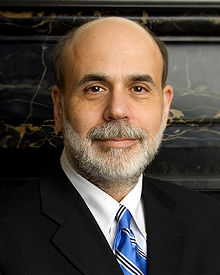
At my institution, Bard College at Simon’s Rock, the Class of 2013 will be addressed by none other than Ben Bernanke, chairman of the Federal Reserve, whose son and daughter-in-law met as Simon’s Rock students.

Of course I am curious to hear what Mr. Bernanke will tell these spanking-new A.A. and B.A. graduates.

I wonder if he will mention the touchy issue of student debt, which the eminent economist Joseph Stiglitz just called a contemporary crisis on the same order of magnitude as the housing bubble crisis of 2008.

Stiglitz doesn’t mince his words in responding to the news that “total student debt, around $1 trillion, surpassed total credit-card debt last year.”  While it’s possible to learn to control credit card spending, he says, “curbing student debt is tantamount to curbing social and economic opportunity. College graduates earn $12,000 more per year than those without college degrees; the gap has almost tripled just since 1980. Our economy is increasingly reliant on knowledge-related industries.”

In other words, young Americans and their families can’t afford not to do whatever it takes—including going into debt—to get that college degree, and beyond that graduate degrees as well.

The students I know are increasingly aware of their place in the big picture of American society.

Those who must take out loans to afford their college educations do so with eyes open, knowing that these loans will form a ball and chain around their ankles for many years to come.

I wonder if Ben Bernanke will talk about this?

Will he talk to this year’s graduating class about how, unlike with credit card or mortgage debt, it is almost impossible to discharge a student loan in bankruptcy court?

Will he explain why interest rates on Federal student loans are so much higher than the interest rates on the loans the Federal Reserve has made to the banks that caused the financial crisis of 2008?

As Mr. Stiglitz observes, “if the Federal Reserve is willing to lend to the banks that caused the crisis at just 0.75 percent, shouldn’t it be willing to lend to students, who will be crucial to our long-term recovery, at an appropriately low rate? The government shouldn’t be profiting from our poorest while subsidizing our richest.”

Besides the $1 trillion in student debt, there have been other major records broken in the past few weeks that Mr. Bernanke could address.  The Dow Jones has climbed above 15,000 this spring, a benchmark many thought would never be reached; and the carbon emissions rate has climbed above 400 parts per million, causing polar sea ice melt at rates and levels not seen in human history.

Will Mr. Bernanke talk about how and why it is that in a time when wealth disparity between the 1% and the rest is growing ever vaster, while the planet heats up and becomes ever more unstable and vulnerable, the stock market is soaring as never before?

I would be quite interested to hear his take on that.

Generally Commencement addresses are exhortatory in style.  Go forth, ye graduates, and conquer the world!  Or make it a better place!  Or do well for yourselves at least!

Today’s graduates need all the encouragement they can get as they make their way out into a society, a world and a planet where only the richest can feel secure—and even for those folks, climate change may make a mockery of that sense of stability.

The qualities most needed today are collaboration, creativity and resilience, along with a willingness to think outside the box and go for the roads less traveled.

Students at Simon’s Rock, a non-traditional early college for brilliant non-conformists, have all of these qualities and more.

I am proud to have accompanied some of them on a piece of their journey, and look to them to lead the way into the future we must all confront.

I hope that Ben Bernanke, who well knows the school and the type of students it attracts, will speak to them frankly and in good faith about the challenges ahead and how best to be not part of the problem, but cutting-edge leaders in the quest for solutions.

Learning from mass murder: we must pay attention to our young men

If this past week had been written up as a movie script, I would have rejected it as totally over-the-top, beyond belief.

Two young Chechen immigrants successfully wreak mayhem and turn a city upside down with their improvised explosive devices, in the very same week that the U.S. Senate Republicans successfully beat back a bill designed to stiffen background checks for gun purchases.

Gabrielle Giffords

Gabrielle Giffords

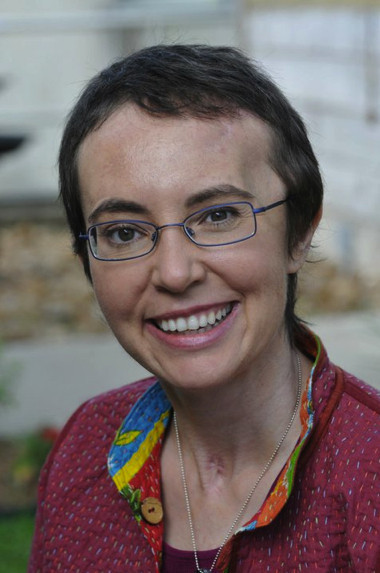
The beautiful, brave Gabrielle Giffords publishes an impassioned piece in The New York Times, condemning the cowardly Senators who put the interests of the National Rifle Association over and above the interests of the American people.

Meanwhile, down in Texas, an explosion in a chemical fertilizer factory flattened a whole neighborhood, killing at least 15 people and injuring more than 200.  The cause of the blast is still unknown.

And the whole middle section of the country was inundated by heavy rains, storms and severe floods.

Fire, air, earth and water, all the elements seem to be drawn into an intensified dance these days, speeded up along with the 24-hour news cycle.

As the bizarre manhunt for the two Chechen bombers unfolded, and the whole country went into virtual “lockdown” in sympathy with the people of Boston and eastern Massachusetts, it felt like we were suddenly waking up to find ourselves in Baghdad.  Things like that don’t happen here.

Until they do.

boston-bomber-suspect-dzhokhar-tsarnaev I don’t have TV in the house, so I got most of my information on the situation in Boston from print media and radio.  But even the few pictures I saw were enough to convey the sense that the official response to these boys’ stupid act of random violence was hugely disproportionate.

Against a lone 19-year-old kid, thousands of law enforcement officers of every stripe were deployed, in full riot gear, toting rifles, traveling around the deserted streets in armored vehicles.

The kid was presumed to be “extremely dangerous.”

How dangerous could one kid be?

I understand that the concern was that he might have had a bomb or a suicide vest that he could detonate at the very end.

But that is not the way the story went.  In the end, he came out with his hands up, just one stupid, confused kid who surrendered to the police without a peep.

His life is over.

Ours will go on.

In the wake of this latest act of violence within our own borders, we need to take a good hard look at the role of the U.S. as a fomenter of violence, both at home and abroad.

Unknown-1 Not only is the U.S. the largest exporter of arms and weaponry in the world, but we are also the biggest developer of violent video games worldwide, the ones I am betting those Chechen boys loved to play.

Why should we expect that we can promote violence by all kinds of channels, and remain immune to it within our own borders?

What goes around comes around.

If we were serious about wanting peace and security, we would start by radically shifting our focus from creating implements of destruction—be they chemical fertilizers, assault weapons or games that encourage violence—to waging peace.

Waging peace—what would that look like?

One of the most urgent tasks is to change the way young men are socialized.

Let us not for a moment forget that every single act of mass violence that has taken place here in the U.S.—every single mass shooting, every single bombing—has been the work of young men.

Young men are do-ers.  They have heroic dreams—and in Western culture, it’s the young men who can slay the dragon or vanquish the ogre who are considered heroic.

We can honor and nourish that warrior spirit in our young men in ways that celebrate heroes who use their strength and talents productively, to safeguard ordinary people.

I suspect that Dzhokhar Tsarnaev is someone who would have made an excellent warrior for good.  He was obviously smart, resourceful and could handle himself well under great pressure.

For reasons as yet unknown, he–like Newtown gunman Adam Lanza, Norway gunman Anders Breivik, Aurora, Colorado gunman James Holmes and so many other young men whose names stand for infamous mass murders—chose to walk on the dark side.

We need to be paying attention to the accelerating rate of these crimes.  They are a sign of the dark times we are living through.

Those of us who believe in peace must recommit ourselves to raising our own internal lights higher, beacons for others to rally around.  Those of us who have the great responsibility of raising the next generation of young men—parents, teachers, employers, mentors—must recognize the tremendous importance of our task.

In the past thirty years, there has been a great deal of attention paid to rethinking the way we socialize young women.  This is definitely essential work.  But we forget about our young men at our own peril.

Sparks fly around the table–of the seminar room or the lunchroom

There’s something seriously wrong when the dominant methods of education do not foster the skills most valued by potential employers.

In a recent spate of op-ed pieces in The New York Times, pundits have explored this disconnect, which seems to be grower wider as we advance into the 21st century.

David Brooks, making a distinction between what he calls “technical knowledge” and “practical knowledge,” says that online education is good for transmitting and measuring students’ mastery of technical knowledge, but does little for helping students gain the practical knowledge they’ll need to be successful in the workplace.

“Practical knowledge is not about what you do, but how you do it,” Brooks says. “It is the wisdom a great chef possesses that cannot be found in recipe books. Practical knowledge is not the sort of knowledge that can be taught and memorized; it can only be imparted and absorbed. It is not reducible to rules; it only exists in practice.”

Brooks points to the college seminar as one of the important incubators of important workplace skills, and as someone who teaches exclusively in seminar style, I agree with him.  The college seminar is where students learn how to listen to each other, build on each other’s ideas, articulate their own ideas clearly and concisely, and take away crucial insights that they’ll use to construct their more fully elaborated written papers (which in the workplace might be called briefs or reports).

But Brooks and I part company when he suggests that seminars should be used as laboratories for the dissection of intellectual exchange.  He thinks that a smart use of online education technology would be “to take a free-form seminar and turn it into a deliberate seminar….Seminars could be recorded with video-cameras, and exchanges could be reviewed and analyzed to pick apart how a disagreement was handled and how a debate was conducted. Episodes in one seminar could be replayed for another. Students could be assessed, and their seminar skills could be tracked over time.”

Deep groan.  This sounds like a perfect recipe for a disastrous seminar in which students—and faculty–would be made to feel increasingly self-conscious, where the delight of the “free-form” exchange of ideas would degenerate into a stilted, scripted, uber-careful caricature of what a seminar should be.

Occasionally taping a seminar and analyzing it might be fruitful, especially in one of those inevitable groups where the dynamics are terrible and everyone, by mid-semester, wants to just crawl under the table and hide. But making the focus of the semester the “how” rather than the “what” seems like a terrible idea.

It’s also in sharp contrast to the most cutting-edge ideas of how to spur human innovation and creativity, which lord knows we desperately need as the 21st century advances.

In his own recent column on education, NY Times columnist Tom Friedman interviewed Harvard education specialist Tony Wagner, also looking for ways that educational practices could better connect to workplace imperatives. According to Wager, who just wrote a book called Creating Innovators: The Making of Young People Who Will Change the World, “because knowledge is available on every Internet-connected device, what you know matters far less than what you can do with what you know. The capacity to innovate — the ability to solve problems creatively or bring new possibilities to life — and skills like critical thinking, communication and collaboration are far more important than academic knowledge. As one executive told me, ‘We can teach new hires the content, and we will have to because it continues to change, but we can’t teach them how to think — to ask the right questions — and to take initiative.’ ”

Critical thinking, asking the right questions, and taking initiative are indeed what should be taught at every level of education, from kindergarten to college and beyond.  Interestingly, Wagner also points to another important goal of education, which is to motivate students to want to learn.

“Young people who are intrinsically motivated — curious, persistent, and willing to take risks — will learn new knowledge and skills continuously,” Wagner says. “They will be able to find new opportunities or create their own — a disposition that will be increasingly important as many traditional careers disappear.”

Unfortunately, in our current education environment, where passing standardized tests becomes a goal in itself, keeping kids engaged is a serious challenge.

I saw this myself when I taught at a large state university, where the students were much more interested in finding the best watering holes for their weekend parties than in any of their classes.

As Friedman reports: “We teach and test things most students have no interest in and will never need, and facts that they can Google and will forget as soon as the test is over,” said Wagner. “Because of this, the longer kids are in school, the less motivated they become. Gallup’s recent survey showed student engagement going from 80 percent in fifth grade to 40 percent in high school.”

Wagner’s solution is to re-imagine the classroom, and the educational system, so that teachers are focused on “teaching the skill and will to learn and to make a difference and bring the three most powerful ingredients of intrinsic motivation into the classroom: play, passion and purpose.”

That is a tall order, really, and it has to do not just with the classroom, but also with the dining room table—with what happens at home, in students’ family environment.  How to inspire passion and persistence in students who are being reared on smash-em up video games?  How to foster critical thinking and collaboration in students who come from plugged-in families who rarely spend much quality time together?

Somewhat paradoxically, it appears that it’s precisely in web-based interactive technology companies like Google, Facebook, Yahoo and others that the qualities of human innovation and creativity are most dogged sought.

And how are they trying to foster these skills among their workers?

Google350x233By going back to good old-fashioned lunchroom tables, at which, it appears, the unstructured back and forth of ideas is what prompts the greatest leaps in creative thinking.  Just like that other good old-fashioned table, the one in the college seminar room!

In a New York Times article provocatively entitled “Engineering Serendipity,” Greg Lindsay points to a recent study in which “researchers at Arizona State University used sensors and surveys to study creativity within teams.” The study found that “employees who ate at cafeteria tables designed for 12 were more productive than those at tables for four, thanks to more chance conversations and larger social networks. That, along with things like companywide lunch hours and the cafes Google is so fond of, can boost individual productivity by as much as 25 percent.”

If our best, most innovative companies most value creative, collaborative thinking, which is best fostered in face to face interactions, why in the world is K-12 education focused on teaching technical knowledge measured by standardized tests, while higher education is flocking to online learning, which isolate students in front of their computer screens?

Give me the old-fashioned seminar table any day, with a smart, dedicated teacher and a roomful of students who are absolutely forbidden to use their computers or phones or tablets for the duration of the class session! Give us some provocative material to discuss, and just watch the creative sparks fly!