Finding Your Tree—Taking a Stand—on Thanksgiving 2016

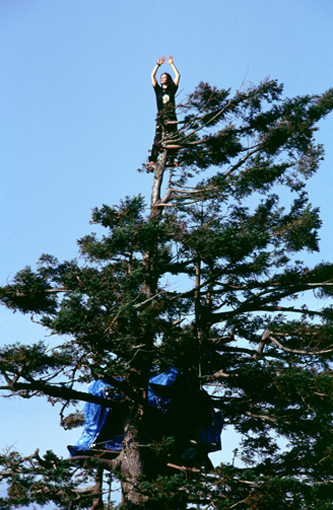
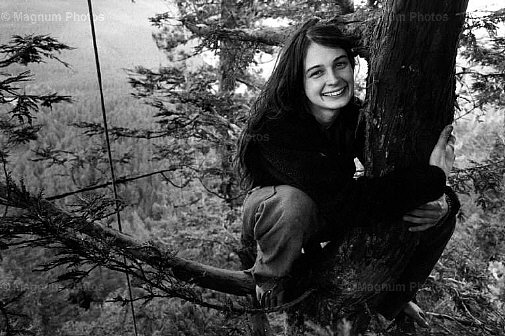
When asked by young activists where they should direct their energies, Julia Butterfly Hill responds simply, “Everyone has to find their own tree.”

2049891Julia, you may remember, is the woman who in 1997, at the age of 23, camped out at the top of a thousand-year-old, 180-foot-high California redwood named Luna, to save her and others in her grove from death by logging. She stayed up there for two solid years, through winter snowstorms, attacks by helicopter and constant harassment from the company goons holding siege below.

She eventually returned to the ground when her mission was accomplished—she had persuaded the logging company to leave Luna and her stand of old-growth trees alone. It was an important battle on the way to having the 7,500-acre Headwaters Forest protected as an ecological preserve.

This week we witnessed another brave young woman warrior, Sophia Wilansky, standing up to the attackers at Standing Rock and getting her lower arm blown off by a grenade.

Compared to the scale of the harm inflicted by the U.S. military in places like Syria, Iraq and Afghanistan, a young woman losing her arm seems relatively minor. The water protectors are being hit with water cannons and mace, not cluster bombs.

But by the standards of what is considered acceptable behavior for American law enforcement against unarmed citizens, what’s been going on at Standing Rock is totally outrageous.

Without in any way undercutting the incredible sacrifice that young Sophia Wilansky has made, I want us to notice that when one white woman gets hurt, suddenly the outrage of the onlookers jumps up several notches.

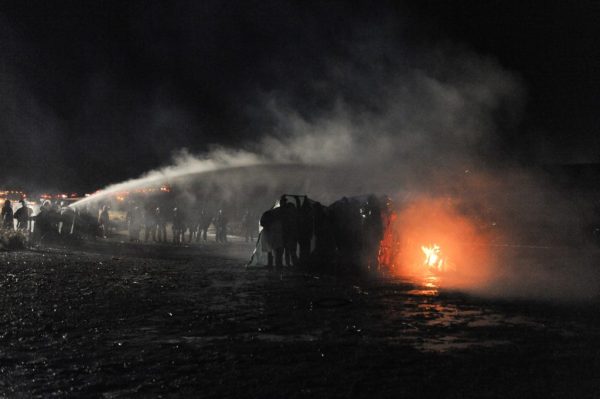
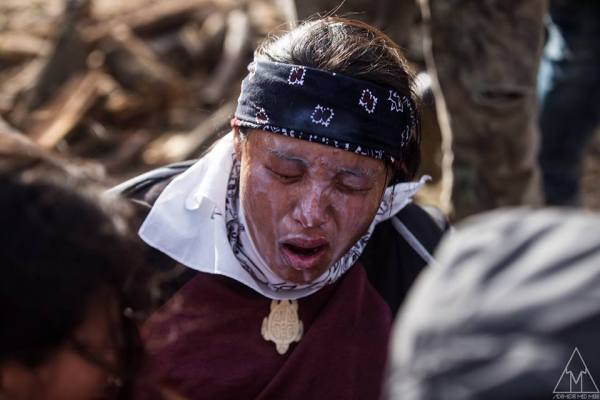
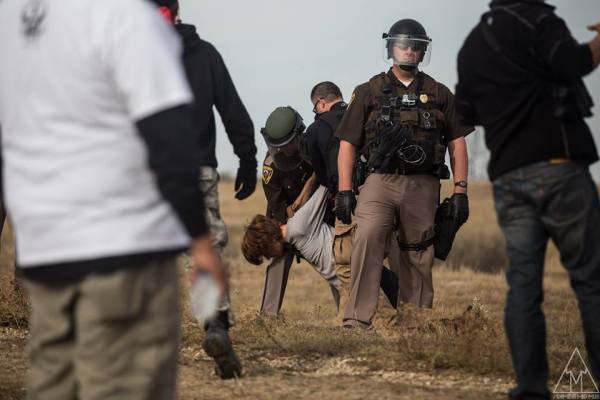
Native people have been getting injured with rubber bullets fired at close range; elders are being beaten up; water protectors have been thrown into dog kennel cages and kept there in inhumane conditions; they’ve been attacked by drenching water cannons in 20-degree temperatures, with no way to get warm.

And there has been outrage and solidarity from onlookers: marches and rallies in many cities and towns, an outpouring of donations of food, warm clothing, camping supplies and money for legal fees and other expenses. The indie media and social media have been out in force, covering the scene.

But still, here we are on Thanksgiving, 2016, and Native Americans are being forced to fight, David vs. Goliath style, to defend their land and water from the rapacious appetites of the colonizers.

screenshot-2016-11-02-at-1-44-54-pm

On this Thanksgiving Day, please take a moment to say a prayer for the water protectors of Standing Rock, who are standing up for the right of every American to clean water.

And please take a moment to think about Julia Butterfly Hill’s advice.

What is your tree? What is the cause that is calling to you with such passion that your heart leaps in response? Where will you stubbornly take up a stand, vowing not to give ground until the battle is won?

1492528_orig.jpg

Honoring the Water Protectors of Standing Rock on Thanksgiving

So here we are at the start of the holiday season once again. The food stores in my New England town are mobbed with people loading up their shopping carts with turkeys and all the trimmings for a grand Thanksgiving meal. Christmas trees are beginning to appear at the farm stands and garden centers. The lights are coming on to ward off the early afternoon gloom. We are going through the motions.

On the other side of the country, there are some other kinds of motions going on this Thanksgiving season.

How about water cannons drenching unarmed and unprotected people peacefully protesting the pipeline that threatens their land and water?

How about mace, rubber bullets and all-night floodlights?

How about constant intimidation and harassment?

RTSSKV8-1024x681.jpg

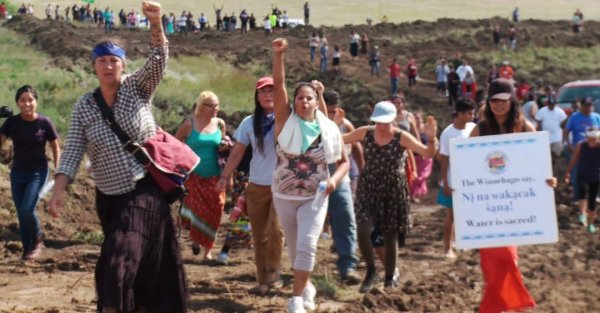
This is what the Thanksgiving season is bringing to the good people of Standing Rock, North Dakota, and the friends and allies who are standing firm at the camp, determined to protect the water and resist the bullying from law enforcement and private security guards.

Yes, here we are at Thanksgiving, the holiday supposedly celebrating the way the Native Americans generously fed the European settlers, helping them avoid starvation during that first New England winter.

The Pilgrims didn’t repay the Native people well then, and that was only the beginning of the holocaust visited on Native Americans all across this continent.

In the history books, they make it sound like that was all a long time ago; like those old prejudices and oppressions are safely in the past.

But Andrew Jackson the Indian-killer is still on the $20 bill, and what we’re seeing in Standing Rock this Thanksgiving week shows that there is still no respect when it comes to Native Americans.

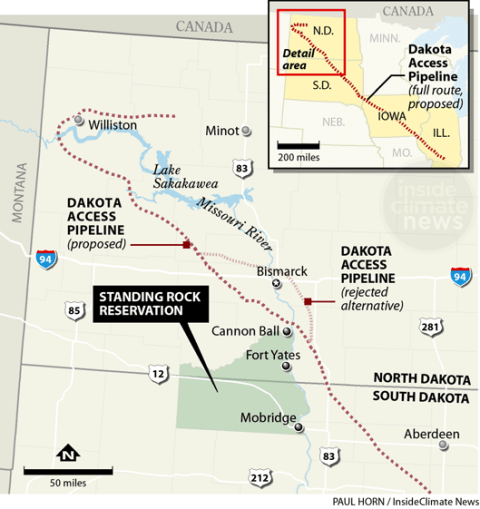
mapBe it noted that the Dakota pipeline was originally routed right next to predominantly white town of Bismarck ND. When the people there protested, the route was promptly changed. It didn’t require thousands of men, women and children, camping out for months; there were no water cannons, tear gas or rubber bullets used.

But when it comes to re-routing the pipeline away from Lakota sacred lands, and away from the Missouri River, which supplies millions of people with drinking water—the gloves come off immediately.

One shudders to think of how this might have been handled in the days before social media. In 2016, the North Dakota authorities are brutal, but they know the world is watching: there are many people, including celebrities, standing with Standing Rock in its quest to protect the water and land.

Still, here we are at Thanksgiving, and the news from Standing Rock is getting worse, not better.

President Obama has not responded to the pleas for help. There have been protests across the country, but with the sudden, unexpected ascension of Trump and the Republicans, Americans who might have thrown their weight behind Standing Rock have been distracted, making plans for the Electoral College March, the Million Woman March, and standing vigil at Trump Tower on Fifth Avenue.

12-trump-womens-protest.w710.h473.jpg

From Trump Tower to Standing Rock, what we’re seeing is all part of a continuum of violence: violence against women, against less powerful identity groups, against animals and trees, against the land and the water and the oceans; against life itself on this great planet.

In the old days, what is happening now would have been depicted mythologically as a struggle between life and death, good and evil, the weak and the powerful.

But this time around a victory for the powerful is going to take us all a step closer to the Armageddon of climate change.

How can we open the eyes of the fossil fuel lords and the militarized police that are doing their bidding?

There are movements afoot to divest from the fossil fuel industry and from banks funding the Dakota pipeline. Money seems to be the only language these folks understand, so that may be an effective form of protest.

There are phone numbers to call, and plenty of opportunities to help out with much-needed supplies at the Standing Rock protest camps, as winter sets in.

This Thanksgiving, every American should give thanks for the Native Americans who, despite everything, are still standing firm as protectors and stewards of their lands.

People don’t like to think about this, but it’s true: there may come a time when we European settlers will once again call desperately on Native peoples’ deep knowledge of this land. Once again, Native generosity may be the only thing standing between us and starvation.

All over the world, as climate change sets in and modern industrial agriculture, trade routes and energy sources are disrupted, those who still remember how to nestle into the bosom of Mother Earth and live simply off what she provides—these will be the people who will survive the shocks that await human civilization in the Anthropocene.

Maybe the good people of North Dakota should think twice, this Thanksgiving week, before sending out the dogs and the water cannons, the tanks and the tear gas again.

May we all give thanks for the blessings Mother Earth gives us constantly, without reserve, seeking nothing in return. May we learn to be grateful, and as generous in our turn. May we humans—all of us—rise to become the Earth stewards we were always meant to be. May we give thanks and honor to the Native peoples for showing us the way.

Standing Rock: Frontline of the New Occupy Fossil Fuels Resistance Movement

The standoff at Standing Rock—where thousands of Native American men, women and children, along with many non-Native allies, are camping out to block the laying of a 1,170-mile pipeline to carry fossil fuels from North Dakota to refineries on the Gulf of Mexico—is more than just an isolated battle, the Sioux deciding they won’t allow their lands to be taken by force by the oil lords, and putting their bodies on the line to protect their land and water.

14729345_10154752400255921_4614956170135620976_n

Standing Rock is one of those moments, like the Occupy Wall Street protests, that we will look back on as a tipping point in consciousness; a moment when the lines of battle in the war to keep our planet habitable for our children became visceral and unmistakable.

Just as in Occupy Wall Street, we are seeing militarized police and guards attacking ordinary people who have taken to the public sphere to protect their right to a livable future. The same tactics are being used: escalating the pressure with an overwhelming force of armored vehicles, sound grenades, tear gas, pepper spray, police batons, tasers and rubber bullets until the violence starts and the rounding up of peacefully protesting civilians can appear “justified.”

14717088_10154752399965921_4422586919591831573_n

Law enforcement claims to be protecting public safety, but in fact they are acting as hired goons for the fossil fuel companies.

In a New Republic article this fall, Bill McKibben used the metaphor of World War III to describe the kind of all-out industrial effort that is needed now to shift our economy from running on fossil fuels to running on renewable energy sources like wind, solar, tidal, geothermal.

We need a Marshall Plan to ramp up and get the job done, McKibben declared.

2564906-H.jpgInstead of hiring a few guys to lay pipelines and fight off anyone who dares to protest, we need to mobilize an army of people who are dedicated to developing, producing and distributing alternative energy systems, along with converting buildings, transportation networks, farms and factories to run clean.

Tar sands, fracked gas and deep-sea oil rigs, along with the pipelines, tankers and refineries that service them, are part of the dead-end 20th century vision that we must abandon if we are to find our way out of the frightening labyrinth of the present moment.

It’s no accident that the nascent Occupy Fossil Fuel movement is being led by Native people, not only because their land rights are once again being flagrantly violated, but also because they have never fully bought into the fossil-fuel-based plunder economy, the economy of short-term gain, maximizing profits, and to hell with the consequences.

The leaders at Standing Rock have created a movement based on prayer and reverence for the sacredness of Earth, and people of all backgrounds from all across the country have responded with a resounding YES!

defend_the_sacred_-_courtesy_indigenous_environmental_network

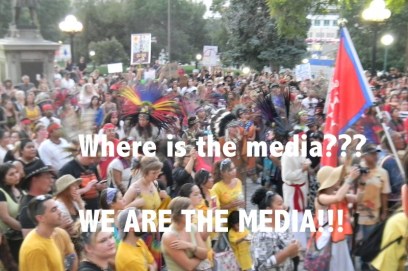
While the mainstream media is showing once again its collusion with the Wall Street/fossil fuel barons that also control our government, by simply ignoring Standing Rock, social media has leapt into the breach, with citizen livestreams taking us right into the heart of the struggle.

14572425_10154635715284600_8219779230791003850_nYou can’t support a movement you aren’t aware of, which must be what the mainstream media is up to in willfully blinding themselves and their readers to the significance of Standing Rock.

Like Occupy Wall Street, like Ferguson, Standing Rock is not going to go away. The more the police try to repress the protests, the more they will spread.

Because the simple truth is this: a majority of us want to leave a habitable planet for our children and grandchildren.

We want future-oriented solutions—re-localizing energy sources via solar and wind, not thousand-mile pipelines strangling our country and putting our waterways at risk.

980x

We don’t want our hard-earned tax dollars to go for paying police to brutalize peaceful protestors at home, nor to support an endless military buildup to safeguard a corporate globalization that follows the same playbook worldwide of trashing local economies and environments.

Americans are not afraid of hard work. We relish challenge and delight in innovation. We have what it takes to head off climate change disaster.

In addition to supporting the Standing Rock protestors who are right now bravely occupying the front lines of the struggle for our shared future, we need to create our own Standing Rocks, our own front lines of resistance where we are.

The Marshall Plan of the climate change wars won’t be led by the Federal government. It will happen on the local level in towns and cities, as well as in global networks of like-minded people, like 350.org and the new Treesisters movement.

It will happen when enough of us have the courage to come together, as the Standing Rock Sioux and their allies have done, to say YES! to a livable future.

we_are_water_590

For the Trees

IMG_0258 copy.jpg

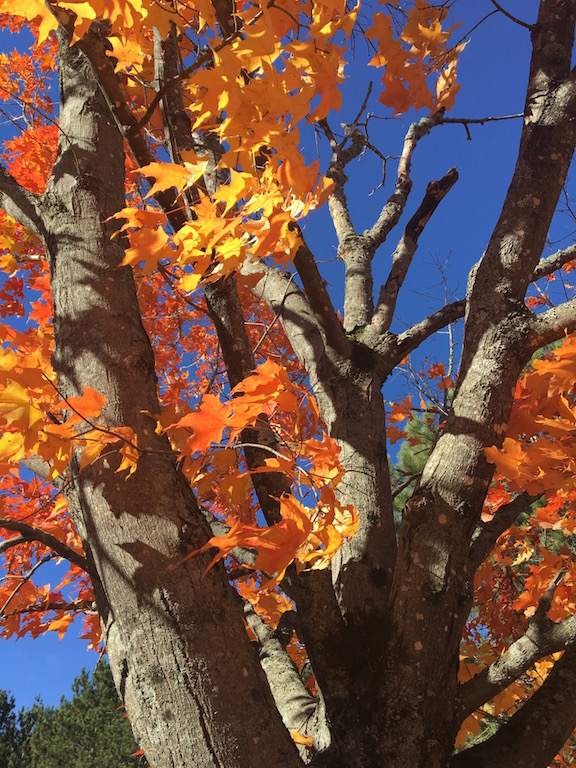
For North American tree lovers, October is a special month: the time of year when the trees get dressed up in their fanciest finery and show off just how wildly beautiful they are.

I pay attention to trees in all seasons, and have ever since I was a girl who loved to climb them, as high as I could go, and drape myself over a branch to feel the wind swaying us both gently.

My very first short story, written in pencil in a nondescript notebook when I was about 8, was about a tree nymph named Estrella, who gathered the animals around her in an urgent council, and set off on a quest to try to save her forest from destruction by humans. I never finished that story, mostly because I could not imagine a solution—how could a tree nymph and some forest animals stop the men with their bulldozers and chain saws?

Estrella haunts me now, prodding me to return to her story and persevere to the ending. Since those long ago days of my childhood, the pace of forest destruction has only increased.

According to National Geographic, if the current pace of deforestation continues, the planet’s rainforests could “completely vanish in a hundred years” (italics mine).

The fate of the northern boreal forests is no less dire. The Canadian boreal forest, an area more than 14 times the size of California, is being scraped away relentlessly for tar sands oil production, as well as being steadily logged.

boreal_concessions

In the first 13 years of the 21st century, according to a report from the World Resources Institute and Global Forest Watch, “Canada lost more than 26 million hectares of forest, mainly in its boreal region. More than 20 percent of the boreal forest region (more than 150 million hectares) is now covered by industrial concessions for timber operations, hydrocarbon development, hydroelectric power reservoirs, and mineral extraction.”

A hectare is equal to about 2.5 acres. The scale of this deforestation boggles the mind. In fact, I think one of the reasons this vast destruction is continuing is because it’s so hard to wrap our minds around it. Outside of photos, very few of us tree lovers ever see a fresh clear-cut or a mine. We don’t see what passes for “reforestation,” the planting of millions of trees in straight lines, with herbicide sprayed below them to prevent “weeds” from growing, and not an animal or bird or butterfly in sight.

Unknown.jpeg

Yet so many of us love birds and butterflies and animals. We put out our bird feeders in the winter and ooh and ahh over a sighting of a deer or a bobcat.

How can we be so loving on the one hand, and so callous on the other? How can we allow the relentless logging and scraping and dozing and burning to go on???

We seem to live with constant cognitive dissonance, whereby we know what’s going on, but resolutely shut out the knowledge. At least, that’s what I do. I know that every time I get in my car I’m being part of the problem. But I continue driving, nevertheless. We all do.

Human beings are profoundly social animals. The more I think about our behavior, the more I see our resemblance to ants, bees and termites. Especially ants, who are also wizards at reshaping the environment to suit their own needs. But no other species on Earth destroys its own habitat—and knowingly, at that!

A long, long time ago, the Earth was an anaerobic environment; there was no oxygen in the atmosphere. Then the plants came along and started turning carbon dioxide into oxygen, paving the way for all of us oxygen breathers who followed them.

Without the plants—without the algae, grasses, trees and all the other carbon-dioxide breathers—the Earth would become uninhabitable for us, just as it became uninhabitable for the anaerobic creatures millions of years ago.

So when we’re thinking about the trees, we owe them some gratitude. Some reverence and respect.

img_0160-copy

I love trees because they seem majestic and wise to me. They live a long time, far longer than humans, and they exist both above and below ground in ways I can hardly begin to fathom. They are also patient and resilient. When you cut down a tree, its roots still feed the soil, and if left alone (ie, no herbicides), it will soon regenerate, calmly sending up hundreds of new saplings to take the place of the one who fell. It has time. There is no rush.

It’s human beings who are in a rush, all the time. In a rush to “harvest biomass,” policy code for cutting down forests. In a rush to figure out how to “manage ecosystem services,” ie, learning how to cut down, replant and cut down again at the fastest possible rate.

All this rush is sending us pell-mell off the cliff of climate change. We know this, but try not to think about it. It’s so much easier to go along with the flow of our dominant, fossil-fuel-based, wood-hungry culture than to try to resist. Especially when it seems like that’s what everyone else is doing too.

Charles Eisenstein says that “enlightenment is a group activity,” meaning that it’s almost impossible for us humans, social creatures that we are, to change our mind-sets alone.

What’s truly exciting about our time is that now, we are more networked and communicative than ever before, just like our cousins the ants and the bees. Our Internet has made group enlightenment (otherwise known as social change) possible at a speed and a scale never before possible for humans.

It’s no longer possible for us to simply not know when millions of acres of forest are being clear-cut. That kind of innocence is gone, and with knowledge comes the responsibility to act, to live up to our values. Happily, there are some potent actions going on right now on behalf of the forests and the waters—the lifeblood of our planet.

img_0267-copy

Not surprisingly, it’s indigenous peoples, the ones who have stayed closest to the land throughout the whole horrendous onslaught of “Western civilization,” who are leading the way.

If you haven’t been following the protests at Standing Rock, North Dakota, where a massive pipeline project is underway, please inform yourself. The powers that be are trying to muzzle the media there, but that always backfires in the age of social media, doesn’t it.

Amy Goodman’s video report of dogs attacking peaceful protesters (they prefer to call  themselves as “water protectors”) has gone viral with more than 14 million views in just a couple of weeks. The more the oil moguls try to stamp out resistance, the brighter the glare of public awareness and outrage shines.

I’m also heartened by the response to the Million Trees Campaign started by Treesisters, an organization inspired by the Pachamama Alliance, which was itself sparked by visits with the Amazonian Shuar people who were reaching out to northern allies to try to save their forests.

Treesisters is funding local reforestation projects, focusing on the tropical rainforests that are so essential to the stability of the climate worldwide. Currently they are half-way to their goal of funding the planting of 1 million trees in the coming year—you can join in here.

tree-copy


Estrella the tree nymph is never far from my mind these days, her great love for the trees and forests fueling her implacable determination to change the hearts and minds of the human beings that would destroy them.

One day I will finish her story. And I hope I can find my way to a happy ending.


Snowden and the Politics of Doing Good

Go see Oliver Stone’s new movie “Snowden,” starring Joseph Gordon-Levitt as the eponymous hero, if you need reminding about how important a single human being’s act of courageous resistance can be.

Granted, Edward Snowden had his finger on the pulse of information far beyond the ken of most of us ordinary folks. But we can all relate to the ethical questions he faced, which the movie details so well.

To whit: At what point is it more important to listen to your own internal moral compass, even when it means going against “public opinion,” company policy or—in Snowden’s case—the entire power elite of the U.S. military industrial complex?

We live in a time when this is a question will come up with increasing urgency for more and more of us. Our age is one of unprecedented access to information, as “Snowden” shows in horrifyingly graphic detail. And once we know something—say, how a pipeline leak can foul and destroy an entire river ecosystem, or how a radiation leak can play havoc with ocean systems for years, or how deforestation leads to mud slides, or how climate change is already changing coast lines and destroying planetary weather balance—once we know all this, and so much more, what do we do with our newfound knowledge?

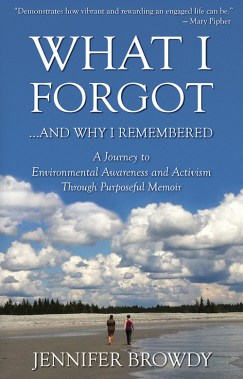
what-i-forgot-cover-draft-new-smThis question became increasingly central for me as I worked on my memoir, What I Forgot…And Why I Remembered, over the past several years. It was waking up to climate change that sparked my journey of looking back at my half-century on the planet, trying to understand how I had allowed myself to forget the connection to the natural world that had been so central to me as a child.

What I discovered was that as a young adult, I made some choices that led me to go with the predominant flow of American culture. Like Snowden, I was seduced by the possibility of attaining the American dream—my version of it being the husband, children, home, career. I put myself in the traces and began to focus on pulling that cart, and I found it took everything I had.

Not until the dream disintegrated along with my marriage did I pick my head up and look around me, instinctively seeking solace in the natural world but finding that things had changed a great deal since I was a dreamy child following the chickadees through the hemlock forest, or lying full-length on a high maple branch to feel the wind swaying through the tree.

While I had been focused on raising my family, trying to hold my marriage together and striving for success in my career, things had been going very badly for the chickadees, the hemlocks and the maples. Government policies and corporate greed, unleashed by the shortsightedness of millions of compliant citizens like me, had led us to the brink of a global catastrophe of biblical proportions.

There we sit now, on that brink. Did you notice the news, buried beneath all the election cycle noise, that the climate has now passed 400 ppm of carbon in the atmosphere, far beyond the 350 ppm that gave the scrappiest of the climate change warrior-organizations its name?

This means we are on track to melt, folks. The polar ice caps and the permafrost on land will thaw, releasing ancient methane; the oceans will warm, throwing off the food chains and the weather; insects and bacteria will do very well, but many if not most of the larger species will rather quickly go the way of the wooly mammoth and the saber-toothed tiger.

Including, dare I say it, homo sapiens. Future historians, if there are any, should rename our species homo ignoramus—the stupid ones who knew how they could save themselves and the ecosystem that sustained them, but let it all go to hell.

We have come to a time, as the Deep Green Resistance eco-warriors recognized several years ago, when it will be necessary to think for ourselves and stand up for what we believe in, just like Ed Snowden did.

ogxmhigg1ipam3wk7hpi

This is dangerous business, as Snowden knew. He is lucky to be living freely in Moscow rather than locked up as a traitor like fellow information resistance fighter Chelsea Manning. The fossil fuel lords and their military henchmen take mutiny very seriously, as the brave water protectors at Standing Rock know well.

But there comes a time when you have to listen to your gut, even if it goes against your upbringing and socialization. You have to do what you think is right.

Of course, in a black and white view of morality, what’s right for you may be totally wrong for me. How do we reconcile the disparate moral compasses of a jihadist suicide bomber or an American bomber pilot or a tar sands bulldozer operator or a pipeline resistance activist?

Each of us has to make up our own minds, fully cognizant of the implications of our actions, the bigger backdrops against which each of our little lives play out. That is why I continue to believe that there is no more important role these days than that of an awake, aware, independently minded educator.

We need teachers at every level of education who are dedicated to developing the capacity of young people to understand and analyze complex information, to weigh and debate different points of view, to use empathy as a pathway to decision-making, and to be open to shifting their views as their understanding increases.

14232542_1204250572949382_2583876020375066880_n.jpg

Edward Snowden and Chelsea Manning were both thoroughly indoctrinated by the military, but were still able to think for themselves and sacrifice their snug insider positions in service to the greater good. If they can do it, any of us can.

No need for spectacular defections or heroics. All that’s needed is a steady ongoing commitment to sifting through the barrage of information coming at us all the time, and pointing our internal compass at DO NO HARM or even better DO GOOD.

If you want to call me a pie-in-the-sky do-gooder, so be it. I can live with that.

do-no-harm.jpg

World War III Has Begun: Which Side Are You On?

Although you wouldn’t know it from scanning the front pages of the mainstream media, a major battle in what Bill McKibben has called World War Three, the war to save the planet from human destruction, has been going down in Indian Country for the past six months.

Thousands of Native Americans, members of a whole host of tribes, have gathered at Standing Rock, North Dakota, to protest the North Dakota Access Pipeline (#NoDAPL), which was sited by the Army Corps of Engineers to run dangerously close to the Missouri River and the Standing Rock Reservation.

But as the protesters say, they are not just defending Indian country, they are defending everyone who relies on the Missouri for water—and not just humans but all life.

If there is anyone to look back at this turbulent period in human history on Earth—now coming to be known as the Anthropocene—they will surely wonder at the suicidal tendency of human civilization in the 20th and early 21st centuries.

Why, they will ask, would such an intelligent species willingly—even enthusiastically—engage in the poisoning of its waterways and underground water resources; the destruction of its forests; the chemical contamination of its soils and oceans; the overheating of its precious atmosphere by relentless burning of fossil fuels? Why would humans put so much of their intelligence and technological prowess into developing ever more lethal weapons of mass destruction, used to bludgeon each other? Why would they preside blithely over the extinction of millions of other species, the vicious ripping of the great ecological web of life on Earth?

Why indeed?

I know it’s hard for any of us to escape the clutter of our everyday lives, with the constant pressures and worries that beset us on the personal level. But this is precisely what is being asked of us now.

The courageous defenders out at Standing Rock dropped their ordinary lives to be part of the historic encampment protesting the stranglehold of the oil companies on our waterways and our lands. They are fighting in the courts, through the media, and most importantly with their physical presence, standing up to the bulldozers, the attack dogs and the pepper spray.

dakota

Image source: Democracy Now!

This is what McKibben’s World War Three looks like—it’s already begun. It will be fought locally, as communities and individuals wake up to the implications of the destruction and decide that hell no, they won’t take it any more.

pipeline_line_map

Oil and gas pipelines in the U.S. Image source: https://projects.propublica.org/pipelines/

In my own corner of the world, we are under assault from General Electric, wanting to create toxic waste dumps right in the middle of our small rural towns. We have a gas pipeline being constructed, despite vehement protests, through a pristine old-growth state forest. We have oil tanker trains running constantly right through our communities. Despite a thriving organic and biodynamic farm renaissance, we still have far too many pesticides, herbicides and fungicides being used locally, and too many trees being cut down.

I have been thinking and writing for some time now about how important it is to align the personal, political and planetary in our own lives and in the way we relate to the world around us. On all three of these levels, 21st century American life is way out of balance.

It is time to focus, each one of us, on using our brief lifetimes to create balance and harmony on Earth. Sometimes the way to harmony leads through protest and discord, as is happening now in Standing Rock. Sometimes it can be as simple as choosing to support local, low-impact agriculture rather than industrial agriculture. Leaning on our political representatives to move faster on policy that will shift our society to renewable energy is key.

rolling-hills

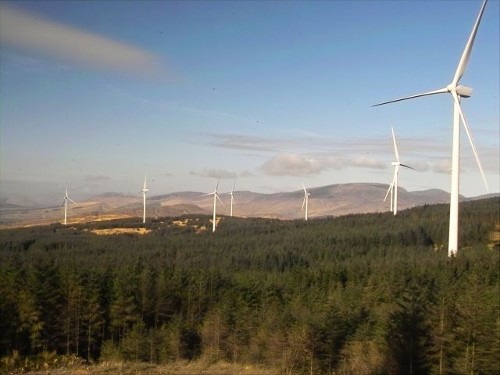
Wind farm in Ireland. Source: http://www.iwea.com/_wind_information

There are so many ways to get involved in this War for the Planet, many of them quite peaceful. The important thing is to get off the sidelines. Get involved. Feel the potential of this moment—it’s literally a make or break period for the future of humanity on Earth, and many other living beings too.

The brave defenders at Standing Rock are reminding us that we are all “natives” of this Earth, and we all have a stake in protecting her. Which side are you on?

14184457_10154517767299394_1637715510123189394_n

From Orlando to Dallas and beyond: dreaming of a homeland to be proud of

The weather here in Nova Scotia has been stormy, but that’s nothing compared with the storms sweeping across my homeland, the USA. I write the word “homeland” with an inner cringe…can I really call this violent place home? Home is supposed to be a place of refuge; a sanctuary. I feel that about my island home here in Canada, but when I contemplate going back across the border, I can’t avoid an instinctive sense of fear and foreboding.

According to the astrologers, Mars is in Scorpio now—pretty potent times, when the god of war meets the sign known for intensity around death and sexuality. That might have “explained” the tragedy in Orlando. But the steady beat of innocent Black folks being gunned down by law enforcement officers for misdemeanors—or no crime at all—cannot be explained by anything except a racist society full of trigger-happy cops.

And this latest episode in Dallas defies any explanation. I am not satisfied with the official story, that a single sniper was able to kill five cops and injure several more people before being cornered in a parking garage. I have not seen any convincing evidence proving that the young man they killed in the garage with a “robot bomb” was in fact the sniper they were looking for. Eventually I assume they will show the forensic evidence linking the bullets found in the bodies to Micah Johnson’s gun, but even that kind of evidence could be trumped up.

I fear that this young veteran, handily dead, could be taking the fall for a sinister conspiracy aimed at further destabilizing the country and giving the police permission to “get tougher.” Which seems to mean, use more of their military surplus equipment against their own homeland citizens.

I read an article by an ex-cop who said 15% of cops are good people who would never commit a racist act; 15% are racists just waiting for an opportunity to strike; and 70% are just ordinary folks, susceptible to the prevailing culture in their community and police force.

Those percentages are probably about right when applied to the U.S. population at large, too. Clearly what needs to be worked on is the prevailing culture—the structural racism, the structural elitism, the deck stacked against the poor, no matter the color of their skin, and the way it’s becoming almost impossible to climb out of poverty if you’ve been born into it.

This bigger picture is what can be so hard to get from the media, which converts everything into sound-bites, “status updates,” or even, lord help us, tweets. Everything moves so fast, we are kept busy just trying to stay abreast of what’s going on, with little time or energy for contemplation.

Meanwhile, out there beyond the personal and political, the planet herself is getting ever more out of balance. The floods, the wildfires, the toxic algae blooms, fungi killing off amphibians and bats, the sudden death of entire populations of birds, reindeer and seals…it’s all part of the bigger picture of a planet gone deeply awry.

The more I think about it, the more convinced I am that the violence and political mayhem we are seeing in the world is connected to the inner turmoil in human beings. We are the consciousness of the planet. We alone among all species are able to understand history and predict the future. We know the consequences of our actions and we live and die according to moral codes.

All of us who are sick at heart in these days of horrendous violence at home must understand that what we are seeing in the U.S. is just a pale echo of the massive violence Americans have inflicted on people in other countries (from Vietnam to Iraq, from El Salvador to Afghanistan and on and on), as well as—on an even bigger scale—on other living beings on the planet, from iconic creatures like elephants and lions on down to coral, fish and butterflies, not to mention all the beautiful members of the plant kingdom.

Since we have allowed the arming of our civilian population with military-style weapons, our country is turning into the same kind of war zone  experienced by people in other countries, and animals everywhere.

And more of us are becoming infected with that conflictive kind of consciousness, dominated by fear and its twin, aggression. The inner landscape mirrors the outer landscape, with devastating consequences for those caught in the crossfire.

Neither fear nor aggression will get us where we need to go, as individuals, as a society, or on the global scale. Nor does moral exhortation seem to have much effect. The only real solution has to be the deep, structural one: redirecting our resources away from weapons and war, towards education, well-being and an economy that gives every human being the opportunity to live a peaceful, satisfying life.

You may say this is utopian. “You may say I’m a dreamer, but I’m not the only one.” There are many economists who understand that we have a choice whether or not to base our global livelihoods on the death-and-aggression-focused military-industrial complex, or on “right livelihood,” the kind of activities and industries that make people happy, well and fulfilled, and at the same time protect and care for our planet and the myriad other creatures who live here too.

While honoring all those—and there are so many—who have fallen prey to our violent culture, we must keep in mind the bigger picture, and the magnitude of what is at stake. The violence perpetrated against Black people at home is the same violence being perpetrated against so many others, in all the places in the world where we sell and deploy our vaunted American military weapons and expertise.

Let’s dare to imagine a future in which Americans are famous and respected not for the size of our military budget, but for our leadership in stabilizing our planet and making it a safe, prosperous home for everyone. We can do it. And we must.

rainbow


From Selfies to Withies with Eli Pariser: Who’s In the Frame?

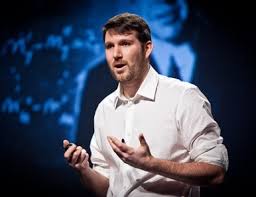
UnknownTis the season of Commencement speeches, and I read one this week with particular attention, because it was by an illustrious alum from Bard College at Simon’s Rock—Eli Pariser, the founder of Moveon.org and Upworthy, two awesome organizations dedicated to using social media technology to shift culture for the better.
There’s a lot to love in Eli’s speech. He tells the graduates that having a sense of self-worth is the foundation of empathy, which is the social glue that holds communities together. He enjoins the young people before him to remember that they matter, citing studies showing “the powerful effect that believing we matter has on the way we behave, especially toward those who are different from us.”

He continues: “When we’re affirmed in who we are, when we believe that we matter, we relax. We’re more open to new ideas, other ways of seeing things. We’re more accepting of each other. We feel safe. Our subconscious bias goes down. Our empathy goes up. Instead of seeing stereotypes, we can see and accept people as individual human beings.”

This leads him to the important question of how we should value ourselves, or what in ourselves we should value. After all, a bigot might look in the mirror and value hir hatred, right?

Eli is clear on this question: “Here’s what I believe: You matter because you contain within you a great capacity to do good. To act with love.”

He concludes his speech by asking the students in front of him to take out their cameras and instead of taking selfies, take “withies”:

“I want you to capture yourself in the context of everyone around, everyone who has travelled this journey with you. Instead of a selfie, let’s call it a “withie.” With your friends. With your classmates. With your professors. With your family. With as many people as you can fit into the frame. The whole context….As you move out into your next chapter, this wild and weird future, remember this. You’re not alone in your frame. You do matter. You have this great power within you to do good and to remind people that they matter too.”

Totally awesome message! There’s just one thing missing here, and that is an acknowledgment that there is much more in the frame of our “withies” than people.

2016 is a year when we desperately need to bring the great green and blue pulse of planetary life into our frames, and remember that our love and empathy must be extended to all living beings, from the plants that produce the oxygen we breathe to the plankton, coral and mangroves that support the ocean food chains, to the bacteria that give us rich earth and the insects that pollinate our crops.

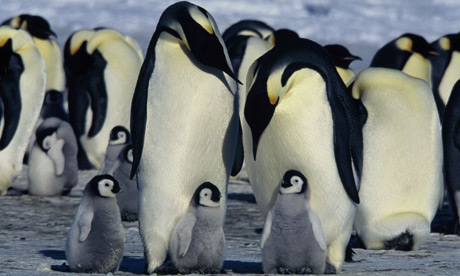
Interestingly, Eli mentions non-human life just once in his speech, a reference to penguins that apparently occurred to him only because the penguin is the mascot of the institution he was addressing. He uses the communitarian nature of penguins to illustrate his idea of “withies”:

penguins460

“As any student of “March of the Penguins” knows, penguins are awesome. They can swim faster than a human can run. They can drink ocean water and sneeze out the salt. And when it gets really, really Antarctic cold, they huddle close to one another. They put the kids on the inside. They rotate turns on the outside, absorbing the chill. They come together. And that’s how they make it through the winter.”

“March of the Penguins” came out in 2005, bringing us up close and personal for the first time to the dramatic lives of Antarctic penguins, nesting and raising their young in the harshest environment on Earth. A decade later, a film like that would never be made without acknowledging that penguins are among the many iconic species now being threatened with extinction by the manmade global heating that is causing their ice shelf home to melt into the sea.

The fact that someone as smart and savvy as Eli Pariser could write a Commencement speech in 2016 making no mention of the environmental crisis at all is deeply sobering to me.

It reminds me of the humans in the 2008 movie WALL-E, who have computer screens perpetually fixed right in front of their faces. We have become so entranced by our own reflections in our screens that even our “withies” are all about us.

brodude.ru_25.08.2014_aYNRv2PDHQfkT

Let’s go back to the conclusion of Eli’s speech for a moment. He says:

“As you move out into your next chapter, this wild and weird future, remember this.You’re not alone in your frame. You do matter. You have this great power within you to do good and to remind people that they matter too. If you do that, then truly there’s nothing to be afraid of. Class of 2016, you’re going to do just fine.”

Yes, I totally agree, with this essential caveat: the Class of 2016, and all of us who are in the service of love on this planet, must become aware of the gravest challenge of our “wild and weird future”—climate change and environmental destruction—and begin to direct our energies towards creating a livable future, not just for us but for life as we know it on this planet.

That means coming out from behind our screens and reconnecting with the elemental life on this planet—earth and water, fire and air. We need to feel the wind on our faces, to smell the fresh scent of damp earth, to remember what it’s like to swim in a clean river and sit around a fire on a starry night, telling stories.

Penguins are not just mascots. They are living beings with every right to continue their march into the future. Let’s put them, and the polar bears, elephants, whales and all other life on Earth, into our “withies” too.

Manifesto for a Sustainable Future

Sometimes you just need a good manifesto. Here’s mine:

Preamble: In the midst of the hottest year on record, 2015, I reaffirm my commitment to dedicate my talents and energies towards shifting our destructive global human society in a direction that values the ecological health of the entire web of life on Earth over the short-term gains of a minority of human beings.

Manifesto for a Sustainable Future

Whereas human beings have acted in a dominating fashion towards each other and towards other living species on this planet, using the excuse of difference to justify aggressive and destructive behavior;

Whereas competition has been used as a rationale for economic systems based on hierarchical systems of power;

Whereas social exclusion and systematic discrimination has been seen as the normative right of dominant groups;

Whereas privileged groups have felt entitled to take more than their fair share from the environmental commons, and to deprive less powerful groups, whether human or of other species, of the resources necessary for well-being;

Whereas it is quickly becoming apparent, in the age of climate change, that the dominant paradigm of capitalist patriarchal social relations is resulting in the dangerous destabilization of the entire natural ecosystem;

The time has come to take action to change this paradigm in the following ways:

1. Move from a top-down hierarchical system to a horizontal, egalitarian model of social relations based on inclusivity across all of the traditional boundaries used to keep different groups apart, and also opening up the possibility for cross-species collaboration based on respect and stewardship;

2. Shift the worldwide economic system to a model of global cooperation and collaboration, with the focus of human industry and government on providing a baseline of well-being for all life forms on this planet, regardless of geographic origin or antiquated ideas of relative importance (ie, who is to say that a human being is more important than a songbird, or a sardine?);

3. Tailor the education system to teaching the history of the destructive cultural practices of homo sapiens up to the 21stcentury, and opening up constructive conversations across disciplines, where alternatives to these traditions can be envisioned and developed;

4. Model egalitarian, collaborative, respectful social relations in the private sphere of the family as well as the public spheres of education, the profession, government and law;

5. Shift from a violent conflict and punishment model of resolving disagreements to a peaceful persuasive model, with the goal always being the well-being of the community as a whole first, and secondly each member of it.

6. Destroy all weapons of mass destruction, as well as all bio and chemical weapons, and their blueprints.

7. Disallow any one person’s or minority group’s interests (with rich people and businesses or industries rightly being considered minorities)  to take precedence over the interests of the majority, including the non-human majority on this planet.

8. Develop an appropriate representative global governing council to administer these principles.

In the name of Mother Earth and ALL of her children, I call on the peoples of the world to act without delay to become the stewards of the planet and the collaborative, respectful individuals we were always meant to be.

***

Dare to dream of a better world. That’s the only way change has ever been accomplished. 

10153293_552008379784_8650399992315417237_n

And the Walls Came Tumbling Down: Pope Francis Shows Us the Way

The Encyclical on climate change and the environment released by Pope Francis this week has all the magic of the fall of the Berlin Wall in 1991. Back then, the antagonism between the U.S. and the U.S.S.R. seemed implacable and unresolvable, a fight to the death. And then suddenly the wall came down and the world walked through, marveling, into a new era.

Now we have another abrupt shift, this time of a religious order. The leaders of the Catholic Church can hardly be accused of being “radical tree-huggers.” And yet here is Pope Francis, solemnly exhorting his flock of a billion Catholics worldwide to be respectful to Mother Earth and all the living beings she supports. In the blink of an eye, the language of Native American spirituality has been taken up by the same Catholic Church that once tortured and executed indigenous peoples precisely because of their different religious beliefs.

I urge you to read the entire Encyclical for yourself. It is a truly remarkable document, worth serious study. Of many passages I’d like to underline, here are two:

  1. Care for nature is part of a lifestyle which includes the capacity for living together and communion. Jesus reminded us that we have God as our common Father and that this makes us brothers and sisters. Fraternal love can only be gratuitous; it can never be a means of repaying others for what they have done or will do for us. That is why it is possible to love our enemies. This same gratuitousness inspires us to love and accept the wind, the sun and the clouds, even though we cannot control them. In this sense, we can speak of a “universal fraternity”.
  1. We must regain the conviction that we need one another, that we have a shared responsibility for others and the world, and that being good and decent are worth it. We have had enough of immorality and the mockery of ethics, goodness, faith and honesty. It is time to acknowledge that light-hearted superficiality has done us no good. When the foundations of social life are corroded, what ensues are battles over conflicting interests, new forms of violence and brutality, and obstacles to the growth of a genuine culture of care for the environment.

Here we find spiritual ecology enshrined as Catholic doctrine. And one thing about the Catholic Church—it is big on obedience. For believers, to ignore the Pope is to risk hellfire and damnation. In this case, though, the hellfire and damnation will be earthly, if we do not listen to the wise advice of Pope Francis and curb the insanity of industrial growth that goes beyond the limits of the planet to support.

Scientists appeal to our sense of reason, presenting compelling evidence that if we continue on our present path of wasteful consumption of the Earth’s resources, we will destroy our own future as a flourishing species. Religious leaders appeal to human beings’ moral conscience in invoking the responsibility of current parents and grandparents to leave a livable world to our descendants. It is up to the politicians, though, to translate vision into practice.

For too long, Christian conservatives in the U.S. have played the role of the ideological wing of Big Business, using money, manipulation and scare tactics to buy politicians and votes. In the face of the new Papal Encyclical, can American Christians really continue in good conscience to support the worst of the planet’s polluters and plunderers? Can they continue to elect mercenary politicians who hold our country hostage to the highest bidder?

If all good people who love our Earth and its creatures were to translate our love into action, as Pope Francis has just done so forcefully, I have no doubt the seemingly invincible wall of the industrial growth society we’ve been living with these past 200 years would melt away, revealing the path into a green, prosperous future.

“Where there’s a will, there’s a way,” the saying goes. Pope Francis has just shown us the will, and the way. It is now the task of us ordinary citizens to break the stranglehold of Big Business on politics and insist that our politicians follow his lead.

I close with an excerpt from the Pope’s “Christian Prayer in Union with Creation,” a vision of ecological interdependence if ever there was one:

“Triune Lord, wondrous community of infinite love,

teach us to contemplate you

in the beauty of the universe,

for all things speak of you.

“Awaken our praise and thankfulness

for every being that you have made.

Give us the grace to feel profoundly joined to everything that is.

God of love, show us our place in this world

as channels of your love

for all the creatures of this earth,

for not one of them is forgotten in your sight.

Enlighten those who possess power and money

that they may avoid the sin of indifference,

that they may love the common good, advance the weak,

and care for this world in which we live.”

Amen.

And the meek shall inherit the Earth....

And the meek shall inherit the Earth…. Photo by J. Browdy, 2015