The Solutions are Hidden in Plain Sight–if you look through 21st century eyes

IMG_4806A lot of us in the Northeast are doing our share of grumbling this year about the Arctic air that just won’t go away.  Usually March is the time when the winds start to blow, the sap starts to rise, the snow melts into the thawing earth and our thoughts turn to snowdrops and crocus.

This year, we’re still in the deep freeze with a hardpack of snow on the ground, and no end in sight.

It’s all part of the erratic weather of our climate change era.  The question for all of us now is, how, beyond bitching and moaning, are we going to respond?

Most of us just shrug and turn the dial on the heater up a little higher, not thinking about what that very small, ordinary act really entails.

If your thermostat is wired into an oil burner or a natural gas furnace, like most homes and apartment buildings in the Northeast, then when you turn up the dial in response to the bitter cold you are, perhaps unwittingly, enabling, supporting and becoming an integral part of the very industry that is relentlessly destroying our climate.

The fossil fuel industry is not some demonic force outside of our control.  It’s just a human business that is responding to human needs for energy—lots and lots of energy.

We Americans are used to getting what we want, and what we’ve wanted, in the 50 years I’ve been on the planet, is ease.  What could be easier than turning a dial to make your house warmer in the winter or cooler in the summer, or gassing up your comfy car before you get on the freeway?

1_RussetLikewise in terms of agricultural production—we like to get our vegetables pre-washed and sometimes even pre-cut, all even-sized, no blemishes, laid out attractively in faux crates under spotlights in our upscale grocery stores.

When we buy that bag of potatoes or carrots, we’re not thinking about the tons of pesticide, herbicide, fungicide and fossil fuels that went into making it easy for us to throw these items in our shopping cart.

We’re not thinking about the bees, butterflies and other valuable insects that have been driven to population collapse by industrial agricultural practices; or the huge dead zones in the ocean at the mouth of the Mississippi River, where fertilizer and chemical run-off from the Midwest runs down to the sea; or the millions of birds that are affected each year by the toxic chemicals we spread over the landscape.

We’re just throwing that bag of veggies into the cart, or turning up that dial.

Well, the time of such oblivious innocence is over.

The curtain has been pulled back, and the Wizard of Industrial Capitalism has been revealed—and lo and behold, he wears the ordinary face of each one of us.

Every step we take on this beautiful, battered planet of ours matters.

Eric and me at the February 2013 Forward on Climate rally in DC

Eric and me at the February 2013 Forward on Climate rally in DC

I am heartened to know that this very weekend, one year after the big climate change rally in Washington DC that I attended in the hopes of pressuring the Obama Administration to block the Keystone XL pipeline, thousands of activists, most of them college students, will be raising a ruckus at the White House gates to insist that the politicians stop gambling away their future.

Here in my backyard, in the Massachusetts-New York region, people have woken up to the fact that mile-long trains of crude oil and gas are being run through heavily populated neighborhoods.

We’re moving to block gas fracking in western Massachusetts as the sight of contaminated tap water in fracking regions brings the dangers right home.

We’re also starting to get serious about making solar energy accessible to homeowners and businesses.

UnknownThis week’s New Yorker magazine has a fascinating article about a little-known scientific program to create a controlled thermonuclear fusion power plant.  Unlike the current fission plants, which burn radioactive fuel and generate dangerous waste, the fusion plant, if it were successful, would run indefinitely on seawater and lithium, with no waste.  It would be ten times hotter than the core of the Sun.

Talk about an audacious plan!  You have to hand it to human beings, we are nothing if not hubristic.  It is our greatest strength and our most glaring weakness.

Why spend billions on creating an artificial sun here on earth?  Why not just learn from our cousins the plants, and start to use the sunlight we have more efficiently?

It’s time to take off our grimy 20th century glasses and start looking at the world and ourselves through 21st century eyes.  When we do, we’re going to find that the solutions to all the problems that beset us have been hidden in plain sight all along.
Love is all we need

Most people I know don’t pay a whole lot of attention to Valentine’s Day.

In its pop culture guise, it’s pretty trite, after all—candy, flowers, champagne perhaps, aimed at seducing the beloved into bed at the end of the evening….

Eve Ensler has tried hard to put a harder, more political edge on V-Day.  She’s got thousands of women dancing for freedom—rejecting the pervasive violence against women that forms the backdrop of so many of our lives.

Unknown-3

But for most of us, well, we’re just here in the trenches, and we may or may not have a loved one to honor as a Valentine this year.

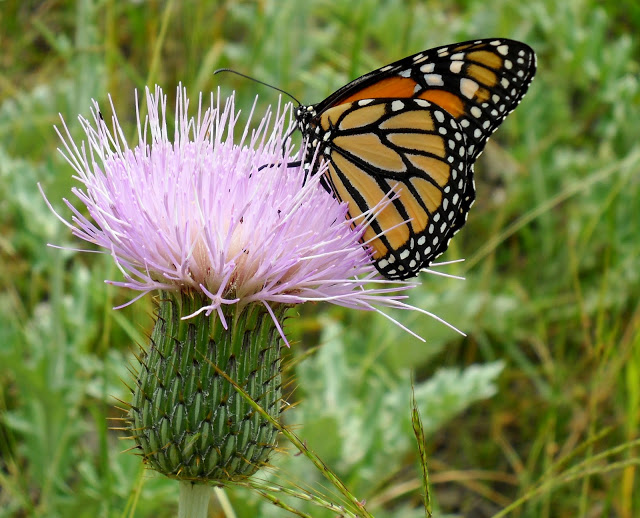
Me, I’ve got no particular human Valentine at present. Such love as I have to give, I want to dedicate to the forests and the birds, the butterflies and the flowers that are, to me, the most beautiful manifestations of LOVE on this planet.

DSCN2252

Any expression of love is far and away more potent than expressions of hatred and violence.

If you love someone, you should, by all means, shower them with kisses and caresses.  You should be extravagant in your appreciation.

Likewise, if the object of your affection is a tree or a landscape or a bright, joyful living thing—say, a tadpole or a fish or a magnificent coral—go ahead and shower that being with the love it deserves.

The only meaningful counter to the hatred, disrespect and violence that has become the norm in Western culture is the intentional distribution of LOVE.

Love is all you need, crooned the Beatles.  Maybe they were on to something.

Changing the storyline: from limitless growth to sustainable planetary happiness

Today in my Writing for Social and Environmental Justice class we began to talk about the power of storytelling.

The challenge for the students in my class is to figure out the best narrative strategy, the best rhetorical approach, the best genre and format to inspire others to work with them for positive social change.

To get people’s attention, especially in the media-saturated social landscapes many of us inhabit, the story has to be well-narrated, fast-paced and compelling.  It has to deliver information succinctly and have a memorable “take-away” line.  It has to give us interesting, admirable protagonists and a complex plot, complete with tragedy, catharsis and antagonists we can love to hate.

It’s a pretty tall order!

The first step, of course, is being clear on your own values—what you think is important, what issue is the one that most grabs your own heart and mind.  Great change writing speaks out of a place of passionate commitment.

Great change writing says: “I believe this so deeply I am going to open my heart and let you see how this great injustice or destructive practice is tearing me apart.  I am going to let you see me in all the vulnerability of my rage, grief and passion…and I am going to convince you to care about this issue too—enough to be willing to stand up and take action.”

That’s the second part of great change writing—you have to give people a clear call to action, and at least show them the starting point of a path towards change.

It’s not enough to wail and point blaming fingers at all the injustices of the world.  You have to point the way towards remedies, solutions, action.

I ended both my classes today declaring my feeling of optimism in the future. I feel more optimistic today than I have in a long time that we will be able to solve all the many problems human civilization has created in its childhood—the past 500 years or so.

The tremendous challenges that beset us, particularly the environmental challenges which have the potential to completely wipe us out, can be solved.

We already know what we have to do.  Reduce emissions, yes, but also restore the ability of the planet to absorb the emissions we do produce.

Judith D. Schwartz

Judith D. Schwartz

We are reading Judith Schwartz’s book Cows Save the Planet this week, which is all about the potential of soil to become an incredibly effective carbon sink, if we just stop our bad agricultural practices and let the billions of microbes that inhabit each teaspoon of healthy soil do their work.

If we were to stop killing our soil, plants and forests with herbicides, fungicides, fertilizer-dependent agriculture and clear-cutting, it is possible that we could radically shift the whole disaster-scenario of climate change—fast enough to make a difference.

What we need is to start telling a new story, to which the broadest possible base of people can hear and respond.

It will be a story about how a beleaguered, tired, hungry, thirsty, oppressed people—that is, the majority of people on this Earth—realized that with just a few adjustments, they could live a much richer, happier life in harmony with the natural world.

It will be a story about how the economics of endlessly growing national product gave way to the economics of sustainable planetary happiness. How competition gave way to collaboration, with the recognition that we have the capacity to give everyone on this planet a good life if we shift our focus from rising profits for the few to steady well-being for the many.

If we were to start telling this story loud and clear, in beautiful, compelling, persuasive and well-researched ways, broadcast over the billion megaphones of the World Wide Web, how could people fail to listen?

Especially if we backed up the vision with concrete strategies for making it happen down on the ground.

345570804_640I am heartened by initiatives such as the C40 Cities Climate Leadership Group, a working group of mayors from the major cities of the world who have decided not to wait around for the United Nations to get its act together, but to start working together independently towards a sustainable future.

C40 is changing the dominant narrative of gridlock and impossibility with its muscular can-do insurgency.

We can’t wait around for others to do it for us.  Each one of us has the power to be the starting point for ripples of change that can reach further than ever before in our brave new interconnected world.

What story will you tell?  What life will you lead?  What are you waiting for?

Coming your way: the first-ever Sustainable Civilization Olympics

I know I’m exposing myself to hailstorms of rotten tomatoes and eggs, but I’m going to say it anyway: I don’t care about the Super Bowl, or the Winter Olympics either!

Every time one of these big annual sports events come around, all I can think about is if only people would put the same energy and enthusiasm into sustainable living on our planet, what a beautiful world it would be!

It’s fine that people want to spend all their time and energy toning up their bodies and becoming world-class athletes.  Hey, whatever floats your boat!

But if you’re going to become a badass athlete, why don’t you put your strength and prowess to work for the planet, super-hero style, rather than settling for winning medals and giving your ego some strokes?

The bare truth is that if we human beings put our collective minds to it, we can solve any problem.

Melting-Glaciers_in_Himalayas_top-10-list.org_-300x198Global warming, water shortages, acidification of the oceans, clean energy, you name it, we can handle it—if we just focus our time, resources and energies behind being part of the solution instead of part of the problem.

Here’s an idea: why don’t we have a Sustainable Civilization Olympics, complete with livestreams in the labs and testing grounds so that we can all follow along as various teams make progress on solving our global problems?

For those who can’t get excited about anything unless competition is involved, well, go for it!  We can have teams, play-offs, Super Bowls, you name it!

Just let’s get the job done, for heaven and earth’s sake!

And then, once we’re back on an even planetary keel, maybe we can spare the time for the kind of mindless entertainment that floods our airwaves each year on SuperBowl Sunday.

Writing of Disaster, Writing of Hope

As a professor of literature, I tend to pay special attention to what my son is reading in school.  I wish I could say I paid attention to what he reads at home, for pleasure, but the truth is that he does not read for pleasure.  He reads on assignment, and that’s it.

So what is he reading, in his typical 9th grade American public high school?

So far this year he’s read 1984, Lord of the Flies, and Night. Now he’s reading a contemporary novel, How the Light Gets In, by a British author, M.J. Hyland, billed as a 21st century girls’ version of Catcher in the Rye.

In short, it’s been one depressing, upsetting book after another.  Thought-provoking would be the kind term to use, but it saddens me to recognize that generally speaking, “serious” literature is about the things that frighten us.

And it’s not just in literature that this is true.  In pop culture too, the violence that plays out over and over in every form of media entertainment is catering to what seems to be a human need to imagine and play out in fantasy our deepest fears.

Almost all science fiction series and movies that try to imagine the future show us disasters and social dystopias.  These are considered “realistic” (a positive attribute), as distinct from “utopian” scenarios (dismissed as unrealistic, hence not to be taken seriously).

As a parent, a teacher, and a member, like you, of the transitional generation on this planet, I worry about our apparent addiction to what 20th century philosopher Maurice Blanchot called “the writing of disaster.”

Certainly I have not shied away, in my own career, from making myself aware of the ugly side of human experience.  I have studied human rights abuses of every stripe and geographic origin, including sexual abuse, torture, war and genocide.

I have confronted the grotesque truth of the devastation we humans are wreaking on non-human animals and on our planetary environment—the chemical poisoning of air, waters, earth, along with the life forms that inhabit these strata; the factory farms; the mountaintop removal, clear-cutting and strip-mining; the plastics pollution of the oceans; and on and on.

I don’t bury my head in the sand, by any means.

But I question the wisdom of inundating our imaginations, especially those of young people, with violent stories.

Whether they’re historical like Night or futuristic fiction like 1984; whether they’re video game scenarios like GTA or Call of Duty; or TV series, movies, or the daily news—if all we see in virtual reality is human beings being violent, doesn’t this begin to affect the way we understand ordinary reality?

Doesn’t it make us more guarded with each other, less likely to trust, less likely to build community and bring out the best in each other?

Mary Pipher

Mary Pipher

In preparation for my new class this spring, “Writing for Social and Environmental Justice,” I’ve been re-reading Mary Pipher’s 2006 book Writing to Change the World. Mary Pipher, you may remember, is the psychologist who wrote Reviving Ophelia, a book from the late 1980s that provoked a major surge of attention to the way American girls self-sabotage as young teens, and what societal factors made their swan-dive of self-esteem more likely to occur.

In recent years, Pipher has become an environmentalist, leading the charge in her home state of Nebraska against the Keystone XL.  Although the pipeline is not dead yet, it has at least been re-routed away from the ecologically sensitive Sand Hills region.

In Writing to Change the World, she offers a how-to book for those, like me, who see writing as one of the best tools to raise awareness about the issues that matter most.

Pipher writes: “The finest thing we can do in life is to grow a soul and then use it in the service of humankind.  Writers foster the growth of readers’ souls, and the best soil for growth is love.  Writing can be love made visible….This is our challenge: to cultivate lives of reflection, love and joy and still manage to do our share for this beautiful broken planet of ours” (241-2).

However, it seems to me that the kinds of writing we are consuming as a culture, and especially what we’re feeding to our young people, will neither “cultivate lives of reflection, love and joy” nor inspire us to take arms against the sea of troubles that is our planet today.

On the contrary, the dominant narratives I see, at least in American culture, are violent, cynical and despairing, showing us the worst of humanity rather than enticing us forward with dreams of what could be.

I’d like to see the start of a new global literary movement of change narratives in every genre aimed at holding a positive mirror up to human nature, giving us examples of the good we have done and the good we are capable of doing if we draw on our positive qualities—our ability to love, to nurture, to steward, to protect.

Even our oh-so-human violence has a place, if it is used to protect rather than to abuse and wreak wanton havoc.

I would like school curricula to stop replaying the horrific stories of our past—or at least, to balance these negative stories with narratives that give students some positive, hopeful models of human beings as well.

Trying to “grow a soul” in today’s social climate is like trying to grow a plant without sunshine.

Writers, let’s take on the challenge of using our gift with words to change the world for the better.  Let’s be the sunshine, not the shadow.

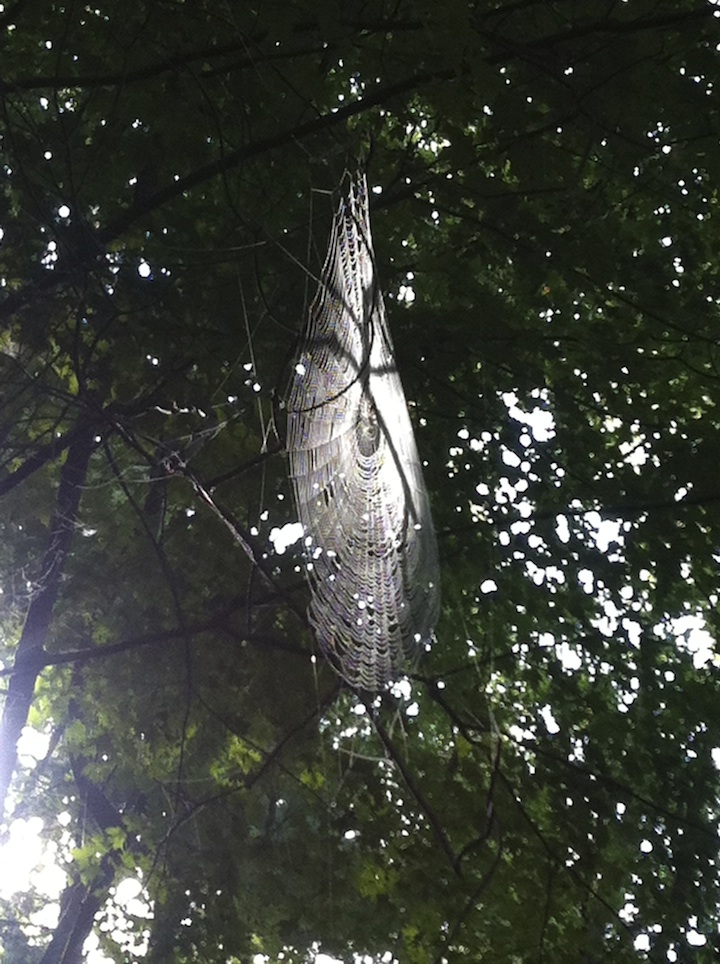
Spiderweb

Dark Universe, Brightening

Socrates had it right long ago when he acknowledged that to the extent that he was wise, it was because he knew how much he did not know.

During my lifetime, the trend has been for homage to be paid to all the cocky, smart human beings who think they know everything.

The slicker and more self-confident the guy (and this is mostly about guys), the more rewards and adulation he gets.

Collectively, especially in the United States, arrogance has been the name of the game.  I think this collective hubris may have reached its apex with the splitting of the atom and the knowledge that he who controls atomic energy controls the world.

Or so we thought.

Climate change is ushering in a whole new, and much more humble era.

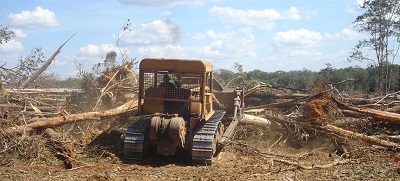
imageIt turns out that just because we can bulldoze forests and mountaintops, change the course of rivers, drill beneath the sea and through solid rock, and completely saturate the earth with satellite, drone and in-home surveillance devices, we are still just as vulnerable as we ever were to the simple, earthbound necessities of food and shelter.

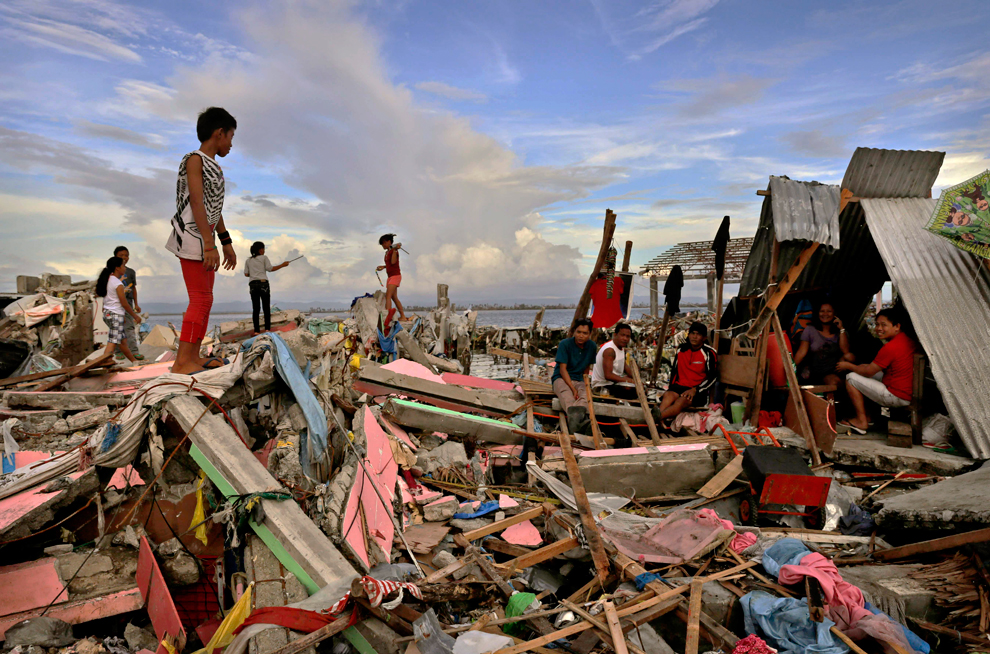
As the big, climate-change-induced storms continue to roll in from the ocean, so frequently that they all begin to blur into an anguished nonstop disaster montage, a slow but steady sea-change in collective human consciousness is beginning to occur.

Aftermath of Typhoon Haiyan, Philippines, 2013

Aftermath of Typhoon Haiyan, Philippines, 2013

We are beginning to recognize how much we still don’t know, and how dangerous our ignorance, combined with arrogance, is becoming.

There is no doubt now that we who are alive today, along with our children and grandchildren, are going to be living through a remarkable transition time as the planet we have destabilized and plundered during the past few hundred years of industrialization seeks to return to equilibrium.

We must acknowledge that human over-population has played a major role in this process of destabilization.  Our very success as a species is what is driving the current unfolding disaster.  By reducing our numbers through disease, drought, flooding and the competition for shrinking natural resources that leads to war, the planet is doing what it must to return to a steady state where the ecosystem as a whole can flourish.

It is sobering to live with this knowledge.

Perhaps it is my sadness at knowing that I am going to be living through (and dying in) a veritable Holocaust of earthly creatures, that has me searching outside the box of science and common knowledge for signs of hope.

IMG_4150 copyI was not raised with religion, but I have always been an instinctive spiritual animist, seeing the divine in the beauty of the natural world, and in my unbounded love for all the elements of our Earth—rock, water, air and all the myriad living beings that inhabit every strata of our planet.

I have also been open, since I was a child, to the possibility that there is more to our experience than meets the eye.  I have always been fascinated by the occult, shamanism, and science fiction involving time travel to other dimensions of space/time.

I don’t know if it is just because I am paying more attention, but lately I have been perceiving a definite uptick in collective awareness that the key to fixing what ails us in the physical world may lie not in better “hard science,” but in a deeper connection to knowledge that can only be accessed through a different kind of perception.

The doors to this under-tapped realm of wisdom are accessible to us through what has poetically been called “our mind’s eye.”

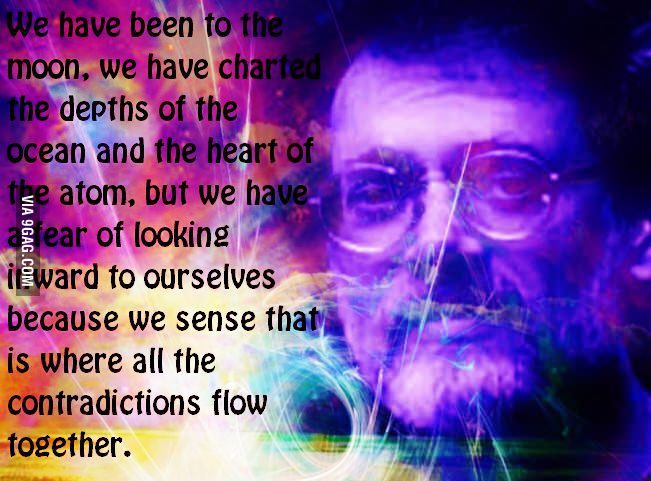
There have always been humans who have been explorers in this realm—Socrates was one, the Biblical sages and prophets were others, and modern esoteric explorers like Rudolf Steiner, Terrence McKenna, Mary Daly, Martin Prechtel, Starhawk and many more.

Terrence McKenna

Terrence McKenna

In the 1960s psychedelic drugs opened the doors for many people who were not at all prepared for the “trips” they encountered.

Now we seem to be coming around again to a period where, as conditions in the physical world deteriorate, more of us are seeking understanding and reassurance in the non-physical.

The more we know of how bad things are here in the physical realm, the more we want to know that “another world is possible.”  And the more we look, the more we find that indeed, there is much more to the universe than meets the eye.

Even scientists are beginning to align with the spiritists they previously disdained. In our age of quantum physics, the whole idea of a “spiritual dimension,” accessible through human consciousness, is becoming much less far-fetched to rational hard science types.

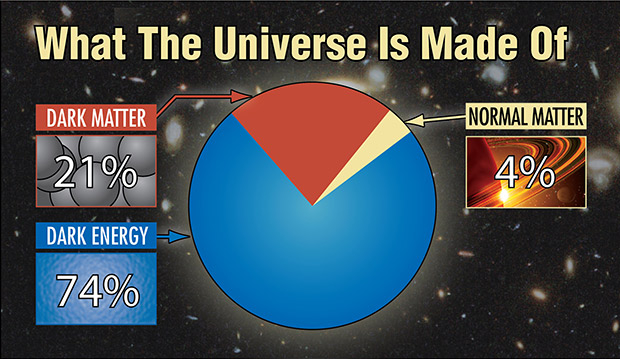
The new Hayden Planetarium show, “Dark Universe,” ends with a graphic that could be right out of “Twilight Zone,” showing that roughly three-quarters of the universe is composed of “dark energy,” a term invented to represent in language something we know enough to know we do not understand at all.

It could be that waking, embodied life is to human consciousness what the physical, hard-matter universe is to the cosmos as a whole.  Just a tiny fragment of a much larger, and potentially much more interesting, whole.

What if the reason every living thing on this planet sleeps (whether in the daytime or the nighttime) is in order to reconnect with the non-physical realm that spiritually sustains us?  We know that if we are deprived of sleep for any length of time, we go crazy and die.

What if “the dreams that come,” whether in sleep or in death, are just as valid a form of experience as the waking hours of our day, and our lives?

What would it mean to be able to think beyond the brief timelines of our individual lives, or even the eons of evolutionary cycles on the planet, and know that we are all part of a much grander cosmic dream?

dark-universe-red-shift-interior

Photo source: American Museum of Natural History, Rose Space Center, Hayden Planetarium, “Dark Universe”

Thinking this way does not give me license to let go of my focus on making a difference here on earth, now in my lifetime.

In some ways this imperative becomes even stronger, as it was for Socrates, Steiner and so many other visionaries who were also powerful initiators and guides during their lifetimes.

During this winter solstice season of introspection and questioning, I have been reading and re-reading the writings of one such contemporary guide, the Sufi mystic and spiritual ecologist Llewellyn Vaughan-Lee.  I leave you with a passage to ponder:

In the book of life we can see the energy patterns of creation, the rivers of light that flow between the worlds.  We can see how the individual relates to the whole and learn the secret ways to bring light into the world; we can understand the deeper purpose of the darkness and suffering in the world, of its seeming chaos.  And the attentive reader can glimpse another reality behind all of the moving images of life, a reality that is alive with another meaning in which our individual planet has a part to play in the magic of the galaxy.  Just as there are inner worlds, each deeper and more enduring, there are also different outer dimensions whose purposes are interrelated and yet different.  The inner and outer mirror each other in complex and beautiful ways, and in this mirroring there are also levels of meaning.  As we awaken from our sleep of separation, we can come alive in a multifaceted, multidimensional universe that expresses the infinite nature of the Beloved.

–Llewellyn Vaughan-Lee, Spiritual Power: How It Works

Let it be so.

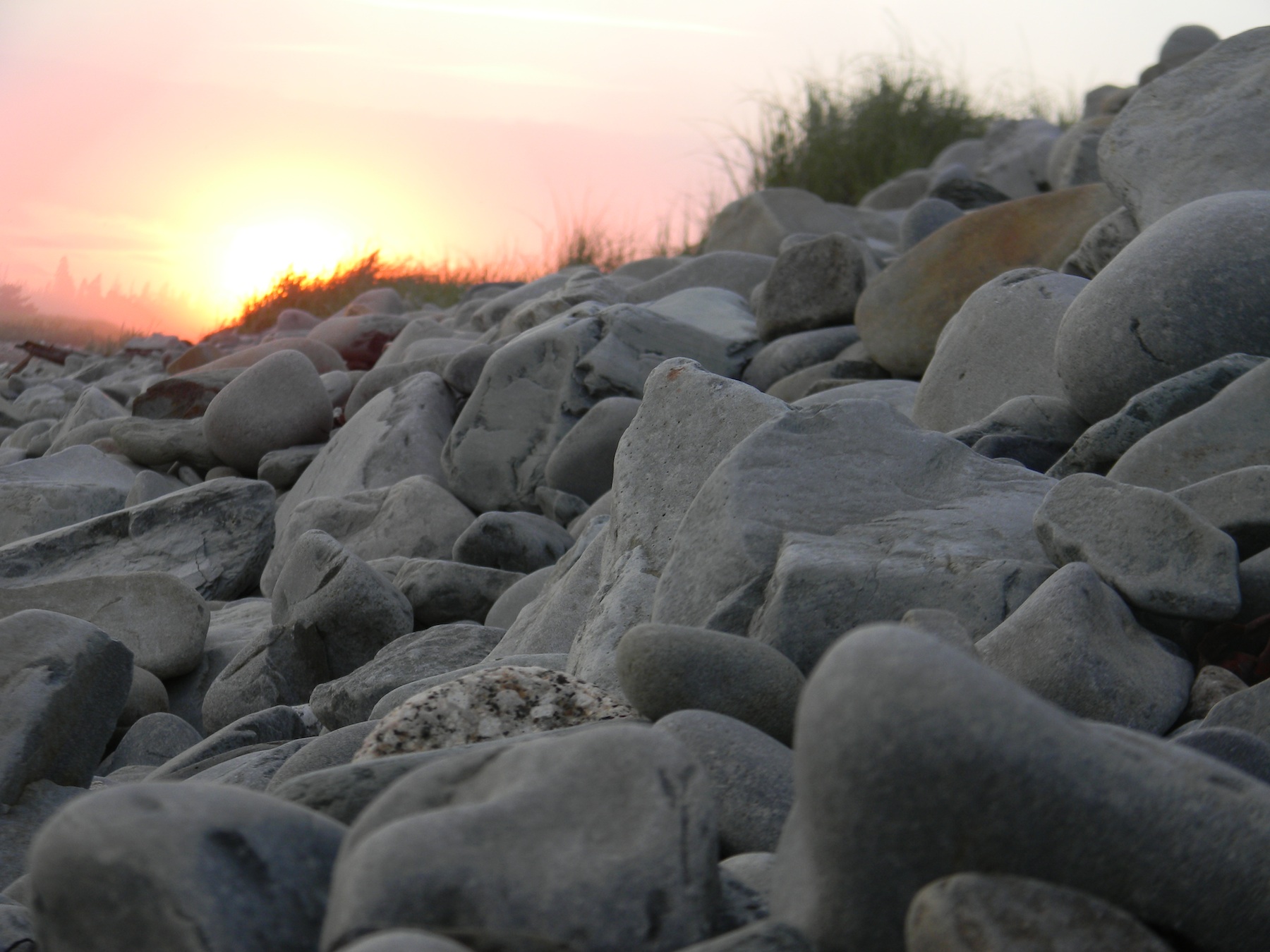
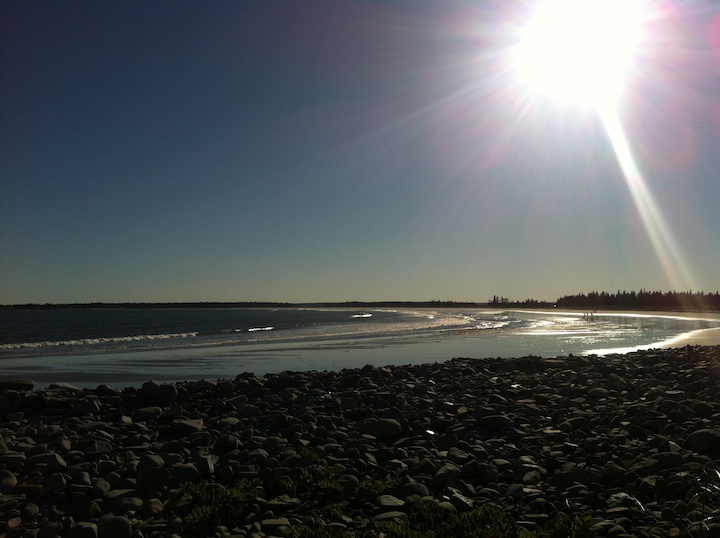
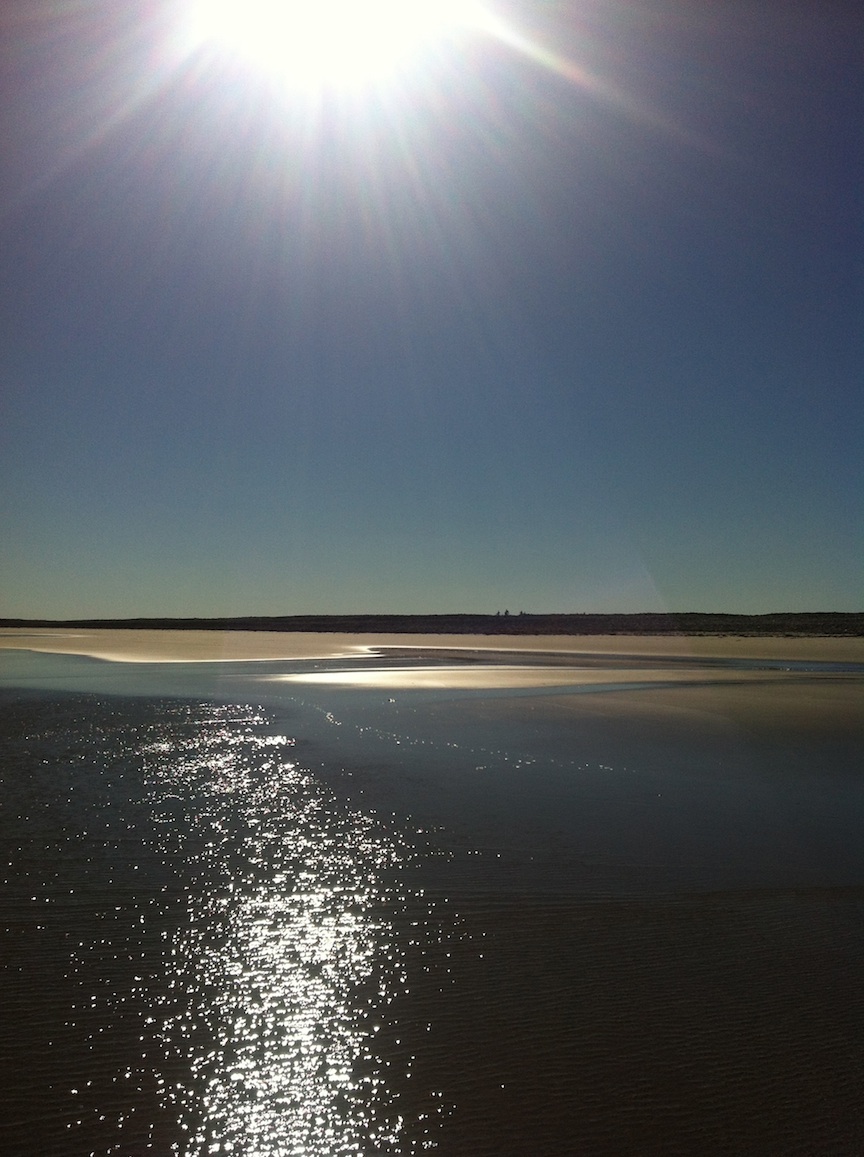
Sunset on Cherry Hill Beach, Nova Scotia.  Photo by Eric  B. Hernandez

Sunset on Cherry Hill Beach, Nova Scotia. Photo by Eric B. Hernandez

Drinking Deep from the Elixir of the Berkshire Festival of Women Writers

BFWW-vertical-logoJanuary is the season when I must work like mad to get the Program for the 2014 Berkshire Festival of Women Writers out to the printers, so that it will be ready to distribute in February.

For months now, program coordinator Jan Hutchinson and I have been finalizing all the details, gathering the descriptions and bios and photos for no fewer than 58 separate events, featuring more than 150 women and girls at some thirty different venues throughout Berkshire County, including of course our principal sponsor Bard College at Simon’s Rock.

We’ve also been soliciting advertising and sponsors with the help of our hard-working Miss Hall’s School Horizons interns, supervised by organizing committee volunteers Judy Nardacci and Lorrin Krouss.

And committee members Maureen Hickey, Joanne Cooney, Vera Kalm and Johanna Janssen have been helping to generate the funds necessary to sustain a growing Festival like this one, with considerable success—we have dozens of contributors to thank this year.

Once I finish my part of the Program, I’ll send the copy over to Festival graphic designers Alice and Anna Myers, who will work their magic and send it off to our fabulous printer, John DiSantis at Quality Printing, who always does such a stellar job for us.

Then we’ll turn out attention to getting the website up to speed, and getting out our own publicity in local and regional publications and calendars, aided by the very capable and calm Lynnette Lucy Najimy of Beansprout Productions.

In short, our Festival is a huge effort, representing the combined forces of so many talented people in the Berkshires, all coming together to brighten up the often drab month of March with readings, workshops, performances and discussions highlighting the creative energy of women and girls.

I may be grumbling about the frenetic workload now, but I know once March 1 rolls around and our Festival starts to gather steam, the delicious vitality of women’s words will carry me along to inspirational highs I could never have conjured on my own.

1528653_548356822534_515979881_nThat’s what the Festival is all about—it’s a grand collaborative gift that we give to our community, and not only in March.  This year we’ve begun to offer year-round programming as well: the monthly Lean In group for women writers, co-hosted by Lesley Ann Beck and yours truly at the Berkshire Museum; the Writing from the Heart readings, which we’ll be offering next on February 13 at The Mount; a special Mother’s Day event planned for May at the Sandisfield Arts Center; and the new weeklong Writing Workshops for Women, going on right now and again in June.

The energy of so many creative women and girls coming together to share their ideas and perspectives in the public sphere ignites an alchemical combustion that produces a heady, exhilarating kind of mental/emotional elixir.

We all feel it, presenters and audiences alike—the sheer joy of coming together to shine our creative lanterns at each other, beckoning and inspiring each other on to new heights.

Clarissa Pinkola Estes would call what we do in the Festival “displaying the lantern of the soul.”  In a recent blog post she said that “to display the lantern of soul in shadowy times like these – to be fierce and to show mercy toward others; both are acts of immense bravery and greatest necessity.
Struggling souls catch light from other souls who are fully lit and willing to show it.”

Meet us out on deck at the Berkshire Festival of Women Writers, and bring your lantern!  Let’s create beacons bright enough to illuminate the way forward, together.

Cherry Hill Beach copy

Winter Solstice Reflections: Returning to Light, Swimming Against the Tide

Lately I have been feeling that I am constantly struggling against a strong current pulling me away from the work I want to be doing.

The current is composed of all the day-to-day chores of life, along with all the busyness of the holiday season, and the relentless tide of bad news about the state of our beloved planet and her living communities, from trees to fish to birds and bees.

The more I become aware of the dire ecological state of our planet, the more I want to devote myself to swimming against that current of devastation, trying to bring our planetary systems back into balance.

I want to do that work on the personal level, starting with my own life, and moving out into my community and the broader Earth communities in which we all live.

The climate issue, like no other in human history, has made our planetary connectedness clear. We must work together, from pole to pole, to solve the problem of climate instability that industrial civilization has wrought.

If we don’t get on in immediately, we may very well spiral into another Great Extinction, possibly soon enough for current generations of humans—me and my children and their children—to live and die through.

Faced with a negative reality of this magnitude, many of us tend to just turn away in numbed grief and try to ignore it because, sadly, “there’s nothing we can do about it.”

My own sense of being caught in a tidal current pulling me back from whatever it is I’m supposed to be doing may have a lot to do with the despairing feeling that whatever I try to do will not be enough.

But I have to do it anyway, and so do you.

Winter Solstice is the time of year when I try to retreat from the furious churning of life and recalibrate, retune, reflect.

How can I use the gifts I have been given to make a positive difference, moving outward from myself, my family and local community, to the larger circles of life I love?

My greatest gift and abiding passion has always been writing. As soon as I learned to write, I began writing stories and poems that celebrated the natural world and honored the spirits of the Earth.

As a 21st century writer, I have the ability to project my words and perspectives far beyond the confines of the old spiral-bound notebooks I used to keep as a child. I have the potential to engage in dialogue with people all across the globe, and if you’re reading this, so do you.

As a teacher, I have the ability to begin conversations with students about the difficult ecological crises that are already beginning to unfold, and the social and environmental injustices that they are spawning. I can offer students the tools and strategies for continuing these conversations across the globe through our amazing new digital technologies.

In the past year, without a great deal of focus on my part, my blog has been viewed more than 20,000 times by visitors from more than 130 countries around the world.

My little blog is just a very small drop in the great ocean of digital conversations, but even so, it is possible that some of those 20,000 readers came away with a new idea or an affirmation of their own thinking, or a challenge to their habitual perspectives, that could start a chain reaction among their friends and digital connections that could, seriously, change the world.

Rupert Sheldrake argues that “The fields organizing the activity of the nervous system are inherited through morphic resonance, conveying a collective, instinctive memory. Each individual both draws upon and contributes to the collective memory of the species. This means that new patterns of behaviour can spread more rapidly than would otherwise be possible.”

Sheldrake’s theory is exciting and controversial because if it’s true, it means that none of us has to be bound by the heavy burden of habit and cultural inertia, the industrial tide that seems to sweep us along so inexorably.

We have a choice. We can pick up our heads, think for ourselves, seek out others who also want to preserve the ecological health of the planet, and together use our great digitally connected human brain trust to steward and safeguard this planet, not destroy her.

Working together, we could, within a couple of generations, be swimming together joyously in an entirely different sea.

As the Earth wheels slowly back towards the Sun today, this is my steady vow: to keep my head above water, to reach out a hand to others who share my reverence for our beautiful planet and its magnificent life, and to give myself without reserve to the mission of building a strong interconnected movement dedicated to the shift into a sustainable, ecologically sound, joyful future.

Browdy de Hernandez 2013

c. Browdy de Hernandez 2013

Let’s Face It, Charity is Not Enough

When I was a kid, I didn’t read “the funny pages” of the newspaper; in fact, the only newspaper that came into my parents’ home did not stoop to such trivia.  We read, exclusively, The New York Times.

I remember the first time—it must have been around sixth grade—that I happened upon “The Neediest Cases” articles in The Times.

The stories hit me like a ton of bricks.

Comfortably ensconced in my parents’ Park Avenue apartment, I had no idea—no idea—that just a few blocks away, on the other side of the 96th Street divide between the wealthy Upper East Side and dirt-poor Spanish Harlem, ordinary people just like me and my family were living in abject poverty.

With a kind of morbid fascination, I read about the kids whose parents were locked away in prison; the kids whose parents were drug users; the kids whose parents were homeless, sleeping in the dark, rat-infested recesses of the infamous New York City train tunnels.

Unknown-2Every article ended with the same words: Give to The New York Times Neediest Cases Fund.

This went on year after year.  Every year there were more “neediest cases,” each one more dire and depressing than the last.

Eventually I began to actively avoid reading those pages in December.  The contrast between the clean, glowing, opulent New York I knew and the dark, dank margins of poverty I was reading about was just too much for me to take.

And it was clear to me, at least on a subliminal level, that giving to the Neediest Cases Fund did not accomplish much—not if every year the need continued, unabated and even growing worse.


This week I opened my Ipad while still in bed and found myself drawn, despite myself, into a Neediest Cases article on 21st century media steroids—complete with an elegant magazine presentation and fabulous photographs of the squalor of homelessness.

It was the story of a 12-year-old girl named Dasani (after the bottled water), the oldest child of two methadone-dependent former addicts.  Unemployed and homeless, the parents live in a single room in a mouse-infested city shelter with their seven children, from Dasani on down to an infant.

As with the 19th century New York tenement photographs of Jacob Riis, the pictures themselves tell a powerful story.  Dasani is still full of optimistic determination to succeed at school; she hasn’t yet been beaten down, like her sad-faced mother.

I can just imagine Park Avenue New Yorkers—at least The New York Times readers among them—reaching in droves for their checkbooks to send some relief to Dasani and her family.

It happens every time there is a story about a disaster or a particularly shocking needy case.  Wealthy people open up their wallets and give what they can.

But the need goes on, and on.

Photo by Ruth Fremson of The New York Times

Photo by Ruth Fremson of The New York Times

What will happen to Dasani’s little sister, the one who is legally blind?  What will become of her rambunctious little brothers?  What will prevent them from following the same path that ensnared their parents, drug addiction born of desperation?  What will keep them out of prison and make them into the productive citizens our society claims to admire?


When I was a girl, I naively believed that the “neediest cases” were an aberration.  I thought that most people lived the way I did, in comfortable security.

In fact, it’s the other way around in our America.  More and more Americans are falling into poverty day by day.  Our minimum wage cannot sustain a family, not even with both parents working.  We don’t have decent health care or child care for lower income working people.  Food pantries are scarcely able to keep up with the need, as food prices continue to rise.

There are 22,000 homeless children in New York City alone, according to The Times.

Nationally, according to the U.S. Department of Education, there are 1,168,354 homeless students, a figure that many believe to be an underestimate.

It’s outrageous that the richest, most powerful nation on Earth is willing to allow more than a million of its children to go homeless year after year.

We spend billions on nuclear weapons annually, which Lord knows we do not need and cannot use.  This taxpayer money could provide a stellar education for all American children—not just the ones who are fortunate enough to live in a wealthy school district.

Dasani and her siblings have as much right to the American dream as any other American child.

Donating to the charities that hand out teddy bears at Christmastime is just not enough.

The great activist Eve Ensler wrote in her latest memoir that she “despises charity.”

Why?  Because it doesn’t go far enough.

It’s a sop to the consciences of those who give, without addressing the root causes of the need in a way that might actually alleviate it in the longterm.

Structural changes are needed at every level of our society.  For starters, let’s do away with the policy that ties school district funding to property tax revenues.

American public schools should provide a level playing field for all children, regardless of where they live.

Next, don’t just warehouse poor families like Dasani’s in miserable rundown housing.  Give them jobs, give them respect, give them an incentive to work their way out of poverty.

At the very least, they could be organized to clean up their city-run housing, plant gardens and provide services to each other as a way to supplement their welfare checks.

Nothing breeds hopelessness faster than powerlessness, and charity perpetuates the illusion of powerlessness in its recipients.

Dasani’s resilience and determination, as brought to light in the outstanding reporting of Andrea Elliot and her photographer Ruth Fremson, needs no charity.  All Dasani needs is a fair chance.

Photo by Ruth Fremson of The New York Times

Photo by Ruth Fremson of The New York Times

Keeping Mandela’s Dream Alive–Not Just for South Africa, but for the Planet!

Nelson Mandela

Nelson Mandela

Nelson Mandela was imprisoned for 27 years as a terrorist.

And then he was released and became one of the greatest freedom fighters the world has ever known.

For me, the lesson is clear.

We cannot rely on others for a moral compass.

I am thinking of Chelsea Manning, Edward Snowden, Julian Assange, Tim DeChristopher and Lord knows how many others who have been exiled or imprisoned for “treason” in the United States.

I believe they will be exonerated in the long run, just as Mandela was, and shown to be on the side of justice.

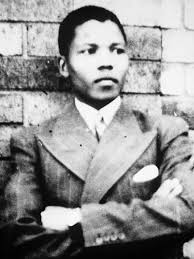
Nelson Mandela as a young man

Nelson Mandela as a young man

We shake our heads incredulously when we hear that Nelson Mandela was in jail and at hard labor for 27 years.

Twenty-seven years!  He was imprisoned just a few months before I was born, and released a few months before I married.

He came out to have a whole new life, like a butterfly breaking out of an unwanted cocoon.

The news media seems to be playing up the aspect of Nelson Mandela’s story that deals with forgiveness.

He forgave his captors.  He was not vindictive.  He believed in reconciliation.

Yes.

But I do not forgive them.  And the part of Mandela’s story I would like to focus on is his incredible perseverance in achieving his lifework of overcoming the evil of apartheid in South Africa.

Unknown

It takes great self-awareness and rock-solid confidence to maintain one’s moral compass in the face of a whole state and social apparatus set up to prove one wrong.

For example, climate activists today, like the Greenpeace 30–locked up in Russia for daring to challenge Russian drilling rights in the Arctic–need to be incredibly resolute in their insistence that we must do what we can to stop the runaway warming of the planet.

Today we have many ways of expressing our solidarity—ways that were not available to sympathizers of Mandela back in the 1960s, ‘70s and ‘80s.  We need to use these communication channels to send a solid wave of support back to those who dare to challenge today’s rulers—the fossil fuel industry, the National Security Agency, and the like.

Mandela fought the good fight and he won.  Today, our fight is not for justice in one country, but for the very survival of the human race—and so many other species—on this planet.

We owe it to the memory of Nelson Mandela to stand firm and refuse to be bullied or intimidated.  We who are fighting for a sustainable planetary future are on the side of justice and will be vindicated as such, just like Mandela, if we are not all washed away first.

Nelson Mandela was great because he never gave up.  He remained true to his own moral compass and he lived his ideals.

We must do the same today, and then some, to keep Mandela’s flame alive and burning brightly for a new day on this sad beleaguered planet of ours.