Blessings on the blossom…

UnknownWhen I compiled the anthology Women Writing Resistance: Essays on Latin America and the Caribbean, I put an excerpt from the Puerto Rican-American writer Aurora Levins Morales right up front, because what she had to say about the invisibility of working women was so powerful.

“Let’s get one thing straight.  Puerto Rico was a woman’s country….Whatever there was to be cooked, we cooked it.  Whoever was born, we birthed and raised them.  Whatever was to be washed, we washed it….Whatever was grown, we grew it…We were never still, our hands were always busy….Ours is the work they decided to call unwork.  The tasks as necessary as air.  Not a single thing they did could have been done without us.  Not a treasure taken.  Not a crop brought in.  Not a town built up around its plaza, not a fortress manned without our cooking, cleaning, sewing, laundering, childbearing.  We have always been here, doing what had to be done.  As reliable as furniture, as supportive as their favorite sillón.  Who thanks his bed? But we are not furniture.  We are full of fire, dreams, pain, subversive laughter.  How could they not honor us?

I have to admit that never, in all my years of studying the history of the Americas, had I even noticed the absence of accounts of these women from its annals.

But it’s so true.  What famous explorer could have sailed the ocean blue without his mother and/or nurse giving him the loving care he needed to survive infancy and childhood? What town could have been built without the crucial work of women supporting its foundations?

Just as we are often blind to the crucial life-giving value of women’s work, we also have a tendency to arrogantly overlook the essential work done by the foundation of the planetary biosphere. I’m talking about PLANTS.

100_2483 copy

Without the plants—from algae and seaweeds in the ocean to trees and grasses on land—our planet would quickly become a barren desert.

Without the microbes in the water and soil digesting decayed matter and nourishing those plants, the entire food chain would collapse, with humans falling along with all other “higher” species.

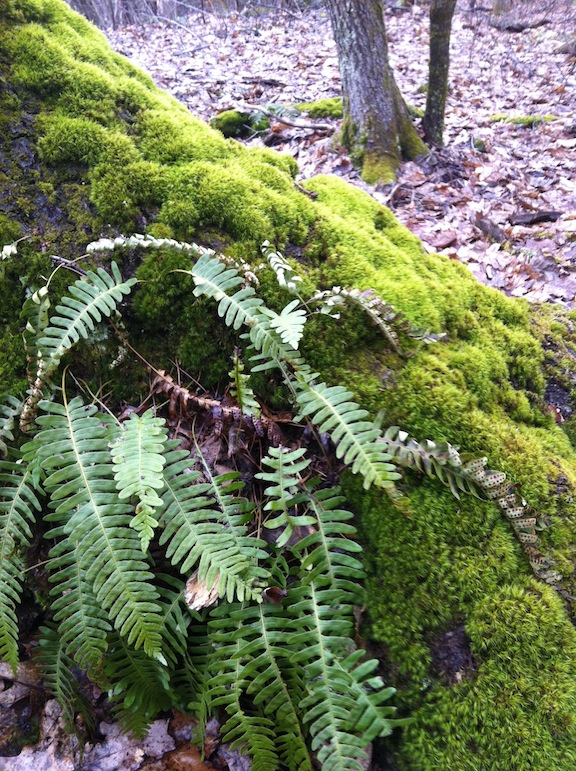
IMG_1916 copy

This Thanksgiving, I want to honor and thank the marvelous plants of our planet, who silently, efficiently and ceaselessly convert sunlight and water to living tissue, and give themselves without protest to nourishing the lives of so many other species on Earth.

As we enjoy our Thanksgiving feasts, let’s remember that none of this abundance would be possible without our unsung plant kingdom heroes, and let us perhaps take a moment to sing their praises, as in this simple blessing I learned from my son’s Waldorf teacher many years ago:

Blessings on the blossom, blessings on the fruit.

Blessings on the leaf and stem, blessings on the seed and root.

IMG_4088 copy

For a more extended version of this blessing, see the Mohawk Thanksgiving prayer.

Amen.


PHOTOS COPYRIGHT JENNIFER BROWDY DE HERNANDEZ.

Dreams of terror, dreams of peace

This morning my son came down to breakfast with a queasy look on his face.  “I had a dream that I killed a baby,” he said.  “I was shooting with a machine gun at these guys, and the baby was in the way.”

I hate the fact that this kind of violence, which kids are exposed to through the media constantly these days, creeps insidiously into their sleep, invading their dreams.

The subliminal violence is everywhere.   This same son, a 9th grader in a typical American public high school, is reading Lord of the Flies for English class and All Quiet on the Western Front for Social Studies.

Lord-of-the-Flies-1963-fi-007Lord of the Flies, you’ll remember, is about how a group of adolescent boys, turned loose on an island without any adult authority present, morph into “beasts” who bully, torture and kill one another.

All Quiet on the Western Front is about World War I, and my son’s teacher is sparing the class none of the gory details of that war; in fact, a whole section of the paper my son has to write about the book is supposed to enumerate all the challenges ordinary soldiers in that war faced, from freezing muddy trenches to disease to field amputations, rats and artillery fire.

Last month, this same teacher had the kids reading 1984 and spent a lot of class time talking about how the surveillance tactics and physical brutality in that book related to real-life episodes of torture and detention camps in the history of China and the Soviet Union.

In short, my son’s imaginative life lately has been saturated with violence, for which the peacefulness of our home is no match.  And he is one of the more sheltered boys growing up today; I do my best to keep him away from violent movies or military-style and gangster video games.  We don’t even have TV at home.

When dreams like this emerge at our breakfast table, they remind me that the apparent peacefulness of a small American town like mine is terribly fragile.

With every mass-murder shooting incident that occurs, the fine veil of civility frays just a little more.

The truth is that the United States has one of the most heavily armed civilian populations in the world.

It would not take much, in terms of social unrest, for those guns to come out and the “beastly” side of humanity to emerge, a la Lord of the Flies.

That’s what worries me when I contemplate climate change scenarios involving catastrophic storms like Haiyan that result in power outages, fuel and food shortages—which could happen here in the U.S. just as easily as anywhere else.

What we should be doing now, in the time we have left before climate change gets truly out of hand, is strengthening our bonds as communities.

Never mind the dysfunctionality of our Congress, the bashing and competitive trash-talking that too often passes for ordinary public discourse in America today.

On the local level, we can do better, and indeed we must.

Every community in America should be starting to plan for how it would respond to disruptions in power, fuel and food supplies.

We can’t rely on FEMA to ride in to the rescue.  We can’t afford to entrust our survival to the guys with the biggest guns in our area.

The Transition Town movement has it right in their focus on building strong, resilient communities and re-learning valuable pre-industrial skills.  But they need a greater sense of urgency.

My son’s dream is a warning that we ignore at our peril.  There is no time to waste.

The Civilization We Grew Up In Is Already Dead. So now what?

“If we want to learn how to live in the Anthropocene, we must first learn how to die.”

This is the last line in a fine essay by Roy Scranton, former U.S. soldier and currently a doctoral candidate in English at Princeton University.  The essay, published in the New York Times philosophy blog “The Stone,” is one of those rare attempts to really lay out the gravity of the situation we face today, as humans on a rapidly destabilizing planet.

Readers of Transition Times have been hearing me give my doom-and-gloom warnings for years now.  But it’s very rare that such grim scenarios break into the gilded precincts inhabited by readers of The New York Times.

Here is Scranton:

“The challenge the Anthropocene poses is a challenge not just to national security, to food and energy markets, or to our “way of life” — though these challenges are all real, profound, and inescapable. The greatest challenge the Anthropocene poses may be to our sense of what it means to be human.

“Within 100 years — within three to five generations — we will face average temperatures 7 degrees Fahrenheit higher than today, rising seas at least three to 10 feet higher, and worldwide shifts in crop belts, growing seasons and population centers.

“Within a thousand years, unless we stop emitting greenhouse gases wholesale right now, humans will be living in a climate the Earth hasn’t seen since the Pliocene, three million years ago, when oceans were 75 feet higher than they are today.

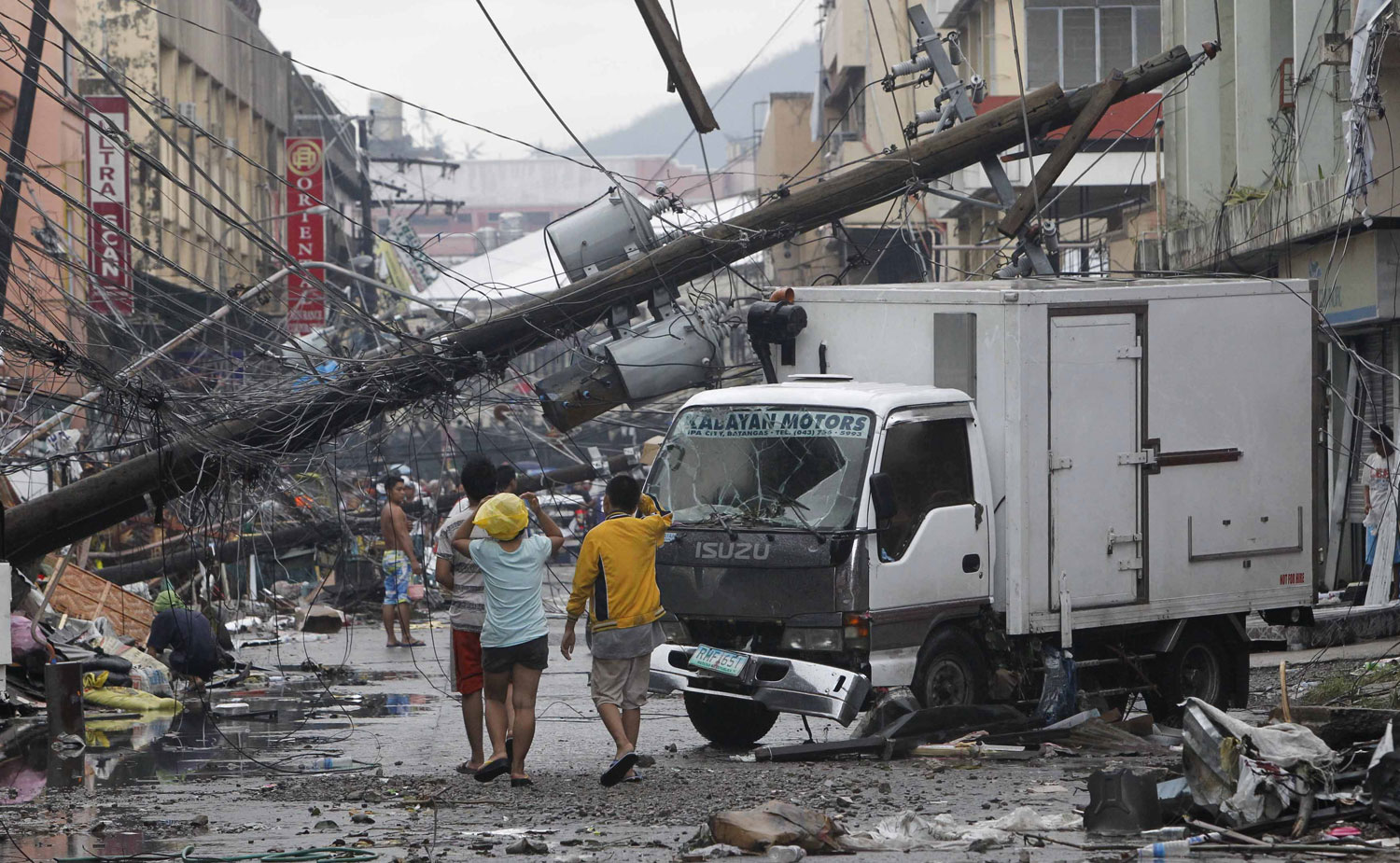
Aftermath of Typhoon Haiyan

Aftermath of Typhoon Haiyan

“We face the imminent collapse of the agricultural, shipping and energy networks upon which the global economy depends, a large-scale die-off in the biosphere that’s already well on its way, and our own possible extinction.

“If homo sapiens (or some genetically modified variant) survives the next millenniums, it will be survival in a world unrecognizably different from the one we have inhabited.”

Yes.  We know this.  It’s actually what Scranton does next in his essay that most interests me.

He makes a turn into the humanities, arguing that since “studying philosophy is about learning how to die,” then we have now “entered humanity’s most philosophical age — for this is precisely the problem of the Anthropocene. The rub is that now we have to learn how to die not as individuals, but as a civilization.”

Scranton reminds us that “the biggest problems the Anthropocene poses are precisely those that have always been at the root of humanistic and philosophical questioning: ‘What does it mean to be human?’ and ‘What does it mean to live?’

“In the epoch of the Anthropocene, the question of individual mortality — ‘What does my life mean in the face of death?’ — is universalized and framed in scales that boggle the imagination. What does human existence mean against 100,000 years of climate change? What does one life mean in the face of species death or the collapse of global civilization? How do we make meaningful choices in the shadow of our inevitable end?”

These are the kind of questions I ruminate about daily.  It comes back to Mary Oliver’s signature question, in her haunting poem “The Summer Day”—“What will I do with my one wild and precious life?”

We never know if our own deaths are right around the corner.  Will the truck driver around the next bend be distracted by his phone, cross the yellow line and blow me to oblivion?  Will my next physical exam reveal a terminal illness?  It could happen any time.

But as Scranton says, the climate change issue is much bigger than any of our individual lives.  It’s about the future of human civilization on the planet.

He ends his essay provocatively, saying that the problem of climate change cannot be solved by “buying a Prius, signing a treaty, or turning off the air-conditioning.” What is needed is a profound philosophical shift; to go from a civilization built on the illusion of endless growth and consumption, to a steady-state civilization that the planet can sustain.

We need to realize, Scranton says, that the human civilization all of us grew up in “is already dead. The sooner we confront this problem, and the sooner we realize there’s nothing we can do to save ourselves, the sooner we can get down to the hard work of adapting, with mortal humility, to our new reality.”

Yeb Sano breaks down speaking about the devastation in the Philippines after Typhoon Haiyan, and begs the climate negotiators to act decisively to curb carbon emissions

Yeb Sano breaks down speaking about the devastation in the Philippines after Typhoon Haiyan, and begs the climate negotiators to act decisively to curb carbon emissions

Watching the desperation on the faces and in the voices of the climate negotiators from sea-level nations like the Philippines, Bangladesh, and the Maldives, it’s clear that these folks have already absorbed the lesson we in the higher-terrain countries have yet to confront.

We cannot go on with business as usual any longer.

Not if we want to bequeath a livable Earth to our descendants.

Severn Suzuki speaking out

Severn Suzuki speaking out

Severn Suzuki said it all, so eloquently, speaking to a climate change summit way back in 1992, when she was just a girl of 12.  Are we ready to listen yet?

Of Oil, Honey and the Future of Human Civilization

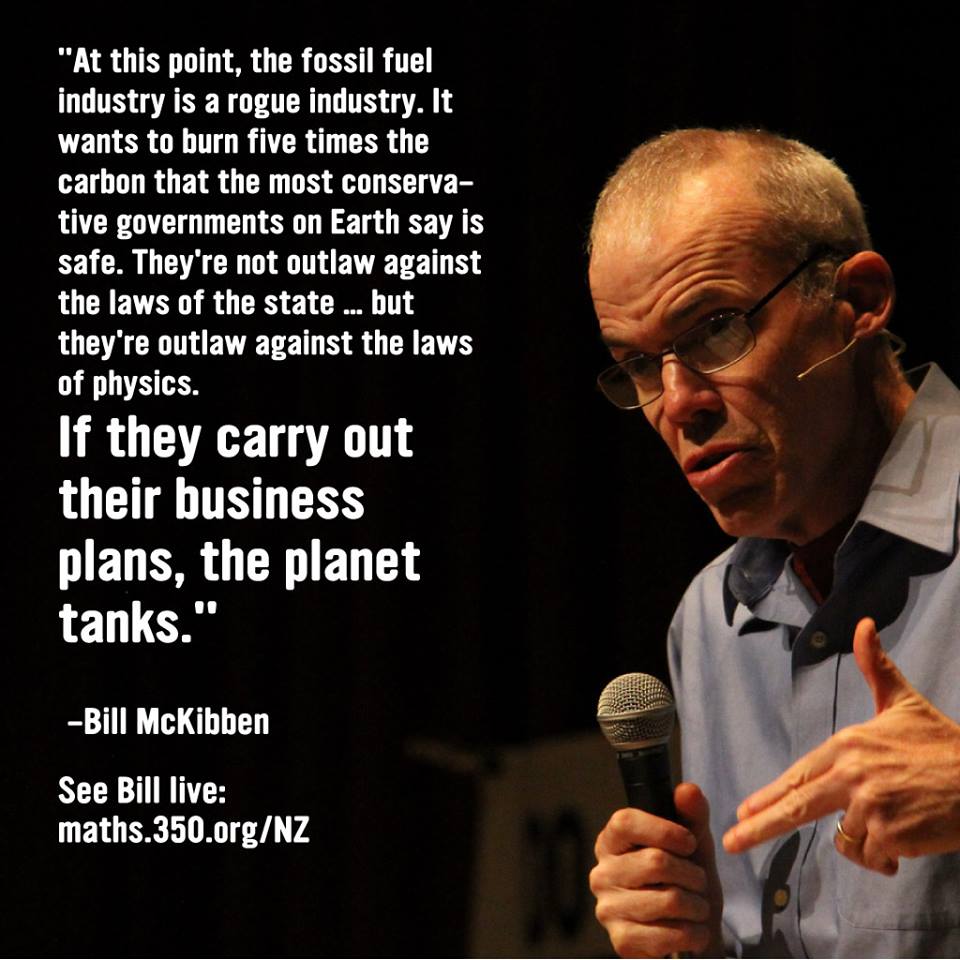
do_the_math_image_1I have been reading Bill McKibben’s new book, Oil and Honey: The Education of an Unlikely Activist, with a group of students in a course called Media Strategies for Social and Environmental Justice Advocacy that I’m offering for the first time this semester at Bard College at Simon’s Rock.

Oil and Honey tells the story of how McKibben founded 350.org with a group of his students at Middlebury College in 2009, and how together they went on to become the most visible American environmental organization of our time, leading the U.S. protests against the Keystone XL pipeline and creating an international movement to put pressure on governments and policy makers to quickly and decisively address the mounting threats of climate change.

Most recently, McKibben has been focusing on divestment as a tactic to push the fossil fuel industry to shift into cleaner forms of energy production.

Taking its cue from the successful anti-apartheid divestment campaigns of the 1980s, the strategy is to awaken enough ordinary citizens–including college students, church-goers and workers of every stripe–to the perils of climate change, and get them to press their hometowns, companies, churches and colleges or schools to divest their endowments, retirement funds and other collectively held investment portfolios from the fossil fuel industry.

It seems like a good strategy, and yet it did not elicit much enthusiasm from the students in my class.

They were more interested in thinking about how to educate younger kids about the beauty and value of the natural world, and moving from that basic platform out into activism.

Kids today spend so much time indoors, in front of screens, that they have little sense of connection to nature, my students said.  And without that connection, it’s very hard to understand why it’s important.  What’s all the fuss about?

This is what it’s about.

Bill McKibben asks us to “do the math” and understand that if we were to actually succeed in burning all the fossil fuels that are currently in the ground, we would heat our planet to a level not seen for millions of years.

It would definitely be game over for human civilization, and it would take millions of years for the planet to restabilize.

What it is about this simple math that human beings today do not want to see and understand?

Part of it is simply that we’re so easily distracted.

The big news yesterday was that Federal Aviation Administration will now allow airline passengers to use their computers and tablets right through take-off and landing.  We can be in front of our screens to the very last second of the day!

Meanwhile, while we’re busy on our computers, not paying attention, the fossil fuel industry is going around the resistance to the Keystone XL pipeline by massively investing in railway terminals, lines and cars for carrying its tar sands oil down to refineries and tankers on the coasts.

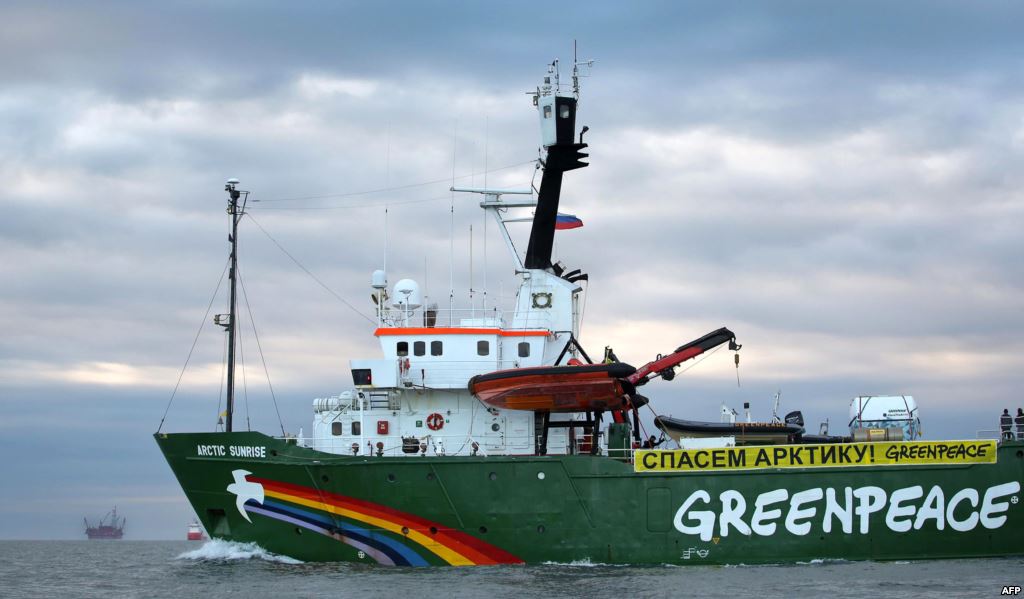
B3029FCC-5228-4E57-B879-F8A83ABF036B_mw1024_n_sAnd up in the darkness of the Russian tundra, 30 Greenpeace activists are languishing in cold solitary prison cells, held without trial for the crime of trying to raise awareness about the destruction of the Arctic by Russian and international oil drilling.

Where is the outrage?

In the book Oil and Honey, McKibben ingeniously compares corporate behavior to bee behavior.  Corporations are like bees, he says, in being relentlessly “simple” and focused on their one crucial task—for bees, making honey; for corporations, making profit.

They don’t change their focus, no matter what.

But humans are more complex than that.  We can change and adapt to new circumstances.  We can recognize and act upon moral imperatives.  We don’t have to follow suicidal corporations blindly over a cliff of their own making.

Although it’s true that the alarming dependence of Americans on screens of every size can get in the way of a connection to the natural world, on the other hand, the fact that so many people are networked together through the media presents great opportunities for activism and change.

With my students this semester, I’ll be thinking about how to harness the power of the media to create a different kind of swarm—not following our current corporate leaders, but moving in an entirely different direction.

We’re not alone—there are many groups working on this now, from the Transition Town movement to the Pachamama Alliance to even such formerly mainstream organizations as the Sierra Club.

The task: to awaken a critical mass of people, worldwide, to the reality that we are living in an end-time of biblical stature; and to get them to understand that we have the power to change the storyline from doom-and-gloom cataclysm to a positive shift into a whole new relationship of humans to our planetary home.

Working cooperatively, bees are able to turn small grains of pollen into vast tubs of honey.  Human beings can do that too–when we work together for a common cause we can do almost anything.

So what are we waiting for?

images-1

Turns out “Crazy Mary” isn’t crazy after all: Homage to Mary Daly’s Green Philosophy

In my quest to drown out the drone of the mindless Republican obstinacy-for-its-own-sake that is currently taking up so much of our media bandwidth, I have been reading the work of Dr. Mary F. Daly, someone I’ve known about for many years, but never actually sat down and read.

You may have heard about Mary Daly too—she was a professor of philosophy and theology at Jesuit-run Boston College, whose first three books, Beyond God the Father, The Church and the Second Sex, and Gyn/Ecology, were runaway bestsellers among women readers, but so infuriated the powers that be at her institution that they mounted campaigns to discredit her, first trying to deny her tenure and then harassing her to step down from her tenured position.

Who was this oh-so-threatening gadfly on the flanks of the Church and Academia?

Mary Daly wielding the Labrys

Mary Daly wielding the Labrys

Daly called herself by many names—one of her projects was to take back the English language from the patriarchy that she saw used language as yet another misogynist weapon against women and the natural world.  She was a self-proclaimed “Radical Lesbian Feminist Philosopher,” a “Wild, Wicked Woman,” a “Postively Revolting Hag” who “proclaimed that Laughing Out Loud is the Virtue of Crackpot Crones who know we have Nothing to lose.”

“As an Offensive, Tasteless, Haggard Pirate,” Daly wrote in her 1992 memoir Outercourse, “I was inspired to acquire the Courage to Leave the doldrums of Stag-nation, Sailing off with as much loot as my Craft could carry.  I tried to foster in myself and in Others the Courage to Live Wildly, that is, to refuse inclusion in the State of the Living Dead, to break out from the molds of archetypal deadtime (a.d.), to take leap after leap of Living Faith, becoming Fiercely Biophilic” (198).

Biophilic as opposed necrophilic, which is how she described Western society—a society built on and organized around sucking the lifeblood from the planet.

Although the dominant feminist movement has resisted the eco-feminist tendency to link women and nature “essentially,” Mary Daly saw women as having a special role to play as bearers and defenders of life—not in terms of the conventional “right to life” type of discourse, but in terms of the right and indeed the responsibility to protect and nurture the planet and other life forms on it from the predations of patriarchal society.

“By being the originator of my own Green Philosophy,” she wrote, “which is the tabooed woman-identified/nature-identified philosophy, I have uttered a Great Refusal of the patriarchal prescription of Self-lobotomy for and by women” (326).

The truth is that most people I know automatically turn off and turn away when a woman dares to utter the word “patriarchy.”

It’s a word-bomb wielded by feminist terrorists, and “we don’t negotiate with terrorists,” do we?

Maybe it’s time to remember that one man’s “terrorist” is another’s “freedom fighter.”

Maybe it’s time to be honest about the fact that the rape and pillage of our planet has in fact been a male-dominated project.

To criticize the patriarchy as a system of knowledge and action is not to condemn any individual man.  All individual humans are free to choose how they will act in the world, and many individual men have acted honorably and with loving care towards women, animals and the planet as a whole.

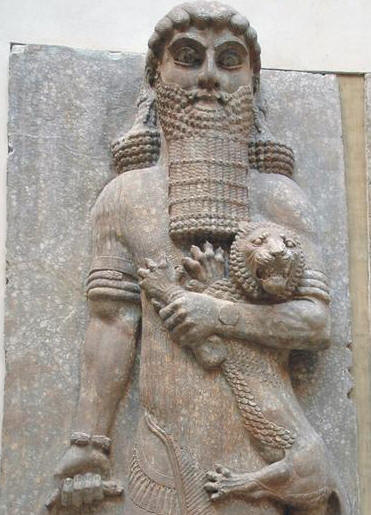
Gilgamesh

Gilgamesh

But in general, I have to agree with Mary Daly that since the advent of patriarchal human civilization–say, around the time when Gilgamesh defied the gods and cut down an entire cedar forest to build his city—humanity has lived by extractive, exploitative, often cruel and extremely destructive frameworks of ideology, policy and praxis.

Women in power, or women close to men in power, have often gone along for the ride and enjoyed their entitlements.  For example, in education: education for centuries was the exclusive prerogative of men, and when women were finally admitted to the august halls of higher learning, they tended to conform to whatever it was the authorities expected of them.

A woman like Mary Daly, who was able to think for herself outside the box of patriarchal philosophy, and who dared to criticize the masters, would be undercut by whatever means possible—dismissed as a lunatic, ignored and disdained, exiled and excommunicated.

Mary Daly was gutsy enough to survive all the attacks that were lobbed at her, and come back swinging.  Each of her books is more radical and free-thinking than the last, and she never wavers from her central insight, which she credits to her interchange with a clover blossom at age 14, that every form of life on the planet has intrinsic value, meaning, and a purpose on the planet.

Unknown-1“There was the Moment…when one particular clover blossom Announced its be-ing to me.  It Said starkly, clearly, with utmost simplicity, ‘I am.’…The encounter with that clover blossom had a great deal with my becoming a Radical Feminist Philosopher.  If a clover blossom could say ‘I am’ then why couldn’t I?” (23).

Daly takes a great leap here away from the artificial structures of the kind of “post-structuralist” philosophy that I, for example, spent countless hours studying during my years in graduate school in the 1980s.

Like Derrida, Daly is interested in words and language and how the “binary oppositions” of Western philosophy, starting with the mother of them all, Good and Evil, have played out in socio-political frameworks that conspire to maintain the patriarchal status quo.

But she is not interested in staying in the labyrinthine worlds of textuality; she is very much engaged with how these linguistic issues affect real, flesh-and-blood women and other beings.  She not only dares to call out the patriarchy, she also dares to discourse with other species in her writing—not just clovers, but also cats, cows, and trees—and to raise what she calls “Fore-Sisters” of earlier times to engage in philosophical dialogue.

Daly was not afraid to call herself a Witch, and to reclaim the demonized power of magic to confront the necrophilia of dominant society.

For instance, in Boston in 1989, she worked with friends and students to create a multimedia performance called “The Witches Return,” which would “expose the gynocidal/biocidal atrocities [of patriarchy] and the connections among them.”

On Mother’s Day, 1989, the group acted out with intense emotion a Witches’ Trial that culminated in the symbolic beheading of those who were accused of “the massacre of women’s minds, bodies and spirits.” Daly wrote, “Our dramatic indictment was created with utterly Fiercely Focused Rage and Elemental, Creative Power” (398).

The performance was a rejection of what she called the “foreground,” ordinary day-to-day life so totally saturated in atrocity that people became numb to it—and a reaching into the “background,” the deeper truths that, if accessed, could light the way to real change.

Daly’s description of the difference between the foreground and the background makes so much sense to me, now in 2013 even more than in 1989.

In our media-saturated lives, it is so easy to spend most of our waking hours tuned in to someone else’s vision, listening to someone else’s insights, digesting information packaged for us by someone else.  And most often, that someone else is—let’s face it—a white man, or someone who is reacting to the dominant white-male patriarchal vision.

How often do we allow ourselves to simply sit down in a field and commune with a clover?  How often to we allow ourselves to listen to ideas that seem radical or weird or crazy?

Isn’t it interesting that radical ideas coming from white males get plenty of press time and are entertained with great seriousness by the entire world (I’m referring to the crazy, weird, radical ideas of the Republican Tea Partiers) while when a woman dares to utter the taboo word “patriarchy” she is immediately not only dismissed, but completely ignored and excommunicated?

In the last book she wrote before her death in 2010, Amazon Grace, Mary Daly called on women who understand the connections between gynocide and ecocide to come together and dare to, as she phrased it, “Sin Big”—dare to call out the patriarchy and insist that, as Arundhati Roy memorably put it, “Another world is possible. On a clear day, I can hear her breathing.”

Yes.

Tell me a different story, somebody, please!

As a college professor with a focus on media and issues of social and environmental justice, it’s my responsibility, I believe, to be tuned into the news of the day.

I need to know that, as reported by Jennifer Steinhauer in The New York Times, “For roughly 30 hours over several days, defense lawyers for three former United States Naval Academy football players grilled a female midshipman about her sexual habits. In a public hearing, they asked the woman, who has accused the three athletes of raping her, whether she wore a bra, how wide she opened her mouth during oral sex and whether she had apologized to another midshipman with whom she had intercourse “for being a ho.”

I need to know that the Obama Administrations efforts to regulate and clean up the American coal industry “are certain to be denounced by House Republicans and the industry as part of what they call the president’s “war on coal.”

I have to follow the progress of the latest massive floods in Colorado, noting that they involve the release of unknown quantities of toxic chemicals into the region’s waterways; these floods happened in a populated area of Colorado that also happens to be the site of thousands of gas fracking wells.

Then there are those unprecedented wildfires in California, finally under control after having burned 400 square miles in and around Yosemite National Park, with “a solid 60 square miles burned so intensely that everything is dead.”

California Rim Fire, 8-21-13 Photo by Robert Martinez

California Rim Fire, 8-21-13
Photo by Robert Martinez

I have to pay attention when our nation threatens missile strikes on another Middle Eastern country, or there’s another crazy gunman on the rampage with assault weapons in a peaceful civilian setting, or a bunch of ideologically blinkered Republican politicians threaten to shut down the U.S. government and force us to default on our international debt obligations, putting the world financial system in jeopardy, simply in order to embarrass the country’s popular Democratic African-American President.

To do my job well, I have to know about these issues and episodes, and so I follow the media daily.  And yet day by day I grow more resentful of being dragged along on storylines that I find so—so—well, so boring.

They’re boring because they’re so repetitive.  Another fire, another flood, another mass shooting, another U.S. missile or drone strike, another government shutdown to be averted at the last minute.  Another woman raked over the coals when she tries to bring a rapist to justice.

And in the background, the real story, the Big News of our time, grinds on relentlessly, it too so endlessly repeated that we have all become blind, deaf and dumb to it.

I’m referring, of course, to the story of global climate change, with its attendant melting ice, rising seas, rising temperatures, erratic weather and, ultimately, mass extinction of life as we know it on Earth.

I understand why very few humans alive today want to grapple with that story.

If the news episodes I listed above are boring in their repetitiveness, the Big News of climate change is just too scary to take in.

No wonder so many people of all ages just don’t bother following the news, preferring instead to focus on televised sports or the latest mini-series or movies.

People seem to have a fatalistic approach to reality lately.

Obamacare will go through or it will be defunded, no matter what we think or do.  Fossil fuel plants will continue to burn, not only unregulated but subsidized at that; politicians will continue to act in criminal ways (shutting down the U.S. government is an act of treason in my book!), boys will continue to be boys and get slapped on the wrist when a woman dares to cry rape–no matter what we do.

The entire American populace seems to be locked in some kind of slumped-over apathy, just trying to keep up the mortgage payments, trying to stay healthy in an increasingly toxic environment, trying to raise decent kids despite the toxic media entertainment landscape in which the kids spend most of their time.

I’m slumped over with the rest, a lot of the time.

But there is something in me that resists this posture, too.  There is something in me that yearns for a different narrative.  Tell me a different story, somebody, please!

Not a return to the triumphalist patriarchal Manifest Destiny that led us inexorably to the disastrous brink on which we now perch.

Not the macho environmentalism that tries to beat the fossil fuel villains in the courts and the high seas.

Not the moralistic sermonizing of those who see the world in strictly black-and-white, Good-and-Evil binary oppositions.

I’m hungering for something deeper.  Something bigger.  A story that truly acknowledges where we are today as a species, and can help us to perceive the way forward out of the current slumped-over morass of bad news.

Briane Swimme

Briane Swimme

The closest I’ve been able to come to such a story so far is the work of Thomas Berry and Brian Swimme.  In their visionary description of the “Ecozoic Era” that we could create, acting in the best interests of the planet as a whole, I find the map and the compass I’ve been seeking to guide me to a livable future.

In the final chapter of their book The Universe Story, Berry and Swimme lay out a vision that, tragically, we have not heeded in the more than 20 years since the book appeared in 1992.

“In economics it is clear that our human economy is derivative from the Earth economy.  To glory in a rising Gross Domestic Product with an irreversibly declining Gross Earth Product is an economic absurdity.  So long as our patterns of consumption overwhelm the upper reaches of Earth’s sustainable productivity, we will only drive the Earth community further into ruin.  The only viable human economy is one that is integral with the Earth economy” (256).

“We need an inter-species economy, an inter-species well-being, an inter-species education, an inter-species governance, an inter-species religious mode, inter-species ethical norms,” they say (257).

Berry and Swimme end their vast “journey of the universe” by describing the celebratory aspect of the universe, which perhaps only humans, at least of the beings on Earth, can fully appreciate.

The cosmic celebration--courtesy of the Hubble telescope

The cosmic celebration–courtesy of the Hubble telescope

“Everything about us seems to be absorbed into a vast celebratory experience,” they say.  “There is no being that does not participate in this experience and mirror it forth in some way unique to itself and yet in a bonded relationship with the more comprehensive unity of the universe itself.  Within this context of celebration we find ourselves, the human component of this celebratory community.  Our own special role is to enable this entire community to reflect on and to celebrate itself and its deepest mystery in a special mode of self-conscious awareness” (264).

In other words, our role is to be the storytellers of past, present and future.  Of all the amazing beings on the planet, no one else can fill this particular niche.

It is our privilege and our curse as humans to KNOW so much about what we are doing at any given moment on the planet, and to ceaselessly narrate that knowledge.  Now in the 21st century, aided by the global neural network of the World Wide Web, we have never been more tuned into the on-going global story, but this knowledge often becomes oppressive, since so much of what we are asked to absorb is negative, bad news.

It’s time to rebel–to resist the battering of the bad news, to become producers rather than just passive consumers of knowledge.

We need to start telling new stories.  Empowering, positive stories that light the way towards the human beings we could become, the human civilization we could create, in concert and harmony with the rest of the Earth community.

What stories do you hold locked in your heart, tenderly sheltered from the glare and cacophony of contemporary pop culture?

I suggest you look to the home ground of your deep childhood for inspiration.  Remember the stories you told to yourself then, or that you heard the flowers and the insects singing.  Remember the way the motes of dust twirling in the sunlight spoke to you.

Remember what it felt like to have an unmediated, imaginative connection with the world around you.

Then speak the truths that come out of that primary knowledge.

Women Writing from the Heart: What the world needs now

This time tomorrow night I’ll be sharing, for the first time, a piece of the memoir I’ve been working on for a good three years now.

il_570xN.378782406_r41jI’ll be reading at a gathering I organized on behalf of the Berkshire Festival of Women Writers, called “Writing from the Heart.”  It features seven of us in all, each sharing a piece of writing that comes from the deep, sometimes aching, sometimes exuberant place at our core, which we rarely trot out and share in public settings.

I organized “Writing from the Heart” because I believe it is so important, now more than ever, for women to get over our social conditioning to “be nice,” “be polite,” “go with the flow,” and cede the floor.  It’s so important that we start expressing, loud and clear, the truths we hold inside us, which are often far from self-evident.

Each one of us has her own perspective on the world, her own experiences to share, her own passions and convictions.  I am less concerned with the content than with the character: what matters to me is that you say what is in your heart, and listen to the heartfelt ideas of others, and that out of this exchange we begin a dialogue on what’s important in this deep, rich, rarely mined terrain.

Let us be frank: although women have made great strides in the past century, we still live in a male-dominated world.

Old, masculinist stories of domination, penetration, exploitation and subordination still prevail over many of the world’s societies.

We live in a violent world on many levels, and the violence, whether against the natural world or against other human beings, is overwhelmingly committed by men.

Women have been forcibly kept out of the male-dominated public sphere in most societies, for much of human history.

We have been the ones bearing and raising the sons who go off to war.  We have been the ones keening and mourning over the coffins that return.  We have been the ones who have been silent while our daughters have been forced into marriages too young, or to men we knew would be abusive.  We have been the ones raising our grandchildren as best we could when our sons and daughters died of AIDS, or ended up in prison.  We have done the best we could with the tools and strengths we had available.

But this is a new time.  Without really realizing it, we have stepped over the threshold into an era that calls for an extraordinary effort on the part of women and men of good heart and far-reaching vision.

Women and men must work together to create new social, economic and environmental frameworks that will enable us to survive and even flourish in the brave new world of climate change that is now upon us.

Women, who have centuries of experience of nourishing, cultivating, collaborating, and surviving against all kinds of odds, have a special role to play in this new era.

Women need to teach these skills to men; and men need to share with us their warrior spirit.

In this new age, the feminine and the masculine must come together in the service of generations to come, each learning from the other and together becoming greater than they could ever be apart.

Every human being has both estrogen and testosterone coursing through hir system, and every human being is capable of both nurturing and violence.

Today, we need women to have the courage to defend the rights of future generations, both human and non-human, and we need men to stand with us in acknowledging that the age of masculine privilege and dominance has been terribly destructive, and must now come to an end.

This is what is in my heart on this 12th anniversary of 9/11, this 40th anniversary of the Chilean coup, this 50th anniversary of the bombing of the 16th Street Baptist Church in Birmingham, Alabama.

Tomorrow evening at this time, six other women will share writing that comes right from the depths of their hearts.  This sharing must become a great, passionate tide, an upwelling of feeling and action that will sweep us away into a better future.

Let it be so.

From Syria to Sunshine

And so we find ourselves, once again, on the brink of sending our military to attack another country, about which, again, we seem to know pathetically little.

Will it be possible to perform a “surgical strike” in Syria, preventing the government armed forces from using chemical weapons without actually taking sides in the civil war?

To what extent have the “rebel forces” been infiltrated by radical Muslim fighters coming over from Afghanistan and Iran?

What are the motives of the shadowy big players looming in the background—China, Russia, Saudia Arabia, Iran, Israel?

Why has the United Nations been so silent?

But here’s the big question that no one is asking: why aren’t we working like banshees to reduce our dependence on Middle East oil?

The fact is that the sheikdoms of the Persian Gulf were insular, off-the-the-beaten track kingdoms until the advent of the modern Western addiction to oil.  It’s all about resources.

If humans replaced our dependence on fossil fuels with a dependence on the mother fuel of it all, the Sun, we would be so much better off.

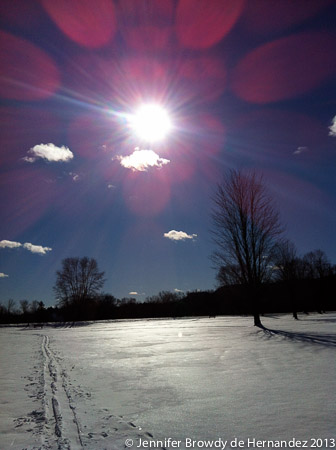
The Sun is one of those resources, like air, that is free and available to all.  Every tree, every blade of grass, every phytoplankton, benefits from the sun.  The sun plays no favorites, though sometimes clouds intervene.

If we put anything near the amount of dollars we currently put into weapons development, production, and the waging of war, into research & development of solar energy capture, storage and distribution, we would suddenly find ourselves accelerating into a whole new era of human civilization, as dramatic as the shift from coal to oil, or from horsepower to steam.

IMG_1174 copy

The Middle Eastern nations, being naturally sunny, would do fine in a new solar-based economy.

But there’s no part of our globe that is cut off from sunshine.

In fact, the sun shines in my backyard just as brightly as it does in yours.

Exxon/Mobil/BP and all the rest couldn’t lay claim to a monopoly on sunshine, although I am sure they will try to control the storage and distribution networks.

But solar is naturally inclined to egalitarian distribution.  Just as every daisy in the field and every apple on the tree has an equal claim on sunshine, so every human being is also entitled to soak up those rays.

DSCN2769 copy

Photo by Eric Hernandez

Wake up, humanity!  Wake up, Americans!  Understand that we do not have to spend our hard-earned tax dollars on war instead of peacetime priorities like education, health and social security.

Understand that the same forces that want to wage war are the ones that want to frack and drill and build pipelines to Kingdom Come.

Gone is the time when oil came gushing up out of the wells, black gold that would make us all rich.

Now oil is a fool’s gold, bankrupting the majority even while it enriches the few who control the wells, the refineries and the gas stations.

Another world is possible—a world that looks to the sun to warm us and the wind to cool us, at a fraction of the cost of the 21st century extraction of oil.

When we think about intervening in Syria, or Iraq, or Iran, or Afghanistan, or Colombia, or Venezuela, or Ecuador—understand that whatever the stated moral goal, the real reason is a very simple three-letter word: O-I-L.

To which we can respond with some very simple words of our own: S-U-N, W-I-N-D.

N-O-W.

What are we waiting for? Violence and climate change in our brave new world.

Finally, in the Sunday New York Times, a report giving empirical evidence of what we already knew intuitively, that climate change leads to violence, and that it’s going to get worse as the planet continues to warm.

For a couple of years now I’ve had a haunting premonition that violence is going to come even to the comfortable, beautiful corner of the world where I live.

We saw how fast tempers flared when Hurricane Sandy created gas shortages down in the New York metropolitan area.

What happens when our industrial food supply starts to fail, given the inevitable and already-occurring wildfires, droughts, tornados and floods?

When people get hungry, survival-of-the-fittest kicks in, and it will take serious riot police to keep order when the supermarkets run out of food.

The authors of the new report say that their findings “are particularly important for what they imply about the future. Many global climate models project global temperature increases of at least 3.6 degrees Fahrenheit (2 degrees Celsius) over the next half-century. Our results imply that if nothing changes, this rise in temperature could amplify the rate of group conflicts like civil wars by an astonishing 50 percent in many parts of the world — a frightening possibility for a planet already awash in conflict.”

Frightening indeed. What to do with this new knowledge?

The authors urge political leaders to “call for new and creative policy reforms designed to tackle the challenge of adapting to the sorts of climate conditions that breed conflict — for instance, through the development of more drought- and heat-resistant agricultural technologies.”

I hardly think that the answer lies in agricultural engineering.

In the time we have left before chaos sets in we should be re-localizing agriculture, setting up distributed energy networks and re-learning the old arts of drying, salting, canning and cold storing agricultural products.

Indian Line CSA, one of the first in the nation

Indian Line CSA, one of the first in the nation

We should also be disarming our civilian population and focusing on creating strong community networks of mutual support.

For all our cleverness, humans are just primitive beasts when our bellies are empty—primitive beasts armed, at least in Fortress America, with deadly assault weapons.

The nightmares of the Congo, Somalia and Sudan, not to mention Afghanistan, Syria and Iraq, could easily start up here too, when food is scarce and sectarian violence begins to flare.

The truth is that we can’t rely on national and international leaders to undertake meaningful “policy reforms”—not when they are being held hostage by Big Carbon, Big Ag, Big Chemical/Pharma and Big Finance.

Delusional these corporate giants may be, but they will be going down with the ship holding fast to their belief in the value of limitless human economic growth, stable climate be damned.

We who believe that another world is possible need to hold fast to our own belief that the world won’t end when those giant glass towers in financial districts worldwide go down.

We can build that new world—not through technology and arms, but through community and collaboration.  Bottom-up, not top-down.

It’s true: we are the ones we’ve been waiting for.  And given the impending climate crisis, there’s no point in waiting anymore.

Harvesting at Indian Line Farm, Berkshire County MA

Harvesting at Indian Line Farm, Berkshire County MA

I have a dream: the 20th century visions of King and Obama and the “fierce urgency” of our time

mlkihaveadreamgogoFifty years ago today Dr. Martin Luther King Jr. shared his dreams with the American nation:

“I have a dream that one day this nation will rise up and live out the true meaning of its creed: We hold these truths to be self-evident, that all men are created equal.’

“I have a dream that one day on the red hills of Georgia, the sons of former slaves and the sons of former slave owners will be able to sit down together at the table of brotherhood.

“I have a dream that one day even the state of Mississippi, a state sweltering with the heat of injustice, sweltering with the heat of oppression, will be transformed into an oasis of freedom and justice.

“I have a dream that my four little children will one day live in a nation where they will not be judged by the color of their skin but by the content of their character.

“I have a dream today!”

Today President Obama, himself the fulfillment of Dr. King’s dream, honored the legacy of the Civil Rights movement, telling us that because people in Dr. King’s generation marched for justice, “America changed. Because they marched, the civil rights law was passed. Because they marched, the voting rights law was signed. Because they marched, doors of opportunity and education swung open so their daughters and sons could finally imagine a life for themselves beyond washing somebody else’s laundry or shining somebody else’s shoes. Because they marched, city councils changed and state legislatures changed and Congress changed and, yes, eventually the White House changed.”

967-16eslj.AuSt.55

But Obama’s dream remains too limited.  He is still dreaming a 20th century dream of middle class jobs and security: the longing for a society offering  “decent wages, fair working conditions, livable housing, old age security, health and welfare measures — conditions in which families can grow, have education for their children and respect in the community.”

Such a scenario assumes the stability of the real workers of our economy: the trees and plankton that supply our oxygen and the microorganisms that make our crops grow.  It takes for granted steady, predictable rains and moderate temperatures.

We can no longer make such assumptions, and President Obama is wrong to preach to the nation as though 20th century problems and concerns were still paramount today.

Yes, the problem of the color line still exists in 21st century America.  The unemployed still need jobs.  The racial disparity in prison populations is disgraceful.  But these are not the most pressing issues of our time.

President Obama lauded the young of the 1960s for being “unconstrained by habits of fear, unconstrained by the conventions of what is. They dared to dream different and to imagine something better.”

He argued that “that same imagination, the same hunger of purpose serves in this generation.   We might not face the same dangers as 1963, but the fierce urgency of now remains.”

In fact, we face even greater dangers today than in 1963, and it was dishonest of our President not to allude to the much more serious problems now bearing down on us full force: the juggernaut of global climate change.

The wildfires burning in California this week are the among largest ever recorded in the United States.

The rate of species extinction is faster now than it ever has been in the history of human civilization.

The ice melting at the poles promises to release heat-trapping methane gas at rates not seen since prehistoric eras.

Human population is on track to reach 9 billion or more in this century, way beyond the carrying capacity of the Earth.

We don’t know where all this is leading, but surely we cannot expect positive outcomes from these dramatic planetary shifts.

These interconnected environmental issues are the great challenges of our time, and it is to them that President Obama should have alluded, if he was being honest with himself and with the American people.

Whether or not the Syrians used chemical weapons against their own people; whether or not African Americans get to the voting booth; whether or not the American middle class sinks into poverty…all this will not matter at all when accelerating climate change begins to bring food shortages even to the most cosseted Americans.

Here is what our President should have said today:

‘I have a dream that Americans will step into a leadership role in the great fight of our time, the transition to a sustainable, renewable-energy-based society.

‘I have a dream that people of all nations, all creeds and from every culture on Earth will embrace our common challenge of finding ways to mitigate human damage to the planet, and adapt to the changes that are rapidly coming our way.

‘I have a dream that men and women from all over the globe will stand together, knowing that divided we will fall, but united we have a chance to safely ride out the storms that face us.’

My own personal dream is that our political leaders will stop lying to us, and will summon us to step up to the great ethical and empirical challenge of our time: creating lifeboats on which our children and grandchildren may sail safely into a sustainable future.