Mother Earth and the Art of the Deal: Doing Hope in Dark Times

On trade, as with immigration, the 45thAmerican president is not only an embarrassment, but a danger to world peace and prosperity. But we must take into account the deeper layers to both issues, which he understands only in the most superficial, self-serving way.

On the G7 and free trade: let’s admit candidly that globalized free trade of the NAFTA and TPP variety have been boons for corporations and Wall Street financiers, but disasters for most workers. The policy of freeing corporations to seek the lowest possible taxes and the cheapest, most compliant workers has resulted in unemployed, impoverished, unionless American workers and exploited, slave-like workers in places like Indonesia, China and India. The depression and rage of these screwed-over American workers is what propelled Trump into office, and he knows they will crow in glee as he shafts the ministers of free trade in the G7.

But of course they don’t realize, or refuse to see, that Trump is a wolf in sheep’s clothing (a corporate magnate in worker’s garb) when it comes to trade. All this talk of tariffs or no tariffs is just a smokescreen to throw his trading partners off guard and negotiate better deals for American corporations.

Trump is not interested in the welfare of American workers. If he were, he wouldn’t be protesting so loudly about the Canadian dairy industry, which is a good case in point as to the value of socialized industry. The Canadian government protects its dairy farmers from competition with the American dairy farmers who have been gutted by the free market and have been going out of business and committing suicide in record numbers as a result. Canadians wisely realize the value of nurturing their farmers, and so far Justin Trudeau is refusing to cave to Trump’s bullying, though it’s worrisome that a Trump-lite politician just won high office in Ontario, Canada’s most populous state.

Canadians look south of the border and see a nightmare: civilians waving guns in the streets and at schools, politicians regularly going out in handcuffs, an addicted, depressed, unhealthy, scared-as-shit population too ignorant and distracted to understand when it’s being shafted.

Perhaps the G7 should become the G6 unless and until the United States pulls itself out of its current morass. Thanks to Trump and the Republicans America has become a rogue nation, led by a corrupt strongman who seems to have his opponents, including the Justice Department, by the balls.

Meanwhile, along the southern border with Mexico, Trump has also taken a wrecking ball to a long-established relationship. Free trade was also a terrible deal for ordinary Mexicans—to take one example, thanks to NAFTA their corn industry was totally swamped by dumped cheap corn from American farmers, a lose-lose for all the workers involved.

But of course, the welfare of ordinary people is not Trump’s motivation. If it were, instead of talking about building the next Great Wall (a boon for the construction industry) to keep desperate Mexican and Central American families out of the United States, we’d be talking about investigating and improving the conditions that are forcing families to leave their homes and make the dangerous trip up north. The U.S. destroyed the economies and societies of Central America during the 1970s Communist scare, NAFTA and CAFTA splayed them open to American exploitation, and ordinary people are still paying the price.

This is a “workers of the world, unite” kind of moment, particularly in the face of climate change, which can only be tackled by a unified global effort–but instead the Trumpites are sowing distrust and discord everywhere they go. Fox News and the rest of the rightwing media, not to mention Trump’s own Twitter feed, feeds his followers a steady diet of carefully calibrated misinformation designed to brainwash them into cheering for their own evisceration.

With Bolton at his side, Trump is on the road to undoing the post-World War II world order that has maintained peace and prosperity for the elitessince 1945. If Trump & Co. were of the Chairman Mao variety, we might be looking at a new kind of Cultural Revolution. But no—these men want their elite status to last and grow. They don’t care about the costs—to the planet, to people, to the future.

Instead, we are seeing the rise of a new oligarchy, with Putin its shadow leader and Pompeo its enforcer. The generals go along–war and terror are their stock in trade after all–and business follows the generals with their lucrative military contracts. Next we’ll see Dick Cheney raising his ugly pate out of the swamp looking to rebuild Syria and modernize North Korea.

The truth is that for most of the planet–from marine life to forests to insects, and including poor people everywhere—this is nothing new. Most of the world has been living through a nonstop crisis all during these so-called “boom years” after 1945. Ask an indigenous person in the Amazon rainforest how the past 70+ years have been. Ask the butterflies and bees how they’ve enjoyed the rise of Monsanto.

It’s just that the carrying capacity of the planet is now maxxed out, so in order to preserve and increase the wealth of the elites, they must find new people and places to exploit. The ruthlessness of those in power, which has always been used to bludgeon the rest of the world, is now being turned on our trading partners, as well as on ordinary Americans, who are nearly as weak and easy to screw over as the Central Americans. Witness the fracking rigs in school yards and neighborhoods; the gutting of fragile health care protections for the poor and the sick; the adunctification of the higher education industry; the undermining of unions of every stripe.

The constant stream of unbelievably bad news coming down the transom is like one of those overwritten movie thrillers where you leave the theater shaking your head, wondering why the writers felt they had to cram every single violent act they could think of into a shortest possible time. But something’s wrong with this picture.  Where is the resistance? Where are the plucky Luke Skywalker types who can take on the Dark Lord and his henchmen?

Although rarely visible in the mainstream media, it turns out that the indigenous people of the Americas, for whom this crisis is nothing new at all, are leading the way—slowly, painfully and without great success, but with absolutely rock-solid determination. Everyone who cares about this planet should be standing with them; we need a Standing Rock movement in every state and town, to demand the health and welfare of all living beings on the planet and to insist that protecting the web of life is our most sacred duty as humans on Earth.

Trade and immigration are important issues, but they’re not as important as preparing to deal with the ravages of climate change. The worst thing Trump has done was to thumb his nose at the Paris climate accord, and then to put another wolf in charge of deregulating industry via the so-called Environmental Protection Agency.

Pope Francis gets it; bless him for calling the big oil chiefs to the Vatican for a lecturing on the importance of transitioning to clean energy, and fast. We need more independent, clear-sighted leaders like the Pope to focus our collective attention on what’s really important, and everything that’s at stake in our actions now.

It would sure help if the super-rich like Jeff Bezos and Mark Zuckerberg would decide, like Tom Steyer, to throw some of their billions into climate change solutions—and I don’t mean inventing rockets to allow the elites to escape to Mars. They should be standing with First Nations leaders like Winona LaDuke, who has already successfully defeated one Midwestern oil pipeline, and is working to make her own reservation energy-independent and self-sufficient.

Despite the shitstorm that surrounds Trump (he reminds me of the Peanuts character Pigpen, perpetually surrounded by his own filthy stench), there is still hope to be found. Do yourself, and our world, a favor: seek out, focus on and amplify every small ray of hope you can find.

It only feeds the dark side to constantly marinate yourself in bad news and share your outrage with others. Feed the light with all the hope, good will and visionary creativity you can muster, and seek out others who are doing this too. Do hope together, and watch it grow.

It may help to remember: Mother Earth is on our side, if by “our side” we mean the side of life, abundance and well-being. If we’re as smart as we like to believe we are, humans, we’ll work with her, not against her. For in the end, she won’t be trumped. She will win this deal, with us or without us.

Purposeful Memoir as a Tool for Earth Activists

Recently I presented a slide lecture called “Navigating Climate Change in Uncertain Times: Cultivating Personal and Political Resilience for a Thriving Future.” But as often happens, I had to come up with the title months before I actually sat down to write the lecture, and in the interim my understanding of what I wanted to say shifted.

If I had to write the title now, it would be more like this: “Aligning the Personal, Political and Planetary Through Purposeful Memoir: Exploring the Past to Understand the Present and Envision the Thriving Future We Yearn For.”

It’s too wordy, but so far I have been unable to simplify these big ideas into a more succinct wording.

Truly, what I’m after is something big here, something potentially transformative on a grand scale.

And yet it starts very simply, very close to home: sitting down, preferably with others, to explore one’s own life experience and how it has been shaped and impacted, whether we’ve realized it along the way or not, by the political and planetary landscape of our time and place.

In the lecture, I used my own life experience as an example, exploring the years between 1962, my birth year, and 2011, the year I woke up to climate change and the Sixth Great Extinction—which, not coincidentally, was also the year that I started writing Transition Times.

The political events of those 50 years in America include several wars, from Vietnam to the invasion of Iraq and Afghanistan; the Civil Rights and feminist movements; the stealing of the election by Bush Jr. in 2000; and the complicated ups and downs of Congressional politics in relation to the environment.

The planetary events are perhaps less familiar, especially to those who, like me before 2011, were not paying much attention to the planetary backdrop against which we foregrounded our lives.

But put together, decade by decade, that “backdrop” loomed large. Each decade since the 1960s, the population of the Earth’s most successful invasive species, Homo sapiens, has increased by one billion people. We went from 3 billion or so when I was born, to 7 billion in the early 21stcentury, and we’re on track to reach 8 billion by 2020.

Data from the EPA and NASA show the steady rise in global atmospheric carbon over these decades, accompanied by rising air and sea temperatures and melting polar ice.

And in these decades since the first American endangered species list was created in 1967, hundreds of species have been added to the list of those threatened by extinction. It turns out that 1994, the year I earned my Ph.D., was the worst single year on the list, with 129 species added. Of course, I wasn’t paying attention at the time.

H0IAyQ9ok8y--lIOqv24M93X8iYDqQj0LbdSKaVvKY4

Source: World Economic Forum, https://www.weforum.org/agenda/2016/08/endangered-species-wait-an-average-of-12-years-to-get-on-the-list

The power of aligning the personal, political and planetary through purposeful memoir is precisely that it focuses our attention in a new way.

It’s not just for those who want to write a full-fledged memoir. It’s also a valuable tool for anyone who is ready to understand their lives as part of the broader story of the relationship between human society and our planet.

It’s a way of understanding more deeply how we got to our present crisis moment on the planet, individually and as a society; a way of taking stock of the past and present in order to gird ourselves for the challenging work ahead.

Too often, people take up activism only in the political realm. They go out to fight politically for the planet without having done the deep inner work of understanding who they are, where they come from and how they were socialized and educated by their family and culture.

This inner work of purposeful memoir can be difficult because almost everyone alive today will have to confront their own complicity in the steady destruction of the global ecosystem—the swift and inexorable erosion, over the past 50-plus years, of the health and wellbeing of all life on the planet, including of course ourselves, human beings.

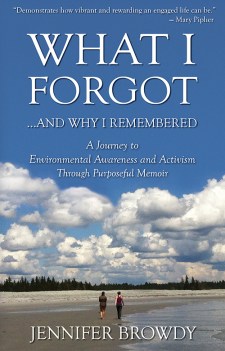
What-I-Forgot-Cover-draft-NEW-smAs I worked on my own memoir, What I Forgot…And Why I Remembered, I went through all the classic stages of grief as I realized the full extent of the loss that has unfolded during my lifetime.

Allowing ourselves to feel the grief is important, as Joanna Macy has been telling us for a long time; and we can channel the anger that arises from the tragic, relentless loss of life into a powerful force for Earth activism.

When we gather together to write and share how our personal stories have intertwined with the political and planetary happenings of our time and place, we are strengthening ourselves as a collective force for positive transformation of self, society and world.

We are, as I put it in my memoir, “doing hope together.”

Emily Dickinson famously described hope as:

“the thing with feathers –
that perches in the soul –
and sings the tune without the words
And never stops at all.”

As we navigate through our perilous moment of climate change, political disruption and environmental destruction, we can use purposeful memoir as a way of tuning into to our own inner resilience while listening for the never-ending song of hope that pulses through all life on Earth.

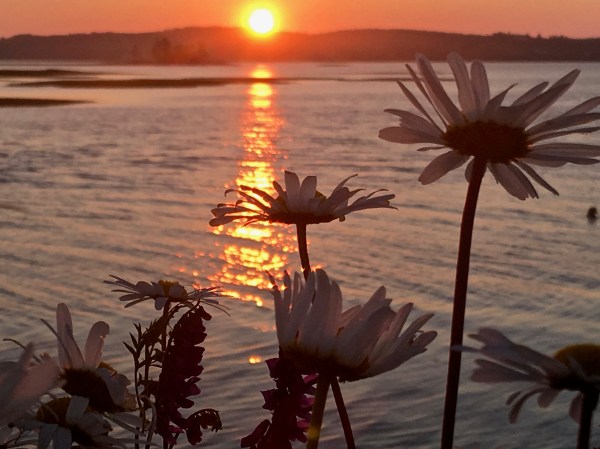
It’s easy to hear it on these beautiful days of spring renewal. It’s what sets the leaves unfurling and the flowers turning their faces to the sun. It’s what animates the birds to build their nests and the bees to gather pollen to make their honey season after season.

32072788_634642051244_576629338359726080_n

Photo J. Browdy 2018

As we work through purposeful memoir to align the personal, political and planetary, we can clearly see the preciousness and the fragility of life on Earth, and we come to understand our own potential to be stewards for the planet, and active guardians of other species.

We tap into the strong current of hope and life that constantly encircles this planet and begin to cultivate the deep awareness and resilience to become a beacon for others, each of us a little light in the vast global shift towards, as Charles Eisenstein puts it, “the more beautiful world our hearts know is possible.”

Terry-Tempest-Williams-in-canyonlands-72dpi

Terry Tempest Williams

At a recent climate change panel discussion in Albany NY, purposeful memoirist Terry Tempest Williams talked poetically about our responsibility to the generations still to come.

“The eyes of the future are looking back at us, praying we will see beyond our own time and act accordingly,” she said.

Purposeful memoir can help us locate ourselves as a strong link in the chain between past and future, understanding our individual lives as part of the broader political and planetary landscape of our time and place.

Doing hope together, we can engage in the joyful, sacred task of building bridges, plank by plank, into the thriving future we yearn for—not just for ourselves and other human beings, but for all life on Earth.

IMG_2793

Photo J. Browdy 2017

Will the Real Hillary (Rodham, Clinton) Please Stand Up?

Today’s New York Times features an article by Amy Chozick about the fading away of Hillary Rodham Clinton, in the wake of her electoral college (though not popular) defeat to a known sexual predator.

The article regrets the fact that Mrs. Clinton, after so many decades of leading the way for women in politics, has now been forced to the sidelines. “On issues of sexual assault, Mrs. Clinton has remained mostly muted, her hands tied as liberals rethink how President Bill Clinton’s accusers were dismissed and shamed in the 1990s. Even the #StillWithHer crowd seems to agree that the #MeToo movement cannot feature Mrs. Clinton.”

And therein lies the rub for Mrs. Clinton.

To fully step into her power as a feminist leader, she has to account for her hubby. This is where the personal meets the political and things get complicated.

Chozick asks whether Mrs. Clinton should “be held responsible for the badly behaving men around her.” The answer is no, we are only responsible for our own behavior.

But her behavior in the Monica Lewinsky scandal was not okay. For years she determinedly looked the other way as Bill had his trysts. This was known when they were on the campaign trail in the 1990s, and the Lewinsky affair revealed just how deeply entrenched Bill’s proclivity to sexual predation had become.

All through that scandal, Hillary stood by her man.

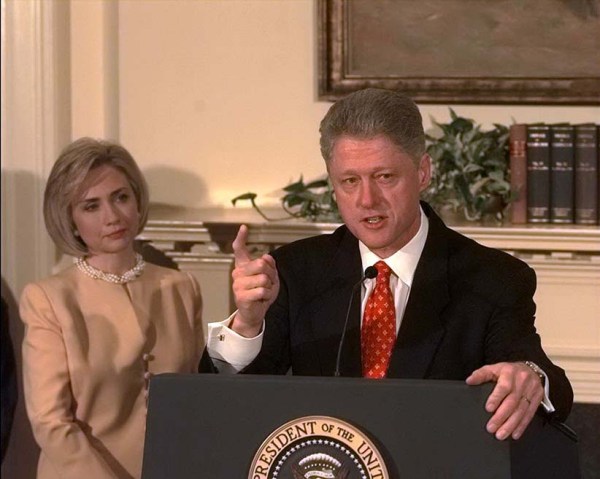
Pres. Clinton Denies Lewinsky Affair

Even after they left the White House, when she could have divorced him without any political blowback, she continued to stand by her man.

We don’t know if he continued his sexually loose ways after retirement. I for one don’t care, as long as the encounters were consensual. Let him eat cake. Let her eat cake too, for that matter! I’m not one to argue sententiously for the sanctity of marriage.

But if Hillary wants to be an icon for women, she should help us understand what was in her mind as she stood by Bill, even knowing that he was getting young Monica to jack him off in the Oval Office.

I wish Hillary would write a real memoir digging into the full complexity of the calculus for women seeking power and success in a world still so overwhelmingly patriarchal.

frida-dvdSalma Hayek’s brilliant essay, revealing how she had to demean herself to Harvey Weinstein in order to achieve her creative masterpiece Frida, opens a lurid window into the contortions required of ambitious, talented women in this man’s world. Whether they are seeking success in science, religion, education, politics, the arts, or business, as feminists have been documenting for years, there is no level playing field for women.

These days, feminist critique is finally coming out of women’s studies classrooms and journals and into the mainstream. The whole nation saw the glass ceiling in action in all its glory, holding fast against the first woman who actually might have been POTUS.

At the very least, when all is said and done, Hillary deserves a good biography of her life, maybe a dramatic bio-pic made by someone who gets it, like Salma Hayek.

We need to understand what pressures women like her to put up with “bad behavior from those around her” in the quest to achieve higher goals.

We need to understand why she has stuck by Bill all these years. Hollywood celebrities get to marry and divorce with abandon, but not politicians, particularly women politicians. Why not? Why do we insist that women stand by their men, no matter what? Other countries are relaxing this standard—look at France, or Chile.

We will never know if Hillary would have been a stronger, better candidate had she divorced Bill after their shabby reign in the White House ended. All these years, she stuck by her man. Maybe she loves him. Maybe he’s changed with age and become a good companion for her.

150410203036-hillary-clinton-bill-clinton-steak-fry-large-169

Hillary and Bill in 2016

The bedroom does influence the boardroom, for women as well as men. Hillary Clinton is someone who could tell us just how much this is so. But she’d have to take the risk of standing on her own two feet, as Hillary Rodham, Clinton be damned.

Stop the world, I want to get off! Reflections from the runaway train of 2017

The train wreck in Washington state this week gave visual reality to the feeling I’ve had lately of being a passenger on a runaway train, bound for disaster. I’m in that eerie slo-mo stage where everyone is screaming, we know we’re screwed, but there is nothing anyone can do to change the inevitable horrific outcome.

I’m talking about the Great Tax Scam of 2017, in which ultra-wealthy individuals and mega-corporations played a nasty shell game with everyone else–now you see it, now you don’t!—throwing some crumbs to the masses, while slashing funding for public education, health care, infrastructure and the social safety net for the most vulnerable, including the elderly and children.

I’m also talking about the environment: even as the pace of mining, logging, fracking and drilling continues to increase, the Arctic is melting, the forests and coral reefs are dying, and every day brings new tidings of floods, fires, droughts, famines.

To use another disaster metaphor, the US government and the corporations continue to party while the great Titantic of human civilization maintains a collision course for those now-melting ice bergs.

I can foresee the wreck, but I seem to be frozen and helpless to act to avert it.

Part of my inertia comes from the fact that I, like all of us living in the heart of the Empire, benefit from what the corporations offer. I’m complicit: I drive with gas, I heat with oil, I use banks and computers, I eat industrially produced food and expect drugs to be there when I need them. I pay my taxes.

While I don’t want to make excuses or let myself off the hook for my complicity, I also recognize the way my choices have been warped and limited by the same forces that are now ramming “tax reform” through Congress.

Because my funds are limited, it is difficult for me to buck the pressures of industrial capitalism—the policies that make gas cars cheaper than hybrids, oil burners cheaper than solar panels, and industrial food cheaper than organic.

For the most part, I have allowed myself to be shaped (maybe contorted would be a better word) into another of the obedient, ever-desiring consumers required by the corporate finance titans—a capitalist automaton who will shop till they drop on plastic fumes and go into debt bondage to keep up with the American dream.

But even as I reach for my plastic and do my holiday shopping, I am aware that I am not as helpless as the corporations and government want me to believe. I do have choices, even on this crazy runaway train that’s taking us all for a terrifying ride in these early years of the 21st century.

In a long-ago dispute over taxes, Henry Thoreau went to debtors’ jail to protest how taxpayer money was being spent on war. He wrote his famous letter on civil disobedience from prison, with the line that always echoes in my ears: “If the injustice is part of the necessary friction of government, let it go, let it go; perchance it will wear smooth–certainly the machine will wear out… but if it is of such a nature that it requires you to be the agent of injustice to another, then I say break the law. Let your life be a counter-friction to stop the machine. What I have to do is see, at any rate, that I do not lend myself to the wrong which I condemn.”

If I were to stop “lending myself to the wrong which I condemn,” I would have to stop contributing my tax dollars to the maw of U.S. corporate capitalism. I would have to get rid of my credit card and start working individually and in my community to become more independent and resilient: investing in local agriculture, decentralized energy, local credit unions and currencies, building up community networks to ensure a social safety net on the local level.

One way federal/corporate interests keep us in line is by mesmerizing us with global news. We know more about the latest disaster on the other side of the country or the world than we know about how our neighbors are living down the street.

We can’t stop climate change, but we can begin to work in our own communities to prepare for it. We may not be able to overcome the stranglehold of corporate capitalism on our economy and our government, but we can do things differently on the local level.

It’s time to walk the talk of living as awake, aware, socially and environmentally responsible human beings. I can’t do it alone, but I can reach out to you, and together we can begin to bring our personal, political and planetary values into alignment. It’s never too late to start, and it’s certainly not too soon.

IMG_2352

Time for the biggest march on Washington DC EVER!

The bombardment of bad news is relentless. For an empath like me, it’s literally painful, even self-destructive to open myself up to it. Today they are permitting the shooting of hibernating bears in their dens. Yesterday they threw out the rules against trophy imports of elephant and lion parts.

Tomorrow they’ll vote on a tax bill will savage students, the elderly and the working class, while sending the rich laughing to the bank. Word is that the senator from Alaska has decided to vote for it, despite misgivings, because she can’t resist the pork thrown her way: carte blanche to drill in the Artic National Wildlife Refuge. And then there’s the possibility of war with North Korea, which has Hawaii resurrecting World War II era missile warning systems.

Meanwhile, the insane man who stole our White House is busy inflaming old hatreds, undermining confidence in our most respected news organizations, and getting away with crimes that other men are now being fired for daily (Garrison Keillor, the latest head to roll for sexual misconduct).

How should we conduct ourselves in the face of such overwhelmingly bad news?

Like most people I know, I’m just continuing to go through the motions of my life. As a teacher, I go in to teach my classes, and most of the time current events doesn’t come up, even in my media studies classes. The students don’t want to discuss politics or current events. They don’t want to get into arguments or risk offending each other. They just want to do their work, get good grades, and move on with their lives.

I can’t blame them as I’m following the same playbook. We all are. Yes, there’s some outrage expressed on social media, but if we really allowed ourselves to wake up and feel the full measure of the slow-motion disaster that is our present moment, we’d be doing more than posting angry faces and sharing editorials.

Graduate students, who are among the biggest targets of the disgusting Republican tax bill being rushed through Congress, are taking to the streets to protest. As usual, the young lead the way. We should all be out in the streets protesting!

I am surprised that no national organization is calling for the mass protests that should be occurring in Washington DC this holiday season. Last January women turned out en masse not only in Washington but all over the country to protest the ascension of “grab’em by the pussy Donald” to the highest office in the land. Where are they now, when all our worst fears for the Trump era have come true, and then some?

Protesting to your social media friends in virtual reality is ineffective because you’re not reaching your “enemies,” the people in power you’re protesting against. The Republican-controlled government is in its own echo chamber—45’s 43 million Twitter followers are cheering him on, giving him the illusion of invincibility.

Trump and his Republican toadies need a wake-up call, and it needs to be delivered with boots on the ground, not easily ignored virtual reality.

Today I’m calling on the leaders of every progressive organization in America to get off their butts and start organizing the biggest march on Washington our country has ever known.

We are in the midst of a crisis of epic proportions, affecting every sector of society (save the 1% and the big corporations). The health of our society and environment has never been more threatened.

It’s a storm-the-Bastille moment, and yet here we are, all mesmerized and immobilized by our screens.

Let’s use virtual reality to organize: who’s ordering up a bus for my town? What about yours? It’s time to go to Washington to remind the politicos who they work for, and what the democratic creed of America stands for.

We need to do it now, before they lock in legislation that will cripple our economy and bankrupt our future for generations to come.

Fired up? Ready to go!

***

While you’re waiting for the bus, you can call these senators who are said to be open to rational appeal on the tax bill:

Collins (ME) 202-224-2523
Corker (TN) 202-224-3344
Daines (MT) 202-224-2651
Flake (AZ) 202-224-4521
Johnson (WI) 202-224-5323
Lankford (OK) 202-224-5754
McCain (AZ) 202-224-2235
Murkowski (AK) 202-224-6665

And consider submitting your writing, photography or art to the new online magazine I’ve just founded, Fired Up! Creative Expression for Challenging Times.  It’s true that online activism can only take us so far. But it’s a good way to let off some steam and inspire ourselves and others in the process!

Apres le deluge comes the fire: it’s time for another big march in America!

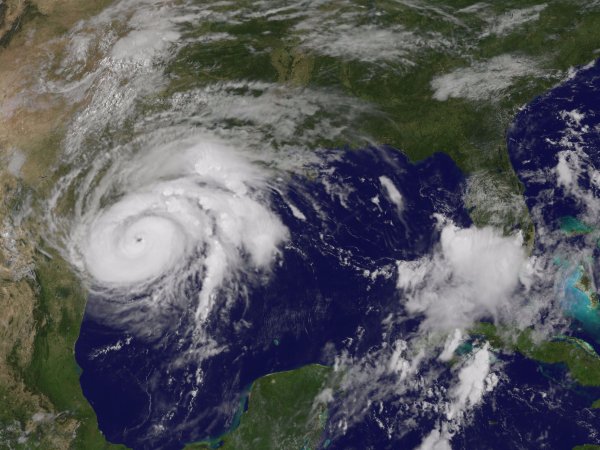
It is so sunny and peaceful here in Massachusetts, it’s hard to believe that Texas is in the middle of a hurricane with high winds and epic downpours that are expected to go on for days.

How convenient for the president and his henchmen, a natural disaster to distract everyone while a racist bigot sheriff is pardoned (Arpaio), a white nationalist fascist advisor is sent back into the shadows (Gorka) and the systematic work of undoing environmental protections goes full steam ahead (Bears Ears).

The circular motion of the hurricane seems an appropriate weather metaphor for America this August, whirling around the black eye of the solar eclipse. But this political hurricane has no end in sight. It just keeps getting stronger and stronger, worse and worse.

latest

Hurricane Harvey hits Texas, August 25, 2017

There is no fighting against a hurricane. You can only try to flee out of the storm’s path, or if that is impossible, do your best to hunker down and survive.

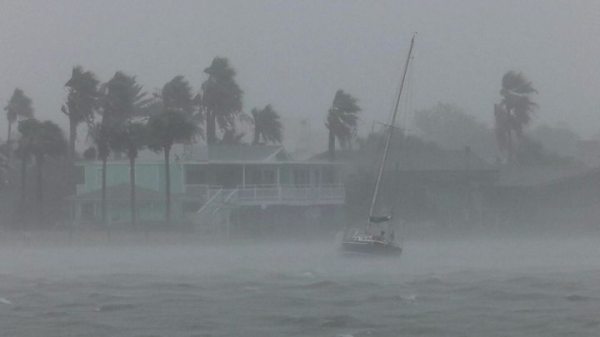
Like the Texas palm trees, we bend and bow under the fierce winds that Trump and his gang have unleashed upon the land. The pace of un-American proclamations and acts is so rapid and intense, we are under constant siege. How long before we snap?

p05dbxb0

Winds of 130 mph as Harvey hit the coast

But the metaphor only goes so far. In today’s political hurricane, we do not have to flee or hide in our homes. Here in sunny New England, we are free to come and go as we please.

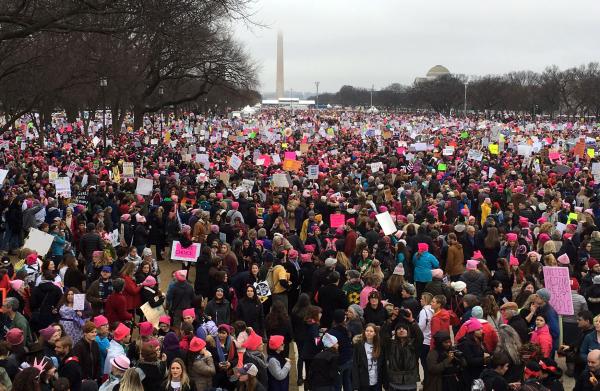
It’s time for another big march, people. Things have gone from bad to worse since the Women’s March on Washington in January. We are all under constant assault from this White House and Republican Congress, and the Democrats are sitting on their hands. It’s time for the people to rise up and defy the battering winds of the Trump machine.

Thousands-converge-for-Womens-March-nationwide

Women’s March on Washington, January 2017

How about on Labor Day? An uprising in every city and town across America, a show of force and unity in the shared vision of the peaceful, just, harmonious country we want to live in and create together.

But we could take the next step and make this an actual March for Impeachment, a march to show the president and his cronies that we see what they’re up to and we won’t stand for it.

We know they got where they are by trickery and manipulation (gerrymandering, hacking, corruption of all kinds). They were not elected by a majority of this country and it’s time for that majority to come out and let them know it.

If the Democrats won’t lead the charge, we need to do it for them.

Fired up? Ready to go!

fired-up-ready-to-go

Still more work to do.


In the Shadow of an Uncertain Future

On the homestretch to the 2017 solar eclipse over America, it seems that the shadow is already falling on this beleaguered country.

Tear gas and violence in Charlottesville over the decision to remove a statue of Robert E. Lee, racist hero of the Confederates. A president who tries to appease both sides, refusing to condemn racism and white supremacy as a failed and destructive ideology that has no place in 21st century America—no surprise, as he is busy enacting his racist anti-immigration policies and looking the other way on gender- and race-based violence.

Meanwhile on the other side of the world, a trigger-happy, unstable and belligerent boy king is daring to challenge the trigger-happy, unstable and belligerent American president. The whole world watches, aghast, knowing that these two boy-men have the power to drag us all into war, and deadly nuclear war at that.

Wildfires burn in the West, floods wash out parts of New Orleans, and overhead the Perseid meteors sizzle and flash.

I can’t help but feel the portent in all of this, and to wonder why it is that most people seem oblivious.

KeyArt_LowRes_copyThe chatter in the audience this evening before Al Gore’s new film began was all about cultural doings, restaurants and vacations. Needless to say, people were more subdued after watching 100 minutes of Gore turning gray in his indefatigable efforts to wake people up to climate change and get us to fight for our future.
The movie tried to end on a hopeful note, and yet we can’t avoid the dire fact that our climate gets further out of balance year by year. This summer there are unprecedented wildfires in the previously frozen peat bogs of Greenland, releasing tons of methane, a greenhouse gas way more potent than carbon dioxide.

The writing on the bog is clear: in a relentlessly warmer world, we’d better start adapting.

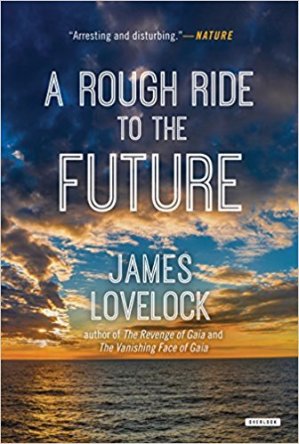
51yaY7uJ07L._SX334_BO1,204,203,200_In the same week as seeing Gore’s film, I also read James Lovelock’s latest book, A Rough Ride to the Future, as well as his student Stephan Harding’s marvelous book Animate Earth: Science, Intuition and Gaia.

Lovelock—the pathbreaking scientist who, with Lynn Margulis, was the first to understand the Earth as Gaia, a vast interconnected biological system—is now 98, and he’s still way out in front of the pack in terms of visionary, unconventional thinking.

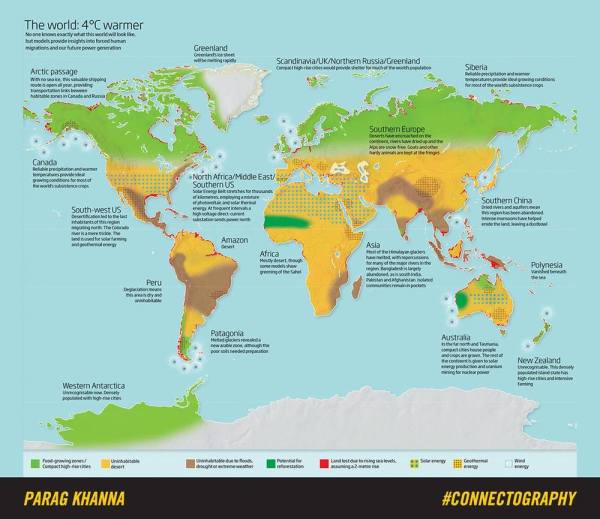
His book envisions the possibility of humans taking an evolutionary leap hand in hand with our computers and robots, founding a new civilization of cyborgs that no longer rely on what he calls “wet carbon life forms,” which will not be able to withstand the hotter world we are creating. He advises that we build new, sustainable cities in areas of the world likely to remain arable, and let Gaia take care of regulating the rest of the planet, as she has always done through many great climate changes in history.

Although Lovelock calls himself an optimist, the book ends on a sober note.

“I do not envision the death of Gaia, the Earth system, in the immediate future, either through human folly or otherwise. It can sustain human life for a good while yet, and human life can be the catalyst for Gaian survival in the much longer term. But there is one snag. The system cannot sustain the present level of human population for very much longer. The future world may be a better place, but getting to it from here will not be easy, and we will not all make the journey.”

Watching Gore’s movie, with its dramatic footage of floods, fires and melting glaciers, as well as his reminders that the terrible violence in Syria started with a drought that destroyed more than 60% of the country’s farmland, while an increase in pandemics is inescapable on a warmer planet….well, you’d have to be pretty obtuse not to see that there are many paths to human population crash, and we’re rapidly swarming down all of them.

We are about to be the victims of our own success as a species, and there doesn’t seem to be a whole lot any of us can do about it. Even Al Gore seems pretty stumped by the end of the movie, after Trump’s decision to scuttle U.S. participation in the Paris climate accord.

I may not be much of an optimist, but I won’t allow myself the luxury of despair, either. I agree with Gore and Stephan Harding that we must use our power as consumers and taxpayers to push for climate-friendly changes at the local, national and international levels, including electing politicians who will represent the best interests of people and the planet.

But before that can happen, we need to wake people up to the necessity of profound, rapid, systemic change that goes beyond individual choices to the realm of national policy.

Harding’s vision is very much aligned with my own belief in the importance of starting from personal experience. The way to get people to care about the Earth is to help them remember moments when they were able to perceive the beauty and awe of our planet. This is the aim of my forthcoming online course in purposeful memoir, “Becoming Gaia,” and Harding puts it very lyrically in his conclusion to Animate Earth:

51w61ADyV4L._SX332_BO1,204,203,200_“To act well, we need to experience the Earth not as “nature” out there, nor as an “environment” that is distinct from us, but as a mysterious extension of our very own sensing bodies that nourishes us with an astonishing variety of intellectual and aesthetic experiences—with the roar of the sea and with the wonderful sight of the night moon reflected in a calm lake. Right action requires us to live into the body of the Earth, so that we feel just as comfortable with the air, water, rocks and living beings that are the life of that wider body as we do in our human-made environments. If we could only do this, our focus would shift from the endless fascination with human affairs to a wider, more fulfilling perception of the animate Earth in which these affairs take place. We would then encounter a broader, Earth-centered view in which every breath we take and every decision we make is a pledge of service and allegiance to the greater personhood of our planet.”
Truly, a pledge of allegiance to the planet is called for today.

To those who have been tasked with carrying out the ecocidal will of the fossil fuel cabal now in political power in the United States, I say: you have a choice.

  • If the mad president tells you to pull the trigger on a nuclear weapon that will incinerate a nation, you can say no.
  • If the energy transfer company wants you to put a gas pipeline under a river or over an aquifer, you can say no.
  • Even if you are offered a lot of money for staying silent, you always have the choice to say no.

“The arc of history is long, but it bends towards justice.” Your resistance may be vilified in the short term, but it will eventually be understood as heroic whistleblowing that saved millions of lives, in service to our shared sustainable future.

Gore compares the fight to head off climate destruction to other morally based American movements: abolition, women’s suffrage, civil rights, gay rights. The climate justice fight is bigger than any of these—it’s global, and it goes way beyond humanity. We are fighting for all the beautiful members of our Earth community who came up with us through the eons, the plants, animals, birds, insects and marine life that evolved together into the complex, perfectly balanced system of water, oxygen, carbon and sunlight that makes our planet such a living wonder.

An Inconvenient Sequel ends on a defiant note. “Fight like your world depends on it,” Gore says.

Because, of course, it does.

1469740124988

Stop the World, I Want to Get Off!

We live in a time when depression and anxiety are at epidemic levels—the so-called “opioid crisis” is really just a symptom of a deeper sickness eating away at the heart of our society. It’s especially disturbing—but understandable—to find high levels of anxiety and despair among the young.

This has been going on for a long time in certain communities—among the urban poor or on Native reservations, using drugs and alcohol to fight the despair is nothing new.

Now it’s spilling into the mainstream—white suburban kids are dying from overdoses, along with their fathers and mothers. This recent report from my home state of Massachusetts presents a chilling portrait of the scale of the problem.

AverageAnnualOpioidRelatedDeathRateper100,000People

While better treatment for addicts is certainly necessary, it’s crucial to address the the deeper roots of the problem: the physical and emotional pain that drives kids, men and women to seek out opioids, legal or illegal.

This is a much more complicated knot to try to untangle, but the basic outlines of the problem are clear.

  • We need a more vibrant, creative, exciting educational system, where kids look forward to going to school each day because it’s a chance to interact collaboratively with interesting people—teachers, other students, and community members of all ages—and learn life skills that can be immediately put into practice. Humans learn best by doing, not by rote memorization and regurgitation of abstract knowledge.
  • We need better nutrition: getting chemicals and excessive sugar out of our diet and returning to the whole, unprocessed foods that contribute naturally to our physical and mental health. We need to get connected with how our food is produced, and return to gardening and animal husbandry ourselves when possible. We need more time for eating and socializing around the table.
  • We need a basic social safety net for all, so that no one has to worry about becoming homeless if they get sick, or when they get old. Everyone has something to contribute to society, and people should always be able to find rewarding work in their communities that will allow them to live decently and with respect.
  • We need to create more time and space for fun, especially in outdoor activities, or in creative, collaborative culture-making. Despite all the social media, people are feeling isolated and alienated and even the comfort of talk therapy has been taken away by the insurance companies, which would much rather push those pills on us.

To those who would tell me we can’t afford it, I reply: what would happen if we stopped spending more than $600 billion a year (15% of 2016 GDP) on the military, while giving only 3% of GDP to education? What if those proportions were reversed, as they are in many other Western countries?

And yet even as I type these words, I know the politicians won’t be listening. They are too focused on treating the symptoms to pay attention to the causes.

This is as true for dealing with climate change as it is for dealing with the opioid crisis. Everyone is looking for quick fixes that will allow us to continue with business as usual, no matter how many casualties that business generates.

When confronted with an intractable problem, my mom used to say, “Stop the world, I want to get off!”

Lately the feeling of just being along for the ride—and a hurtling, scary, out-of-control ride at that—grows stronger day by day.

And of course, we can’t get off, not alive, anyway.

So how do we deal with having to sit in the back seat while the drivers take us down bumpy roads in the wrong direction at dangerous speeds?

My own response is to focus on what I do have control over.

  • I can weed my garden, spend more time outside.
  • I can eat healthy foods and cultivate mental clarity by cutting back on the distractions of social media and television.
  • I can try to contribute positively to my community—family, friends, the larger circles of positive creative people I care about.
  • I can review my life goals, and set some intentions for the coming years that, with focus and effort, I may be able to achieve.

Most of all, I can set my internal compass to LOVE and try to hold it steady there, no matter the jerks and lurches along the road.

FullSizeRender

My new online course, The Elemental Journey of Purposeful Memoir, will be launching this fall. Through catalyzing writing prompts, I invite you to consider how you got where you are today, and to envision the future you want to create and live into. Join me!

A Paean for Interdependence

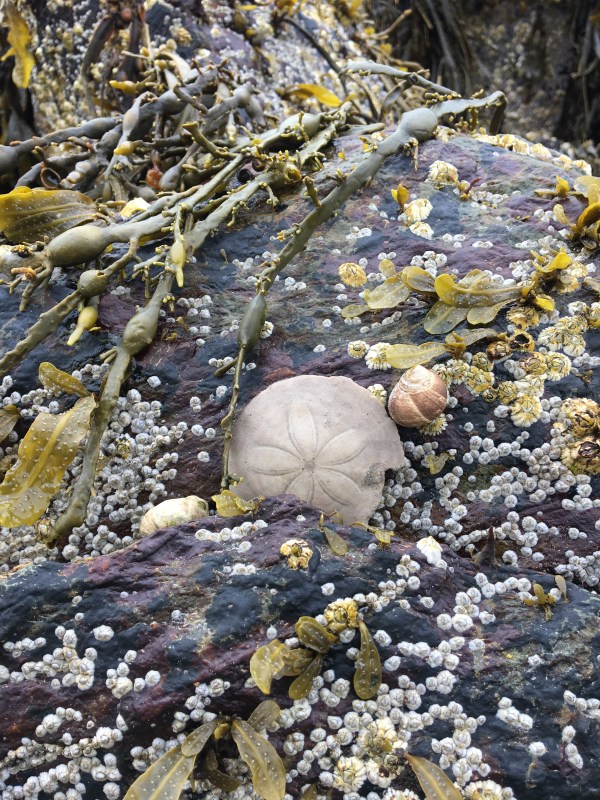
It’s so clear, by the sea, how interdependent every living thing on our planet is. It’s clear in the mountains and forests too, but somehow everything is stripped down to its essentials by the ocean and you can see the remarkably calibrated food chain in all its exquisitely complicated simplicity.

AIR, WATER, EARTH, FIRE. Take oxygen, hydrogen and carbon, drench with sunlight, and watch life pour forth.

Death too is a necessary part of the cycle. But not the death of innocent babies caught in the crossfire; not the death of majestic animals shot for greed or sick pleasure; not the cataclysmic death of the Sixth Great Extinction, with billions of life forms, some not even known to humans yet, all being choked out at once.

Well, perhaps I shouldn’t say that, because these great extinction events are also part of the natural cycles of this planet. We are moving rapidly into the sixth such event, after all. If you take a longer view, as the Mayans did in predicting that 2012 would be a historic end of one cycle, beginning of another, you can see once again the elegance of the great pulses of life and death on Earth.

Although I have written before about how I believe that “Independence Day” should be converted to “Interdependence Day,” in 2017 this shift seems particularly urgent.

Not just because we need to become more aware of our ecological interdependence with all other life on the planet, from the bacteria and worms to the fish, vultures and wolves, but also because the whole idea of celebrating a colony’s independence from a colonizer seems quaint and outdated today, when the colonization process actually runs so much deeper and is so much more intense.

Nation-states as markers of identity are fading, which may be why we’re seeing a paroxysm of violence from those who want to preserve this failing political form at all costs.

Now people are being organized into two main groups—those who are connected to the World Wide Web, and those who are not. The connected ones belong to a kind of virtual nation, and we are controlled not by physical borders, but by information (aka propaganda).

The current American president got where he is because he understood the power of media to manipulate people. He is doing his best to confuse and discredit the whole idea of a news media dedicated to reporting “the whole truth and nothing but the truth” because he knows that if people can’t tell truth from falsehood, they are all the easier to manipulate. Colonization goes internal, we police ourselves and each other, and the warlords make out like bandits.

This is the sad state of affairs on the Fourth of July, 2017. Ordinary American politics is so diseased that celebration is impossible.

So perhaps it’s time to embrace a bigger vision, going beyond the fiercely contested territories of the nation-state and the Internet to think creatively and positively about our presence on the planet.

This Fourth of July, I celebrate Gaian life in all its diversity and glory. I resist separatism and meaningless violence incited by arbitrary boundaries and manipulative colonizers, whether of the corporate or nation-state variety.

Human beings are just another animal in the vast ecological web of life on the planet—a very successful and destructive invasive species, to be precise.

Because of our ability to remember the past, forecast the future, and use technology to chart and change our environment, our natural role as a species is to tend, steward and manage our planet, for the benefit of all. Not just all humans, but all life, because we cannot thrive unless the entire ecological web is healthy.

This is how it works:

Take a deep breath. You are breathing in the trees, the flowers, the cool seaweed in the ocean and the pale lichens on the rock. Exhale and know that you are sending sweet nourishment to all life on the planet, in a perfectly balanced symbiosis.

Interdependence. So simple, so complex, so profound. There’s nothing better to celebrate today, is there?

IMG_2221

This International Women’s Day, I Stand for Life

The good news this International Women’s Day has to do with resistance.

This year’s unprecedented Women’s March on Washington brought women and our allies out into the American public square demanding our rights, in a way that hasn’t happened for a long time.

Of course, never in my memory has the top American official, our President, been a man who is a gloating and unapologetic sexual predator of women; a man who treats his wife like a porn star bimbo and believes that serious women who dare to aspire to power are “nasty.”

By acquiescing in a warped political process that propelled this man into power, Americans have become bystanders to his nasty, discriminatory behavior towards women. “Make America Great Again” seems to mean “put women back in their place again”—in the home, making babies and waiting to serve their all-powerful men.

Well, no. Just NO.

Our foremothers did not fight so long and so hard for women’s equality just to see the current generation swallow our bile and tears and accept the rolling back of our rights as free and equal human beings.

Everywhere you look you can see women standing strong against this new tide of injustice.

The powerful women of Standing Rock are now flooding into Washington DC, along with thousands of other Native people and allies, for this weekend’s Native Rights marches. The Native people of America, and indeed the world, are leading the way on insisting that humans stop destroying our Mother Earth, and become her loving stewards.

17191266_10155285345051844_4388818631995381601_n

Tipis on the National Mall, March 7, 2017. Photo by Kandi Mossett

Although there are so many important issues to focus on this International Women’s Day, for me all of them can be summed up fairly simply: either you love and support life, or you hate and destroy life.

I CHOOSE LIFE.

That means I choose to stand up for children, our precious new generations, who have the right to quality education, good nutritious food, a loving family and community, and a healthy environment.

IMG_9158

My first child.

I stand for the right of every human being to play a meaningful role in their community, and to be rewarded and respected for their contributions. Of course, this means that women should have control over their bodies in every situation, just as men do.

I stand for the rights of animals, who should not be made to suffer…who should not be driven to extinction…because of the thoughtless greed of human beings. I stand for the protection of our environment, for the rights of Mother Nature, without whom none of us could live for even a moment.

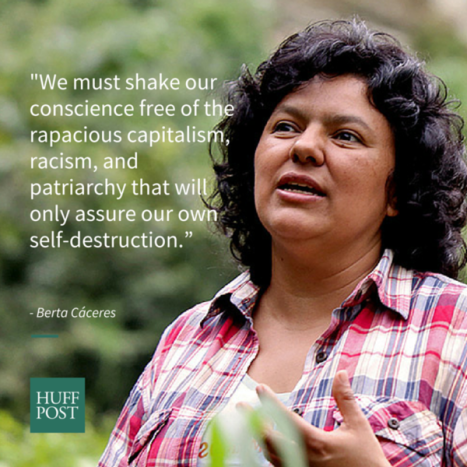
This International Women’s Day, I give thanks and honor to every woman who has stood up for Life, sometimes in the face of fierce persecution, sometimes even giving her own life for the cause—like the environmental activist Berta Caceres, who we lost in 2016 because she refused to back down when the loggers and drillers advanced towards her community.

Berta

Berta Caceres

Yes, it can be dangerous to stand up and resist the forces of destruction, to say NO to those who would silence us and reinstate the supremacy of the patriarchy, now rearing up in its most potently savage form: racist, misogynist, elitist, imperialist, extractivist, militarist, corporatist, extremist…these are the times we are living in, and they demand an equally potent resistance movement.

Marching, calling, sending post cards, organizing in our communities, networking with kindred spirits across the globe…all this is necessary, and more.

All our activism must be rooted in a deep sense of purpose, a commitment that must run like sap up our core: the commitment to STAND FOR LIFE.

Every great successful movement of the past has been fueled by the moral imperative to do what is right, to live in alignment with our most deeply held values. “We hold these truths to be self-evident: that all men are created equal…” was a revolutionary statement in its time, which was shifted by the courageous work of 19th and 20th century activists to include women, people of color and non-landowners under the banner of equality.

We are living in another revolutionary moment. It is a transition time, when if we fail to recognize the intrinsic value of our most precious resources—clean Earth, Water, Air and the life they support—we will soon find our entire civilization swept away by the storms, floods and droughts of Earth recalibrating herself in a massive reset leading into a new epoch.

This International Women’s Day, I vow to stand, as a woman and a human being, for the health and wellbeing of Mother Earth and all her children, human and non-human alike.

Join me.

01-oneness-mother-earth

Looking for a good place to start? Register for the Pachamama Alliance Game Changer Intensive course, starting a new series in March 2017. It’s free, and it’s a powerful way to connect with kindred spirits who also want to STAND FOR LIFE.