Late Night Thoughts on Love, Loss and the Urgent Need for Action

I had a rough night last night. I went to bed thinking about the April 15 “Blood Moon” lunar eclipse; unfortunately we could not see it here in the Northeast, but we certainly could feel the extra-intense full moon energy these past few days.

At some point in the wee hours I woke up to strong winds battering the house, and peering out the window I could see that our long-awaited springtime had been overrun by Old Man Winter again. Driving snow, accumulating steadily on the ground.

Shit. Yet another manifestation of the new normal of our wrecked climate.

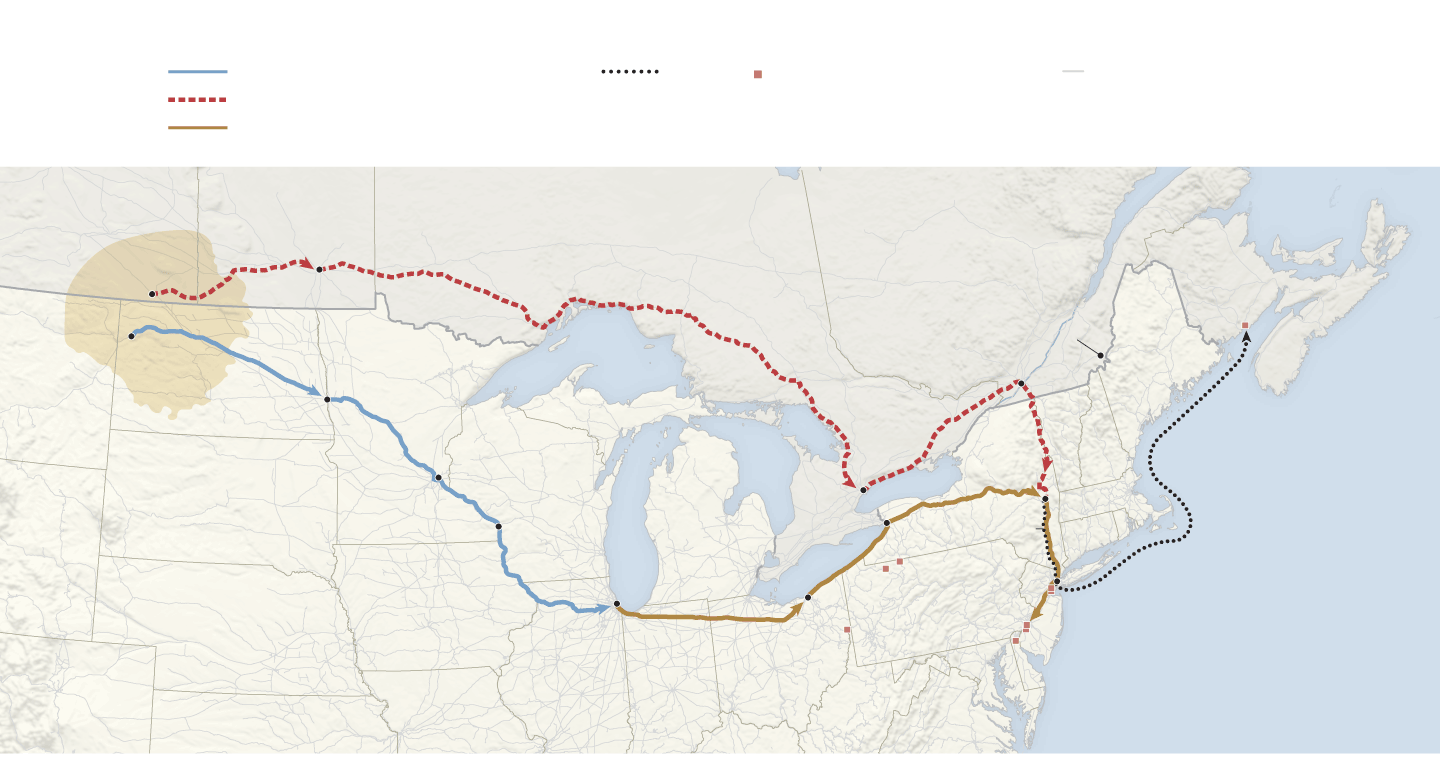
After that I tossed and turned and couldn’t fall back asleep. Eventually, bored with my own churning thoughts, I fired up my tablet and started reading The New York Times in bed. Bad move. The first article that caught my attention was about how hazardous materials, particularly heavy crude and gas from the Bakken Fields in North Dakota, are being sent by rail to ports in the Northeast in exponentially increasing quantities, with virtually no regulatory oversight.

The map below shows the rail lines from North Dakota to the Hudson River, where tankers take the oil up to the refinery at St. John, New Brunswick, on the magnificent Bay of Fundy.
I live just two blocks from a train line, and I see the tanker cars that rumble past twice a day.

The tracks go right through downtown Pittsfield, the largest town in Berkshire County, and they go through many of our most lovely wilderness areas too.

But compared to cities like Albany, where schools are apparently sited right along the railroad tracks, or Philadelphia, which narrowly averted a major hazmat rail accident just recently, we have it good here in the Berkshires.

The point is, we are kidding ourselves if we think that nasty crude oil spills and explosions only happen somewhere else, like Ecuador or Nigeria.

We are kidding ourselves if we try to imagine ourselves as innocent bystanders in the nightmare of industrial devastation of our land, waters and air, and the destruction of our planet’s biospheric life support systems.

If Humans Are So Smart, Why Are We Destroying Our Home?
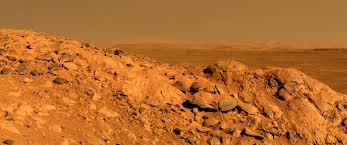
Surface of Mars

Surface of Mars

Surfing around the web bleakly in the middle of the night, I found myself reading articles speculating about how the dead, dry planet Mars lost its ability to support life.

The most likely scientific guess right now seems to be a catastrophic asteroid hit that changed the climate. Somehow the magnetic field of the planet was damaged, which allowed its atmosphere to literally blow away into space.

On Earth, our undoing will be the result of our own relentless industriousness and intelligence.

Human beings are so smart, we figured out how to split atoms and make atomic explosions! Too bad we haven’t got a clue what to do about the residual radiation and radioactive waste—waste with a half-life measured in the billions of years.

We’re so smart, we figured out how to harness the carbon energy buried deep in the ground in the form of coal, gas and oil. We even figured out how to turn oil into a different kind of substance that’s virtually indestructible—plastic! We just somehow overlooked the fact that we might quickly bury ourselves in plastic garbage, and choke ourselves in exhaust fumes.

We’re the smartest species on Earth. But like the Grinch, it appears that we have one fatal flaw—our hearts are many sizes too small for our outsized minds.

If we were guided by heart energy—that is, LOVE—in the application of our amazing technological abilities, what a very different world it would be.

It’s Time For Those With Loving Hearts to Speak in Many Tongues, Translating Love into Action

If future beings ever look back, shaking their heads at the demise of Homo sapiens on Earth and wondering how this once lush green and blue planet turned dead and brown, I wonder if they will be aware of the anguish of some of us living through these bitter transition times.

Will they know that some of us tossed and turned through the night, seeking futilely for a chink in the armor of the corporate stranglehold on our planet? Will they see that many of us, in these end times, tried to stand up for our values; tried to put into action the love we feel for the living creatures that share our beautiful Earth?

Always, it comes back to the question that keeps me up at night. What can we do to make a difference, now while there’s still time?

For a wordsmith like me, the obvious answer seems to be to learn to speak more tongues.

Since the corporations who are so bound and determined to keep fracking and mining and bulldozing their way to Kingdom Come only understand the language of quarterly profit and loss, this is the way we must speak to them.

The almighty priests of the Bottom Line and their henchmen the politicians could care less about emotional blather of love and respect for life and leaving a livable planet for future generations. So let’s speak to them in terms of losses.

The insurance company guys understand already how irreversible climate change will lead to losses on a Biblical scale. The fossil fuel magnates must also be made to understand that they are driving us all down a rapid road to ruin—and no gates will be high enough to keep the floods, fires and starving displaced populations out. We’re all in this together—rich and poor alike will go down with our sinking Mothership Earth.

To the church-going folks, we can speak the language of moral commitment and social responsibility. This weekend is a holy time in the Jewish and Christian calendars. When we’re thinking about the Resurrection and the miracle of Passover, let’s remember how these ancient holidays celebrate LIFE. For those who are religious, how can you claim to follow the Ten Commandments or the teachings of Jesus and allow the destruction of our planet to proceed unopposed?

To the ordinary folks who are just trying to keep their own lives on track, we must speak in a very pragmatic voice. It’s time to begin to pull together as communities and insist on re-localizing energy production (solar, wind, geothermal) and agricultural production in order to build resilience at the state and town level.

It’s time to insist on regulations that will put the safety of people and environmental ecosystems above the profit margins of corporations, and if the federal government won’t do it, the states and towns must step up.

Lying awake at night worrying and mourning is a poor use of my energy. I want to spend whatever time we have left raising my voice to motivate all of us who care to work tirelessly and passionately on behalf of the voiceless: the trees and the bees, the birds and the whales, the frogs, elephants and farm animals, and especially on behalf of the human children as yet unborn, who may never be born—or may be born into a nightmarish, unlivable world gone mad.

Bulbs contending with snow and temperatures in the 20s on April 16, 2014--western Massachusetts

Bulbs contending with snow and temperatures in the 20s on April 16, 2014–western Massachusetts

Psst. The Personal is Planetary. Pass it On.

We are living through a transition in awareness that might be described as the shift between the recognition that “the personal is political” to the recognition that now, “the personal is planetary.”

It’s not enough, anymore, to think about the ways we live our politics in our daily lives.  We urgently need to become aware of how our lives are expressions of our relationship to our planet.

If the personal is planetary, then who we are is deeply indicative of the state of our planet.

Today, the majority of the world’s population lives in cities, almost completely divorced from the natural world.  Most of us have little sense of our relationship to the living planet, since most of our time is spent in artificial, asphalted environments.

Many of us are sick from diseases that are themselves symptoms of our alienation from the planet, our penchant for industrial growth at any price, and our general physical and mental malaise.  The very technologies that we most admire and rely on are the ones that are making us, and our planet, sick.

Despite our technological sophistication, we have serious problems with the most basic mammalian function of providing ourselves with food on a steady, reliable basis.  The imbalance is evident in the fact that billions of human beings on the planet are perpetually hungry; others are malnourished from an over-reliance on empty-calorie sugary processed foods; and still others starve themselves to comply with unrealistic body image expectations, or have so much food that they can afford to casually throw it away.

We are a species that claims to admire empathy and compassion, but actually spends an inordinate amount of time gazing at our own reflection in our ever-more-complex forms of representation, from writing to film, without even realizing how very ego-, ethno- and species-centric our behavior is.  We claim to value love, but for most of us love is too often confused with lust, or so interlaced traditions, habits and obligations that the reality is a poor shadow of our professed ideal.

If the personal is planetary, then it should be no surprise that our planet is suffering so terribly.  We humans are suffering too, and along with us all the animals and plants in our biosphere.

Where will it all end?  Will we be able to get out in front of the tsunami of disastrous climate change, environmental poisoning and destruction of oceans, forests and fresh water in time to restabilize our planet and ourselves?

I worry when I see influential publications like The New York Times giving prominence to think tanks like the Breakthrough Institute, a so-called environmental organization that is working hard to convince us that we can become total cyborgs living happily in a high-tech, managed, artificial environment.

Such a vision of the personal as planetary imagines our planet as a giant park, complete with zoos and aquariums, manicured gardens and “rambles” left artificially “wild.”

What it fails to give any credence to is the possibility that we, and our planet, might have—dare I say it?—a soul.

Machines do not have souls.  But our beautiful planet, with her myriad forms of life, of which we humans are just one more emanation—she is more than just the mechanistic sum of her parts.

sunset on crescent

When we understand the personal as planetary, we see that to go down the road of total technological dominance of human beings and our environment would be to cut ourselves off from what is most beautiful and unique about ourselves as a species: our conscious awareness of the possibility of connecting with and cultivating the divine—that is, extra-human—energy that animates our entire  biosphere, giving us the spark of life that we recognize as the dynamic beauty and power so ever-present in the natural world and potentially in ourselves as well.

To heal the planet, we must first heal ourselves, beginning with our self-imposed split from the natural world and our repudiation of the simple values that human societies have always claimed to revere.  “Do unto others” and “love thy neighbor” take on new meaning when we realize the personal as planetary. The forests are our neighbors. The whales are our neighbors. Even the humble soil bacteria are our neighbors who must be respected for life to flourish in the balance that will benefit us all.

The personal is planetary.  A mantra for the 21st century.  Pass it on.

We Are All Noah Now

We are all Noah now.

These words have been sounding in my head like a mantra these past few weeks, and this morning I woke from strong dreams of animals in trouble—a big lone fox, a frantically hopping toad—and felt the need to make my inchoate awareness of danger and responsibility more tangible by writing it down and sharing it with others.

Derrick Jensen asks with desperate, angry sadness how long it will take us to finally wake up and start resisting the accelerating extinction of species happening on our watch.

How can we love our pets so much (I ask with my purring cat on my lap and my snoring dog at my feet) and remain unmoved by the news that hundreds of sweet, innocent reptiles and amphibians, many of them from fragile, endangered species, were cruelly murdered by callous neglect last week, crushed into hot plastic tubs without food or water for days in a crate bound from Madagascar to the U.S. pet store market?

_72676565_mada3

_72680861_mada4

How can we continue to give our children adorable stuffed lions and tigers and bears to hug and cuddle (my own boys were devoted to their respective stuffed animal friends, a gray kitty and a green froggy) while turning a blind eye to the fact that all of the large animals on Earth are staring extinction in the face?

Indonesian palm oil plantation.  First the forest was bulldozed.  Never mind all the fragile species that called it home, including our primate cousins, the highly endangered orangutans.

Indonesian palm oil plantation. First the forest was bulldozed. Never mind all the fragile species that called it home, including our primate cousins, the highly endangered orangutans.

How can we blithely talk about international agreements like REDD and cap-and-trade markets, ignoring the fact that when these lofty agreements are translated into action on the ground in the remote tropical forests that most need protection, they too often result in the worst kinds of greedy destruction—for example, so-called protected forests being bulldozed, sprayed with herbicides and turned into palm oil plantations, but still sold as “protected forest” in the international carbon market.

Americans spend royally on landscaping around our own homes, but fail to appreciate that if we don’t snap out of our trance and start acting forcefully on behalf of the planet as a whole, the storms and droughts that are coming will make short work of all our careful planting and pruning.

Wake up people!  We are all Noah now.  The Ark that will help us weather the storms we have brought upon ourselves is the Mother Ship, sweet Gaia herself.

Headlands, Puerto Rico. Photo by Eric B. Hernandez

Headlands, Puerto Rico.
Photo by Eric B. Hernandez

It’s past time to start focusing on doing all we can to conserve the living beings on this planet—ours to protect, not to destroy.

We are all Noah now.

Respecting Our Elders

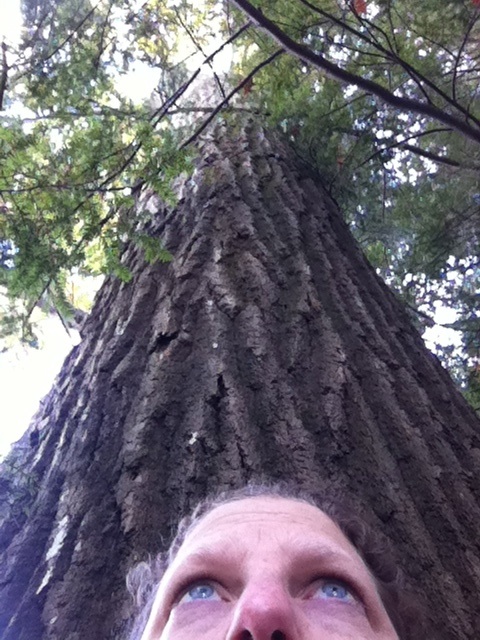
I was fascinated to learn recently that trees, especially big old trees, can communicate with each other and with their entire grove or forest of younger ones.

Apparently they do this through a network of fungi that grow in a symbiotic relationship with tree roots.  The larger the tree, the bigger the root network, and the more other trees the old one is in contact with.

What do they talk about? According to forest ecologist Dr. Suzanne Simard of the University of British Columbia, trees share nutrients and chemical signals through the network.  A big old tree can help the younger ones who may be less able to withstand drought, for example, or an insect onslaught.

That’s what we know for sure now, but who knows what other wisdom the trees may be sharing?

IMG_3928 copy

I was reminded of this forest phenomenon this week as two things happened simultaneously: the news broke that folk music giant Pete Seeger had died, and I started discussing with students in my Women Write the World class the first book of the semester, The Legacy of Luna by Julia Butterfly Hill.

juliahillLuna, you may recall, is a 200-foot-high California redwood that Julia Hill single-handedly saved from the chainsaw by obstinately camping out on a platform high in the tree, for more than two years.

In the book she wrote later, Julia describes how she came to regard Luna as a living consciousness, a kindred spirit with whom she could connect.

I thought the students in my class would pooh-pooh that idea, but many of them were willing to entertain the notion that there might have been some actual cross-species communication going on between the massive old tree and the young woman perched in its branches.

What is certain is that living in Luna taught young Julia Butterfly Hill many lessons that she never could have learned elsewhere.

If Luna had been cut down, as so many of the great old trees have been in forests around the world, all her accumulated wisdom would have been lost too, an incalculable loss to the younger trees around her.

We are fortunate that Pete Seeger and other great old ones like him—Nelson Mandela springs to mind, and Wangari Maathai and Rachel Carson, both of whom died of cancer far too young—have been able to leave a written and recorded legacy to us younger ones coming along in their wake.

We will be listening to Pete sing, watching Mandela give speeches, and reading the books of Maathai and Carson for years to come.

But when we cut down a wise old tree, we silence its network entirely.

Forests can  regenerate—if they are not sprayed with herbicides, if their topsoil doesn’t wash away and if they’re not turned into artificial factory-style plantations.

In many tropical countries the natural forest is destroyed and replanted like this.

In many tropical countries the natural forest is destroyed and replanted like this.

But even in the best of circumstances, the younger trees will be more vulnerable and less resilient without the oldest trees to shelter and guide them.

During the European colonial period, it was an accepted strategy for would-be conquerors to kill or enslave the tribal leaders first, under the theory that their followers would be less able to resist.

The Americans took a page out of the same playbook in their treatment of Native Americans, trying to demoralize the tribes by killing, imprisoning and humiliating their leaders.

It has been no different with logging.  The big old trees are the most highly prized, and are chopped down first, with longstanding and poorly understood consequences.

IMG_4053 copy 2

Dr. Simard is arguing for a different kind of forest management plan, one that is respectful of what she calls “the mother trees”—those old survivors who can help the regenerate the forest after the loggers have moved on.

Just as we honor outstanding human elders like Seeger and Mandela, we should be honoring the most ancient living things among us, the old trees.

It makes scientific sense (older, larger trees trap more carbon and hence help reduce global warming) and it also makes moral sense.

It’s the right thing to do.

Photo by Patxi Pierce

Julia at the top of Luna
Photo by Patxi Pierce