Casting the Spell of the Solstice Season

There is a passage in my memoir where I describe the sense of gleeful abundance that the Christmas season brought to my childhood. It was a magical spell created through the transformation of bringing a fragrant pine tree into the living room and decorating it with lights and ornaments; the joyful anticipation of presents; the sweet and savory scents and tastes of my mother’s special holiday meals and treats.

Outside our home, the whole world was transformed by millions of lights, Christmas trees and decorations, the landscape glittering with lights on the ground and bright stars overhead. The cumulative effect of all of this was that for the holiday season, we seemed to have stepped over some kind of threshold into a magical fairyland, complete with talking reindeer that could fly and jolly elves that delivered presents down the chimney.

Nowadays, as an adult with children of my own, the external trappings remain the same, but it’s harder to recapture that sense of magic. The setting up and taking down of the Christmas tree, lights and decorations are chores, though there is pleasure in the outcome. The presents must be chosen, obtained and wrapped. The cooking must be planned and executed. My mother, on whom most of the burden of all of this activity fell in my childhood, made it look easy and fun, and I followed in her footsteps while my children were small, which is why they too have developed a magical attraction to celebrating this holiday in an all-out way.

As I grow older, it is harder to banish the persistent doubt…the feeling that rather than celebrating the birth of a sacred child representing love, mercy and compassion, or even the simple return to light of the Solstice, we in modern America have been charmed into celebrating the great God of Consumption, who we worship through the rituals of shopping, cooking and eating to excess.

Oh, I know I will be branded a Scrooge or a Grinch for this thought. My children will cringe, embarrassed that their mother would be willing to publicly deviate from the established tradition, the script. And I can’t deny that I still enjoy the chance to escape into fairyland for a day or two, through a door that only opens at Christmastime.

But while we fortunate few are enjoying ourselves with feasting and gifts, the unpleasant reality continues for the majority on our planet. Humans continue to kill and persecute other humans. We  continue to kill and exterminate other species. The roasting of the planet through carbon combustion continues unabated, with weird, dangerous weather becoming more commonplace every day.

Oh Grinch, stop it, they will cry. Where is your sense of fun and joy? Why is your heart ten sizes too small?

No, I will reply sadly. The problem is that my heart is ten sizes too large, and I cannot relax in fairyland knowing that there is so much misery going on just outside our charmed circle.

This holiday season I have not been able to evade the thought that maybe what I need is a little dose of Zoloft to keep my mood suitably elevated and banish the darkness to the margins of my consciousness. Oh brave new world, in which we cannot function without a dose of manufactured, pharmaceutical good cheer!

If I were to change this holiday so that I could truly be happy celebrating, what would I change? I would still want to eat and drink and exchange presents with my family. But I would want to increase the dose of spiritual energy running throughout all the rituals. Instead of buying presents, we would take the time to make them for each other, putting love into every stroke of creation. Or at least choose and purchase gifts that are made by hand, with love.

IMG_3243

We would take the time to appreciate the slow return to light that happens after the Winter Solstice, the sun going down just a few minutes later each day. We would go outside under the stars and moon and send our own intense lovelights into the universe, seeking consciously to increase the network of loving connection across the planet. We would affirm to each other our commitment for the coming year to each do what we can, in our own sphere, to make this world a better place for all.

We would take it all slow, as is appropriate for this dark, cold time of year. We would sleep in and go to bed early, allowing plenty of time for dreams. We would linger long at the table and by the fireside, enjoying each other’s conversation and company.

So much of contemporary life is about maintaining our robotic rhythms without any heed for the change of seasons. In the summer we air condition so we can keep working without the indolence of heat and humidity. In the winter we have the bright glare of electric lighting to keep the darkness of the season at bay, so we can keep working and playing without interruption.

These artificial rhythms are not good for our spirits—or for our mental health. As we are drawn into marching to the beat of the machine world, the bright living aura that tunes us into the pulse of life on our planet is diminished, dimmed.

It is no accident that our time has seen a resurgence of fascination with zombies, the walking dead. We play out in our imaginations what we fear in reality. Sometimes fantasy anticipates or spells out a frightening reality we do not want to acknowledge.

We must blow gently on the embers of our humanity, still alive and glowing despite all those artificial lights. In these Solstice days of dramatic darkness and light, let us cast the spell of the season by reaching out in love to each other and all life on the planet. That is where the true magic lies.

Transition Times: Personal, Political, Planetary

The Solstice is an opportunity to remind ourselves that the moment we hit the very darkest point of the year is also the transition into the next phase, the return of the light; every end point is also a new beginning.

The recent decision of The Berkshire Edge to end my EdgeWise column gives me time to return here, to Transition Times, with renewed energy and commitment. Transition Times began in 2011 as a space where I could write about human rights, social justice, issues of higher education and pedagogy, and my overriding concerns about the environment and climate change. It’s been a liberating and often exhilarating experience to write in my own personal/political voice, without having to meet any particular deadlines or answer to an editor or publisher. And I love that my readership is truly global.

I wish I could say that many of the issues that preoccupied me in the first several years of Transition Times have now been resolved. Sadly, violence—against people, against the natural world—is still a problem of epic proportions, worldwide. Climate change, chemical contamination, animal extinction deforestation and acidification of the oceans have all been accelerating. Our political establishment continues to be dominated by elites who seem to care only about maintaining their own wealth and power, not about preserving a livable world for the rest of us.

While all that is true, there is still cause for hope. When I first began writing about climate change, I felt like other than Bill McKibben and a handful of environmentalists, no one was paying attention to this looming issue. Now it’s common to see climate change on the front page of mainstream media. The Pope has written a whole Encyclical about it. World leaders converged in Paris to talk seriously about what can be done, including key players like the U.S., Russia, China and India, countries that must cooperate for real change to happen.

crppope650

I feel less optimistic about progress on the peace-building front. Gun violence in the U.S. continues to skyrocket, as do sales of assault weapons to civilians. Let’s face it, here in the U.S. we live in an armed and dangerous camp. Terrorism continues to rise with the spread of the violent, sexist, medieval principles and tactics of the Islamic State and Boko Haram. Civilians are also being constantly threatened by state-sponsored terrorism, otherwise known as warfare—especially in places where civil society has broken down or become dominated by corruption (think Afghanistan, Syria, Yemen, Libya, the list goes on).

Against this backdrop of global-scale violence, I see young Americans, who in earlier generations would have been our revolutionaries, struggling with up-close-and-personal issues that make it hard for them to focus on the bigger picture. Poverty, debt, lack of opportunity, institutional racism and sexism, anxiety, depression and addictions (including media addiction)—these immediate concerns are front and center for many young people I know. Mention climate change and they just flinch and turn away, unable to cope with one more problem, especially one so immense and seemingly intractable.

Butterfly-Effect-Logo-WEB-2015In my work—teaching, writing, organizing the Berkshire Festival of Women Writers and the new Butterfly Leadership Program, and running Green Fire Press—I am always seeking to empower others to recognize their own potential to become the leaders we are all waiting for. The old saying “We are the ones we’ve been waiting for” is so true, and we must wait no longer—there simply isn’t time.

What is needed now is a deep, grounded movement for peace, based on empathy, collaboration and alliances across superficial differences. We must recognize our kinship, not only with other human beings but with all life on Earth. We must re-learn to rightly value the “natural resources” without which none of us could survive a moment: clean air, clean water, fertile soil, a vibrant healthy planetary ecosystem.

We must re-learn and teach our children appreciation and even reverence for this beautiful battered planet of ours. We must institute social priorities based on peace and collective well-being, not violence and competitive profiteering.

UnknownWe have a candidate for the American Presidency now who is not afraid to take up these values and call them by their old, 20th century name: socialism.

While I have no problem with the moniker socialism, I wonder if it might be time for a new, 21st century political movement, with a new name that doesn’t come with all the blood-soaked baggage of the 19th and 20th centuries.

Your ideas of possible new names, emphasizing collective well-being and reverence for life, would be most welcome. Here’s one idea to get us started. How about Gaiaism?

Happy Solstice to all, and may this new year be a transition time to a new and better world for all of us Gaians.

11224451_580292333514_5740506175697213006_o

As above so below. Photo by J. Browdy c. 2015


And the Walls Came Tumbling Down: Pope Francis Shows Us the Way

The Encyclical on climate change and the environment released by Pope Francis this week has all the magic of the fall of the Berlin Wall in 1991. Back then, the antagonism between the U.S. and the U.S.S.R. seemed implacable and unresolvable, a fight to the death. And then suddenly the wall came down and the world walked through, marveling, into a new era.

Now we have another abrupt shift, this time of a religious order. The leaders of the Catholic Church can hardly be accused of being “radical tree-huggers.” And yet here is Pope Francis, solemnly exhorting his flock of a billion Catholics worldwide to be respectful to Mother Earth and all the living beings she supports. In the blink of an eye, the language of Native American spirituality has been taken up by the same Catholic Church that once tortured and executed indigenous peoples precisely because of their different religious beliefs.

I urge you to read the entire Encyclical for yourself. It is a truly remarkable document, worth serious study. Of many passages I’d like to underline, here are two:

  1. Care for nature is part of a lifestyle which includes the capacity for living together and communion. Jesus reminded us that we have God as our common Father and that this makes us brothers and sisters. Fraternal love can only be gratuitous; it can never be a means of repaying others for what they have done or will do for us. That is why it is possible to love our enemies. This same gratuitousness inspires us to love and accept the wind, the sun and the clouds, even though we cannot control them. In this sense, we can speak of a “universal fraternity”.
  1. We must regain the conviction that we need one another, that we have a shared responsibility for others and the world, and that being good and decent are worth it. We have had enough of immorality and the mockery of ethics, goodness, faith and honesty. It is time to acknowledge that light-hearted superficiality has done us no good. When the foundations of social life are corroded, what ensues are battles over conflicting interests, new forms of violence and brutality, and obstacles to the growth of a genuine culture of care for the environment.

Here we find spiritual ecology enshrined as Catholic doctrine. And one thing about the Catholic Church—it is big on obedience. For believers, to ignore the Pope is to risk hellfire and damnation. In this case, though, the hellfire and damnation will be earthly, if we do not listen to the wise advice of Pope Francis and curb the insanity of industrial growth that goes beyond the limits of the planet to support.

Scientists appeal to our sense of reason, presenting compelling evidence that if we continue on our present path of wasteful consumption of the Earth’s resources, we will destroy our own future as a flourishing species. Religious leaders appeal to human beings’ moral conscience in invoking the responsibility of current parents and grandparents to leave a livable world to our descendants. It is up to the politicians, though, to translate vision into practice.

For too long, Christian conservatives in the U.S. have played the role of the ideological wing of Big Business, using money, manipulation and scare tactics to buy politicians and votes. In the face of the new Papal Encyclical, can American Christians really continue in good conscience to support the worst of the planet’s polluters and plunderers? Can they continue to elect mercenary politicians who hold our country hostage to the highest bidder?

If all good people who love our Earth and its creatures were to translate our love into action, as Pope Francis has just done so forcefully, I have no doubt the seemingly invincible wall of the industrial growth society we’ve been living with these past 200 years would melt away, revealing the path into a green, prosperous future.

“Where there’s a will, there’s a way,” the saying goes. Pope Francis has just shown us the will, and the way. It is now the task of us ordinary citizens to break the stranglehold of Big Business on politics and insist that our politicians follow his lead.

I close with an excerpt from the Pope’s “Christian Prayer in Union with Creation,” a vision of ecological interdependence if ever there was one:

“Triune Lord, wondrous community of infinite love,

teach us to contemplate you

in the beauty of the universe,

for all things speak of you.

“Awaken our praise and thankfulness

for every being that you have made.

Give us the grace to feel profoundly joined to everything that is.

God of love, show us our place in this world

as channels of your love

for all the creatures of this earth,

for not one of them is forgotten in your sight.

Enlighten those who possess power and money

that they may avoid the sin of indifference,

that they may love the common good, advance the weak,

and care for this world in which we live.”

Amen.

And the meek shall inherit the Earth....

And the meek shall inherit the Earth…. Photo by J. Browdy, 2015

Ebola & Islamic Extremism: An Ounce of Prevention is Worth a Pound of Cure

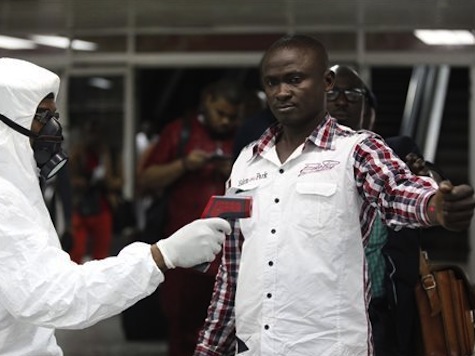
airport Ebola screening

Airport Ebola screening

Although American officials are making lots of reassuring noises about screening passengers coming from West Africa for signs of the dreaded Ebola virus, the truth is that the only way to totally safeguard against the spread of the disease is to close our borders entirely. And I don’t see that happening anytime soon.

Talk about an unexpected side effect of globalization. Goods and services spread around the globe at the stroke of a keyboard or the roar of a jet engine, but the same mechanisms we celebrate as having pumped up the global economy also, potentially, have a darker side.

What was it Marx said about the bourgeoisie digging its own grave?

I keep hearing the undertone, in the media reporting on Ebola, of the “blame-the-victim” complaint, “What’s wrong with these people? Why are they living in such poverty? Why don’t they have doctors, nurses, hospitals? Look how their squalor is putting us all at risk?!”

There is truth to this. The poor folks in Liberia, Guinea and Sierre Leone, former colonies of the U.S., France and Great Britain, respectively, have not managed to modernize their societies. This is due to a number of factors, including corrupt leadership (strongmen often propped up by the Western powers), violent civil wars (armed by Western weapons manufacturers and distributors), and banana republic-style economies where Western corporations rule by extraction, extortion and exploitation, without giving anything back in taxes, infrastructure or education for the local people.

This is where the West has made its big mistake. How could we in the so-called developed world be so naïve as to think that we could ignore the poverty and suffering of other parts of the globe without that poverty and suffering coming back to haunt us?

Liberian child soldier

Liberian child soldier

If we had invested in schools, medical facilities and housing in Liberia, instead of sending endless supplies of assault rifles and ammunition, we would not be worrying about Ebola now.

Likewise, if we had invested in education and economic development in the Middle East, instead of relying corrupt warlords to keep the population in line, we would not be dealing with a seemingly endless morphing insurgency of Taliban-Al Quaeda-Islamic State terrorists.

It really is true that an ounce of prevention is worth a pound of cure.

In a globalized society, pretending that vast disparities of wealth don’t matter is just plain stupid. Imagining that a vicious virus can be contained by airport thermometer checks is as ridiculous as imagining that an international terrorist network can be stopped by a few fly-by bombings.

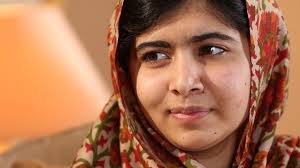
The world’s leaders need to take a lesson from Malala Yousefzai, the 17-year-old girl who won the 2014 Nobel Peace Prize for her steadfast insistence, even after nearly having her head blown off by the Taliban, that girls should be educated.

Malala Yousefzai, winner of the 2014 Nobel Peace prize

Malala Yousefzai, winner of the 2014 Nobel Peace prize

Study after study has shown that when a society educates and empowers women, it becomes more economically successful and more politically stable.

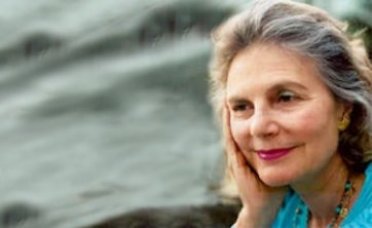
Ellen Johnson Sirleaf, President of Liberia

Ellen Johnson Sirleaf, President of Liberia

This week, in my African Women Writing Resistance class, I’ve been reading and discussing the autobiography of Ellen Johnson Sirleaf, President of Liberia and first woman head of state in modern Africa.

Sirleaf, who won the Nobel Peace Prize in 2011, has been in the news a lot lately, begging for help in containing the spread of Ebola and warning grimly of the consequences of international inaction.

She came to office vowing to take her country back from the warlords and reintegrate child soldiers, to educate girls and boys and build a sustainable economy. She’s made great strides, but the stark pictures of the pathetic state of the nation’s health care infrastructure make it clear how far Liberia, like other poor African nations, still has to go.

The bottom line is this: if we want safety, we have to build towards it, step by step, from the ground up. We can’t ignore poverty and then get mad when impoverished sick people dare to infect us, or when desperate people turn to radical Islam as a way out of their misery.

Child worker on Firestone rubber plantation in Liberia

Child worker on Firestone rubber plantation in Liberia

There is no excuse, in our globalized world, for the dramatic disparities of wealth and poverty that exist today. Those of us lucky enough to live comfortably in the U.S. or Europe should be using our privilege to advocate for those less fortunate.

Not just out of altruism. Out of self-preservation, too.
If we had been helping Liberia and other West African nations build good social infrastructure, instead of extracting profits from diamonds, rubber and gun sales, we would not be worrying about the spread of Ebola today.

If we had been educating children in Syria, Yemen and Iraq instead of supporting corrupt dictators and ignoring the plight of ordinary people, we would not be facing the spread of Islamic extremism today.

How many innocent humans will have to die before we begin to understand that simple adage? An ounce of prevention is worth a pound of cure.

Communing with Grasshoppers: An Elemental Prayer

There’s nothing like an out-of-control fatal virus to make you stop and give thanks for each day of your still-unfolding life.

Every year when I teach the five-day Writing & Thinking orientation workshop at Bard College/Simon’s Rock, I end by leading the students on a slow, silent, meditative walk in the woods, and before we set out we read Mary Oliver’s wonderful poem “The Summer Day,” which ends with these lines:

I don’t know exactly what a prayer is.


I do know how to pay attention,


how to fall down into the grass,


how to kneel down in the grass,


how to be idle and blessed,


how to stroll through the fields,


which is what I have been doing all day.


Tell me, what else should I have done?


Doesn’t everything die at last, and too soon?


Tell me, what is it you plan to do


with your one wild and precious life?

The students think and write and share their responses to that final question, which is the part of the poem that leaps out at them—understandably, as they are poised on the threshold of an exciting new chapter in their lives, starting college two years earlier than most of their peers.

The more I read this poem, the more drawn I am to the earlier lines, though. I love Oliver’s humility in admitting, “I don’t know exactly what a prayer is,” followed by the suggestion that prayer can take the form of communing wordlessly with the unmown fields and the grasshopper that Oliver observes “gazing around with her enormous and complicated eyes.”

Unknown

Fewer and fewer of us humans have the chance, these days, to simply relax into the natural world around us.

Fewer and fewer of us are even aware that we inhabit a natural world—or if we do think about it, it’s more in terms of annoyance (“the mosquitoes are so bad this year!”) or fear (“the seas are rising! What are we going to do?!”) or utility (“the Arctic ice is melting, let’s get an oil rig up there and start drilling!”).

Oliver’s insight that prayer can take the form of “blessed idleness” in nature seems key to me now. That’s the kind of religion we need more of today.

Not the hysterical fanaticism of the pseudo-religious Islamic State, which, like the Queen in Alice in Wonderland screaming “Off with their heads!” at every opportunity, is turning the beheading of civilians into a spectator sport.

Not the Cain-and-Abel warring of the Israeli Jews and the Palestinian Muslims; not the Christian capitalist posturing of “do unto others” while simultaneously creating wealth disparities just as vast as back in the days of feudalism, with inherited misery for the masses and inherited luxury for the few.

In creating a society that sees and understands itself through the mediation of computer screens, we have, in a few short generations, succeeded in cutting ourselves off from what we once knew: that we are an integral part of our planet, and indeed of our universe.

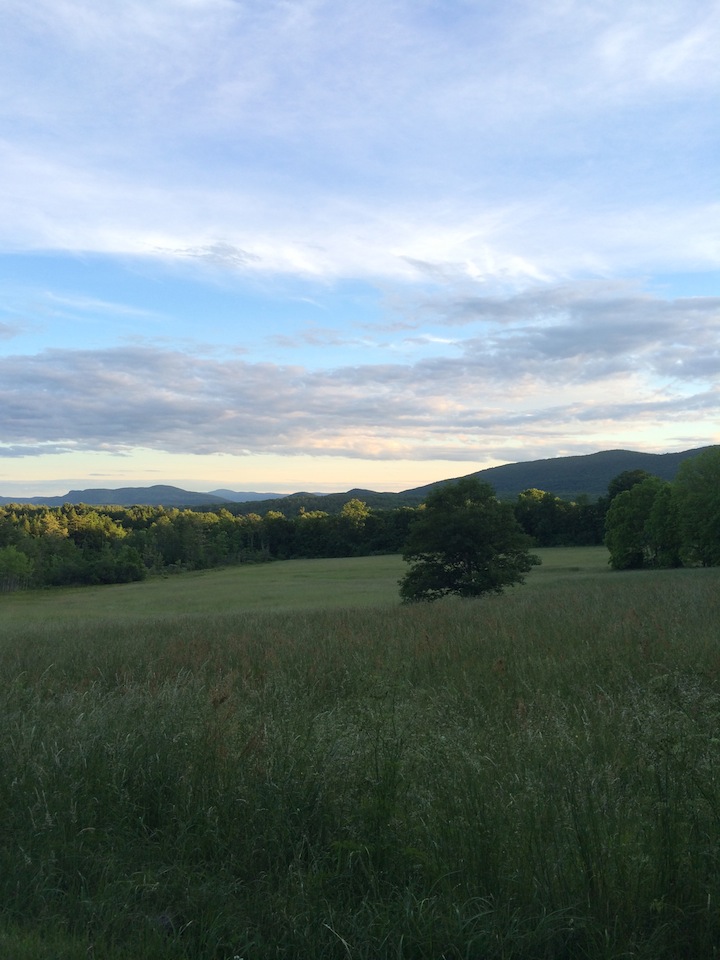
IMG_6007

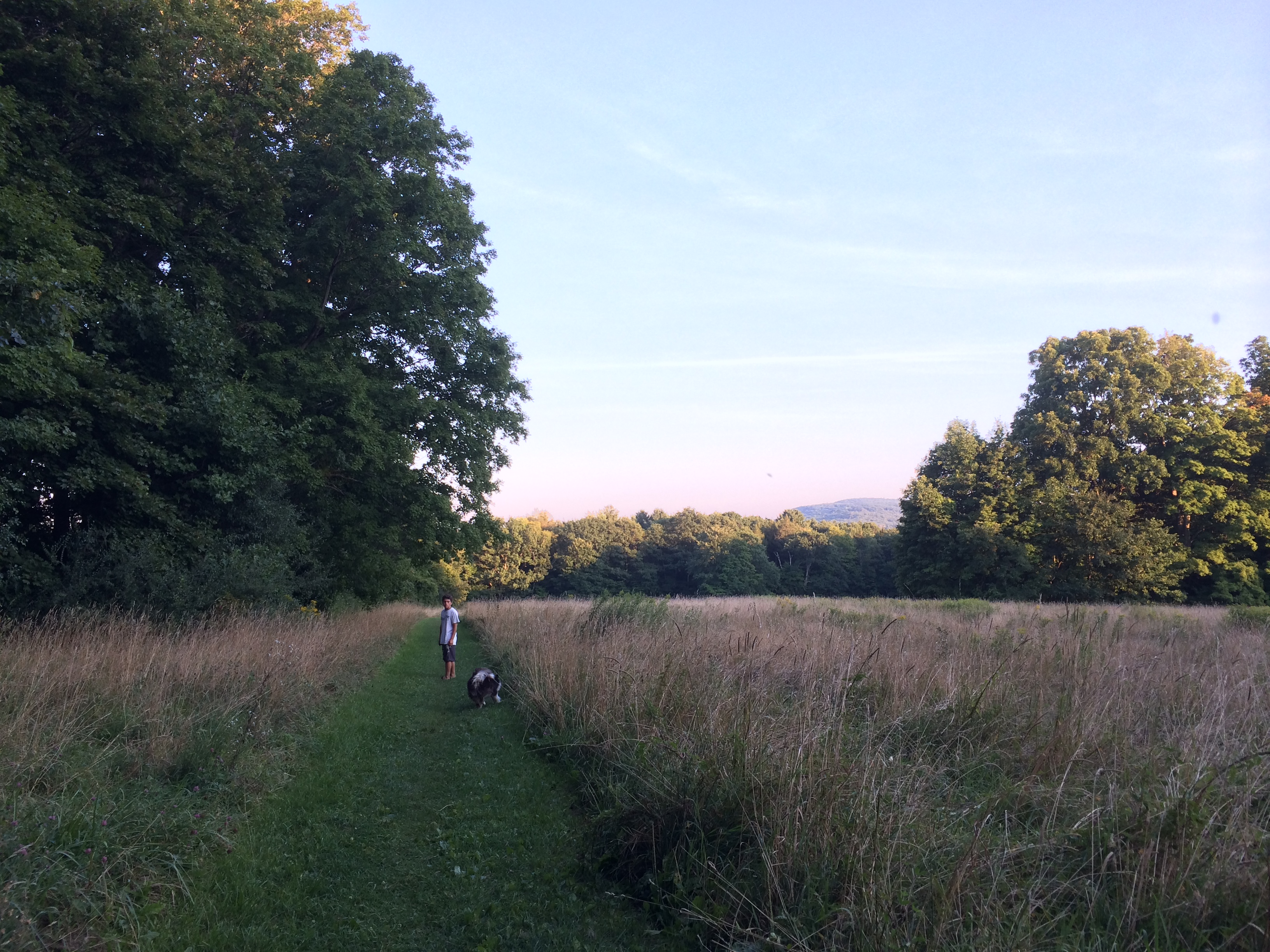
Unmowed field off the Appalachian Trail, South Egremont MA. Photo c. J. Browdy

Humans are not that different from grasshoppers, or birds, or maple trees. Everything alive on Earth is made out of the same basic building blocks of oxygen, hydrogen and carbon, fueled by the intense energy of our sun.

Without sun, water and oxygen-rich air, all of us will die.

It makes perfect sense to me that we humans should make our everyday lives into a prayer in honor of the Elemental Nature that sustains us.

IMG_6024

Humans are the consciousness of the planet; we are the one species that can weigh actions in the present based on our knowledge of the past, our calculated predictions of the future, and our elaborate system of ethics.

If we could just pull our eyes away from our hypnotic screens more often and remember our kinship with every precious manifestation of life on our beautiful planet, it would become inconceivable that we could allow ourselves to destroy it all.

Wildflowers, Nova Scotia.  Photo c. Jennifer Browdy, 2014

Wildflowers, Nova Scotia. Photo c. Jennifer Browdy, 2014

The quest to restore balance to our natural systems should become the Holy Grail of our time, with all the best and brightest on the planet dedicating themselves to the grand collective effort.

I wish every young person on the planet, but especially the brilliant, pampered, over-stimulated, often-jaded young people of privilege, could have the chance to sit in a field in blessed idleness on a lovely summer day and commune with a grasshopper.

If we would only pay attention, we would see in “her enormous and complicated eyes” the reflection of our own human souls.

IMG_7497

Warriors for the Planet

Another summer, another war. I wonder how many summers there have been in the last 5,000 years when human beings were not occupied with killing each other?

Correction: not “human beings,” “men.”

Let’s be frank: even though there may be women in the armed forces of many countries now, war still remains a masculine activity and preoccupation. The women who serve as soldiers must adhere to the masculine warrior code and become honorary “bros,” for whom the worst insult is still be called a “girl” or a “pussy.”

AnneBaring_A_lgI have been reading Anne Baring’s magisterial book The Dream of the Cosmos, in which she gives a detailed account of the shift, around the time of Gilgamesh, from the ancient, goddess- and nature-worshipping “lunar cultures” to the contemporary era of solar, monotheistic, warrior-worshipping cultures.

In her elaboration of this shift, I read the tragedy of our time, enacted over and over again all over the planet, and not just by humans against humans, but also by humans against the other living beings with whom we share our world. I quote at length from Baring’s remarkable book:

Gilgamesh-187x300“The archetype of the solar hero as warrior still exerts immense unconscious influence on the modern male psyche, in the battlefield of politics as well as that of corporate business and even the world of science and academia: the primary aim of the male is to achieve, to win and, if necessary, to defeat other males. The ideal of the warrior has become an unconscious part of every man’s identity from the time he is a small child.

“With the mythic theme of the cosmic battle between good and evil and the indoctrination of the warrior went the focus on war and territorial conquest. War has been endemic throughout the 4000 years of the solar era. The glorification of war and conquest and the exaltation of the warrior is a major theme of the solar era—still with us today in George W. Bush’s words in 2005: ‘We will accept no outcome except victory.’ This call to victory echoes down the centuries, ensuring that hecatombs of young warriors were sacrificed to the god of war, countless millions led into captivity and slavery, countless women raped and widows left destitute. It has sanctioned an ethos that strives for victory at no matter what cost in human lives and even today glorifies war and admires the warrior leader. This archaic model of tribal dominance and conquest has inflicted untold suffering on humanity and now threatens our very survival as a species.

2014-06-15-Mission

“The cosmic battle between light and darkness was increasingly projected into the world and a fascination with territorial conquest gripped the imagination and led to the creation of vast empires. It is as if the heroic human ego, identified with the solar hero, had to seek out new territories to conquer, had to embody the myth in a literal sense and as it did so, channel the primitive territorial drives of the psyche into a Dionysian orgy of unbridled conquest, slaughter and destruction. We hear very little about the suffering generated by these conquests: the weeping widows, the mothers who lost sons, the orphaned children and the crops and patterns of sowing and harvesting devastated and disrupted by the foraging armies passing over them, the exquisite works of art pillaged and looted….The long chronicle of conquest and human sacrifice, of exultation in power and the subjugation of enemies might truly be named the dark shadow of the solar age” (118;124).

Like Baring, I see our time as a critical era in the long history of homo sapiens on the planet. There is still hope that enough of us will be able to detach ourselves from the pressures and busyness of our lives—will become conscious of what is happening to the planet and human civilization writ large—will understand that there are other ways to relate to each other and to the Earth, ways that will seem increasingly possible and obvious once we focus on them and begin to put our energies into manifesting our visions of a creative, collaborative, respectful mode of being.

Baring ends her disturbing chapter on the ascendancy of the solar warrior culture with a hopeful quote from The Passion of the Western Mind by Richard Tarnas, from which she springs into her own positive vision of the potential of our time.

“’We stand at the threshold of a revelation of the nature of reality that could shatter our most established beliefs about ourselves and the world. The very constriction we are experiencing is part of the dynamic of our imminent release. For the deepest passion of the Western mind has been to reunite with the ground of its being. The driving impulse of the West’s masculine consciousness has been its quest not only to realize itself, to forge its own autonomy, but also, finally, to recover its connection with the whole, to come to terms with the great feminine principle in life; to differentiate itself from but then rediscover and reunite with the feminine, with the mystery of life, of nature, of soul. And that reunion can now occur on a new and profoundly different level from that of the primordial unconscious unity, for the long evolution of human consciousness has prepared it to be capable at last of embracing the ground and matrix of its own being freely and consciously.’

“As this deep soul-impulse gathers momentum, the ‘marriage’ of the re-emerging lunar consciousness with the dominant solar one is beginning to change our perception of reality. This gives us hope for the future. If we can recover the values intrinsic to the ancient participatory way of knowing without losing the priceless evolutionary attainment of a strong and focused ego, together with all the discoveries we have made and the skills we have developed, we could heal both the fissure in our soul and our raped and vandalized planet” (130-131).

My heart aches for the suffering of the innocent civilians trapped in the crossfire in Gaza this summer, and for the grieving families of the passenger plane heinously shot down by warriors who were either poorly trained or just plain evil.

I am heartsick when I think about the holocaust that is overtaking living beings on every quadrant of our planet as humans continue to ravage the forests and seas, to melt the poles with our greenhouse gases, and to poison the aquifers and soil with our chemicals.

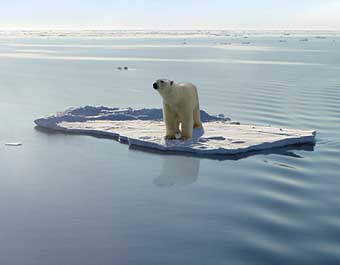
The last Polar Bear

This is where the solar cultures, with their “great” warrior kings, have led us. And yet, as Baring says, they have also presided over the most amazing advances in science and technology that humans have ever known in our long history on the planet.

We don’t need or want to go back to the simple innocence of ancient lunar societies. We don’t have to bomb ourselves back into the Stone Age.

What we need is to go forward, wisely and joyously, into a new phase of consciousness, in which the masculine warrior spirit is used for protection and stewardship rather than destruction, and the Earth is honored as the Mother of all that she is.

Never let anyone tell you it can’t be done. It is already happening.

Unplugged

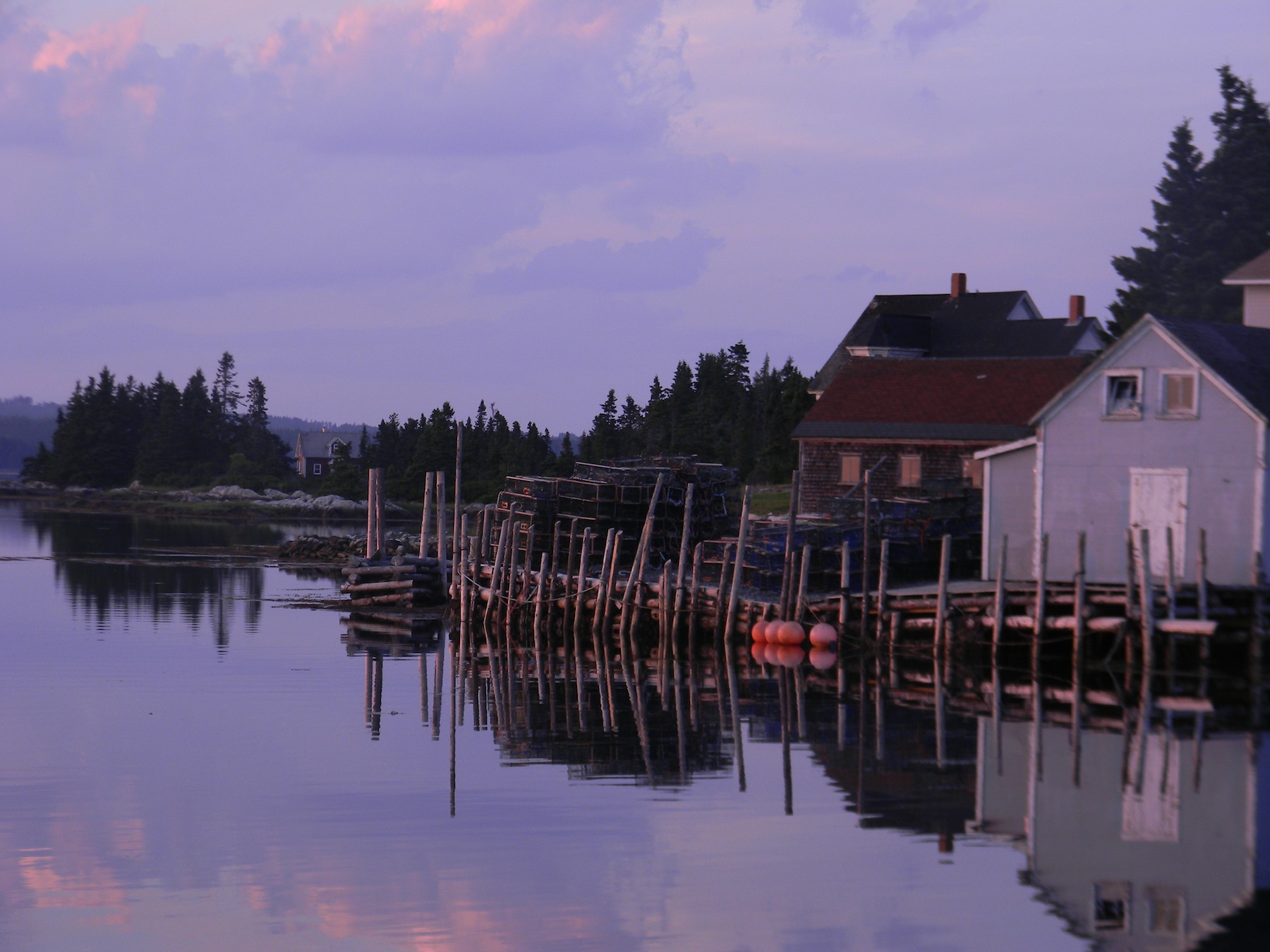
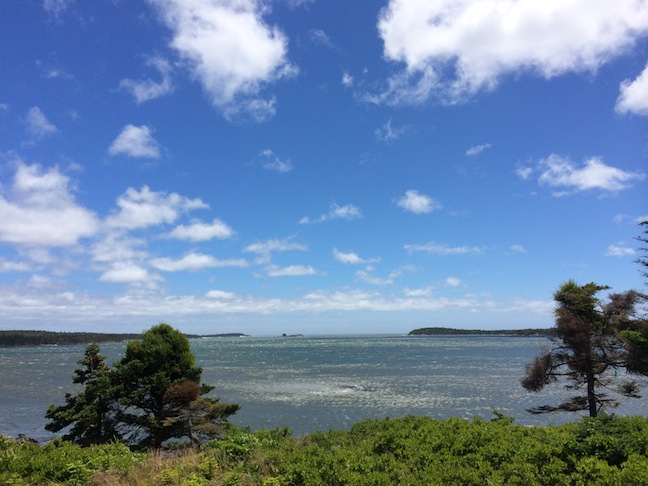
I’m now in the middle of my annual summer retreat to the LaHave Islands in Nova Scotia, Canada, and it’s no exaggeration to say I feel like a different person than the harried, exhausted woman who packed up and headed north on the highway three weeks ago.

I am sleeping better—my dreams are lucid and intriguing, with elaborate narrative plots that I enjoy following even if I lose the thread when I wake up.

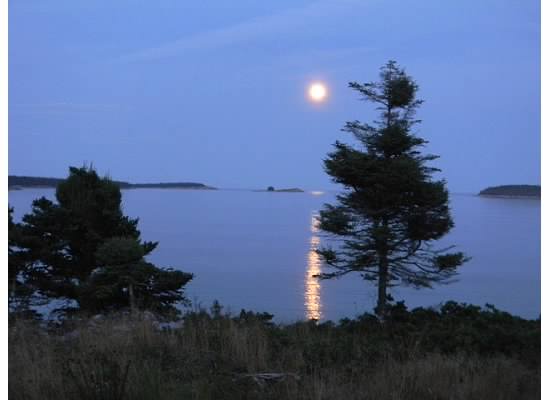
moonrise

I am writing again—going back to the manuscript of my memoir with fresh eyes and tightening, tweaking, reworking the introduction over and over until (I think) I get it right.

I am reading for pleasure—yes, you heard right! After a long school year in which, as a professor of literature and media studies, I could read only to prep classes, I am indulging in the guilty pleasure of reading mystery novels—Donna Leon’s Brunetti series, with their wonderful descriptions of Venice and Italian food.

I am spending long hours walking the empty beaches and cliffside trails, drinking in the natural beauty and letting the soothing sound of the waves banish all my worries and cares.

Gaff Point

I am enjoying adapting to the rhythm of my parents’ life, which takes me right back to my peaceful childhood, where each day was spent in a judicious measure of work, conversation, meal preparation and relaxed eating. My parents sit together at their lovely dining room table—here in Nova Scotia, with the dramatic view of the bay outside their windows, and the constant sound of the waves on the rocks in their ears—and eat three beautifully prepared and served meals a day, a routine few Americans still maintain.

frittataWhen I first arrived here three weeks ago, I thought this focus on meals took an awful lot of time and effort. But once I slowed down enough, I remembered something that my own grab-and-go existence had made me forget—just how worthwhile it is to take the time to prepare delicious meals, set a lovely table and eat in leisurely fashion, talking quietly over the day’s events. My entire body, aching and stressed when I arrived in Nova Scotia three weeks ago, is grateful.

Here on the island, where the most important questions are whether the tide is up or down and whether the fog is expected to blow out by lunchtime, life returns to its elemental rhythm, and it’s possible to feel how much is lost by the speed of our technology-dominated 21st century existence.

It’s possible to take a deep breath and remember that only 20 years ago, there was no Internet. There was no email. There were no cell phones, no smart phones, no texting. There were no digital music or video files, no VCRs or ipods, let alone streaming capabilities.

Remember what that was like? Everything moved a heck of a lot slower, that much is for sure. We wrote letters on paper and mailed them. We read books and big print newspapers that we had to schlep around with us in knapsacks. When we needed to look up a fact, we had to go to the library and look in the—get ready for it—card catalogue.

This was only twenty years ago, a mere flicker of time in the scale of human history. Imagine what a strain it is on our poor homo sapiens brains and bodies to keep up with the breakneck pace of modern digitized life, especially for those of us born and bred before the Great Digital Coming of the 1990s.

gorgeous NS copy

The brains of children born into this brave new technologized world are being wired differently. For many it is pure torture to slow down to ordinary time. Life without a screen and a wifi connection is unthinkable.

As we advance into the 21st century, I can see in my students the signs of smartphone addiction—the same nervousness and agitation, halfway through a 90-minute class, that smokers used to display in a previous generation. They have to get up and wander off to the bathroom as a pretext for checking in with the virtual world they crave.

I too get addicted during the course of the school year. I check email constantly and Facebook several times a day; I spend more time on the screen than I do out in the garden or walking in the woods or preparing meals and eating them with friends and family.
Only now, when I’m on a media holiday with my email vacation message set, can I appreciate the toll this society-wide digital addiction takes on each of us as individuals, and on human society writ large.

Yes, I love the power and reach of the Internet as much as the next person. I love being able to write my blog, send it out over wifi and have people all across the world reading it in a moment’s time. When my blog readership surpassed 100,000 visitors from more than 200 countries last month, I was thrilled.

But for deep thinking and sustained writing, I need to get away from that kaleidoscopic virtual reality and get in tune with the more primal rhythms of sunset and moonrise, tides flowing in and out again, seagulls soaring over the mermaid dive of a seal fishing quietly by the rocks.

eye of the hurricane 2014

Even if the closest thing to nature you can get is a city park, try spending a couple of hours there without your smart phone, and see what you notice. Watch how your breathing slows down and your tired, overworked brain relaxes when all it has to focus on is trees and bushes, maybe a sparrow or pigeon or two.

We don’t need expensive meditation retreats, yoga classes or far-flung vacations. We just need to give ourselves permission to unplug for a while.

Help Wanted: Willing Ring Bearer Seeks Quest

All week the energy of the summer solstice seemed to build in me. After a week of rain, the sun burst through and we had a whole week of clear, low-humidity days in which it appeared that you could see the plants growing happily, stretching their roots down into the soil and their leaves up towards the bright sky.

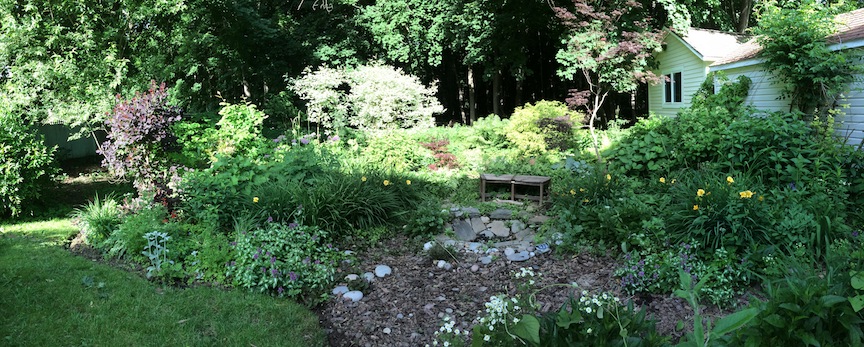
My peaceful backyard in the Shire

My peaceful backyard in the Shire

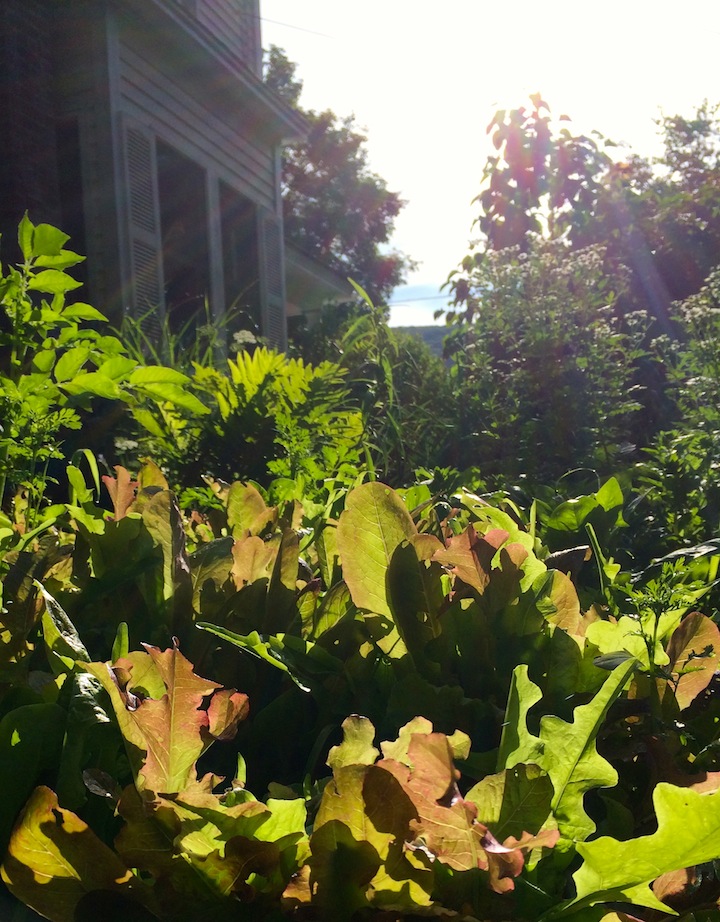
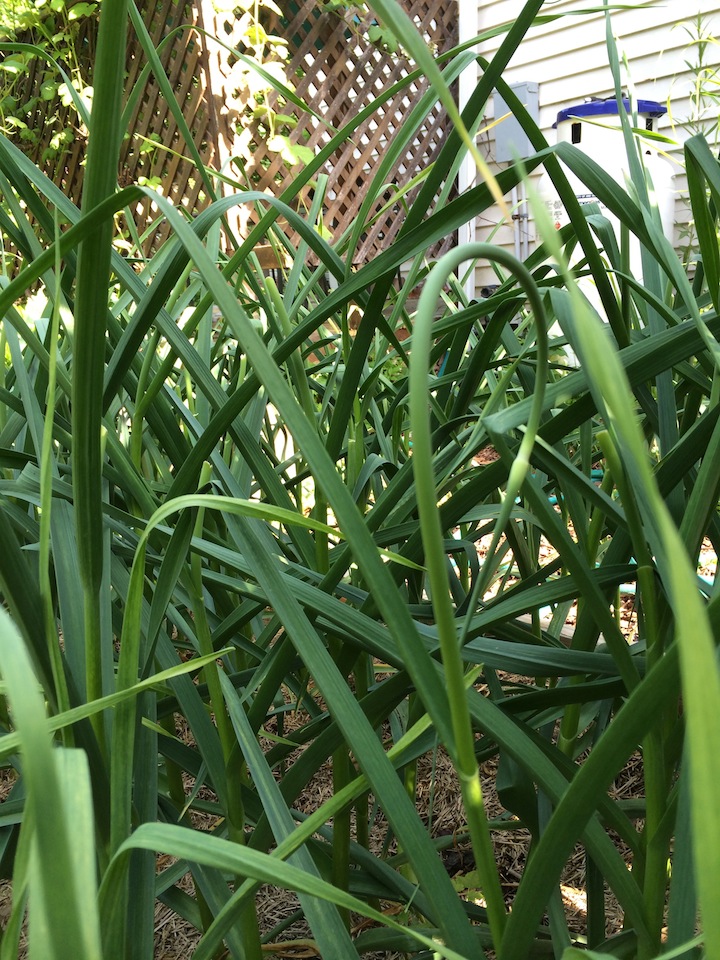
In anticipation of several weeks away (I’ll be making my annual pilgrimage to Nova Scotia soon) I spent a lot of time out in the garden, planting vegetables and annuals, weeding flower beds, mulching and staking and tending.

morning lettuce

morning lettuce

pumpkins

pumpkins

Garlic; note the gas tank in the background

Garlic; note the gas tank in the background

It’s always hard to leave a garden in the summer, when you know the minute your back is turned the invasive weeds will grow with vindictive vigor, the slugs will multiply and munch away at the lettuce, and the Japanese beetles will arrive to decimate the roses.

However, I must get away from the confines of my little corner of the world to clear my head and ready myself for another year—for me, as a lifelong academic, the year always starts with the fall semester of school.

Last night, in honor of the longest day of the year, my son and I took an evening hike up a local mountain, and sat on a rock ledge facing west as the sun slowly and majestically dropped towards the horizon.

Eric in woods

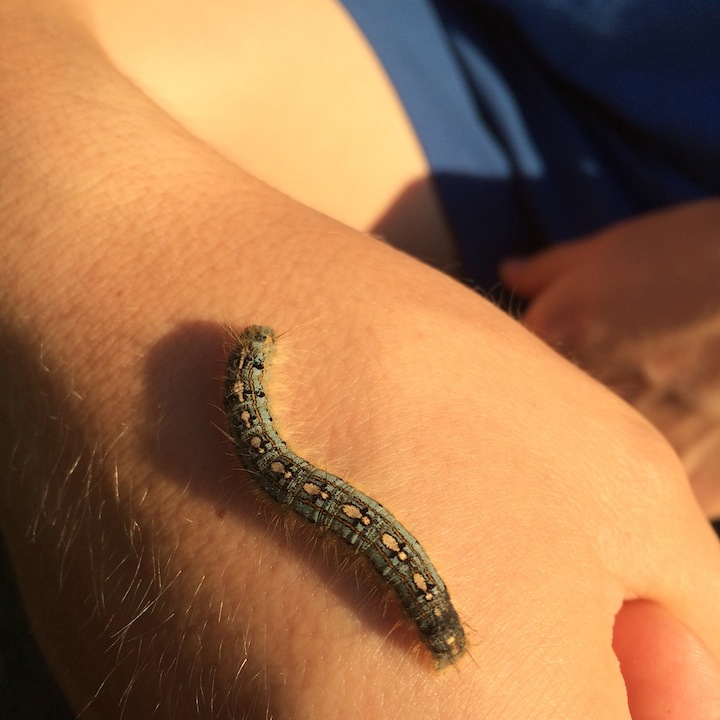
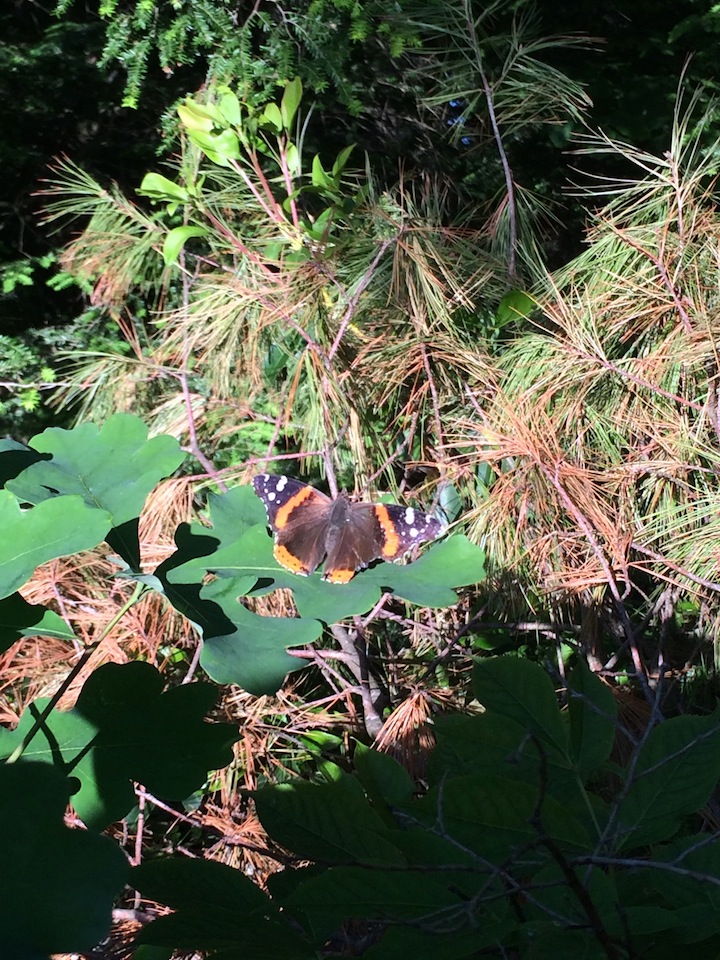
We were happy to find some friends up there—a caterpillar with beautiful markings, making its way up an oak sapling, and a pair of orange-and-black butterflies, sunning themselves just like we were.

caterpillar

butterfly

solstice sunset

As we walked down again in the last rays of sunshine, I couldn’t help thinking about the strong contrast between the peaceful, lovely landscape of my home ground, where for many of us the most urgent question of the day is “what shall we have for dinner?” or “what movie shall we watch tonight?” and the social landscapes that cry out to me every day when I read the news headlines—arid, violent, rigid, harsh.

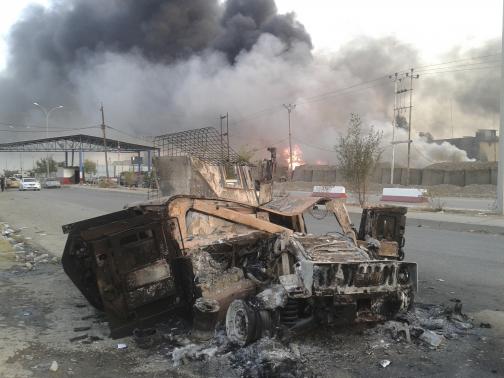
Reuters photo taken June 11, 2014 in Mosul, Iraq

Reuters photo taken June 11, 2014 in Mosul, Iraq


This summer solstice, as I sit in my peaceful green American haven, Iraq is again descending into crazed sectarian violence. The news reports that “militias are organizing” or “Mosul was taken” focus on the politicians playing the mad chess game of war, and the young men drawn into the armies as battlefield pawns. There is no mention of the mothers, sisters and grandmothers of those politicians and young men. The women rarely surface in the headlines, and when they do, the news is not good: a woman who dared to go out to a rally stripped and gang-raped, for example.

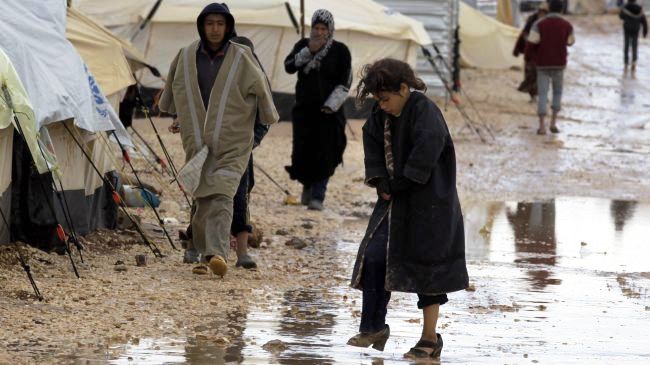
We hear about women obliquely in the reporting about the incredible surge of refugees living in camps this year: of the 51 million people living in refugee camps under U.N. supervision, half are children—which means that a high percentage of the other half are probably mothers and grandmothers. But that is in inference I am making by reading between the lines; those women are invisible in the official story.

Syrian refugee camp in Jordan, now Jordan's fifth largest city

Syrian refugee camp in Jordan, now Jordan’s fifth largest city

jammas.hussain20130212012158677

I have to recognize the incredible privilege I have as an American woman, living in the heart of the heavily guarded gated community that this country has become.

Other people around the world are paying the price for the peace and plenty I have here in my home. And not just people—the animals and insects and birds and forests are paying the hugest price of all to maintain my privileged lifestyle.

How long can I continue to live comfortably with this knowledge?

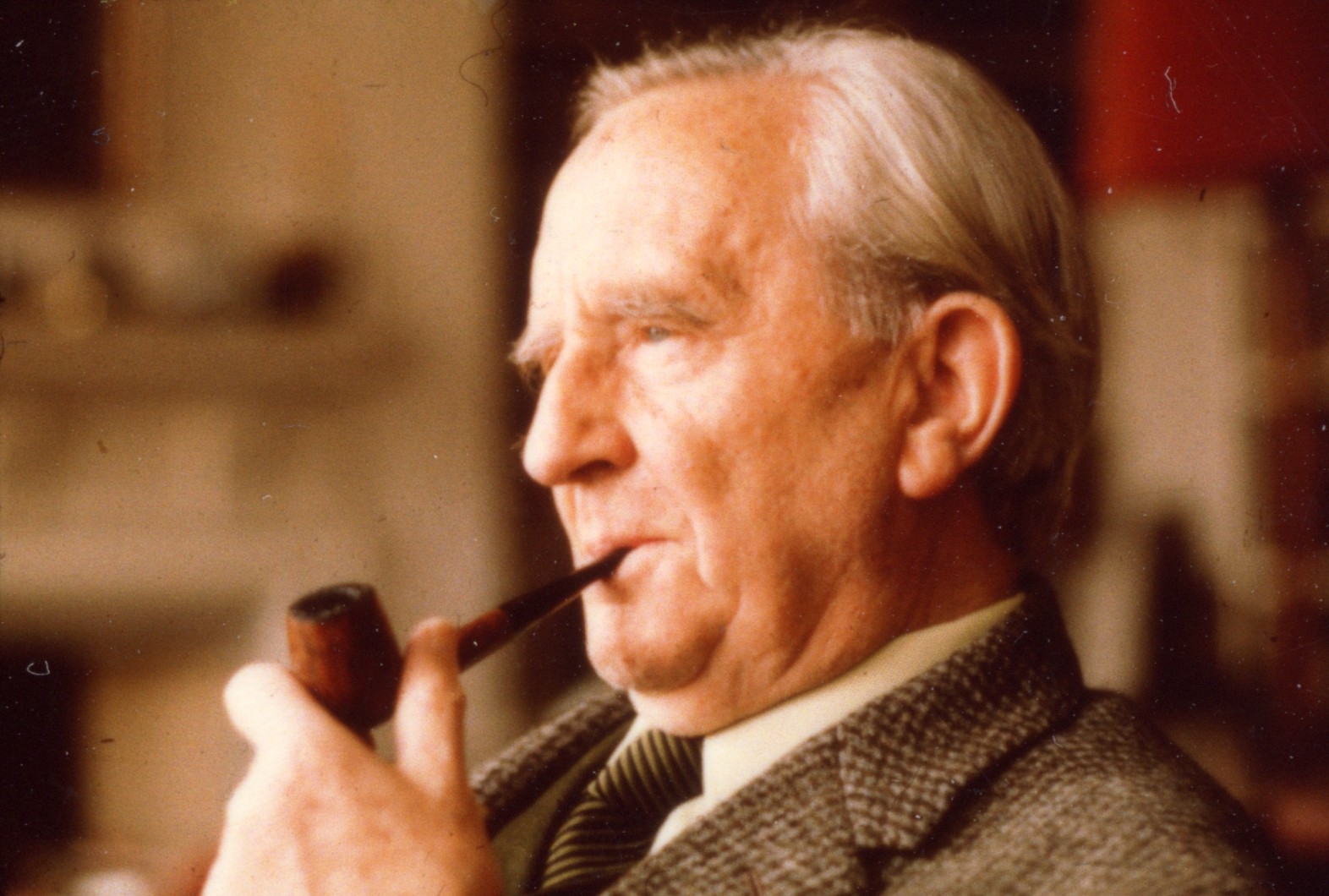
The more time goes on, the more I see how prescient J.R.R. Tolkien was with his Lord of the Rings series. Berkshire County, where I live, is indeed “the Shire” of legend—peaceful, productive, green and jolly. Outside our borders, far, far away, the armies of Mordor are mobilizing in the midst of lands laid waste by the industries of the Dark Lord. Few in the Shire are worried; the chance of those nasty people and industries actually coming here seem remote indeed.

JRR Tolkien

JRR Tolkien

In Lord of the Rings, it is Gandalf the wizard who serves as the bridge between these two very different landscapes. He gives Bilbo, and later Frodo, the charge of becoming the change agents who can make all the difference. The fight against the Dark Lord is fought on many fronts, but the quest to destroy the Ring of Power is paramount, and in order to destroy the ring Frodo must journey to the heart of the dark Empire itself.

I can’t escape the feeling that here in the quiet Shire where I live, ordinary people like me are being called upon, as Bilbo and Frodo were, to step up to the immense and dangerous challenge of resisting the darkness that is brewing on our borders.

But in our case there does not seem to be a Gandalf who can give us a mission and guide us as we set off on the quest. Not even the wisest leaders of the environmental and peace movements seem to be able to provide that kind of leadership. Worldwide, those leaders who claim to know with absolute certainty what is right and what to do are precisely the ones who are fomenting war and leading us down the path to environmental, civilizational suicide.

That must be why I am drawn to study with those who are exploring other epistemologies, outside of the normative range of politics, science, philosophy and religion.

Right now my bedside reading includes Anne Baring, Pam Montgomery and Pamela Eakins, along with Brian SwimmeMartin Prechtel, Bill Plotkin,  and Daniel Pinchbeck.

spring meadowWhen I look out into the green world stretching up towards our beneficent Sun, or glowing brightly under our sweet white Moon, I can see and hear the harmony that life on Earth evolved to sing. Put water and sunlight together, wait a few billion years, and you get this incredible lush planet, pulsating with life.

Human beings have flourished so well that now we have become overpopulated, an invasive species that is destructively taking over every last environmental niche on the planet. In a normal terrestrial cycle, we would go bust, our civilization would collapse, and with time the earth and the sun would gradually rebuild life in endlessly new creative forms.

Is that what is coming? Or will we be able to be the Gandalfs of our own generation, waking ourselves up out of our complacency here in the beautiful American Shire, and conquering the inner and outer Dark Lords that are laying waste to the planet?

What is the quest that is mine to carry out? What is yours? If we at least start asking these questions, with the greater good of the Earth in mind, perhaps the answers will emerge in time to set humanity on a better path.

solstice sunset dark

With Starhawk: Dreaming the Dark and the Light

The night I returned home from an intense weekend workshop at Rowe with Starhawk, I had a disturbing dream.

A little girl, dressed in a pink jumper, was crying that she was lost, she had to find her father. So I took her by the hand and we started looking for her father in an urban landscape—first on the street, then in an apartment hallway with many doors. I said to her, do you remember what the floor of your home looked like? Was it wooden? Black and white tile? We stopped at several doors but they weren’t the right one. Then we came to the one with the blue-green patterned tiles, and her father was in the doorway.

As soon as I saw him I was afraid…he seemed like a devil, a mean, cruel man, although he smiled (leered, more like) as he came forward in the doorway to receive her. And she went to him, whimpering. There were people gathered in the apartment behind him, all dressed creepily in black, watching something on a screen in a darkened room. He thanked me for bringing her back, and I turned away, with a sick feeling, thinking she was going to be hurt or punished for “running away.”

As I turned away I heard her whimpering turn to full-out crying, a terrible keening sound, and I felt paralyzed—what should I do? Should I call Child Protective Services? Clearly this little child needed my help, but I was afraid that if I called the police or other authorities, the “father” would know who called and would come after me.

So I did what any dreamer does when paralyzed by fear—I woke up.

I haven’t been able to stop thinking about this dream, especially as it seems to be a kind of psychological bridge between Starhawk’s remarkable rituals honoring Mother Earth, and my own upcoming writing workshop on “purposeful memoir,” which uses the elements as a way to frame and explore parts of one’s life journey.

I feel sure that I was both the small child in the dream, and the adult who was trying to help her find her way “home.” The problem was that “home” was a dangerous, confusing, love-and-hate kind of place, ruled over by a “father” who was punitive, frightening and loving in a controlling kind of way. The adults sitting in the dark background passively watching the screen are human society writ large, especially our Western, technology-obsessed society. The little child with her bright pink outfit and fearful, wanting-to-trust eyes, stood out here as a wholly other kind of being, but one which would, in the pinching hands of her “father,” be formed and molded into just another one of these pale, eerie, zombified adults.

We talked a lot last weekend about how frightening it is that we Westernized humans have become so very disconnected from the natural world. As Starhawk gathered us in circles to ritually salute the four elements and the four directions (Earth/North, Fire/South, Water/West, Air/East), as well as the Center/Spirit, it seemed like a dream of an older way of being that I dimly remembered, from a time before I had taken my seat among all the other adults sitting before screens in darkened rooms.

After the last circle

After the last circle

We listened to the birds singing and the wind blowing through the new spring leaves; marveled at how the veins of the leaves mirrored the veins in our own bodies and the bigger veins of river waters on the body of the Earth; and let our combined voices, chanting around a sparking fire in praise of the elemental unity of all Life, blur together into a wordless ringing sound that cast our intention to be of service to Mother Earth high up into the starry sky.

Following Starhawk along a labyrinth made of stones lined with vivid purple violets, I thought about my desire to help others explore their own lives in elemental terms, looking back at where we’ve come from in order to see more clearly who we are and who we wish to become. In writing my own memoir, the elemental structure emerged organically from the trajectory of my life: Earth the childhood ground of my being; Water the stream of culture I’d been sucked into as an adolescent and young adult; Fire the years of adulthood, being tested on many fronts; and Air running through it all as reflections from my current perch, back on the Earth of middle age, trying to recover my grounding in order to move more intentionally into the next stage of my life.

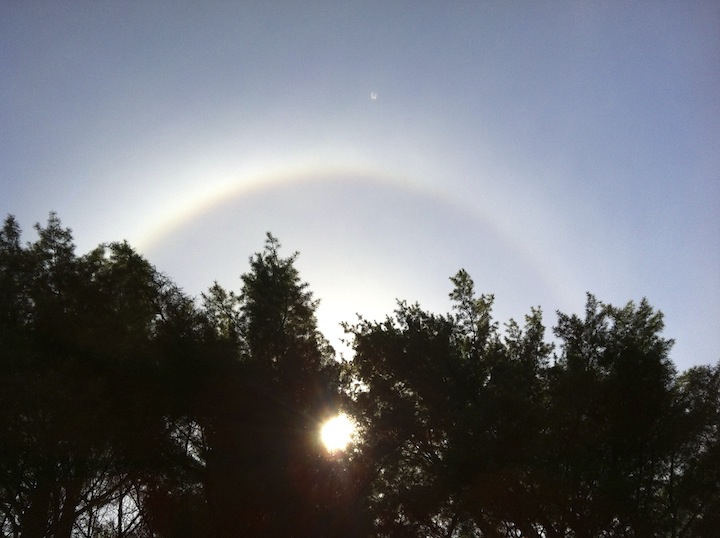
A rainbow halo around the sun, right over our circle

A rainbow halo around the sun, right over our circle

My dream, in which I was both the crying little girl who felt compelled to find her way back “home” and the concerned adult who could see just how damaging and hostile that “home” was, seems to represent my awareness these past few years of how destructive our American “home culture” is to the sweet, sensitive Earth-centered children who are born into this harsh, techno-dominated world and cleave to it with innocent fidelity.

We are instinctively loyal to our families and our birth cultures, even when on some level we are aware that they are not always healthy for us. And the adult “me” in my dream, anguished about handing over the child to this destructive “father” figure, was like any bystander in a negative scenario, desperately choosing to remain silent out of fear of retribution, fear of bringing the hostility down on myself.

In my memoir workshop next week, I want to guide others to explore how thinking about our lives in elemental terms can help us make sense of our past, and give us a firm footing from which to overcome our conditioning and our fears and take the full measure of our life’s purpose.

Three generations

Three generations

We all came into this life wide-eyed and open-hearted, looking for love and warmth. It’s fascinating to explore what happens as we are received by our families and our home cultures, and swept along into the fast-moving currents of life, heading towards the fires of adulthood.

But what really matters is what comes next. What will we do with our one precious life, as Mary Oliver put it so poignantly? Can we step back from our loyalties and conditioning and figure out what it is we care about enough to stand up for and give our lives to?

Starhawk on the path

Starhawk on the path

Starhawk has moved in the past decade or so from a focus on a largely metaphorical, feminine-inflected Earth-based spirituality to a much more grounded practice in permaculture, “a multi-disciplinary art form, drawing from the physical sciences, architecture, nutrition, the healing arts, traditional ecological knowledge, and spirituality. The ethical underpinnings that guide permaculture are simple yet powerful: take care of earth, take care of the people, and share the surplus.”

In her Earth Activist Trainings, she seeks to help us reimagine a new kind of culture, one in which nature and human society are seamlessly intertwined. “EAT is practical earth healing with a magical base of ritual and nature awareness, teaching you to integrate mind and heart, with lots of hands-on practice and plenty of time to laugh,” she says on her website.

We need to create a new kind of culture that will comfort and nourish both the caring adult and the crying child in my dream. Our culture has to be supported by a sustainable relationship to our Mother Earth, a relationship in which we give back as much as we take, in an endlessly regenerative circle of life.

mossy rockAs I look ahead purposefully in my life, I hope that the adult I want to become would not leave the innocent child I was in the treacherous hands of a culture that has forgotten how to love. If I could replay that dream, I would guide that small, pink-clad child away from her malevolent “father” and his techno-obsessed tribe. I would take her away from that urban landscape, out into the warm green gloom of the forest, where we would sit together on a mossy rock and listen to the wind in the leaves and the birds in the sky. Together we would look up to see Starhawk approaching along the path, roots sprouting from her feet and branches from the top of her head.

We would sing together, in the words of poet Kristin Knowles, with whom I shared the Starhawk weekend:

Our mother,

in art and nature,

passionate burns thy flame.

Thy strength is one

with moon and sun

on Earth as up in the heavens.

Teach us the way to lightly tread

And relieve us our distress as

we receive those who would prefer our silence.

And lead us not into frustration

but deliver us from ill will.

For thine is the freedom, power and glory,

her story,

now and forever.

Blessed be.

Taking the risk to feel the pain of the world, and the love that can change it

Sometimes I wish I just taught math or physics—something dry and formulaic that would not require wading publicly into the messy, unclear, painful areas of life and interpersonal relations. My current mantra is “the personal is planetary.” If this is so, what does it mean for the planet that such a high percentage of my students over the years have revealed such terrible pain and suffering in the classroom over and over again?

Lately I’ve been reading Bill Plotkin’s magisterial work Nature and the Human Soul, in which he argues that human civilization has been stuck for too long (since Gilgamesh, I’d say) in an adolescent stage of development, where young men are encouraged in their shallow enjoyment of violence, sex and glory, and young women are encouraged to be pretty, compliant and deferent to authority.

The students at my institution are generally trying very hard to resist this overwhelming cultural message.  They try to think outside the box.  They have an earnest desire to be politically correct and intellectually sophisticated. It’s all very well on the purely academic front.  But what happens when the cracks in that academic façade appear and reveal deep emotions—anger, grief, fear, desire—that go way beyond the bounds of the merely academic?

Sometimes these emotions can be so frightening that the only sane response seems to be to numb out on drugs (licit & illicit) or get distracted by media entertainment & competition & the race to keep one’s economic head above water. Somehow in my classes these tumultuous, unruly emotions often come leaping into the foreground.  I allow and sometimes even encourage our class discussions to “go there,” to go into that dangerous gray zone between the purely intellectual/theoretical and the deeply personal lived experience. I believe that this is the zone where the most productive new thinking happens, the kind that can shift paradigms and change worlds.  So I’m willing to risk the discomfort of venturing outside our collective comfort zones, in the hopes that a spark set off in one of our class discussions or activities will ignite a fiery passion that goes well beyond the narrow confines of this class, this semester, or any one student’s career.

But in the aftermath, as I think back on the tears shed, the furrowed brows of the listeners, the potential for aftershocks to occur outside the relatively safe space of the classroom, I can’t rest easy.  I feel deeply, myself, the responsibility of leadership, even in the relatively small scale of the classroom.  The ripples of our conversations on any given day may spread out for many years, affecting those of us who listened and bore witness to his pain in ways we cannot yet imagine.

Some believe that we human beings are the consciousness of the planet. If the personal is planetary and vice versa, then it could be that these young people are in some sense channeling the pain of our planet itself. We owe it to our youth, to ourselves, and to the great planet we call home, to—at minimum—listen with respect, try to understand, and consider how our choices and actions can contribute to or lessen the pain.

It’s risky to do this active listening and thinking aloud, in the moment, rather than waiting until we are sure we “have it right,” “understand it all,” or “know what to do.”  But we don’t have the luxury of time now to get it all perfect.  The best we can do is continually check in with our own emotions, and try to be sure that whatever we say or do is rooted in compassion, concern and a sincere desire to make things better.

“In a voiced community we all flourish,” says Terry Tempest Williams.  Blowing with love on the shaky fires of these suffering voices, bringing them into a nourishing, respectful community, will help ease not only human suffering, but also, potentially, as the ripples spread out, the suffering of so many living beings on the planet.

LOVE—the one emotion that trumps all others, on both the personal and the planetary scale.  The one emotion we can never have too much of, and the one out of which new potentialities continually spring. 6a00d83451c79e69e2015432a3f0e2970c-253x300May the tears we shed as we think about the pain of the world water the dry, numbed-out hearts of those who profess not to care about the links between the health of humans and of the natural world.

May we take the pain born of love, and channel it into personal and planetary healing.  May we be wise enough to see the connections between our actions and their ripple effects in human society and the planet writ large. May we learn to feel all the love we’re capable of as humans and to act out of that deep wellspring of emotion. Let it be so.  Let’s make it so.