Battle Hymn from the Archaic Future: Mary Daly leads the way

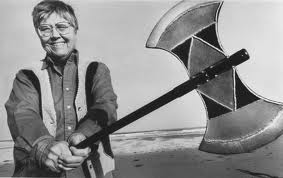
Mary Daly

Mary Daly

Next week we are reading the fierce, lusty, self-proclaimed Pirate Crone Mary Daly in my Women Write the World class. It’s actually the first time I’ve ever dared to share Daly with students, partly because it took me a long time to get myself up on to her energetic wavelength. She talks about how important it is that “radical feminists” like her “magnetize” other women, in order to grow a movement for change—but unfortunately, until recently I felt so repelled by her Wild Woman energy that I could not bring myself to actually read her.

Then, at the end of last summer, something changed in me. I think it had to do with finishing my memoir and allowing myself to feel the rage (Daly would call it Righteous Rage) that I had suppressed over the past 20 years as my life rolled along with what have come to seem like entirely normal frustrations and disappointments: the mommy tracking at work, the lack of respect at home, the endlessly deferred pleasures that could have been mine if I had been properly compensated for my hard and excellent work as a scholar and teacher.

No one besides Daly, in my experience, had had the courage to call out our culture itself as a perpetrator in the on-going inequality and undermining of women like me. And she could do so using the Master’s Tools—no less than three doctorates (in religion, theology and philosophy) and decades of experience as a Boston College professor and scholar working in the heart of what she called the phallocracy. She chose to stay on at Boston College despite the administration’s repeated attempts to oust her, because she felt that her message was especially needed there. The problems she saw throughout her 33-year tenure there have only gotten worse as we’ve advanced into the 21st century.

Unknown-1It’s fascinating to read through Daly’s oeuvre and see how, over the years, she transformed the master’s tools of language and rhetoric to make them uniquely her own. She even created her own dictionary, the Wickedary, in which she retooled old words to make them serve her radical feminist purpose.

And what would that radical feminist purpose be? While Daly says that each of us will find our own path, what “radical feminists” have in common is that we serve as conduits for the creative energy of the universe, the life force she calls “biophilia.” Biophilia is the opposite of necrophilia, which preys violently on the planet and its denizens, sucking out and destroying life on Earth.

Daly’s cardinal crime is to Name (capitalization hers) patriarchal culture as the perpetrators of the ongoing violence against women, animals and other life forms on the planet, and to single out Wild Women (again, capitalization hers) as heroic resisters.

This stance has gotten her into a lot of trouble. Men don’t like to be called out on their patriarchal privilege, and excluded by virtue of their biological and cultural baggage from the ranks of heroic resisters that Daly is trying to conjure. I am curious to see how the young men in my class respond to Daly.

When I read her closely, it seems to me that although she does elevate Woman as a category, she is actually reinventing that word too. Not all women would deserve to be included in her radical feminist confederacy of Wild Women. And it’s possible that some men—feminist men—would be welcomed, although Daly herself remained a firm lesbian separatist to the end of her life (in one of her last books, Quintessence, she imagined herself traveling to a utopian “Lost and Found Continent” in the year 2048, which was fiercely and proudly all-female).

I think Daly, who died at the age of 81 in 2010, would have been pleased to see the militant environmental group Deep Green Resistance proclaiming itself a “radical feminist” organization. DGR was founded by two men and a woman (Derrick Jensen, Aric McBay and Lierre Keith) and in their guiding principles, right up there with respect for all life, is respect for women.
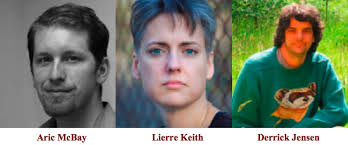
Unknown-2

Here is DGR’s fifth guiding principle, in full:

  • Deep Green Resistance is a radical feminist organization. Men as a class are waging a war against women. Rape, battering, incest, prostitution, pornography, poverty, and gynocide are both the main weapons in this war and the conditions that create the sex-class women. Gender is not natural, not a choice, and not a feeling: it is the structure of women’s oppression. Attempts to create more “choices” within the sex-caste system only serve to reinforce the brutal realities of male power. As radicals, we intend to dismantle gender and the entire system of patriarchy which it embodies. The freedom of women as a class cannot be separated from the resistance to the dominant culture as a whole.

And here are principles one through four:

  • The soil, the air, the water, the climate, and the food we eat are created by complex communities of living creatures. The needs of those living communities are primary; individual and social morality must emerge from a humble relationship with the web of life.
  • Civilization, especially industrial civilization, is fundamentally destructive to life on earth. Our task is to create a life-centered resistance movement that will dismantle industrial civilization by any means necessary. Organized political resistance is the only hope for our planet.
  • Deep Green Resistance works to end abuse at the personal, organizational, and cultural levels. We also strive to eradicate domination and subordination from our private lives and sexual practices. Deep Green Resistance aligns itself with feminists and others who seek to eradicate all social domination and to promote solidarity between oppressed peoples.
  • When civilization ends, the living world will rejoice. We must be biophilic people in order to survive. Those of us who have forgotten how must learn again to live with the land and air and water and creatures around us in communities built on respect and thanksgiving. We welcome this future.

I can just hear the spirit of Mary Daly rejoicing at these fierce words from what she would call the “Archaic Future.”

She herself called for “even more than the ‘subversion’ of the present order and more than ‘dissolution’ of the whole existing social compact.” Truly changing the world, she said, “requires the Courage to participate Positively in bringing forth…many New Forms (political, social, philosophical, aesthetic) by multitudes of creators who do not necessarily know each other consciously” (Quintessence, 103).

It is this subterranean radical network of grassroots co-creators that I hope to tap into with blog posts like these.  Are you there?  Shall we create that joyous Archaic Future together?

Psst. The Personal is Planetary. Pass it On.

We are living through a transition in awareness that might be described as the shift between the recognition that “the personal is political” to the recognition that now, “the personal is planetary.”

It’s not enough, anymore, to think about the ways we live our politics in our daily lives.  We urgently need to become aware of how our lives are expressions of our relationship to our planet.

If the personal is planetary, then who we are is deeply indicative of the state of our planet.

Today, the majority of the world’s population lives in cities, almost completely divorced from the natural world.  Most of us have little sense of our relationship to the living planet, since most of our time is spent in artificial, asphalted environments.

Many of us are sick from diseases that are themselves symptoms of our alienation from the planet, our penchant for industrial growth at any price, and our general physical and mental malaise.  The very technologies that we most admire and rely on are the ones that are making us, and our planet, sick.

Despite our technological sophistication, we have serious problems with the most basic mammalian function of providing ourselves with food on a steady, reliable basis.  The imbalance is evident in the fact that billions of human beings on the planet are perpetually hungry; others are malnourished from an over-reliance on empty-calorie sugary processed foods; and still others starve themselves to comply with unrealistic body image expectations, or have so much food that they can afford to casually throw it away.

We are a species that claims to admire empathy and compassion, but actually spends an inordinate amount of time gazing at our own reflection in our ever-more-complex forms of representation, from writing to film, without even realizing how very ego-, ethno- and species-centric our behavior is.  We claim to value love, but for most of us love is too often confused with lust, or so interlaced traditions, habits and obligations that the reality is a poor shadow of our professed ideal.

If the personal is planetary, then it should be no surprise that our planet is suffering so terribly.  We humans are suffering too, and along with us all the animals and plants in our biosphere.

Where will it all end?  Will we be able to get out in front of the tsunami of disastrous climate change, environmental poisoning and destruction of oceans, forests and fresh water in time to restabilize our planet and ourselves?

I worry when I see influential publications like The New York Times giving prominence to think tanks like the Breakthrough Institute, a so-called environmental organization that is working hard to convince us that we can become total cyborgs living happily in a high-tech, managed, artificial environment.

Such a vision of the personal as planetary imagines our planet as a giant park, complete with zoos and aquariums, manicured gardens and “rambles” left artificially “wild.”

What it fails to give any credence to is the possibility that we, and our planet, might have—dare I say it?—a soul.

Machines do not have souls.  But our beautiful planet, with her myriad forms of life, of which we humans are just one more emanation—she is more than just the mechanistic sum of her parts.

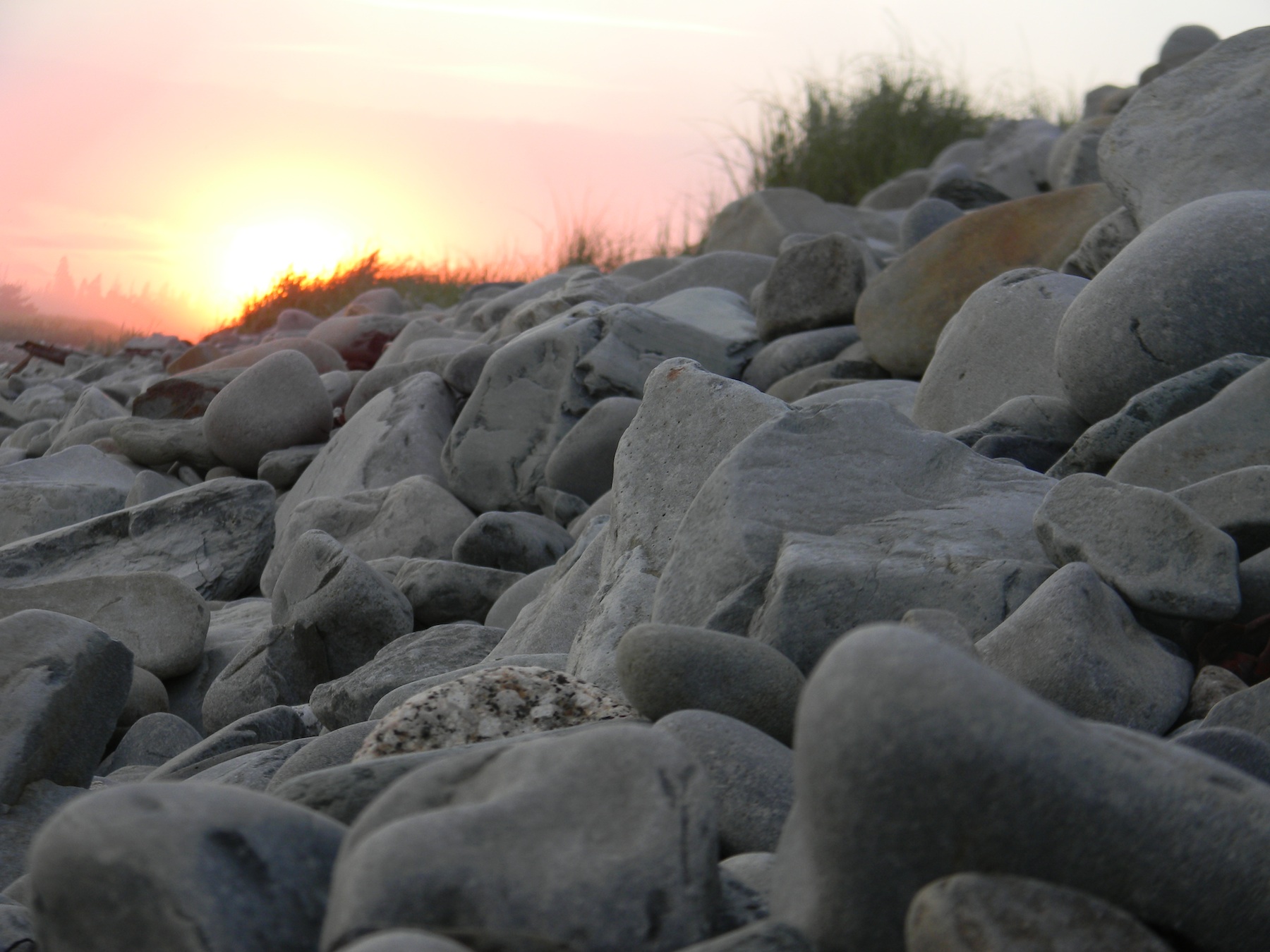
sunset on crescent

When we understand the personal as planetary, we see that to go down the road of total technological dominance of human beings and our environment would be to cut ourselves off from what is most beautiful and unique about ourselves as a species: our conscious awareness of the possibility of connecting with and cultivating the divine—that is, extra-human—energy that animates our entire  biosphere, giving us the spark of life that we recognize as the dynamic beauty and power so ever-present in the natural world and potentially in ourselves as well.

To heal the planet, we must first heal ourselves, beginning with our self-imposed split from the natural world and our repudiation of the simple values that human societies have always claimed to revere.  “Do unto others” and “love thy neighbor” take on new meaning when we realize the personal as planetary. The forests are our neighbors. The whales are our neighbors. Even the humble soil bacteria are our neighbors who must be respected for life to flourish in the balance that will benefit us all.

The personal is planetary.  A mantra for the 21st century.  Pass it on.

Sharing and Seeking New Stories, Moving from Silence to Language, Action and Hope

Jennifer Browdy de Hernandez; photo by L. Najimy

Jennifer Browdy de Hernandez; photo by L. Najimy

Yesterday, for the first time, I gave a public reading from my memoir, What I Forgot…and Why I Remembered.  It was a powerful experience, offering me a personal taste of what the Berkshire Festival of Women Writers has been giving to other women writers all month.

We met at the Friends Meeting House in Great Barrington, in a meeting room imbued with incredibly peaceful energy and beautiful light, with big windows opening up to the trees, mountains and sky off to the West.  I stood with my back to the view, wanting the audience to see me as I see myself, a small human nestling up to the flank of our great Mother Earth.  The reading started at 4 p.m., so as I talked and read the sun sank slowly behind me, and I was told afterwards that hawks cruised by casually a few times, riding the strong March winds.

Earth, water, fire and air…those are the elements that compose each of us, literally and figuratively.  We are simply emanations of our planet, like the flowers of the field and the fish of the sea.  Remembering that, it becomes easier to see how insane it is to poison and destroy our planet.  It is, quite simply, suicidal.

Last week a beloved member of my local community, a young woman, took her own life and set off a storm of grief.

How powerful it would be if that kind of deeply felt emotional response could be aroused in relation to the slow-moving suicidal ecocide that we are all currently participating in!

Of course, first we have to recognize what’s happening.  As I say in my memoir, most of us are still sleep-walking when it comes to seeing the great tragedy of our times.  We’ll still be sleep-walking, mumbling numbly that “everything is fine,” right off that cliff, unless we can be woken up in time and aroused to channel our emotions into positive change.

It’s not scientific facts and figures that will wake people up to the reality of the Sixth Great Extinction and the human-induced ending of the stable climate we’ve enjoyed for many thousands of years.

It’s hearts, not minds, that must be moved. And for that, it’s stories, not charts, that are called for.

It’s in this spirit that I offer my story in my memoir. Here is a quote that I read yesterday:

“My story is the story of a generation of Americans who grew up with tremendous privilege, so comfortable and coddled that we were not even aware of how very privileged we were.  It is the story of many generations of people who grew up believing that they had the right to take endlessly from the natural world, without fear of exhausting the planet’s resources, and without ever giving anything back. It is the story of my generation’s tremendous alienation from Nature, our reliance on technology and engineering to solve all problems, to the point where we could delude ourselves that we did not need the natural world to make us happy, only our own representations of her, and the resources we could extract at the push of a button.

“My story is the story of how finally, at midlife, I came back to my senses and woke up to the impending disaster that my generation had presided over unthinkingly.  I could share this story in the hopes that the very ordinariness of it would help my peers to wake up as well, and join the great struggle of our time, the struggle to turn our tremendous intelligence to the good work of creating a livable future for ourselves, our children and the billions of innocents condemned to extinction by our thoughtlessness.”

I also read a quote from Audre Lorde, who has been so important in encouraging me to overcome my social conditioning to be quiet, to be polite, to go with the flow, to suck it up, to keep my head down…which women, in particular, get a heavy dose of all our lives.

This is what Lorde has to say about that conditioning, from her essay “The Transformation of Silence into Language and Action, in the Sister Outsider collection:

“My silences had not protected me. Your silence will not protect you….What are the words you do not yet have?  What do you need to say?  What are the tyrannies you swallow day by day and attempt to make your own, until you will sicken and die of them, still in silence?…

“In the cause of silence, each one of us draws the face of her own fear—fear of contempt, of censure, or some judgment, or recognition, of challenge, of annihilation.  But most of all, I think, we fear the visibility without which we cannot truly live….

“And that visibility which makes us most vulnerable is that which is also the source of our greatest strength. Because the machine will try to grind you into dust anyway, whether or not we speak.  We can sit in our corners mute forever while our sisters and ourselves are wasted, while our children are distorted and destroyed, while our Earth is poisoned; we can sit in our safe corners mute as bottles, and we will still be no less afraid….

“We can learn to work and speak when we are afraid in the same way that we have learned to work and speak when we are tired. For we have been socialized to respect fear more than our own needs for language and definition, and while we wait in silence for that final luxury of fearlessness, the weight of that silence will choke us.”

Truly we no longer have the luxury of waiting for the time to be right to speak up, to take action, to admit to ourselves and others that everything is NOT FINE, not at all.

All of our stories are important. The more we open up and share with one another, the greater the potential that we’ll be able to find the connecting points that will enable us to work together to create a new story, a bridge of a story to carry us forward into the future and help us create the structures we will need to weather the storms that are coming.

We Are All Noah Now

We are all Noah now.

These words have been sounding in my head like a mantra these past few weeks, and this morning I woke from strong dreams of animals in trouble—a big lone fox, a frantically hopping toad—and felt the need to make my inchoate awareness of danger and responsibility more tangible by writing it down and sharing it with others.

Derrick Jensen asks with desperate, angry sadness how long it will take us to finally wake up and start resisting the accelerating extinction of species happening on our watch.

How can we love our pets so much (I ask with my purring cat on my lap and my snoring dog at my feet) and remain unmoved by the news that hundreds of sweet, innocent reptiles and amphibians, many of them from fragile, endangered species, were cruelly murdered by callous neglect last week, crushed into hot plastic tubs without food or water for days in a crate bound from Madagascar to the U.S. pet store market?

_72676565_mada3

_72680861_mada4

How can we continue to give our children adorable stuffed lions and tigers and bears to hug and cuddle (my own boys were devoted to their respective stuffed animal friends, a gray kitty and a green froggy) while turning a blind eye to the fact that all of the large animals on Earth are staring extinction in the face?

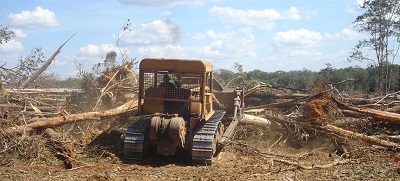
Indonesian palm oil plantation.  First the forest was bulldozed.  Never mind all the fragile species that called it home, including our primate cousins, the highly endangered orangutans.

Indonesian palm oil plantation. First the forest was bulldozed. Never mind all the fragile species that called it home, including our primate cousins, the highly endangered orangutans.

How can we blithely talk about international agreements like REDD and cap-and-trade markets, ignoring the fact that when these lofty agreements are translated into action on the ground in the remote tropical forests that most need protection, they too often result in the worst kinds of greedy destruction—for example, so-called protected forests being bulldozed, sprayed with herbicides and turned into palm oil plantations, but still sold as “protected forest” in the international carbon market.

Americans spend royally on landscaping around our own homes, but fail to appreciate that if we don’t snap out of our trance and start acting forcefully on behalf of the planet as a whole, the storms and droughts that are coming will make short work of all our careful planting and pruning.

Wake up people!  We are all Noah now.  The Ark that will help us weather the storms we have brought upon ourselves is the Mother Ship, sweet Gaia herself.

Headlands, Puerto Rico. Photo by Eric B. Hernandez

Headlands, Puerto Rico.
Photo by Eric B. Hernandez

It’s past time to start focusing on doing all we can to conserve the living beings on this planet—ours to protect, not to destroy.

We are all Noah now.

Dark Universe, Brightening

Socrates had it right long ago when he acknowledged that to the extent that he was wise, it was because he knew how much he did not know.

During my lifetime, the trend has been for homage to be paid to all the cocky, smart human beings who think they know everything.

The slicker and more self-confident the guy (and this is mostly about guys), the more rewards and adulation he gets.

Collectively, especially in the United States, arrogance has been the name of the game.  I think this collective hubris may have reached its apex with the splitting of the atom and the knowledge that he who controls atomic energy controls the world.

Or so we thought.

Climate change is ushering in a whole new, and much more humble era.

imageIt turns out that just because we can bulldoze forests and mountaintops, change the course of rivers, drill beneath the sea and through solid rock, and completely saturate the earth with satellite, drone and in-home surveillance devices, we are still just as vulnerable as we ever were to the simple, earthbound necessities of food and shelter.

As the big, climate-change-induced storms continue to roll in from the ocean, so frequently that they all begin to blur into an anguished nonstop disaster montage, a slow but steady sea-change in collective human consciousness is beginning to occur.

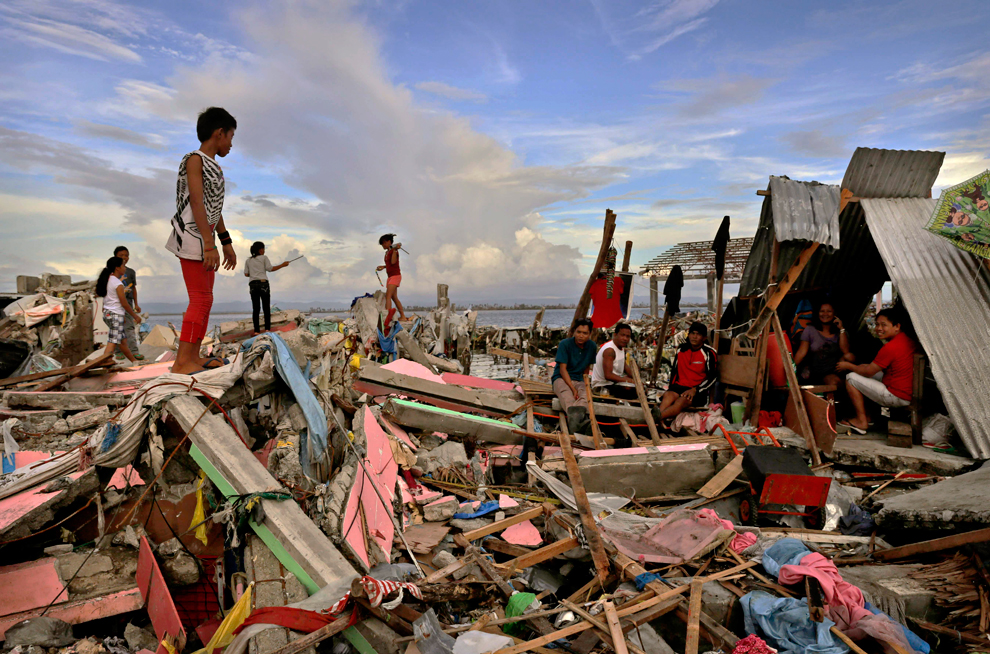
Aftermath of Typhoon Haiyan, Philippines, 2013

Aftermath of Typhoon Haiyan, Philippines, 2013

We are beginning to recognize how much we still don’t know, and how dangerous our ignorance, combined with arrogance, is becoming.

There is no doubt now that we who are alive today, along with our children and grandchildren, are going to be living through a remarkable transition time as the planet we have destabilized and plundered during the past few hundred years of industrialization seeks to return to equilibrium.

We must acknowledge that human over-population has played a major role in this process of destabilization.  Our very success as a species is what is driving the current unfolding disaster.  By reducing our numbers through disease, drought, flooding and the competition for shrinking natural resources that leads to war, the planet is doing what it must to return to a steady state where the ecosystem as a whole can flourish.

It is sobering to live with this knowledge.

Perhaps it is my sadness at knowing that I am going to be living through (and dying in) a veritable Holocaust of earthly creatures, that has me searching outside the box of science and common knowledge for signs of hope.

IMG_4150 copyI was not raised with religion, but I have always been an instinctive spiritual animist, seeing the divine in the beauty of the natural world, and in my unbounded love for all the elements of our Earth—rock, water, air and all the myriad living beings that inhabit every strata of our planet.

I have also been open, since I was a child, to the possibility that there is more to our experience than meets the eye.  I have always been fascinated by the occult, shamanism, and science fiction involving time travel to other dimensions of space/time.

I don’t know if it is just because I am paying more attention, but lately I have been perceiving a definite uptick in collective awareness that the key to fixing what ails us in the physical world may lie not in better “hard science,” but in a deeper connection to knowledge that can only be accessed through a different kind of perception.

The doors to this under-tapped realm of wisdom are accessible to us through what has poetically been called “our mind’s eye.”

There have always been humans who have been explorers in this realm—Socrates was one, the Biblical sages and prophets were others, and modern esoteric explorers like Rudolf Steiner, Terrence McKenna, Mary Daly, Martin Prechtel, Starhawk and many more.

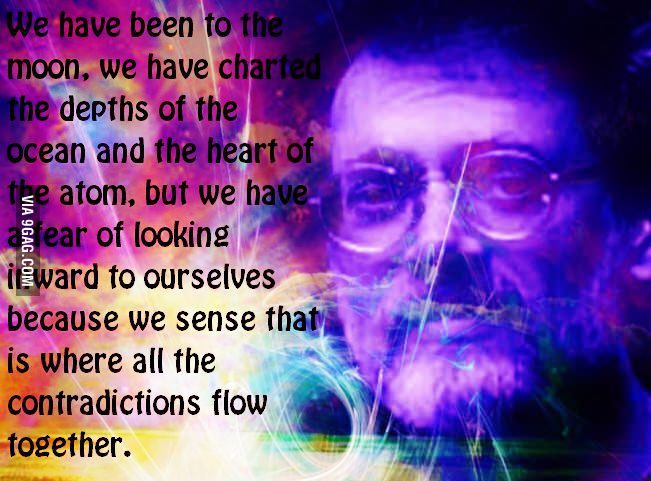
Terrence McKenna

Terrence McKenna

In the 1960s psychedelic drugs opened the doors for many people who were not at all prepared for the “trips” they encountered.

Now we seem to be coming around again to a period where, as conditions in the physical world deteriorate, more of us are seeking understanding and reassurance in the non-physical.

The more we know of how bad things are here in the physical realm, the more we want to know that “another world is possible.”  And the more we look, the more we find that indeed, there is much more to the universe than meets the eye.

Even scientists are beginning to align with the spiritists they previously disdained. In our age of quantum physics, the whole idea of a “spiritual dimension,” accessible through human consciousness, is becoming much less far-fetched to rational hard science types.

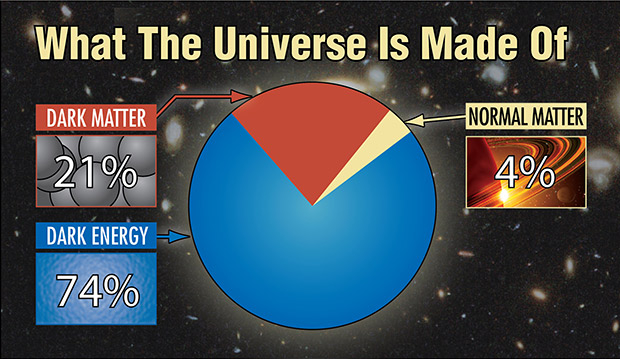
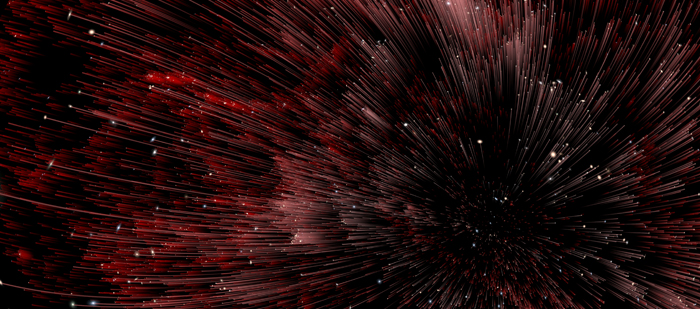
The new Hayden Planetarium show, “Dark Universe,” ends with a graphic that could be right out of “Twilight Zone,” showing that roughly three-quarters of the universe is composed of “dark energy,” a term invented to represent in language something we know enough to know we do not understand at all.

It could be that waking, embodied life is to human consciousness what the physical, hard-matter universe is to the cosmos as a whole.  Just a tiny fragment of a much larger, and potentially much more interesting, whole.

What if the reason every living thing on this planet sleeps (whether in the daytime or the nighttime) is in order to reconnect with the non-physical realm that spiritually sustains us?  We know that if we are deprived of sleep for any length of time, we go crazy and die.

What if “the dreams that come,” whether in sleep or in death, are just as valid a form of experience as the waking hours of our day, and our lives?

What would it mean to be able to think beyond the brief timelines of our individual lives, or even the eons of evolutionary cycles on the planet, and know that we are all part of a much grander cosmic dream?

dark-universe-red-shift-interior

Photo source: American Museum of Natural History, Rose Space Center, Hayden Planetarium, “Dark Universe”

Thinking this way does not give me license to let go of my focus on making a difference here on earth, now in my lifetime.

In some ways this imperative becomes even stronger, as it was for Socrates, Steiner and so many other visionaries who were also powerful initiators and guides during their lifetimes.

During this winter solstice season of introspection and questioning, I have been reading and re-reading the writings of one such contemporary guide, the Sufi mystic and spiritual ecologist Llewellyn Vaughan-Lee.  I leave you with a passage to ponder:

In the book of life we can see the energy patterns of creation, the rivers of light that flow between the worlds.  We can see how the individual relates to the whole and learn the secret ways to bring light into the world; we can understand the deeper purpose of the darkness and suffering in the world, of its seeming chaos.  And the attentive reader can glimpse another reality behind all of the moving images of life, a reality that is alive with another meaning in which our individual planet has a part to play in the magic of the galaxy.  Just as there are inner worlds, each deeper and more enduring, there are also different outer dimensions whose purposes are interrelated and yet different.  The inner and outer mirror each other in complex and beautiful ways, and in this mirroring there are also levels of meaning.  As we awaken from our sleep of separation, we can come alive in a multifaceted, multidimensional universe that expresses the infinite nature of the Beloved.

–Llewellyn Vaughan-Lee, Spiritual Power: How It Works

Let it be so.

Sunset on Cherry Hill Beach, Nova Scotia.  Photo by Eric  B. Hernandez

Sunset on Cherry Hill Beach, Nova Scotia. Photo by Eric B. Hernandez