Help Wanted: Willing Ring Bearer Seeks Quest

All week the energy of the summer solstice seemed to build in me. After a week of rain, the sun burst through and we had a whole week of clear, low-humidity days in which it appeared that you could see the plants growing happily, stretching their roots down into the soil and their leaves up towards the bright sky.
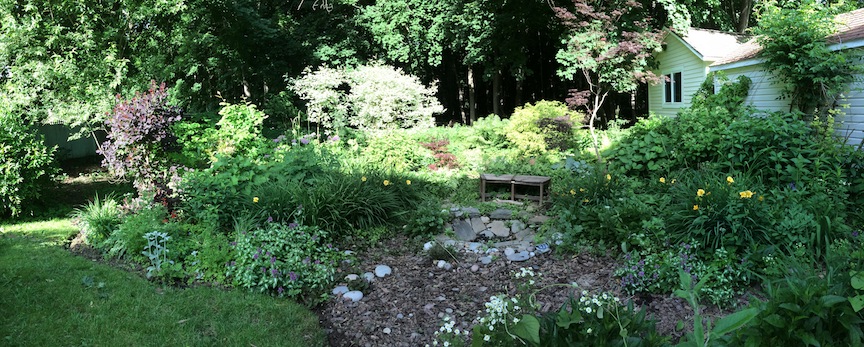
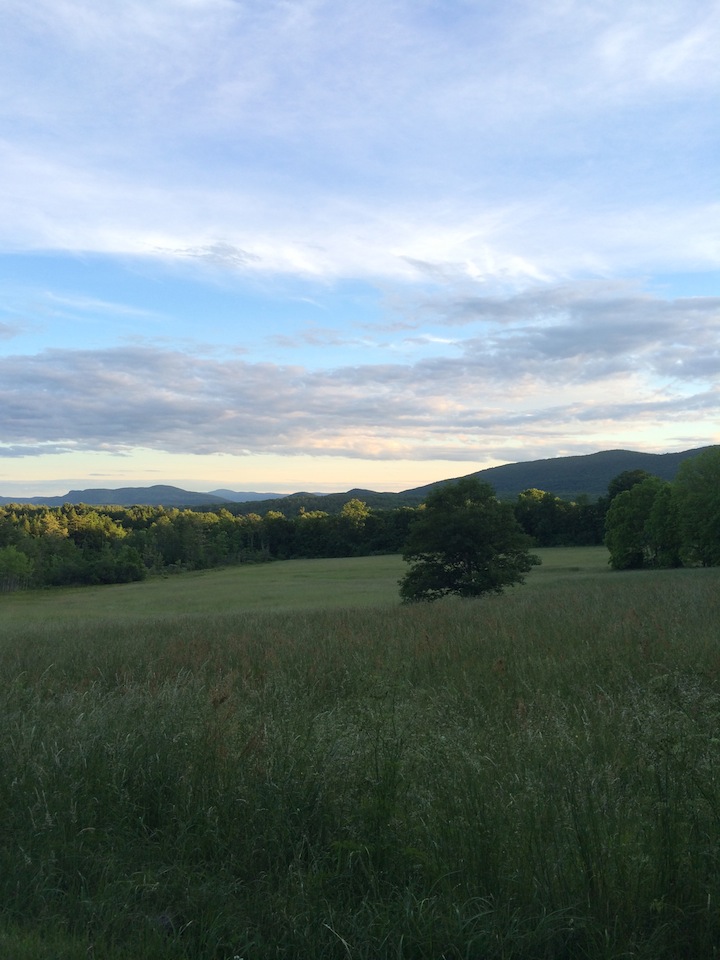
My peaceful backyard in the Shire

My peaceful backyard in the Shire

In anticipation of several weeks away (I’ll be making my annual pilgrimage to Nova Scotia soon) I spent a lot of time out in the garden, planting vegetables and annuals, weeding flower beds, mulching and staking and tending.
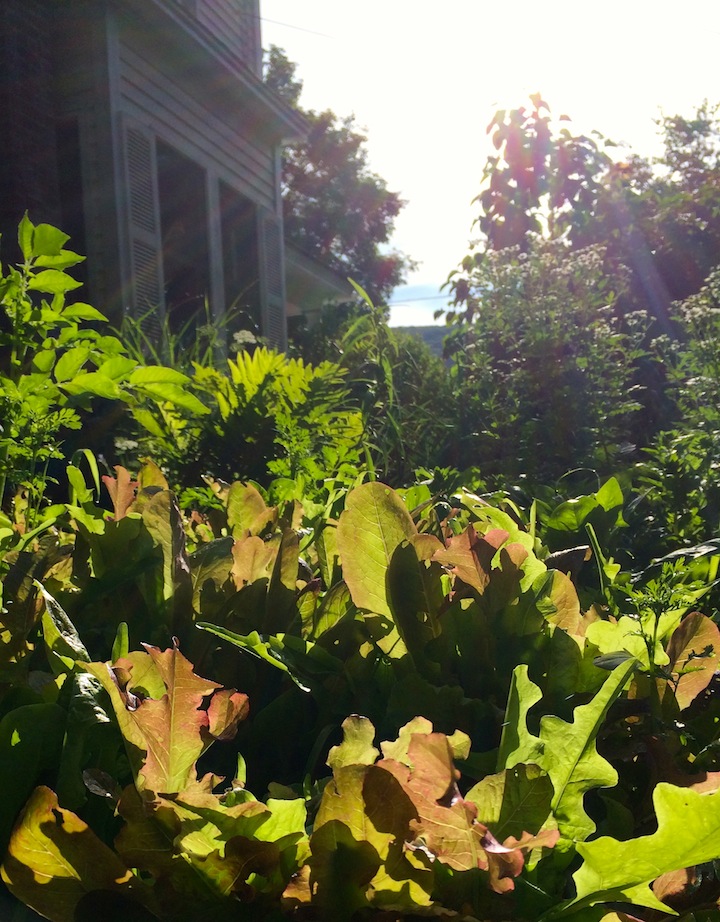
morning lettuce

morning lettuce

pumpkins

pumpkins

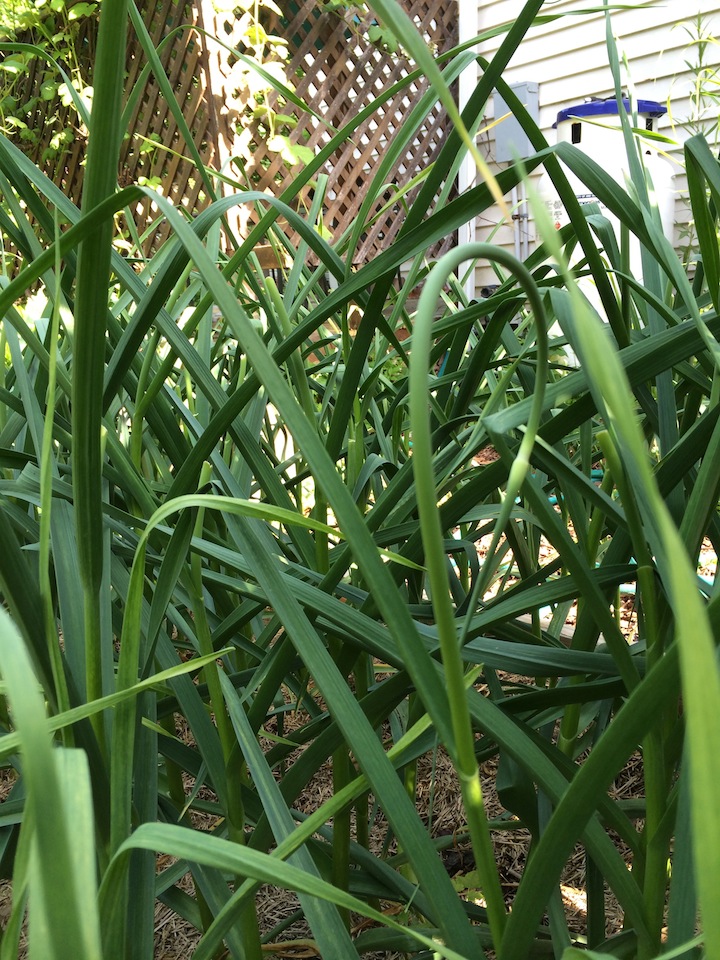
Garlic; note the gas tank in the background

Garlic; note the gas tank in the background

It’s always hard to leave a garden in the summer, when you know the minute your back is turned the invasive weeds will grow with vindictive vigor, the slugs will multiply and munch away at the lettuce, and the Japanese beetles will arrive to decimate the roses.

However, I must get away from the confines of my little corner of the world to clear my head and ready myself for another year—for me, as a lifelong academic, the year always starts with the fall semester of school.

Last night, in honor of the longest day of the year, my son and I took an evening hike up a local mountain, and sat on a rock ledge facing west as the sun slowly and majestically dropped towards the horizon.

Eric in woods

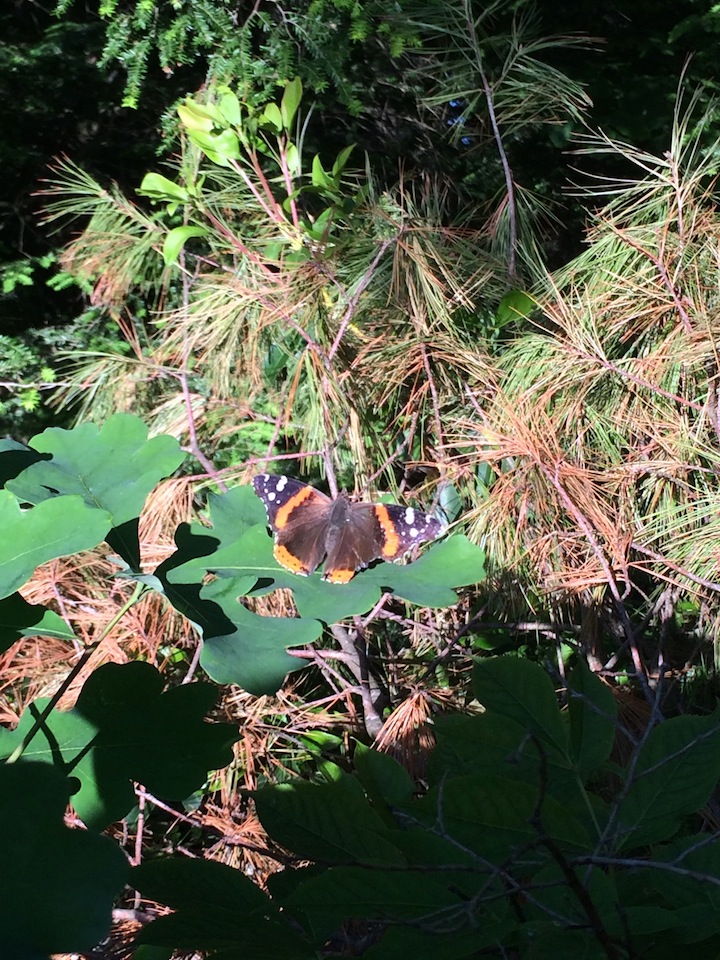
We were happy to find some friends up there—a caterpillar with beautiful markings, making its way up an oak sapling, and a pair of orange-and-black butterflies, sunning themselves just like we were.
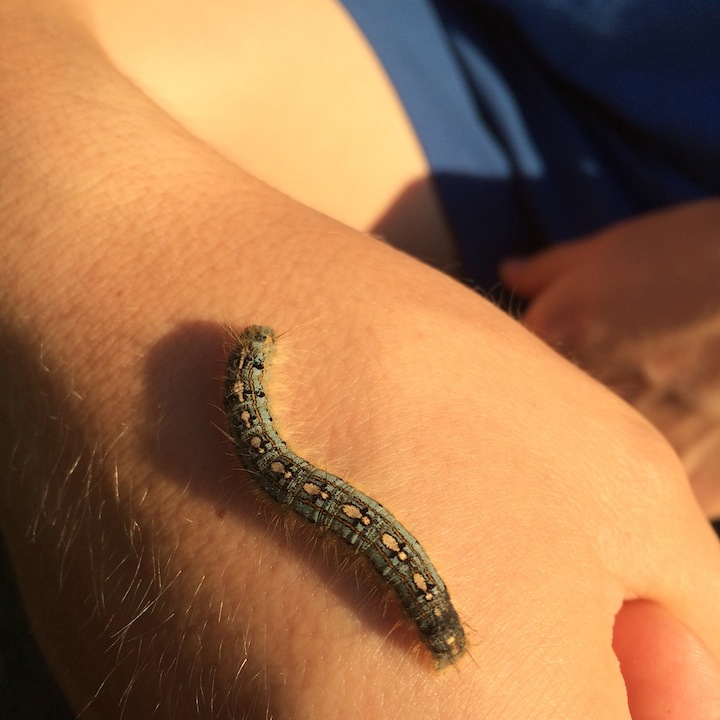
caterpillar

butterfly

solstice sunset

As we walked down again in the last rays of sunshine, I couldn’t help thinking about the strong contrast between the peaceful, lovely landscape of my home ground, where for many of us the most urgent question of the day is “what shall we have for dinner?” or “what movie shall we watch tonight?” and the social landscapes that cry out to me every day when I read the news headlines—arid, violent, rigid, harsh.
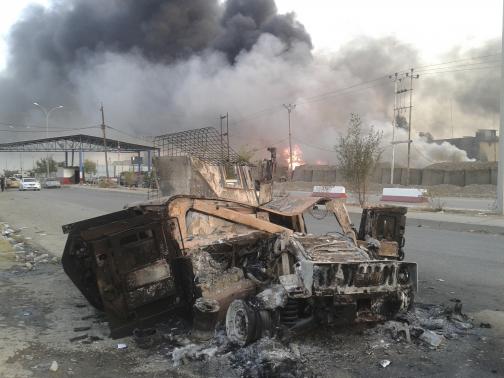
Reuters photo taken June 11, 2014 in Mosul, Iraq

Reuters photo taken June 11, 2014 in Mosul, Iraq


This summer solstice, as I sit in my peaceful green American haven, Iraq is again descending into crazed sectarian violence. The news reports that “militias are organizing” or “Mosul was taken” focus on the politicians playing the mad chess game of war, and the young men drawn into the armies as battlefield pawns. There is no mention of the mothers, sisters and grandmothers of those politicians and young men. The women rarely surface in the headlines, and when they do, the news is not good: a woman who dared to go out to a rally stripped and gang-raped, for example.

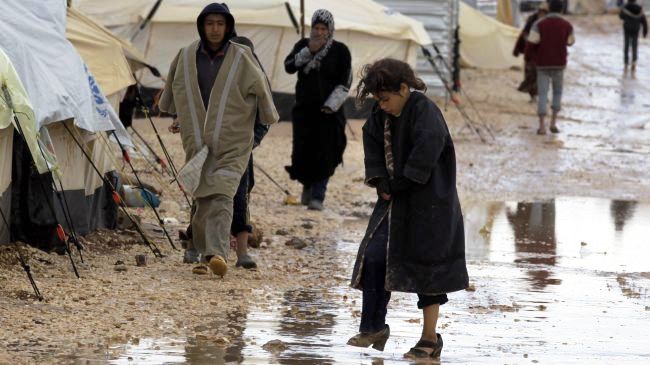
We hear about women obliquely in the reporting about the incredible surge of refugees living in camps this year: of the 51 million people living in refugee camps under U.N. supervision, half are children—which means that a high percentage of the other half are probably mothers and grandmothers. But that is in inference I am making by reading between the lines; those women are invisible in the official story.

Syrian refugee camp in Jordan, now Jordan's fifth largest city

Syrian refugee camp in Jordan, now Jordan’s fifth largest city
jammas.hussain20130212012158677

I have to recognize the incredible privilege I have as an American woman, living in the heart of the heavily guarded gated community that this country has become.

Other people around the world are paying the price for the peace and plenty I have here in my home. And not just people—the animals and insects and birds and forests are paying the hugest price of all to maintain my privileged lifestyle.

How long can I continue to live comfortably with this knowledge?

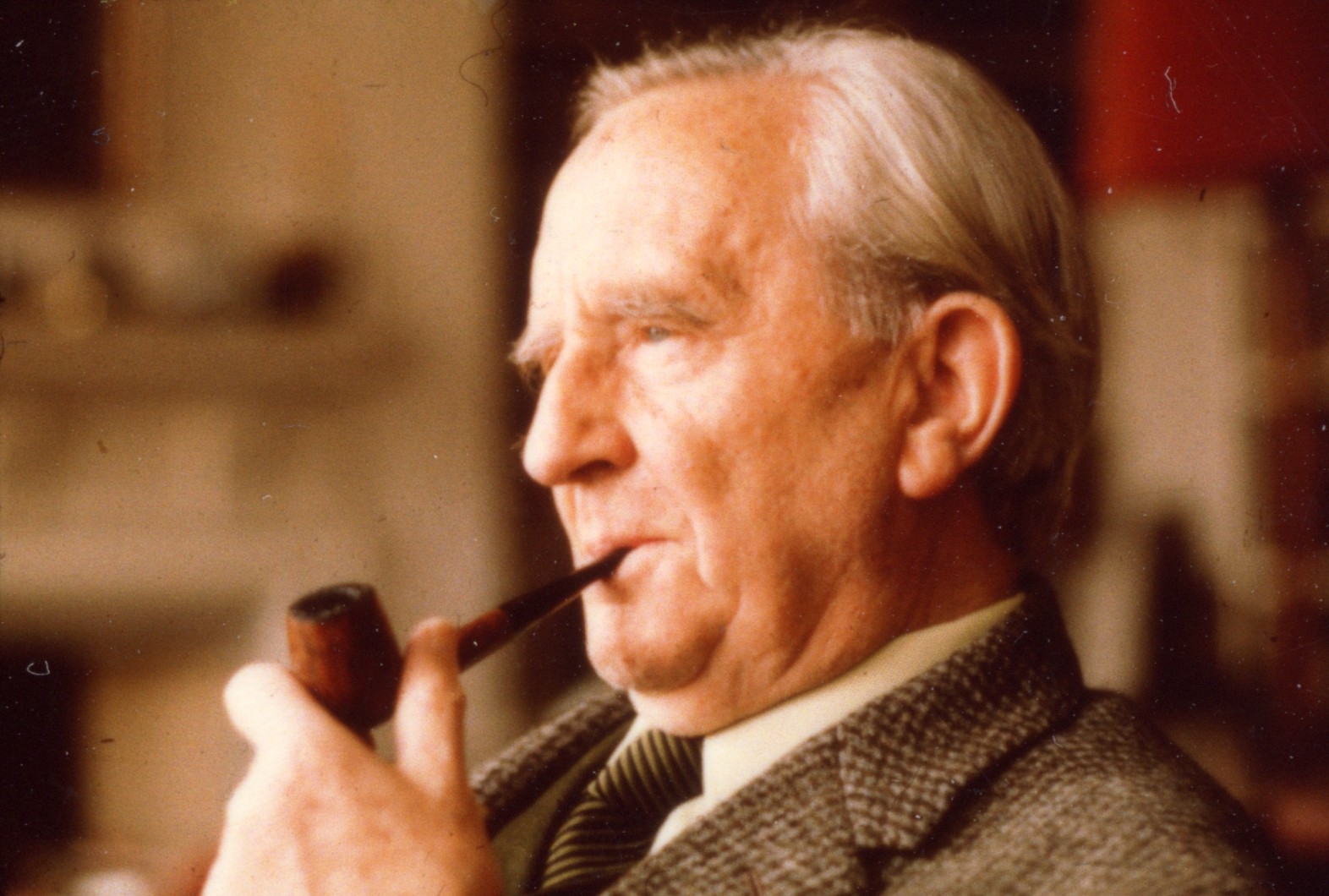
The more time goes on, the more I see how prescient J.R.R. Tolkien was with his Lord of the Rings series. Berkshire County, where I live, is indeed “the Shire” of legend—peaceful, productive, green and jolly. Outside our borders, far, far away, the armies of Mordor are mobilizing in the midst of lands laid waste by the industries of the Dark Lord. Few in the Shire are worried; the chance of those nasty people and industries actually coming here seem remote indeed.
JRR Tolkien

JRR Tolkien

In Lord of the Rings, it is Gandalf the wizard who serves as the bridge between these two very different landscapes. He gives Bilbo, and later Frodo, the charge of becoming the change agents who can make all the difference. The fight against the Dark Lord is fought on many fronts, but the quest to destroy the Ring of Power is paramount, and in order to destroy the ring Frodo must journey to the heart of the dark Empire itself.

I can’t escape the feeling that here in the quiet Shire where I live, ordinary people like me are being called upon, as Bilbo and Frodo were, to step up to the immense and dangerous challenge of resisting the darkness that is brewing on our borders.

But in our case there does not seem to be a Gandalf who can give us a mission and guide us as we set off on the quest. Not even the wisest leaders of the environmental and peace movements seem to be able to provide that kind of leadership. Worldwide, those leaders who claim to know with absolute certainty what is right and what to do are precisely the ones who are fomenting war and leading us down the path to environmental, civilizational suicide.

That must be why I am drawn to study with those who are exploring other epistemologies, outside of the normative range of politics, science, philosophy and religion.

Right now my bedside reading includes Anne Baring, Pam Montgomery and Pamela Eakins, along with Brian SwimmeMartin Prechtel, Bill Plotkin,  and Daniel Pinchbeck.
spring meadowWhen I look out into the green world stretching up towards our beneficent Sun, or glowing brightly under our sweet white Moon, I can see and hear the harmony that life on Earth evolved to sing. Put water and sunlight together, wait a few billion years, and you get this incredible lush planet, pulsating with life.

Human beings have flourished so well that now we have become overpopulated, an invasive species that is destructively taking over every last environmental niche on the planet. In a normal terrestrial cycle, we would go bust, our civilization would collapse, and with time the earth and the sun would gradually rebuild life in endlessly new creative forms.

Is that what is coming? Or will we be able to be the Gandalfs of our own generation, waking ourselves up out of our complacency here in the beautiful American Shire, and conquering the inner and outer Dark Lords that are laying waste to the planet?

What is the quest that is mine to carry out? What is yours? If we at least start asking these questions, with the greater good of the Earth in mind, perhaps the answers will emerge in time to set humanity on a better path.

solstice sunset dark

Sharing and Seeking New Stories, Moving from Silence to Language, Action and Hope

Jennifer Browdy de Hernandez; photo by L. Najimy

Jennifer Browdy de Hernandez; photo by L. Najimy

Yesterday, for the first time, I gave a public reading from my memoir, What I Forgot…and Why I Remembered.  It was a powerful experience, offering me a personal taste of what the Berkshire Festival of Women Writers has been giving to other women writers all month.

We met at the Friends Meeting House in Great Barrington, in a meeting room imbued with incredibly peaceful energy and beautiful light, with big windows opening up to the trees, mountains and sky off to the West.  I stood with my back to the view, wanting the audience to see me as I see myself, a small human nestling up to the flank of our great Mother Earth.  The reading started at 4 p.m., so as I talked and read the sun sank slowly behind me, and I was told afterwards that hawks cruised by casually a few times, riding the strong March winds.

Earth, water, fire and air…those are the elements that compose each of us, literally and figuratively.  We are simply emanations of our planet, like the flowers of the field and the fish of the sea.  Remembering that, it becomes easier to see how insane it is to poison and destroy our planet.  It is, quite simply, suicidal.

Last week a beloved member of my local community, a young woman, took her own life and set off a storm of grief.

How powerful it would be if that kind of deeply felt emotional response could be aroused in relation to the slow-moving suicidal ecocide that we are all currently participating in!

Of course, first we have to recognize what’s happening.  As I say in my memoir, most of us are still sleep-walking when it comes to seeing the great tragedy of our times.  We’ll still be sleep-walking, mumbling numbly that “everything is fine,” right off that cliff, unless we can be woken up in time and aroused to channel our emotions into positive change.

It’s not scientific facts and figures that will wake people up to the reality of the Sixth Great Extinction and the human-induced ending of the stable climate we’ve enjoyed for many thousands of years.

It’s hearts, not minds, that must be moved. And for that, it’s stories, not charts, that are called for.

It’s in this spirit that I offer my story in my memoir. Here is a quote that I read yesterday:

“My story is the story of a generation of Americans who grew up with tremendous privilege, so comfortable and coddled that we were not even aware of how very privileged we were.  It is the story of many generations of people who grew up believing that they had the right to take endlessly from the natural world, without fear of exhausting the planet’s resources, and without ever giving anything back. It is the story of my generation’s tremendous alienation from Nature, our reliance on technology and engineering to solve all problems, to the point where we could delude ourselves that we did not need the natural world to make us happy, only our own representations of her, and the resources we could extract at the push of a button.

“My story is the story of how finally, at midlife, I came back to my senses and woke up to the impending disaster that my generation had presided over unthinkingly.  I could share this story in the hopes that the very ordinariness of it would help my peers to wake up as well, and join the great struggle of our time, the struggle to turn our tremendous intelligence to the good work of creating a livable future for ourselves, our children and the billions of innocents condemned to extinction by our thoughtlessness.”

I also read a quote from Audre Lorde, who has been so important in encouraging me to overcome my social conditioning to be quiet, to be polite, to go with the flow, to suck it up, to keep my head down…which women, in particular, get a heavy dose of all our lives.

This is what Lorde has to say about that conditioning, from her essay “The Transformation of Silence into Language and Action, in the Sister Outsider collection:

“My silences had not protected me. Your silence will not protect you….What are the words you do not yet have?  What do you need to say?  What are the tyrannies you swallow day by day and attempt to make your own, until you will sicken and die of them, still in silence?…

“In the cause of silence, each one of us draws the face of her own fear—fear of contempt, of censure, or some judgment, or recognition, of challenge, of annihilation.  But most of all, I think, we fear the visibility without which we cannot truly live….

“And that visibility which makes us most vulnerable is that which is also the source of our greatest strength. Because the machine will try to grind you into dust anyway, whether or not we speak.  We can sit in our corners mute forever while our sisters and ourselves are wasted, while our children are distorted and destroyed, while our Earth is poisoned; we can sit in our safe corners mute as bottles, and we will still be no less afraid….

“We can learn to work and speak when we are afraid in the same way that we have learned to work and speak when we are tired. For we have been socialized to respect fear more than our own needs for language and definition, and while we wait in silence for that final luxury of fearlessness, the weight of that silence will choke us.”

Truly we no longer have the luxury of waiting for the time to be right to speak up, to take action, to admit to ourselves and others that everything is NOT FINE, not at all.

All of our stories are important. The more we open up and share with one another, the greater the potential that we’ll be able to find the connecting points that will enable us to work together to create a new story, a bridge of a story to carry us forward into the future and help us create the structures we will need to weather the storms that are coming.

We Are All Noah Now

We are all Noah now.

These words have been sounding in my head like a mantra these past few weeks, and this morning I woke from strong dreams of animals in trouble—a big lone fox, a frantically hopping toad—and felt the need to make my inchoate awareness of danger and responsibility more tangible by writing it down and sharing it with others.

Derrick Jensen asks with desperate, angry sadness how long it will take us to finally wake up and start resisting the accelerating extinction of species happening on our watch.

How can we love our pets so much (I ask with my purring cat on my lap and my snoring dog at my feet) and remain unmoved by the news that hundreds of sweet, innocent reptiles and amphibians, many of them from fragile, endangered species, were cruelly murdered by callous neglect last week, crushed into hot plastic tubs without food or water for days in a crate bound from Madagascar to the U.S. pet store market?

_72676565_mada3

_72680861_mada4

How can we continue to give our children adorable stuffed lions and tigers and bears to hug and cuddle (my own boys were devoted to their respective stuffed animal friends, a gray kitty and a green froggy) while turning a blind eye to the fact that all of the large animals on Earth are staring extinction in the face?

Indonesian palm oil plantation.  First the forest was bulldozed.  Never mind all the fragile species that called it home, including our primate cousins, the highly endangered orangutans.

Indonesian palm oil plantation. First the forest was bulldozed. Never mind all the fragile species that called it home, including our primate cousins, the highly endangered orangutans.

How can we blithely talk about international agreements like REDD and cap-and-trade markets, ignoring the fact that when these lofty agreements are translated into action on the ground in the remote tropical forests that most need protection, they too often result in the worst kinds of greedy destruction—for example, so-called protected forests being bulldozed, sprayed with herbicides and turned into palm oil plantations, but still sold as “protected forest” in the international carbon market.

Americans spend royally on landscaping around our own homes, but fail to appreciate that if we don’t snap out of our trance and start acting forcefully on behalf of the planet as a whole, the storms and droughts that are coming will make short work of all our careful planting and pruning.

Wake up people!  We are all Noah now.  The Ark that will help us weather the storms we have brought upon ourselves is the Mother Ship, sweet Gaia herself.

Headlands, Puerto Rico. Photo by Eric B. Hernandez

Headlands, Puerto Rico.
Photo by Eric B. Hernandez

It’s past time to start focusing on doing all we can to conserve the living beings on this planet—ours to protect, not to destroy.

We are all Noah now.